SNMM19GSM GPRS Mobile Phone
Ningbo Bird Co., Ltd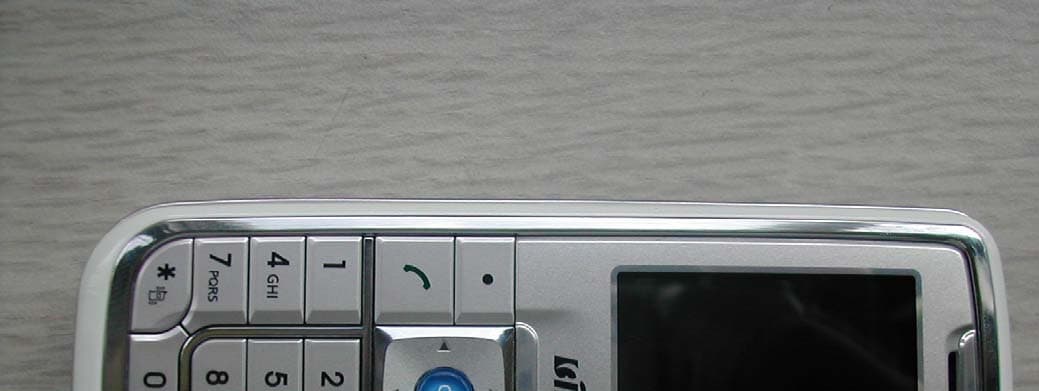
Click to zoom
Application Details
- Equipment Class
- PCE - PCS Licensed Transmitter held to ear
- Date of Grant
- Jul 26, 2006
- Application Purpose
- Original Equipment
- Date of Application
- Jul 26, 2006
- Equipment Note
- GSM GPRS Mobile Phone
- Frequency Range
- 1850.20000000 - 1909.80000000
- Company
- Ningbo Bird Co., Ltd
- Country
- China
Documents & Files
Document Text
Text extracted from the exhibit documents filed with the FCC. Open a document above to read the original.
Users Manual
Table of Contents Forewords........................................................................................................................ 1 FCC Part 15 Notice.......................................................................................................... 2 SAR .................................................................................................................................. 3 Safety Precautions.......................................................................................................... 4 Care & Maintenance........................................................................................................ 6 Glimpse of Your Phone................................................................................................... 6 Knowing the Keys........................................................................................................... 8 Understanding Display Icons......................................................................................... 9 Quick Reference............................................................................................................ 10 Preparing Your Phone................................................................................................... 11 Using Your Phone......................................................................................................... 13 Accessing the Menus ................................................................................................... 16 Using the Features........................................................................................................ 19 Messages .................................................................................................................................19 Camera ....................................................................................................................................27 Games .....................................................................................................................................29 Phone Book .............................................................................................................................30 Call Records............................................................................................................................32 Alarm ......................................................................................................................................33 Settings....................................................................................................................................33 Mobile Web .............................................................................................................................38 Multimedia ..............................................................................................................................39 Media Player ...........................................................................................................................41 STK* .......................................................................................................................................42 Extras ......................................................................................................................................42 Input Methods................................................................................................................ 46 Accessories ................................................................................................................... 47 Technical Specifications............................................................................................... 49 Troubleshooting ............................................................................................................ 49 Forewords Sincerest felicitation and congratulations for wisely choosing M19 mobile phone! Our cellular phones are approved for GSM networks conforming to communications industry standards of the People's Republic of China, complies with FCC rules and regulations, and meeting stringent European standards. To use this phone you must subscribe to a GSM service from a provider. We have included many features in this device but their function depends on the features available with your subscribed wireless network. Please contact your service provider for more information. We strongly recommend you to carefully read and understand this manual before using your phone in order to keep it under best conditions for your effective usage and utmost satisfaction. This User Manual is published by the manufacturer without any warranty. Revisions and improvements resulting from typographical errors, inaccuracy of current information, and improvements to the device or software may be done without any prior notification, but will be incorporated to newer editions. More information and help on your phone may be available at the manufacturer’s web site. The manufacturer reserves all rights to the contents herein. Copyrights and trade marks mentioned in this document remain with their respective owner. Reproduction, transfer, storage, or distribution in whole or in part of copyrighted materials without prior written permission is expressly prohibited. Bird is a trademark of China Bird Company, Limited. JAVA TM and all JAVA TM based trademarks and logos are trademarks or registered trademarks of Sun Microsystems, Inc. in the U.S.A. and other countries. T9 associated with predictive text input is protected under one or more of the following US patents: 5,818,437; 5,953,541; 5,187,480; 5,945,928; 6,011,554 and other patents are being applied worldwide.. The WAP navigator software included are exclusive properties of Openwave, therefore it is forbidden to modify, translate, disassemble or even decompile all or part of these softwares. FCC Part 15 Notice This device complies with part 15 of the FCC Rules. Operation is subjec…
Text truncated - open the document above for the full version.
Cover Letter(s)
ADT (Shanghai) Corporation 2F, Building C, No.1618, Yishan Rd., 201103, Shanghai, China Jul. 25, 2006 FCC ID: SNMM19 The following lists are the answers for the comments on Jul. 23, 2006. Please kindly have a review on it: 1) Section III, 4(a) of the 731 form should be “PCE”. Please adjust. Also, please fill out Section IV, (1) of the 731 form. RE: Please see (SNMM19)731Form_rev1. 2) 731 Form for GSM should normally cite 824.2 – 848.8 & 1850.2 – 1909.8 MHz. Please correct. RE: Please see (SNMM19)731Form_rev1. 3) Block Diagram appears to only show 850 MHz. This appears to be a dual band phone. Please explain as block diagram appears incomplete. RE: Please see (SNMM19)BlkDia_rev1. 4) Note that users manual mentions GSM 900 and DCS 1900 only. Please clarify all bands the device is capable of operation on as we must appropriately denote the grant for other bands that do not operate in the U.S. (i.e. European bands). RE: Please see page 49, (SNMM19)UserMan_rev1. 5) It is unclear if the device integrates various shields over the various portions as well. If so, please provide internal photographs to show what device looks like before shields are removed. RE: Please see page 1, (SNMM19)IntPho_rev1. 6) It is uncertain where the antenna is located and what it looks like. Please update the internal photographs to include or label as appropriate to show it. RE: Please see page 2, (SNMM19)IntPho_rev1. 7) FYI....The preferred accepted format for FCC Labeling is to include “FCC ID:”, not simply “FCC ID”. It is suggested this be corrected. RE: N/A 8) For the label it is uncertain if the FCC ID uses an S or another character. Please review. RE: It is “S”. 9) Generally a Tune Up procedure show the various adjusted levels/limits by the manufacturer during the manufacturing process. More detail should be provided. Please correct. RE: Please see (SNMM19)PowerSetting. 10) Generally the following information is expected to be provided: a description of all circuitry and devices provided for determining and stabilizing frequency, for suppression of spurious radiation, for limiting modulation, and for limiting power been provided (2.1033(c)(10). RE: Please see the previous file (SNMM19)Schem. It is seemed that all the information has been included. If not, please tell us in detail what it is since our client does not understand it thoroughly. 11) This device appears to be capable of USB connection to a PC and is therefore also considered a PC peripheral device (in addition to the TX requirements, i.e. Part 22, etc.) and is subject to either a Certification or DoC as a PC peripheral. Therefore the application must clarify if you are asking for: a) Certification of the device as a TX, and a DoC has been performed by an appropriately accredited test lab for a PC peripheral b) Certification as a TX + PC peripheral. RE: We are asking for “a”. The DoC report is issued by ADT Tai Wan and produced under subcontract by ADT Shanghai. 12) Given the device is much more than a simple phone/TX, the complete 2 part statement of 15.19(a)(3) should be located on the label or manual as appropriate. Please review. RE: Please see page 2, (SNMM19)UserMan_rev1. 13) Test report cites a battery of 3.9 VDC and the manual cites 3.7 VDC. Please explain if more than one battery is available for this device. Note that for SAR testing, the FCC expects each type of battery to be tested. RE: Please see page 49, (SNMM19)UserMan_rev1. 14) It is uncertain what accessories (battery, earbud, belt clips/holsters) are provided with the device by the manufacturer. Please clarify. RE: Please see page 47 ~ 48, (SNMM19)UserMan_rev1. 15) Please explain the reference to TDMA on page 10 of the Part 22/24 report. RE: N/A 16) Please provide appropriate information to determine the classes (A – C & 1 – 29) associated with this particular GSM transmitter. These define the typical use and type of up/down slots the device is capable of. RE: What does this comment mean? Is it offered by lab or applicant? 17) All test photographs appear to show the device laying down. For TX fundamental and spurious, this is unusual. Please verify/explain as necessary as it would be expected that the worse case position would be upright. RE: Please see (SNMM19)TestSup_rev1. 18) For the occupied bandwidth and bandedge, it does not appear that the test was performed using > 1% RBW as specified by 22.917(b) and 24.238(b). Please note that the 26 dB is considered referenced to “total TX power”. For instance, the 0 dB reference would be established using RBW > 300 kHz and then the 26 dB points would be referenced down from this point using a RBW > 1%. This will likely yield an occupied bandwidth a little less than 300 kHz. Please review. RE: Under handling. 19) Test reports do not appear to contain entire information regarding test equipment for substitution methods (i.e. signal generator, substitution antennas, etc.). Please review. RE: Please see page 67, (SNMM19)TestRpt.Part22_rev1 & page 64, (SNMM19)TestRpt.Part24_rev1. 20) FYI...SAR report is still under review. RE: N/A. 21) FYI...For frequency stability, generally enough time to ensure all components inside the device have reached the desired temperature should occur. Generally anything less than 1 hour is unusual. In the future you may wish to evaluate this. RE: N/A 22) Please confirm that GPRS mode is not functional in voice mode of operation. RE: Under handling. 23) Generally Z-axis should be provide for worse case for each configuration (i.e. 850 – Head, 850 – Body, 1900 – Head, 1900 body). If available, please provide. RE: Under handling. Thank you very much.
Cover Letter(s)
ADT (Shanghai) Corporation 2F, Building C, No.1618, Yishan Rd., 201103, Shanghai, China Jul. 26, 2006 FCC ID: SNMM19 The following lists are the answers for the comments on Jul. 25, 2006. Please kindly have a review on it: 1) Please submit a new labeling exhibit to correct the odd looking S and also to include the appropriate DoC information. RE: It is commonly considered that the DoC logo not be put on the label of cell phone. Is it compulsive? 2) It is still uncertain if the GPRS mode is functional in voice mode of operation or not. If so, then GPRS should also be tested while positioned at the head. RE: When GPRS is under use, the call cannot be made and there is also no voice. 3) The Tune up information provided suggests a +/- 2 dB variance to output power. Please note that the FCC expects a much higher tolerance if this is a conducted measurement. Expected tolerance must be +/- 0.5 dB or less. RE: Please see (SNMM19)PowerSetting_rev1. 4) It appears that the newly provided photographs are actually labeling the antenna connector and not the antenna itself. Please review. RE: Under handling. 5) Note that users manual mentions GSM 850/900 and DCS 1800 only. Please confirm as the manual is expected to cite 1900 for U.S. Please clarify all bands the device is capable of operation on as we must appropriately denote the grant for other bands that do not operate in the U.S. (i.e. European bands). RE: Please page 49, (SNMM19)UserMan_rev2. 6) Please provide appropriate information to determine the classes (A – C & 1 – 29) associated with this particular GSM transmitter. These define the typical use and type of up/down slots the device is capable of. This is something the manufacturer will need to provide. RE: Class A & 11. 7) Generally the following information is expected to be provided: a description of all circuitry and devices provided for determining and stabilizing frequency, for suppression of spurious radiation, for limiting modulation, and for limiting power been provided (2.1033(c)(10). This information is generally an engineering theory of operation that describes in a few paragraphs how the RF circuitry performs the above listed items. Generally this information is also confidential as well and therefore the confidentiality letter should be updated to include “theory of operation” as well. RE: Under handling. 8) For the occupied bandwidth and bandedge, it does not appear that the test was performed using > 1% RBW as specified by 22.917(b) and 24.238(b). Please note that the 26 dB is considered referenced to “total TX power”. For instance, the 0 dB reference would be established using RBW > 300 kHz and then the 26 dB points would be referenced down from this point using a RBW > 1%. This will likely yield an occupied bandwidth a little less than 300 kHz. Please review. RE: Please see (SNMM19)TestRpt.Part22_rev2 & (SNMM19)TestRpt.Part24_rev2. 9) Users Manual Page 47 mentions batteries of various capacity are available. The FCC expects each type of battery to be tested. Please review. RE: Under handling. 10) FYI...Please note that the users manual must also include specific DoC information as well. Please ensure proper information gets added to the manual. RE: N/A Thank you very much.
Cover Letter(s)
ADT (Shanghai) Corporation 2F, Building C, No.1618, Yishan Rd., 201103, Shanghai, China Jul. 27, 2006 FCC ID: SNMM19 The following lists are the answers for the comments on Jul. 26, 2006. Please kindly have a review on it: 1) Regarding the labeling, if the device is DoC approved as a PC peripheral device (as mentioned in an earlier response to ATCB), then labeling for DoC is mandatory. There is no exemption based on the fact that the device is a Cellphone. However if the device is to be Certified as a PC peripheral as well (an would be considered a composite application where multiple grants are issued), then the FCC ID alone would be sufficient. However if DoC is being used as previously indicated, then proper DoC labeling is required. RE: Please see (SNMM19)Label_rev1. 2) Your response cites that the device is a Class A and 11. Note that if this is the capability of the device, there are various concerns to be noted: a) if the device is Class 11, it is capable of uploading 3 slots for every 8 slots for GSM. Therefore the data given in the SAR report uses the incorrect crest factor. The SAR shows maximum crest factor of 1:4. However Class 11 would be 1:2.6667 or 3:8 and will affect the results reported for GPRS. b) If the device is a Class A, then it is capable of: Class A: This class includes devices that are capable of working with circuit-oriented and packet-oriented connections simultaneously. With these mobile telephones, users can begin transferring data during an active voice connection. Class A is at the high end of the GPRS mobile telephone spectrum and includes multifunctional devices or “smart phones.” This would mean that the information presented to the last comment 2 is not correct. Additionally if the device is a Class A device, then the SAR has not been evaluated at the head properly as this was only utilizing GSM with crest factor of 1:8. Please review/correct as necessary. RE: The information transmission was wrong last time. The correct Class is 4. 3) We are also still awaiting responses to the following items per your last response: a) Users Manual Page 47 mentions batteries of various capacity are available. The FCC expects each type of battery to be tested. Please review. RE: Please see Page 47 of (SNMM19)UserMan_rev3. There is only one type of battery available. The sentence that would make person misapprehensive has been corrected. b) It appears that the newly provided photographs are actually labeling the antenna connector and not the antenna itself. Please review. RE: Please see (SNMM19)IntPho_rev2. c) Generally the following information is expected to be provided: a description of all circuitry and devices provided for determining and stabilizing frequency, for suppression of spurious radiation, for limiting modulation, and for limiting power been provided (2.1033(c)(10). This information is generally an engineering theory of operation that describes in a few paragraphs how the RF circuitry performs the above listed items. Generally this information is also confidential as well and therefore the confidentiality letter should be updated to include “theory of operation” as well. RE: N/A 4) For the occupied bandwidth and bandedge, it appears that the process of applying the markers was reversed and proper RBW for one trace may not have been used. For instance, in the Part 22 report, page 31 – Marker 2 should be at the highest power of the trace taken with RBW >= 300 kHz (assumed to be Blue trace), and the delta markers 1 and 3 should be located on the trace using RBW > 1% (3 kHz likely) and therefore are assumed they should have been on the black trace. The 26 dB down points are measured on the black trace, from the marker located on the blue trace. Additionally, it appears that a RBW >= 300 kHz was not used for the blue trace. Please review. Note that estimates from what was provided appears to show a bandwidth about about 250 kHz which is approximate expected value. RE: Please see (SNMM19)TestRpt.Part22_rev3 & (SNMM19)TestRpt.Part24_rev3. 5) FYI...Please note that the users manual must also include specific DoC information as well. Please ensure proper information gets added to the manual. RE: N/A Thank you very much.
Cover Letter(s)
Dear Tim, It is Class B & 10. ※※※※※※※※※※※※※※※※※※※※ ADT (Shanghai) Corporation 2F , C Building, No.1618, Yi Shan Rd., Shanghai,China Lily Liu Page 1 of 1In 7/27/2006Printed for "Timothy R. Johnson" <[email protected]>
Cover Letter(s)
American Telecommunications Certification Body Inc. 6731 Whittier Ave, McLean, VA 22101 July 27, 2006 RE: NINGBO BIRD CO., LTD. FCC ID: SNMM19 After a review of the submitted information, I have a few comments on the above referenced Application. 1) Your response to class did not define class A-C. Additionally, the last response stated class 4. Class 4 only has one TX slot per 8 and therefore doesn’t match the data as reported for SAR. According to the SAR report and crest factors reported, this device appears to be different class. Please reverify. Timothy R. Johnson Examining Engineer mailto: [email protected] The items indicated above must be submitted before processing can continue on the above referenced application. Failure to provide the requested information may result in application termination. Correspondence should be considered part of the permanent submission and may be viewed from the Internet after a Grant of Equipment Authorization is issued. Please do not respond to this correspondence using the email reply button. In order for your response to be processed expeditiously, you must submit your documents through the AmericanTCB.com website. Also, please note that partial responses increase processing time and should not be submitted. Any questions about the content of this correspondence should be directed to the sender.
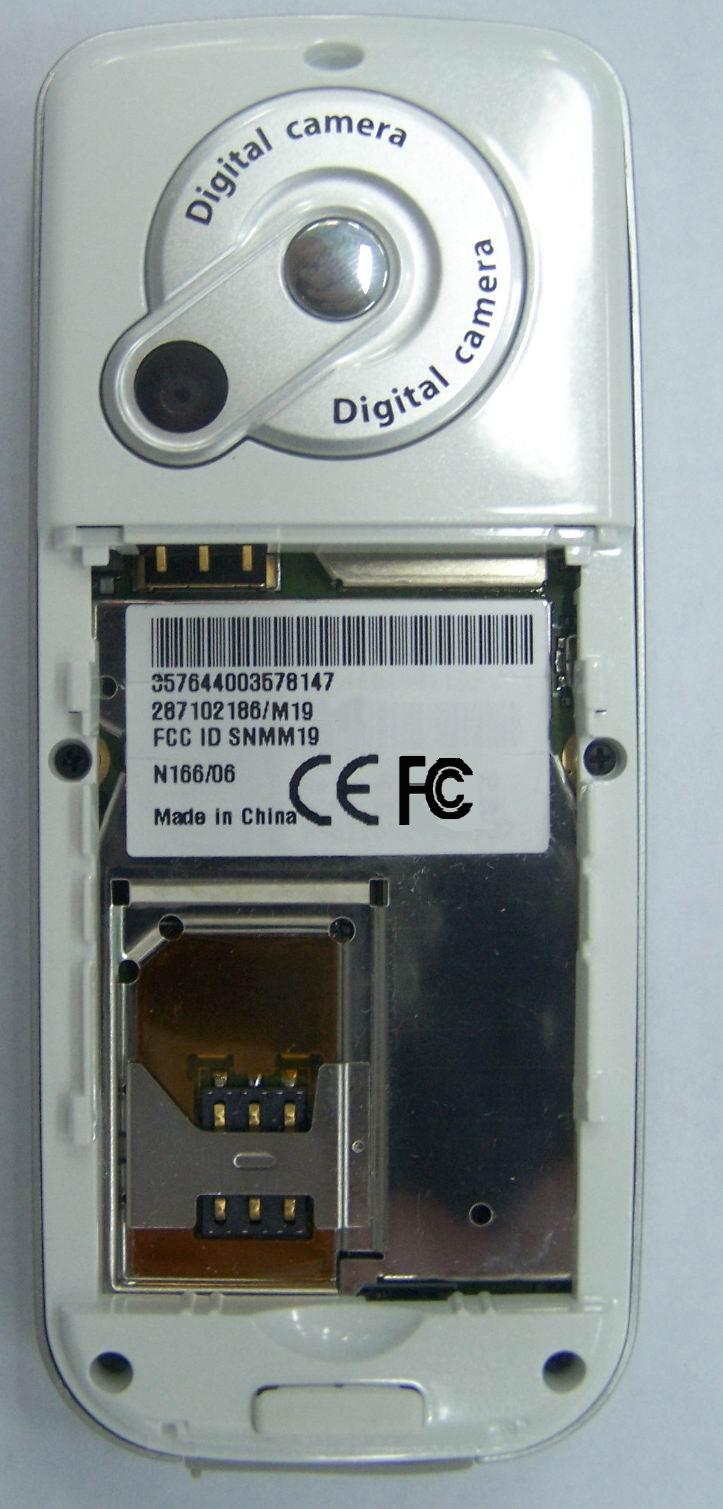
Internal Photos
With Shields Without Shields
Operational Description
Last Revition Product nameProject name M19 Product sculpt AppearanceSculpt Vertical board Dimension 106x44x15.2mm Weight 82g ( with batter y ) Network BIRD HANDSET PRODUCT SPEC BD-PD-M19 Last Revition BIRD HANDSET PRODUCT SPEC BD-PD-M19 Frequency EGSM850/PCS1900 Network model GSM PHASE2 Speech codec HR,FR,EFR Taking parametersStandby time up to 150 Talk time up to 2 Charging time 2hours Basic funtionLCD 128×160 TFT Camera 0.3M Ringer 16 Hand free Support Java supported WAP supported MMS supported Redial 50 Automatic redial not supported speed dial not supported International access button (+) Support Emergency call Support Anonymous mode Support Call Hold / Call Waiting Support Conference mode Support Call forward Support USSD Support SIM Application Tool Kit Support Advice of Charge (AoC) not supported Alternative Line Speech (ALS) Support GPRS data counter/Connection time not supported SMS Support Last Revition BIRD HANDSET PRODUCT SPEC BD-PD-M19 Clock saving / RTC backup Support Calendar Support Menu language Support Network Indicator Diode Not Support Network selection modes Support Contrast adjustment Not Support Reset option (Restore factory settings) SupportKeypad locking Support PIN number Support PIN number 2 Support Call barring (operated by network) Support Phone Code Support Auto-lock Support Multi-Alarm clocks not Support Calculator Support Notebook Support Game 1
RF Exposure Info
Report No.: SA950704L121Report Format Version 2.0.3 SAR TEST REPORT REPORT NO.: SA950704L12 MODEL NO.: M19 RECEIVED: Jul. 04, 2006 TESTED: Jul. 06 ~ 07, 2006 ISSUED: Jul. 17, 2006 APPLICANT: NINGBO BIRD CO., LTD ADDRESS: No. 999, Dacheng East Road, Fenghua City, Zhejiang, China ISSUED BY: Advance Data Technology Corporation LAB ADDRESS: No. 47, 14th Ling, Chia Pau Tsuen, Lin Kou Hsiang 244, Taipei Hsien, Taiwan, R.O.C. TEST LOCATION: No. 19, Hwa Ya 2 nd Rd., Wen Hwa Tsuen, Kwei Shan Hsiang, Taoyuan Hsien 333, Taiwan, R.O.C. This test report consists of 47 pages in total except Appendix. It may be duplicated completely for legal use with the approval of the applicant. It should not be reproduced except in full, without the written approval of our laboratory. The client should not use it to claim product endorsement by CNLA, A2LA or any government agencies. The test results in the report only apply to the tested sample. Report No.: SA950704L122Report Format Version 2.0.3 TABLE OF CONTENTS 1.CERTIFICATION.............................................................................................................3 2.GENERAL INFORMATION..............................................................................................4 2.1GENERAL DESCRIPTION OF EUT.................................................................................4 2.2GENERAL DESCRIPTION OF APPLIED STANDARDS...................................................5 2.3GENERAL INOFRMATION OF THE SAR SYSTEM.........................................................6 2.4GENERAL DESCRIPTION OF THE SPATIAL PEAK SAR EVALUATION.........................9 3.DESCRIPTION OF SUPPORT UNITS...........................................................................13 4.DESCRIPTION OF TEST POSITION AND CONFIGURATIONS....................................14 4.1DESCRIPTION OF ANTENNA LOCATION....................................................................14 4.2DESCRIPTION OF TEST POSITION.............................................................................15 4.2.1TOUCH/CHEEK TEST POSITION.................................................................................16 4.2.2TILT TEST POSITION...................................................................................................16 4.2.3BODY-WORN CONFIGURATION..................................................................................17 4.3DESCRIPTION OF ASSESSMENT POSITION..............................................................18 4.4DESCRIPTION OF TEST MODE...................................................................................19 4.5SUMMARY OF TEST RESULTS....................................................................................20 5.TEST RESULTS............................................................................................................22 5.1TEST PROCEDURES...................................................................................................22 5.2MEASURED SAR RESULTS.........................................................................................24 5.3SAR LIMITS..................................................................................................................30 5.4RECIPES FOR TISSUE SIMULATING LIQUIDS............................................................30 5.5TEST EQUIPMENT FOR TISSUE PROPERTY.............................................................34 6.SYSTEM VALIDATION..................................................................................................35 6.1TEST EQUIPMENT.......................................................................................................35 6.2TEST PROCEDURE.....................................................................................................36 6.3VALIDATION RESULTS................................................................................................38 6.4SYSTEM VALIDATION UNCERTAINTIES.....................................................................39 7.MEASUREMENT SAR PROCEDURE UNCERTAINTIES...............................................40 7.1PROBE CALIBRATION UNCERTAINTY........................................................................40 7.2ISOTROPY UNCERTAINTY..........................................................................................41 7.3BOUNDARY EFFECT UNCERTAINTY..........................................................................41 7.4PROBE LINEARITY UNCERTAINTY.............................................................................42 7.5READOUT ELECTRONICS UNCERTAINTY.................................................................42 7.6RESPONSE TIME UNCERTAINTY................................................................................42 7.7INTEGRATION TIME UNCERTAINTY...........................................................................43 7.8PROBE POSITIONER MECHANICAL TOLERANCE.....................................................44 7.9PROBE POSITIONING.................................................................................................44 7.10PHANTOM UNCERTAINTY...........................................................................................45 7.11DASY4 UNCERTAINTY BUDGET.................................................................................46 8.INFORMATION ON THE TESTING LABORATORIES....................................................47 APPENDIX A: TEST CONFIGURATIONS AND TEST DATA APPENDIX B: ADT SAR MEASUREMENT SYSTEM APPENDIX C: PHOTOGRAPHS OF SYSTEM VALIDATION APPENDIX D: SYSTEM CERTIFICATE & CALIBRATION Report No.: SA950704L123Report Format Version 2.0.3 1. CERTIFICATION PRODUCT: Dual Band GSM GPRS Mobile Phone MODEL: M19 BRAND: bird APPLICANT: NINGBO BIRD CO., LTD TEST DATE: Jul. 06 ~ 07, 2006 TEST SAMPLE: MASS-PRODUCTION STANDARDS:FCC Part 2 (Section 2.1093), RSS-102 FCC OET Bulletin 65, Supplement C (01-01) The above equipment have been tested by Advance Data Technology Corporation, and found compliance with the…
Text truncated - open the document above for the full version.
RF Exposure Info
1 APPENDIX A: TEST DATA Liquid Level Photo Tissue HSL835MHz D=151mm Tissue MSL835MHz D=155mm 2 Tissue HSL1900MHz D=155mm Tissue MSL1900MHz D=150mm 3 Date/Time: 2006/7/7 14:25:56 Test Laboratory: Advance Data Technology Right Head-Cheek-GSM850-CH128-Mode 1 DUT: Dual Band GSM GPRS Mobile Phone ; Type: M19 ; Test Frequency: 824.2 MHz Communication System: PCS 850 ; Frequency: 824.2 MHz ; Duty Cycle: 1:8.3 Phantom: SAM 12 Medium parameters used: f = 824.2 MHz; σ = 0.87 mho/m; ε r = 41.8; ρ = 1000 kg/m 3 ; Liquid level: 151 mm Phantom section: Right Section ; DUT test position : Cheek ; Modulation type: GMSK Antenna type : Internal Antenna ; Air temp. : 22.5 degrees ; Liquid temp. : 21.2 degrees DASY4 Configuration: - Probe: ET3DV6 - SN1687; ConvF(6.34, 6.34, 6.34) ; Calibrated: 2005/9/15 - Sensor-Surface: 4mm (Mechanical Surface Detection) - Electronics: DAE3 Sn510; Calibrated: 2005/8/17 - Phantom: SAM 12; Type: SAM V4.0; Serial: TP 1202 - Measurement SW: DASY4, V4.7 Build 44; Postprocessing SW: SEMCAD, V1.8 Build 171 Touch position - Low Channel 128/Area Scan (6x10x1): Measurement grid: dx=15mm, dy=15mm Maximum value of SAR (measured) = 0.783 mW/g Touch position - Low Channel 128/Zoom Scan (7x7x7) (7x7x7)/Cube 0: Measurement grid: dx=5mm, dy=5mm, dz=5mm Reference Value = 23.0 V/m Peak SAR (extrapolated) = 1.25 W/kg SAR(1 g) = 0.711 mW/g; SAR(10 g) = 0.458 mW/g Maximum value of SAR (measured) = 0.770 mW/g 4 Date/Time: 2006/7/7 14:43:55 Test Laboratory: Advance Data Technology Right Head-Cheek-GSM850-CH190-Mode 1 DUT: Dual Band GSM GPRS Mobile Phone ; Type: M19 ; Test Frequency: 836.6 MHz Communication System: PCS 850 ; Frequency: 836.6 MHz ; Duty Cycle: 1:8.3 Phantom: SAM 12 Medium parameters used: f = 836.6 MHz; σ = 0.89 mho/m; ε r = 41.7; ρ = 1000 kg/m 3 ; Liquid level: 151 mm Phantom section: Right Section ; DUT test position : Cheek ; Modulation type: GMSK Ant…
Text truncated - open the document above for the full version.
Contact Information
Applicant
Changlong Chen(Vice Manager)
Technical Contact
ADT (Shanghai) CorporationWallace Pan
[email protected]86 21 6465 9091
2F, Building C, No. 1618 Yishan Rd. · Shanghai · China
Non-Technical Contact
ADT (Shanghai) CorporationLily Liu
[email protected]86 21 6465 9091
Test Firm
BUREAU VERITAS ADT (Shanghai) CorporationZhaoqian YU
Technical Specifications
| # | Rule Parts | Frequency Range | Power Output | Emission | Tolerance |
|---|---|---|---|---|---|
| 2 | 24E | 1.85 GHz - 1.91 GHz | 390.00 mW | 300KGXW | 2.5 ppm |
Other Applications from Ningbo Bird Co., Ltd

SNM-5005
May 07, 2015Mobile phone
Equipment Class
PCE - PCS Licensed Transmitter held to ear
SNMS700
Nov 11, 2007Dual Band GSM GPRS Mobile Phone
Equipment Class
PCE - PCS Licensed Transmitter held to ear
SNMS701
Nov 08, 2007Dual Band GSM GPRS Mobile Phone
Equipment Class
PCE - PCS Licensed Transmitter held to ear
SNMC600
Sep 11, 2006CDMA 1X Digital Mobile Phone
Equipment Class
TNE - Licensed Non-Broadcast Transmitter Held to Ear
SNMS198P
Jul 02, 2006Dual Band GSM Mobile Phone
Equipment Class
PCE - PCS Licensed Transmitter held to ear