SRF0219082XXBluetooth Audio Streaming Headphone
BeCell Innovations Corp.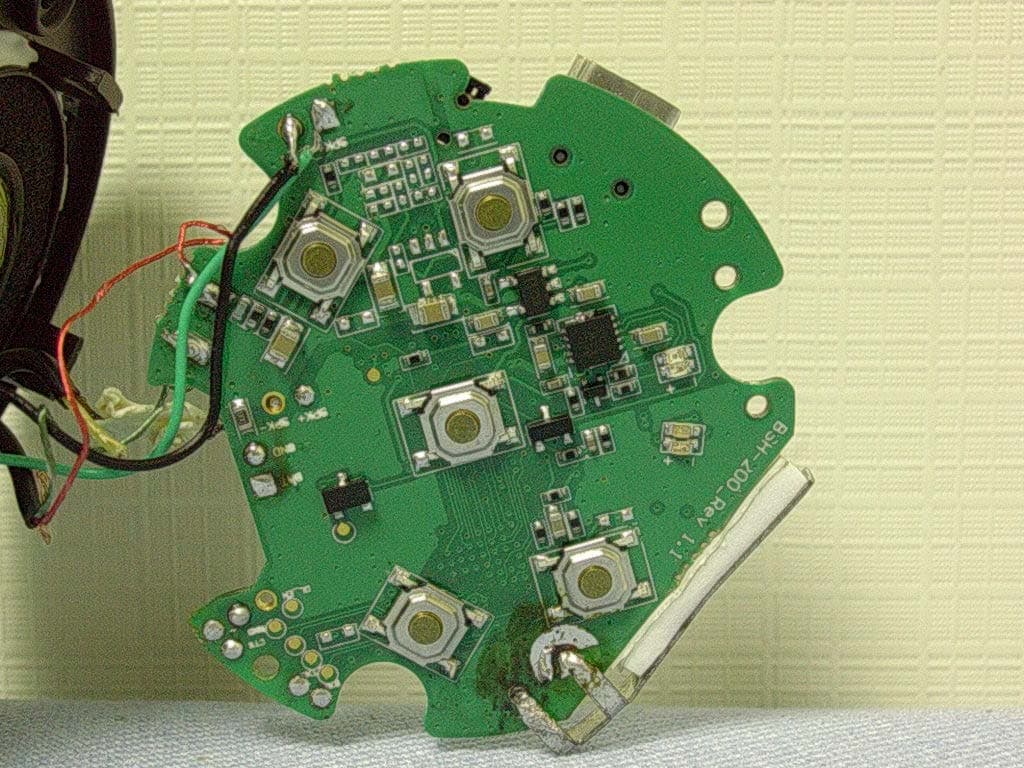
Click to zoom
Application Details
- Equipment Class
- DSS - Part 15 Spread Spectrum Transmitter
- Date of Grant
- Jul 04, 2006
- Application Purpose
- Original Equipment
- Date of Application
- Jul 04, 2006
- Equipment Note
- Bluetooth Audio Streaming Headphone
- Frequency Range
- 2402.00000000 - 2480.00000000
- Company
- BeCell Innovations Corp.
- Country
- Taiwan
Documents & Files
Document Text
Text extracted from the exhibit documents filed with the FCC. Open a document above to read the original.
Users Manual
Stereo Headphone Kit Bluetooth ™ Audio Stream Headphone & Dongle > User Manual i -- Copyright This publication, including all photographs, illustrations and software, is protected under interna- tional copyright laws, with all rights reserved. Neither this manual, nor any of the material con- tained herein, may be reproduced without written consent of the author. Copyright 2005 Version 1.0, July 2005 Disclaimer The information in this document is subject to change without notice. The manufacturer makes no representations or warranties with respect to the contents hereof and specifically disclaims any implied warranties of merchantability or fitness for any particular purpose. The manufacturer reserves the right to revise this publication and to make changes from time to time in the content hereof without obligation of the manufacturer to notify any person of such revision or changes. Trademark Recognition Bluetooth is a trademark of the Bluetooth SIG, Inc. (Special Interest Group). The Bluetooth trade- mark is owned by Bluetooth SIG, Inc. USA. BlueSoleil is a trademark of IVT Corporation. Winamp is a trademark of Nulsoft Incorporated. Windows Media Player is a trademark of Microsoft Corporation. Other product names used in this manual are the properties of their respective owners and are acknowledged. About This Manual This manual provides information for setting up and configuring the BSK200. This manual is intended for home users. Safety Information •Only use the supplied travel adapter. •Do not place anything on the power cord. Place the power cord where it will not be in the way of foot traffic. •Before cleaning the headset or transmitter, disconnect the travel charger. -- ii Conventions Used in this Manual The following conventions are used in this manual. NOTE ICON: P ROVIDES MORE INFORMATIN ON THE CURRENT TOPIC. I MPORTANT ICON: P ROVIDES IMPORTANT INFORMATION ON THE CURRENT TOPIC THAT MUST NOT BE OVERLOOKED. W ARNING ICON: A LERTS YOU TO A SITUATION THAT COULD CAUSE PERSONAL INJURY. iii -- -- iv Table of Contents Getting Started with the BSK200 ............................................................... 1 Unpacking and Checking the Contents ....................................................................... 1 Identifying Components ............................................................................................... 1 Headset Parts . . . . . . . . . . . . . . . . . . . . . . . . . . . . . . . . . . . . . . . . . . . . . . . . . . . . . . . . . . . . 1 Transmitter Parts . . . . . . . . . . . . . . . . . . . . . . . . . . . . . . . . . . . . . . . . . . . . . . . . . . . . . . . . . . 2 Headset Status LEDs Main Functions . . . . . . . . . . . . . . . . . . . . . . . . . . . . . . . . . . . . . . . . . 3 Transmitter Status LEDs Main Functions . . . . . . . . . . . . . . . . . . . . . . . . . . . . . . . . . . . . . . 4 Mode Switch . . . . . . . . . . . . . . . . . . . . . . . . . . . . . . . . . . . . . . . . . . . . . . . . . . . . . . . . . . . . . 4 Charging the Headset and Transmitter Batteries........................................................ 5 Charging the Headset with the USB Cable . . . . . . . . . . . . . . . . . . . . . . . . . . . . . . . . . . . . . . 5 Charging the Transmitter with the USB Cable . . . . . . . . . . . . . . . . . . . . . . . . . . . . . . . . . . . 6 Charging the Headset with the Travel Adapter . . . . . . . . . . . . . . . . . . . . . . . . . . . . . . . . . . 6 Charging the Transmitter with the Travel Adapter . . . . . . . . . . . . . . . . . . . . . . . . . . . . . . . . 7 Software and Driver Installation ................................................................. 9 Installing the IVT BlueSoleil™ Software ...................................................................... 9 Installing Drivers for the Transmitter.......................................................................... 13 Operation ................................................................................................. 17 Connecting the Transmitter to an Audio Device........................................................ 17 Pairing Devices.......................................................................................................... 18 Pairing the Headset and Transmitter . . . . . . . . . . . . . . . . . . . . . . . . . . . . . . . . . . . . . . . . . . 18 Pairing the Headset with the IVT BlueSoleil Program . . . . . . . . . . . . . . . . . . . . . . . . . . . . 19 Using the Headset with your Computer . . . . . . . . . . . . . . . . . . . . . . . . . . . . . . . . . . . . . . . 22 Pairing with a Bluetooth Enabled Phone . . . . . . . . . . . . . . . . . . . . . . . . . . . . . . . . . . . . . . 23 Headset Operation..................................................................................................... 24 Adjusting the Volume . . . . . . . . . . . . . . . . . . . . . . . . . . . . . . . . . . . . . . . . . . . . . . . . . . . . . 24 Skipping Tracks . . . . . . . . . . . . . . . . . . . . . . . . . . . . . . . . . . . . . . . . . . . . . . . . . . . . . . . . . 24 Appendix .................................................................................................. 25 Troubleshooting ......................................................................................................... 25 Resetting the Headset . . . . . . . . . . . . . . . . . . . . . . . . . . . . . . . . . . . . . . . . . . . . . . . . . . . . . 25 Headset and Transmitter LEDs Detailed Descriptions.............................................. 25 Headset LED . . . . . . . . . . . . . . . . . . . . . . . . . . . . . . . . . . . . . . . . . . . . . . . . . . . . . . . . . . . . 25 USB connector . . . . . . . . . . . . . . . . . . . . . . . . . . . . . . . . . . . . . . . . . . . . . . . . . . . . . . . . . . 26 Audio Jack . . . . . . . . . . . . . . . . . . . . . . . . . . . . . . . . . . . . . . . . . . . . . . . . . . . . . . . . . . . . . 26 Avai…
Text truncated - open the document above for the full version.
Cover Letter(s)
BeCell Innovations Corp. 12F-9 No. 7'9, Shin-Tai 5tb Rd Sec 1, Shih-Chih Taipei 221. Taiwan ('I) 02-86%-3320 02-8698-3321 Date: June 22,2006 Compliance Certification Services Certification Division 56 1 F Monkrey Road Morgan Hill, CA 95037 To whom it may concern: We, the undersigned, hereby authorize the Taiwan ofice of Compliance Engineering Services, Inc., d.b.a. Compliance Certification Services and hereafter referred to as CCS TW, to act on our behalf in all manners relating to application for equipment authorization, including signing of all documents relating to these matters. Any and d1 acts carried out by CCS TW on our behalf shall have the same effect as acts of our own. We, the undersigned, hereby certify that we are not subject to a denial of federal benefits, that includes FCC benefits, pursuant to Section 530 1 of the Anti-Drug Abuse Act of 1988,2 1 U.S .C. 853(a). In authorizing CCS TW as our agent, we still recognize that we are responsible to: Comply with the relevant provisions of the certification program; Make all necessary arrangements for the conduct of the evaluation, including provision for examining documentation and access to all areas, records (including internal audit reports) and personnel for the purposes of evaluation (e-g. testing, insption, asmsment, surveillance, reassessment) and resolution of complaints; Make claims regarding certification only in respect of the scope for which certification has been granted; Do not use our product certification in such a manner as to bring the Certification Division into disrepute and not make any statement regarding our product certification which the Certification Division may consider misleading or unauthorized; Upon suspension or cancellation of certification, discontinue use of all advertising matter that contains my reference thereto and return any certification documents as required by the Certification Divisiod; Use certification on1 y to indicate the products are certified as being in conformity with specified standards; g) Endeavor to ensure that no certificate or report nor any part thereof is used in a misleading manner; h) Ensure that my reference to our product certification in communication media such as documents, brochures or advertising, complies with the requirements of the Certification Division; i) Keep a record of all complaints made known to the us relating to the product compliance with requirements of the relevant standard and to make these records available to the Certification Division when requested; j) Take appropriate action with respect to such complaints and any deficiencies found in products or services that affect compliance with the requirements for certification; k) Document the actions taken. This authorization is valid until further written notice: from the applicant. Sincerely Yours, Josepll Fsii ~ioduct Manager BCe11 h{natjofi$ CDIT. Tel : 024698-3320 Fax: 02-8698-332 I E-Mall: [email protected] REMARK: J . This authorization letter will be: sent along with your application when filing with the Cert i fiat ion Division. 2. Please follow the format and type it on company letterhead and send original to us.
Cover Letter(s)
12F-9 No. 79, Shin-Tai 5~ Rd Sec I, Shih-Chih Taipi 221, Taiwan Date: June 22,206 Federal Cornmuni~tions Commission Authorization and Evaluation Division FCC ID: SRFQ219082XX Confidentialitv Reaues t Pursuant to Sections 0.457 and 0.459 of the Commission's Rules, the Applicant hereby requests confidential treatment of information accompanying this AppIication as outlined below: 1. Schematics 2. Operational Description 3. Block Diagram The above materials contain trade secrets and proprietary infomation not customarily relased to the public, The public disclosure of these matters might be hful to the Applicant and provide unjustified benefits to its competitors. The Applicant understands that pursuant to Rule 0.457, disclosure of this Application and all accompanying documentation will not be made before the date of the Grant for this application. Sincerely, 34 + 6k/zo0 6 hsep h F~id Product Mmwer BeCxIl lntlovations Corp. Td: 02-8698-3320 F~X: rn-~x-w~ E-Mail: [email protected]
Cover Letter(s)
Bluetooth Declaration Per FCC 15.247 Requirements 1 Output power and channel separation of a Bluetooth device in the different operating modes: The different operating modes (data-mode, acquisition-mode) of a Bluetooth device don’t influence the output power and the channel spacing. There is only one transmitter which is driven by identical input parameters concerning these two parameters. Only a different hopping sequence will be used. For this reason the check of these RF parameters in one op-mode is sufficient. 2 Frequency range of a Bluetooth device: Hereby we declare that the maximum frequency of this device is: 2402 – 2480 MHz. This is according the Bluetooth Core Specification V 1.0B (+ critical errata) for devices which will be operated in the USA. This was checked during the Bluetooth Qualification tests (Test Case: TRM/CA/04-E). Other frequency ranges ( e.g. for Spain, France, Japan) which are allowed according the Core Specification are not supported by this device. 3 Co-ordination of the hopping sequence in data mode to avoid simultaneous occupancy by multiple transmitters: Bluetooth units which want to communicate with other units must be organized in a structure called piconet. This piconet consist of max. 8 Bluetooth units. One unit is the master the other seven are the slaves. The master co-ordinates frequency occupation in this piconet for all units. As the master hop sequence is derived from it’s BD address which is unique for every Bluetooth device, additional masters intending to establish new piconets will always use different hop sequences. 4 Example of a hopping sequence in data mode: Example of a 79 hopping sequence in data mode: 40, 21, 44, 23, 42, 53, 46, 55, 48, 33, 52, 35, 50, 65, 54, 67, 56, 37, 60, 39, 58, 69, 62, 71, 64, 25, 68, 27, 66, 57, 70, 59, 72, 29, 76, 31, 74, 61, 78, 63, 01, 41, 05, 43, 03, 73, 07, 75, 09, 45, 13, 47, 11, 77, 15, 00, 64, 49, 66, 53, 68, 02, 70, 06, 01, 51, 03, 55, 05, 04 5 Equally average use of frequencies in data mode and behaviour for short transmissions: The generation of the hopping sequence in connection mode depends essentially on two input values: 1. LAP/UAP of the master of the connection 2. Internal master clock The LAP (lower address part) are the 24 LSB’s of the 48 BD_ADDRESS. The BD_ADDRESS is an unambiguous number of every Bluetooth unit. The UAP (upper address part) are the 24 MSB’s of the 48 BD_ADDRESS. The internal clock of a Bluetooth unit is derived from a free running clock which is never adjusted and is never turned off. For synchronisation with other units only offset are used. It has no relation to the time of the day. Its resolution is at least half the RX/TX slot length of 312.5 μs. The clock has a cycle of about one day (23h30). In most case it is implemented as 28 bit counter. For the deriving of the hopping sequence the entire LAP (24 bits), 4 LSB’s (4 bits) (Input 1) and the 27 MSB’s of the clock (Input 2) are used. With this input values different mathematical procedures (permutations, additions, XOR-operations) are performed to generate the sequence. This will be done at the beginning of every new transmission. Regarding short transmissions the Bluetooth system has the following behaviors: The first connection between the two devices is established, a hopping sequence was generated. For transmitting the wanted data the complete hopping sequence was not used. The connection ended. The second connection will be established. A new hopping sequence is generated. Due to the fact that the Bluetooth clock has a different value, because the period between the two transmission is longer (and it cannot be shorter) than the minimum resolution of the clock (312.5 μs). The hopping sequence will always differ from the first one. 6 Receiver input bandwidth and behaviors for repeated single or multiple packets: The input bandwidth of the receiver is 1 MHz. In every connection one Bluetooth device is the master and the other one is the slave. The master determines the hopping sequence (see chapter 5). The slave follows this sequence. Both devices shift between RX and TX time slot according to the clock of the master. Additionally the type of connection (e.g. single or multislot packet) is set up at the beginning of the connection. The master adapts its hopping frequency and its TX/RX timing according to the packet type of the connection. Also the slave of the connection will use these settings. Repeating of a packet has no influence on the hopping sequence. The hopping sequence generated by the master of the connection will be followed in any case. That means, a repeated packet will not be send on the same frequency, it is send on the next frequency of the hopping sequence. 7 Dwell time in data mode The dwell time of 0.3797s within a 30 second period in data mode is independent from the packet type (packet length). The calculation for a 30 second period is a follows: Dwell time = time slot length * hop rate / number of hopping channels *30s Example for a DH1 packet (with a maximum length of one time slot) Dwell time = 625 μs * 1600 1/s / 79 * 30s = 0.3797s (in a 30s period) For multislot packet the hopping is reduced according to the length of the packet. Example for a DH5 packet (with a maximum length of five time slots) Dwell time = 5 * 625 μs * 1600 * 1/5 *1/s / 79 * 30s = 0.3797s (in a 30s period) This is according the Bluetooth Core Specification V 1.0B (+ critical errata) for all Bluetooth devices. There for all Bluetooth devices comply with the FCC dwell time requirement in data mode. This was checked during the Bluetooth Qualification tests. The Dwell time in hybrid mode is measured and stated in the test report. 8 Channel Separation in hybrid mode The nominal channel spacing of the Bluetooth system is 1Mhz independent of the operating mode. The maximum “initial carrier frequency tolerance” which is allowed for Bluetooth is fcenter = 75 kHz. This was checked during the Bluetooth Qualification tests (Test Case:…
Text truncated - open the document above for the full version.
Cover Letter(s)
Compliant Portion Declaration Hong-Ming Chen Bluetooth Qualification Body (BQB) TUV Rheinland Taiwan Ltd. Applicant details Applicant BeCell Innovations Corp. Address 12F-9, No.79, Shin-Tai 5 th Rd. Sec. 1, Shih-Chih, Taipei 221, Taiwan Person responsible Joseph Fan Phone +886-2-8698 3320 #215 Fax +886-2-8698 3321 E-mail [email protected] Product information Product name Stereo Headset with Bluetooth wireless technology Product ID BSH-XXX, BSH-100, IBSH-200 Hardware version 1.2 Software version 1.0 Product category Mobile Phone Accessory Product type PROD Compliance Portion Declaration identification QPN Reference No. BQ10014876 CPD Reference No. CP10014876 Date of Assessment October 3 rd , 2005 Date of Listing October 3 rd , 2005 This Compliance Portion Declaration is only valid in conjunction with Annex A. On the basis of the reviewed submitted compliance folder I declare that the mandatory and optional features of Bluetooth Protocols and Bluetooth Profiles as described in Annex A are implemented in the above described Product. Taipei, October 3 rd , 2005 place, date signature Bluetooth is a trademark owned by Bluetooth SIG, Inc., USA and licensed to the member whose qualified product is listed in this certificate. Third-party brands and names are the property of their respective owners. CPD Ref. No: CP10014876 Page 1 of 2 Compliant Portion Declaration Bluetooth is a trademark owned by Bluetooth SIG, Inc., USA and licensed to the member whose qualified product is listed in this certificate. Third-party brands and names are the property of their respective owners. CPD Ref. No: CP10014876 Page 2 of 2 Annex A Integrated Pre-tested Components: #1 ZEEVO Single Chip Bluetooth Solution, Product ID: ZV4301, listed under Bluetooth Identifier: B01268 on 2003-11-06. #2 ImpulseSoft’s embedded Bluetooth solution, Product ID: iBTStack, listed under Bluetooth Identifier: B01642 on 2004-07-16. List of Bluetooth Protocols and Profiles supported by the IUT: A: RF Power Class II device, as defined in the integrated pre-tested component #1 B: BB As defined in the integrated pre-tested component #1. C: LM As defined in the integrated pre-tested component #1. D: L2CAP As defined in the integrated pre-tested component #2. E: SDP As defined in the integrated pre-tested component #2. K:1: GAP As defined in the integrated pre-tested component #2. K:5: SPP As defined in the integrated pre-tested component #2. AVCTP As defined in the integrated pre-tested component #2. AVDTP As defined in the integrated pre-tested component #2. GAVTP As defined in the General Audio Video Distribution Profile specification version 1.0, including all mandatory features. A2DP-Sink As defined in the Advanced Audio Distribution Profile specification version 1.0, including all mandatory features. AVRCP-Controller As defined in the A/V Remote Control Profile specification version 1.0, including all mandatory features and conditional features “Sending PASS THROUGH command in category 1”. Supported operation_id are “Forward” and “Backward”. HSP-HS As defined in the Headset Profile specification version 1.1, including all mandatory features and optional features HFP.3/9 & HFP.3/10. HFP-Unit As defined in the Hand Free Profile specification version 1.0, including all mandatory features and optional feature HFP.3/18a. Revision History: Rev. Date Changes CPD Ref. No. 0 Oct. 3 rd , 2005 First release CP10014876
External Photos
Compliance Certification Services Inc. Reference No.: 50602001 Report No: 60224105 Date of Issue: March 6, 2006 Page 1 Total Page: 1 Rev. 01 PHOTOGRAPHS OF EUT
Internal Photos
Compliance Certification Services Inc. Reference No.: 50602001 Report No: 60224105 Date of Issue: March 6, 2006 Page 1 Total Page: 3 Rev. 00 PHOTOGRAPHS OF EUT Compliance Certification Services Inc. Reference No.: 50602001 Report No: 60224105 Date of Issue: March 6, 2006 Page 2 Rev. 00 Compliance Certification Services Inc. Reference No.: 50602001 Report No: 60224105 Date of Issue: March 6, 2006 Page 3 Rev. 00
Parts List/Tune Up Info
SC-311 Bluetooth PIFA Soarcomm Technology Company ©2005 Soarcomm Technology Company. All rights reserved. 1 of 5 Specification for Approval : : SC-311 version-1.0 Soarcomm Technology Company Tel: 02-2625-2547 Fax: 02-8631-2232 Customer Approval SC-311 Bluetooth PIFA Soarcomm Technology Company ©2005 Soarcomm Technology Company. All rights reserved. 2 of 5 1, Electrical Specification Frequency Range 2.4-2.485 GHz Impedance 50 ohm Return Loss 10−≤dB Gain 2dBi Polarization Linear Radiation Omni 2, Mechanical Properties Material 0.3T Weight 0.7 g 3, Operating Temperature CC°+−°−6520 SC-311 Bluetooth PIFA Soarcomm Technology Company ©2005 Soarcomm Technology Company. All rights reserved. 3 of 5 4, Dimension: SC-311 Bluetooth PIFA Soarcomm Technology Company ©2005 Soarcomm Technology Company. All rights reserved. 4 of 5 5, Test Report 5.1 Vertical polarization, Gain pattern 5.2 Horizontal polarization, Gain pattern SC-311 Bluetooth PIFA Soarcomm Technology Company ©2005 Soarcomm Technology Company. All rights reserved. 5 of 5 5.3 Return Loss
Test Report
Compliance Certification Services Inc. Reference No.: 50602001-RP1 Report No.: 60224105-RP1 FCC ID: SRF0219082XX Date of Issue: March 6, 2006 Note: This report shall not be reproduced except in full, without the written approval of Compliance Certification Services Inc. This document may be altered or revised by Compliance Certification Services Inc. personnel only, and shall be noted in the revision section of the document. Page 1 Total Page: 49 Rev. 01 FCC 47 CFR PART 15 SUBPART C TEST REPORT For Bluetooth Audio Streaming Headphone Model: BSH-2XX (X=00-99) Trade Name: BeCell Issued to BeCell Innovation Corp. 12F-9, No. 79, Shin-Tai 5th Rd., Sec. 1, Shih-Chih, Taipei 221, Taiwan, R.O.C. Issued by Compliance Certification Services Inc. No. 81-1, Lane 210, Bade Rd. 2, Luchu Hsiang, Taoyuan Hsien, (338) Taiwan, R.O.C. TEL: 886-3-324-0332 FAX: 886-3-324-5235 Compliance Certification Services Inc. Reference No.: 50602001-RP1 Report No.: 60224105-RP1 FCC ID: SRF0219082XX Date of Issue: March 6, 2006 Page 2 Rev. 01 TABLE OF CONTENTS 1. TEST RESULT CERTIFICATION.................................................................................................3 2. EUT DESCRIPTION ........................................................................................................................4 3. TEST METHODOLOGY .................................................................................................................5 3.1 EUT CONFIGURATION.....................................................................................................................5 3.2 EUT EXERCISE.................................................................................................................................5 3.3 GENERAL TEST PROCEDURES..........................................................................................................5 3.4 FCC PART 15.205 RESTRICTED BANDS OF OPERATIONS.....................................................6 3.5 DESCRIPTION OF TEST MODES........................................................................................................6 4. INSTRUMENT CALIBRATION.....................................................................................................7 5. FACILITIES AND ACCREDITATIONS .......................................................................................8 5.1 FACILITIES ......................................................................................................................................8 5.2 EQUIPMENT.....................................................................................................................................8 5.3 LABORATORY ACCREDITATIONS AND LISTING...............................................................................8 5.4 TABLE OF ACCREDITATIONS AND LISTINGS....................................................................................9 6. SETUP OF EQUIPMENT UNDER TEST ....................................................................................10 6.1 SETUP CONFIGURATION OF EUT....................................................................................................10 6.2 SUPPORT EQUIPMENT ............................................................................................................10 7. FCC PART 15.247 REQUIREMENTS..........................................................................................11 7.1 PEAK POWER.................................................................................................................................11 7.2 BAND EDGES MEASUREMENT .............................................................................................14 7.3 PEAK POWER SPECTRAL DENSITY.................................................................................................19 7.4 FREQUENCY SEPARATION....................................................................................................22 7.5 NUMBER OF HOPPING FREQUENCY ...................................................................................24 7.6 TIME OF OCCUPANCY (DWELL TIME)................................................................................26 7.7 RADIO FREQUENCY EXPOSURE.....................................................................................................33 7.8 SPURIOUS EMISSIONS .............................................................................................................34 7.9 POWERLINE CONDUCTED EMISSIONS............................................................................................44 APPENDIX 1 PHOTOGRAPHS OF TEST SETUP ...........................................................................47 Compliance Certification Services Inc. Reference No.: 50602001-RP1 Report No.: 60224105-RP1 FCC ID: SRF0219082XX Date of Issue: March 6, 2006 Page 3 Rev. 01 1. TEST RESULT CERTIFICATION Applicant: BeCell Innovation Corp. 12F-9, No. 79, Shin-Tai 5th Rd., Sec. 1, Shih-Chih, Taipei 221, Taiwan, R.O.C. Equipment Under Test: Bluetooth Audio Streaming Headphone Trade Name: BeCell Model: BSH-2XX (X=00-99) Date of Test: June 28 ~ July 6, 2005 APPLICABLE STANDARDS STANDARD TEST RESULT FCC 47 CFR Part 15 Subpart C No non-compliance noted We hereby certify that: The above equipment was tested by Compliance Certification Services Inc. The test data, data evaluation, test procedures, and equipment configurations shown in this report were made in accordance with the procedures given in ANSI C63.4: 2003 and the energy emitted by the sample EUT tested as described in this report is in compliance with the requirements of FCC Rules Part 15.207, 15.209, 15.247. The test results of this report relate only to the tested sample EUT identified in this report. Approved by: Reviewed by: Harris W. Lai Susan Su Executive Vice President Section Manager of Linkou Laboratory Compliance Certification Services Inc. Compliance Certification Services Inc. Compliance Certification Services Inc. Reference No.: 50602001-RP1 Repo…
Text truncated - open the document above for the full version.
Test Setup Photos
Compliance Certification Services Inc. Reference No.: 50602001-RP1 Report No.: 60224105-RP1 FCC ID: SRF0219082XX Date of Issue: March 6, 2006 Page 47 Rev. 01 APPENDIX 1 PHOTOGRAPHS OF TEST SETUP Radiated Emission Set up Photos Compliance Certification Services Inc. Reference No.: 50602001-RP1 Report No.: 60224105-RP1 FCC ID: SRF0219082XX Date of Issue: March 6, 2006 Page 48 Rev. 01 Conduction Emission Set Up Photos Compliance Certification Services Inc. Reference No.: 50602001-RP1 Report No.: 60224105-RP1 FCC ID: SRF0219082XX Date of Issue: March 6, 2006 Page 49 Rev. 01 Conducted Set Up Photo
Contact Information
Applicant
Charlie Chen(Account Manager)
Test Firm
Compliance Certification Services Inc.Kurt Chen
Technical Specifications
| # | Rule Parts | Frequency Range | Power Output |
|---|---|---|---|
| 1 | 15C | 2.40 GHz - 2.48 GHz | 860.00 µW |
Other Applications from BeCell Innovations Corp.

SRFBCBTH200
May 10, 2005Headset with Bluetooth Technology
Equipment Class
DSS - Part 15 Spread Spectrum Transmitter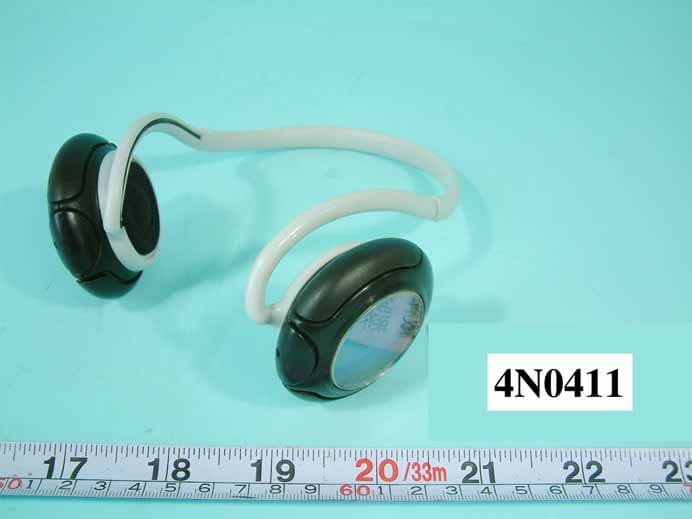
SRFBECELLBMH200
Dec 20, 2004BLUETOOTH MP3 HEADPHONE
Equipment Class
DSS - Part 15 Spread Spectrum Transmitter