SX9UHF1BRFID Transmitter
DLP Design, Inc.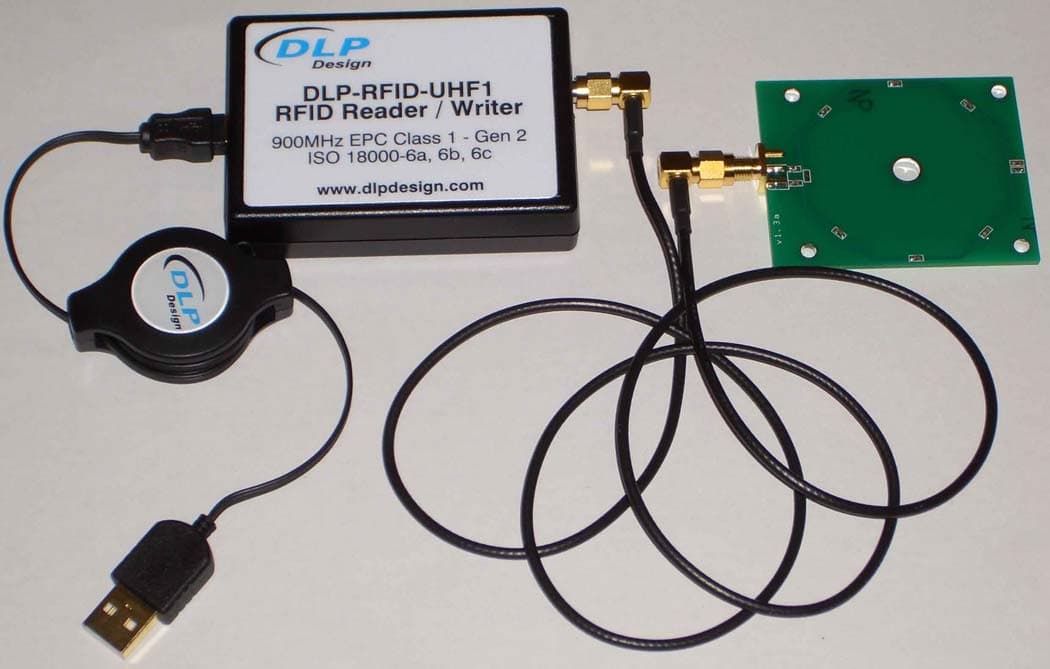
Click to zoom
Application Details
- Equipment Class
- DSS - Part 15 Spread Spectrum Transmitter
- Date of Grant
- Sep 04, 2009
- Application Purpose
- Original Equipment
- Date of Application
- Sep 04, 2009
- Equipment Note
- RFID Transmitter
- Frequency Range
- 902.60000000 - 927.40000000
- Company
- DLP Design, Inc.
- Country
- United States
Documents & Files
Document Text
Text extracted from the exhibit documents filed with the FCC. Open a document above to read the original.
Cover Letter(s)
1601 FM 1460, Suite B Round Rock, TX 78664 e-mail: [email protected] (512)244-3371 Fax: (512)244-1846 September 2, 2009 FCC ID: SX9UHF1B & 5675A-UHF1B In response to your comments regarding the application for certification of the device referenced above please find our response below: 1.) Either provide confirmation that this frequency hopping transmitter meets the Bluetooth industry standard or provide documentation (more detailed operational description) that it meets the following: (a) Pseudorandom hopping requirement in Section 15.247(a)(1) – describe how the hopping sequence is generated (just providing the hopping sequence is not enough), (b) Equal frequency use in Section 15.247(a)(1) – describe how each transmitter meets the requirement that its hopping channels are used equally on average (e.g., that each new transmission event begins on the next channel in the hopping sequence after the final channel used in the previous transmission event), (c) System receiver input bandwidth in Section15.247(a)(1) – describe how the associated receiver complies with the requirement that its input bandwidth (either IF or RF) matches the bandwidth of the transmitted signal, (d) System receiver hopping capability in Section 15.247(a)(1) – describe how the associated receiver has the ability to shift frequencies in synchronization with the transmitted signals, (e) Coordination capability in Section 15.247(h) – describe if this transmitter can recognize other users within the spectrum band so that it individually and independently chooses and adapts its hop sets to avoid hopping on occupied channels and how this is accomplished. (a) A cover letter has been provided explaining the hopping sequence and showing the order of channels selected (b) The transmitter by design uses the hop table provided by exhibit (a) in the order it is presented. Transmission begins where the hop sequence left off from the previous transmission. (c) The system is and RFID in which the tags are passive. The tags can be interrogated at any frequency close to the carrier frequency. The receive functionality of the system is based on backscatter and will only work while the TX function is tuned to that particular frequency. (d) The tags used with the system are passive tags. They will accept a broad range of frequencies since they are not active. (e) This transmitter does not sense for other carriers in the band. 2.) The external photo exhibit does not show the device’s overall appearance, the antenna used with the device (if any) and the controls available to the user on the device as specified in Section 2.1033(b)(7) of the FCC Rules. Please provide an external photo exhibit that shows the complete device (transmitter, antenna and antenna cable) and the USB and antenna connectors on the transmitter itself. A new external photo exhibit has been provided that shows the complete device (transmitter, antenna and antenna cable)and the USB and antenna connectors on the transmitter itself. 3.) The IC representative letter is not signed by the Canadian representative. Please submit an IC representative letter that is signed by the Canadian representative, Mike Zarycki. A signed IC letter from the Canadian representative has been provided. 4.) Please submit a separate RF safety exhibit for the FCC instead of making it a part of the test report. The FCC wants these exhibits to be separate from the test report and filed in the RF exposure exhibit location on their website. Also, please correct the calculation for this device. 915 MHz, when shown in GHz, is .915 GHz not as shown in the formula (915) calculating whether SAR evaluation is needed. The SAR Waiver Calculation has been pulled from the report and will be presented as a separate exhibit. The calculation has been corrected. 5.) I have several issues with the submitted user manual: (a) The “Features” section at the beginning of the user manual has different criteria that the “specifications” in Section 3.0 of the user manual. For example, what is the operating frequency...915 MHz or 902.6-927.4 MHz? Also the output power is listed as 13 dBm and 18 dBm in each of these sections?!?! Which is correct? (b) In Section 6.4 of the user manual, the statement about the module only being used with the approved antennas is missing (See second attachment, Section (a)(3)). (c) The user manual does not advise the OEM that statements from Section 15.105(a) or 15.105(b) must be included for connecting this device to a personal computer via the USB port. Using the USB port makes this device a PC peripheral subject to either Declaration of Conformity (DoC) as a Class B digital device peripheral or Verification as a Class A digital device peripheral. User information must be incorporated into the final user manual by the OEM and additional labeling of the final product is required for DoC. The user manual does not advise of these FCC requirements. a) The User Manual has been amended. “915 MHz reader” has been removed from the Features section. The output power has been corrected to 18 dBm. b) FCC Section 15.204 (c) An intentional radiator may be operated only with the antenna with which it is authorized. If an antenna is marketed with the intentional radiator, it shall be of a type which is authorized with the intentional radiator. An intentional radiator may be authorized with multiple antenna types. (4) Any antenna that is of the same type and of equal or less directional gain as an antenna that is authorized with the intentional radiator may be marketed with, and used with, that intentional radiator. No retesting of this system configuration is required. It is our interpretation of FCC Section 15.204 (c)(4) that any like or similar loop antenna that does not exhibit directional gain greater than the gain of the approved antenna may be used and we have modified the User Manual Section 6.4 to add this statement. c)The device can be used as a PC peripheral, but is not intended to be used in this …
Text truncated - open the document above for the full version.
RF Exposure Info
SAR WAIVER CALCULATION PROJECT # DATE 10147-10 August 17, 2009 COMMENT Center frequency of band utilized to calculate SAR waiver limit. SAR Waiver equation P=60/f (GHz) P=60/.915=65.5 mW Results Table Frequency (MHz) Power (dBm) Power (mW) Limit (mW) 902.6 18.1 64.5 65.5 915 18.0 63.1 65.5 927.4 17.4 55.0 65.5 Result: SAR NOT REQUIRED.
Contact Information
Applicant
Don Powrie(President/CEO)
Technical Contact
Professional Testing (EMI), Inc.Jason Anderson
[email protected]512-244-3371
1601 FM 1460 Suite B · Round Rock, Texas · United States
Non-Technical Contact
Professional Testing (EMI), Inc.Annette Rice
[email protected]512-244-3371
Test Firm
Professional TestingRobert McCollough Lenk
Technical Specifications
| # | Rule Parts | Frequency Range | Power Output |
|---|---|---|---|
| 1 | 15C | 902.6 MHz - 927.4 MHz | 64.50 mW |
Other Applications from DLP Design, Inc.
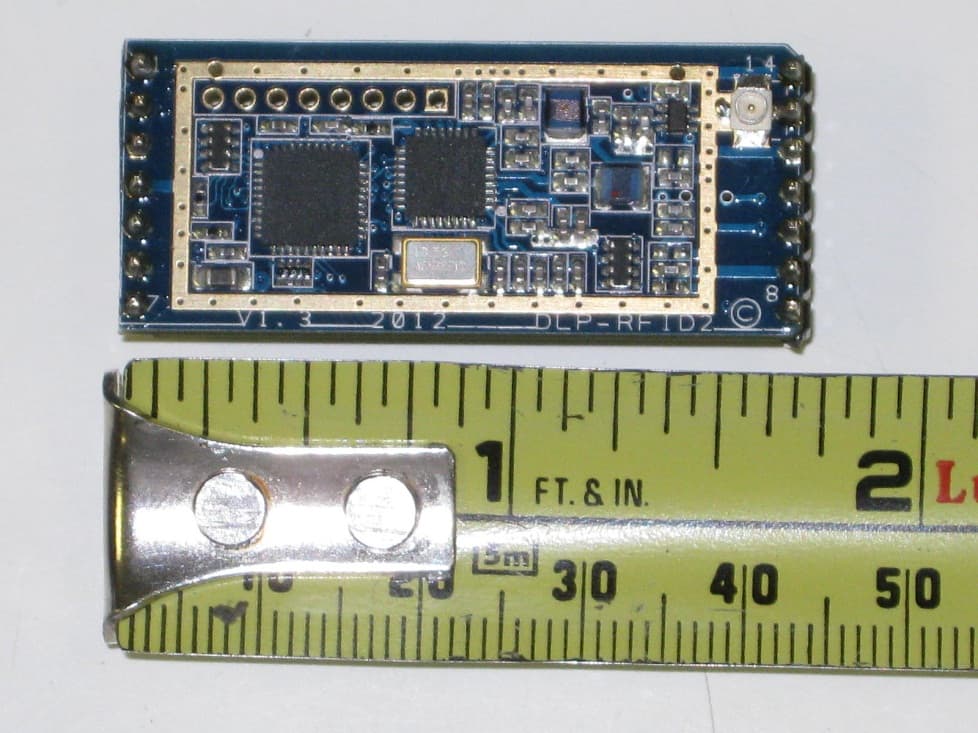
SX9RFID2
Jul 18, 2012RFID Device
Equipment Class
DXX - Part 15 Low Power Communication Device Transmitter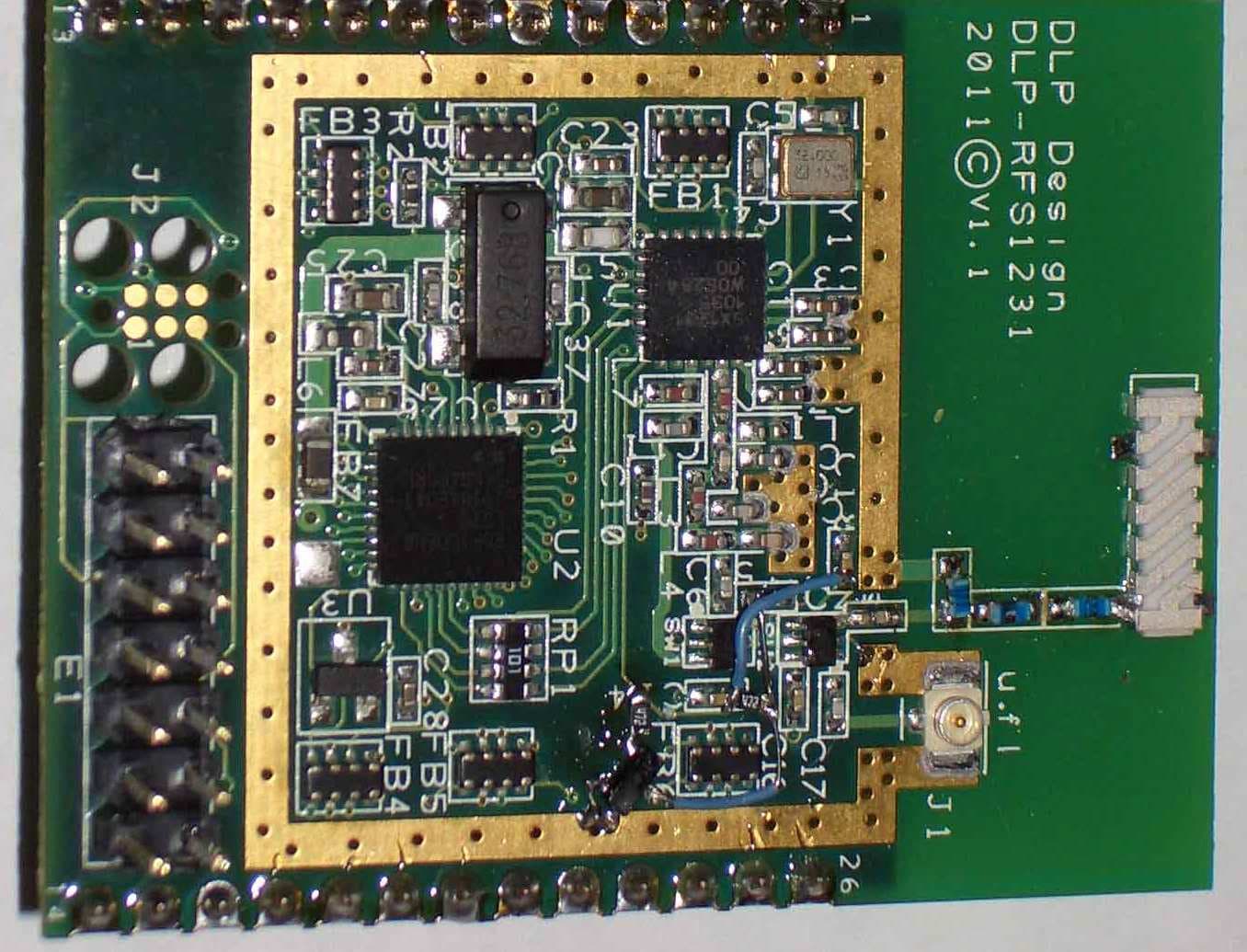
SX9RFS1
Feb 23, 2012Module
Equipment Class
DSS - Part 15 Spread Spectrum Transmitter