SXX-EDS8000Portable Bluetooth Party Speaker
Shenzhen KingBoard Technology Co., Ltd.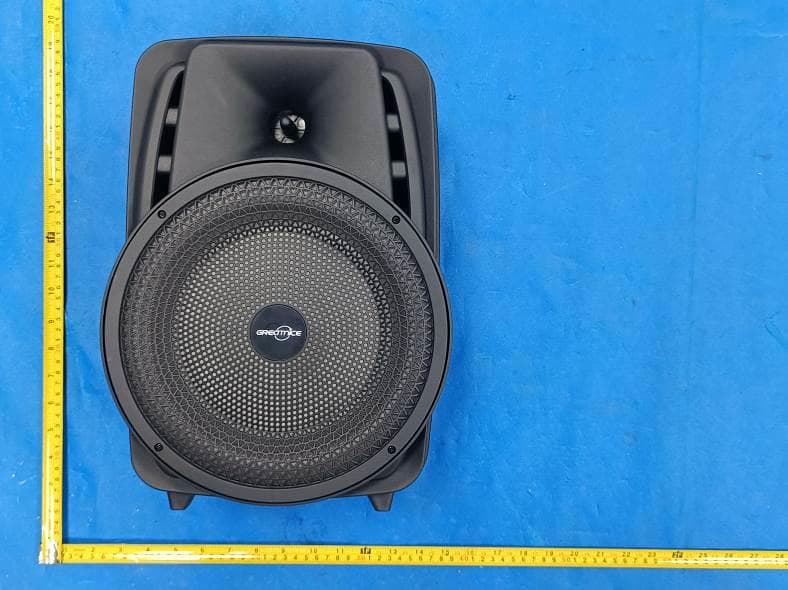
Click to zoom
Application Details
- Equipment Class
- DSS - Part 15 Spread Spectrum Transmitter
- Date of Grant
- Jul 18, 2023
- Application Purpose
- Original Equipment
- Date of Application
- Jul 18, 2023
- Equipment Note
- Portable Bluetooth Party Speaker
- Frequency Range
- 2402.00000000 - 2480.00000000
- Country
- China
Documents & Files
Document Text
Text extracted from the exhibit documents filed with the FCC. Open a document above to read the original.
Users Manual
Portable Bluetooth Party Speaker with Multi-Color Round Running Lights EDS-8000 Instruction Manual Please read carefully before use and keep for future reference 2 WARNING 1. Read these instructions. 2. Guard this manual. 3. Obey all alerts. 4. Follow all instructions. 5. WARNING: Do not store and operate this product near liquid. 6. Clean only with dry cloth. 7. Not store and not operate this product near any heat sources such as radiators and heat regis- ventilated place. 8. Not ignore the safety purpose of the polarized or grounding plug. A polarized plug has two blades being wider than the other. A grounding plug has two blades plus a round pin to ground. The wide blade or the third prong is intended to provide security into your outlet, consult an electrician to replace the outlet. 9. Protect all wires connected to this unit from being walked on or pinched, particularly at plugs and the point where the cord exits the unit. When unplugging from the electrical outlet, grasp the plug and do not pull the cord. 10. Disconnect the unit during lightning storms or when long period is to remain unused. level. Once all devices are connected, slowly increase the volume or level controls to achieve the proper position. 13. Before placement, installation, assembly or suspending any product, inspect all equipment, suspension, cabinets, transducers, brackets and associated equipment. Any missing component, corroded, deformed, or with non-nominal load can reduce the intensity, placement and arrange- and must be corrected immediately. Use only suitable equipment for the loading conditions of the installation and that any possibility of reducing term, unexpected overload, never exceed the capacity of the material or equipment. 14. Consult a licensed professional to install the equipment and make sure that all local, regional and national regulations related to security are understood and adhered to. apparatus has been damaged in any way, as if having the power cord or its damaged connector, or if the machine breaks contact with liquid or if any object is inserted in the unit or if the unit is exposed to rain or moisture, or if the unit does not operate normally, or has been dropped. CHARGE THE BATTERY FULLY BEFORE FIRST USE TO OPTIMIZE ITS LIFETIME PERFOR- MANCE. IMPORTANT SAFETY INSTRUCTIONS 3 IN THE BOX are present: • Wireless Speaker • Charging Cable • Wired Microphone • User Manual 8 KEY FEATURES • • Bluetooth® functionality allows you to wirelessly stream all your favorite music content from Bluetooth-enabled devices in high-quality audio • - sion on all your friends and family • Live out your inner rockstar dreams during a fun time of karaoke with friends and family thanks to the MIC input and included wired microphone • • Connect to other speaker True Wireless Speakers (TWS) allowing you to sync speakers from each other without any wires • Ensure the fun never has to stop by keeping the speaker at a full charge with the included USB charging cable • • Tune in on all your favorite local radio stations thanks to the FM tuner • Accessories included: User Manual, Wired Microphone, and USB charging cable 4 PRODUCT OVERVIEW 3. /- : In FM/USB/TF/Bluetooth mode, press to move to previous channel/track. Press and hold to decrease the volume 4. Play/Pause: In USB/TF/Bluetooth mode, press for play and pause. In FM mode, Press: station selection and frequency modulator alternation, press and hold for automatic search. Press and hold to change the RGB light mode 5. /+ : In FM/USB/TF/Bluetooth mode, press to move to next channel/track. Press and hold to increase the volume 6. DC-5V: DC-5V USB charge port 9. MIC-IN: Microphone-in 10. LED display 5 PAIRING A BLUETOOTH® DEVICE Use Bluetooth® mode to stream music from a Bluetooth® enabled player (e.g., smartphone or tablet device). A device must be paired with the unit before using them To pair a Bluetooth® enabled device with the Speaker, follow these steps: Make sure Bluetooth® is enabled on your device and that it is next to the unit before attempting to pair it. Turn on the Speaker. Use the Mode button to switch to Bluetooth® mode. Use your device to search for nearby Bluetooth devices. The Speaker will be listed as “EDS-8000”. (This function is usually in the Bluetooth® settings menu; refer to your device’s instruction manual to learn more.) Select “EDS-8000” from the list of found/available devices. The Speaker will make a You can now start playback on your connected device to begin streaming music to the speaker. TWS FUNCTION The Wireless speaker allows you to enjoy your favorite audio played over multiple speakers at the same time thanks to the included TWS function. To use the TWS function, follow these steps: Please purchase 2 Bluetooth speaker if you want to use TWS function. Turn on one speaker, connect the speaker via Bluetooth to your device. You should see ‘’EDS-8000” in the list over Bluetooth devices. Turn on the second speaker, press the M(TWS)button and hold it for 3 seconds. You will hear a tone sound, the devices are connected in TWS mode. You can now enjoy True Wireless Stereo (TWS)* for Stereo Audio Experience speaker. NOTE: You will hear a tone sound, the devices are disconnected from TWS mode. To connect TWS again repeat the steps above. 6 USB MODE The Wireless speaker allows you to enjoy your favorite audio played from external storage 1. Insert the USB into the USB port. /- or /+ button to skip to the previous or next song. Press and hold the /- or /+ button to decrease or increase the volume. NOTE: You can also enter USB mode by pressing the “MODE” button to cycle through modes. TF MODE The Wireless speaker allows you to enjoy your favorite audio played from external storage devices, such as TF cards. To use do so, follow these steps: 1. Insert the TF card into the TF card slot. /- or /+ button to skip to the previous or next song. Press and hold the /- or /+ button to decrease or increase the volume. NOTE: When a TF card is inserted…
Text truncated - open the document above for the full version.
External Photos
FCC ID: SXX-EDS8000 External Photos of the EUT Photo 1 Photo 2 Photo 3 FCC ID: SXX-EDS8000 Photo 4 Photo 5 Photo 6 FCC ID: SXX-EDS8000 Photo 7
ID Label/Location Info
MODEL:EDS-8000 Input:DC-5V Rechargeable Battery Included: 3.7V-1500mAh M/D: 4527-07-23 Made in China This device complies with Part 15 of the FCC Rules.Operation is subject to the following two conditions: (1)this device may not cause harmful interference,and (2)this device must accept any interference received, including interference that may cause undesired operation. FCC: SXX-EDS8000 Portable Bluetooth Party Speaker
Internal Photos
FCC ID: SXX-EDS8000 Internal Photos of the EUT Photo 1 Photo 2 Photo 3 FCC ID: SXX-EDS8000 Photo 4 Photo 5 Photo 6 FM RX Antenna FCC ID: SXX-EDS8000 Photo 7 Photo 8 Photo 9 BT PCB Antenna
RF Exposure Info
RF Exposure evaluation FCC ID: SXX-EDS8000 1.1. Applicable Standard According to §1.1307(b)(1), systems operating under the provisions of this section shall be operated in a manner that ensures that the public is not exposed to radio frequency energy level in excess of the Commission’s guidelines. According to §1.1310 and §2.1093 RF exposure requirement KDB447498 v06: Mobile and Portable Devices RF Exposure Procedures and Equipment Authorization Policies 1.2. Requirement According to KDB447498 D01 General RF Exposure Guidance v06 Section 4.3.1 Standalone SAR test exclusion considerations: “Unless specifically required by the published RF exposure KDB procedures, standalone 1-g head or body and 10-g extremity SAR evaluation for general population exposure conditions, by measurement or numerical simulation, is not required when the corresponding SAR Test Exclusion Threshold condition, listed below, is satisfied. These test exclusion conditions are based on source-based time-averaged maximum conducted output power of the RF channel requiring evaluation, adjusted for tune-up tolerance, and the minimum test separation distance required for the exposure conditions.22 The minimum test separation distance is determined by the smallest distance from the antenna and radiating structures or outer surface of the device, according to the host form factor, exposure conditions and platform requirements, to any part of the body or extremity of a user or bystander (see 5) of section 4.1). To qualify for SAR test exclusion, the test separation distances applied must be fully explained and justified by the operating configurations and exposure conditions of the transmitter and applicable host platform requirements, typically in the SAR measurement or SAR analysis report, according to the required published RF exposure KDB procedures. When no other RF exposure testing or reporting is required, a statement of justification and compliance must be included in the equipment approval, in lieu of the SAR report, to qualify for the SAR test exclusion. When required, the device specific conditions described in the other published RF exposure KDB procedures must be satisfied before applying these SAR test exclusion provisions; for example, handheld PTT two-way radios, handsets, laptops & tablets etc.23 “ [(max. power of channel, including tune-up tolerance, mW)/ (min. test separation distance, mm)] · [√f (GHz)] ≤ 3.0 for 1-g SAR and ≤ 7.5 for 10-g extremity SAR, where: • f (GHz) is the RF channel transmit frequency in GHz • Power and distance are rounded to the nearest mW and mm before calculation • The result is rounded to one decimal place for comparison • 3.0 and 7.5 are referred to as the numeric thresholds in the step 2 below The test exclusions are applicable only when the minimum test separation distance is ≤ 50 mm and for transmission frequencies between 100 MHz and 6 GHz. When the minimum test separation distance is < 5 mm, a distance of 5 mm according to 5) in section 4.1 is applied to determine SAR test exclusion. 1.3. Manufacturing tolerance GFSK (Peak) Channel Channel 0 Channel 39 Channel 78 Target (dBm) -2.0 -2.0 -2.0 Tolerance ±(dB) 1.0 1.0 1.0 π/4DQPSK (Peak) Channel Channel 0 Channel 39 Channel 78 Target (dBm) -3.0 -2.0 -2.0 Tolerance ±(dB) 1.0 1.0 1.0 Page 2 of 2 2. E v a l u a t i o n R e s u l t Evaluation Results Band/Mode f (GHz) Antenna Distance (mm) RF output power (including tune-up tolerance) SAR Test Exclusion Threshold SAR Test Exclusion dBm mW BT 2.450 5 -1.0 0.7943 0.2487<3.0 Yes 3. C o n c l u s i o n The measurement results comply with the FCC Limit per 47 CFR 2.1093 for the uncontrolled RF Exposure and SAR Exclusion Threshold per KDB 447498 v06 .....................End of Report.........................
Test Report
Inverted F Antenna Specification Summary ITEM ANT SPEC Model Name 2.4G ANT Horizontal Vertical 2400MHz 2400MHz2500MHz2400MHz2400MHz 2500MHz Center Frequency -1.73 -0.84 -0.68 -6.15 -3.70 -2.32 MAX. Gain -0.68dBi Polarization Horizontal and Vertical Azimuth Beam Pattern Omni-directional Impedance 50 Ohm Antenna Length 38.20mm Manufacture ZHUHAI JIELI TECHNOLOGY CO.,LTD Antenna Photo & Length (mm) Horizontal: 2400 MHz 2450 MHz 2500 MHz Power (dBm) Max: 0 Min: -40 Scale: 5/div Gain(dBi) Frequency (MHz) Max Min Avg 2400 -1.73178 -30.0815 -8.48713 2450 -0.845801 -38.5605 -7.88012 2500 -0.685586 -24.0318 -6.79139 Vertical: 2400 MHz 2450 MHz 2500 MHz Power (dBm) Max: 0 Min: -30 Scale: 5/div Gain(dBi) Frequency (MHz) Max Min Avg 2400 -6.1530 -24.1420 -13.0295 2450 -3.7054 -26.5836 -10.6700 2500 -2.32122 -30.4301 -9.70536 ANT Test Labs:Attestation of Global Compliance Co., Ltd.
Test Report
Shenzhen CTA Testing Technology Co., Ltd. Room 106, Building 1, Yibaolai Industrial Park, Qiaotou Community, Fuhai Street, Bao’an District, Shenzhen, China Shenzhen CTA Testing Technology Co., Ltd. Room 106, Building 1, Yibaolai Industrial Park, Qiaotou Community, Fuhai Street, Bao’an District, Shenzhen, China Tel:+86-755 2322 5875 E-mail:[email protected] Web:http://www.cta-test.cn FCC PART 15 SUBPART C TEST REPORT FCC PART 15.247 Report Reference No. ..................... : FCC ID. ............................................ : CTA23070300801 SXX-EDS8000 Compiled by ( position+printed name+signature) .. : File administrators Zoey Cao Supervised by ( position+printed name+signature) .. : Project Engineer Amy Wen Approved by ( position+printed name+signature) .. : RF Manager Eric Wang Date of issue ..................................... : Jul. 07, 2023 Testing Laboratory Name .............. : Shenzhen CTA Testing Technology Co., Ltd. Address ............................................ : Room 106, Building 1, Yibaolai Industrial Park, Qiaotou Community, Fuhai Street, Bao‘an District, Shenzhen, China Applicant’s name ............................ : Shenzhen KingBoard Technology Co., Ltd. Address ............................................ : Bldg. A, Dakanglong Industry Zone Dabuxiang, Guanlan ShenZhen, China Test specification ...........................: Standard ........................................... : FCC Part 15.247 Shenzhen CTA Testing Technology Co., Ltd. All rights reserved. This publication may be reproduced in whole or in part for non-commercial purposes as long as the Shenzhen CTA Testing Technology Co., Ltd. is acknowledged as copyright owner and source of the material. Shenzhen CTA Testing Technology Co., Ltd. takes no responsibility for and will not assume liability for damages resulting from the reader's interpretation of the reproduced material due to its placement and context. Test item description .....................: Portable Bluetooth Party Speaker Trade Mark ....................................... : Emerson, Naxa Manufacturer .................................... : Shenzhen KingBoard Technology Co., Ltd. Model/Type reference....................... : EDS-8000 Listed Models .................................. : GTS-1567, EDS-8001, EDS-8002, EDS-8003, EDS-8004, EDS-8005, EDS-8006, EDS-8007, EDS-8008, EDS-8009, EDS-8010, EDS-8050, EDS-8051, EDS-8052, EDS-8053, EDS-8054, EDS-8055, EDS-8056, EDS-8057, EDS-8058, EDS-8059, EDS-8060 Modulation ....................................... : GFSK, Π/4DQPSK Frequency .......................................... From 2402MHz to 2480MHz Rating ............................................... : DC 3.7V From Battery and DC 5.0V From external circuit Result................................................ : PASS Report No.: CTA23070300801 Page 2 of 44 Shenzhen CTA Testing Technology Co., Ltd. Room 106, Building 1, Yibaolai Industrial Park, Qiaotou Community, Fuhai Street, Bao’an District, Shenzhen, China Tel:+86-755 2322 5875 E-mail:[email protected] Web:http://www.cta-test.cn T E S T R E P O R T Equipment under Test : Portable Bluetooth Party Speaker Model /Type : EDS-8000 Listed Models : GTS-1567, EDS-8001, EDS-8002, EDS-8003, EDS-8004, EDS-8005, EDS-8006, EDS-8007, EDS-8008, EDS-8009, EDS-8010, EDS-8050, EDS-8051, EDS-8052, EDS-8053, EDS-8054, EDS-8055, EDS-8056, EDS-8057, EDS-8058, EDS-8059, EDS-8060 Applicant : Shenzhen KingBoard Technology Co., Ltd. Address : Bldg. A, Dakanglong Industry Zone Dabuxiang, Guanlan ShenZhen, China Manufacturer : Shenzhen KingBoard Technology Co., Ltd. Address : Bldg. A, Dakanglong Industry Zone Dabuxiang, Guanlan ShenZhen, China Test Result: PASS The test report merely corresponds to the test sample. It is not permitted to copy extracts of these test result without the written permission of the test laboratory. Report No.: CTA23070300801 Page 3 of 44 Shenzhen CTA Testing Technology Co., Ltd. Room 106, Building 1, Yibaolai Industrial Park, Qiaotou Community, Fuhai Street, Bao’an District, Shenzhen, China Tel:+86-755 2322 5875 E-mail:[email protected] Web:http://www.cta-test.cn Contents 1 T E S T S T A N D A R D S ................................................................. 4 2 S U M M A R Y ............................................................................ 5 2.1 General Remarks 5 2.2 Product Description 5 2.3 Equipment Under Test 5 2.4 Short description of the Equipment under Test (EUT) 5 2.5 EUT operation mode 6 2.6 Block Diagram of Test Setup 6 2.7 Related Submittal(s) / Grant (s) 6 2.8 Modifications 6 3 T E S T E N V I R O N M E N T .............................................................. 7 3.1 Address of the test laboratory 7 3.2 Test Facility 7 3.3 Environmental conditions 7 3.4 Summary of measurement results 8 3.5 Statement of the measurement uncertainty 8 3.6 Equipments Used during the Test 9 4 T E S T C O N D I TI O N S A N D R E S U L T S ........................................... 10 4.1 AC Power Conducted Emission 10 4.2 Radiated Emission 13 4.3 Maximum Peak Output Power 19 4.4 20dB Bandwidth 20 4.5 Frequency Separation 23 4.6 Number of hopping frequency 25 4.7 Time of Occupancy (Dwell Time) 27 4.8 Out-of-band Emissions 30 4.9 Antenna Requirement 37 5 T E S T S E T U P P H O T O S O F T H E E U T ......................................... 38 6 P H O T O S O F T H E E U T ........................................................... 39 Report No.: CTA23070300801 Page 4 of 44 Shenzhen CTA Testing Technology Co., Ltd. Room 106, Building 1, Yibaolai Industrial Park, Qiaotou Community, Fuhai Street, Bao’an District, Shenzhen, China Tel:+86-755 2322 5875 E-mail:[email protected] Web:http://www.cta-test.cn 1 T E S T S T A N D A R D S The tests were performed according to following standards: FCC Rules Part 15.247: Frequency Hopping, Direct Spread Spectrum and Hybrid Systems that are in operation within the bands of 902-928 MHz, 2400-2483.5 MHz, and 5725-5850 MHz. ANSI C63.10-2013: American Na…
Text truncated - open the document above for the full version.
Test Report
Report No.: CTA23070300801 Page 34 of 44 Shenzhen CTA Testing Technology Co., Ltd. Room 106, Building 1, Yibaolai Industrial Park, Qiaotou Community, Fuhai Street, Bao’an District, Shenzhen, China Tel:+86-755 2322 5875 E-mail:[email protected] Web:http://www.cta-test.cn Band-edge Measurements for RF Conducted Emissions: GFSK Left Band edge hoping off Right Band edge hoping off Left Band edge hoping on Right Band edge hoping on Report No.: CTA23070300801 Page 35 of 44 Shenzhen CTA Testing Technology Co., Ltd. Room 106, Building 1, Yibaolai Industrial Park, Qiaotou Community, Fuhai Street, Bao’an District, Shenzhen, China Tel:+86-755 2322 5875 E-mail:[email protected] Web:http://www.cta-test.cn π/4DQPSK Left Band edge hoping off Right Band edge hoping off Left Band edge hoping on Right Band edge hoping on Report No.: CTA23070300801 Page 36 of 44 Shenzhen CTA Testing Technology Co., Ltd. Room 106, Building 1, Yibaolai Industrial Park, Qiaotou Community, Fuhai Street, Bao’an District, Shenzhen, China Tel:+86-755 2322 5875 E-mail:[email protected] Web:http://www.cta-test.cn Pseudorandom Frequency Hopping Sequence TEST APPLICABLE For 47 CFR Part 15C section 15.247 (a) (1) requirement: Frequency hopping systems shall have hopping channel carrier frequencies separated by a minimum of 25 kHz or the 20 dB bandwidth of the hop-ping channel, whichever is greater. Alternatively, frequency hopping systems operating in the 2400–2483.5 MHz band may have hopping channel carrier frequencies that are separated by 25 kHz or two-thirds of the 20 dB bandwidth of the hopping channel, whichever is greater, provided the systems operate with an output power no greater than 125 mW. The system shall hop to channel frequencies that are selected at the system hopping rate from a pseudo randomly ordered list of hopping frequencies. Each frequency must be used equally on the average by each transmitter. The system receivers shall have input bandwidths that match the hop-ping channel bandwidths of their corresponding transmitters and shall shift frequencies in synchronization with the transmitted signals. EUT Pseudorandom Frequency Hopping Sequence Requirement The pseudorandom frequency hopping sequence may be generated in a nice-stage shift register whose 5 th and 9 th stage outputs are added in a modulo-two addition stage. And the result is fed back to the input of the first stage. The sequence begins with the first one of 9 consecutive ones, for example: the shift register is initialized with nine ones. ● Number of shift register stages:9 ● Length of pseudo-random sequence:29-1=511 bits ● Longest sequence of zeros:8(non-inverted signal) An example of pseudorandom frequency hopping sequence as follows: Each frequency used equally one the average by each transmitter. The system receiver have input bandwidths that match the hopping channel bandwidths of their corresponding transmitter and shift frequencies in synchronization with the transmitted signals. Report No.: CTA23070300801 Page 37 of 44 Shenzhen CTA Testing Technology Co., Ltd. Room 106, Building 1, Yibaolai Industrial Park, Qiaotou Community, Fuhai Street, Bao’an District, Shenzhen, China Tel:+86-755 2322 5875 E-mail:[email protected] Web:http://www.cta-test.cn 4.9 Antenna Requirement Standard Applicable For intentional device, according to FCC 47 CFR Section 15.203, an intentional radiator shall be designed to ensure that no antenna other than that furnished by the responsible party shall be used with the device. And according to FCC 47 CFR Section 15.247 (c), if transmitting antennas of directional gain greater than 6dBi are used, the power shall be reduced by the amount in dB that the directional gain of the antenna exceeds 6dBi. Refer to statement below for compliance The manufacturer may design the unit so that the user can replace a broken antenna, but the use of a standard antenna jack or electrical connector is prohibited. Further, this requirement does not apply to intentional radiators that must be professionally installed. Antenna Connected Construction The maximum gain of antenna was -0.68 dBi. Remark:The antenna gain is provided by the customer , if the data provided by the customer is not accurate, Shenzhen CTA Testing Technology Co., Ltd. does not assume any responsibility. Report No.: CTA23070300801 Page 38 of 44 Shenzhen CTA Testing Technology Co., Ltd. Room 106, Building 1, Yibaolai Industrial Park, Qiaotou Community, Fuhai Street, Bao’an District, Shenzhen, China Tel:+86-755 2322 5875 E-mail:[email protected] Web:http://www.cta-test.cn 5 T e s t S e t u p P h o t o s o f t h e E U T Report No.: CTA23070300801 Page 39 of 44 Shenzhen CTA Testing Technology Co., Ltd. Room 106, Building 1, Yibaolai Industrial Park, Qiaotou Community, Fuhai Street, Bao’an District, Shenzhen, China Tel:+86-755 2322 5875 E-mail:[email protected] Web:http://www.cta-test.cn 6 P h o t o s o f t h e E U T Report No.: CTA23070300801 Page 40 of 44 Shenzhen CTA Testing Technology Co., Ltd. Room 106, Building 1, Yibaolai Industrial Park, Qiaotou Community, Fuhai Street, Bao’an District, Shenzhen, China Tel:+86-755 2322 5875 E-mail:[email protected] Web:http://www.cta-test.cn Report No.: CTA23070300801 Page 41 of 44 Shenzhen CTA Testing Technology Co., Ltd. Room 106, Building 1, Yibaolai Industrial Park, Qiaotou Community, Fuhai Street, Bao’an District, Shenzhen, China Tel:+86-755 2322 5875 E-mail:[email protected] Web:http://www.cta-test.cn Report No.: CTA23070300801 Page 42 of 44 Shenzhen CTA Testing Technology Co., Ltd. Room 106, Building 1, Yibaolai Industrial Park, Qiaotou Community, Fuhai Street, Bao’an District, Shenzhen, China Tel:+86-755 2322 5875 E-mail:[email protected] Web:http://www.cta-test.cn Report No.: CTA23070300801 Page 43 of 44 Shenzhen CTA Testing Technology Co., Ltd. Room 106, Building 1, Yibaolai Industrial Park, Qiaotou Community, Fuhai Street, Bao’an District, Shenzhen, China Tel:+86-755 2322 5875 E-mail:[email protected] Web:http://www.cta-test.cn Report No.: CTA230703…
Text truncated - open the document above for the full version.
Test Setup Photos
FCC ID: SXX-EDS8000 Test Setup Photos of the EUT
Contact Information
Applicant
Qin Hong Huang(Manager)
Test Firm
SHENZHEN CTA TESTING TECHNOLOGY CO., LTD.Eric Wang
[email protected]+86 755 2322 5875
Technical Specifications
| # | Rule Parts | Frequency Range | Power Output |
|---|---|---|---|
| 1 | 15C | 2.40 GHz - 2.48 GHz | 800.00 µW |
Other Applications from Shenzhen KingBoard Technology Co., Ltd.
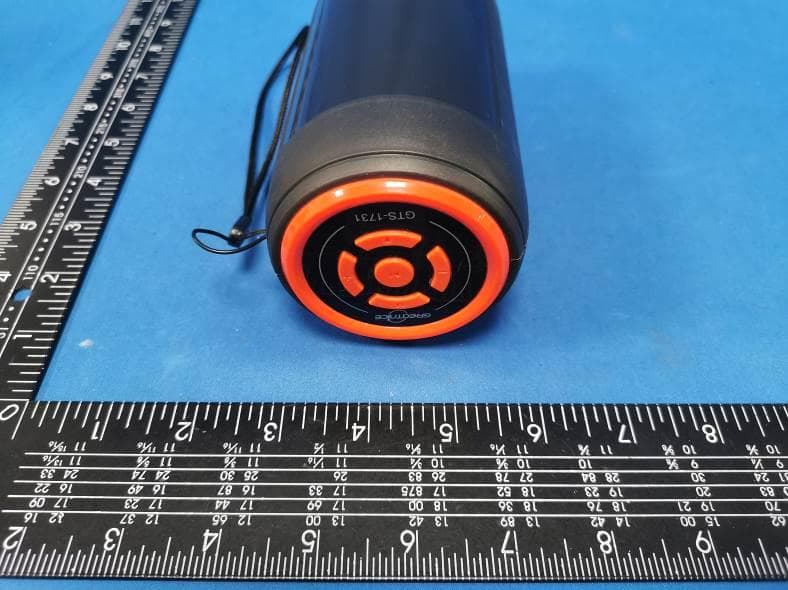
SXX-KTS1731
Jun 27, 2023portable speaker
Equipment Class
DSS - Part 15 Spread Spectrum Transmitter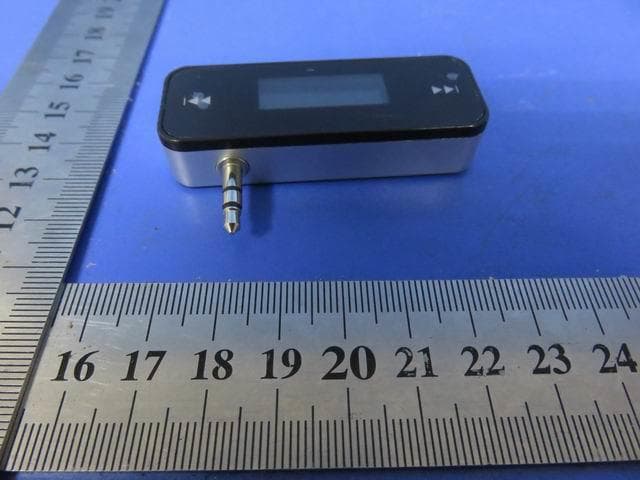
SXXKF-100
Jan 04, 2016FM transmitter
Equipment Class
DXX - Part 15 Low Power Communication Device Transmitter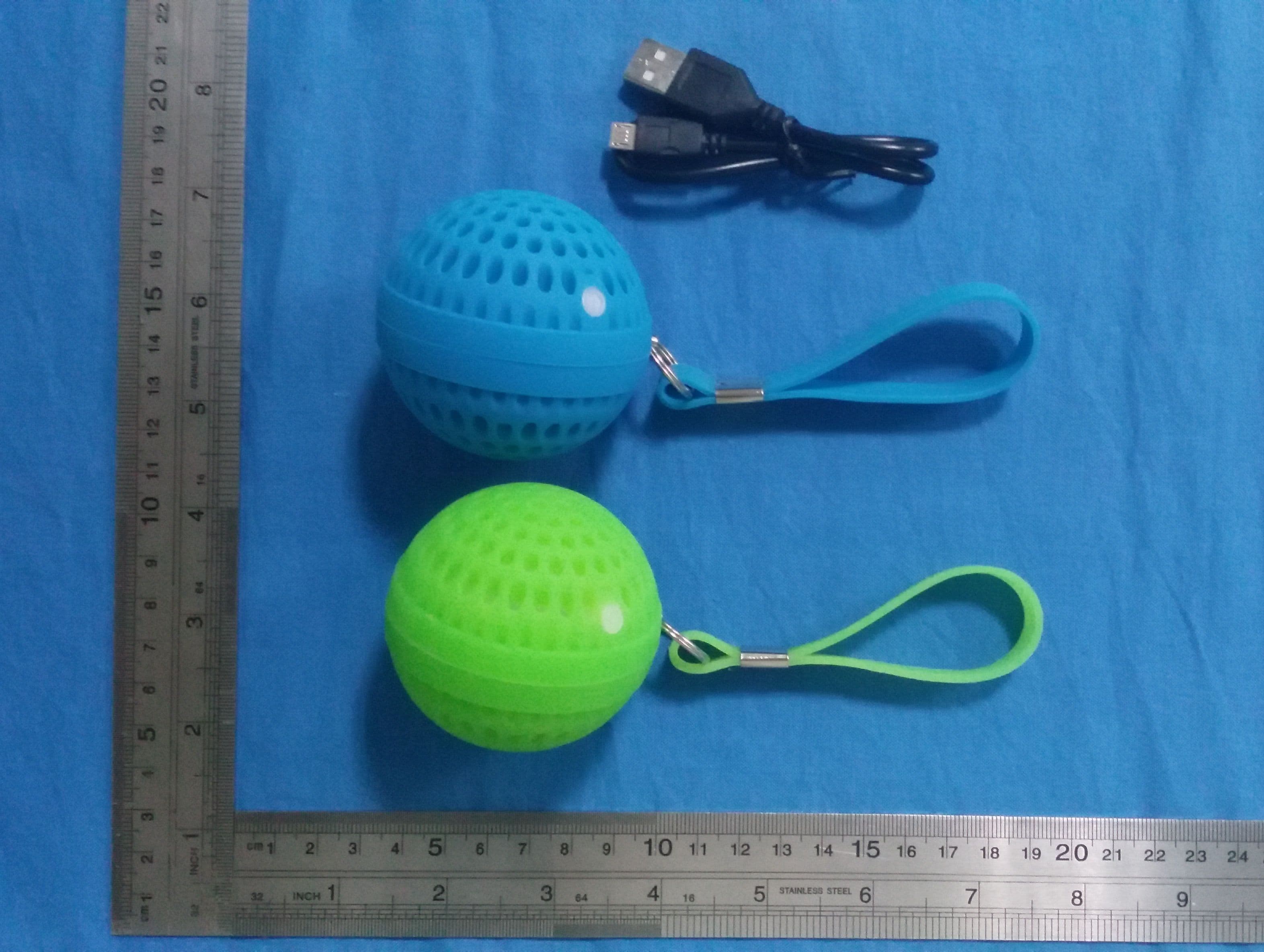
SXXKTS-41
Sep 23, 2015Bluetooth Speaker
Equipment Class
DSS - Part 15 Spread Spectrum Transmitter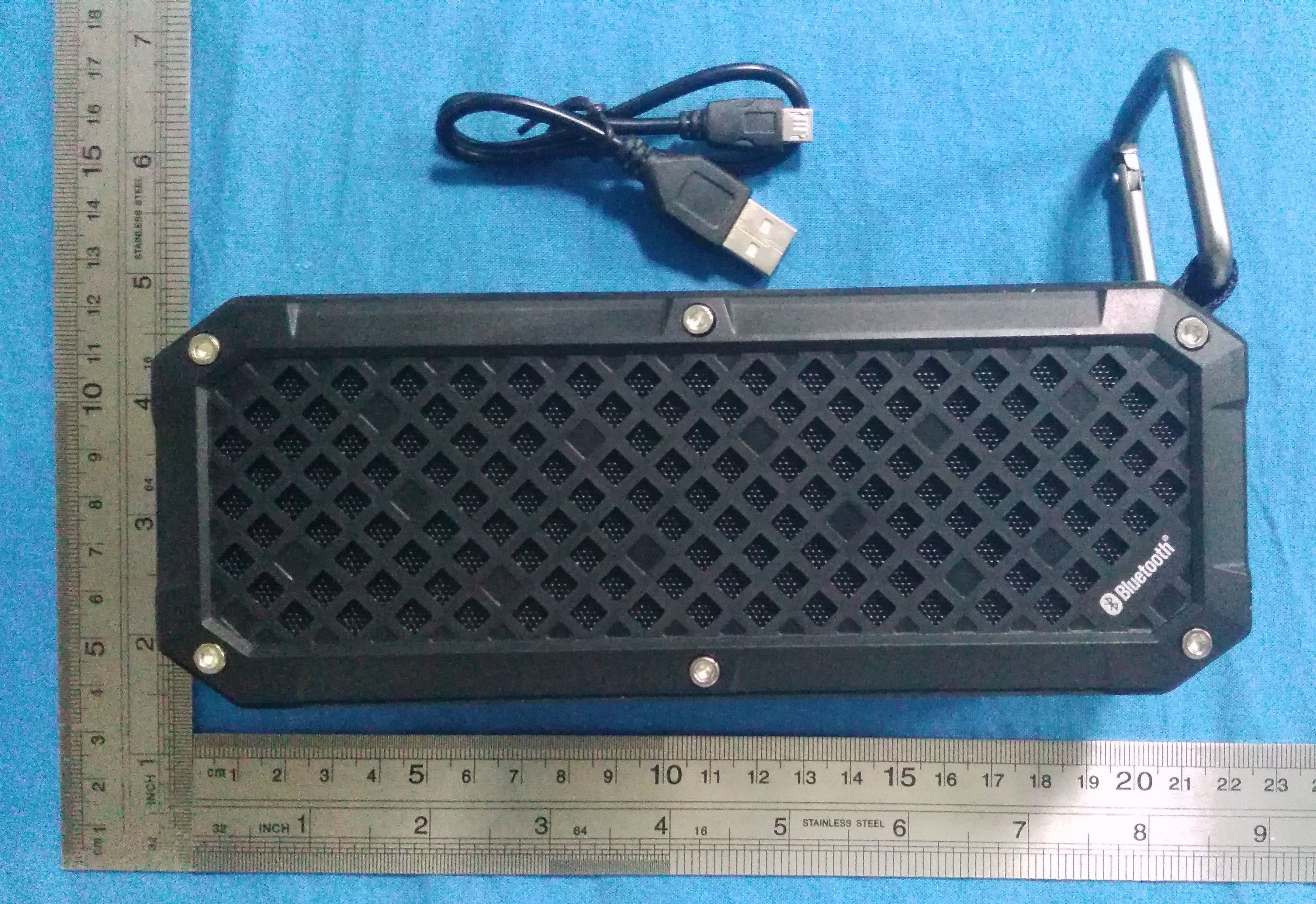
SXXKTS-2003
Sep 23, 2015Bluetooth Speaker
Equipment Class
DSS - Part 15 Spread Spectrum Transmitter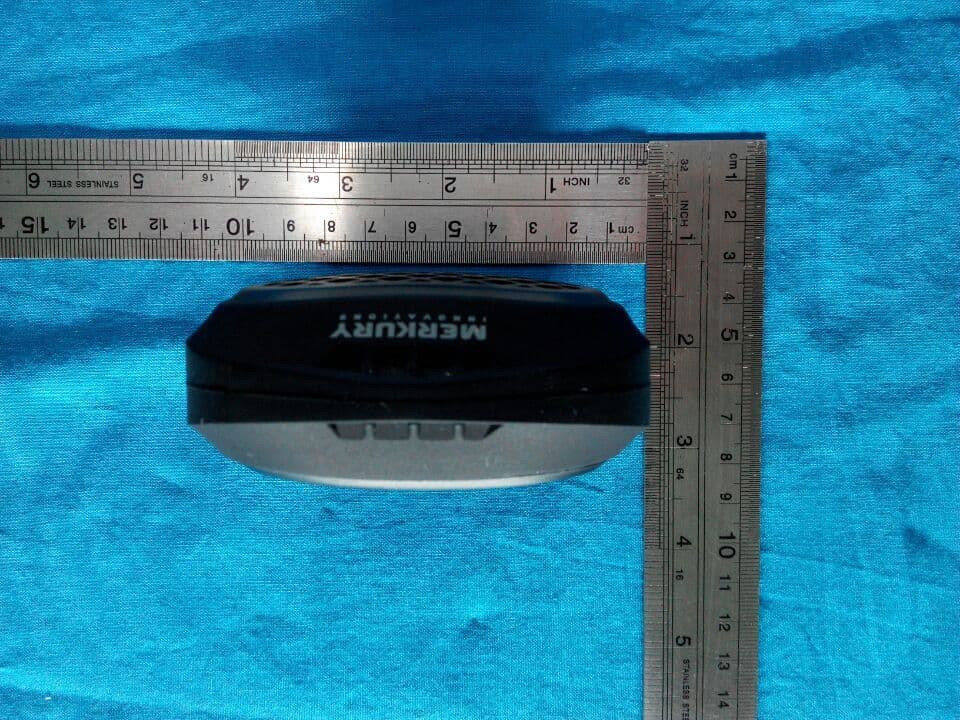
SXXKTS-86
Jul 29, 2015Bluetooth Speaker
Equipment Class
DSS - Part 15 Spread Spectrum Transmitter