THX-LFBT1-01A personal handheld biometric security device
Privaris Inc.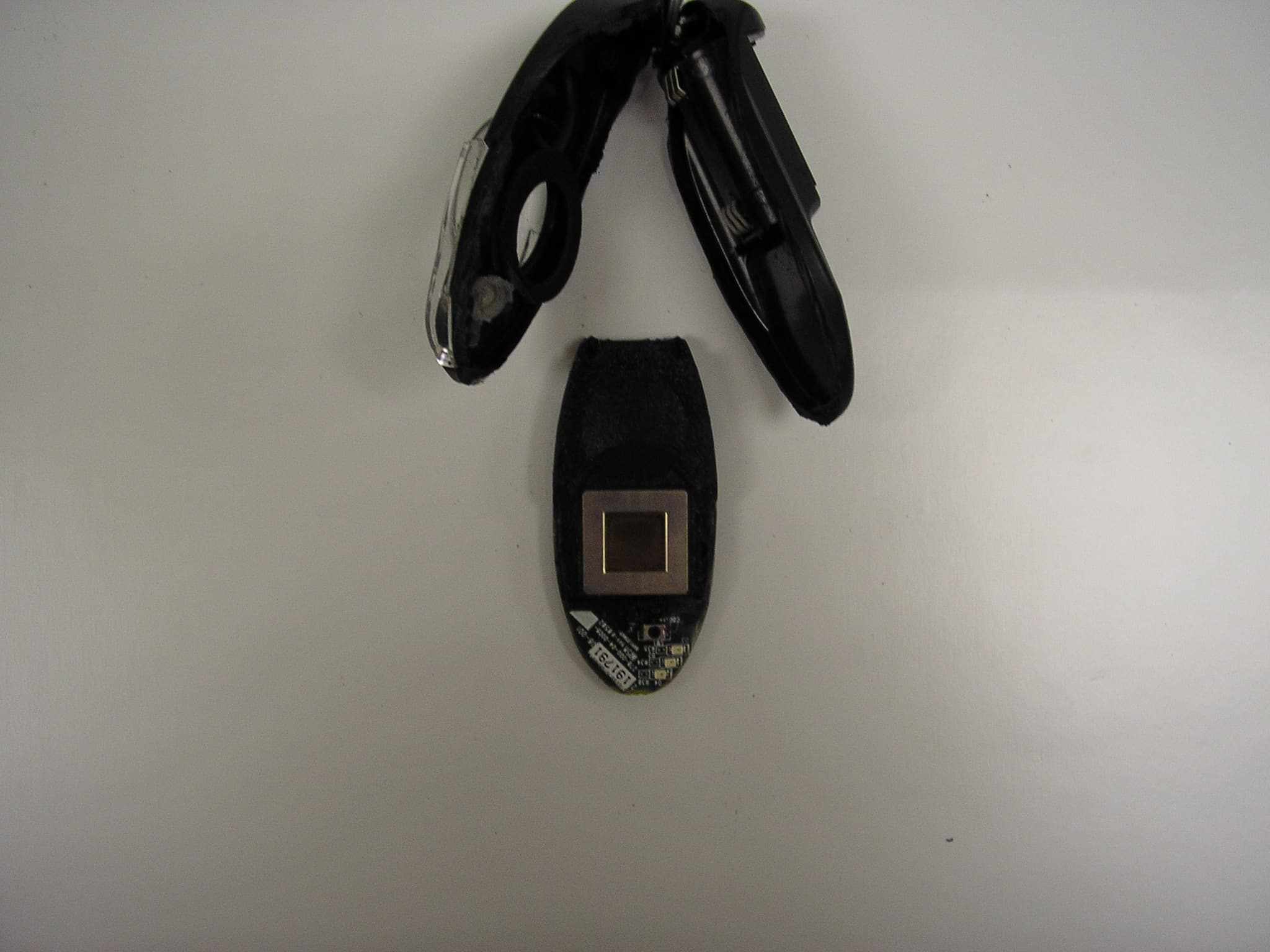
Click to zoom
Application Details
- Equipment Class
- DSS - Part 15 Spread Spectrum Transmitter
- Date of Grant
- Nov 06, 2005
- Application Purpose
- Original Equipment
- Date of Application
- Nov 06, 2005
- Equipment Note
- A personal handheld biometric security device
- Frequency Range
- 2402.00000000 - 2480.00000000
- Company
- Privaris Inc.
- Country
- United States
Documents & Files
Document Text
Text extracted from the exhibit documents filed with the FCC. Open a document above to read the original.
Users Manual
BPID™ LFBT Security Device USER MANUAL AND LICENSING AGREEMENT VERSION 1.4 www.privaris.com Privaris BPID™ LFBT Security Device, V1.4 Congratulations on receiving your new BPID™ Security Device. Record your device’s unique Bluetooth™ address here: __ __ : __ __ : __ __ : __ __ : __ __ : __ __ The Bluetooth™ address is found on the back of your device. It is a 12 character string of letters and numbers separated by colons. For optimal results and convenience using your device, it is important that you read this manual. In addition to instructions for proper device usage, information is included on the device itself - how it works, its personal privacy features, troubleshooting guidelines, and answers to frequently asked questions. IMPORTANT. READ BEFORE USING FOR SUCCESSFUL DEVICE OPERATION FOLLOW THESE GUIDELINES: Ensure that fingers are free of excessive dirt or grease. Clean fingers with a tissue, or on a clean article of clothing. You do not need to wash your hands prior to device use. Always attempt to place your finger on the fingerprint sensor in the same position in which you placed it during the enrollment process - the Center Position. Never press hard or squeeze the device. Press just enough to make solid contact with the sensor. Always keep your finger flat and level with the device when placing it on the fingerprint sensor. The knuckle should never be raised or bent. ©2005 Privaris, Inc. 1 Privaris BPID™ LFBT Security Device, V1.4 1. WHAT IS A BPID™ SECURITY DEVICE? 3 OVERVIEW 3 DEVICE DIAGRAM 3 APPLICATIONS 4 2. USAGE INSTRUCTIONS 5 STEP 1: ACTIVATION 5 STEP 2: USING YOUR DEVICE 5 - FACILITY ACCESS 5 - COMPUTER OR NETWORK LOGON 6 3. BATTERY REPLACEMENT 7 BATTERY LEVEL INDICATORS 7 CHANGING THE BATTERY 7 4. SECURITY & PERSONAL PRIVACY 8 5. HOW IT WORKS 9 ENROLLMENT 9 T VERIFICATION 9 TRANSMISSION 9 6. GENERAL TROUBLESHOOTING 10 7. FACILITY ACCESS TROUBLESHOOTING 14 8. COMPUTER/NETWORK LOGON TROUBLESHOOTING 15 9. FREQUENTLY ASKED QUESTIONS 18 10. CUSTOMER SERVICE 20 11. WARRANTY 21 12. LICENSING AGREEMENT 22 13. PERMISSIONS 25 2 Privaris BPID™ LFBT Security Device, V1.4 1. WHAT IS A BPID™ SECURITY DEVICE? Overview A BPID™ Security Device is a wireless, biometric personal identification device that provides identity verification using fingerprint biometrics. Because no two fingerprints are identical, biometric verification significantly heightens security levels by ensuring that the intended and authorized user of the device is the only person for whom the device will function. The BPID™ device uses fingerprints to verify its user’s identity before granting access to a specific resource. It works in much the same way that a remote control is used to operate a television or a garage door, but instead requires the authorized user’s fingerprint to “unlock” and operate the device. Device Diagram Figure 1: Front of Device Figure 2: Back of Device 3 Privaris BPID™ LFBT Security Device, V1.4 The BPID™ Security Device’s design is simple and user-friendly. The device has four components: Lights: A green, yellow and red light help to prompt the user through device operation and communicate to the user what mode the device is in. Power Button: Turns the device on and off Fingerprint Sensor: Scans a user’s fingerprint and either grants or denies access to a particular resource. Battery Compartment: Located under a sliding cover. The cover is removed using the battery release. Applications The BPID™ Security Device replaces standard forms of identity verification. Examples of possible applications include the use of a BPID™: In place of a proximity (prox) card for access through a door or gate In place of a key to access a home, garage or automobile In place of a password to access a computer or network In place of a driver’s license, passport, or corporate ID card to verify an individual’s identity In place of a credit card to purchase items without having to swipe a traditional credit card or sign for the purchase. 4 Privaris BPID™ LFBT Security Device, V1.4 2. USAGE INSTRUCTIONS Step 1: Activation In order to activate a BPID™ Security Device you must be enrolled in the device. Enrollment is the device issuance process and is typically managed by an organization’s issuing authority, such as the Information Technology Department, Security Office, or Human Resources Department. Enrollment initializes the device and “marries” it to its owner. During enrollment, users are asked to place their finger on the device several times in order for the fingerprint sensor to scan and securely store their print’s features. Once enrolled in a device, it is activated and ready for use. Step 2: Using Your Device FACILITY ACCESS (secured doorways or gated entrances): 1. Open the device’s clear plastic flip-cover. 2. Click the round gray Power Button once. -A blinking yellow light will indicate that the device is on and is awaiting a finger. 3. With the yellow light blinking, place an enrolled finger on the device’s fingerprint sensor in a position used during enrollment. -A solid yellow light will indicate that the device is scanning your finger. 4. A solid green light indicates that your fingerprint and your identity have been successfully verified. 5. With the green light still on, touch the tip of your device to the device reader located at the doorway or access point. 6. Your device will wirelessly transmit your programmed credentials to the access point. 7. Access to the facility is permitted. 8. Press the power button to turn off the device. If you forget, it will power off automatically after approximately 10 seconds. 5 Privaris BPID™ LFBT Security Device, V1.4 COMPUTER OR NETWORK LOGON: 1. Ensure that the computer or network is powered on. 2. Ensure that the computer has a Bluetooth™ adaptor. 3. Open the device’s clear plastic flip-cover. 4. Double-click the round gray Power Button. -The green light will continually blink. 5. The device will be detected by a properly configured com…
Text truncated - open the document above for the full version.
Users Manual
PRIVARIS LICENSING AGREEMENT READ THE TERMS AND CONDITIONS OF THIS LICENSE AGREEMENT (“AGREEMENT”) CAREFULLY BEFORE OPENING THIS PACKAGE. THE SOFTWARE APPLICATIONS AND THE ACCOMPANYING USER DOCUMENTATION CONTAINED IN THIS PACKAGE ARE COPYRIGHTED AND ARE LICENSED (NOT SOLD) TO YOU IN ACCORDANCE WITH THE TERMS OF THIS AGREEMENT. BY OPENING THIS PACKAGE, YOU AGREE TO BE BOUND BY THE TERMS OF THIS AGREEMENT. IF YOU DO NOT AGREE TO BE BOUND BY THE TERMS OF THIS AGREEMENT, THEN YOU MUST PROMPTLY RETURN THIS PACKAGE, IN UNOPENED FORM, AND YOU WILL RECEIVE A REFUND OF YOUR MONEY. 1. Generally. This Agreement represents the entire agreement between you, the end user (either in your individual capacity or as an authorized agent of an otherwise legally-recognized organization), and Privaris, Inc. (“Licensor”) relating to the software that is pre-installed on the hardware product(s) (“Hardware”) enclosed within this package, as well as all documentation related thereto (collectively, the “Software”). This Agreement supersedes any prior proposal, representation, or understanding between you and Licensor related to the Software. This is a legally-binding agreement and governs the conditions under which you and/or your organization may use the Software. 2. Term . This Agreement is effective on your opening of this package and shall continue until terminated as set forth in this Agreement. You may terminate this Agreement at any time by returning the Hardware and all copies of the Software to Licensor. Licensor may terminate this Agreement on the breach by you of any term of this Agreement, including without limitation your failure to pay any applicable fees described in this Agreement. On any such termination, you shall return to Licensor the Hardware and all copies of the Software. 3. Grant of Licenses . Licensor grants you the personal, nontransferable, nonsublicensable and nonexclusive right and license to execute the Software (in its executable, object-code form only) on the Hardware for the sole purpose of serving your personal needs or the internal needs of your business. You shall not assign, sublicense, transfer, pledge, lease, rent, or share your rights under this Agreement, whether by contract, operation or law or otherwise. Any use, copying, or distribution of the Software not expressly authorized by this Agreement shall automatically terminate your right and license hereunder. This grant shall be limited to use of the Software with the Hardware in accordance with the terms of this Agreement. 4. Trade Secret Protection . The Software contains substantial trade secrets of Licensor, and you shall employ reasonable security precautions to maintain the confidentiality of such trade secrets. You shall not "unlock," decompile, or reverse-assemble the binary or object code portions or versions of the Software, as the terms are generally used in the computer industry. 5. Fees . The fees for the use of the Software in accordance with this Agreement consist of the initial license fee that is incorporated as part of the purchase price of the Hardware purchased by you from Licensor, its authorized resellers or its authorized licensees. The dollar amount of such fees and the terms of payment are specified in the product invoice separately furnished to you. You shall pay such fees to Licensor in accordance with the terms of such product invoice. 6. Limited Warranty . Licensor warrants that the Software will, for a period of one (1) year following its delivery to you, be in good working order and will conform in all material respects to Licensor's published specifications. Licensor does not warrant that the operation of the Software will be uninterrupted or error-free, or that the functionality of the Software will meet your individualized requirements. The foregoing warranty does not cover repair for damages, malfunctions, or service failures caused by (1) actions of any non-Licensor personnel, your failure to follow Licensor's installation, operation, or maintenance instructions, (3) attachment to or incorporation in the Software of non- Licensor products not supported or otherwise authorized by Licensor, or (4) or any factor beyond Licensor's control, including fire, explosion, lightning, pest damage, power surges or failures, strikes or labor disputes, water, acts of God, the elements, war, terrorism, civil disturbances, acts of civil or military authorities or the public enemy, transportation facilities, fuel or energy shortages, or acts or omissions of communications carriers. EXCEPT FOR THE WARRANTIES SET FORTH IN THIS SECTION 6, THE SOFTWARE IS LICENSED "AS IS," AND LICENSOR DISCLAIMS ANY AND ALL OTHER WARRANTIES, WHETHER EXPRESS OR IMPLIED, INCLUDING, WITHOUT LIMITATION, ANY IMPLIED WARRANTIES OF MERCHANTABILITY, QUALITY, FITNESS FOR A PARTICULAR PURPOSE, ACCURACY, OR INTERFERENCE WITH YOUR ENJOYMENT OF THE SOFTWARE OR OF NON-INFRINGEMENT. YOUR SOLE REMEDY AGAINST LICENSOR, ITS AFFILIATES, SUBCONTRACTORS, AND REPRESENTATIVES FOR LOSS OR DAMAGE CAUSED BY ANY FAILURE OF THE SOFTWARE TO OPERATE IN CONFORMITY WITH THIS WARRANTY, REGARDLESS OF THE FORM OF ACTION, WHETHER IN CONTRACT OR TORT, INCLUDING NEGLIGENCE, STRICT LIABILITY OR OTHERWISE, SHALL BE (1) THE REPAIR OR REPLACEMENT OF THE SOFTWARE, PROVIDED THAT SUCH SOFTWARE IS RETURNED IN ACCORDANCE WITH THE CONDITIONS PROVIDED HEREIN OR (2) IF SUCH REPAIR CANNOT BE MADE OR AN EQUIVALENT REPLACEMENT CANNOT BE PROVIDED, THE REFUND OF AMOUNTS PREVIOUSLY PAID BY YOU BETWEEN DISCOVERY OF THE FAILURE OF THE SOFTWARE TO OPERATE IN CONFORMITY WITH THIS WARRANTY AND THE RETURN OF THE SOFTWARE AS REQUIRED BY THIS AGREEMENT. 7. Limitations on Liability . IN NO EVENT SHALL LICENSOR BE LIABLE FOR INCIDENTAL, INDIRECT, SPECIAL, OR CONSEQUENTIAL DAMAGES, OR FOR LOST PROFITS, SAVINGS, OR REVENUES OF ANY KIND, OR FOR LOST DATA OR DOWNTIME, REGARDLESS OF WHETHER LICENSOR HAS BEEN ADVISED OF THE POSSIBILITY OF SUCH DAMAGES. THE CUMULATIVE LIABILITY OF LICENSOR TO YOUR…
Text truncated - open the document above for the full version.
Block Diagram
Figure 1. Block Diagram of Test Configuration Anritsu (Bluetooth Installed) LFBT1 (EUT)
Cover Letter(s)
DOC-FCC009 4/14/2005 Page 1 of 2 FEDERAL COMMUNICATIONS COMMISSION - FCC FORM 731 APPLICATION FOR EQUIPMENT AUTHORIZATION Approved by OMB 3060 - 0934 Expires 02/28/2005 Item 1. Applicant's complete, legal business name: Privaris, Inc. Item 2. Applicant's mailing address Line 1: 675 Peter Jefferson Parkway Line 2: Suite 150 City: Charlottesville State: VA Country (if foreign address): USA Zip/Postal Code: 22911 Item 3. FCC ID: THX-LFBT1-01 Grantee code: THX Equipment Product Code (14 characters maximum): LFBT1-01 Item 4. Person at the applicant's address to receive grant or for contact: First Name: Michael Last Name: Cherniawski Telephone: (434) 244-4207 Title: VP of Engineering E-mail: [email protected] Fax No: (434) 293-8212 Item 5. Instead of Applicant, the original Grant is authorized to be mailed to: N/A Item 6. Technical Contact: Firm Name: MET Laboratories Telephone: 410-354-3300 Fax No: 410-354-3313 First Name: Chris Last Name: Eckert Address Line 1: 914 West Patapsco Avenue City: Baltimore Country (if foreign address): USA Zip/Postal Code: 21230 E-mail: [email protected] Item 7. Non-Technical Contact: Firm Name: Privaris, Inc. Telephone: (434) 244-4212 Fax No: (434) 293-8212 First Name: Hunter Last Name: Ware Address Line 1: 675 Peter Jefferson Parkway Address Line 2: Suite 150 City: Charlottesville, VA Country (if foreign address): USA Zip/Postal Code: 22911 E-mail: [email protected] Item 8. * Does this application include a request for confidentiality for any portion(s) of the data contained in this application pursuant to 47 CFR § 0.459 of the Commission Rules? If "Yes" see instructions. (please mark as appropriate) T Yes Ο No Item 9. Does the applicant request that the Commission defer grant of this application pursuant 47 CFR § 0.457(d)(1)(ii)? (See instructions) If so, specify date when grant may be issued (MM/DD/YYYY format): Item 10. * Equipment Class: DSS * Description of Product as it is Marketed: A personal handheld biometric security device (NOTE: This text will appear below the equipment class on the grant) Item 11. * Application is for: (please mark as appropriate) T Original Equipment (See instructions) Ο Change in identification of presently authorized equipment: Original FCC ID: Grant Date (MM/DD/YYYY format): Ο Class II permissive change or modification of presently authorized equipment (See instructions) DOC-FCC009 4/14/2005 Page 2 of 2 Item 12. Is the equipment in this application: * (a) a composite device subject to an additional equipment authorization? * (b) part of a system that operates with, or is marketed with, another device that requires an equipment authorization? If either of the above questions is answered "Yes" complete section 12(c). Ο Yes T No Ο Yes T No (c) The related application: Ο has been granted under the FCC ID listed to the right Ο is in the process of being filed under the FCC ID listed to the right Ο is pending with the FCC under the FCC ID listed to the right FCC ID Item 13. Name of test firm and contact person on file with the FCC, if different from applicant or contact person: Firm Name: MET Laboratories Last Name: Confroy First Name: Marie Ann Telephone: 410.354.3300 Ext 412 Fax No. 410.354.3313 E-mail: [email protected] Item 14. Enter any text that you would like to appear at the bottom of the Grant of Equipment Authorization. N/A Read each certification carefully before answering and signing this application Equipment Specifications: Rule Part Frequency Range (MHz) Power (W) Frequency Tolerance and Units Emission Designator Note Codes 15.249 (c) 2.4 GHz to 2.4835 GHz -3.07 EIRP WILLFUL FALSE STATEMENTS MADE ON THIS FORM ARE PUNISHABLE BY FINE AND IMPRISONMENT (U.S. CODE, TITLE 18, SECTION 1001), AND/OR REVOCATION OF ANY STATION LICENSE OR CONSTITUTION PERMIT (U.S. CODE, TITLE 47, SECTION 312(a)(1)), AND/OR FORFEITURE (U.S. CODE, TITLE 47, SECTION 503). Item 15. *SECTION 5301 (ANTI-DRUG ABUSE) CERTIFICATION: The applicant must certify that neither the applicant nor any party to the application is subject to a denial of Federal benefits, that include FCC benefits, pursuant to Section 5301 of the Anti-Drug Abuse Act of 1988, 21 U.S.C. § 862 because of a conviction for possession or distribution of a controlled substance. See 47 CFR 1.2002(b) for the definition of a "party" for these purposes. Does the applicant or authorized agent so certify? T Yes Ο No Item 16. APPLICANT/AGENT CERTIFICATION: I certify that I am authorized to sign this application. All of the statements herein and the exhibits attached hereto, are true and correct to the best of my knowledge and belief. IN accepting a Grant of Equipment Authorization issued by the FCC as a result of the representations made in this application, the applicant is responsible for (1) labeling the equipment with the exact FCC ID specified in this application, (2) compliance statement labeling pursuant to the applicable rules, and (3) compliance of the equipment with the applicable technical rules. If the applicant is not the actual manufacturer of the equipment, appropriate arrangements have been made with the manufacturer to ensure that production units of this equipment will continue to comply with the FCC's technical requirements. Authorizing an agent to sign this application, is done solely at the applicant's discretion; however, the applicant remains responsible for all statements in this application. If an agent has signed this application on behalf of the applicant, a written letter of authorization which includes information to enable the agent to respond to the above section 5301 (Anti-Drug Abuse) Certification statement has been provided by the applicant. It is understood that the letter of authorization must be submitted to the FCC upon request, and that the FCC reserves the right to contact the applicant directly at any time. * Signature of Authorized Person Filing: Marie Ann Confroy Title of authorized signature: TCB Administrator
ID Label/Location Info
NOTE: Dashed line represents label cut lines (dimensions of cut label are 16.51mm by 15.24mm). The label background is white. Document Title: Privaris Certification Label Document Part Number: 278000050008001 Label Part Number: 278000080004001 Designed By: Kevin Snead ([email protected]) Approved By: Michael Cherniawski ([email protected]) Revision Date: 09.09.2005 Privaris, Inc. 675 Peter Jefferson Pkwy Suite 150 Charlottesville, VA 22902 Phone: 434.293.4033 Fax: 434.293.8212 This document contains proprietary and confidential information of Privaris, Inc. The distribution of this document is limited to only those authorized by Privaris, Inc. By accepting this document for review, the recipient agrees to hold confidential all information, data, and drawings included in this document, and not to disclose them to any third parties without the prior written consent of Privaris, Inc. FCC ID: THXLFBT101 IC: 6065ALFBT101 1 5 . 2 4 m m 16.51mm
ID Label/Location Info
FCC ID: THXLFBT101 IC: 6065ALFBT101 0 . 6 " 0.6"
Operational Description
Sample Operational Description EMC16647 FCC TCB and IC CB Certification for the BPID Applicant: Pirvaris, Inc. The BPID, Model LFBT1, Equipment Under Test (EUT), is a personal handheld biometric security device. A fingerprint sensor is used to capture the users finger print which is stored in on board memory for later use. Once programmed, the fingerprint sensor is used to take an image which is checked for a match with the stored image in memory. On a successful match, a connection is established with a host machine via Bluetooth and credentials are sent. The BPID TM Security Device has three functions: enrollment, verification, and transmission. Enrollment Enrollment is the device activation and issuance process and generally occurs only once. It is what assigns or “marries” the device to its user. During enrollment, numeric representations of the unique features of a fingerprint (i.e. the ridges, valleys and whorls) are encoded and securely stored on the BPID TM device. The actual fingerprint is not stored on the device. The fingerprint features are encoded and securely stored so that the device will function only for its authorized user. Also during enrollment, the user’s credentials (e.g. a facility entrance code, a password, or personal identity document) are typically encrypted and wirelessly transferred and stored on the BPID™ device. Verification After the initial enrollment process, each time a finger is placed on the BPID™ device, the device will attempt to match that print’s features to an originally enrolled fingerprint. This is the verification, or matching, process. A match is indicated by a green light and means that the user has been verified as the authorized owner of the device. If a user attempts to verify a non-enrolled finger, a match will not be found and access to the specified resource will not be granted. Failed verification attempts are indicated by a red light. Transmission Upon verification, which is the matching of a live finger to the template of an enrolled finger, the BPID™ device wirelessly transmits the user’s credentials that were stored during enrollment (e.g. a facility entrance code, a password, or personal identity documents). The transmission is verification of the user’s identity. The credentials are transferred typically as an encrypted data stream, depending on the application. Only the authorized user’s finger can trigger the release of their credentials, and only the user’s credentials are transferred - the stored fingerprint is never transferred and never released from the device. The BPID™ Security Device can store and transmit any number of user credentials including digital certificates. It supports both Bluetooth TM and RFID wireless communication protocols for data transmission. The hardware for an RFID interface was included with this model. However, the firmware for this interface was not included and the RFID interface was not functional in the version of the product supplied for testing. A special set of firmware was loaded into the EUT to allow it to be placed in a slave mode. A Bluetooth test set was used to set the transmit channel, power and packet type to the levels indicated in each test section. Frequency hopping was turned off for the purpose of testing the transceiver at the required channels. The LED indicators were used to determine that the EUT was successfully placed in slave mode. Then the Bluetooth test set monitored the EUT indicating a successful connection.
RF Exposure Info
MPE Calculation: The TCB exclusion list defines the low power threshold in milliwatts for devices transmitting closer than 2.5cm as 60/f, where f is the midband frequency in GHz. The midband frequency for the EUT was 2.441 GHz., yielding a low power threshold of 24.58 mW. This is the threshold power below which SAR testing is not required. The output power of the device was 0.493 mW EIRP. The maximum permitted exposure for the general population is 1mW/cm 2 . The formula used for MPE calculations is: Pd = PG / 4πr 2 where Pd = power density in W/cm 2 G = numerical antenna gain r = minimum allowable distance P = RF power to the antenna Solving for r using the power density limit of 1mW/cm 2 , r = (PG / 4πPd) 1/2 = (0.00049 / 4π) 1/2 = 0.00626 cm
Test Report
MET Laboratories, Inc. Safety Certification - EMI - Telecom Environmental Simulation 914 WEST PATAPSCO AVENUE ! BALTIMORE, MARYLAND 21230-3432 ! PHONE (410) 354-3300 ! FAX (410) 354-3313 The Nation’s First Licensed Nationally Recognized Testing Laboratory Privaris, Inc. August 17, 2005 675 Peter Jefferson Pkwy Suite 150 Charlottesville, VA 22911 Dear Hunter Ware, Enclosed is the EMC test report for compliance testing of the Privaris, Inc., BPID, tested to the requirements of Title 47 of the Code of Federal Regulations (CFR), Part 15 Subpart B for a Class B Digital Device. Thank you for using the services of MET Laboratories, Inc. If you have any questions regarding these results or if MET can be of further service to you, please feel free to contact me. Sincerely yours, MET LABORATORIES, INC. Samantha Sharbonda Documentation Department Reference: (\Privaris, Inc.\EMC16647-FCC) Certificates and reports shall not be reproduced except in full, without the written permission of MET Laboratories, Inc. While use of the National Voluntary Laboratory Accreditation Program (NVLAP) letters or the NVLAP Logo, the Standards Council of Canada Logo, A2LA, or the Nationally Recognized Testing Laboratory (NRTL) Letters in this report reflects MET Accreditation under these programs, these letters, logo, or statements do not claim product endorsement by these organizations or any Agency of the U.S. Government. This letter of transmittal is not a part of the attached report. MET Laboratories, Inc. Safety Certification - EMI - Telecom Environmental Simulation 914 WEST PATAPSCO AVENUE ! BALTIMORE, MARYLAND 21230-3432 ! PHONE (410) 354-3300 ! FAX (410) 354-3313 DOC-EMC700 4/7/2005 Electromagnetic Compatibility Criteria Test Report For the Privaris, Inc. BPID, Model LFBT1 Tested under Title 47 of the Code of Federal Regulations (CFR), Part 15 Subpart B for a Class B Digital Device MET Report: EMC16647-FCC August 17, 2005 Prepared For: Privaris, Inc. 675 Peter Jefferson Pkwy Suite 150 Charlottesville, VA 22911 Prepared By: MET Laboratories, Inc. 914 West Patapsco Avenue Baltimore, MD 21230 Privaris, Inc. Electromagnetic Compatibility BPID CFR Title 47, Part 15, Subpart B MET Report: EMC16647-FCC © 2005, MET Laboratories, Inc. Page ii of vi DOC-EMC700 4/7/2005 Electromagnetic Compatibility Criteria Test Report For the Privaris, Inc. BPID, Model LFBT1 Tested under Title 47 of the Code of Federal Regulations (CFR), Part 15 Subpart B for a Class B Digital Device MET Report: EMC16647-FCC Kevin Mehaffey Samantha Sharbonda Manager, Electromagnetic Compatibility Lab Documentation Department Engineering Statement: The measurements shown in this report were made in accordance with the procedures indicated, and the emissions from this equipment were found to be within the limits applicable. I assume full responsibility for the accuracy and completeness of these measurements, and for the qualifications of all persons taking them. It is further stated that upon the basis of the measurements made, the equipment tested is capable of operation in accordance with the requirements of Title 47 of the CFR, Part 15, Subpart B for a Class B Digital Device under normal use and maintenance. Chris Eckert Electromagnetic Compatibility Lab Privaris, Inc. Electromagnetic Compatibility BPID CFR Title 47, Part 15, Subpart B MET Report: EMC16647-FCC © 2005, MET Laboratories, Inc. Page iii of vi DOC-EMC700 4/7/2005 Report Status Sheet Revision Report Date Reason for Revision Ø August 17, 2005 Initial Issue. Privaris, Inc. Electromagnetic Compatibility BPID CFR Title 47, Part 15, Subpart B MET Report: EMC16647-FCC © 2005, MET Laboratories, Inc. Page iv of vi DOC-EMC700 4/7/2005 Table of Contents 1.0 Testing Summary .......................................................................................................................................................... 1 2.0 Equipment Configuration............................................................................................................................................. 2 2.1 Overview ................................................................................................................................................................... 2 2.2 Test Site..................................................................................................................................................................... 3 2.3 Description of Test Sample ....................................................................................................................................... 3 2.4 Equipment Configuration.......................................................................................................................................... 4 2.5 Support Equipment.................................................................................................................................................... 4 2.6 Ports and Cabling Information .................................................................................................................................. 4 2.7 Mode of Operation .................................................................................................................................................... 6 2.8 Method of Monitoring EUT Operation ..................................................................................................................... 6 2.9 Modifications ............................................................................................................................................................ 6 2.9.1 Modifications to EUT ............................................................................................................................ 6 2.9.2 Modifications to Test Standard .............................................................................................................. 6 2.10 Disposition of EUT .......................................................................…
Text truncated - open the document above for the full version.
Test Report
MET Laboratories, Inc. Safety Certification - EMI - Telecom Environmental Simulation 914 WEST PATAPSCO AVENUE ! BALTIMORE, MARYLAND 21230-3432 ! PHONE (410) 354-3300 ! FAX (410) 354-3313 The Nation’s First Licensed Nationally Recognized Testing Laboratory August 12, 2005 Privaris, Inc. 675 Peter Jefferson Parkway, Suite 150 Charlottesville, VA 22911 Dear Hunter Ware, Enclosed is the EMC test report for compliance testing of the BPID, Model LFBT1, as tested to the requirements of Title 47 of the CFR, Ch. 1 (10-1-03 ed.), Part 15 Subpart C, §15.247 for Intentional Radiators and FCC Declaration of Conformity under CFR, Part 15, Subpart B For a Class B Unintentional Rad…
Text truncated - open the document above for the full version.
Contact Information
Applicant
Larry Yost(Director, Product Development)
Test Firm
EUROFINS ELECTRICAL AND ELECTRONIC TESTING NA, INCGreg Kovolenko
Technical Specifications
| # | Rule Parts | Frequency Range | Power Output | Emission |
|---|---|---|---|---|
| 1 | 15C | 2.40 GHz - 2.48 GHz | 490.00 µW | F1DAT |
Other Applications from Privaris Inc.
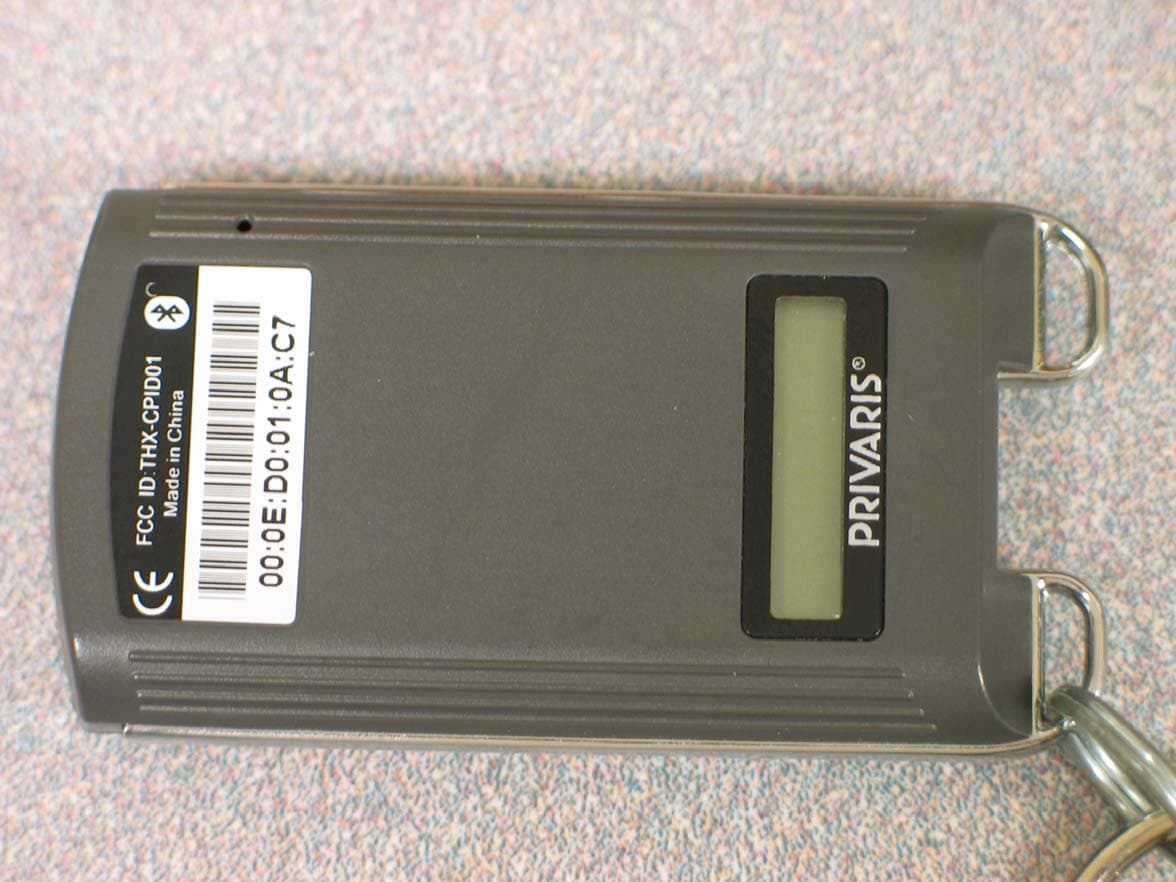
THX-CPID03
Feb 07, 2008Bluetooth Security Biometric Device
Equipment Class
DTS - Digital Transmission System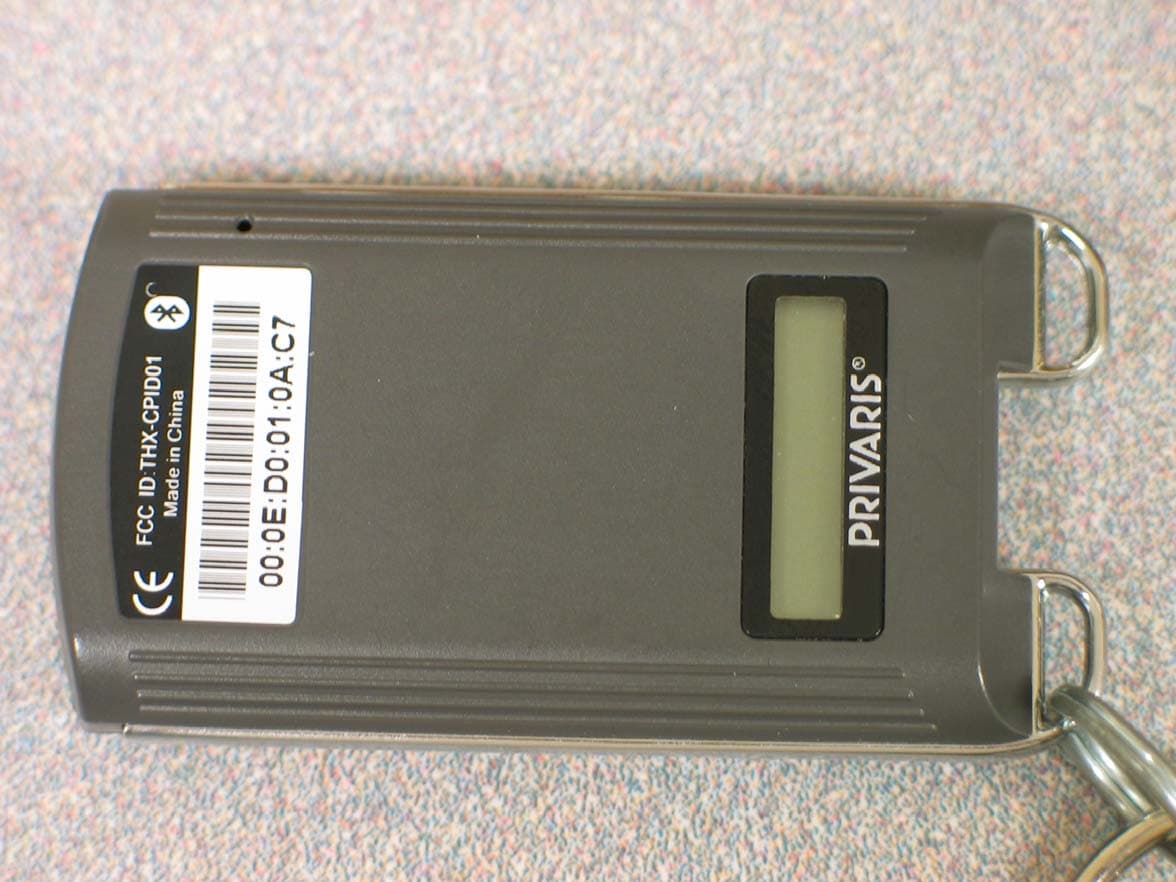
THX-CPID01
Jul 31, 2007Fingerprint Sensor
Equipment Class
DTS - Digital Transmission System