TJ7-H26TRUE WIRELESS EARBUDS
Shenzhen SHI KISB Electronic Co., Ltd.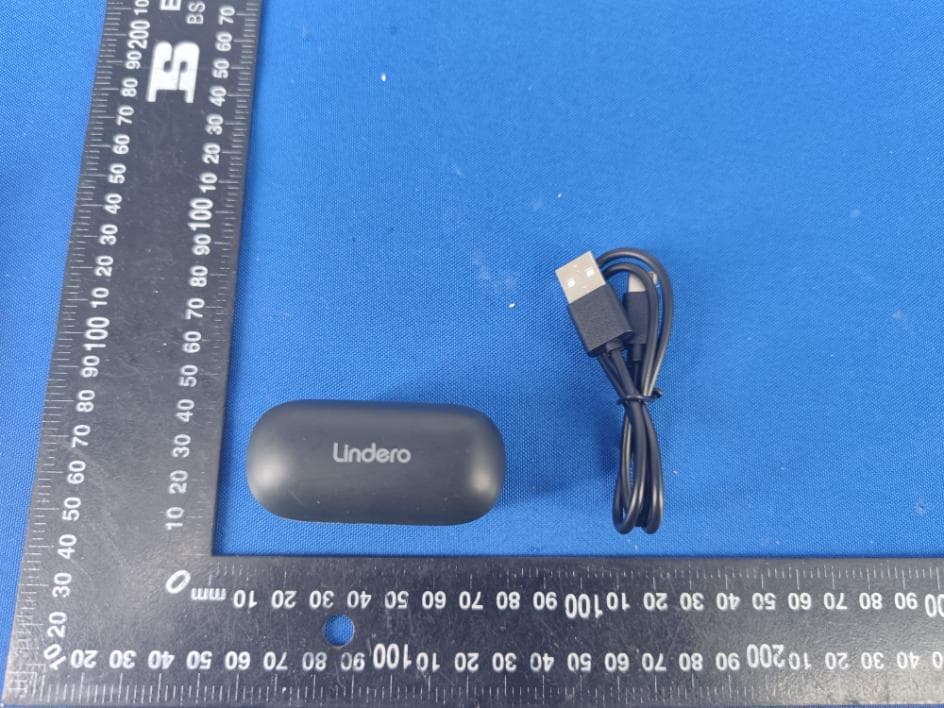
Click to zoom
Application Details
- Equipment Class
- DSS - Part 15 Spread Spectrum Transmitter
- Date of Grant
- May 18, 2021
- Application Purpose
- Original Equipment
- Date of Application
- May 18, 2021
- Equipment Note
- TRUE WIRELESS EARBUDS
- Frequency Range
- 2402.00000000 - 2480.00000000
- Country
- China
Documents & Files
Document Text
Text extracted from the exhibit documents filed with the FCC. Open a document above to read the original.
Users Manual
产品结构说明 包装清单 以上图片仅供参考,请以实物为准! 充电座耳机 x 1耳机 x 2 耳机1对,充电盒1个,大中小加小耳帽各一对(中号佩戴在耳机上),数据线1根,说明书1本 说明书 x 1 耳帽 x 4数据线 x 1 H26 ANC 主动降噪蓝牙耳机使用说明书 使用前请阅读使用说明 LED指示灯 充电Type-C端口 右/R左/L 多功能按键(MFB ) LED指示灯 开机 方法1 :耳机放在充电盒, 打开盖子,取出双耳机,橙白灯亮 1 秒即开机; 方法 2:关机状态下,耳机在充电盒外,长按功能键 4 秒, 即开机。 方法 1 从充电盒中取出双耳机 , 耳机自动开机并进入配对模式,LED 橙白灯交替快闪,即进入手机配 对模式; 打开蓝牙设备,并 在设备列表中选择“H26”,并连接,即配对成功 ; 方法 2 在开机未连接状态下,双击左耳或右耳多功能键进入手机配对模式;LED 橙白灯交替快闪; 打开蓝牙设备,并在设备列表中选择“H26”,并连接,即配对成功。 (注意 : 如果耳机已连接设备 1,则设备 1 的蓝牙请关闭蓝牙功能,然后尝试与设备 2 配对。) 重置和清除配对 耳机在充电盒内且在充电状态下,长按多功能键约5秒,橙灯灭一下后,在再充电盒中等待左 右耳配对完成后(此操作大概需要10 s),取出双耳机,重置完成。 关机 方法1 :开机状态,将耳机放入充电盒内,橙灯常亮,即关机; 方法 2:开机状态下,耳机在充电盒外,长按左右耳多功能键 5s 后释放橙灯常亮 1s,即关机。 多功能键使用 双击 长按1~2秒 左耳 三击 单击 单击 三击 右耳 + 启动SIRI 打开/关闭ANC 长按2秒 长按2秒 - 产品使用说明 蓝牙配对 ANC(主动降噪ANC模式) 常见问题 在待机状态 / 音乐状态下: < 主动降噪(ANC)模式 > 在双耳模式下使用时,长按左耳机 2 秒钟听到环境模式打开后,长按 2 秒钟 ANC 打开; 再按 2 秒后,ANC 关闭。 < 环境模式 > 您可以通过打开环境模式来捕获周围的声音。当您要关注环境情况或进行对话时,此功能 非常方便。 操作方法:按住左耳机 2 秒钟,进入环境模式 ; 以环境模式→ANC 打开→ANC 关闭的顺序切换 注意:仅当双耳同时使用时,降噪功能(ANC)才可用。 单耳使用时您无法在使用ANC。 另外,当耳机电源关闭时,ANC关闭。 Q: 无法连接到手机: 1. 确保本产品电量充足,已开机,并与手机配对建立连接完成。 2. 手机的蓝牙功能启动。 3. 本产品与手机之间的距离是否超过 10 米(约 30 英尺,以及二者之间是否存在着墙壁等 障碍物或其他电子设备。 4. 请恢复至出厂设置后重新配对。 Q: 听不到任何声音 请尝试调高手机音量。 Q: 听到杂音 蓝牙为一种无线技术,这意味着它对本产品与配对设备之间的物体非常敏感。其设计使用 条件为:本产品与配对装置间相距不超过 10 米,两者之间不存在大的障碍物(如墙面等)。 备注:若于户外吵杂的环境下,可能会影响声音效果。 ● 本产品由充电电池供电。新电池只有在经过两、三次完全充电和放电的周期后才能达到较 佳性能。电池可以重复充电、放电,但最终会失效。 ● 如果把本产品放在过热或过冷的地方,如在夏天或冬天将其放在封闭汽车里,会减少电池 的容量和寿命。应尽量将电池温度保持在 15°C和 25°C之间。本产品电池过冷或过热可能会使 其暂时无法工作,即使电池电量充足。当温度远低于冰点时,电池的性能尤其受到限制。 ● 请勿将电池掷入火中,以免电池爆炸。受损电池也可能会爆炸。请按当地规定处理电池。 请在可能的情况下回收电池。不可将电池作为生活垃圾处理。 温馨提醒:本产品若不常使用,请每三个月充放电一次,避免电池过久没使用,而造成 电池损坏。 电池信息 Product S tructure Description Packing Lis t Picture only for reference! Charging Case × 1 Earbud x 2 1 pair of earbuds, 1 charging case, 4 pairs of tips (size: XS, S, L; M tips already on the earbuds), 1 USB cable, 1 User Manual. User Manual x 1 Eartips x 4 USB cable x 1 LED light TYPE-C Charging Port Right Left Multi-Func tion Button(MFB) LED light Po wer O Po wer On The ear buds will turn on automatically when taken out from the charging case, with orange and white light is on for 1s; When the earbuds shut down, press the left or right MFB for 4s to boot up. Method 1 Take out two earbuds, they will turn on and enter pairing mode automatically with orange and white indicator lights twinkling alternately; which enable the bluetooth of your phone to search "H26" and then click it for pairing, it will be connected. Method 2 When the earbuds are turned on and not connected, double-tap the left or right MFB to enter pairing mode with orange and white indicator lights twinkling alternately. Which enable the bluetooth of your phone to search "H26" and then click it for pairing, it will be connected. (Note: If the earbuds have been connected to device 1, please turn off the bluetooth function of device 1 and then try to pair with device 2.) Reset P ut the earbuds back into the charging case with orange light on, long press the left and right MFB for 5s, the orange light turns off. Then wait the left and right earbuds pairing again (this operation takes about 10s), finally take out the earbuds to finish resetting. The earbuds will turn off automatically when put back into the charging case, with the orange light always on When the earbuds is on and out of the charging case, long press the left or right MFB for 5s, then the orange light is on for 1s, that means the earbuds shut down. Use of MFB Double P ress Left Righ t + Start SIRI HearT hrough / ANC / off - Pr ess for 1~2s Use Instructions Bluetooth pairing ANC Mode Common ques tions Q: Unable to connect to phone: 1. Ensure that the product has sufficient battery, has been turned on, and has been paired with the phone to establish connection. 2. The phone’ s Bluetooth activates. 3. Whether the distance between the product and the phone is more than 10 meters (about 30 feet), and whether there are walls, other obstacles or other electronic devices between them. 4. Please reset to factory settings and then re-pair. Q: No voice heard Please try to turn up the phone's volume. Q: Have noise Bluetooth is a wireless technology, which means it is very sensitive to objects between the product and the device it is paired with. The design conditions for use are: the distance between the product and the matching device is no more than 10m, and there is no big obstacle (such as wall) between the two. Note: The sound effect may be affected in noisy outdoor environment. ● This product is powered by rechargeable battery. New battery performs better after two or This product is powered by rechargeable battery. A new battery will performance better after two or three complete charge and discharge cycles. The battery can be charged and discharged repeatedly, but it will eventually fail. If this product is placed in a over hot or over cold place, such as in a closed car in summer or winter, the capacity and life of the battery will be reduced. It is recommended to store in 15 to 20 environments. It may not work in extreme cold or hot environment even if it is fully charged. The battery’ s performance will be restricted when the temperature is far below freezing. Do not throw the battery into fire to prevent it from exploding. Damaged battery may also explode. Please follow the local regulations to deal with the battery. Please recycle the battery when possible, and do not dispose of it as household garbage. Warm Tips: If this product is not used frequently, please regularly recharge and discharge it every three months, to avoid battery damage caused by unused for too long time. Batt ery information H26 TR UE WIRELESS EAR BUDS USER MANUA L Please read the Manual before use. Pr ess for 2s Press Triple Press Press Triple Press Press for 2s In standby state/music state: <Active Noise Cancellation (ANC) Mode> When using in binaural mode, long press the left MFB for 2s to hear the HearThrough mode turned on, then press for 2s more to turn on ANC ; and press for another 2s to turn off ANC. < HearThrough m…
Text truncated - open the document above for the full version.
Cover Letter(s)
ShenzhenSHIKISBElectronicCo.,Ltd. OfficeofEngineeringTechnology FederalCommunicationsCommission 7435OaklandMillsRoad Columbia,MD21046 USA Date:2021-05-08 Subject;RequestforLongTermConfidentiality FCCID:TJ7-H26 ToWhomItMayConcern, PursuanttotheprovisionsoftheCommission’srulesTitle47Sections§0.457and§0.459,we arerequestingtheCommissiontowithholdthefollowingattachment(s)asconfidential documentsfrompublicdisclosureindefinitely. Thesedocumentscontaindetailedsystemandequipmentdescriptionsandareconsideredas proprietaryinformationinoperationoftheequipment.Thepublicdisclosureofthesedocuments mightbeharmfultoourcompanyandwouldgivecompetitorsanunfairadvantageinthemarket. SchematicDiagram BlockDiagram PartsList OperationalDescription Tune-upProcedure Itisourunderstandingthatallmeasurementtestreports,FCCIDlabelformatand correspondenceduringthecertificationreviewprocesscannotbegrantedasconfidential documentsandthisinformationwillbeavailableforpublicreviewoncethegrantofequipment authorizationisissued. Sincerely, Signature: Name:KKLee Title:GeneralManager
Cover Letter(s)
ShenzhenSHIKISBElectronicCo.,Ltd. 3-5F,ABuilding,ShangheIndustrialZone,NanchangRoad, Bao'anDistrict,Shenzhen,518126China AgentAuthorization Company:ShenzhenSHIKISBElectronicCo.,Ltd. Address:3-5F,ABuilding,ShangheIndustrialZone,NanchangRoad,Bao'an District,Shenzhen,518126China ProductName:TRUEWIRELESSEARBUDS ModelNumber(s):H26 ProductDescription:TRUEWIRELESSEARBUDS WeauthorizeMiCOMLabsInc.,575BoulderCourt,Pleasanton,California94566,USA, toactonourbehalfonallmattersconcerningthecertificationofabovenamed equipment. WedeclarethatMiCOMLabsInc.isallowedtoforwardallinformationrelatedtothe approvalandcertificationofequipmenttotheregulatoryagenciesasrequiredandto discussanyissuesconcerningtheapprovalapplication.Anyandallactscarriedoutby MiCOMLabsonourbehalfshallhavethesameeffectasactsofourown. Signature:Date:2021-05-08 Name:KKLee Title:GeneralManager Company:ShenzhenSHIKISBElectronicCo.,Ltd.
External Photos
Page 1 of 6 Appendix B: Photographs of EUT Product: TRUE WIRELESS EARBUDS Model: H26 External Photos Page 2 of 6 Page 3 of 6 Page 4 of 6 Page 5 of 6 Page 6 of 6
ID Label/Location Info
LabelandLocation Model:H26 Label: Size:L*W=8*3mm FCCID:TJ7-H26 Location
Internal Photos
Page 1 of 5 Appendix B: Photographs of EUT Product: TRUE WIRELESS EARBUDS Model: H26 Internal Photos Page 2 of 5 Page 3 of 5 Antenna Page 4 of 5 Page 5 of 5
RF Exposure Info
RF exposure evaluation FCC ID: TJ7-H26 §2.1093 Radiofrequency radiation exposure evaluation: Portable Devices. According to§15.247(i) and§1.1307b(1), systems operating under the provisions of this section shall be operated in a manner that ensures that the public is not exposed to radio frequency energy level in excess of the commission’s guidance. The 1-g SAR test exclusion thresholds for 100 MHz to 6 GHz at test separation distances ≤ 50 mm are determined by: [(max. power of channel, including tune-up tolerance, mW) / (min. test separation distance, mm)] · [√f(GHz)] ≤ 3.0 for 1-g SAR, where f(GHz) is the RF channel transmit frequency in GHz Power and distance are rounded to the nearest mW and mm before calculation When the minimum test separation distance is < 5 mm, a distance of 5 mm according is applied to determine SAR test exclusion. The result is rounded to one decimal place for comparison Channel Frequency (GHz) Max. Power (dBm) Tune up Power (dBm) Max. Tune up Power (dBm) Max. Tune up Power (mW) Test distance (mm) Result exclusion thresholds for 1-g SAR CH 78 2.480 4.60 4±1 5 3.16 5 1.00 3.0 Result: Base on the calculation value, No SAR measurement is required.
Test Report
Hotline: 400-6611-140 Tel: 86-755-27673339 Fax: 86-755-27673332 http://www.tct-lab.com TEST REPORT FCC ID: TJ7-H26 Product: TRUE WIRELESS EARBUDS Model No.: H26 Additional Model No.: N/A Trade Mark: Lindero, SounSparking, Sounkindy, SounSwet, Eryin Report No.: TCT210422E015 Issued Date: May 07, 2021 Issued for: Shenzhen SHI KISB Electronic Co., Ltd. 3-5F, A Building, Shanghe Industrial Zone, Nanchang Road, Bao'an District, Shenzhen, 518126 China Issued By: Shenzhen Tongce Testing Lab TCT Testing Industrial Park, Fuqiao 5th Industrial Zone, Fuhai Street, Bao'an District, Shenzhen, Guangdong, 518103, People's Republic of China TEL: +86-755-27673339 FAX: +86-755-27673332 Note: This report shall not be reproduced except in full, without the written approval of Shenzhen Tongce Testing Lab. This document may be altered or revised by Shenzhen Tongce Testing Lab personnel only, and shall be noted in the revision section of the document. The test results in the report only apply to the tested sample. Report No.: TCT210422E015 Page 2 of 69 Hotline: 400-6611-140 Tel: 86-755-27673339 Fax: 86-755-27673332 http://www.tct-lab.com TABLE OF CONTENTS 1. Test Certification ..................................................................................... 3 2. Test Result Summary .............................................................................. 4 3. EUT Description ....................................................................................... 5 4. General Information ................................................................................. 6 4.1. Test environment and mode ............................................................................................................ 6 4.2. Description of Support Units ........................................................................................................... 6 5. Facilities and Accreditations .................................................................. 7 5.1. Facilities ............................................................................................................................................. 7 5.2. Location.............................................................................................................................................. 7 5.3. Measurement Uncertainty ................................................................................................................ 7 6. Test Results and Measurement Data ..................................................... 8 6.1. Antenna requirement ........................................................................................................................ 8 6.2. Conducted Emission ......................................................................................................................... 9 6.3. Conducted Output Power ............................................................................................................... 13 6.4. 20dB Occupy Bandwidth ................................................................................................................ 18 6.5. Carrier Frequencies Separation ..................................................................................................... 23 6.6. Hopping Channel Number .............................................................................................................. 28 6.7. Dwell Time ........................................................................................................................................ 31 6.8. Pseudorandom Frequency Hopping Sequence ........................................................................... 36 6.9. Conducted Band Edge Measurement ........................................................................................... 37 6.10. Conducted Spurious Emission Measurement.............................................................................. 41 6.11. Radiated Spurious Emission Measurement ................................................................................. 45 Appendix A: Photographs of Test Setup Appendix B: Photographs of EUT Report No.: TCT210422E015 Page 3 of 69 Hotline: 400-6611-140 Tel: 86-755-27673339 Fax: 86-755-27673332 http://www.tct-lab.com 1. Test Certification Product: TRUE WIRELESS EARBUDS Model No.: H26 Additional Model No.: N/A Trade Mark: Lindero, SounSparking, Sounkindy, SounSwet, Eryin Applicant: Shenzhen SHI KISB Electronic Co., Ltd. Address: 3-5F, A Building, Shanghe Industrial Zone, Nanchang Road, Bao'an District, Shenzhen, 518126 China Manufacturer: Shenzhen SHI KISB Electronic Co., Ltd. Address: 3-5F, A Building, Shanghe Industrial Zone, Nanchang Road, Bao'an District, Shenzhen, 518126 China Date of Test: Apr. 23, 2021 – May 06, 2021 Applicable Standards: FCC CFR Title 47 Part 15 Subpart C Section 15.247 FCC KDB 558074 D01 15.247 Meas Guidance v05r02 ANSI C63.10:2013 The above equipment has been tested by Shenzhen Tongce Testing Lab and found compliance with the requirements set forth in the technical standards mentioned above. The results of testing in this report apply only to the product/system, which was tested. Other similar equipment will not necessarily produce the same results due to production tolerance and measurement uncertainties. Tested By: Date: May 06, 2021 Aaron Mo Reviewed By: Date: May 07, 2021 Beryl Zhao Approved By: Date: May 07, 2021 Tomsin Report No.: TCT210422E015 Page 4 of 69 Hotline: 400-6611-140 Tel: 86-755-27673339 Fax: 86-755-27673332 http://www.tct-lab.com 2. Test Result Summary Requirement CFR 47 Section Result Antenna Requirement §15.203/§15.247 (c) PASS AC Power Line Conducted Emission §15.207 PASS Conducted Peak Output Power §15.247 (b)(1) PASS 20dB Occupied Bandwidth §15.247 (a)(1) PASS Carrier Frequencies Separation §15.247 (a)(1) PASS Hopping Channel Number §15.247 (a)(1) PASS Dwell Time §15.247 (a)(1) PASS Radiated Emission §15.205/§15.209 PASS Band Edge §15.247(d) PASS Note: 1. PASS: Test item meets the …
Text truncated - open the document above for the full version.
Test Report
Report No.: TCT210422E015 Page 36 of 69 Hotline: 400-6611-140 Tel: 86-755-27673339 Fax: 86-755-27673332 http://www.tct-lab.com 6.8. Pseudorandom Frequency Hopping Sequence Test Requirement: FCC Part15 C Section 15.247 (a)(1) requirement: Frequency hopping systems shall have hopping channel carrier frequencies separated by a minimum of 25 kHz or the 20 dB bandwidth of the hopping channel, whichever is greater. Alternatively. Frequency hopping systems operating in the 2400-2483.5 MHz band may have hopping channel carrier frequencies that are separated by 25 kHz or two-thirds of the 20 dB bandwidth of the hopping channel, whichever is greater, provided the systems operate with an output power no greater than 125 mW. The system shall hop to channel frequencies that are selected at the system hopping rate from a Pseudorandom ordered list of hopping frequencies. Each frequency must be used equally on the average by each transmitter. The system receivers shall have input bandwidths that match the hopping channel bandwidths of their corresponding transmitters and shall shift frequencies in synchronization with the transmitted signals. EUT Pseudorandom Frequency Hopping Sequence The pseudorandom sequence may be generated in a nine-stage shift register whose 5th and 9th stage outputs are added in a modulo-two addition stage. And the result is fed back to the input of the first stage. The sequence begins with the first one of 9 consecutive ones; i.e. the shift register is initialized with nine ones. • Number of shift register stages: 9 • Length of pseudo-random sequence: 2 9 -1 = 511 bits • Longest sequence of zeros: 8 (non-inverted signal) An example of Pseudorandom Frequency Hopping Sequence as follow: Each frequency used equally on the average by each transmitter. The system receivers have input bandwidths that match the hopping channel bandwidths of their corresponding transmitters and shift frequencies in synchronization with the transmitted signals. Report No.: TCT210422E015 Page 37 of 69 Hotline: 400-6611-140 Tel: 86-755-27673339 Fax: 86-755-27673332 http://www.tct-lab.com 6.9. Conducted Band Edge Measurement 6.9.1. Test Specification Test Requirement: FCC Part15 C Section 15.247 (d) Test Method: KDB 558074 D01 v05r02 Limit: In any 100 kHz bandwidth outside the intentional radiation frequency band, the radio frequency power shall be at least 20 dB below the highest level of the radiated power. In addition, radiated emissions which fall in the restricted bands must also comply with the radiated emission limits. Test Setup: Test Mode: Transmitting mode with modulation Test Procedure: 1. Set to the maximum power setting and enable the EUT transmit continuously. 2. Set RBW = 100 kHz (≥1% span=10MHz), VBW = 300 kHz (≥RBW). Band edge emissions must be at least 20 dB down from the highest emission level within the authorized band as measured with a 100kHz RBW. The attenuation shall be 30 dB instead of 20 dB when RMS conducted output power procedure is used. 3. Enable hopping function of the EUT and then repeat step 2 and 3. 4. Measure and record the results in the test report. Test Result: PASS 6.9.2. Test Instruments Equipment Manufacturer Model Serial Number Calibration Due Spectrum Analyzer Agilent N9020A MY49100619 Sep. 11, 2021 RF cable (9kHz-26.5GHz) TCT RE-06 N/A Sep. 11, 2021 Antenna Connector TCT RFC-01 N/A Sep. 11, 2021 Note: The calibration interval of the above test instruments is 12 months and the calibrations are traceable to international system unit (SI). Report No.: TCT210422E015 Page 38 of 69 Hotline: 400-6611-140 Tel: 86-755-27673339 Fax: 86-755-27673332 http://www.tct-lab.com 6.9.3. Test Data GFSK Modulation Test channel: Lowest channel No-hopping mode Hopping mode Test channel: Highest channel No-hopping mode Hopping mode Report No.: TCT210422E015 Page 39 of 69 Hotline: 400-6611-140 Tel: 86-755-27673339 Fax: 86-755-27673332 http://www.tct-lab.com Pi/4DQPSK Modulation Test channel: Lowest channel No-hopping mode Hopping mode Test channel: Highest channel No-hopping mode Hopping mode Report No.: TCT210422E015 Page 40 of 69 Hotline: 400-6611-140 Tel: 86-755-27673339 Fax: 86-755-27673332 http://www.tct-lab.com 8DPSK Modulation Test channel: Lowest channel No-hopping mode Hopping mode Test channel: Highest channel No-hopping mode Hopping mode Report No.: TCT210422E015 Page 41 of 69 Hotline: 400-6611-140 Tel: 86-755-27673339 Fax: 86-755-27673332 http://www.tct-lab.com 6.10. Conducted Spurious Emission Measurement 6.10.1. Test Specification Test Requirement: FCC Part15 C Section 15.247 (d) Test Method: KDB 558074 D01 v05r02 Limit: In any 100 kHz bandwidth outside the intentional radiation frequency band, the radio frequency power shall be at least 20 dB below the highest level of the radiated power. In addition, radiated emissions which fall in the restricted bands must also comply with the radiated emission limits. Test Setup: Test Mode: Transmitting mode with modulation Test Procedure: 1. The RF output of EUT was connected to the spectrum analyzer by RF cable and attenuator. The path loss was compensated to the results for each measurement. 2. Set to the maximum power setting and enable the EUT transmit continuously. 3. Set RBW = 100 kHz, VBW = 300kHz, scan up through 10th harmonic. All harmonics / spurs must be at least 20 dB down from the highest emission level within the authorized band as measured with a 100 kHz RBW. 4. Measure and record the results in the test report. 5. The RF fundamental frequency should be excluded against the limit line in the operating frequency band. Test Result: PASS 6.10.2. Test Instruments Equipment Manufacturer Model Serial Number Calibration Due Spectrum Analyzer Agilent N9020A MY49100619 Sep. 11, 2021 RF Cable (9KHz-26.5GHz) TCT RE-06 N/A Sep. 11, 2021 Antenna Connector TCT RFC-01 N/A Sep. 11, 2021 Note: The calibration interval of the above test instruments is 12 months and the calibrations are traceable to international system unit (SI). Report N…
Text truncated - open the document above for the full version.
Test Setup Photos
Page 1 of 2 Appendix A: Photographs of Test Setup Product: TRUE WIRELESS EARBUDS Model: H26 Radiated Emission Left Page 2 of 2 Conducted Emission
Contact Information
Applicant
KK Lee(General Manager)
Technical Contact
Test Firm
SHENZHEN TONGCE TESTING LABBeryl Zhao
[email protected]+8675527208735
Technical Specifications
| # | Rule Parts | Frequency Range | Power Output |
|---|---|---|---|
| 1 | 15C | 2.40 GHz - 2.48 GHz | 2.90 mW |
Other Applications from Shenzhen SHI KISB Electronic Co., Ltd.
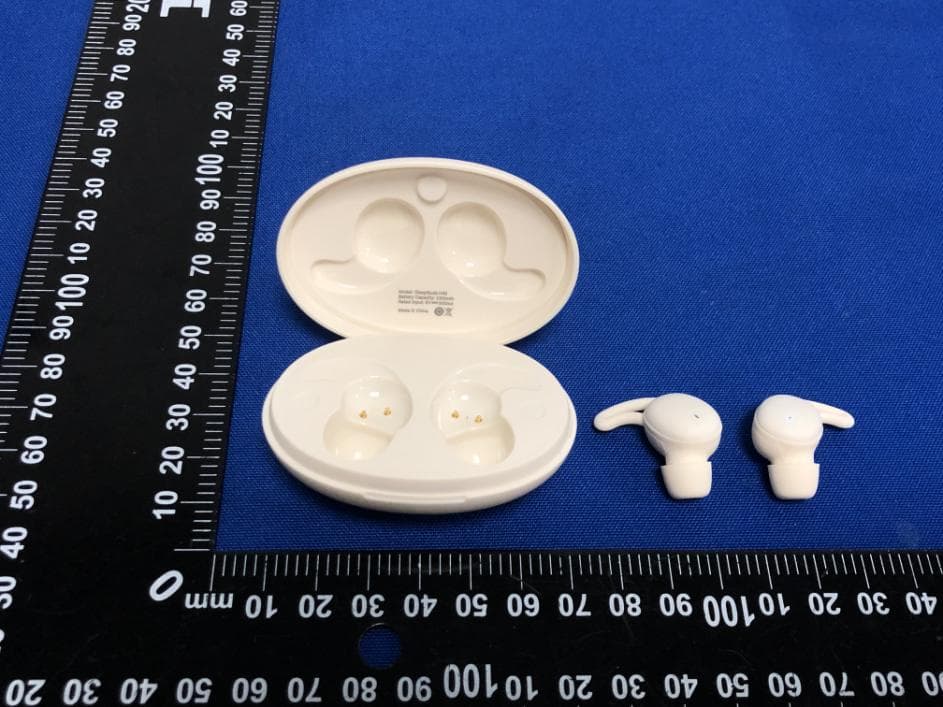
TJ7-H40
Jul 26, 2023TRUE WIRELESS EARBUDS
Equipment Class
DSS - Part 15 Spread Spectrum Transmitter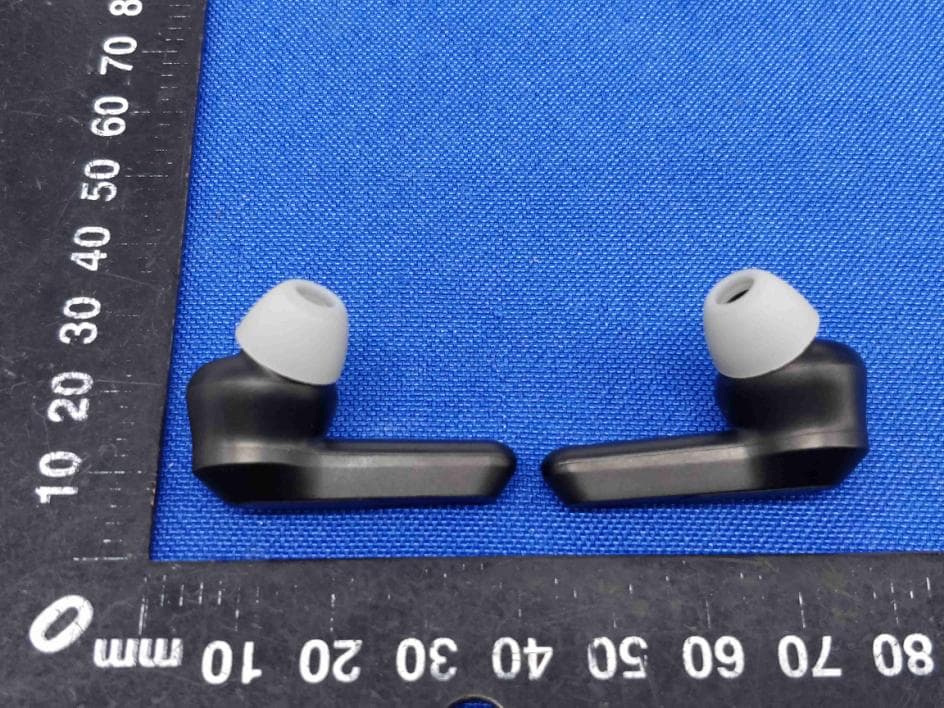
TJ7-H21B
Aug 02, 2021TRUE WIRELESS EARBUDS
Equipment Class
DSS - Part 15 Spread Spectrum Transmitter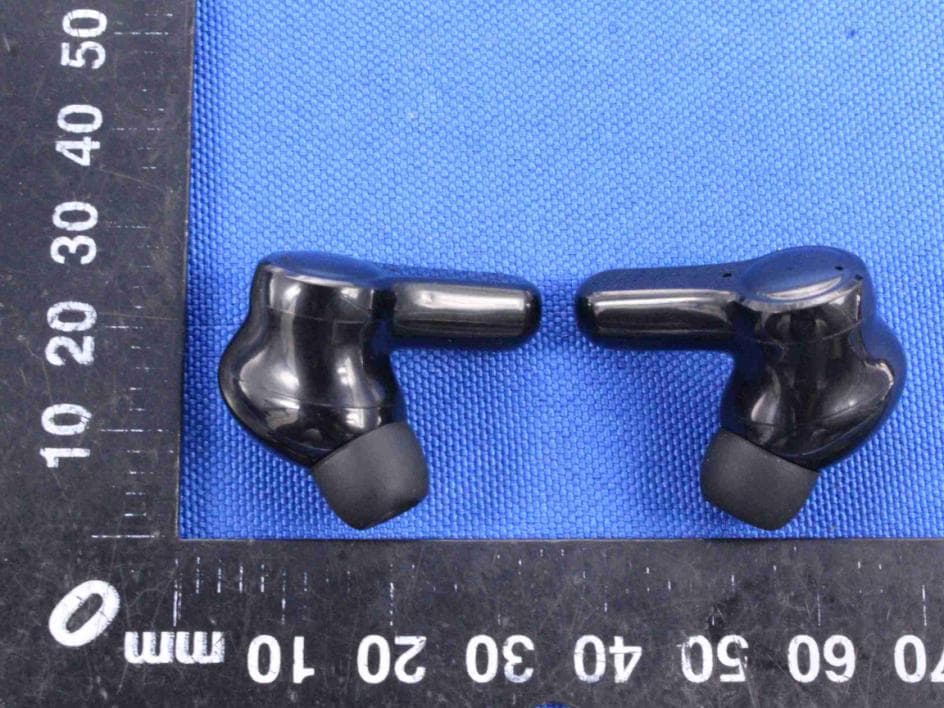
TJ7-H29
Jun 01, 2021TRUE WIRELESS EARBUDS
Equipment Class
DSS - Part 15 Spread Spectrum Transmitter
TJ7VALOREBTK-C5
Jul 14, 2015Bluetooth Headset
Equipment Class
DXX - Part 15 Low Power Communication Device Transmitter
TJ7BTK-729
Jul 09, 2014Bluetooth Headset
Equipment Class
DSS - Part 15 Spread Spectrum Transmitter