UU5-03112105SCar Kit
BlueDECT Technology Corp.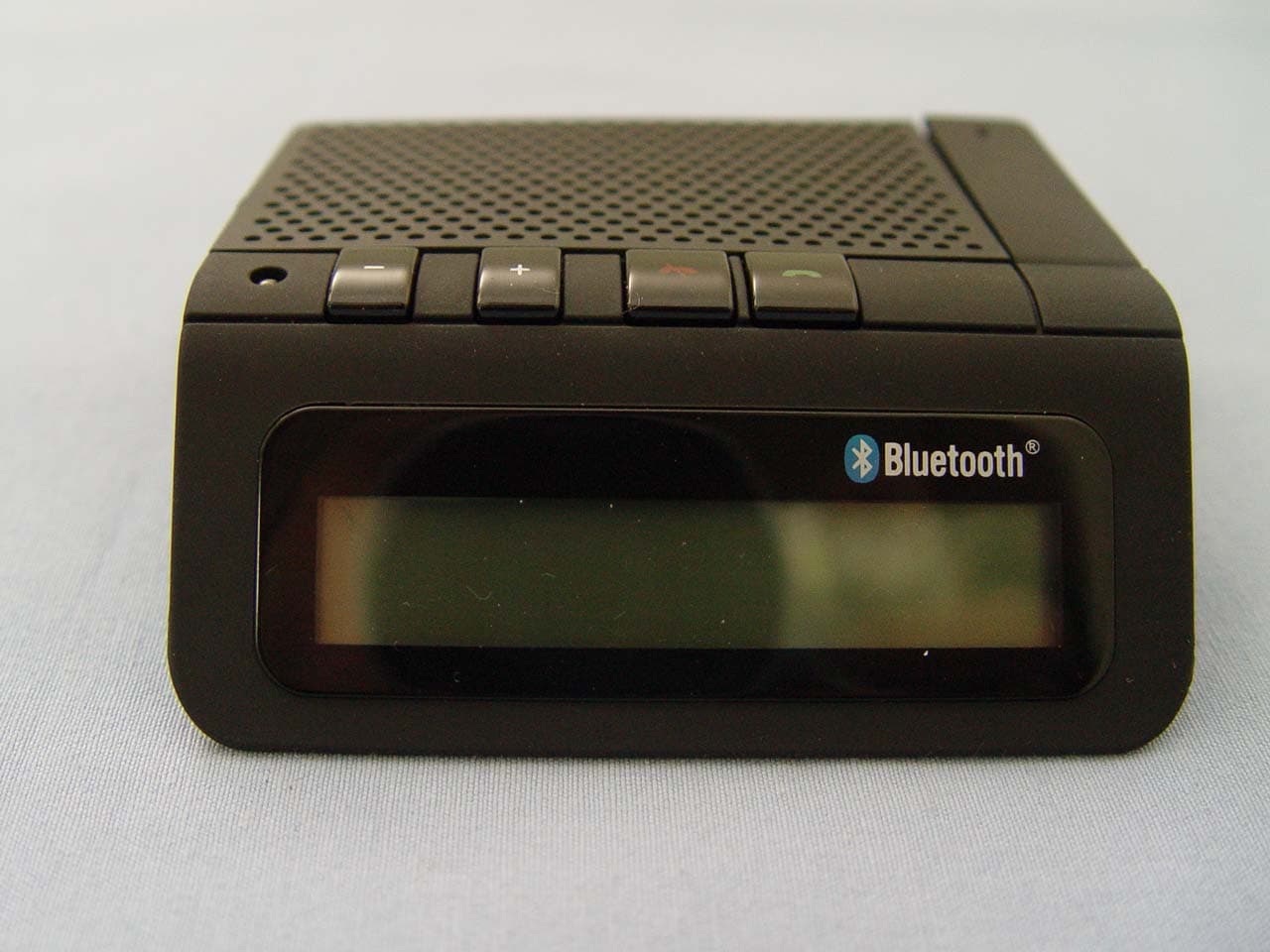
Click to zoom
Application Details
- Equipment Class
- DSS - Part 15 Spread Spectrum Transmitter
- Date of Grant
- Apr 29, 2007
- Application Purpose
- Original Equipment
- Date of Application
- Apr 29, 2007
- Equipment Note
- Car Kit
- Frequency Range
- 2402.00000000 - 2480.00000000
- Company
- BlueDECT Technology Corp.
- Country
- Taiwan
Documents & Files
Document Text
Text extracted from the exhibit documents filed with the FCC. Open a document above to read the original.
Users Manual
Bluetooth® LCD Portable Carkit 1. Introduction The Portable Hands-free car kit is base on Bluetooth wireless technology connects to a compatible phone without wires. To enjoy its convenience, just pair with your mobile phone, you can easily answer the coming call, return incoming calls, and dial from memory list to keep your hands free The latest Bluetooth hands free car kit provides optimum audio qual ity thanks to its internal digital signal processor (DSP). T he LCD shows the number or names of callers. The hands free car kit has been designed for professional life style. You put it on t he sun visor to get the best voice quality, and put it on the char ging cradle when the battery is low. The intelligent software auto-detects the microphone changing, and adjusts the parameter, without interrupting the call. 2. Product out looking Car kit Directional Microphone Y es No Speaker V ol. + V ol. - LED LCD Batteries 3. How to use it 1. Position: you can put the car kit on a 、 Sun visor b 、 Dash board of your car c 、 Office/home for conference 2. Charging battery: 1. Put 2 rechargeable batteries into batteries case. 2. You have to fully charge the battery before the first time you use it. It takes 8 hours to fully charge the battery. 3. How to charge a 、 You can use regular AC adapter with the following requirement to charge it. ♦ Standard mini USB interface ♦ Output current: 300~500 mA ♦ Output voltage: 5 V b. Plug the cigarette power adapter into the power source on the car, and charge the carkit. 3. Open the microphone : you should open the microphone when you use it, and face the microphone to your mouth. 4. General Function description a. Turn on Device : During Off, press “No” to turn it on, the LCD shows “Blue Voice” b. Turn off Device: During No link/stand by mode (LCD shows “B lue Voice”), press “No” to turn it off. c. Pairing: During No link/stand by mode (LCD shows “Blue Voice”), press and hold “Yes” and “No” together to enter the pairing mode. The LCD shows the Pin code. If you don’t like to pair, just press “No” to escape the pairing mode. d. LCD flips over: During No link/stand by mode (LCD shows “Blue Voice”), press “V+” and “V-“ together. e. Connect to the last linked phone: During No link/stand by mode (LCD shows “B lue Voice”), press “Yes” to link to the last linked phone. f. Connect to other paired phone: ♦ During No link/stand by mode (LCD shows “Blue Voice”), press “Yes” for 3 seconds to enter the paired phone list. The LCD shows the paired phone name. ♦ Press “V+” or “V-“ to select the phone you like to link. ♦ Press “Yes” to link. LCD shows the phone name. g. Disconnect the carkit and mobile phone ♦ During the connection mode, you could see the phone name on LCD. Press “Yes” for 3 seconds to disconnect. h. Answer ♦ While an incoming call, the car kit rings and the caller’s ID of the call is shown on the LCD. ♦ Press “ Yes ” to answer the call. i. Reject an coming call ♦ While an incoming call, press “ NO ” to reject the call. j. Terminate a call ♦ During an active call, press “ NO ” to terminate. k. Voice Transfer between carkit and phone, while an on-going call ♦ Press “ Yes ” for 3 seconds to transfer voice between the car kit and your mobile phone, during an on-going call, for your privacy. l. Adjusting the Volume ♦ Press “ Vol (+) button ” for higher volume in talking mode. ♦ Press “ Vol (-) button ” for lower volume in talking mode. m. Mute ♦ Press and hold “ Vol (-) button ” to enable Mic mute function in during an on-going call. ♦ Press and hold “ Vol (+) button ” to disable Mic mute function in during an on-going call. 5. call back from receiving list ♦ After you receive a coming call, the caller numb er will be stored in the receiving list. ♦ The memory could keep 4 numbers in the receiving list. ♦ You can dial out these 4 numbers in the carkit Operation: a 、 Press “V-“ for 3 seconds to enter the receiving list, during link/stand-by mode. The LCD shows the last receiving number. b 、 Press “V+” or “V-“ to select the number you like to call c 、 Press “Yes” to make a call. d 、 If you don’t want to call, press “No” to escape it and back to Stand by mode. 6. Store numbers from receiving list ♦ After you receive a coming call, the caller numb er will be stored in the receiving list. ♦ You can save 4 numbers from receiving to the memory. Operation: a. You have to be in the no link/stand by mode. b. Press “V-“ for 3 seconds to enter the receiving list, the LCD shows the last receiving number. c. Press “V+” or “V-“ to select the number you like to store. d. Press “Yes” for 3 seconds, then the LCD shows “M1?”, it means you store this number in the memory one. You can press “V+” or “V-“ to select the memory space from “M1”, “M2” to “M3”, and “M4” e. Press “Yes” for 3 seconds to confirm. The LCD shows “Save OK”. Be careful it erases the previous saving. f. If you don’t want to save, press “No” to escape it and back to Stand-by mode. 7. Make a call from memory Operation: a. Press “V+“ for 3 seconds to enter the memory list, during link/stand-by mode. The LCD shows the “memory 1” number. Press “V+” or “V-“ to select the number you like to call b. Press “Yes” to make a call. c. If you don’t want to call, press “No” to escape it and back to Stand by mode. 8. Trouble shooting a. anytime the carkit doesn’t perform right, press “No” for 3 seconds to restart the device. b. If you still cannot solve the problem, open the battery case, and remove the battery. Put the battery in again, close the ba ttery case. Then restart the device. b. If you still cannot solve problem, Press “V-“ and “No” together, for 3 seconds. It will reset the device to the factory stat us. Be careful you will lose every data in the carkit, after doing the factory reset. Warning T his equipment has been tested and found to comply with the limits for a class B digital device, pursuant to part 15 of the FCC rules. These limits are designed to provide to provide reasonable protection against harmful interference…
Text truncated - open the document above for the full version.
Cover Letter(s)
BlueDECT Technology Corp. April 23, 2007 Bluetooth Declaration Per FCC 15.247 Requirements 1 Output power and channel separation of a Bluetooth device in the different operating modes: The different operating modes (data-mode, acquisition-mode) of a Bluetooth device don’t influence the output power and the channel spacing. There is only one transmitter which is driven by identical input parameters concerning these two parameters. Only a different hopping sequence will be used. For this reason the check of these RF parameters in one op-mode is sufficient. 2 Frequency range of a Bluetooth device: Hereby we declare that the maximum frequency of this device is: 2402 – 2480 MHz. This is according the Bluetooth Core Specification V 1.0B (+ critical errata) for devices which will be operated in the USA. This was checked during the Bluetooth Qualification tests (Test Case: TRM/CA/04-E). Other frequency ranges ( e.g. for Spain, France, Japan) which are allowed according the Core Specification are not supported by this device. 3 Co-ordination of the hopping sequence in data mode to avoid simultaneous occupancy by multiple transmitters: Bluetooth units which want to communicate with other units must be organized in a structure called piconet. This piconet consist of max. 8 Bluetooth units. One unit is the master the other seven are the slaves. The master co-ordinates frequency occupation in this piconet for all units. As the master hop sequence is derived from it’s BD address which is unique for every Bluetooth device, additional masters intending to establish new piconets will always use different hop sequences. 4 Example of a hopping sequence in data mode: Example of a 79 hopping sequence in data mode: 40, 21, 44, 23, 42, 53, 46, 55, 48, 33, 52, 35, 50, 65, 54, 67, 56, 37, 60, 39, 58, 69, 62, 71, 64, 25, 68, 27, 66, 57, 70, 59, 72, 29, 76, 31, 74, 61, 78, 63, 01, 41, 05, 43, 03, 73, 07, 75, 09, 45, 13, 47, 11, 77, 15, 00, 64, 49, 66, 53, 68, 02, 70, 06, 01, 51, 03, 55, 05, 04 5 Equally average use of frequencies in data mode and behaviour for short transmissions: The generation of the hopping sequence in connection mode depends essentially on two input values: 1. LAP/UAP of the master of the connection 2. Internal master clock The LAP (lower address part) are the 24 LSB’s of the 48 BD_ADDRESS. The BD_ADDRESS is an unambiguous number of every Bluetooth unit. The UAP (upper address part) are the 24 MSB’s of the 48 BD_ADDRESS. The internal clock of a Bluetooth unit is derived from a free running clock which is never adjusted and is never turned off. For synchronisation with other units only offset are used. It has no relation to the time of the day. Its resolution is at least half the RX/TX slot length of 312.5 μs. The clock has a cycle of about one day (23h30). In most case it is implemented as 28 bit counter. For the deriving of the hopping sequence the entire LAP (24 bits), 4 LSB’s (4 bits) (Input 1) and the 27 MSB’s of the clock (Input 2) are used. With this input values different mathematical procedures (permutations, additions, XOR- operations) are performed to generate the sequence. This will be done at the beginning of every new transmission. Regarding short transmissions the Bluetooth system has the following behaviors: The first connection between the two devices is established, a hopping sequence was generated. For transmitting the wanted data the complete hopping sequence was not used. The connection ended. The second connection will be established. A new hopping sequence is generated. Due to the fact that the Bluetooth clock has a different value, because the period between the two transmission is longer (and it cannot be shorter) than the minimum resolution of the clock (312.5 μs). The hopping sequence will always differ from the first one. 6 Receiver input bandwidth and behaviors for repeated single or multiple packets: The input bandwidth of the receiver is 1 MHz. In every connection one Bluetooth device is the master and the other one is the slave. The master determines the hopping sequence (see chapter 5). The slave follows this sequence. Both devices shift between RX and TX time slot according to the clock of the master. Additionally the type of connection (e.g. single or multislot packet) is set up at the beginning of the connection. The master adapts its hopping frequency and its TX/RX timing according to the packet type of the connection. Also the slave of the connection will use these settings. Repeating of a packet has no influence on the hopping sequence. The hopping sequence generated by the master of the connection will be followed in any case. That means, a repeated packet will not be send on the same frequency, it is send on the next frequency of the hopping sequence. 7 Dwell time in data mode The dwell time of 0.3797s within a 30 second period in data mode is independent from the packet type (packet length). The calculation for a 30 second period is a follows: Dwell time = time slot length * hop rate / number of hopping channels *30s Example for a DH1 packet (with a maximum length of one time slot) Dwell time = 625 μs * 1600 1/s / 79 * 30s = 0.3797s (in a 30s period) For multislot packet the hopping is reduced according to the length of the packet. Example for a DH5 packet (with a maximum length of five time slots) Dwell time = 5 * 625 μs * 1600 * 1/5 *1/s / 79 * 30s = 0.3797s (in a 30s period) This is according the Bluetooth Core Specification V 1.0B (+ critical errata) for all Bluetooth devices. There for all Bluetooth devices comply with the FCC dwell time requirement in data mode. This was checked during the Bluetooth Qualification tests. The Dwell time in hybrid mode is measured and stated in the test report. 8 Channel Separation in hybrid mode The nominal channel spacing of the Bluetooth system is 1Mhz independent of the operating mode. The maximum “initial carrier frequency tolerance” which is allowed for Bluetooth is fcenter = 75 kHz. This was checked during the…
Text truncated - open the document above for the full version.
External Photos
Compliance Certification Services Inc. Report No.: 70226005 Date of Issue: April 17, 2007 Page 1 Total Page: 8 Rev. 00 EXTERNAL PHOTOGRAPHS OF EUT Compliance Certification Services Inc. Report No.: 70226005 Date of Issue: April 17, 2007 Page 2 Rev.00 Compliance Certification Services Inc. Report No.: 70226005 Date of Issue: April 17, 2007 Page 3 Rev.00
ID Label/Location Info
CAR KIT Model: CK2105 FCC ID: UU5-03112105S Rating: DC : 2.5V 200mA S/N:XXXXXXXXXX BlueDECT Technology Corp.
Internal Photos
Compliance Certification Services Inc. Report No.: 70226005 Date of Issue: April 17, 2007 Page 4 Rev.00 INTERNAL PHOTOGRAPHS OF EUT Compliance Certification Services Inc. Report No.: 70226005 Date of Issue: April 17, 2007 Page 5 Rev.00 Compliance Certification Services Inc. Report No.: 70226005 Date of Issue: April 17, 2007 Page 6 Rev.00 Compliance Certification Services Inc. Report No.: 70226005 Date of Issue: April 17, 2007 Page 7 Rev.00 Compliance Certification Services Inc. Report No.: 70226005 Date of Issue: April 17, 2007 Page 8 Rev.00
Parts List/Tune Up Info
ACX Adv anced Ceram ic X Mark L W T a Dimensions 5.00.2 2.00.2 1.00.2 0.50.3 Application of AT5020 Series Multilayer Chip Antenna Features Monolithic SMD with small, low-profile and light-weight type. Wide bandwidth Applications Bluetooth/Wireless LAN/Home RF ISM band 2.4GHz applications Part Number AT 5020 - B 2R8 HAA ghfe dc c Type AT : Antenna d Dimensions ( L × W ) 5.0× 2.0 mm e Material Code B f Frequency Range 2R8=2800MHz g Specification Code HAA h Packaging T: Tape & Reel B: Bulk Terminal Configuration No. Terminal Name No. Terminal Name c Feeding Point d NC d c Dimensions and Recommended PC Board Pattern Unit : mm a W T L ACX Adv anced Ceram ic X Signal feed in 1mm 3.5mm 1.8nH 2.2pF 3.9pF 0.5mm 4.1mm 3.9mm 8.5mm 1.8mm *Line width should be designed to match 50Ω characteristic impedance, depending on PCB material and thickness. Typical Electrical Characteristics (T=25 o C) Test Board 11.5mm 53mm 7mm No Ground 10mm Antenna 21.5mm 60mm Matching Circuit Ground ACX Adv anced Ceram ic X Return Loss ACX Adv anced Ceram ic X Radiation Patterns XZ cut @2.45GHz Vertical Horizontal YZ cut @2.45GHz Vertical Horizontal XZ-V/XZ-H YZ-V/YZ-H XY cut @2.45GHz Vertical Horizontal Z 270 o 0 o X Y XY-cut scanning direction Y 270 o 0 o X Z XZ-cut scanning direction Y X 0 o 270 Z YZ-cut scanning direction 180 180 180 o XY-V/XY-H 90 o 90 o 90 o ACX Adv anced Ceram ic X Maximum & Average Gain (dBi) XY-V XY-H XZ-V XZ-H YZ-V YZ-H Maximum -12.04 -0.3 -5.21 -5.84 -7.83 -0.21 Average -17.22 -4.99 -10.01 -10.9 -10.51 -5.75 Advanced Ceramic X Corp. 16 Tzu Chiang Road, Hsinchu Industrial District Hsinchu Hsien 303, Taiwan TEL:886-3-5987008 FAX:886-3-5987001 E-mail: [email protected] http://www.acxc.com.tw
Test Report
Compliance Certification Services Inc. Report No.: 70226005-RP1 FCC ID: UU5-03112105S Date of Issue: April 17, 2007 Note: This report shall not be reproduced except in full, without the written approval of Compliance Certification Services Inc. This document may be altered or revised by Compliance Certification Services Inc. personnel only, and shall be noted in the revision section of the document. Page 1 Total Page: 45 Rev. 00 FCC 47 CFR PART 15 SUBPART C TEST REPORT For CAR KIT Model: CK2105 Trade Name: BlueDECT Issued to BlueDECT Technology Corp. 10F-2,No.2,Lane 258, Rueiguang Road, Neihu District, Taipei 114, R.O.C. Issued by Compliance Certification Services Inc. No. 81-1, Lane 210, Bade Rd. 2, Luchu Hsiang, Taoyuan Hsien, (338) Taiwan, R.O.C. http://www.ccsemc.com.tw [email protected] Compliance Certification Services Inc. Report No.: 70226005-RP1 FCC ID: UU5-03112105S Date of Issue: April 17, 2007 Page 2 Rev. 00 TABLE OF CONTENTS 1. TEST RESULT CERTIFICATION.....................................................................................................3 2. EUT DESCRIPTION...........................................................................................................................4 3. TEST METHODOLOGY....................................................................................................................5 3.1 EUT CONFIGURATION.....................................................................................................................5 3.2 EUT EXERCISE.................................................................................................................................5 3.3 GENERAL TEST PROCEDURES..........................................................................................................5 3.4 FCC PART 15.205 RESTRICTED BANDS OF OPERATIONS.....................................................6 3.5 DESCRIPTION OF TEST MODES........................................................................................................7 4. INSTRUMENT CALIBRATION........................................................................................................8 4.1 MEASURING INSTRUMENT CALIBRATION...................................................................................8 4.2 MEASUREMENT EQUIPMENT USED......................................................................................8 5. FACILITIES AND ACCREDITATIONS ...........................................................................................9 5.1 FACILITIES ......................................................................................................................................9 5.2 EQUIPMENT.....................................................................................................................................9 5.3 TABLE OF ACCREDITATIONS AND LISTINGS..................................................................................10 6. SETUP OF EQUIPMENT UNDER TEST........................................................................................11 6.1 SETUP CONFIGURATION OF EUT....................................................................................................11 6.2 SUPPORT EQUIPMENT ............................................................................................................11 7. FCC PART 15.247 REQUIREMENTS.............................................................................................12 7.1 PEAK POWER.................................................................................................................................12 7.2 BAND EDGES MEASUREMENT .............................................................................................13 7.3 PEAK POWER SPECTRAL DENSITY.................................................................................................18 7.4 FREQUENCY SEPARATION....................................................................................................21 7.5 NUMBER OF HOPPING FREQUENCY ...................................................................................23 7.6 TIME OF OCCUPANCY (DWELL TIME)................................................................................25 7.7 SPURIO US EMISSIONS .............................................................................................................32 7.8 POWERLINE CONDUCTED EMISSIONS............................................................................................42 APPENDIX I RADIO FREQUENCY EXPOSURE ................................................................................43 APPENDIX II PHOTOGRAPHS OF TEST SETUP ...............................................................................44 Compliance Certification Services Inc. Report No.: 70226005-RP1 FCC ID: UU5-03112105S Date of Issue: April 17, 2007 Page 4 Rev. 00 2. EUT DESCRIPTION Product CAR KIT Trade Name BlueDECT Model Number CK2105 Model Discrepancy N/A Power Supply DC 12V Frequency Range 2402 ~ 2480 MHz Transmit Power 4.46 dBm Modulation Technique FHSS (GFSK) Transmit Data Rate 1Mbps Number of Channels 79 Channels Antenna Specification Gain: -0.21 dBi Antenna Designation Multilayer Chip Antenna Remark: 1. The sample selected for test was production product and was provided by manufacturer. 2. This submittal(s) (test report) is intended for FCC ID: UU5-03112105S filing to comply with Section 15.207, 15.209 and 15.247 of the FCC Part 15, Subpart C Rules. Compliance Certification Services Inc. Report No.: 70226005-RP1 FCC ID: UU5-03112105S Date of Issue: April 17, 2007 Page 5 Rev. 00 3. TEST METHODOLOGY The tests documented in this report were performed in accordance with ANSI C63.4 and FCC CFR 47 2.1046, 2.1047, 2.1049, 2.1051, 2.1053, 2.1055, 2.1057, 15.207, 15.209 and 15.247. 3.1 EUT CONFIGURATION The EUT configuration for testing is installed on RF field strength measurement to meet the Commissions requirement and operating in a manner that intends to maximize its emission …
Text truncated - open the document above for the full version.
Test Setup Photos
Compliance Certification Services Inc. Report No.: 70226005-RP1 FCC ID: UU5-03112105S Date of Issue: April 17, 2007 Page 44 Rev. 00 APPENDIX II PHOTOGRAPHS OF TEST SETUP CONDUCTED EMISSION SETUP PHOTO Compliance Certification Services Inc. Report No.: 70226005-RP1 FCC ID: UU5-03112105S Date of Issue: April 17, 2007 Page 45 Rev. 00 RADIATED EMISSION SETUP PHOTOS
Contact Information
Applicant
Dexter Chen(Engineer)
Test Firm
Compliance Certification Services Inc.Harris Lai
Technical Specifications
| # | Rule Parts | Frequency Range | Power Output |
|---|---|---|---|
| 1 | 15C | 2.40 GHz - 2.48 GHz | 2.79 mW |
Other Applications from BlueDECT Technology Corp.
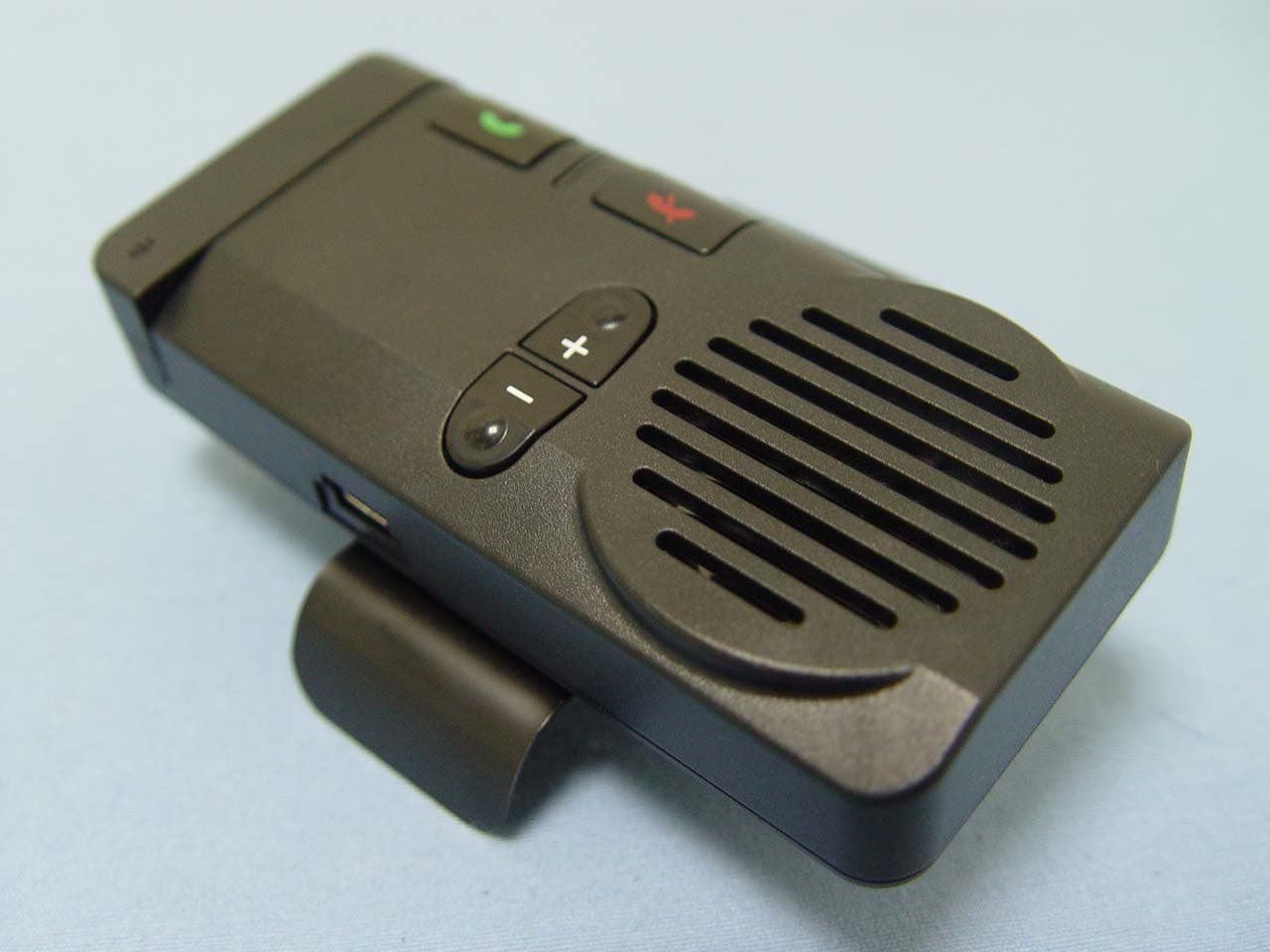
UU5-03112109S
Aug 15, 2007BLUETOOTH CAR KIT
Equipment Class
DSS - Part 15 Spread Spectrum Transmitter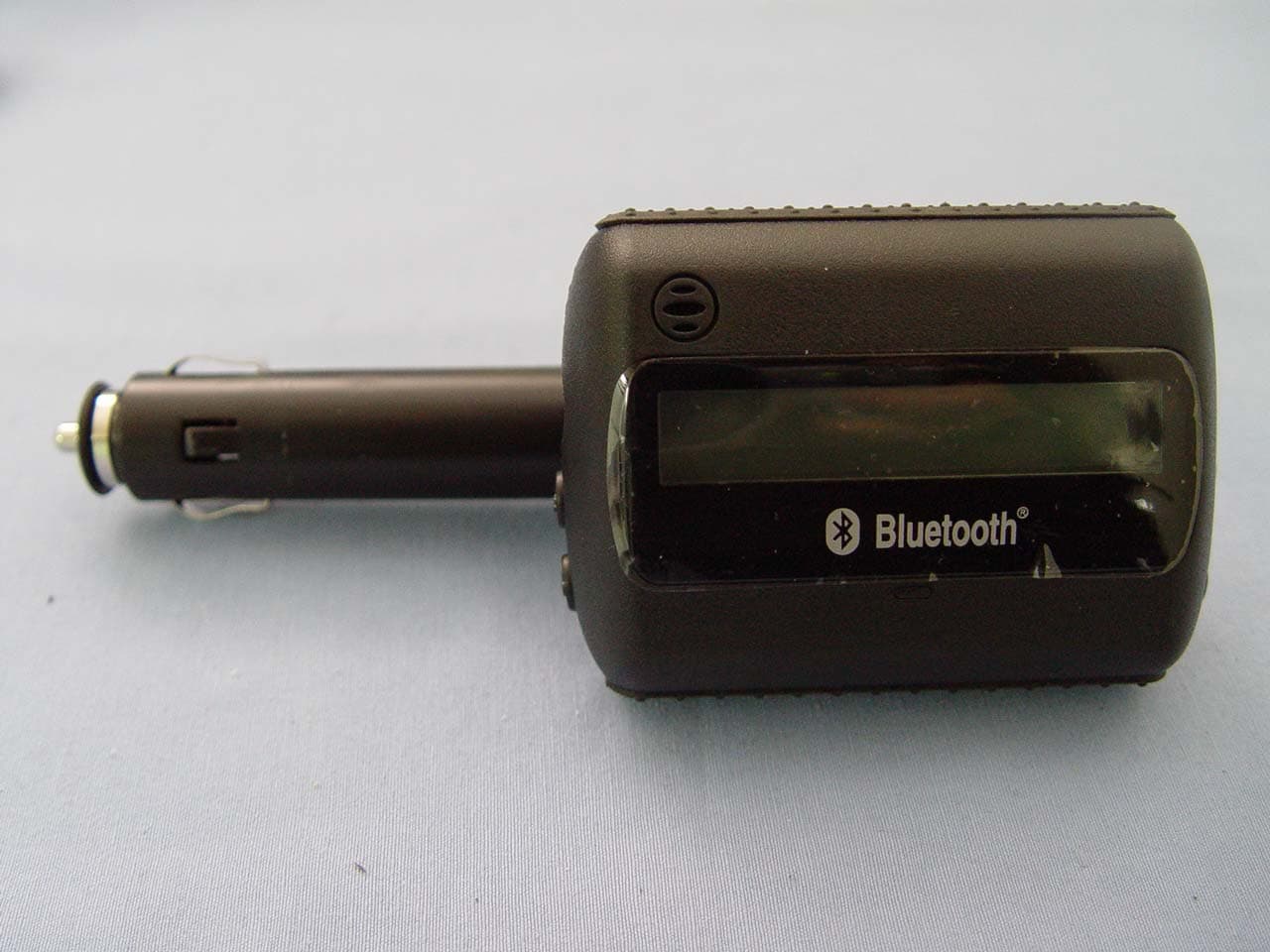
UU5-03112102G
May 14, 2007Bluetooth Car Kit
Equipment Class
DSS - Part 15 Spread Spectrum Transmitter