UZ7SB1SMART BADGE
Zebra Technologies Corporation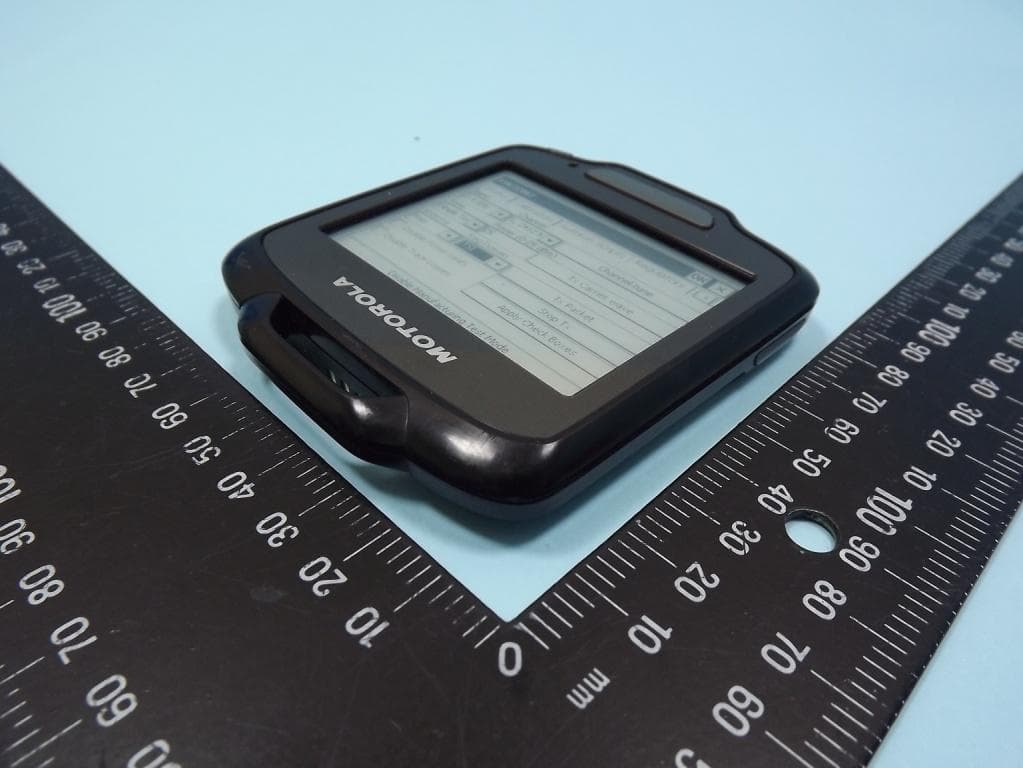
Click to zoom
Application Details
- Equipment Class
- DTS - Digital Transmission System
- Date of Grant
- Sep 16, 2012
- Application Purpose
- Original Equipment
- Date of Application
- Sep 13, 2012
- Equipment Note
- SMART BADGE
- Frequency Range
- 2412.00000000 - 2472.00000000
- Country
- United States
Documents & Files
Document Text
Text extracted from the exhibit documents filed with the FCC. Open a document above to read the original.
Users Manual
SB1 SMART BADGE USER GUIDE PRELIMINARY PRELIMINARY SB1 SMART BADGE USER GUIDE 72E-164711-01 Rev. 082312 August 2012 PRELIMINARY iiSB1 User Guide No part of this publication may be reproduced or used in any form, or by any electrical or mechanical means, without permission in writing from Motorola. This includes electronic or mechanical means, such as photocopying, recording, or information storage and retrieval systems. The material in this manual is subject to change without notice. The software is provided strictly on an “as is” basis. All software, including firmware, furnished to the user is on a licensed basis. Motorola grants to the user a non-transferable and non-exclusive license to use each software and firmware program delivered hereunder (licensed program). Except as noted below, such license may not be assigned, sublicensed, or otherwise transferred by the user without prior written consent of Motorola. No right to copy a licensed program in whole or in part is granted, except as permitted under copyright law. The user shall not modify, merge, or incorporate any form or portion of a licensed program with other program material, create a derivative work from a licensed program, or use a licensed program in a network without written permission from Motorola. The user agrees to maintain Motorola’s copyright notice on the licensed programs delivered hereunder, and to include the same on any authorized copies it makes, in whole or in part. The user agrees not to decompile, disassemble, decode, or reverse engineer any licensed program delivered to the user or any portion thereof. Motorola reserves the right to make changes to any software or product to improve reliability, function, or design. Motorola does not assume any product liability arising out of, or in connection with, the application or use of any product, circuit, or application described herein. No license is granted, either expressly or by implication, estoppel, or otherwise under any Motorola, Inc., intellectual property rights. An implied license only exists for equipment, circuits, and subsystems contained in Motorola products. PRELIMINARY iii Revision History Changes to the original guide are listed below: ChangeDateDescription Rev. 06041206/04/12Draft. Rev. 08061208/06/12Draft 2 PRELIMINARY ivSB1 User Guide PRELIMINARY TABLE OF CONTENTS Revision History .............................................................................................................................. iii About This Guide Introduction ..................................................................................................................................... ix Documentation Set ................................................................................................................... ix Configurations................................................................................................................................. ix Software Versions ..................................................................................................................... ix Chapter Descriptions ...................................................................................................................... x Notational Conventions................................................................................................................... x Related Documents and Software .................................................................................................. xi Service Information ......................................................................................................................... xi Chapter 1: Getting Started Unpacking the SB1 ........................................................................................................................ 1-1 Features ......................................................................................................................................... 1-2 SB1 Startup .................................................................................................................................... 1-3 Charging .................................................................................................................................. 1-3 WLAN Setup .................................................................................................................................. 1-5 Resetting the SB1 .......................................................................................................................... 1-6 Powering Off the SB1 .................................................................................................................... 1-6 Chapter 2: Operation Wearing the SB1 ............................................................................................................................ 2-1 Lanyard .................................................................................................................................... 2-1 Holster ...................................................................................................................................... 2-2 Armband .................................................................................................................................. 2-2 Entering Data ................................................................................................................................. 2-3 Using a Headset ............................................................................................................................ 2-4 Using the Speaker Adapter ............................................................................................................ 2-6 Home Screen ................................................................................................................................. 2-7 Notifications ..............................................................................................................…
Text truncated - open the document above for the full version.
Users Manual
SB1 REGULATORY GUIDE Motorola Solutions, Inc. 1301 E. Algonquin Rd. Schaumburg, IL 60196-1078, U.S.A. http://www.motorolasolutions.com MOTOROLA, MOTO, MOTOROLA SOLUTIONS and the Stylized M Logo are trademarks or registered trademarks of Motorola Trademark Holdings, LLC and are used under license. All other trademarks are the property of their respective owners. © 2012 Motorola Solutions, Inc. All Rights Reserved. 72-162415-01 Rev. 1 — May 2012 FeaturesRegulatory Information This device is approved under Motorola Solutions, Inc. This guide applies to model numbers: SB1. All Motorola devices are designed to be compliant with rules and regulations in locations they are sold and will be labeled as required. Local language translations are available at the following website: http://supportcentral.motorola.com Any changes or modifications to Motorola equipment, not expressly approved by Motorola, could void the user's authority to operate the equipment. Declared maximum operating temperature: 50°C. Wireless Devices Country Approvals Regulatory markings, subject to certification, are applied to the device signifying the radio(s) is/are approved for use in the following countries: United States, Canada, Japan, China, S. Korea, Australia, and Europe 1 . Please refer to the Declaration of Conformity (DoC) for details of other country markings. This is available at http:/ /www.motorola.com/doc. Note 1 : For 2.4GHz or 5GHz Products: Europe includes, Austria, Belgium, Bulgaria, Czech Republic, Cyprus, Denmark, Estonia, Finland, France, Germany, Greece, Hungary, Iceland, Ireland, Italy, Latvia, Liechtenstein, Lithuania, Luxembourg, Malta, Netherlands, Norway, Poland, Portugal, Romania, Slovak Republic, Slovenia, Spain, Sweden, Switzerland and the United Kingdom. Country Roaming This device incorporates the International Roaming feature (IEEE802.11d) which will ensure the product operates on the correct channels for the particular country of use. Health and Safety Recommendations Ergonomic Recommendations •Reduce or eliminate repetitive motion •Maintain a neutral postures •Reduce or eliminate excessive force •Keep objects that are used frequently within easy reach •Perform tasks at correct heights •Reduce or eliminate vibration •Reduce or eliminate direct pressure •Provide adjustable workstations •Provide adequate clearance •Provide a suitable working environment •Improve work procedures. Please observe all warning notices with regard to the usage of wireless devices. Potentially Hazardous Atmospheres - Fixed Installations You are reminded of the need to observe restrictions on the use of radio devices in fuel depots, chemical plants etc. and areas where the air contains chemicals or particles (such as grain, dust, or metal powders). Safety in Aircraft Switch off your wireless device whenever you are instructed to do so by airport or airline staff. If your device offers a 'flight mode' or similar feature, consult airline staff as to its use in flight. Wireless devices transmit radio frequency energy and may affect medical electrical equipment. Wireless devices should be switched off wherever you are requested to do so in hospitals, clinics or healthcare facilities. These requests are designed to prevent possible interference with sensitive medical equipment. Pacemakers Pacemaker manufacturers recommended that a minimum of 15 cm (6 inches) be maintained between a handheld wireless device and a pacemaker to avoid potential interference with the pacemaker. These recommendations are consistent with independent research and recommendations by Wireless Technology Research. Persons with pacemakers: •Should ALWAYS keep the device more than 15 cm (6 inches) from their pacemaker when turned ON. •Should not carry the device in a breast pocket. •Should use the ear furthest from the pacemaker to minimize the potential for interference. •If you have any reason to suspect that interference is taking place, turn OFF your device. Other Medical Devices Please consult your physician or the manufacturer of the medical device, to determine if the operation of your wireless product may interfere with the medical device. Safety Information Reducing RF Exposure - Use Properly Only operate the device in accordance with the instructions supplied. International The device complies with internationally recognized standards covering human exposure to electromagnetic fields from radio devices. For information on “International” human exposure to electromagnetic fields refer to the Motorola Declaration of Conformity (DoC) at http:// www.motorola.com/doc. For further information on the safety of RF energy from wireless devices - see http://responsibility.motorolasolutions.com/index.php/ ourapproach/wirelesscommhealth/ Europe Handheld Devices This device was tested for typical body-worn operation. Use only Motorola tested and approved belt-clips, holsters, and similar accessories to ensure EU Compliance. US and Canada Handheld Devices This device was tested for typical body-worn operation. Use only Motorola tested and approved belt-clips, holsters, and similar accessories to ensure FCC Compliance. The use of third-party belt-clips, holsters, and similar accessories may not comply with FCC RF exposure compliance requirements, and should be avoided. Complies with IEC/EN60825-1:2001 & IEC/ EN62471:2006. Label reads: 1. LED LIGHT DO NOT STARE DIRECTLY INTO OPTICAL INSTRUMENTS. CLASS 1M LED PRODUCT Batteries Battery Safety Guidelines •The area in which the units are charged should be clear of debris and combustible materials or chemicals. Particular care should be taken where the device is charged in a non commercial environment. •Follow battery usage, storage, and charging guidelines found in the user's guide. •Improper battery use may result in a fire, explosion, or other hazard. •To charge the mobile device battery, the battery and charger temperatures must be between +32ºF and +104ºF (0ºC and +40ºC) •Do not use incompatible batteries a…
Text truncated - open the document above for the full version.
External Photos
FCC TEST REPORT SPORTON International Inc. PAGE NUMBER : A1 OF A13 TEL : 886-3-327-3456 ISSUED DATE : Aug. 31, 2012 FAX : 886-3-327-0973 APPENDIX B. Photographs of EUT FCC TEST REPORT SPORTON International Inc. PAGE NUMBER : A2 OF A13 TEL : 886-3-327-3456 ISSUED DATE : Aug. 31, 2012 FAX : 886-3-327-0973
ID Label/Location Info
Screen Front of EUT The label will show on the screen when EUT is turned off.
Internal Photos
FCC TEST REPORT SPORTON International Inc. PAGE NUMBER : A3 OF A13 TEL : 886-3-327-3456 ISSUED DATE : Aug. 31, 2012 FAX : 886-3-327-0973 FCC TEST REPORT SPORTON International Inc. PAGE NUMBER : A4 OF A13 TEL : 886-3-327-3456 ISSUED DATE : Aug. 31, 2012 FAX : 886-3-327-0973 FCC TEST REPORT SPORTON International Inc. PAGE NUMBER : A5 OF A13 TEL : 886-3-327-3456 ISSUED DATE : Aug. 31, 2012 FAX : 886-3-327-0973 FCC TEST REPORT SPORTON International Inc. PAGE NUMBER : A6 OF A13 TEL : 886-3-327-3456 ISSUED DATE : Aug. 31, 2012 FAX : 886-3-327-0973 FCC TEST REPORT SPORTON International Inc. PAGE NUMBER : A7 OF A13 TEL : 886-3-327-3456 ISSUED DATE : Aug. 31, 2012 FAX : 886-3-327-0973 FCC TEST REPORT SPORTON International Inc. PAGE NUMBER : A8 OF A13 TEL : 886-3-327-3456 ISSUED DATE : Aug. 31, 2012 FAX : 886-3-327-0973 FCC TEST REPORT SPORTON International Inc. PAGE NUMBER : A9 OF A13 TEL : 886-3-327-3456 ISSUED DATE : Aug. 31, 2012 FAX : 886-3-327-0973 WLAN Module FCC TEST REPORT SPORTON International Inc. PAGE NUMBER : A10 OF A13 TEL : 886-3-327-3456 ISSUED DATE : Aug. 31, 2012 FAX : 886-3-327-0973 FCC TEST REPORT SPORTON International Inc. PAGE NUMBER : A11 OF A13 TEL : 886-3-327-3456 ISSUED DATE : Aug. 31, 2012 FAX : 886-3-327-0973 FCC TEST REPORT SPORTON International Inc. PAGE NUMBER : A12 OF A13 TEL : 886-3-327-3456 ISSUED DATE : Aug. 31, 2012 FAX : 886-3-327-0973 FCC TEST REPORT SPORTON International Inc. PAGE NUMBER : A13 OF A13 TEL : 886-3-327-3456 ISSUED DATE : Aug. 31, 2012 FAX : 886-3-327-0973
RF Exposure Info
SPORTON INTERNATIONAL INC. Page Number : 1 of 28 TEL : 886-3-327-3456 Report Issued Date : Sep. 03, 2012 FAX : 886-3-328-4978 Report Version : Rev. 01 FCC ID : UZ7SB1 FCC SAR Test Report Report No. : FA270520 FCC SAR Test Report APPLICANT : Motorola Solutions, Inc. MODEL NAME : Smart Badge BRAND NAME : Motorola Solutions, lnc MODEL NO : SB1 FCC ID : UZ7SB1 STANDARD : FCC 47 CFR Part 2 (2.1093) ANSI/IEEE C95.1-1992 IEEE 1528-2003 FCC OET Bulletin 65 Supplement C (Edition 01-01) The product was completely tested on Jul. 31, 2012. We, SPORTON INTERNATIONAL INC., would like to declare that the tested sample has been evaluated in accordance with the procedures and shown the compliance with the applicable technical standards. The test results in this report apply exclusively to the tested model / sample. Without written approval of SPORTON INTERNATIONAL INC., the test report shall not be reproduced except in full. Reviewed by: Jones Tsai / Manager SPORTON INTERNATIONAL INC. No. 52, Hwa Ya 1 st Rd., Hwa Ya Technology Park, Kwei-Shan Hsiang, Tao Yuan Hsien, Taiwan, R.O.C. SPORTON INTERNATIONAL INC. Page Number : 2 of 28 TEL : 886-3-327-3456 Report Issued Date : Sep. 03, 2012 FAX : 886-3-328-4978 Report Version : Rev. 01 FCC ID : UZ7SB1 FCC SAR Test Report Report No. : FA270520 Table of Contents 1. Statement of Compliance ............................................................................................................................................. 4 2. Administration Data ...................................................................................................................................................... 5 2.1 Testing Laboratory .................................................................................................................................................. 5 2.2 Applicant ................................................................................................................................................................ 5 2.3 Manufacturer .......................................................................................................................................................... 5 2.4 Application Details .................................................................................................................................................. 5 3. General Information ...................................................................................................................................................... 6 3.1 Description of Equipment Under Test (EUT) .......................................................................................................... 6 3.2 Product Photos....................................................................................................................................................... 6 3.3 Applied Standard .................................................................................................................................................... 6 3.4 Device Category and SAR Limits ........................................................................................................................... 7 3.5 Test Conditions ....................................................................................................................................................... 7 4. Specific Absorption Rate (SAR) ................................................................................................................................... 8 4.1 Introduction ............................................................................................................................................................ 8 4.2 SAR Definition ........................................................................................................................................................ 8 5. SAR Measurement System ........................................................................................................................................... 9 5.1 E-Field Probe ........................................................................................................................................................10 5.2 Data Acquisition Electronics (DAE) ....................................................................................................................... 11 5.3 Robot .................................................................................................................................................................... 11 5.4 Measurement Server ............................................................................................................................................. 11 5.5 Phantom ................................................................................................................................................................12 5.6 Device Holder........................................................................................................................................................13 5.7 Data Storage and Evaluation ................................................................................................................................14 5.8 Test Equipment List ...............................................................................................................................................16 6. Tissue Simulating Liquids ...........................................................................................................................................17 7. SAR Measurement Evaluation ....................................................................................................................................18 7.1 Purpose of System Performance check ................................................................................................................18 7.2 System Setup ....................................................................................…
Text truncated - open the document above for the full version.
RF Exposure Info
Test Laboratory: Sporton International Inc. SAR/HAC Testing Lab Date: 2012-07-24 System Check_Body_2450MHz_120724 DUT: D2450V2-SN:736 Communication System: CW; Frequency: 2450 MHz;Duty Cycle: 1:1 Medium: MSL_2450_120724 Medium parameters used: f = 2450 MHz; σ = 2.02 mho/m; ε r = 53.9; ρ = 1000 kg/m 3 Ambient Temperature:22.6 °C; Liquid Temperature:21.6 °C DASY4 Configuration: - Probe: EX3DV4 - SN3819; ConvF(7.4, 7.4, 7.4); Calibrated: 2011-11-16 - Sensor-Surface: 4mm (Mechanical Surface Detection) - Electronics: DAE4 Sn1338; Calibrated: 2012-06-12 - Phantom: SAM_Right; Type: SAM; Serial: TP-1303 - Measurement SW: DASY4, V4.7 Build 80; Postprocessing SW: SEMCAD, V1.8 Build 186 Pin=250mW/Area Scan (91x91x1): Measurement grid: dx=15mm, dy=15mm Maximum value of SAR (interpolated) = 14.3 mW/g Pin=250mW/Zoom Scan (7x7x7)/Cube 0: Measurement grid: dx=5mm, dy=5mm, dz=5mm Reference Value = 83.0 V/m; Power Drift = 0.025 dB Peak SAR (extrapolated) = 26.3 W/kg SAR(1 g) = 12.3 mW/g; SAR(10 g) = 5.57 mW/g Maximum value of SAR (measured) = 14.1 mW/g 0 dB = 14.1mW/g Test Laboratory: Sporton International Inc. SAR/HAC Testing Lab Date: 2012-07-25 System Check_Body_2450MHz_120725 DUT: D2450V2-SN:736 Communication System: CW; Frequency: 2450 MHz;Duty Cycle: 1:1 Medium: MSL_2450_120725 Medium parameters used: f = 2450 MHz; σ = 1.93 mho/m; ε r = 52.5; ρ = 1000 kg/m 3 Ambient Temperature:22.4 °C; Liquid Temperature:21.4 °C DASY4 Configuration: - Probe: EX3DV4 - SN3855; ConvF(7.36, 7.36, 7.36); Calibrated: 2012-05-09 - Sensor-Surface: 4mm (Mechanical Surface Detection) - Electronics: DAE4 Sn778; Calibrated: 2011-11-22 - Phantom: SAM_Right; Type: SAM; Serial: TP-1303 - Measurement SW: DASY4, V4.7 Build 80; Postprocessing SW: SEMCAD, V1.8 Build 186 Pin=250mW/Area Scan (61x61x1): Measurement grid: dx=15mm, dy=15mm Maximum value of SAR (interpolated) = 21.2 mW/g Pin=250mW/Zoom Scan (7x7x7)/Cube 0: Measurement grid: dx=5mm, dy=5mm, dz=5mm Reference Value = 104.6 V/m; Power Drift = 0.009 dB Peak SAR (extrapolated) = 39.2 W/kg SAR(1 g) = 13.5 mW/g; SAR(10 g) = 6.14 mW/g Maximum value of SAR (measured) = 20.9 mW/g 0 dB = 20.9mW/g Test Laboratory: Sporton International Inc. SAR/HAC Testing Lab Date: 2012-07-31 System Check_Body_2450MHz_120731 DUT: D2450V2-SN:736 Communication System: CW; Frequency: 2450 MHz;Duty Cycle: 1:1 Medium: MSL_2450_120731 Medium parameters used: f = 2450 MHz; σ = 1.97 mho/m; ε r = 52.7; ρ = 1000 kg/m 3 Ambient Temperature:22.4 °C; Liquid Temperature:21.4 °C DASY4 Configuration: - Probe: EX3DV4 - SN3819; ConvF(7.4, 7.4, 7.4); Calibrated: 2011-11-16 - Sensor-Surface: 4mm (Mechanical Surface Detection) - Electronics: DAE4 Sn778; Calibrated: 2011-11-22 - Phantom: SAM_Right; Type: SAM; Serial: TP-1303 - Measurement SW: DASY4, V4.7 Build 80; Postprocessing SW: SEMCAD, V1.8 Build 186 Pin=250mW/Area Scan (61x61x1): Measurement grid: dx=15mm, dy=15mm Maximum value of SAR (interpolated) = 13.6 mW/g Pin=250mW/Zoom Scan (7x7x7)/Cube 0: Measurement grid: dx=5mm, dy=5mm, dz=5mm Reference Value = 82.9 V/m; Power Drift = -0.107 dB Peak SAR (extrapolated) = 24.4 W/kg SAR(1 g) = 12.2 mW/g; SAR(10 g) = 5.44 mW/g Maximum value of SAR (measured) = 13.7 mW/g 0 dB = 13.7mW/g
RF Exposure Info
Test Laboratory: Sporton International Inc. SAR/HAC Testing Lab Date: 2012-07-24 #01 WLAN2.4G_802.11b_Front_0cm_Ch6 DUT: 270520 Communication System: 802.11b ; Frequency: 2437 MHz;Duty Cycle: 1:1 Medium: MSL_2450_120724 Medium parameters used: f = 2437 MHz; σ = 2 mho/m; ε r = 54; ρ = 1000 kg/m 3 Ambient Temperature:22.6 °C; Liquid Temperature:21.6 °C DASY4 Configuration: - Probe: EX3DV4 - SN3819; ConvF(7.4, 7.4, 7.4); Calibrated: 2011-11-16 - Sensor-Surface: 4mm (Mechanical Surface Detection) - Electronics: DAE4 Sn1338; Calibrated: 2012-06-12 - Phantom: SAM_Right; Type: SAM; Serial: TP-1303 - Measurement SW: DASY4, V4.7 Build 80; Postprocessing SW: SEMCAD, V1.8 Build 186 Ch6/Area Scan (71x81x1): Measurement grid: dx=15mm, dy=15mm Maximum value of SAR (interpolated) = 1.10 mW/g Ch6/Zoom Scan (5x5x7)/Cube 0: Measurement grid: dx=8mm, dy=8mm, dz=5mm Reference Value = 3.98 V/m; Power Drift = -0.008 dB Peak SAR (extrapolated) = 2.61 W/kg SAR(1 g) = 1.05 mW/g; SAR(10 g) = 0.454 mW/g Maximum value of SAR (measured) = 1.09 mW/g 0 dB = 1.09mW/g Test Laboratory: Sporton International Inc. SAR/HAC Testing Lab Date: 2012-07-24 #08 WLAN2.4G_802.11b_Front_0cm_Ch1 DUT: 270520 Communication System: 802.11b ; Frequency: 2412 MHz;Duty Cycle: 1:1 Medium: MSL_2450_120724 Medium parameters used: f = 2412 MHz; σ = 1.96 mho/m; ε r = 54; ρ = 1000 kg/m 3 Ambient Temperature:22.6 °C; Liquid Temperature:21.6 °C DASY4 Configuration: - Probe: EX3DV4 - SN3819; ConvF(7.4, 7.4, 7.4); Calibrated: 2011-11-16 - Sensor-Surface: 4mm (Mechanical Surface Detection) - Electronics: DAE4 Sn1338; Calibrated: 2012-06-12 - Phantom: SAM_Right; Type: SAM; Serial: TP-1303 - Measurement SW: DASY4, V4.7 Build 80; Postprocessing SW: SEMCAD, V1.8 Build 186 Ch1/Area Scan (71x81x1): Measurement grid: dx=15mm, dy=15mm Maximum value of SAR (interpolated) = 1.05 mW/g Ch1/Zoom Scan (5x5x7)/Cube 0: Measurement grid: dx=8mm, dy=8mm, dz=5mm Reference Value = 4.04 V/m; Power Drift = -0.006 dB Peak SAR (extrapolated) = 2.62 W/kg SAR(1 g) = 1.03 mW/g; SAR(10 g) = 0.444 mW/g Maximum value of SAR (measured) = 1.14 mW/g 0 dB = 1.14mW/g Test Laboratory: Sporton International Inc. SAR/HAC Testing Lab Date: 2012-07-25 #10 WLAN2.4G_802.11b_Front_0cm_Ch11 DUT: 270520 Communication System: 802.11b ; Frequency: 2462 MHz;Duty Cycle: 1:1 Medium: MSL_2450_120725 Medium parameters used: f = 2462 MHz; σ = 1.94 mho/m; ε r = 52.4; ρ = 1000 kg/m 3 Ambient Temperature:22.4 °C; Liquid Temperature:21.4 °C DASY4 Configuration: - Probe: EX3DV4 - SN3855; ConvF(7.36, 7.36, 7.36); Calibrated: 2012-05-09 - Sensor-Surface: 4mm (Mechanical Surface Detection) - Electronics: DAE4 Sn778; Calibrated: 2011-11-22 - Phantom: SAM_Right; Type: SAM; Serial: TP-1303 - Measurement SW: DASY4, V4.7 Build 80; Postprocessing SW: SEMCAD, V1.8 Build 186 Ch11/Area Scan (71x81x1): Measurement grid: dx=15mm, dy=15mm Maximum value of SAR (interpolated) = 1.14 mW/g Ch11/Zoom Scan (5x5x7)/Cube 0: Measurement grid: dx=8mm, dy=8mm, dz=5mm Reference Value = 4.66 V/m; Power Drift = -0.111 dB Peak SAR (extrapolated) = 2.56 W/kg SAR(1 g) = 1.06 mW/g; SAR(10 g) = 0.481 mW/g Maximum value of SAR (measured) = 1.13 mW/g 0 dB = 1.13mW/g Test Laboratory: Sporton International Inc. SAR/HAC Testing Lab Date: 2012-07-24 #02 WLAN2.4G_802.11b_Back_0cm_Ch6 DUT: 270520 Communication System: 802.11b ; Frequency: 2437 MHz;Duty Cycle: 1:1 Medium: MSL_2450_120724 Medium parameters used: f = 2437 MHz; σ = 2 mho/m; ε r = 54; ρ = 1000 kg/m 3 Ambient Temperature:22.6 °C; Liquid Temperature:21.6 °C DASY4 Configuration: - Probe: EX3DV4 - SN3819; ConvF(7.4, 7.4, 7.4); Calibrated: 2011-11-16 - Sensor-Surface: 4mm (Mechanical Surface Detection) - Electronics: DAE4 Sn1338; Calibrated: 2012-06-12 - Phantom: SAM_Right; Type: SAM; Serial: TP-1303 - Measurement SW: DASY4, V4.7 Build 80; Postprocessing SW: SEMCAD, V1.8 Build 186 Ch6/Area Scan (71x81x1): Measurement grid: dx=15mm, dy=15mm Maximum value of SAR (interpolated) = 1.15 mW/g Ch6/Zoom Scan (5x5x7)/Cube 0: Measurement grid: dx=8mm, dy=8mm, dz=5mm Reference Value = 6.27 V/m; Power Drift = 0.023 dB Peak SAR (extrapolated) = 2.77 W/kg SAR(1 g) = 1.21 mW/g; SAR(10 g) = 0.528 mW/g Maximum value of SAR (measured) = 1.20 mW/g 0 dB = 1.20mW/g Test Laboratory: Sporton International Inc. SAR/HAC Testing Lab Date: 2012-07-24 #07 WLAN2.4G_802.11b_Back_0cm_Ch1 DUT: 270520 Communication System: 802.11b ; Frequency: 2412 MHz;Duty Cycle: 1:1 Medium: MSL_2450_120724 Medium parameters used: f = 2412 MHz; σ = 1.96 mho/m; ε r = 54; ρ = 1000 kg/m 3 Ambient Temperature:22.6 °C; Liquid Temperature:21.6 °C DASY4 Configuration: - Probe: EX3DV4 - SN3819; ConvF(7.4, 7.4, 7.4); Calibrated: 2011-11-16 - Sensor-Surface: 4mm (Mechanical Surface Detection) - Electronics: DAE4 Sn1338; Calibrated: 2012-06-12 - Phantom: SAM_Right; Type: SAM; Serial: TP-1303 - Measurement SW: DASY4, V4.7 Build 80; Postprocessing SW: SEMCAD, V1.8 Build 186 Ch1/Area Scan (71x81x1): Measurement grid: dx=15mm, dy=15mm Maximum value of SAR (interpolated) = 0.988 mW/g Ch1/Zoom Scan (5x5x7)/Cube 0: Measurement grid: dx=8mm, dy=8mm, dz=5mm Reference Value = 6.10 V/m; Power Drift = 0.074 dB Peak SAR (extrapolated) = 2.38 W/kg SAR(1 g) = 1.04 mW/g; SAR(10 g) = 0.453 mW/g Maximum value of SAR (measured) = 1.06 mW/g 0 dB = 1.06mW/g Test Laboratory: Sporton International Inc. SAR/HAC Testing Lab Date: 2012-07-25 #09 WLAN2.4G_802.11b_Back_0cm_Ch11 DUT: 270520 Communication System: 802.11b ; Frequency: 2462 MHz;Duty Cycle: 1:1 Medium: MSL_2450_120725 Medium parameters used: f = 2462 MHz; σ = 1.94 mho/m; ε r = 52.4; ρ = 1000 kg/m 3 Ambient Temperature:22.4 °C; Liquid Temperature:21.4 °C DASY4 Configuration: - Probe: EX3DV4 - SN3855; ConvF(7.36, 7.36, 7.36); Calibrated: 2012-05-09 - Sensor-Surface: 4mm (Mechanical Surface Detection) - Electronics: DAE4 Sn778; Calibrated: 2011-11-22 - Phantom: SAM_Right; Type: SAM; Serial: TP-1303 - Measurement SW: DASY4, V4.7 Build 80; Postprocessing SW: SEMCAD, V1.8 Build 186 Ch11/Area Scan (71x81x1): Measurement gr…
Text truncated - open the document above for the full version.
RF Exposure Info
SPORTON INTERNATIONAL INC. Calibration Certificate of DASY SPORTON INTERNATIONAL INC. Calibration Certificate of DASY SPORTON INTERNATIONAL INC. Calibration Certificate of DASY SPORTON INTERNATIONAL INC. Calibration Certificate of DASY SPORTON INTERNATIONAL INC. Calibration Certificate of DASY SPORTON INTERNATIONAL INC. Calibration Certificate of DASY SPORTON INTERNATIONAL INC. Calibration Certificate of DASY SPORTON INTERNATIONAL INC. Calibration Certificate of DASY SPORTON INTERNATIONAL INC. TEL : 886-3-327-3456 FAX : 886-3-328-4978 FCC Test Report D2450V2, serial no. 736 Extended Dipole Calibrations Referring to KDB 450824, if dipoles are verified in return loss (<-20dB, within 20% of prior calibration), and in impedance (within 5 ohm of prior calibration), the annual calibration is not necessary and the calibration interval can be extended. <Justification of the extended calibr…
Text truncated - open the document above for the full version.
Contact Information
Applicant
Qianlin Zhou(Regulatory Specialist)
Test Firm
Sporton International Inc.Alex Chen
Technical Specifications
| # | Rule Parts | Frequency Range | Power Output |
|---|---|---|---|
| 1 | 15C | 2.41 GHz - 2.47 GHz | 288.40 mW |
Other Applications from Zebra Technologies Corporation
UZ7DS8288R
Jun 29, 2026Cordless Scanner
Equipment Class
DTS - Digital Transmission SystemUZ7DS8208R
Jun 29, 2026Cordless Scanner
Equipment Class
DSS - Part 15 Spread Spectrum TransmitterUZ7TCW01G
Jun 23, 2026Touch Computer
Equipment Class
CBE - Citizens Band End User DevicesUZ7TCW010
May 29, 2026Touch Computer
Equipment Class
NII - Unlicensed National Information Infrastructure TXUZ7TC101B
Apr 29, 2026Touch Computer
Equipment Class
DSS - Part 15 Spread Spectrum Transmitter