V65C5171Tri-Band CDMA Mobile Phone w BT + WiFi
Kyocera Corporation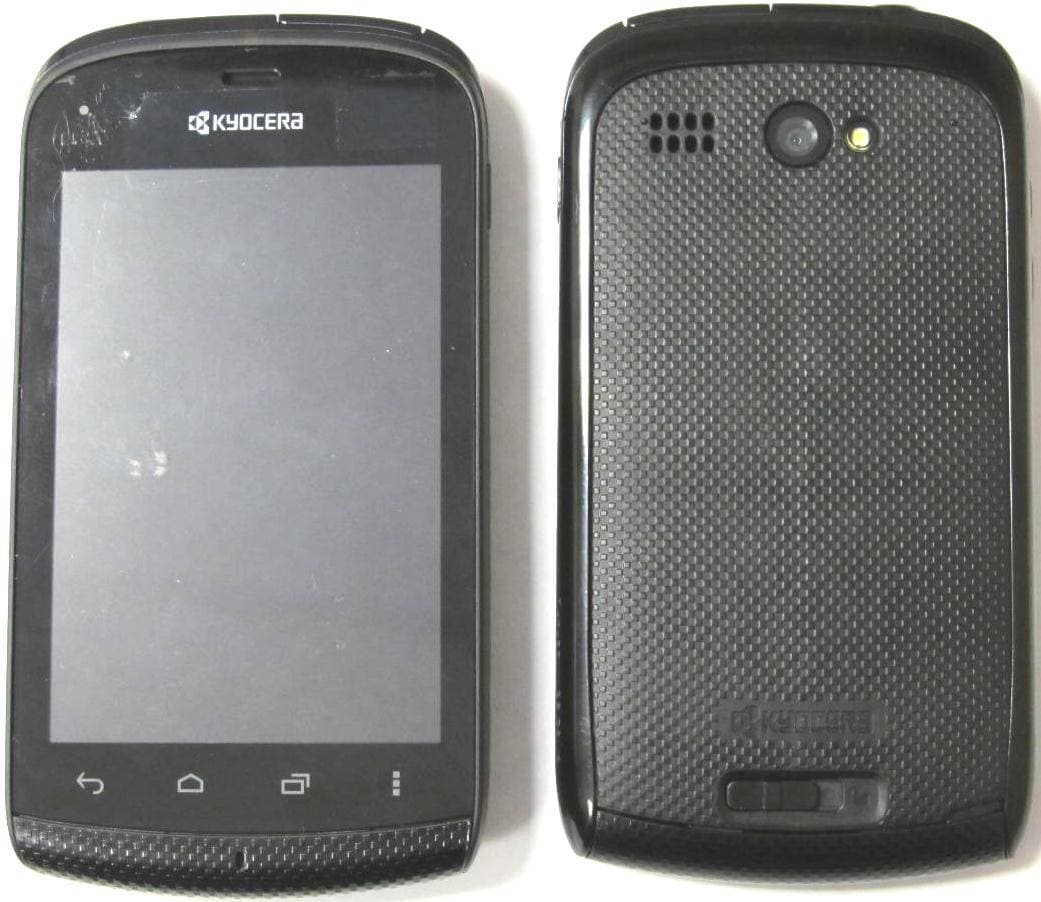
Click to zoom
Application Details
- Equipment Class
- PCE - PCS Licensed Transmitter held to ear
- Date of Grant
- Sep 18, 2012
- Application Purpose
- Original Equipment
- Date of Application
- Sep 18, 2012
- Equipment Note
- Tri-Band CDMA Mobile Phone w BT + WiFi
- Frequency Range
- 1711.25000000 - 1753.75000000
- Company
- Kyocera Corporation
- Country
- United States
Documents & Files
Document Text
Text extracted from the exhibit documents filed with the FCC. Open a document above to read the original.
Users Manual
Get Started for the KYOCERA Hydro Get Started2 Important Safety Information 16 Manufacturer’s Warranty 25 End User License Agreement 27 © 2012 Kyocera Corporation. All rights reserved. All other trademarks are the property of their respective owners. KYOCERA is a registered trademark of Kyocera Corporation. Android, Google Play, Google Maps, Gmail, Google Talk, and YouTube are trademarks of Google Inc. Swype and the Swype logos are registered trademarks or trademarks of Nuance Communications, Inc. © 2012 Nuance Communications, Inc. All rights reserved. The Bluetooth ® word mark and logos are registered trademarks owned by Bluetooth SIG, Inc. and any use of such marks by Kyocera Corporation is under license. Other trademarks and trade names are those of their respective owners. 2Get Started ♦Your KYOCERA Hydro (page 2) ♦Get Your Device Ready (page 3) ♦Android™ Basics (page 4) ♦Use Your Device (page 7) ♦Customer Support (page 15) ♦Notes (page 15) This section introduces you to the basics of getting started with your KYOCERA Hydro. Visit http:// www.mycricket.com/ for the complete User Guide and additional information. Get Started Your KYOCERA Hydro Earpiece LED Indicator Home Key Display Screen Back Key Recent Apps Key Menu Key Microphone Camera Lens Charger/ Accessory Jack Volume Button Headphone Jack Power Button microSD Card Slot (under the battery) Speaker Internal Antennas Camera Flash Battery Cover Release Latch Proximity Sensor/ Light Sensor Get Started3 Find out what you need to do before you use your device the first time. Install the Battery 1. Slide the battery cover release latch to the unlocked position (). 2. Insert your thumb- or fingernail into the slit () and lift the battery cover (). 3. Insert the battery, contacts end first, and gently press into place (). 4. Replace the cover, applying equal pressure from the top down on both sides and making sure all the locking tabs of the cover are seated with no gaps (). 5. Slide the battery cover release latch to the locked position (). Charge the Battery 1. Open the cover of the charger/accessory jack. 2. Plug the smaller end of the micro-USB cable into the device’s charger/accessory jack. 3. Plug the other end of the USB cable into the charger, and then plug the charger into an electrical outlet. Get Your Device Ready 4Get Started Tu r n th e D e v i c e O n Press and hold the Power button to turn your device on. Tu r n th e Screen On and Off To quickly turn the display screen off, press the Power button. To turn the screen on and display the lock screen, press the Power button. Unlock the Screen Touch and flick it in any direction to unlock the screen. Turn the Device Off Press and hold the Power button and then touch Power off > OK to turn the device off. Learn some basics about how to move around on your device, use the Home screen, and enter text. If you’re familiar with Android devices, you can probably skip these pages (although a refresher course never hurts anyone). Move Around Your Device’s Menus and Screens Using Gestures Your device’s touchscreen lets you control everything through various types of touches, or gestures. Touch: When you want to press onscreen buttons, select items such as application and settings icons, or type, simply touch the screen with your finger. A light touch works best. Touch and hold: To open the available options for an item (for example, options for a contact), simply touch and hold the item. Drag: Touch and hold your finger before you start to move it. Do not release your finger until you have reached the target position. Slide or Flick: To slide, quickly move your finger vertically or horizontally across the screen. To flick, move your finger in lighter, quicker strokes than sliding. When you’re flicking through a long list, touch the screen to stop scrolling. Power Button Android™ Basics Get Started5 Pinch and Spread: Pinch the screen using your thumb and forefinger to zoom out or spread the screen to zoom in when viewing a picture or a Web page. (Move fingers inward to zoom out and outward to zoom in.) Rotate: For most screens, you can automatically change the screen orientation from portrait to landscape by turning the device sideways. When entering text, you can turn the device sideways to bring up a bigger keyboard. Note:The Auto-rotate screen check box in Home > Menu > System settings > Display needs to be selected for the screen orientation to automatically change. Home Screen Press Home to display your Home screen. Notifications Panel When you see a notification icon on the left side of the status bar, drag the status bar down to display the Notifications panel. Touch a notification to open the related application, such as messaging, call list, or event. To close the panel, drag the bottom bar up. Viewing Extended Screens Your device’s Home screen extends horizontally to four additional screens. This gives you room to customize your device and put the things you need front and center, just a swipe away. To display the Home screen, press Home from any screen. To view extended screens, flick the screen left or right. There are two additional screens on each side of the Home screen. Add Items to Your Screen 1. Touch on the Favorites Tray. 2. Slide the APPS and WIDGETS screens to find the item you want to add. 3. Touch and hold an application or widget icon. The initial Home screen appears with the icon. 4. Pressing the application or widget icon, move your finger to the place you want to add the icon. 5. Release your finger. Status Bar Google Search Bar Favorites Tray Screen Position Indicator Shortcut Application Launcher 6Get Started Keys Function Keys Just below the touchscreen, you will find a row of four keys that let you perform specific functions. ●Back Key () Press to return to the previous screen or close the dialog box. ●Home Key () Press to return to the Home screen. ●Recent Apps Key () Press to show the Recent Apps screen. ●Menu Key () Press to open the menus of t…
Text truncated - open the document above for the full version.
Cover Letter(s)
KYOCERA COMMUNICATIONS, INC. 8611 Balboa Avenue San Diego, San Diego, CA 92123 Kyocera Communications, Inc. Proprietary/Confidential Date: 08/31/2012 Federal Communications Commission Equipment Approval Services 7435 Oakland Mills Road Columbia, MD 21046 Subject: Request for Confidentiality FCC ID: V65C5171 To Whom It May Concern: In accordance with §0.459 of CFR 47, KYOCERA Corporation requests confidentiality for the following items 1. Block Diagram 2. Parts List 3. Adjustment Procedure and Schematic Diagrams 4. Technical Description These items contain detailed system and equipment description and related information about the product which KYOCERA Corporation considers to be proprietary, confidential and a custom design which otherwise would not be released to the general public. Since this design is a basis from which future technological products will evolve, KYOCERA Corporation also feels that this information would be of benefit to its competitors, and that the disclosure of the information in these exhibits would give our competitors an unfair advantage in the market. Best Regards, ____________________________ C. K. Li Director, Design Center Kyocera Corporation c/o Kyocera Communications, Inc. (KCI) 8611 Balboa Avenue San Diego, San Diego, CA 92123
Cover Letter(s)
KYOCERA COMMUNICATIONS, INC. 8611 Balboa Avenue San Diego, San Diego, CA 92123 Kyocera Communications, Inc.. Proprietary/Confidential Date: 08/31/2012 Federal Communications Commission Equipment Approval Services 7435 Oakland Mills Road Columbia, MD 21046 Subject: Request for Short-Term Confidentiality FCC ID: V65C5171 To Whom It May Concern: In accordance with §0.457 and 0.459 of CFR 47, KYOCERA Corporation requests short-term confidentiality (135 days) for the following items 1. Test Setup Photos 2. External and Internal Photos 3. User’s Manual These items contain detailed system and equipment description and related information about the product which KYOCERA Corporation considers to be proprietary, confidential and a custom design which otherwise would not be released to the general public. Since this design is a basis from which future technological products will evolve, KYOCERA Corporation also feels that this information would be of benefit to its competitors, and that the disclosure of the information in these exhibits would give our competitors an unfair advantage in the market. Best Regards, ____________________________ C. K. Li Director, Design Center Kyocera Corporation c/o Kyocera Communications, Inc. (KCI) 8611 Balboa Avenue San Diego, San Diego, CA 92123
Cover Letter(s)
Date: 7/16/10 Compliance Certification Services Certification Division 47173 Benicia Street Fremont, CA 94538, USA To whom it may concern: I, the undersigned, hereby authorize Ms. Claire Hoque/Application Examiner of Compliance Engineering Services, Inc., d.b.a. Compliance Certification Services and hereafter referred to as CCS, to act on our behalf in all manners relating to application for equipment authorization, including signing of all documents relating to these matters. Any and all acts carried out by Ms. Claire Hoque of CCS on our behalf shall have the same effect as acts of our own. I, the undersigned, hereby certify that we are not subject to a denial of federal benefits, that includes FCC benefits, pursuant to Section 5301 of the Anti-Drug Abuse Act of 1988, 21 U.S.C. 853(a). In authorizing CCS as our agent, we still recognize that we are responsible to: a) comply with the relevant provisions of the certification program; b) make all necessary arrangements for the conduct of the evaluation, including provision for examining documentation and access to all areas, records (including internal audit reports) and personnel for the purposes of evaluation (e.g. testing, inspection, assessment, surveillance, reassessment) and resolution of complaints; c) make claims regarding certification only in respect of the scope for which certification has been granted; d) do not use our product certification in such a manner as to bring the Certification Division into disrepute and not make any statement regarding our product certification which the Certification Division may consider misleading or unauthorized; e) upon suspension or cancellation of certification, discontinue use of all advertising matter that contains any reference thereto and return any certification documents as required by the Certification Division; f) use certification only to indicate the products are certified as being in conformity with specified standards; g) endeavor to ensure that no certificate or report nor any part thereof is used in a misleading manner; h) ensure that any reference to our product certification in communication media such as documents, brochures or advertising, complies with the requirements of the Certification Division; i) keep a record of all complaints made known to the us relating to the product’s compliance with requirements of the relevant standard and to make these records available to the Certification Division when requested; j) take appropriate action with respect to such complaints and any deficiencies found in products or services that affect compliance with the requirements for certification; k) document the actions taken. This authorization is valid until further written notice from the applicant. Sincerely Yours, Tina To, Account Representative CompTest Services, LLC
External Photos
Applicant: Kyocera FCC ID: V65C5171 Report #: CT-C5171-7-0812-R0 © 2012 Comptest Services LLC Page 1 of 1 External Photos This report shall not be reproduced except in full, without the written consent of CompTest Services LLC. EXHIBIT 7: EXTERNAL PHOTOS
ID Label/Location Info
C5171 RATING LABEL KYOCERA Corporation <Note on FCC ID> The handset's FCC ID is printed on the outside of the box. As the box contains the handset without battery/battery cover installed, the FCC ID Printed on the rating label affixed to the opening on the back of the handset will be easily visible. Battery Compartment
Internal Photos
Applicant: Kyocera FCC ID: V65C5171 Report #: CT-C5171-8-0812-R0 © 2012 Comptest Services LLC Page 1 of 5 Internal Photos This report shall not be reproduced except in full, without the written consent of CompTest Services LLC. EXHIBIT 8: INTERNAL PHOTOS CDMA Antenna WiFi/Bluetooth Antenna Applicant: Kyocera FCC ID: V65C5171 Report #: CT-C5171-8-0812-R0 © 2012 Comptest Services LLC Page 2 of 5 Internal Photos This report shall not be reproduced except in full, without the written consent of CompTest Services LLC. Applicant: Kyocera FCC ID: V65C5171 Report #: CT-C5171-8-0812-R0 © 2012 Comptest Services LLC Page 3 of 5 Internal Photos This report shall not be reproduced except in full, without the written consent of CompTest Services LLC. Applicant: Kyocera FCC ID: V65C5171 Report #: CT-C5171-8-0812-R0 © 2012 Comptest Services LLC Page 4 of 5 Internal Photos This report shall not be reproduced except in full, without the written consent of CompTest Services LLC. Applicant: Kyocera FCC ID: V65C5171 Report #: CT-C5171-8-0812-R0 © 2012 Comptest Services LLC Page 5 of 5 Internal Photos This report shall not be reproduced except in full, without the written consent of CompTest Services LLC.
RF Exposure Info
Applicant: Kyocera FCC ID: V65C5171 Report #: CT-C5171-9-0712-R1 © 2012 Comptest Services LLC Page 1 of 39 SAR Report This report shall not be reproduced except in full, without the written consent of CompTest Services LLC. Specific Absorption Rate (SAR) FCC 47 CFR Part 2 Test Report For Kyocera Corporation c/o Kyocera Communication, Inc. Product: Tri-Band CDMA Mobile Phone Model: C5171 Applicant: Kyocera FCC ID: V65C5171 Report #: CT-C5171-9-0712-R1 © 2012 Comptest Services LLC Page 2 of 39 SAR Report This report shall not be reproduced except in full, without the written consent of CompTest Services LLC. TABLE OF CONTENTS 1 SUMMARY OF TESTING ................................................................................................................. 4 2 EQUIPMENT UNDER TEST INFORMATION ................................................................................... 5 3 ACCESSORIES ................................................................................................................................ 5 3.1 BODY WORN ACCESSORIES ........................................................................................................ 5 3.2 BATTERIES ................................................................................................................................. 5 4 TEST CONDITIONS ......................................................................................................................... 6 4.1 TEST FACILITIES ......................................................................................................................... 6 4.2 AMBIENT CONDITIONS ................................................................................................................. 6 4.3 RF CHARACTERISTICS OF THE TEST SITE ...................................................................................... 6 4.4 TEST SIGNAL, FREQUENCIES AND OUTPUT POWER ....................................................................... 7 4.5 DEVICE TEST CONDITIONS........................................................................................................... 9 4.6 MULTIPLE TRANSMITTERS AND ANTENNAS SAR EVALUATIONS..................................................... 10 4.7 ROUTER SAR EVALUATIONS ...................................................................................................... 13 4.8 HAND SAR EVALUATIONS .......................................................................................................... 14 4.9 SAR TESTS IN MOUTH AND JAW REGIONS OF THE SAM PHANTOM .............................................. 15 5 DESCRIPTION OF THE TEST EQUIPMENT ................................................................................. 16 5.1 DOSIMETRIC SYSTEM ................................................................................................................ 16 5.2 ADDITIONAL EQUIPMENT NEEDED IN VALIDATION.......................................................................... 18 5.3 TISSUE STIMULANTS ................................................................................................................. 18 5.4 PHANTOMS DESCRIPTION .......................................................................................................... 19 5.5 ISOTROPIC E-FIELD PROBE ....................................................................................................... 20 6 SYSTEM VALIDATION .................................................................................................................. 21 7 DESCRIPTION OF THE TEST PROCEDURE ................................................................................ 23 7.1 TEST POSITIONS ....................................................................................................................... 23 7.2 SCAN PROCEDURES .................................................................................................................. 25 7.3 SAR AVERAGING METHODS ...................................................................................................... 25 8 MEASUREMENT UNCERTAINTY.................................................................................................. 26 9 TEST DATA .................................................................................................................................... 27 9.1 HEAD SAR TEST RESULTS ........................................................................................................ 27 9.2 BODY-WORN SAR TEST RESULTS ............................................................................................. 31 9.3 HOTSPOT BODY SAR TEST RESULTS ......................................................................................... 33 10 SIMULTANEOUS SAR EVALUATION ........................................................................................... 37 10.1 SUMMATION OF HIGHEST MEASURED SAR VALUES .................................................................... 37 10.2 SUMMATION OF HIGHEST SCALED SAR VALUES ......................................................................... 38 11 LIST OF APPENDIX ....................................................................................................................... 39 Applicant: Kyocera FCC ID: V65C5171 Report #: CT-C5171-9-0712-R1 © 2012 Comptest Services LLC Page 3 of 39 SAR Report This report shall not be reproduced except in full, without the written consent of CompTest Services LLC. ATTESTATION The tested device complies with the requirements in respect of all parameters subject to the test. The test results and statements relate only to the items tested. The test equipment used was suitable for the tests performed and within manufacturer’s published specifications and operating parameters. The test methods were consistent with the methods described in the relevant standards. Product: Tri-Band CDMA Mobile Phone with Bluetooth and WLAN Model #: C5171 FCC ID: V65C5171 Tested in accordance with: FCC §2.1093/…
Text truncated - open the document above for the full version.
RF Exposure Info
Applicant: Kyocera FCC ID: V65C5171 Report #: CT-C5171-9A-0712-R0 © 2012 Comptest Services LLC Page 1 of 22 SAR Validation Plots This report shall not be reproduced except in full, without the written consent of CompTest Services LLC. EXHIBIT 9 APPENDIX A: SAR VALIDATION PLOTS Validation for HEAD Applicant: Kyocera FCC ID: V65C5171 Report #: CT-C5171-9A-0712-R0 © 2012 Comptest Services LLC Page 2 of 22 SAR Validation Plots This report shall not be reproduced except in full, without the written consent of CompTest Services LLC. Test Laboratory: Comptest/Kyocera Date: 07/20/2012 835MHz Validation , Probe #3035, DAE #530, Dipole #467 Communication System: CW, Frequency: 835 MHz, Duty Cycle: 1:1 Medium: Head 835 MHz,Medium parameters used (interpolated): f = 835 MHz; σ = 0.92 mho/m; ε r = 43.2; ρ = 1000 kg/m 3 Phantom: SAM 12,Phantom section: Flat Section DASY4 Configuration: Probe: ES3DV3 - SN3035, ConvF(6.04, 6.04, 6.04), Calibrated: 2/22/2012 Sensor-Surface: 4mm (Mechanical Surface Detection), Electronics: DAE4 Sn530,Calibrated: 5/30/2012 Measurement SW: DASY4, V4.7 Build 80 Postprocessing SW: SEMCAD, V1.8 Build 186 Temperature: Room T = 21.8 +/- 1 deg C, Liquid T = 22.0 +/- 1 deg C 835MHz/Area Scan (51x121x1): Measurement grid: dx=15mm, dy=15mm Maximum value of SAR (interpolated) = 1.05 mW/g 835MHz/Zoom Scan (7x7x7)/Cube 0: Measurement grid: dx=5mm, dy=5mm, dz=5mm Reference Value = 32.9 V/m; Power Drift = 0.029 dB Peak SAR (extrapolated) = 1.47 W/kg SAR(1 g) = 0.980 mW/g; SAR(10 g) = 0.639 mW/g Maximum value of SAR (measured) = 1.07 mW/g 0 dB = 1.05mW/g Applicant: Kyocera FCC ID: V65C5171 Report #: CT-C5171-9A-0712-R0 © 2012 Comptest Services LLC Page 3 of 22 SAR Validation Plots This report shall not be reproduced except in full, without the written consent of CompTest Services LLC. Applicant: Kyocera FCC ID: V65C5171 Report #: CT-C5171-9A-0712-R0 © 2012 Comptest Services LLC Page 4 of 22 SAR Validation Plots This report shall not be reproduced except in full, without the written consent of CompTest Services LLC. Test Laboratory: Comptest/Kyocera Date: 07/23/2012 1800Mhz Validation @ 20dBm Probe 1618, DAE 603 and Dipole 220 Communication System: CW, Frequency: 1800 MHz, Duty Cycle: 1:1 Medium: HSL1800,Medium parameters used (extrapolated): f = 1800 MHz; σ = 1.45 mho/m; ε r = 38.3; ρ = 1000 kg/m 3 Phantom: SAM 12,Phantom section: Flat Section DASY4 Configuration: Probe: ET3DV6 - SN1618, ConvF(5.29, 5.29, 5.29), Calibrated: 9/19/2011 Sensor-Surface: 4mm (Mechanical Surface Detection), Electronics: DAE4 Sn603,Calibrated: 9/27/2011 Measurement SW: DASY4, V4.7 Build 80 Postprocessing SW: SEMCAD, V1.8 Build 186 Temperature: Room T = 21.8 +/- 1 deg C, Liquid T = 22.0 +/- 1 deg C 1800MHz Validation @20dBm/Area Scan (61x61x1): Measurement grid: dx=15mm, dy=15mm Maximum value of SAR (interpolated) = 4.55 mW/g 1800MHz Validation @20dBm/Zoom Scan (7x7x7)/Cube 0: Measurement grid: dx=5mm, dy=5mm, dz=5mm Reference Value = 55.0 V/m; Power Drift = 0.124 dB Peak SAR (extrapolated) = 6.90 W/kg SAR(1 g) = 3.92 mW/g; SAR(10 g) = 2.09 mW/g Maximum value of SAR (measured) = 4.46 mW/g 0 dB = 4.55mW/g Applicant: Kyocera FCC ID: V65C5171 Report #: CT-C5171-9A-0712-R0 © 2012 Comptest Services LLC Page 5 of 22 SAR Validation Plots This report shall not be reproduced except in full, without the written consent of CompTest Services LLC. Applicant: Kyocera FCC ID: V65C5171 Report #: CT-C5171-9A-0712-R0 © 2012 Comptest Services LLC Page 6 of 22 SAR Validation Plots This report shall not be reproduced except in full, without the written consent of CompTest Services LLC. Test Laboratory: Comptest/Kyocera Date: 07/19/2012 1900Mhz Validation @ 20dBm Probe 1618, DAE 603 and Dipole 5d016 Communication System: CW, Frequency: 1900 MHz, Duty Cycle: 1:1 Medium: HSL1900,Medium parameters used (interpolated): f = 1900 MHz; σ = 1.43 mho/m; ε r = 39.1; ρ = 1000 kg/m 3 Phantom: SAM 12,Phantom section: Flat Section DASY4 Configuration: Probe: ET3DV6 - SN1618, ConvF(5.04, 5.04, 5.04), Calibrated: 9/19/2011 Sensor-Surface: 4mm (Mechanical Surface Detection), Electronics: DAE4 Sn603,Calibrated: 9/27/2011 Measurement SW: DASY4, V4.7 Build 80 Postprocessing SW: SEMCAD, V1.8 Build 186 Temperature: Room T = 21.8 +/- 1 deg C, Liquid T = 22.0 +/- 1 deg C 1900MHz Validation @20dBm/Area Scan (61x61x1): Measurement grid: dx=15mm, dy=15mm Maximum value of SAR (interpolated) = 4.70 mW/g 1900MHz Validation @20dBm/Zoom Scan (7x7x7)/Cube 0: Measurement grid: dx=5mm, dy=5mm, dz=5mm Reference Value = 57.8 V/m; Power Drift = -0.179 dB Peak SAR (extrapolated) = 7.07 W/kg SAR(1 g) = 4.02 mW/g; SAR(10 g) = 2.12 mW/g Maximum value of SAR (measured) = 4.54 mW/g 0 dB = 4.70mW/g Applicant: Kyocera FCC ID: V65C5171 Report #: CT-C5171-9A-0712-R0 © 2012 Comptest Services LLC Page 7 of 22 SAR Validation Plots This report shall not be reproduced except in full, without the written consent of CompTest Services LLC. Applicant: Kyocera FCC ID: V65C5171 Report #: CT-C5171-9A-0712-R0 © 2012 Comptest Services LLC Page 8 of 22 SAR Validation Plots This report shall not be reproduced except in full, without the written consent of CompTest Services LLC. Test Laboratory: Comptest/Kyocera Date: 08/07/2012 2450MHz Validation, Probe #3078, DAE #675, Dipole #776 Communication System: CW, Frequency: 2450 MHz, Duty Cycle: 1:1 Medium: HSL2450,Medium parameters used: f = 2450 MHz; σ = 1.87 mho/m; ε r = 38.8; ρ = 1000 kg/m 3 Phantom: SAM 12,Phantom section: Flat Section DASY4 Configuration: Probe: ES3DV3 - SN3078, ConvF(4.44, 4.44, 4.44), Calibrated: 7/19/2012 Sensor-Surface: 4mm (Mechanical Surface Detection), Electronics: DAE4 Sn675,Calibrated: 5/23/2012 Measurement SW: DASY4, V4.7 Build 80 Postprocessing SW: SEMCAD, V1.8 Build 186 Temperature: Room T = 21.8 +/- 1 deg C, Liquid T = 22.0 +/- 1 deg C 2450MHz Validation @20dBm/Area Scan (61x71x1): Measurement grid: dx=15mm, dy=15mm Maximum value of SAR (interpolated) = 6.65 mW/g 2450MHz Validation @20dBm/Zoom Scan (7x7x7)/Cube 0: Mea…
Text truncated - open the document above for the full version.
RF Exposure Info
Applicant: Kyocera FCC ID: V65C5171 Report #: CT- C5171-9B1-0712-R0 © 2012 Comptest Services LLC Page 1 of 32 SAR Plots Head This report shall not be reproduced except in full, without the written consent of CompTest Services LLC. EXHIBIT 9 Appendix B1: SAR DISTRIBUTION PLOTS (HEAD) CELL Applicant: Kyocera FCC ID: V65C5171 Report #: CT- C5171-9B1-0712-R0 © 2012 Comptest Services LLC Page 2 of 32 SAR Plots Head This report shall not be reproduced except in full, without the written consent of CompTest Services LLC. Test Laboratory: Comptest/Kyocera Date: 07/20/2012 FCC C5171 CDMA-800 BC-0 Left, Ch. 1013, Left Cheek Communication System: CDMA-800, Frequency: 824.7 MHz, Duty Cycle: 1:1 Medium: Head 835 MHz,Medium parameters used (interpolated): f = 824.7 MHz; σ = 0.92 mho/m; ε r = 43.2; ρ = 1000 kg/m 3 Phantom: SAM 12,Phantom section: Left Section DASY4 Configuration: Probe: ES3DV3 - SN3035, ConvF(6.04, 6.04, 6.04), Calibrated: 2/22/2012 Sensor-Surface: 4mm (Mechanical Surface Detection), Electronics: DAE4 Sn530,Calibrated: 5/30/2012 Measurement SW: DASY4, V4.7 Build 80 Postprocessing SW: SEMCAD, V1.8 Build 186 Temperature: Room T = 21.8 22.0 CDMA-800 Ch1013 LC/Area Scan (101x61x1): Measurement grid: dx=15mm, dy=15mm Maximum value of SAR (interpolated) = 0.659 mW/g CDMA-800 Ch1013 LC/Zoom Scan (7x7x7)/Cube 0: Measurement grid: dx=5mm, dy=5mm, dz=5mm Reference Value = 10.4 V/m; Power Drift = -0.073 dB Peak SAR (extrapolated) = 0.789 W/kg SAR(1 g) = 0.628 mW/g; SAR(10 g) = 0.470 mW/g Maximum value of SAR (measured) = 0.664 mW/g 0 dB = 0.659mW/g Applicant: Kyocera FCC ID: V65C5171 Report #: CT- C5171-9B1-0712-R0 © 2012 Comptest Services LLC Page 3 of 32 SAR Plots Head This report shall not be reproduced except in full, without the written consent of CompTest Services LLC. Applicant: Kyocera FCC ID: V65C5171 Report #: CT- C5171-9B1-0712-R0 © 2012 Comptest Services LLC Page 4 of 32 SAR Plots Head This report shall not be reproduced except in full, without the written consent of CompTest Services LLC. Test Laboratory: Comptest/Kyocera Date: 07/20/2012 FCC C5171 CDMA-800 BC-0 Left, Ch. 1013, Left Tilt Communication System: CDMA-800, Frequency: 824.7 MHz, Duty Cycle: 1:1 Medium: Head 835 MHz,Medium parameters used (interpolated): f = 824.7 MHz; σ = 0.92 mho/m; ε r = 43.2; ρ = 1000 kg/m 3 Phantom: SAM 12,Phantom section: Left Section DASY4 Configuration: Probe: ES3DV3 - SN3035, ConvF(6.04, 6.04, 6.04), Calibrated: 2/22/2012 Sensor-Surface: 4mm (Mechanical Surface Detection), Electronics: DAE4 Sn530,Calibrated: 5/30/2012 Measurement SW: DASY4, V4.7 Build 80 Postprocessing SW: SEMCAD, V1.8 Build 186 Temperature: Room T = 21.8 22.0 CDMA-800 Ch1013 LT/Area Scan (91x61x1): Measurement grid: dx=15mm, dy=15mm Maximum value of SAR (interpolated) = 0.393 mW/g CDMA-800 Ch1013 LT/Zoom Scan (7x7x7)/Cube 0: Measurement grid: dx=5mm, dy=5mm, dz=5mm Reference Value = 14.0 V/m; Power Drift = -0.006 dB Peak SAR (extrapolated) = 0.457 W/kg SAR(1 g) = 0.372 mW/g; SAR(10 g) = 0.289 mW/g Maximum value of SAR (measured) = 0.392 mW/g 0 dB = 0.393mW/g Applicant: Kyocera FCC ID: V65C5171 Report #: CT- C5171-9B1-0712-R0 © 2012 Comptest Services LLC Page 5 of 32 SAR Plots Head This report shall not be reproduced except in full, without the written consent of CompTest Services LLC. Test Laboratory: Comptest/Kyocera Date: 07/20/2012 FCC C5171 CDMA-800 BC-0 Right, Ch. 1013, Right Cheek Communication System: CDMA-800, Frequency: 824.7 MHz, Duty Cycle: 1:1 Medium: Head 835 MHz,Medium parameters used (interpolated): f = 824.7 MHz; σ = 0.92 mho/m; ε r = 43.2; ρ = 1000 kg/m 3 Phantom: SAM 12,Phantom section: Right Section DASY4 Configuration: Probe: ES3DV3 - SN3035, ConvF(6.04, 6.04, 6.04), Calibrated: 2/22/2012 Sensor-Surface: 4mm (Mechanical Surface Detection), Electronics: DAE4 Sn530,Calibrated: 5/30/2012 Measurement SW: DASY4, V4.7 Build 80 Postprocessing SW: SEMCAD, V1.8 Build 186 Temperature: Room T = 21.8 22.0 CDMA-800 Ch1013 RC/Area Scan (101x61x1): Measurement grid: dx=15mm, dy=15mm Maximum value of SAR (interpolated) = 0.775 mW/g CDMA-800 Ch1013 RC/Zoom Scan (7x7x7)/Cube 0: Measurement grid: dx=5mm, dy=5mm, dz=5mm Reference Value = 8.38 V/m; Power Drift = -0.117 dB Peak SAR (extrapolated) = 1.08 W/kg SAR(1 g) = 0.705 mW/g; SAR(10 g) = 0.468 mW/g Maximum value of SAR (measured) = 0.760 mW/g 0 dB = 0.775mW/g Applicant: Kyocera FCC ID: V65C5171 Report #: CT- C5171-9B1-0712-R0 © 2012 Comptest Services LLC Page 6 of 32 SAR Plots Head This report shall not be reproduced except in full, without the written consent of CompTest Services LLC. Applicant: Kyocera FCC ID: V65C5171 Report #: CT- C5171-9B1-0712-R0 © 2012 Comptest Services LLC Page 7 of 32 SAR Plots Head This report shall not be reproduced except in full, without the written consent of CompTest Services LLC. Test Laboratory: Com…
Text truncated - open the document above for the full version.
Contact Information
Applicant
Thuy To(Regulatory Affairs Manager)
Technical Contact
Compliance Certification Services Inc.Aliza Zaffar
[email protected](510)771-1000
47173 Benicia Street · Fremont, California
Non-Technical Contact
Compliance Certification Services Inc.Aliza Angel Zaffar
[email protected](510)771-1000
Test Firm
Compliance Certification ServicesThu Chan
Technical Specifications
| # | Rule Parts | Frequency Range | Power Output | Emission | Tolerance |
|---|---|---|---|---|---|
| 3 | 27 | 1.71 GHz - 1.75 GHz | 432.50 mW | 1M25F9W | 2.5 ppm |
Other Applications from Kyocera Corporation
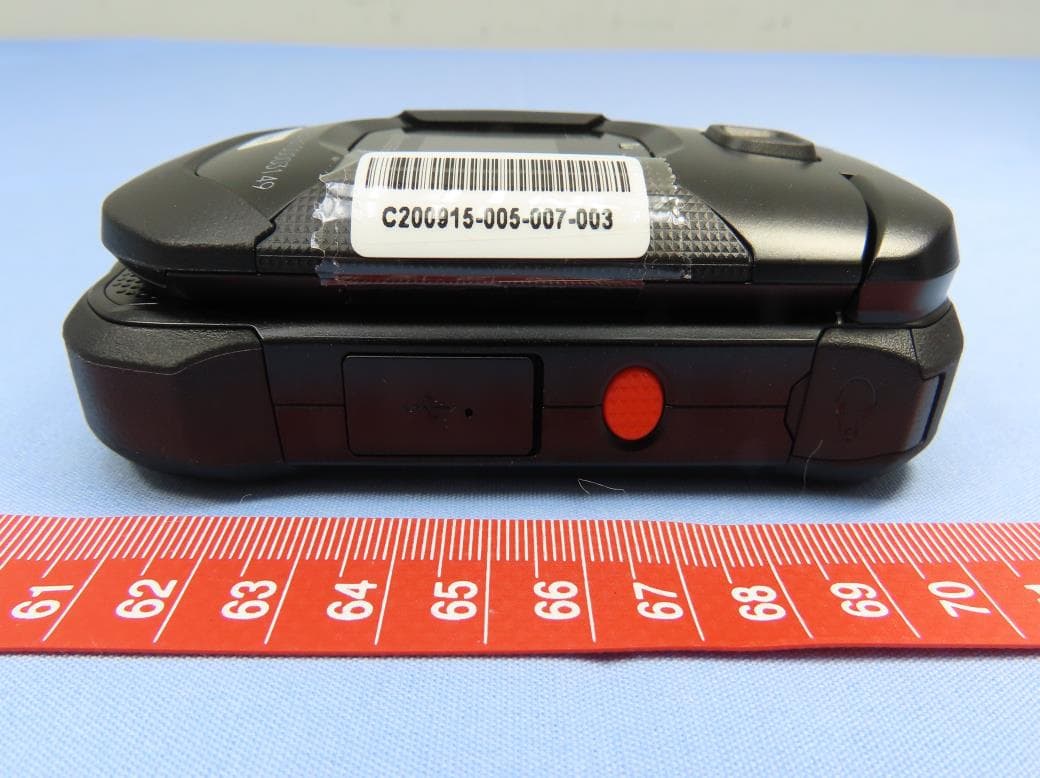
V65E4830
Feb 22, 2021Feature Phone
Equipment Class
PCE - PCS Licensed Transmitter held to ear
V65E7110
Dec 21, 2020Smart Phone
Equipment Class
5GM - Part 30 Mobile Transmitter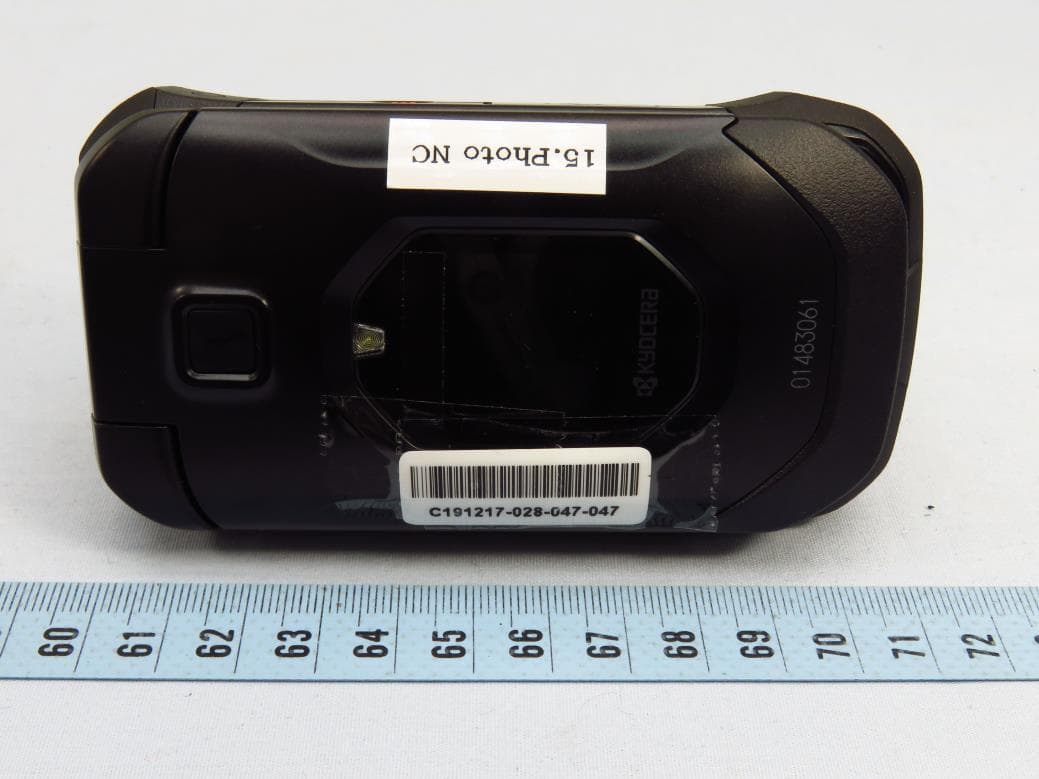
V65E4810
Mar 17, 2020Feature Phone
Equipment Class
PCE - PCS Licensed Transmitter held to ear
V65C6742
Nov 22, 2015UMTS/GSM Bar Phone
Equipment Class
DSS - Part 15 Spread Spectrum Transmitter
V65CD8100
Nov 05, 2015Multi-Band CDMA/LTE Phone with WLAN, Bluetooth and Nordic Transmitter
Equipment Class
DTS - Digital Transmission System