WKZS-318Speaker
Keeson Technology Corporation Limited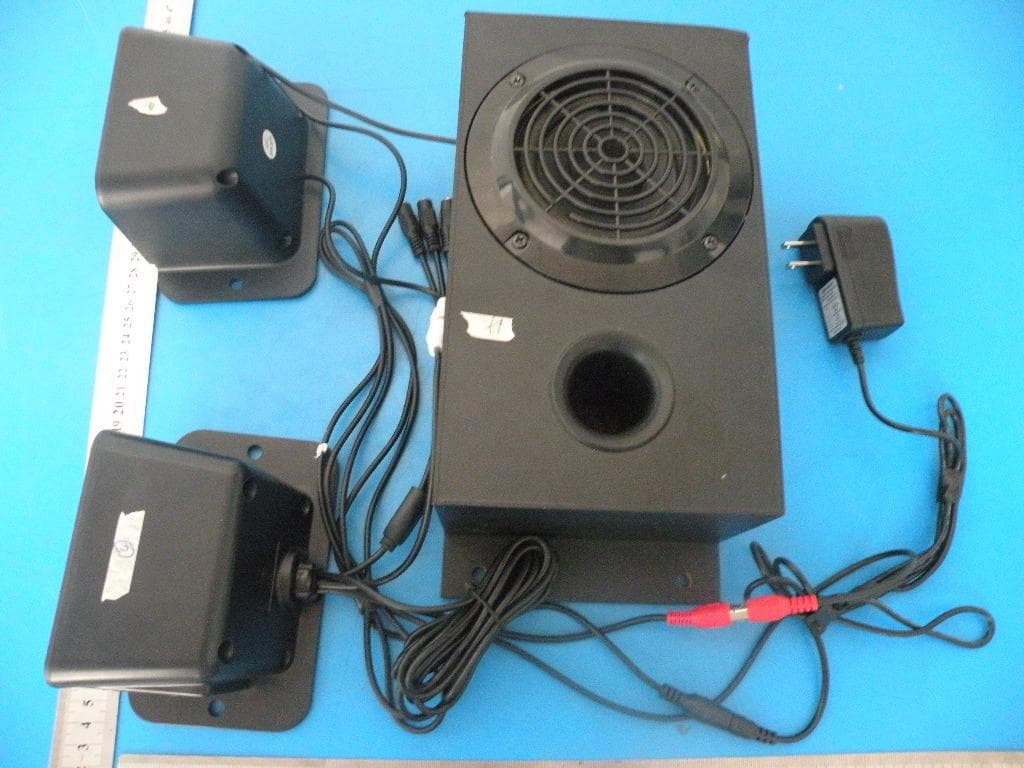
Click to zoom
Application Details
- Equipment Class
- DSS - Part 15 Spread Spectrum Transmitter
- Date of Grant
- May 25, 2015
- Application Purpose
- Original Equipment
- Date of Application
- May 25, 2015
- Equipment Note
- Speaker
- Frequency Range
- 2402.00000000 - 2480.00000000
- Country
- China
Documents & Files
Document Text
Text extracted from the exhibit documents filed with the FCC. Open a document above to read the original.
Users Manual
2.1Bluetooth Speaker(S318) Instructions 1> Functional overview 1. 2.1 Bluetooth bedside audio ; bass is passive box, amplifier built and controlled into vice box. Bass Dimensions: W240 * D140 * H100mm Vice Box Dimensions: W110 * D80 * H80mm 2. I / O interfaces: 1、DC IN:DC5V/2A (Lead 2.4M,Φ5.5DC female plug) 2、AUX IN : Φ3.5 input interface X3(Lead 165mm,4-pole 3.5 stereo female plug) 3、AUDIO OUT: Φ3.5 output interface X3(Lead165mm,4-pole 3.5 stereo female plug) 4、Bluetooth input 5、Right channel output (RCA white male plug), subwoofer output (RCA Red male plug) 3. Functional requirements: (S318) A.Input: BT-AUX, default state is Bluetooth when power-on, connect in priority to devices paired before but not depaired, search the name of this speaker to connect if your device has never paired before; press the HOME key to switch to the AUX mode. B. Volume Control: press VOL- and VOL + button to decrease or increase the volume when in use. C. Bluetooth status will automatically switch to AUX IN to play via LINE if insert the audio signal line; unplug the audio signal line to automatically resume to Bluetooth status . D. Multiple sets of machines can play the same sound source synchronously by connecting the four section stereo signal line into the LINE IN & LINE OUT interfaces of the vice machine control box. E. Amplifier will automatically shut down within 60 seconds into silent mode if no audio input under Bluetooth status, speaker will automatically enter into play mode when input a Bluetooth signal. F. No mute standby function under AUX mode. 2> Power Management Power :DC5V/2A 3> Specification 2.5W*2+3.5W 2. Speaker impedance:Subwoofer:2Ω Satellite : 4Ω 3. Speaker: bass3.5”2Ω10W; tweeter2”4Ω5W 4. Sensitivity:70db(1.0v/1m) 5. Distortion:300Hz-20KHz≤1%(4Ω,1KHz,1W) 6. Frequency response :45Hz-20KHz and more 7. Electrical requirements: A. maximum noise ≤5mV, B. no high frequency and current sound, C. no POPO sound during mode switching, D. no current impact sound when boot, E. mute function. 1. Audo Output Power: This device complies with Part 15 of the FCC Rules. Operation is subject to the following two conditions: (1) this device may not cause harmful interference, and (2) this device must accept any interference received, including interference that may cause undesired operation. Changes or modifications not expressly approved by the party responsible for compliance could void the user's authority to operate the equipment. NOTE: This equipment has been tested and found to comply with the limits for a Class B digital device, pursuant to Part 15 of the FCC Rules. These limits are designed to provide reasonable protection against harmful interference in a residential installation. This equipment generates, uses instructions, may cause harmful interference to radio communications. However, there is no guarantee that interference will not occur in a particular installation. If this equipment does cause harmful interference to radio or television reception, which can be determined by turning the equipment off and on, the user is encouraged to try to correct the interference by one or more of the following measures: -- Reorient or relocate the receiving antenna. -- Increase the separation between the equipment and receiver. -- Connect the equipment into an outlet on a circuit different from that to which the receiver is connected. -- Consult the dealer or an experienced radio/TV technician for help.
Cover Letter(s)
May 19, 2015 Equipment Autorisation Division Federal Communications Commission 7435 Oakland Mills Road Columbia, MD 21046 FCC ID: WKZS-318 _ Product Name: Speaker Request for Confidentiality Pursuant to Sections 0.457 and 0.459 of the commissions rules, we hereby request that the following documents be held confidential: Schematics Long-term confidential Block diagram Long-term confidential Operation description Long-term confidential These materials contain trade secrets and proprietary information and are not customarily released to the public. The public disclosure of this information might be harmful to the company and provide unjustified benefits to our competitors. Signature: Name Jinhua Xu Position Manager Company Name Jiaxing Shufude Electric Bed CO., LTD.. Address East No. 07 Provincial Road, Tengyun Village,Wangjiangjing Development Zone, Jiaxing, Zhejiang, China Tel 008657383582236 Fax 008657383582236-605 Email [email protected]
ID Label/Location Info
Label 40mm 25mm Label Here FCC ID: WKZS-318 Jiaxing Shufude Electric Bed CO., LTD. Model name: Speaker Model No.: S-318 This device complies with Part 15 of the FCC rules. Operation is subject to the following two conditions: 1) this device may not cause harmful interference, and 2) this device must accept any interference received, including interference that may cause undesired operation.
RF Exposure Info
FCC ID: WKZS-318 RF Exposure evaluation According to 447498 D01 General RF Exposure Guidance v05 The 1-g and 10-g SAR test exclusion thresholds for 100 MHz to 6 GHz at test separation distances ≤ 50 mm are determined by: [(max. power of channel, including tune-up tolerance, mW)/(min. test separation distance, mm)] ·[√f(GHz)] ≤ 3.0 for 1-g SAR and ≤ 7.5 for 10-g extremity SAR, where f(GHz) is the RF channel transmit frequency in GHz Power and distance are rounded to the nearest mW and mm before calculation The result is rounded to one decimal place for comparison Worse case is as below: [2480MHz 2.154(1.64mW) output power] (1.64mW /5mm) ·[√2.480(GHz)]= 0.517 <3.0 for 1-g SAR Then SAR evaluation is not required
Test Report
Shenzhen Alpha Product Testing Co., Ltd. TEST REPORT FCC ID: WKZS-318 Applicant : Jiaxing Shufude Electric Bed CO., LTD. Address : East No. 07 Provincial Road, Tengyun Village,Wangjiangjing Development Zone, Jiaxing, Zhejiang, China Equipment Under Test (EUT): Name : Speaker Model : S-318 Trade Name N/A Standards : FCC PART 15, SUBPART C : 2014 (Section 15.247) Report No : T1850313 01 Date of Test : April 09- May 13, 2015 Date of Issue : May 13, 2015 Tset Result : PASS In the configuration tested, the EUT complied with the standards specified above Authorized Signature (Simple Guan) Manager The manufacture should ensure that all the products in series production are in conformity with the product sample detailed in this report. If the product in this report is used in any configuration other than that detailed in the report, the manufacturer must ensure the new system complies with all relevant standards. Any mention of Shenzhen Alpha Product Testing Co., Ltd. Or test done by Shenzhen Alpha Product Testing Co., Ltd. Approvals in connection with, distribution or use of the product described in this report must be approved by Shenzhen Alpha Product Testing Co., Ltd. Approvals in writing. Page 2 of 58 Report No.: T1850313 01 Contents 1. General Information ............................................................................................................... 4 1.1. Description of Device (EUT) ...............................................................................4 1.2. Accessories of device (EUT) ...............................................................................5 1.3. Test Lab information ............................................................................................5 2. Summary of test ...................................................................................................................... 6 2.1. Summary of test result .........................................................................................6 2.2. Assistant equipment used for test .........................................................................6 2.3. Block Diagram .....................................................................................................7 2.4. Test mode .............................................................................................................7 2.5. Test Conditions .....................................................................................................7 2.6. Measurement Uncertainty (95% confidence levels, k=2) ....................................8 2.7. Test Equipment .....................................................................................................9 3. Maximum Peak Output power ............................................................................................ 10 3.1. Limit ...................................................................................................................10 3.2. Test Procedure ....................................................................................................10 3.3. Test Setup ...........................................................................................................10 3.4. Test Result ..........................................................................................................10 4. Bandwidth ............................................................................................................................. 11 4.1. Limit ................................................................................................................... 11 4.2. Test Procedure .................................................................................................... 11 4.3. Test Result .......................................................................................................... 11 5. Carrier Frequency Separation ............................................................................................. 15 5.1. Limit ...................................................................................................................15 5.2. Test Procedure ....................................................................................................15 5.3. Test Result ..........................................................................................................15 6. Number Of Hopping Channel ............................................................................................. 17 6.1. Limit ...................................................................................................................17 6.2. Test Procedure ....................................................................................................17 6.3. Test Result ..........................................................................................................17 7. Dwell Time ............................................................................................................................. 19 7.1. Test limit ............................................................................................................19 7.2. Test Procedure ....................................................................................................19 7.3. Test Results ........................................................................................................19 8. Radiated emissions ................................................................................................................ 24 8.1. Limit ...................................................................................................................24 8.2. Block Diagram of Test setup ..............................................................................25 8.3. Test Procedure ....................................................................................................26 8.4. Test Result ..................................................................................................…
Text truncated - open the document above for the full version.
Test Setup Photos
Photos of Radiated emission Photos of Conducted Emission test
Contact Information
Applicant
Jinhua Xu(Manager)
Test Firm
Shenzhen Alpha Product Testing Co., Ltd.Mark Zhu
Technical Specifications
| # | Rule Parts | Frequency Range | Power Output |
|---|---|---|---|
| 1 | 15C | 2.40 GHz - 2.48 GHz | 1.64 mW |
Other Applications from Keeson Technology Corporation Limited
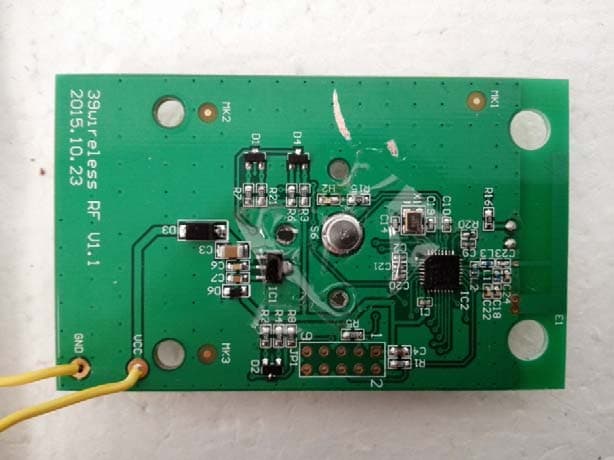
WKZ-RF358C
Dec 02, 201539Wireless Remote
Equipment Class
DXX - Part 15 Low Power Communication Device Transmitter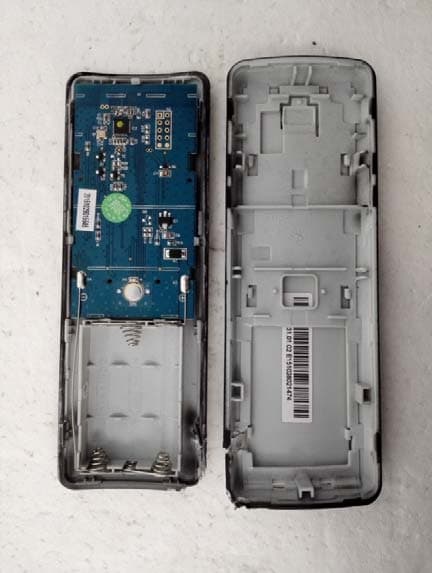
WKZ-RF258G
Nov 30, 2015Remote
Equipment Class
DXX - Part 15 Low Power Communication Device Transmitter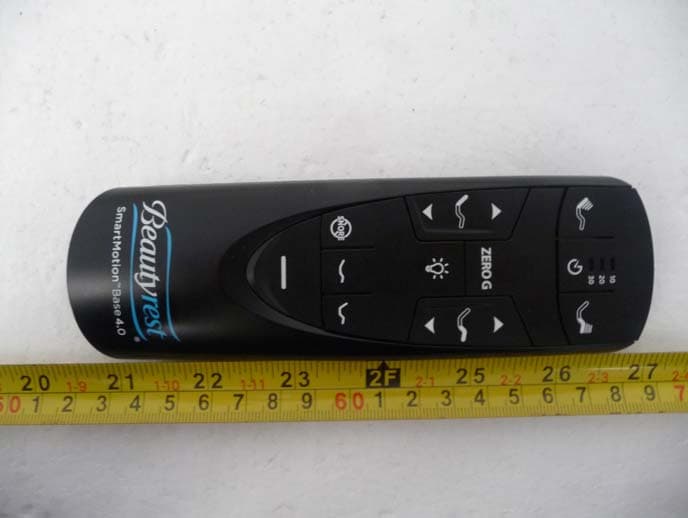
WKZRF358A
Nov 12, 2015REMOTE CONTROL 358A
Equipment Class
DXX - Part 15 Low Power Communication Device Transmitter
WKZBT40SA
Nov 09, 2015BLUETOOTH 4.0 RECEIVER
Equipment Class
DTS - Digital Transmission System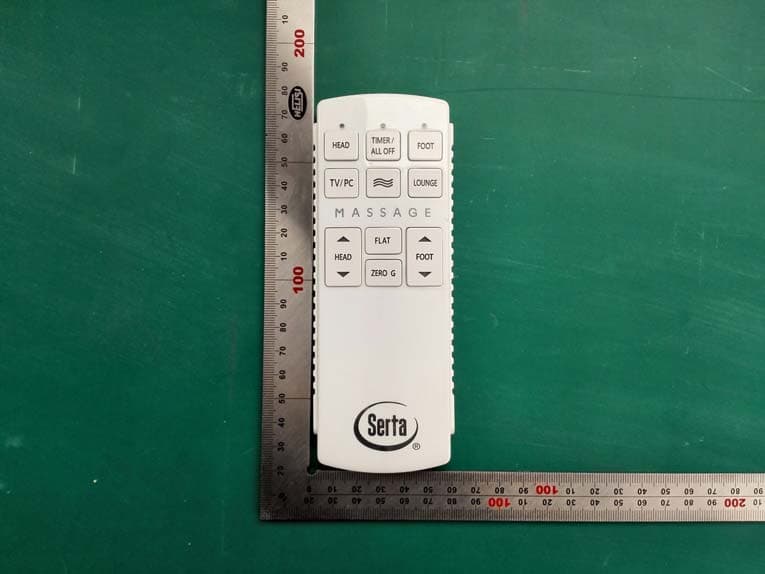
WKZSFDY1007
Feb 16, 2015Remote Control
Equipment Class
DXX - Part 15 Low Power Communication Device Transmitter