X4LT300Martian Voice Command Watch 2
SilverPlus, Inc.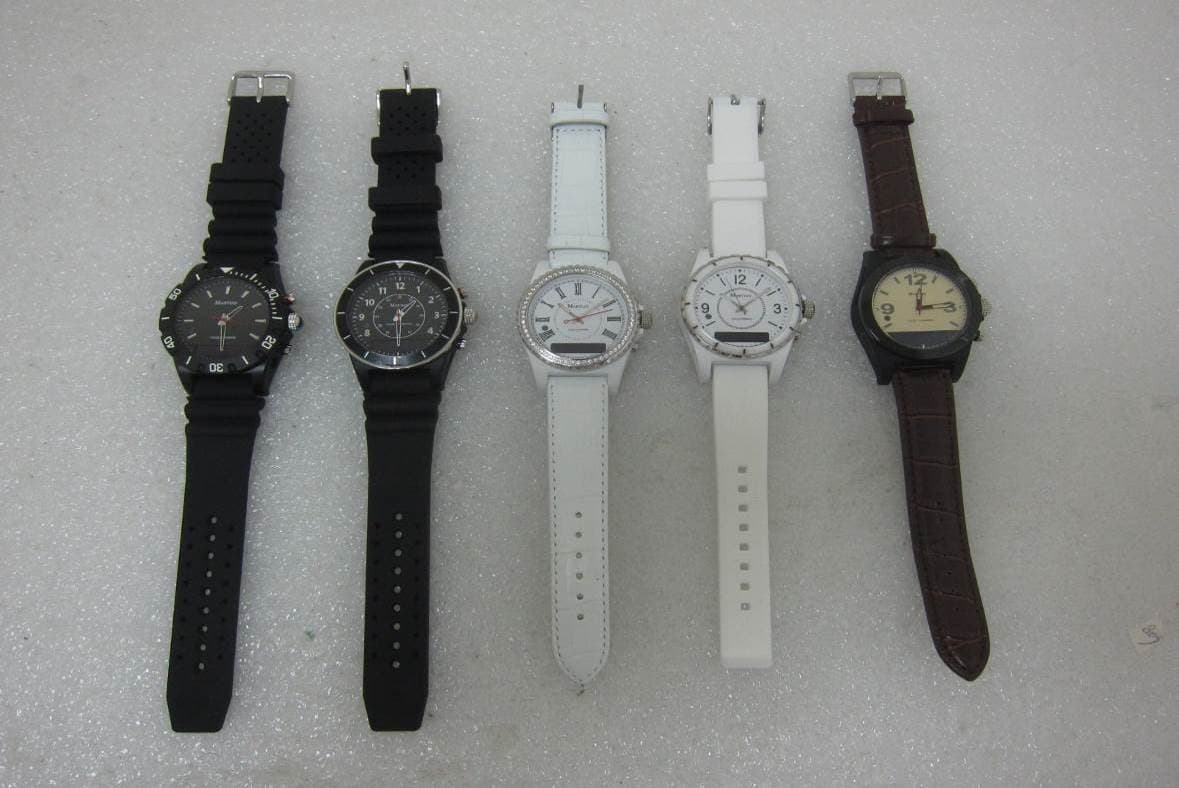
Click to zoom
Application Details
- Equipment Class
- DSS - Part 15 Spread Spectrum Transmitter
- Date of Grant
- Jul 27, 2015
- Application Purpose
- Original Equipment
- Date of Application
- Jul 26, 2015
- Equipment Note
- Martian Voice Command Watch 2
- Frequency Range
- 2402.00000000 - 2480.00000000
- Company
- SilverPlus, Inc.
- Country
- Taiwan
Documents & Files
Document Text
Text extracted from the exhibit documents filed with the FCC. Open a document above to read the original.
Users Manual
MARTIAN WATCHES USER MANUAL This manual is published by MARTIAN WATCHES, without any warranty. Improvements and changes to this manual necessitated by typographical errors, inaccuracies of current information, or improvements to programs and/or equipment, may be made by MARTIAN WATCHES at any time and without notice. Such changes will, however, be incorporated into new editions of this manual. All rights reserved. © MARTIAN WATCHES, 2012 Table of Contents MARTIAN WATCH Overview ........................................................................................................... 1 Phone Compatibility ...................................................................................................................... 2 Getting Started ............................................................................................................................... 3 Kit Contents ................................................................................................................................ 3 Charging ..................................................................................................................................... 3 Turning Your MARTIAN WATCH On and Off .............................................................................. 3 Checking Battery Life ................................................................................................................ 3 Pairing Your MARTIAN WATCH .................................................................................................. 4 Setting the Time ......................................................................................................................... 5 Range /Disconnected and Re-Connecting .................................................................................. 5 Status Bar .................................................................................................................................... 5 MARTIAN Menu ........................................................................................................................... 6 The MARTIAN App ......................................................................................................................... 7 Downloading the App ................................................................................................................. 7 Using the App ............................................................................................................................. 7 Using Your MARTIAN WATCH ....................................................................................................... 8 Accessing Voice Command ........................................................................................................ 8 Calls ............................................................................................................................................ 8 Text Messages, Emails and Notifications ................................................................................... 9 MARTIAN Leash ............................................................................................................................ 10 Gesture Controls ........................................................................................................................... 10 Troubleshooting ........................................................................................................................... 11 Master Reset ............................................................................................................................. 11 Support ......................................................................................................................................... 11 Safety, Regulatory and Legal ....................................................................................................... 12 Certification and Compliance ....................................................................................................... 12 MARTIAN WATCH OVERVIEW Congratulations on your purchase of the MARTIAN WATCH! The MARTIAN WATCH provides you with connectivity to your cell phone via Bluetooth® wireless technology, allowing you to: Place and answer calls, Send text messages (“speech-to-text” via voice command) Receive text messages (OLED display and/or“text-to-speech” played through the Watch), Initiate voice commands to set calendar events and reminders, and search for information, Be notified of incoming calls, texts, and calendar and social media events with vibration, an LED light and OLED text display, And more All without taking your cell phone out of your pocket, purse or backpack! The MARTIAN WATCH allows 2+ hours of talk time and 7 days of standby time, and the timepiece will run for approximately 30 days on a charge. DEVICE COMPATIBILITY Your device features determine your MARTIAN WATCH functionality. Cell phones: The “talk and listen” feature of MARTIAN will work with any cell phone that has Bluetooth wireless technology. (How do you know if your phone works with MARTIAN? First find out if it has Bluetooth connectivity. To know for sure, borrow a friend’s Bluetooth headset and pair it with your device. If you can place a call by saying a name in your Contacts list, or answer a call, then MARTIAN will work with your phone for basic dialing and answering features.) Since MARTIAN connects to your mobile device using Bluetooth technology, anything you can do with your Bluetooth headset, you can do with your MARTIAN WATCH. To use the Voice Command access feature on your MARTIAN WATCH, you must have a compatible Voice Command feature on your mobile device. o Voice Command functions for Android are dependent upon your device. If your device came with an integrated Voice Command app and it works with a Bluetooth headset, it will work with MARTIAN. Coming soon: If you don’t have integrated Voice Command, most Androids will work wi…
Text truncated - open the document above for the full version.
Cover Letter(s)
SCS-F18: Project and Product Certification Representative Authorization Letter Page 1 of 2 Rev 5.0 775 Montague Expressway Milpitas, CA 95035 Tel: 408-526-1188 Fax: 408-526-1088 Email: [email protected] Project and Product Certification Representative Authorization Letter Revision History Reason for Amendment (current / obsolete) From To Approved Date Initial Release (obsolete) 1.0 1.0 Nov-14-2006 Revised wording (obsolete) 1.0 2.0 Sept–25-2007 Updated company template (obsolete) 2.0 3.0 Jan-31-2012 Updated letter information (obsolete) 3.0 4.0 May-23-2014 Added FCC ID field (current) 4.0 5.0 Sept 16 2014 SCS-F18: Project and Product Certification Representative Authorization Letter Page 2 of 2 Rev 5.0 SilverPlus, Inc. 2015/05/19 To: SIEMIC, INC. 775 Montague Expressway, Milpitas, CA 95035 USA Dear Sir/Madam, Re: Product Certification Representative Authorization Letter We, SilverPlus, Inc. hereby authorize SIEMIC, Inc. to act as a Certification Body for certifying for the following project(s): Product Name: Martian Voice Command Watch 2 Model Name: T300 FCC ID: X4LT300 Sincerely, Client’s signature Ming-Yish Chen / Manager 2F.-4, No.15, Ln. 360, Sec. 1, Neihu Rd., Neihu District, Taipei City, 114 Taiwan.
Cover Letter(s)
SCS-F19: Confidentiality Request Letter Page 1 of 3 Rev 4.0 775 Montague Expressway Milpitas, CA 95035 Tel: 408-526-1188 Fax: 408-526-1088 Email: [email protected] Confidentiality Request Letter Revision History Reason for Amendment (current / obsolete) From To Approved Date Initial Release (obsolete) 1.0 1.0 Nov-14-2006 Adding CFR 2.459 (obsolete) 1.0 2.0 August – 11 - 2008 Updated company template & Added text box (obsolete) 2.0 3.0 Jan-31-2012 Added IC confidentiality letter form (current) 3.0 4.0 March-26-2015 SCS-F19: Confidentiality Request Letter Page 2 of 3 Rev 4.0 SilverPlus, Inc. 2015/05/19 To: Federal Communications Commission Authorization and Evaluation Division 7435 Oakland Mills Road Columbia, MD Subject: Permanent Confidentiality Request for FCC ID: X4LT300 We hereby request confidential treatment of information accompanying this application as outlined below: - e.g. Block Diagram - e.g. Schematics - e.g. Operational Description The above materials contain trade secrets and proprietary information not customarily released to the public. The public disclosure of these materials may be harmful to the applicant and provide unjustified benefits to its competitors. The applicant understands that pursuant to Section 0.457 & 0.459 of the Rules, disclosure of this application and all accompanying documentation will not be made before the date of the Grant for this application. Sincerely, Client’s signature : Client’s name & title : Ming-Yish Chen / Manager Contact information / address: 2F.-4, No.15, Ln. 360, Sec. 1, Neihu Rd., Neihu District, Taipei City, 114 Taiwan. SCS-F19: Confidentiality Request Letter Page 3 of 3 Rev 4.0 SilverPlus, Inc. 2015/05/19 To: Industry Canada Certification and Engineering Bureau P.O. Box 11490, Station H 3701 Carling Avenue (Building 94) Ottawa, Ontario K2H 8S2 Attention: Manager, Equipment Certification Subject: Permanent Confidentiality Request for IC: 11463A-T300 We hereby request confidential treatment of information accompanying this application as outlined below: - e.g. block diagrams; - e.g. operational description; - e.g. SDR software and security information; and - e.g. schematic diagrams. The above materials contain trade secrets and proprietary information not customarily released to the public. The public disclosure of these materials may be harmful to the applicant and provide unjustified benefits to its competitors. Sincerely, Client’s signature : Client’s name & title : Ming-Yish Chen / Manager Contact information / address: 17F-2, No. 659, Sec. 1, NeihuRd. Taipei City 114 Taiwan
External Photos
FCC ID: X4LT300 IC: 11463A-T300 International Standards Laboratory Report Number: ISL-14LR285FCDTS EXTERNAL PHOTOGRAPHS OF EUT FCC ID: X4LT300 IC: 11463A-T300 International Standards Laboratory Report Number: ISL-14LR285FCDTS EUT 1 EUT 2 FCC ID: X4LT300 IC: 11463A-T300 International Standards Laboratory Report Number: ISL-14LR285FCDTS EUT 3 EUT 4 FCC ID: X4LT300 IC: 11463A-T300 International Standards Laboratory Report Number: ISL-14LR285FCDTS EUT 5 EUT 6 FCC ID: X4LT300 IC: 11463A-T300 International Standards Laboratory Report Number: ISL-14LR285FCDTS EUT 7 EUT 8
ID Label/Location Info
ID LABEL FORMAT AND LOCATION Applicant: SilverPlus, Inc. FCC ID: X4LT300 IC: 11463A-T300 SilverPlus Model Name: T300 FCC ID: X4LT300 IC: 11463A-T300
Internal Photos
FCC ID: X4LT300 IC: 11463A-T300 International Standards Laboratory Report Number: ISL-14LR285FCDTS INTERNAL PHOTOGRAPHS OF EUT FCC ID: X4LT300 IC: 11463A-T300 International Standards Laboratory Report Number: ISL-14LR285FCDTS EUT 1 EUT 2 FCC ID: X4LT300 IC: 11463A-T300 International Standards Laboratory Report Number: ISL-14LR285FCDTS EUT 3 EUT 4 BT Antenna
RF Exposure Info
FCC: X4LT300 IC: 11463A-T300 International Standards Laboratory Maximum Permissible Exposure (MPE) Standard Applicable For The radiation source included into the device the output power is taken from a corresponding RF test report. If needed the output power is converted to source based, time – average out power. Finally the output power is compared to FCC and IC low power SAR evaluation exemption level. According to §2.1093 this is a Portable device. FCC SAR test exclusion: According to KDB 447498 D01 General RF Exposure Guidance v05r02, Appendix A requirement, “The equation and threshold in section 4.3.1 must be applied to determine SAR test exclusion.” 4.3.1. Standalone SAR test exclusion considerations Unless specifically required by the published RF exposure KDB procedures, standalone 1-g head or body and 10-g extremity SAR evaluation for general population exposure conditions, by measurement or numerical simulation, is not required when the corresponding SAR Test Exclusion Threshold condition, listed below, is satisfied. These test exclusion conditions are based on source-based time-averaged maximum conducted output power of the RF channel requiring evaluation, adjusted for tune-up tolerance, and the minimum test separation distance required for the exposure conditions.23 The minimum test separation distance is determined by the smallest distance from the antenna and radiating structures or outer surface of the device, according to the host form factor, exposure conditions and platform requirements, to any part of the body or extremity of a user or bystander (see 5) of section 4.1). To qualify for SAR test exclusion, the test separation distances applied must be fully explained and justified by the operating configurations and exposure conditions of the transmitter and applicable host platform requirements, typically in the SAR measurement or SAR analysis report, according to the required published RF exposure KDB procedures. When no other RF exposure testing or reporting is required, a statement of justification and compliance must be included in the equipment approval, in lieu of the SAR report, to qualify for the SAR test exclusion. When required, the device specific conditions described in the other published RF exposure KDB procedures must be satisfied before applying these SAR test exclusion provisions; for example, handheld PTT two-way radios, handsets, laptops & tablets etc.24 1) The 1-g and 10-g SAR test exclusion thresholds for 100 MHz to 6 GHz at test separation distances ≤ 50 mm are determined by: [(max. power of channel, including tune-up tolerance, mW)/(min. test separation distance, mm)] · [√f(GHz)] ≤ 3.0 for 1-g SAR and ≤ 7.5 for 10-g extremity SAR,25 where FCC: X4LT300 IC: 11463A-T300 International Standards Laboratory • f(GHz) is the RF channel transmit frequency in GHz • Power and distance are rounded to the nearest mW and mm before calculation26 • The result is rounded to one decimal place for comparison • 3.0 and 7.5 are referred to as the numeric thresholds in the step 2 below The test exclusions are applicable only when the minimum test separation distance is ≤ 50 mm and for transmission frequencies between 100 MHz and 6 GHz. When the minimum test separation distance is < 5 mm, a distance of 5 mm according to 5) in section 4.1 is applied to determine SAR test exclusion. RSS 102 Issue 5 Mar. 2015 2.5.1 Exemption Limits for Routine Evaluation – SAR Evaluation SAR evaluation is required if the separation distance between the user and/or bystander and the antenna and/or radiating element of the device is less than or equal to 20 cm, except when the device operates at or below the applicable output power level (adjusted for tune-up tolerance) for the specified separation distance defined in Table 1. FCC: X4LT300 IC: 11463A-T300 International Standards Laboratory Bluetooth Tune-Up Power: Frequency Range: 2402 – 2480MHz Bluetooth Version: V2.1 + EDR V4.0 Tune-Up Power 1dBm +/-1.5 dBm 0dBm +/-1.5 dBm Power Measurement: BDR Mode Channel Peak Reading Power (dBm) Cable Loss Output Power (dBm) Output Power (W) Limit (W) 2402 1.66 0.00 1.66 0.00147 1 2441 2.03 0.00 2.03 0.00160 1 2480 2.19 0.00 2.19 0.00166 1 BLE Mode Channel Peak Reading Power (dBm) Cable Loss Output Power (dBm) Output Power (W) Limit (W) 2402 0.57 0.00 0.57 0.00114 1 2442 0.04 0.00 0.04 0.00101 1 2480 0.19 0.00 0.19 0.00104 1 FCC: X4LT300 IC: 11463A-T300 International Standards Laboratory Evaluation Result: FCC: BDR Mode: Frequency (MHz) Max power (dBm) Antenna Gain(dBi) EIRP Power (dBm) tune-up tolerance (dB) Max power (mW) Min Distance (mm) Result Limit (3.0 @ 1g SAR) 24021.002.203.201.52.9512095.000.9153.0 24411.002.203.201.52.9512095.000.9223.0 24801.002.203.201.52.9512095.000.9303.0 Max Power(mW) =10^((Max Power(dBm) + Tune-up tolerance(dB) )/10) Result = Max Power (mW) / min. distance(mm) * √f(GHz) BLE Mode: Frequency (MHz) Max power (dBm) Antenna Gain(dBi) EIRP Power (dBm) tune-up tolerance (dB) Max power (mW) Min Distance (mm) Result Limit (3.0 @ 1g SAR) 24020.002.202.201.52.3442295.000.7273.0 24420.002.202.201.52.3442295.000.7333.0 24800.002.202.201.52.3442295.000.7383.0 Max Power(mW) =10^((Max Power(dBm) + Tune-up tolerance(dB) )/10) Result = Max Power (mW) / min. distance(mm) * √f(GHz) FCC: X4LT300 IC: 11463A-T300 International Standards Laboratory RSS 102 issue 5. Refer to IC RSS 210 test report for detail measurement date. BDR IC EIRP level: Frequency:2480 MHz Maximum output power at antenna input terminal:1 (dBm) Tune-Up power Tolerance:1.5 dB Duty cycle:78 (%) Antenna gain (typical):2.2 (dBi) EIRP:2.951 mW EIRP Limit4.000 mW Measurement Result: The EIRP level is 2.95 mW which less than RSS102 section 2.5.1 Exemption Limits above 300 MHz and below 6 GHz condition. BLE IC EIRP level Frequency:2402 MHz Maximum output power at antenna input terminal:0 (dBm) Tune-Up power Tolerance:1.5 dB Duty cycle:100 (%) Antenna gain (typical):2.2 (dBi) EIRP:2.344 mW EIRP Limit4.000 mW Measurement Result: T…
Text truncated - open the document above for the full version.
Test Report
Page: 1 of 59 TEST REPORT of FCC Part 15 Subpart C AND CANADA RSS-210 New Application; Class I PC; Class II PC Product : Martian Voice Command Watch 2 Brand: SilverPlus Model: T300 Model Difference: N/A FCC ID: IC: X4LT300 11463A-T300 FCC Rule Part: IC Rule Part: §15.247, Cat: DSS RSS-210 issue 8:2010, Annex 8 RSS-Gen issue 4: 2014 Applicant: SilverPlus, Inc. Address: FCC: 2F.-4, No.15, Ln. 360, Sec. 1, Neihu Rd., Neihu District , Taipei City, 114, Taiwan (R.O.C.) IC: 17F-2, No. 659, Sec. 1, NeihuRd. Taipei City 114 Taiwan Test Performed by: International Standards Laboratory <Lung-Tan LAB> *Site Registration No. BSMI: SL2-IN-E-0013; MRA TW1036; TAF: 0997; IC: IC4067B-3; *Address: No. 120, Lane 180, Hsin Ho Rd., Lung-Tan Dist., Tao Yuan City 325, Taiwan *Tel : 886-3-407-1718; Fax: 886-3-407-1738 Report No.: ISL-14LR285FCDSS Issue Date : 2015/05/06 Test results given in this report apply only to the specific sample(s) tested and are traceable to na- tional or international standard through calibra- tion of the equipment and evaluating measure- ment uncertainty herein. This report MUST not be used to claim product endorsement by TAF, NVLAP or any agency of the Government. This test report shall not be reproduced except in full, without the written approval of International Standards Laboratory. -2 of 59- FCC ID: X4LT300 IC: 11463A-T300 International Standards Laboratory Report Number: ISL-14LR285FCDSS VERIFICATION OF COMPLIANCE Applicant: SilverPlus, Inc. Product Description: Martian Voice Command Watch 2 Brand Name: SilverPlus Model No.: T300 Model Difference: N/A FCC ID: X4LT300 IC: 11463A-T300 Date of test: 2014/11/13 ~ 2015/05/04 Date of EUT Received: 2014/11/13 We hereby certify that: All the tests in this report have been performed and recorded in accordance with the standards de- scribed above and performed by an independent electromagnetic compatibility consultant, Interna- tional Standards Laboratory. The test results contained in this report accurately represent the measurements of the characteristics and the energy generated by sample equipment under test at the time of the test. The sample equip- ment tested as described in this report is in compliance with the limits of above standards. Test By: Date: 2015/05/06 Dion Chang / Engineer Prepared By: Date: 2015/05/06 Eva Kao / Technical Supervisor Approved By: Date: 2015/05/06 Vincent Su / Technical Manager -3 of 59- FCC ID: X4LT300 IC: 11463A-T300 International Standards Laboratory Report Number: ISL-14LR285FCDSS Version Version No. Date Description 00 2015/05/06 Initial creation of document -4 of 59- FCC ID: X4LT300 IC: 11463A-T300 International Standards Laboratory Report Number: ISL-14LR285FCDSS Table of Contents 1. GENERAL INFORMATION .................................................................................................... 6 1.1. Product Description ....................................................................................................................... 6 1.2. Related Submittal(s) / Grant (s) ..................................................................................................... 7 1.3. Test Methodology .......................................................................................................................... 7 1.4. Test Facility .................................................................................................................................... 7 1.5. Special Accessories ........................................................................................................................ 7 1.6. Equipment Modifications ............................................................................................................... 7 2. SYSTEM TEST CONFIGURATION ....................................................................................... 8 2.1. EUT Configuration ........................................................................................................................ 8 2.2. EUT Exercise ................................................................................................................................. 8 2.3. Test Procedure ................................................................................................................................ 8 2.4. Configuration of Tested System ..................................................................................................... 9 3. SUMMARY OF TEST RESULTS .......................................................................................... 10 4. DESCRIPTION OF TEST MODES ....................................................................................... 10 5. AC POWER LINE CONDUCTED EMISSION TEST ......................................................... 11 5.1. Standard Applicable: .................................................................................................................... 11 5.2. Measurement Equipment Used: ................................................................................................... 11 5.3. EUT Setup: ................................................................................................................................... 11 5.4. Measurement Procedure: ............................................................................................................. 12 5.5. Measurement Result: ................................................................................................................... 12 6. PEAK OUTPUT POWER MEASUREMENT ....................................................................... 15 6.1. Standard Applicable: .................................................................................................................... 15 6.2. Measurement Equipment Used: ................................................................................................... 15 6.3. .Test Set-up: ..............................................................................................…
Text truncated - open the document above for the full version.
Test Setup Photos
FCC ID: X4LT300 IC: 11463A-T300 International Standards Laboratory Report Number: ISL-14LR285FCDTS PHOTOGRAPHS OF SET UP FCC ID: X4LT300 IC: 11463A-T300 International Standards Laboratory Report Number: ISL-14LR285FCDTS Radiated Emission (below 1GHz) Set up Photo FCC ID: X4LT300 IC: 11463A-T300 International Standards Laboratory Report Number: ISL-14LR285FCDTS Radiated Emission (above 1GHz) Set up Photo FCC ID: X4LT300 IC: 11463A-T300 International Standards Laboratory Report Number: ISL-14LR285FCDTS Conducted Emission Set up Photo
Contact Information
Applicant
Ming-Yish Chen
Test Firm
International Standards Laboratory Corp.Benson Chen
Technical Specifications
| # | Rule Parts | Frequency Range | Power Output |
|---|---|---|---|
| 1 | 15C | 2.40 GHz - 2.48 GHz | 1.66 mW |
Other Applications from SilverPlus, Inc.

X4LT200
Apr 01, 2014Martian Notifier
Equipment Class
DTS - Digital Transmission System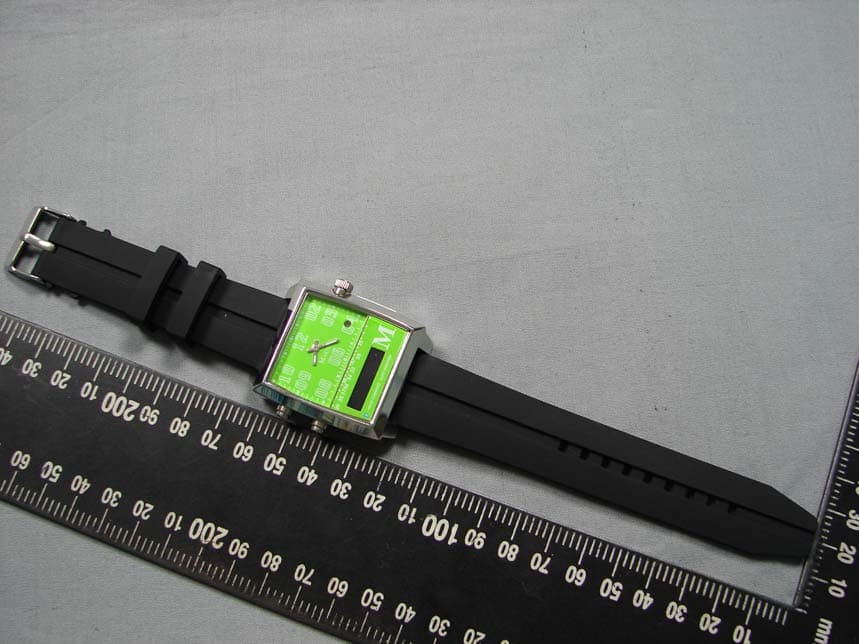
X4LMW100
Mar 06, 2013Martian Watch
Equipment Class
DTS - Digital Transmission System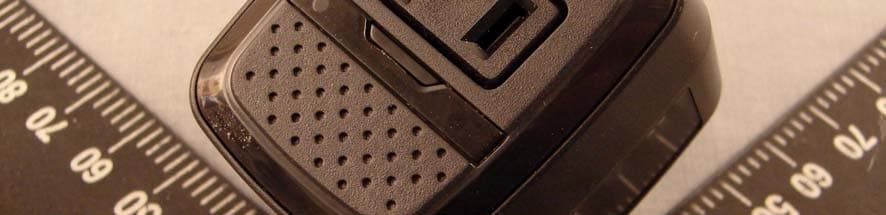
X4LHC100LL
Apr 21, 2010SilverCare Health Care System
Equipment Class
DSS - Part 15 Spread Spectrum Transmitter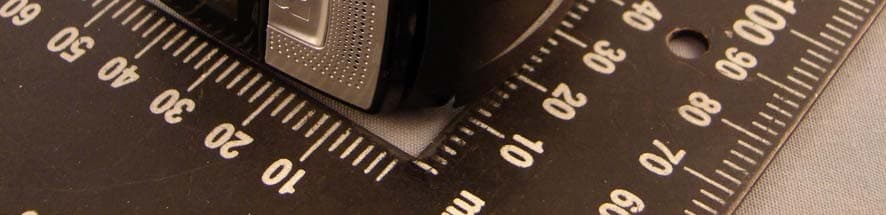
X4LHC100WW
Apr 21, 2010SilverCare Health Care System
Equipment Class
DSS - Part 15 Spread Spectrum Transmitter
X4LHC100BB
Apr 21, 2010SilverCare Health Care System
Equipment Class
DSS - Part 15 Spread Spectrum Transmitter