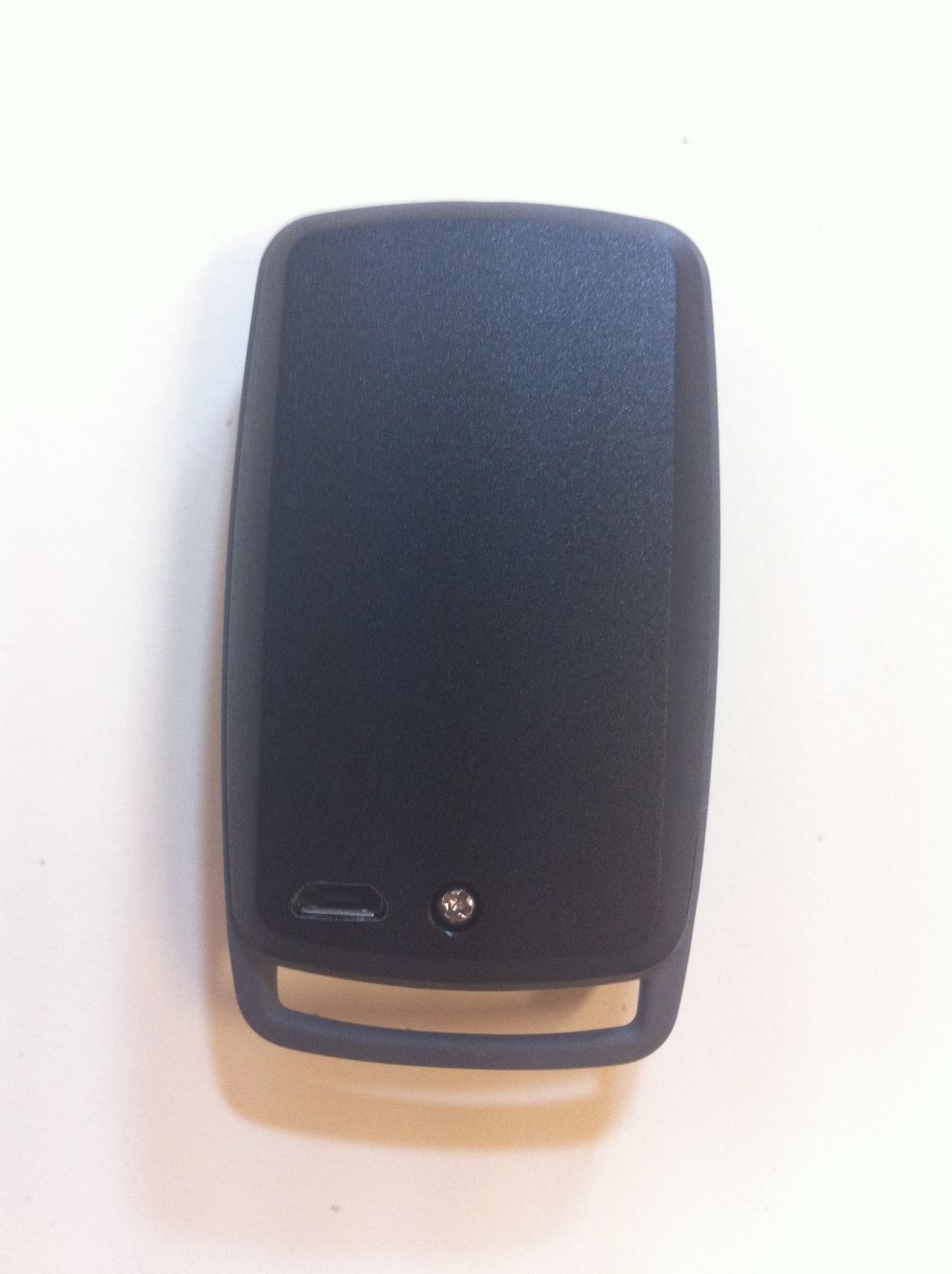
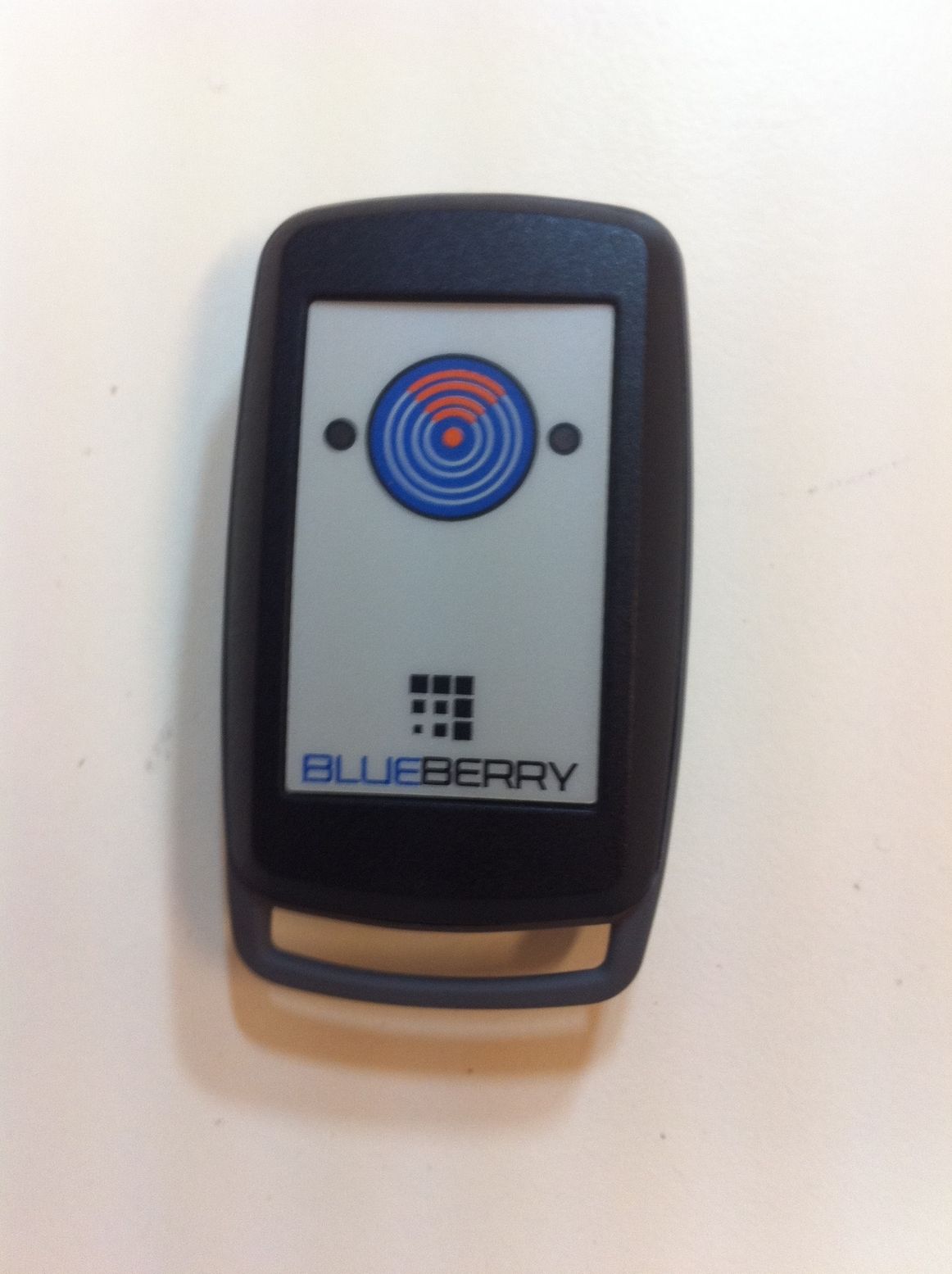
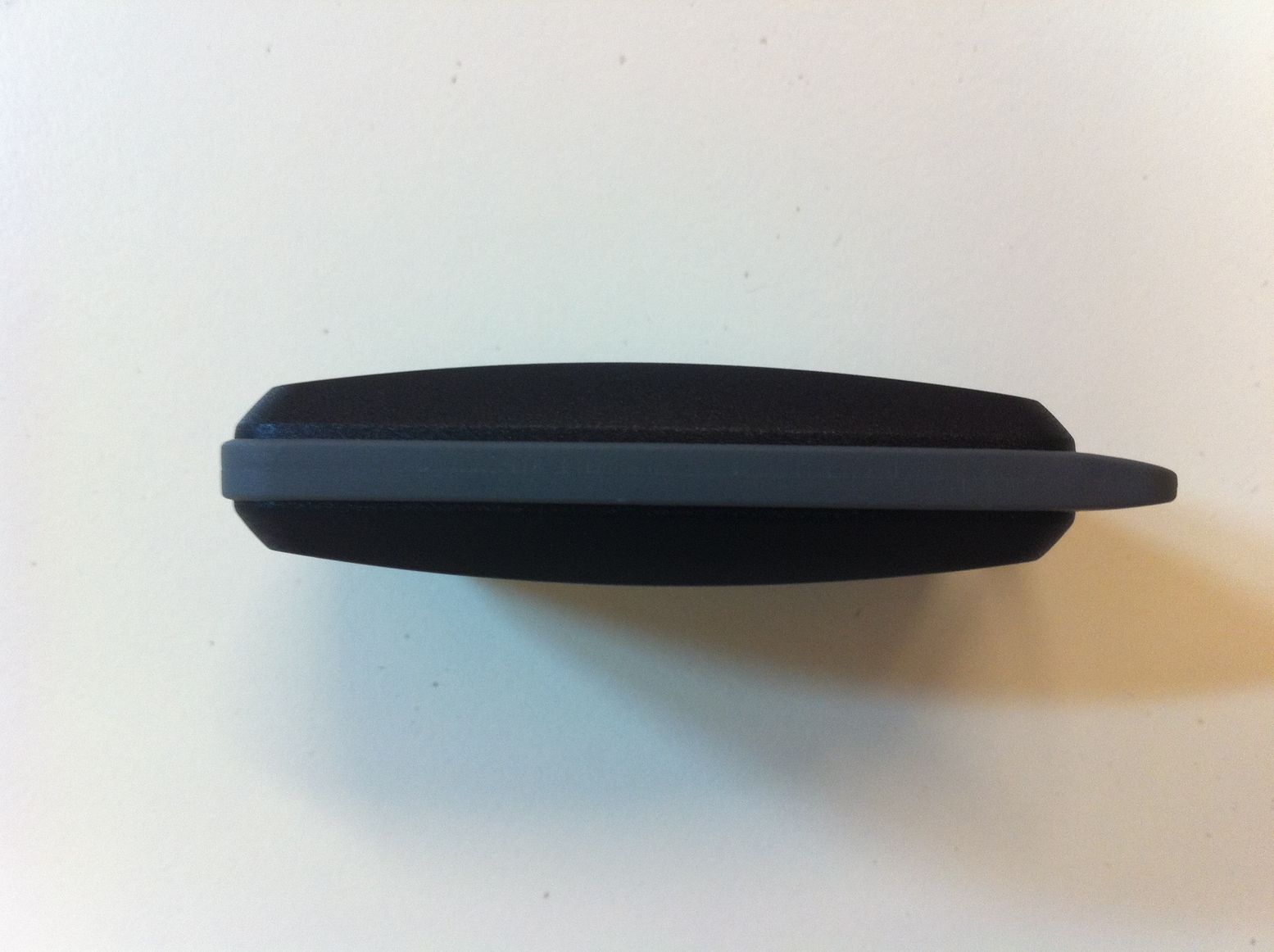
Y6D0793573982315USMALL RFID UHF READER/WRITER, BATTERY POWERED, WITH USB AND BLUETOOTH INTERFACE
TERTIUM Technology S.r.l.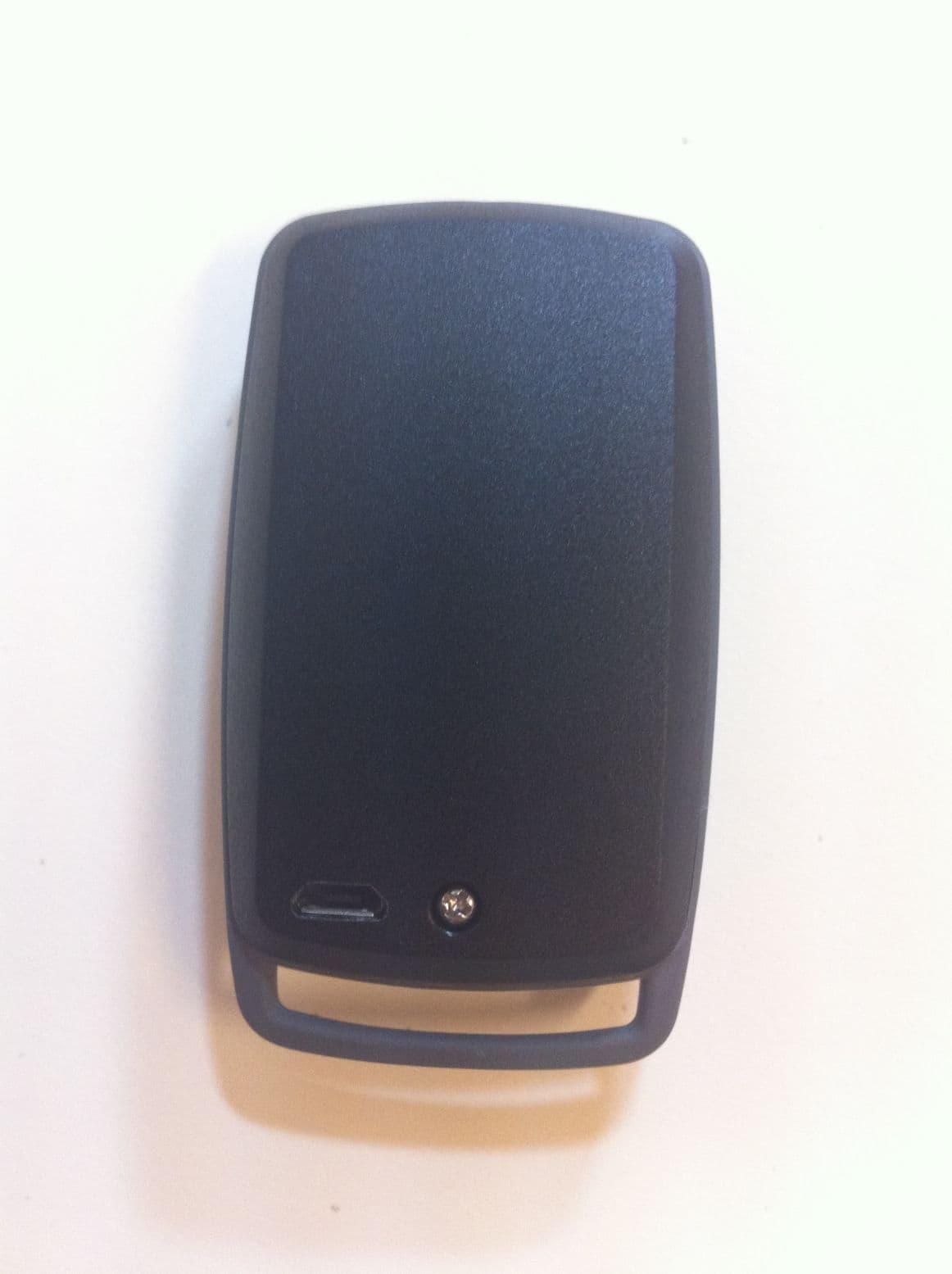
Click to zoom
Application Details
- Equipment Class
- DSS - Part 15 Spread Spectrum Transmitter
- Date of Grant
- Jul 24, 2011
- Application Purpose
- Original Equipment
- Date of Application
- Jul 24, 2011
- Equipment Note
- SMALL RFID UHF READER/WRITER, BATTERY POWERED, WITH USB AND BLUETOOTH INTERFACE
- Frequency Range
- 902.70000000 - 927.20000000
- Company
- TERTIUM Technology S.r.l.
- Country
- Italy
Documents & Files
Document Text
Text extracted from the exhibit documents filed with the FCC. Open a document above to read the original.
Users Manual
BlueBerry UHF v.2.0 – User Manual ver. 0.6 June 2011 1 Index • Introduction to BlueBerry UHF [ 2 ] ◦ Contents inside the pack [ 2 ] ◦ BlueBerry components [ 2 ] ◦ Using function key LED and beeper [ 3 ] ◦ Technical specifications [ 4] • Instructions for use [ 4 ] ◦ Connection of BlueBerry to the computer [ 4 ] ◦ Disconnection of BlueBerry [ 5 ] ◦ Connection of BlueBerry through Bluetooth [ 5 ] ◦ Charging the battery [ 5 ] ◦ Control of the battery level [ 5 ] ◦ Reading distance [ 6 ] • Configuration of BlueBerry [ 7 ] ◦ Bluetooth [ 8 ] ◦ Auto off [ 8 ] ◦ Set mode [ 8 ] ◦ Baudrate [ 10 ] ◦ Sending commands with TT_RFID_Configurator [ 10 ] ◦ Configuration for TT_RFID_BlackBerryDemo and BlueBerryPC [ 11 ] • Other information and support [ 12 ] BlueBerry UHF v.2.0 – User Manual ver. 0.6 June 2011 2 Introduction to BlueBerry UHF Contents inside the pack BlueBerry RFID Reader USB cable A-type male - micro USB male CD BlueBerry components Figura 1: BlueBerry components Key ring Micro USB connector Antenna LED signal light (RFID scanning, results of the RFID commands, Bluetooth connection search...) on/off switch and scanner activation Blue LED: to indicate operation and battery level BlueBerry UHF v.2.0 – User Manual ver. 0.6 June 2011 3 Button , LED and beeper usage Table 1: Button , LED and beeper usage BlueBerry UHF v.2.0 – User Manual ver. 0.6 June 2011 4 Technical specifications Table 2: Technical specifications Instructions for use Installation When BlueBerry is connected to the computer for the first If an internet connection is available, an automatic installation take place. If the internet connection is not available or no suitable driver is automatically found download driver and installation guide at the following link: http://www.ftdichip.com/Drivers/VCP.htm Connection of BlueBerry to the computer Connect BlueBerry to the computer to reload the battery, to configure the device through the TT_RFID_Configurator application, to carry out operation testing through the TT_RFID_PCDemo BlueBerry UHF v.2.0 – User Manual ver. 0.6 June 2011 5 application or to send commands to it according to the specific TERTIUM Technology protocol ( see TERTIUM_RFID_Reader_Protocol.pdf ). Connect BlueBerry to a high-power USB port. Once connected, the state of the LEDs and the acoustic signal will indicate the state of the RFID reader as explained in the paragraph Charging the battery. NOTE: when BlueBerry is connected to the computer through USB, the Bluetooth interface is disabled. Disconnection of BlueBerry To disconnect BlueBerry from the computer, simply disconnect the USB cable. The reader switches off automatically. Connection of BlueBerry through Bluetooth To connect BlueBerry through Bluetooth to any device supplied with this kind of interface such as a computer or smartphone, it is necessary to switch on the reader with the button being sure that it is not connected to any terminal by USB. When BlueBerry is connected to the computer through USB, the Bluetooth interface is disabled. Once it is switched on, BlueBerry is visible through Bluetooth with the name TERTIUM_BB_yyyyyU while the pin code in order to access is 0000 by default. The shown name and the pin code are changeable by the user. Charging the battery BlueBerry is equipped with an internal, non-user-replaceable, rechargeable battery. The high performing Li-Ion battery guarantees an extent of 1000-3000 readings. A discharged battery is completely charged in about 3 hours. To recharge BlueBerry, connect it to the computer. The reader automatically switches on and the state of the battery charge is signalled by the blue LED: when the battery is charging, the LED blinks; when it is fully charged, the LED remains on fixed (for further details to see Table 1). Control of the battery level When the BlueBerry is switched on with the button, the following situations related to the battery’s charge level may occur: • an acoustic signal and a fixed blue LED: charged battery • no acoustic signal and quickly blinking blue LED: battery charge very low. No operations are possible in this condition; if the reader is not switched off, it will automatically switch off after 10 sec. It is recommended to charge BlueBerry up to complete recharge. If the blue LED starts to blink slowly during normal use of BlueBerry, it means that very little charge is left. The reader will only have a few minutes of autonomy. If you continue to use it, the LED will begin to blink quickly signalling a very low battery charge as described above. BlueBerry UHF v.2.0 – User Manual ver. 0.6 June 2011 6 When BlueBerry is connected to the computer, the following situations related to the battery’s charge level may occur: • an acoustic signal and a fixed blue LED: charged battery • an acoustic signal and blinking blue LED: battery charging. In this condition, it is possible to operate with BlueBerry connecting to it with an any serial Terminal program or using the applications provided with the CD ( TT_RFID_Configurator or TT_RFID_PCDemo) In Table 1, you can see the activities of the blue LED and of the acoustic beeper related to the battery level. Reading distance BlueBerry is equipped with an integrated antenna, for the reading of TAG RFID, located above the button as shown in Figure 1. The ideal reading distance and condition for BlueBerry UHF is as follows. NOTE: the reading distance varies based on the type of TAG. Also, metal objects and surfaces located very near BlueBerry can notably invalidate the reader's performance. BlueBerry UHF reader supports the EPC Class 1 Gen 2 standard. The reading distance is 10-20 cm for far field TAG RFID and of maximum 2cm with TAG near field. The optimal conditions of reading are obtained positioning the TAG inside the field pointed out in Figure 2 (the figure is for example purpose only and doesn't represent the real antenna radiation pattern). Figura 2: read field of BlueBerry UHF BlueBerry UHF v.2.0 – User Manual ver. 0.6 June 2011 7…
Text truncated - open the document above for the full version.
Cover Letter(s)
Rev 11/20/07 (APPLICANT’S LETTERHEAD) Federal Communications Commission Authorization and Evaluation Division Confidentiality Request regarding application for certification of FCC ID: (place FCC ID here). Pursuant to Sections 0.457 and 0.459 of the Commission’s Rules, we hereby request confidential treatment of information accompanying this application as outlined below: Exhibit Type File Name (ie- Block Diagram, Schematics, Operational Description, Parts List, Tune Up Info) (ie- “1100_schematics.pdf”) The above materials contain trade secrets and proprietary information not customarily released to the public. The public disclosure of these materials may be harmful to the applicant and provide unjustified benefits to its competitors. The applicant understands that pursuant to Section 0.457 of the Rules, disclosure of this application and all accompanying documentation will not be made before the date of the Grant for this application. Pursuant to DA04-1705 June 15, 2004 of the Commission’s public notice, we also request temporary confidential treatment of information accompanying this application as outlined below: Exhibit Type File Name (ie- External Photos, Internal Photos, Test Setup Photos, Manual) (ie- “1100_external photos.pdf”) Sincerely, Marco Consani
Cover Letter(s)
TERTIUM Technology S.r.l. via G.B. Picotti, 8 – 56124 PISA (Italy) – Tel. e Fax +39 050 57 67 77 partita I.V.A. e C.F. 01594480509 Rev 11/07/01 Federal Communications Commission Authorization and Evaluation Division DoC Letter FCC ID: Y6D0793573982315U The EUT can be connected to a Personal Computer (peripheral) The Declaration of Conformity procedures will be applied to the Computer peripheral Sincerely, Marco Consani
ID Label/Location Info
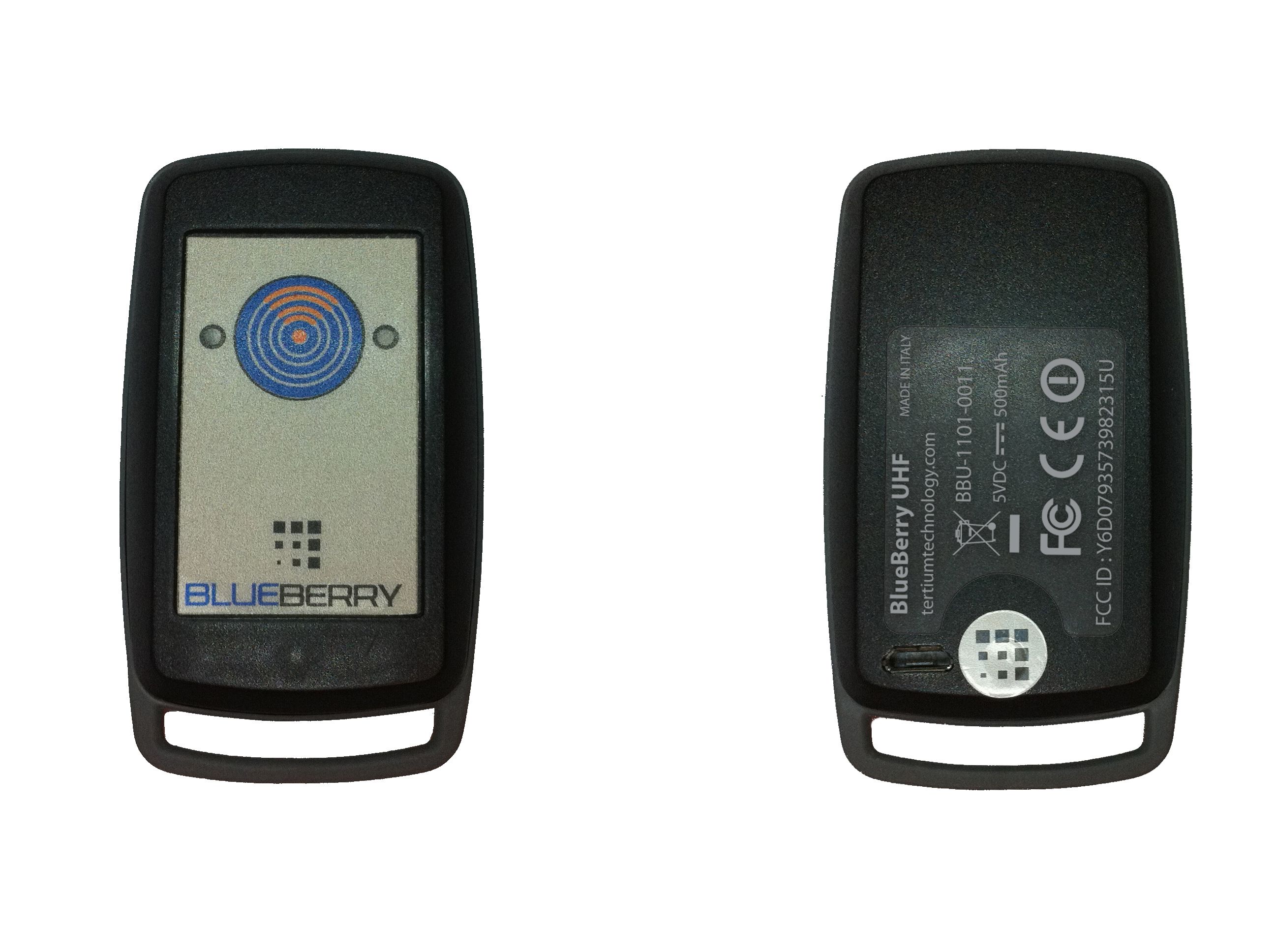
BlueBerry UHF MADE IN ITALY tertiumtechnology.com BBU-1101-00115VDC 500mAh FCC ID : Y6D0793573982315U
Test Report
TERTIUM Technology S.r.l. via G.B. Picotti, 8 – 56124 PISA (Italy) – Tel. e Fax +39 050 57 67 77 partita I.V.A. e C.F. 01594480509 BlueBerry UHF Bluetooth module LMX9838 National Semiconductor - Regulatory Compliance Version 0.1 – 16/03/2011 The LMX9838 has been tested and approved to be compliant to the following regulatory standards: CE Compliance: • EN 300 328 v1.7.1 • EN 301 489-17 v1.2.1 IC Compliance: • RSS-GEN Issue 1 • RSS-210 Issue 7 Annex 8 and RSS-GEN issue 2 FCC Compliance: • FCC Part 15 Subpart C 20.1 FCC INSTRUCTIONS 20.1.1 Safety Information For Rf Exposure 20.1.1.1 FCC Radiation Exposure Statement: This module may only be installed by the OEM or an OEM integrator. The antenna used for this transmitter must not be co-located or operating in conjunction with any other antenna or transmitter. OEM integrators and End-users and installers must be provided with antenna installation instructions and transmitter operating conditions for satisfying RF exposure compliance. Only the antenna filed under FCC ID: ED9LMX9838 can be used with this device. 20.1.1.2 End Product Labeling FCC ID label on the final system must be labeled with “Contains TX FCC ID: ED9LMX9838 “or “Contains transmitter module FCC ID: ED9LMX9838”. IC label on the final system must be labeled with “Contains TX IC: 1520A-LMX9838” or “Contains transmitter module IC: 1520A-LMX9838”. 20.1.1.3 End Product Manual Information In the user manual, final system integrator must ensure that there is no instruction provided in the user manual to install or remove the transmitter module. LMX9838SB must be installed and used in strict accordance with the manufacturer’s instructions as described in the user documentation that comes with the product. The following information is required to be incorporated in the user manual of final system. USA-Federal Communications Commission (FCC) This equipment has been tested and found to comply with the limits for a Class B digital device, pursuant to Part 15 of FCC Rules. These limits are designed to provide reasonable protection against harmful interference in a residential installation. This equipment generates, uses, and can radiate radio frequency energy. If not installed and used in accordance with the instructions, it may cause harmful interference to radio communications. However, there is no guarantee that interference will not occur in a particular installation. TERTIUM Technology S.r.l. via G.B. Picotti, 8 – 56124 PISA (Italy) – Tel. e Fax +39 050 57 67 77 partita I.V.A. e C.F. 01594480509 If this equipment does cause harmful interference to radio or television reception, which can be determined by tuning the equipment off and on, the user is encouraged to try and correct the interference by one or more of the following measures: • Reorient or relocate the receiving antenna. • Increase the distance between the equipment and the receiver. • Connect the equipment to outlet on a circuit different from that to which the receiver is connected. • Consult the dealer or an experienced radio/TV technician for help. Any changes or modifications not expressly approved by the party responsible for compliance could void the user’s authority to operate the equipment. Caution: Exposure to Radio Frequency Radiation. This device must not be co-located or operating in conjunction with any other antenna or transmitter. Canada – Industry Canada (IC) This device complies with RSS 210 of Industry Canada. Operation is subject to the following two conditions: (1) this device may not cause interference, and (2) this device must accept any interference, including interference that may cause undesired operation of this device.” Caution: Exposure to Radio Frequency Radiation. The installer of this radio equipment must ensure that the antenna is located or pointed such that it does not emit RF field in excess of Health Canada limits for the general population; consult Safety Code 6, obtainable from Health Canada’s website www.hc-sc.gc.ca/rpb. www.national.com 28
Test Report
TERTIUM Technology S.r.l. via G.B. Picotti, 8 – 56124 PISA (Italy) – Tel. e Fax +39 050 57 67 77 partita I.V.A. e C.F. 01594480509 Pseudorandom frequency generator for frequency hopping Version 0.1 – 16/03/2011 In the firmware code is inserted an array of 50 elements (named RF_channel) corresponding to 50 frequencies: the first frequency is 902,75MHz and the others are F i = 902,75 + i*500KHz where i is the index of the array (0 ≤ i ≤ 49) Each time a transmission command start, one of the 50 frequencies is selected using the Pseudorandom number generator routine described below and the RF wave is switched on. Pseudorandom number generator routine (prng()): if (r==0 ||r==1 || r==0xFFFFFFFF) r=rprime; r = (9973*(~r)) + (y % 701); y = r>>24; i = y % 50; //i is the index of RF_channel array where rprime=9001, y = 0 at boot time and the seed – initial value of r – is the lower part of a ms clock timer at the first scanning time or the reader serial number. Every transmission is maximum T singleTX = 150ms long. At the end of every transmission the RF is switched off and an other carrier wave is chosen using prng() routine; the RF is switched on and an other transmission start and so on until a tag is found or the command timeout (T cmd ) ends. The command timeout T cmd is a parameter of every transmission command, it’s T cmd ≥ T singleTX and it’s set by the user.
Test Report
G.S.D. S.r.l. Via Marmiceto, 8 - 56121 Ospedaletto (Pisa) Italy MARKING ELECTROMAGNETIC COMPATIBILITY ELECTRICAL SAFETY LASER SPECTROSCOPY ENVIRONMENTAL PHYSIC G.S.D. Srl PISA - Italy Test Report n. FCC-11693 Rev. 02 Manufacturer TERTIUM Technology S.r.l. AddressVia G. B. Picotti, 8 56124 Pisa Italy Test Family Name BlueBerry Testing Laboratory Name G.S.D. S.r.l. AddressVia Marmiceto, 8 56121 Ospedaletto Pisa (PI) Italy Tel/Fax+39 050 984254 / +39 050 984262 P.IVA/VAT01343950505 http – e-mailwww.gsd.it - [email protected] FCC Listed: Registration Number: 424037 Location and Date of IssuePisa, 2011 July 18 This document may be only fully reproduced. Every partial reproduction is only allowed after written approval released by G.S.D. S.r.l. Report n. FCC-11693 Rev. 02, page 1 / 33 Laboratories G.S.D. S.r.l. Via Marmiceto, 8 - 56121 Ospedaletto (Pisa) Italy INDEX 1.MANUFACTURER AND EUT IDENTIFICATION .........................................................................................3 2.REFERENCE STANDARDS................................................................................................................................7 3.RESULT, CONDITION, MEASUREMENT UNCERTAINTY........................................................................8 4.RADIATED EMISSIONS....................................................................................................................................10 5.POWERLINE CONDUCTED EMISSIONS.....................................................................................................16 6.OPERATION WITHIN THE BAND 902-928 MHZ: PEAK OUTPUT POWER – SPURIOUS RF EMISSION – BAND EDGE.........................................................................................................................................19 7.BANDWIDTH AND AVERAGE TIME OF OCCUPANCY...........................................................................24 8.MAXIMUM PERMISSIBLE EXPOSURE........................................................................................................29 9.PHOTO..................................................................................................................................................................30 This document may be only fully reproduced. Every partial reproduction is only allowed after written approval released by G.S.D. S.r.l. Report n. FCC-11693 Rev. 02, page 2 / 33 G.S.D. S.r.l. Via Marmiceto, 8 - 56121 Ospedaletto (Pisa) Italy 1.MANUFACTURER AND EUT IDENTIFICATION 1 Manufacturer TERTIUM Technology S.r.l.. AddressVia G. B. Picotti, 8 56124 Pisa Italy Test Family Name BlueBerry Date of reception2011 March 03 SamplingLaboratory sample for certification Test Item DescriptionRFID Device Nominal Input Voltage5 Vdc Li-ion Batteries rechargeable batteries via micro USB EUT Dimensions7.5cm x 4.0cm FCC IDY6D0793573982315U 1 A detailed documentation is preserved in the internal fascicle. This document may be only fully reproduced. Every partial reproduction is only allowed after written approval released by G.S.D. S.r.l. Report n. FCC-11693 Rev. 02, page 3 / 33 G.S.D. S.r.l. Via Marmiceto, 8 - 56121 Ospedaletto (Pisa) Italy Fig. 1.1 Equipment Photo This document may be only fully reproduced. Every partial reproduction is only allowed after written approval released by G.S.D. S.r.l. Report n. FCC-11693 Rev. 02, page 4 / 33 G.S.D. S.r.l. Via Marmiceto, 8 - 56121 Ospedaletto (Pisa) Italy EUT Dimension1 Photo This document may be only fully reproduced. Every partial reproduction is only allowed after written approval released by G.S.D. S.r.l. Report n. FCC-11693 Rev. 02, page 5 / 33 G.S.D. S.r.l. Via Marmiceto, 8 - 56121 Ospedaletto (Pisa) Italy EUT Dimension1 Photo This document may be only fully reproduced. Every partial reproduction is only allowed after written approval released by G.S.D. S.r.l. Report n. FCC-11693 Rev. 02, page 6 / 33 G.S.D. S.r.l. Via Marmiceto, 8 - 56121 Ospedaletto (Pisa) Italy 2.REFERENCE STANDARDS Tests and measurements are performed accordingly to the reference standards given in the table below: TESTSTANDARD Emissions: Conducted and Radiated – Section 15.207 and 15.209 FCC Rules ad Regulations, Title 47 (2008) Part 15 – Sub part B ANSI C63.4 – American National Standard for Methods of Measuring of Radio-Noise Emissions from Low Voltage Electrical and Electronic Equipment in the Range of 9 kHz – 40 GHz Operation within the band 902-928 MHz: Alternative Test Procedures 15.247 (b) and (c) , and (a) Bandwidth and average time of occupancy, Band Edge 15.247 (d) FCC Rules ad Regulations, Title 47 (2008) Part 15 – Sub part B DA 00-705 (30 March 2010) – Filing and Measurement Guidelines for Frequency Hopping Spread Spectrum Systems ANSI C63.4 – American National Standard for Methods of Measuring of Radio-Noise Emissions from Low Voltage Electrical and Electronic Equipment in the Range of 9 kHz – 40 GHz Maximum Permissible ExposureOET Bulletin 65 Evaluating Compliance with FCC Guidelines for Human Exposure to Radiofrequency Electromagnetic Fields FCC Rules ad Regulations, Title 47 (2008) Part 15 – Sub part B DA 00-705 (30 March 2010) – Filing and Measurement Guidelines for Frequency Hopping Spread Spectrum Systems This document may be only fully reproduced. Every partial reproduction is only allowed after written approval released by G.S.D. S.r.l. Report n. FCC-11693 Rev. 02, page 7 / 33 G.S.D. S.r.l. Via Marmiceto, 8 - 56121 Ospedaletto (Pisa) Italy 3.RESULT, CONDITION, MEASUREMENT UNCERTAINTY Summary of Test Results TESTRESULT Emissions: conducted Section 15.207 Pass Emissions: radiated Section 15.209 Pass Bandwidth and Average Time of Occupancy Section 15.247 (a) Pass Operation within the band 902-928 MHz: Section 15.247 (b) and (c) Pass Band Edge Section 15.247 (d) Pass Measurement uncertainty TESTEXPANDED UNCERTAINTY Conducted Emission – 50W/50mH AMN (150 kHz - 30 MHz) ± 3.5 dB Radiated Emission – (Semianechoic Room) (30 MHz - 18 GHz)± 4.7 dB Climatic Conditions PARAMETERVALUE Temperature (2…
Text truncated - open the document above for the full version.
Test Setup Photos
G.S.D. S.r.l. Via Marmiceto, 8 - 56121 Ospedaletto (Pisa) Italy 9.PHOTO Fig. 9.1 Test Set-up This document may be only fully reproduced. Every partial reproduction is only allowed after written approval released by G.S.D. S.r.l. Report n. FCC-11693 Rev. 02, page 30 / 33 G.S.D. S.r.l. Via Marmiceto, 8 - 56121 Ospedaletto (Pisa) Italy Fig. 9.2 Equipment Under Test This document may be only fully reproduced. Every partial reproduction is only allowed after written approval released by G.S.D. S.r.l. Report n. FCC-11693 Rev. 02, page 31 / 33 G.S.D. S.r.l. Via Marmiceto, 8 - 56121 Ospedaletto (Pisa) Italy Radiated Emissions with PC Test Set-up This document may be only fully reproduced. Every partial reproduction is only allowed after written approval released by G.S.D. S.r.l. Report n. FCC-11693 Rev. 02, page 32 / 33 G.S.D. S.r.l. Via Marmiceto, 8 - 56121 Ospedaletto (Pisa) Italy Conducted Emissions with PC Test Set-up This document may be only fully reproduced. Every partial reproduction is only allowed after written approval released by G.S.D. S.r.l. Report n. FCC-11693 Rev. 02, page 33 / 33
Contact Information
Applicant
Marco Consani
Test Firm
G.S.D. S.r.l. Testing LaboratoryDr. Gian Luca Genovesi
Technical Specifications
| # | Rule Parts | Frequency Range | Power Output |
|---|---|---|---|
| 1 | 15C | 902.7 MHz - 927.2 MHz | 30.00 mW |
Other Applications from TERTIUM Technology S.r.l.

Y6D-MWSAR010
Nov 11, 2014MWS Reader
Equipment Class
DTS - Digital Transmission System
Y6D-BBHF-RW020
Dec 05, 2012RFID Reader
Equipment Class
JBP - Part 15 Class B Computing Device Peripheral