YCNS660Lenovo Mobile Phone
Lenovo Mobile Communication Technology Ltd.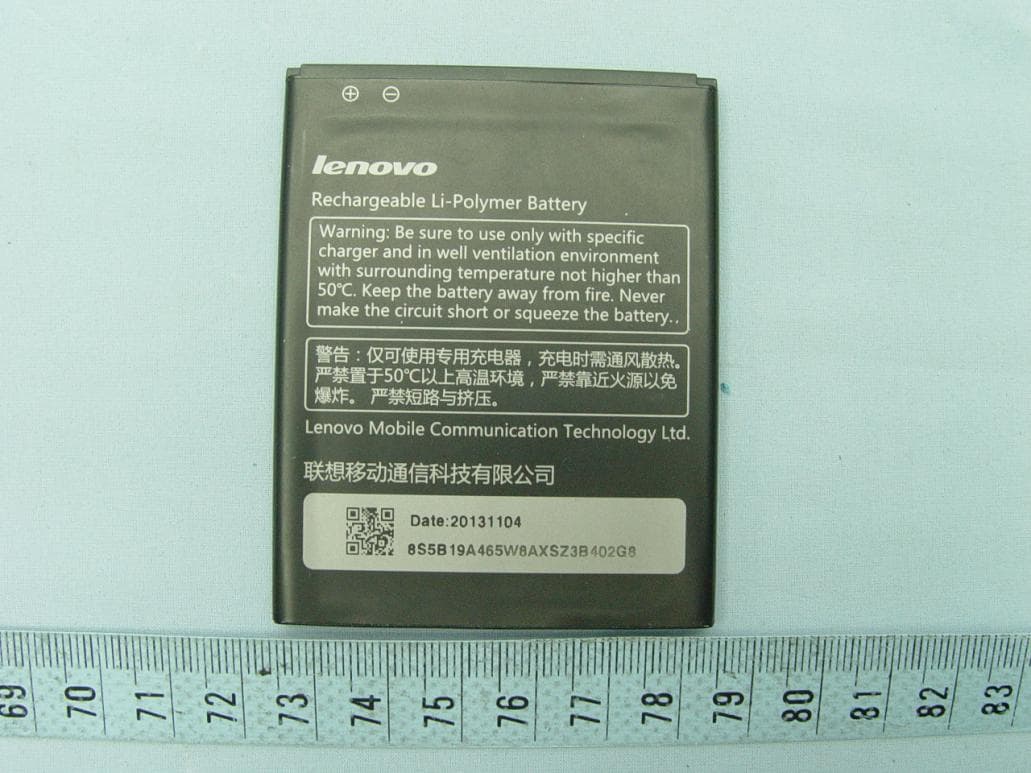
Click to zoom
Application Details
- Equipment Class
- DTS - Digital Transmission System
- Date of Grant
- Jan 27, 2014
- Application Purpose
- Original Equipment
- Date of Application
- Jan 27, 2014
- Equipment Note
- Lenovo Mobile Phone
- Frequency Range
- 2412.00000000 - 2462.00000000
- Country
- China
Documents & Files
Document Text
Text extracted from the exhibit documents filed with the FCC. Open a document above to read the original.
Users Manual
Important Product Information Guide v1.0 Lenovo S660 Content Read first-Regulatory information ........................................................................ 1 Important safety and handling information........................................................... 2 Service and Support information ........................................................................ 10 Warranty information .......................................................................................... 11 Environmental, recycling, and disposal information ........................................... 15 Restriction of Hazardous Substances Directive (RoHS) .................................... 16 Specific Absorption Rate information ................................................................. 17 Read first-Regulatory information 1 Read first-Regulatory information Be sure to read the Regulatory Notice for your country or region before using the wireless devices contained in your Lenovo Mobile Phone. To obtain a PDF version of the Regulatory Notice, refer to the “Downloading publications” section below. Downloading publications Electronic versions of your publications are available from the http://support.lenovo.com. To download the publications for your Lenovo Mobile Phone, go to: http://support.lenovo.com and follow the instructions on the screen. Notice for users in Mexico La operación de este equipo está sujeta a las siguientes dos condiciones: (1) es posible que este equipo o dispositivo no cause interferencia perjudicial y (2) este equipo o dispositivo debe aceptar cualquier interferencia, incluyendo la que pueda causar su operación no deseada. Important safety and handling information 2 Important safety and handling information Important safety information CAUTION To avoid personal injury, property damage, or accidental damage to the product, read all of the information in this section before using the product. Handling Handle Lenovo Phone with care Do not drop, bend, or puncture Lenovo Phone; do not insert foreign objects into or place heavy objects on Lenovo Phone. Sensitive components inside might become damaged. Prevent Lenovo Phone and adapter from getting wet Do not immerse Lenovo Phone in water or leave Lenovo Phone in a location where it can get saturated with water or other liquids. Repairing Do not disassemble or modify Lenovo Phone. Lenovo Phone is a sealed unit. There are no end-user serviceable parts inside. All internal repairs must be done by a Lenovo-authorized repair facility or a Lenovo-authorized technician. Attempting to open or modify Lenovo Phone will void the warranty. Lenovo Phone screen is made of glass. The glass might break if Lenovo Phone is dropped on a hard surface, is the subject of a high impact, or is crushed by a heavy object. If the glass chips or cracks, do not touch the broken glass or attempt to remove it from Lenovo Phone. Stop using Lenovo Phone immediately and contact Lenovo technical support for repair, replacement, or disposal information. Important safety and handling information 3 General battery notice Batteries supplied by Lenovo for use with your product have been tested for compatibility and should only be replaced with approved parts. Risk of explosion if battery replaced aced by an incorrect type. Dispose of used batteries according to the instructions. Rechargeable battery notice CAUTION Risk of explosion if the battery is replaced with an incorrect type. When replacing the lithium battery, use only the same or an equivalent type that is recommended by the manufacturer. The battery contains lithium and can explode if not properly used, handled, or disposed of. Dispose of used batteries according to the instructions Do not: Throw or immerse into water Heat to more than 100°C (212°F) Repair or disassemble Built-in rechargeable battery notice CAUTION Do not attempt to replace the internal rechargeable lithium ion battery. Contact Lenovo Support for factory replacement. Charging Charge Lenovo Phone in the temperature range of 0°C (32 °F)—45°C (113°F). You can use any of the following charging methods to safely recharge the internal battery of Lenovo Phone: Important safety and handling information 4 Charging method Display on Display off ac adapter Supported, but the battery will charge slowly. Supported USB connection between the dc-in connector on Lenovo Phone and a USB connector on a personal computer or other devices that comply with the USB 2.0 standards Supported, but will compensate power consumption and the battery will charge more slowly than usual. Supported, but the battery will charge slowly. Notes: Display on: Lenovo Phone on Display off: Lenovo Phone off or in screen lock mode Charging devices might become warm during normal use. Ensure that you have adequate ventilation around the charging device. Unplug the charging device if any of the following occurs: The charging device has been exposed to rain, liquid, or excessive moisture. The charging device shows signs of physical damage. You want to clean the charging device. Lenovo is not responsible for the performance or safety of products not manufactured or approved by Lenovo. Use only approved Lenovo ac adapters and batteries. NOTE Adapter shall be installed near the equipment and shall be easily accessible. Users have to use the connection to USB interfaces with USB 2.0 version or higher. Important safety and handling information 5 Distraction Take care when using Lenovo Phone in a motor vehicle or on a bicycle. Always prioritize your safety and the safety of others. Follow the law. Local laws and regulations might govern how you can use mobile electronic devices, such as Lenovo Phone, while you drive a motor vehicle or ride a bicycle. Choking hazard Keep Lenovo Phone and accessories away from small children. Lenovo Phone contains small parts that can be a choking hazard to small children. Additionally, the glass screen can break or crack if dropped on or thrown agai…
Text truncated - open the document above for the full version.
Users Manual
Read this guide carefully before using your device. Quick Start Guide Lenovo S660 Type: CMOS Pixels: 6 MP (back) + 0.3 MP (front) Height: 137 mm (5.39 inches) Width: 68.8 mm (2.7 inches) Depth: 9.95 mm (0.39 inches) Weight: 151 g CPU: MTK 6582m 1.3 GHz Quad Core Capacity: 6 GB ROM + 1 GB RAM Size: 4.7 inches (diagonal) Screen: Multi-Touch display Resolution: 960 x 540 LCD type: IPS Model: Lenovo S660 System: Android 4.2 *Bluetooth 4.0; WLAN 802.11 b/g/n; WCDMA, GSM; GPS Standby time: Up to 450 hours Battery: 3000 mAh Model and System Actual product may differ. *Launch with Android 4.2 which only supports BT 4.0 PXP profile. Display Power and Battery CPU and Capacity Size and Weight Camera Wireless Communication Technical specifications Back camera On/Off button Flashlight Receiver Microphone Volume key Speaker Earphone jackMicro USB port 5 10 Front camera2 6 3 7 8 9 4 1 10 9 43 2 53 6 7 8 1 First glance You need to insert the SIM card provided by your carrier to use cellular services. Install your phone as shown. DO NOT insert or remove the SIM cards while your phone is turned on. Doing so may permanently damage your SIM cards or your phone. SIM2 SIM1 SIM2 SIM1 SIM2 SIM1 b a SIM2 SIM1 SIM1 SIM2 SIM2 SIM1 SIM1 SIM2 Step 1. Open the back cover. Step 2. Insert the SIM cards and the memory card. TIP: Insert the SIM1 (USIM) card into SIM1 slot and SIM2 card into SIM2 slot. Step 3. Install the battery. Align the battery connectors on the battery with the pins in the battery compartment. Then push the battery down into place. Step 4. Install the back cover. Preparing your phone Method 1. Connect your phone to a power outlet using the included cable and USB power adapter. Method 2. Charge the battery using a computer. Low batteryFully chargedCharging Your device has a rechargeable battery. For more information about battery safety, see “Rechargeable battery notice” in the Important Product Information Guide. 2 1 Charge the battery as shown. Charging the battery XXXXXXXXXX Printed in China First Edition (February 2014) © Copyright Lenovo 2014. Learn more Legal notices Lenovo, the Lenovo logo are trademarks of Lenovo in the United States, other countries, or both. Other company, product, or service names may be trademarks or service marks of others. For more information about Lenovo Mobile Phone functions Regulatory Notices and other useful manuals, go to http://support.lenovo.com/. Getting support For support on network service and billing, please contact your wireless network operator. For instructions on how to use your device, go to http://support.lenovo.com/.
Attestation Statements
No. 999, Qishan North 2nd Road, Information & Optoelectronics Park, Torch Hi-tech Industry Development Zone, Xiamen, P.R.China Date: January 24, 2014 Federal Communications Commission Authorization and Evaluation Division 7345 Oakland Mills Road Columbia MD 21046 SUBJECT: FCC Application for FCC ID: YCNS660 To Whom It May Concern, We, Lenovo Mobile Communication Technology Ltd., hereby attest to the fact that we will apply the Declaration of Conformity procedure to the class B computer peripheral portion of this composite filing. Sincerely yours,
Attestation Statements
No. 999, Qishan North 2nd Road, Information & Optoelectronics Park, Torch Hi-tech Industry Development Zone, Xiamen, P.R.China Date: January 24, 2014 Statement We, Lenovo Mobile Communication Technology Ltd., state that there is no other space for putting the label on our device, FCC ID: YCNS660 , except for the space of the battery compartment of this device. The label will be put under the battery compartment and it is visible to the users as they purchase the product and install the battery. If you have any question regarding the declaration, please don’t hesitate to contact us. Thank you! Sincerely yours,
Cover Letter(s)
No. 999, Qishan North 2nd Road, Information & Optoelectronics Park, Torch Hi-tech Industry Development Zone, Xiamen, P.R.China Date: January 24, 2014 Power of Attorney To whom it may concern, Please be notified that I, Shouyu Qiu, have designated Daniel Lee of Bureau Veritas Consumer Products Services (H.K.) Ltd., Taoyuan Branch (BV CPS Taoyuan Branch) of Taiwan Kevin Zhang of Lenovo Mobile Communication Technology Ltd. as the persons being responsible for this project and to sign the form 731 and other documentation. Any and all acts carried out by Daniel Lee of Bureau Veritas Consumer Products Services (H.K.) Ltd., Taoyuan Branch (BV CPS Taoyuan Branch) of Taiwan Kevin Zhang of Lenovo Mobile Communication Technology Ltd. on the matters relating to all processes required in the FCC approval and any communication needed with the national authority, shall have the same legal authority as acts on our own behalf. As defined in 47 CFR Ch. 1.2002 (b), we further certify that neither the applicant nor any party to this application is subject to a denial to Federal benefits, including FCC benefits, pursuant to section 5301 of the Anti-Drug Abuse Act of 1998, 21 U.S.C. 835(a). This authorization is limited to the product of as following: FCC ID: YCNS660 If you have any acknowledgement and response, please send it to Daniel Lee of Bureau Veritas Consumer Products Services (H.K.) Ltd., Taoyuan Branch (BV CPS Taoyuan Branch) of Taiwan directly. Should you have any question or comment regarding this matter, please have my best attention. Sincerely yours, ________________________ Shouyu Qiu / Manager Lenovo Mobile Communication Technology Ltd. Fax: 0592-2169999-6651 Tel: 0592-2166651 E-mail: [email protected]
External Photos
1 CONSTRUCTION PHOTOS OF EUT 廠牌:lenovo / 型號:Lenovo S660 2 3 4 5 6
ID Label/Location Info
FCC ID: YCNS660 Mobile Phone (Back) Battery Compartment Label Location
ID Label/Location Info
82VV370002W 12/31 ROW VV37 SIM CARD LABEL VV3782VV370002W Latin America(PE/CL/MX/CO/VE) 15,5 76±0.15 59,8±0.15 3,9 3,9 2 29,3 0,15±0.05 24,4 adhesive area FCC ID : YCNS660 66000011 S660 INPUT:5V 1.5A
Internal Photos
1 CONSTRUCTION PHOTOS OF EUT 廠牌:lenovo / 型號:Lenovo S660 SAMPLE A 2 3 4 5 6 7 8 9 10 SAMPLE B 11 12 13 14 15 16
RF Exposure Info
FCC SAR Test Report Report Format Version 5.0.0 Issued Date : Jan. 22, 2014 Report No. : SA131227C13 Revision : R01 Appendix A. SAR Plots of System Verification The plots for system verification with largest deviation for each SAR system combination are shown as follows. Test Laboratory: Bureau Veritas ADT SAR/HAC Testing Lab Date: 2014/01/17 System Check_H835_140117 DUT : Dipole 835 MHz; Type: D835V2; SN: 4d121 Communication System: CW; Frequency: 835 MHz;Duty Cycle: 1:1 Medium: H835_0117 Medium parameters used: f = 835 MHz; σ = 0.89 S/m; ε r = 42.994; ρ = 1000 kg/m 3 Ambient Temperature:22.2°C; Liquid Temperature:21.1 °C DASY5 Configuration: - Probe: EX3DV4 - SN3590; ConvF(10.52, 10.52, 10.52); Calibrated: 2013/02/20; - Sensor-Surface: 2mm (Mechanical Surface Detection) - Electronics: DAE4 Sn861; Calibrated: 2013/03/19 - Phantom: SAM Phantom_Front; Type: SAM V4.0; Serial: TP 1202 - Measurement SW: DASY52, Version 52.8 (7); SEMCAD X Version 14.6.10 (7164) Pin=250mW/Area Scan (61x81x1): Interpolated grid: dx=1.500 mm, dy=1.500 mm Maximum value of SAR (interpolated) = 2.90 W/kg Pin=250mW/Zoom Scan (5x5x7)/Cube 0: Measurement grid: dx=8mm, dy=8mm, dz=5mm Reference Value = 58.037 V/m; Power Drift = -0.01 dB Peak SAR (extrapolated) = 3.43 W/kg SAR(1 g) = 2.27 W/kg; SAR(10 g) = 1.48 W/kg Maximum value of SAR (measured) = 2.90 W/kg Test Laboratory: Bureau Veritas ADT SAR/HAC Testing Lab Date: 2014/01/21 System Check_H835_140121 DUT: Dipole 835 MHz; Type: D835V2; SN: 4d121 Communication System: CW; Frequency: 835 MHz;Duty Cycle: 1:1 Medium: H835_0121 Medium parameters used: f = 835 MHz; σ = 0.899 S/m; ε r = 41.966; ρ = 1000 kg/m 3 Ambient Temperature:21.2 °C; Liquid Temperature:20.3 °C DASY5 Configuration: - Probe: EX3DV4 - SN3801; ConvF(9, 9, 9); Calibrated: 2013/06/20; - Sensor-Surface: 2mm (Mechanical Surface Detection) - Electronics: DAE3 Sn579; Calibrated: 2013/04/24 - Phantom: SAM Phantom_Right; Type: QD000P40CC; Serial: TP:1496 - Measurement SW: DASY52, Version 52.8 (7); SEMCAD X Version 14.6.10 (7164) Pin=250mW/Area Scan (61x81x1): Interpolated grid: dx=1.500 mm, dy=1.500 mm Maximum value of SAR (interpolated) = 2.75 W/kg Pin=250mW/Zoom Scan (5x5x7)/Cube 0: Measurement grid: dx=8mm, dy=8mm, dz=5mm Reference Value = 56.867 V/m; Power Drift = 0.12 dB Peak SAR (extrapolated) = 3.38 W/kg SAR(1 g) = 2.26 W/kg; SAR(10 g) = 1.48 W/kg Maximum value of SAR (measured) = 2.87 W/kg Test Laboratory: Bureau Veritas ADT SAR/HAC Testing Lab Date: 2014/01/21 System Check_H1900_140121 DUT: Dipole 1900 MHz; Type: D1900V2; SN: 5d036 Communication System: CW; Frequency: 1900 MHz;Duty Cycle: 1:1 Medium: H1900_0121 Medium parameters used: f = 1900 MHz; σ = 1.425 S/m; ε r = 39.246; ρ = 1000 kg/m 3 Ambient Temperature:21.1 °C; Liquid Temperature:20.2 °C DASY5 Configuration: - Probe: EX3DV4 - SN3801; ConvF(7.67, 7.67, 7.67); Calibrated: 2013/06/20; - Sensor-Surface: 2mm (Mechanical Surface Detection) - Electronics: DAE3 Sn579; Calibrated: 2013/04/24 - Phantom: SAM Phantom_Front; Type: SAM V4.0; Serial: TP 1127 - Measurement SW: DASY52, Version 52.8 (7); SEMCAD X Version 14.6.10 (7164) Pin=250mW/Area Scan (61x61x1): Interpolated grid: dx=1.500 mm, dy=1.500 mm Maximum value of SAR (interpolated) = 13.7 W/kg Pin=250mW/Zoom Scan (5x5x7)/Cube 0: Measurement grid: dx=8mm, dy=8mm, dz=5mm Reference Value = 99.695 V/m; Power Drift = 0.01 dB Peak SAR (extrapolated) = 17.6 W/kg SAR(1 g) = 9.39 W/kg; SAR(10 g) = 4.79 W/kg Maximum value of SAR (measured) = 13.7 W/kg Test Laboratory: Bureau Veritas ADT SAR/HAC Testing Lab Date: 2014/01/17 System Check_H2450_140117 DUT: Dipole 2450 MHz; Type: D2450V2; SN: 737 Communication System: CW; Frequency: 2450 MHz;Duty Cycle: 1:1 Medium: H2450_0117 Medium parameters used: f = 2450 MHz; σ = 1.824 S/m; ε r = 38.856; ρ = 1000 kg/m 3 Ambient Temperature:22.2 °C; Liquid Temperature:21.4°C DASY5 Configuration: - Probe: EX3DV4 - SN3650; ConvF(6.99, 6.99, 6.99); Calibrated: 2013/04/30; - Sensor-Surface: 2mm (Mechanical Surface Detection) - Electronics: DAE3 Sn360; Calibrated: 2013/01/30 - Phantom: SAM Phantom_Front; Type: SAM V4.0; Serial: TP 1654 - Measurement SW: DASY52, Version 52.8 (7); SEMCAD X Version 14.6.10 (7164) Pin=250mW/Area Scan (81x81x1): Interpolated grid: dx=1.200 mm, dy=1.200 mm Maximum value of SAR (interpolated) = 18.2 W/kg Pin=250mW/Zoom Scan (7x7x7)/Cube 0: Measurement grid: dx=5mm, dy=5mm, dz=5mm Reference Value = 100.9 V/m; Power Drift = 0.03 dB Peak SAR (extrapolated) = 24.2 W/kg SAR(1 g) = 12.2 W/kg; SAR(10 g) = 6.05 W/kg Maximum value of SAR (measured) = 18.1 W/kg Test Laboratory: Bureau Veritas ADT SAR/HAC Testing Lab Date: 2014/01/22 System Check_B835_140122 DUT: Dipole 835 MHz; Type: D835V2; SN: 4d121 Communication System: CW; Frequency: 835 MHz;Duty Cycle: 1:1 Medium: B835_0122 Medium parameters used: f = 835 MHz; σ = 0.971 S/m; ε r = 55.045; ρ = 1000 kg/m 3 Ambient Temperature:21.3 °C; Liquid Temperature:20.4 °C DASY5 Configuration: - Probe: EX3DV4 - SN3801; ConvF(9.13, 9.13, 9.13); Calibrated: 2013/06/20; - Sensor-Surface: 2mm (Mechanical Surface Detection) - Electronics: DAE3 Sn579; Calibrated: 2013/04/24 - Phantom: SAM Phantom_Right; Type: QD000P40CC; Serial: TP:1496 - Measurement SW: DASY52, Version 52.8 (7); SEMCAD X Version 14.6.10 (7164) Pin=250mW/Area Scan (61x81x1): Interpolated grid: dx=1.500 mm, dy=1.500 mm Maximum value of SAR (interpolated) = 3.03 W/kg Pin=250mW/Zoom Scan (5x5x7)/Cube 0: Measurement grid: dx=8mm, dy=8mm, dz=5mm Reference Value = 56.858 V/m; Power Drift = -0.05 dB Peak SAR (extrapolated) = 3.56 W/kg SAR(1 g) = 2.4 W/kg; SAR(10 g) = 1.58 W/kg Maximum value of SAR (measured) = 3.04 W/kg Test Laboratory: Bureau Veritas ADT SAR/HAC Testing Lab Date: 2014/01/22 System Check_B1900_140122 DUT: Dipole 1900 MHz; Type: D1900V2; SN: 5d036 Communication System: CW; Frequency: 1900 MHz;Duty Cycle: 1:1 Medium: B1900_0122 Medium parameters used: f = 1900 MHz; σ = 1.552 S/m; ε r = 51.225; ρ = 1000 kg/m 3 Ambient Temperature:21.4 °C; Liquid Temperature…
Text truncated - open the document above for the full version.
RF Exposure Info
FCC SAR Test Report Report Format Version 5.0.0 Issued Date : Jan. 22, 2014 Report No. : SA131227C13 Revision : R01 Appendix B. SAR Plots of SAR Measurement The SAR plots for highest measured SAR in each exposure configuration, wireless mode and frequency band combination, and measured SAR > 1.5 W/kg are shown as follows. Test Laboratory: Bureau Veritas ADT SAR/HAC Testing Lab Date: 2014/01/17 P01 GSM850_GPRS11_Left Cheek_Ch251_Sample 2 DUT: 131227C13 Communication System: GPRS11; Frequency: 848.8 MHz;Duty Cycle: 1:2.67 Medium: H835_0117 Medium parameters used: f = 849 MHz; σ = 0.905 S/m; ε r = 42.821; ρ = 1000 kg/m 3 Ambient Temperature:22.2°C; Liquid Temperature:21.1 °C DASY5 Configuration: - Probe: EX3DV4 - SN3590; ConvF(10.52, 10.52, 10.52); Calibrated: 2013/02/20; - Sensor-Surface: 2mm (Mechanical Surface Detection) - Electronics: DAE4 Sn861; Calibrated: 2013/03/19 - Phantom: SAM Phantom_Front; Type: SAM V4.0; Serial: TP 1202 - Measurement SW: DASY52, Version 52.8 (7); SEMCAD X Version 14.6.10 (7164) - Area Scan (61x111x1): Interpolated grid: dx=1.500 mm, dy=1.500 mm Maximum value of SAR (interpolated) = 0.407 W/kg - Zoom Scan (5x5x7)/Cube 0: Measurement grid: dx=8mm, dy=8mm, dz=5mm Reference Value = 8.022 V/m; Power Drift = -0.06 dB Peak SAR (extrapolated) = 0.428 W/kg SAR(1 g) = 0.343 W/kg; SAR(10 g) = 0.263 W/kg Maximum value of SAR (measured) = 0.387 W/kg Test Laboratory: Bureau Veritas ADT SAR/HAC Testing Lab Date: 2014/01/21 P02 GSM1900_GPRS11_Rig ht Cheek_Ch661_Sample 1 DUT: 131227C13 Communication System: GPRS11; Frequency: 1880 MHz;Duty Cycle: 1:2.67 Medium: H1900_0121 Medium parameters used: f = 1880 MHz; σ = 1.399 S/m; ε r = 39.356; ρ = 1000 kg/m 3 Ambient Temperature:21.1 °C; Liquid Temperature:20.2 °C DASY5 Configuration: - Probe: EX3DV4 - SN3801; ConvF(7.67, 7.67, 7.67); Calibrated: 2013/06/20; - Sensor-Surface: 2mm (Mechanical Surface Detection) - Electronics: DAE3 Sn579; Calibrated: 2013/04/24 - Phantom: SAM Phantom_Front; Type: SAM V4.0; Serial: TP 1127 - Measurement SW: DASY52, Version 52.8 (7); SEMCAD X Version 14.6.10 (7164) - Area Scan (61x111x1): Interpolated grid: dx=1.500 mm, dy=1.500 mm Maximum value of SAR (interpolated) = 0.0579 W/kg - Zoom Scan (5x5x7)/Cube 0: Measurement grid: dx=8mm, dy=8mm, dz=5mm Reference Value = 0 V/m; Power Drift = 0.00 dB Peak SAR (extrapolated) = 0.0550 W/kg SAR(1 g) = 0.034 W/kg; SAR(10 g) = 0.019 W/kg Maximum value of SAR (measured) = 0.0434 W/kg Test Laboratory: Bureau Veritas ADT SAR/HAC Testing Lab Date: 2014/01/21 P03 WCDMA II_RMC12.2K_Left Cheek_Ch9262_ Sample 1 DUT: 131227C13 Communication System: WCDMA; Frequency: 1852.4 MHz;Duty Cycle: 1:1 Medium: H1900_0121 Medium parameters used: f = 1852.4 MHz; σ = 1.365 S/m; ε r = 39.513; ρ = 1000 kg/m 3 Ambient Temperature:21.1 °C; Liquid Temperature:20.2 °C DASY5 Configuration: - Probe: EX3DV4 - SN3801; ConvF(7.67, 7.67, 7.67); Calibrated: 2013/06/20; - Sensor-Surface: 2mm (Mechanical Surface Detection) - Electronics: DAE3 Sn579; Calibrated: 2013/04/24 - Phantom: SAM Phantom_Front; Type: SAM V4.0; Serial: TP 1127 - Measurement SW: DASY52, Version 52.8 (7); SEMCAD X Version 14.6.10 (7164) - Area Scan (61x111x1): Interpolated grid: dx=1.500 mm, dy=1.500 mm Maximum value of SAR (interpolated) = 0.173 W/kg - Zoom Scan (5x5x7)/Cube 0: Measurement grid: dx=8mm, dy=8mm, dz=5mm Reference Value = 0 V/m; Power Drift = 0.00 dB Peak SAR (extrapolated) = 0.141 W/kg SAR(1 g) = 0.081 W/kg; SAR(10 g) = 0.043 W/kg Maximum value of SAR (measured) = 0.109 W/kg Test Laboratory: Bureau Veritas ADT SAR/HAC Testing Lab Date: 2014/01/21 P04 WCDMA V_RMC12.2K_Left Cheek_Ch4182_Sample 1 DUT: 131227C13 Communication System: WCDMA; Frequency: 836.4 MHz;Duty Cycle: 1:1 Medium: H835_0121 Medium parameters used: f = 836.4 MHz; σ = 0.9 S/m; ε r = 41.948; ρ = 1000 kg/m 3 Ambient Temperature:21.2 °C; Liquid Temperature:20.3 °C DASY5 Configuration: - Probe: EX3DV4 - SN3801; ConvF(9, 9, 9); Calibrated: 2013/06/20; - Sensor-Surface: 2mm (Mechanical Surface Detection) - Electronics: DAE3 Sn579; Calibrated: 2013/04/24 - Phantom: SAM Phantom_Right; Type: QD000P40CC; Serial: TP:1496 - Measurement SW: DASY52, Version 52.8 (7); SEMCAD X Version 14.6.10 (7164) - Area Scan (61x111x1): Interpolated grid: dx=1.500 mm, dy=1.500 mm Maximum value of SAR (interpolated) = 0.209 W/kg - Zoom Scan (5x5x7)/Cube 0: Measurement grid: dx=8mm, dy=8mm, dz=5mm Reference Value = 5.664 V/m; Power Drift = 0.14 dB Peak SAR (extrapolated) = 0.220 W/kg SAR(1 g) = 0.180 W/kg; SAR(10 g) = 0.141 W/kg Maximum value of SAR (measured) = 0.202 W/kg Test Laboratory: Bureau Veritas ADT SAR/HAC Testing Lab Date: 2014/01/17 P05 802.11b_ Right Cheek_Ch1_Sample 1 DUT: 131227C13 Communication System: WLAN_2.4G; Frequency: 2412 MHz;Duty Cycle: 1:1 Medium: H2450_0117 Medium parameters used: f = 2412 MHz; σ = 1.777 S/m; ε r = 39.004; ρ = 1000 kg/m 3 Ambient Temperature:22.2 °C; Liquid Temperature:21.4°C DASY5 Configuration: - Probe: EX3DV4 - SN3650; ConvF(6.99, 6.99, 6.99); Calibrated: 2013/04/30; - Sensor-Surface: 2mm (Mechanical Surface Detection) - Electronics: DAE3 Sn360; Calibrated: 2013/01/30 - Phantom: SAM Phantom_Front; Type: SAM V4.0; Serial: TP 1654 - Measurement SW: DASY52, Version 52.8 (7); SEMCAD X Version 14.6.10 (7164) - Area Scan (71x131x1): Interpolated grid: dx=1.200 mm, dy=1.200 mm Maximum value of SAR (interpolated) = 0.898 W/kg - Zoom Scan (5x5x7)/Cube 0: Measurement grid: dx=8mm, dy=8mm, dz=5mm Reference Value = 6.849 V/m; Power Drift = 0.05 dB Peak SAR (extrapolated) = 1.36 W/kg SAR(1 g) = 0.554 W/kg; SAR(10 g) = 0.254 W/kg Maximum value of SAR (measured) = 0.929 W/kg Test Laboratory: Bureau Veritas ADT SAR/HAC Testing Lab Date: 2014/01/22 P06 GSM850_GPRS11_Front Face_1cm_Ch251_Sample 2 DUT: 131227C13 Communication System: GPRS11; Frequency: 848.8 MHz;Duty Cycle: 1:2.67 Medium: B835_0122 Medium parameters used: f = 849 MHz; σ = 0.986 S/m; ε r = 54.951; ρ = 1000 kg/m 3 Ambient Temperature:21.3 °C; Liquid Temperature:20.4 °C DASY5 Configuration…
Text truncated - open the document above for the full version.
RF Exposure Info
FCC SAR Test Report Report Format Version 5.0.0 Issued Date : Jan. 22, 2014 Report No. : SA131227C13 Revision : R01 Appendix C. Calibration Certificate for Probe and Dipole The SPEAG calibration certificates are shown as follows.
RF Exposure Info
FCC SAR Test Report Report Format Version 5.0.0 Page No. : 1 of 35 Report No. : SA131227C13 Issued Date : Jan. 22, 2014 Revision : R01 FCC SAR Test Report Report No. : SA131227C13 Applicant : Lenovo Mobile Communication Technology Ltd. Address : No.999, Qishan North 2nd Road, Information & Optoelectronics Park, Torch Hi-tech Industry Development Zone, Xiamen, P.R.China Product : Lenovo Mobile Phone FCC ID : YCNS660 Brand : lenovo Model No. : Lenovo S660 Standards : FCC 47 CFR Part 2 (2.1093) / IEEE C95.1:1992 / IEEE 1528:2003 IEEE 1528a-2005 / KDB 865664 D01 v01r02 / KDB 248227 D01 v01r02 KDB 447498 D01 v05r01 / KDB 648474 D04 v01r02 / KDB 941225 D01 v02 KDB 941225 D02 v02r02 / KDB 941225 D03 v01 / KDB 941225 D06 v01r01 Sample Received Date : Dec. 27, 2013 Date of Testing : Jan. 17, 2014 ~ Jan. 22, 2014 CERTIFICATION: The above equipment have been tested by Bureau Veritas Consumer Products Services (H.K.) Ltd., Taoyuan Branch – Lin Kou Laboratories, and found compliance with the requirement of the above standards. The test record, data evaluation & Equipment Under Test (EUT) configurations represented herein are true and accurate accounts of the measurements of the sample’s SAR characteristics under the conditions specified in this report. It should not be reproduced except in full, without the written approval of our laboratory. The client should not use it to claim product certification, approval, or endorsement by TAF or any government agencies. Prepared By : Vera Huang / Specialist Approved By : Roy Wu / Manager This report is for your exclusive use. Any copying or replication of this report to or for any other person or entity, or use of our name or trademark, is permitted only with our prior written permission. This report sets forth our findings solely with respect to the test samples identified herein. The results set forth in this report are not indicative or representative of the quality or characteristics of the lot from which a test sample was taken or any similar or identical product unless specifically and expressly noted. Our report includes all of the tests requested by you and the results thereof based upon the information that you provided to us. You have 60 days from date of issuance of this report to notify us of any material error or omission caused by our negligence, provided, however, that such notice shall be in writing and shall specifically address the issue you wish to raise. A failure to raise such issue within the prescribed time shall constitute your unqualified acceptance of the completeness of this report, the tests conducted and the correctness of the report contents. Unless specific mention, the uncertainty of measurement has been explicitly taken into account to declare the compliance or non-compliance to the specification. FCC SAR Test Report Report Format Version 5.0.0 Page No. : 2 of 35 Report No. : SA131227C13 Issued Date : Jan. 22, 2014 Revision : R01 Table of Contents Release Control Record ............................................................................................................................................................... 3 1. Summary of Maximum SAR Value ....................................................................................................................................... 4 2. Description of Equipment Under Test ................................................................................................................................. 5 3. SAR Measurement System ................................................................................................................................................... 6 3.1 Definition of Specific Absorption Rate (SAR) ............................................................................................................... 6 3.2 SPEAG DASY System ................................................................................................................................................. 6 3.2.1 Robot .................................................................................................................................................................. 7 3.2.2 Probes ................................................................................................................................................................ 8 3.2.3 Data Acquisition Electronics (DAE) .................................................................................................................... 8 3.2.4 Phantoms ........................................................................................................................................................... 9 3.2.5 Device Holder ................................................................................................................................................... 10 3.2.6 System Validation Dipoles ................................................................................................................................ 10 3.2.7 Tissue Simulating Liquids ................................................................................................................................. 11 3.3 SAR System Verification ............................................................................................................................................ 14 3.4 SAR Measurement Procedure ................................................................................................................................... 15 3.4.1 Area & Zoom Scan Procedure ......................................................................................................................... 15 3.4.2 Volume Scan Procedure ..........................................................................................................................…
Text truncated - open the document above for the full version.
Contact Information
Applicant
Shouyu Qiu(Manager)
Test Firm
Bureau Veritas CPS (H.K.) Ltd., Taoyuan BranchRichard Chen
Technical Specifications
| # | Rule Parts | Frequency Range | Power Output |
|---|---|---|---|
| 2 | 15C | 2.41 GHz - 2.46 GHz | 103.00 mW |
Other Applications from Lenovo Mobile Communication Technology Ltd.

YCNA7010A48
Dec 13, 2015Lenovo Mobile Phone
Equipment Class
DXX - Part 15 Low Power Communication Device Transmitter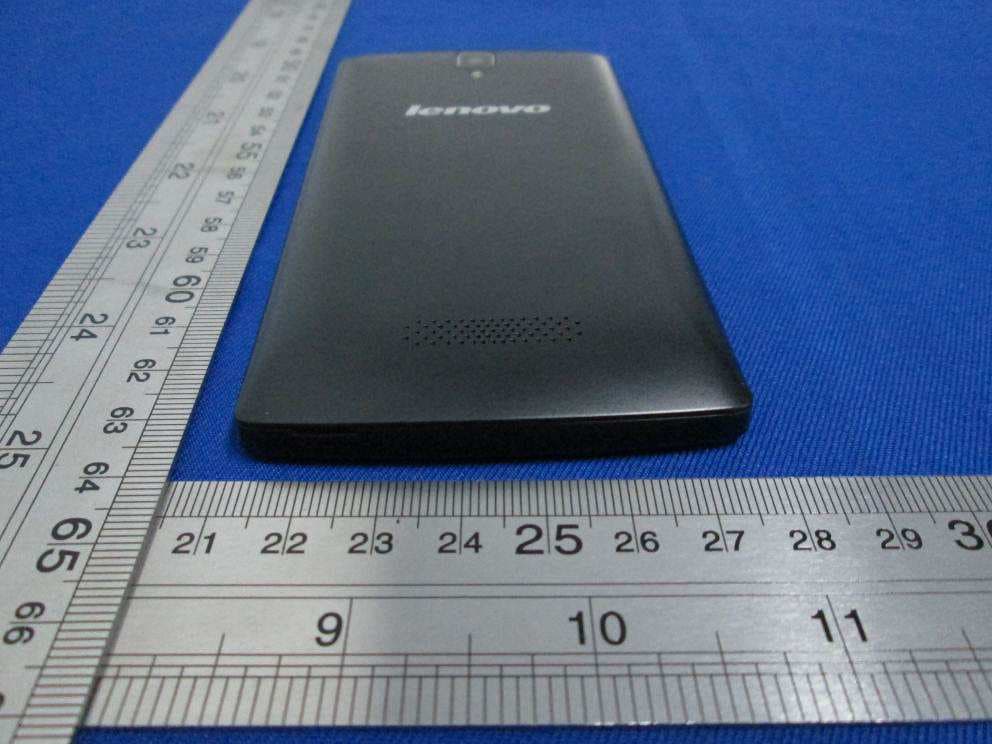
YCNA2010L36
Oct 21, 2015Lenovo Mobile Phone
Equipment Class
DTS - Digital Transmission System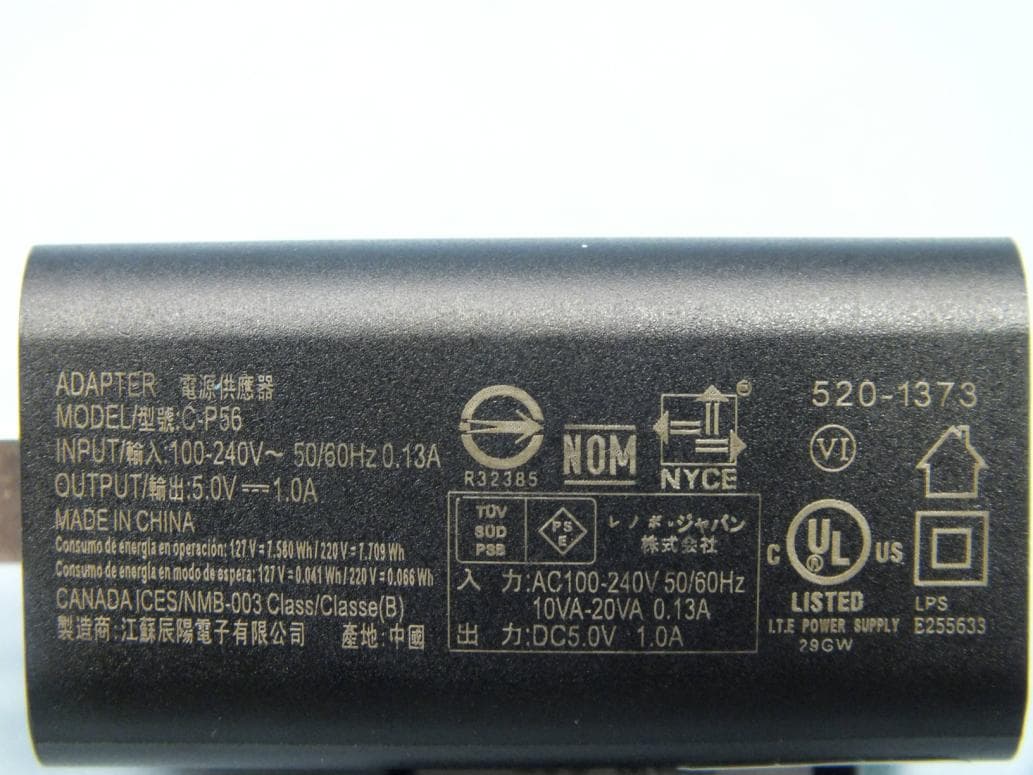
YCNA2010-L
Jun 24, 2015Lenovo Mobile Phone
Equipment Class
DTS - Digital Transmission System
YCNA6000L
Jan 25, 2015Lenovo Mobile Phone
Equipment Class
PCE - PCS Licensed Transmitter held to ear
YCNS90L
Nov 27, 2014Lenovo Mobile Phone
Equipment Class
DSS - Part 15 Spread Spectrum Transmitter