ZUKBT588Sport Bluetooth Earphone
Wintop Electronics Co., Ltd.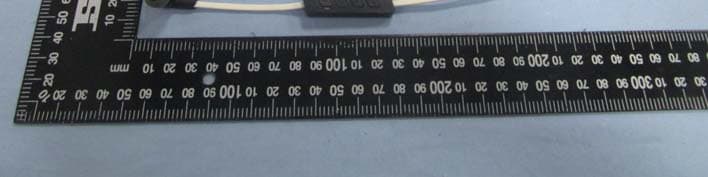
Click to zoom
Application Details
- Equipment Class
- DSS - Part 15 Spread Spectrum Transmitter
- Date of Grant
- May 28, 2015
- Application Purpose
- Original Equipment
- Date of Application
- May 28, 2015
- Equipment Note
- Sport Bluetooth Earphone
- Frequency Range
- 2402.00000000 - 2480.00000000
- Company
- Wintop Electronics Co., Ltd.
- Country
- China
Documents & Files
Document Text
Text extracted from the exhibit documents filed with the FCC. Open a document above to read the original.
Users Manual
BT588 Buttons Definition: SW2: Multifuction Button(MFB) SW1 : Volume+(V+) SW3: Volume-(V-) SW4: Snapshot 1.1 Power on and Power off: Power on: When in Power off status, press Multifuction button for 4 seconds,earbuds have notification voice and blue LED flashes 2 times,earbuds power on. Power off: When in standby status,press Multifuction button for 4 seconds, earbuds have notification voice and red LED flashes 2 times,earbuds power off. 1.2 Using function (1)Answer calling:when a calling coming,short press MFB button to answer it。 (2)Hang up calling:Under conversation,press MFB button to hang up the calling。 (3)Reject calling:when a calling coming,long press MFB button for 2 seconds to reject it。 (5)Redial a calling: When earbuds in connection,press MFB twice,earbuds will redial the last calling。 (6)Volume Control: When earbuds under conversation or playing music,press V+ or V- to control volume. Once the volume reaches Max or Min,there is notification voice. (7)Music Operation: Play music:Enter the music player,short press MFB button to play music; Pause music:when the music playing,short press MFB button to pause music; Previous:when the music playing,,press V- button for 2 second,there is notification sound, then switch to previous song; Next:when the music playing,,press V+ button for 2 second,there is notification sound, then switch to next song; 。 2:Snapshot function: 2.1.When earbuds connect with Android smartphone,the phone soft keyboard will be hided,press Snapshot button for 2 seconds can popup the soft keyboard. 2、Earbuds status and indicator: Status Indicator Shutdown All lights out Power on Blue LED flash 2 times Power off Red LED flash 2 times Pairing mode Red and blue LED flash alternately standby Blue led flash one time every 4 second Lower power Red led flash 3 times every 20 second In charge Red led lighting Charging Finished Blue led lighting Enter a calling Blue led flash fleetly FCC Warning This device complies with Part 15 of the FCC Rules. Operation is subject to the following two conditions: (1) This device may not cause harmful interference, and (2) this device must accept any interference received, including interference that may cause undesired operation. NOTE: Any changes or modifications to this unit not expressly approved by the party responsible for compliance could void the user's authority to operate the equipment.
External Photos
Wintop Electronics Co., Ltd. Model: BT588 REPORT NO.: STR15058152I FCC PART 15.247 EXHIBIT 2 - EUT EXTERNAL PHOTOGRAPHS EUT View 1 EUT View 2 Wintop Electronics Co., Ltd. Model: BT588 REPORT NO.: STR15058152I FCC PART 15.247 EUT View 3
ID Label/Location Info
Wintop Electronics Co., Ltd. Model: BT588 REPORT NO.: STR15058152I FCC PART 15.247 EXHIBIT 1 - PRODUCT LABELING Proposed FCC ID Label Format FCC ID: ZUKBT588 Specifications: Text is Black in color and justified. Labels are printed in indelible ink on permanent adhesive silk-screened onto the EUT or shall be affixed at a conspicuous location on the EUT. Proposed Label Location on EUT FCC ID Label Location
ID Label/Location Info
Wintop Electronics Co., Ltd. Model: BT588 REPORT NO.: STR15058152I FCC PART 15.247 EXHIBIT 1 - PRODUCT LABELING Proposed FCC ID Label Format FCC ID: ZUKBT588 Specifications: Text is Black in color and justified. Labels are printed in indelible ink on permanent adhesive silk-screened onto the EUT or shall be affixed at a conspicuous location on the EUT. Proposed Label Location on EUT FCC ID Label Location
Internal Photos
Wintop Electronics Co., Ltd. Model: BT588 REPORT NO.: STR15058152I FCC PART 15.247 EXHIBIT 3 - EUT INTERNAL PHOTOGRAPHS EUT Housing and Board View 1 Solder Board-Component View 1 BT Antenna Wintop Electronics Co., Ltd. Model: BT588 REPORT NO.: STR15058152I FCC PART 15.247 Solder Board-Component View 2
RF Exposure Info
RF Exposure Requirements Product Description: Sport Bluetooth Earphone Model No.: BT588 FCC ID: ZUKBT588 According to the KDB-447498 D01 V05r02, the following RF exposure evaluation shall to demonstrate RF exposure compliance. Bluetooth Tx frequency range: 2402~2480MHz Device category: Portable device (Distance: 5mm) Maximum Conducted Output Power: 3.154dBm Maximum Output Power: 2.0673mW Limit: 10mW Source-based time-averaged output power is 2.0673mW< 10mW So the transmitter complies with the RF exposure requirements and the SAR is not required.
Test Report
Wintop Electronics Co., Ltd. Model: BT588 REPORT NO.: STR15058152I PAGE 1 OF 54 FCC PART 15.247 FCC Part 15C Measurement and Test Report For Wintop Electronics Co., Ltd. HuaGuan Industrial Park, Xinhe Road, Shangmugu, Pinghu Town, Longgang District, Shenzhen City, China FCC ID: ZUKBT588 FCC Rule(s): FCC Part 15.247 Product Description: Sport Bluetooth Earphone Tested Model: BT588 Report No.: STR15058152I Tested Date: 2015-05-19 to 2015-05-23 Issued Date: 2015-05-23 Tested By: Mark Chen / Engineer Reviewed By: Lahm Peng / EMC Manager Approved & Authorized By: Jandy so / PSQ Manager Prepared By: Shenzhen SEM.Test Technology Co., Ltd. 1/F, Building A, Hongwei Industrial Park, Liuxian 2nd Road, Bao'an District, Shenzhen, P.R.C.(518101) Tel.: +86-755-33663308 Fax.: +86-755-33663309 Website: www.semtest.com.cn Note: This test report is limited to the above client company and the product model only. It may not be duplicated without prior permitted by Shenzhen SEM.Test Technology Co., Ltd. Wintop Electronics Co., Ltd. Model: BT588 REPORT NO.: STR15058152I PAGE 2 OF 54 FCC PART 15.247 TABLE OF CONTENTS 1. GENERAL INFORMATION ................................................................................................................................... 4 1.1 PRODUCT DESCRIPTION FOR EQUIPMENT UNDER TEST (EUT) ............................................................................... 4 1.2 TEST STANDARDS ................................................................................................................................................... 5 1.3 TEST METHODOLOGY ............................................................................................................................................. 5 1.4 TEST FACILITY ....................................................................................................................................................... 5 1.5 EUT SETUP AND TEST MODE ................................................................................................................................. 6 2. SUMMARY OF TEST RESULTS ........................................................................................................................... 7 3. RF EXPOSURE ......................................................................................................................................................... 8 3.1 STANDARD APPLICABLE ......................................................................................................................................... 8 3.2 TEST RESULT.......................................................................................................................................................... 8 4. ANTENNA REQUIREMENT .................................................................................................................................. 9 4.1 STANDARD APPLICABLE ......................................................................................................................................... 9 4.2 EVALUATION INFORMATION .................................................................................................................................. 9 5. FREQUENCY HOPPING SYSTEM REQUIREMENTS ................................................................................... 10 5.1 STANDARD APPLICABLE ....................................................................................................................................... 10 5.2 FREQUENCY HOPPING SYSTEM............................................................................................................................. 10 5.3 EUT PSEUDORANDOM FREQUENCY HOPPING SEQUENCE .................................................................................... 11 6. QUANTITY OF HOPPING CHANNELS AND CHANNEL SEPARATION ................................................... 12 6.1 STANDARD APPLICABLE ....................................................................................................................................... 12 6.2 TEST EQUIPMENT LIST AND DETAILS ................................................................................................................... 12 6.3 TEST PROCEDURE ................................................................................................................................................. 12 6.4 ENVIRONMENTAL CONDITIONS ............................................................................................................................ 12 6.5 SUMMARY OF TEST RESULTS/PLOTS .................................................................................................................... 13 7. DWELL TIME OF HOPPING CHANNEL .......................................................................................................... 17 7.1 STANDARD APPLICABLE ....................................................................................................................................... 17 7.2 TEST EQUIPMENT LIST AND DETAILS ................................................................................................................... 17 7.3 TEST PROCEDURE ................................................................................................................................................. 17 7.4 ENVIRONMENTAL CONDITIONS ............................................................................................................................ 17 7.5 SUMMARY OF TEST RESULTS/PLOTS .................................................................................................................... 18 8. 20DB BANDWIDTH ............................................................................................................................................... 28 8.1 STANDARD APPLICABLE ....................................................................................................................................... 28 8.2 TEST EQUIPMENT LIST AND DE…
Text truncated - open the document above for the full version.
Test Setup Photos
Wintop Electronics Co., Ltd. Model: BT588 REPORT NO.: STR15058152I FCC PART 15.247 EXHIBIT 4 - TEST SETUP PHOTOGRAPHS Conducted Emission Test Setup Radiation Emission Test Setup Wintop Electronics Co., Ltd. Model: BT588 REPORT NO.: STR15058152I FCC PART 15.247 Radiation Emission Test Setup (Below 30MHz) Radiation Emission Test Setup (30MHz to 1GHz) Wintop Electronics Co., Ltd. Model: BT588 REPORT NO.: STR15058152I FCC PART 15.247 Radiation Emission Test Setup (Above 1GHz)
Contact Information
Applicant
Shirly Lee(Sales)
Test Firm
Shenzhen SEM.Test Technology Co., Ltd.Jandy So
Technical Specifications
| # | Rule Parts | Frequency Range | Power Output |
|---|---|---|---|
| 1 | 15C | 2.40 GHz - 2.48 GHz | 2.10 mW |
Other Applications from Wintop Electronics Co., Ltd.

ZUK-KB812M
Nov 25, 2015Wireless Keyboard
Equipment Class
DXX - Part 15 Low Power Communication Device Transmitter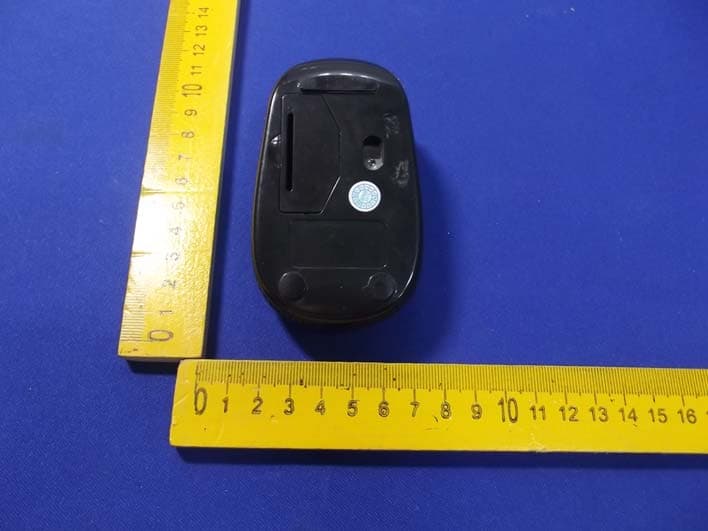
ZUKWM710
Nov 17, 20132.4GHz Wireless Optical Mouse
Equipment Class
DXX - Part 15 Low Power Communication Device Transmitter
ZUKWM660-1
Apr 03, 20122.4 GHz Wireless Mouse Receiver
Equipment Class
JBP - Part 15 Class B Computing Device PeripheralZUKWM660
Apr 01, 20122.4 GHz Wireless Optical Mouse
Equipment Class
DXX - Part 15 Low Power Communication Device Transmitter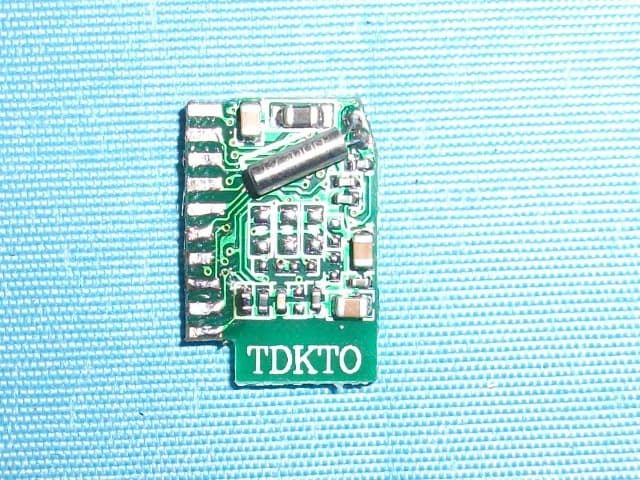
ZUKWM605
Aug 02, 2011Bluetooth Wireless Optical Mouse
Equipment Class
DXX - Part 15 Low Power Communication Device Transmitter