2ABGL-0062.4G Remote Control
Pacific Cycle, Inc.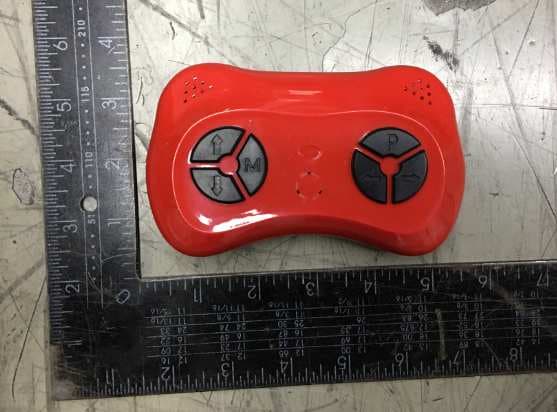
Click to zoom
Application Details
- Equipment Class
- DXX - Part 15 Low Power Communication Device Transmitter
- Date of Grant
- Mar 23, 2020
- Application Purpose
- Original Equipment
- Date of Application
- Mar 17, 2020
- Equipment Note
- 2.4G Remote Control
- Frequency Range
- 2407.00000000 - 2407.00000000
- Company
- Pacific Cycle, Inc.
- Country
- United States
Documents & Files
Document Text
Text extracted from the exhibit documents filed with the FCC. Open a document above to read the original.
Users Manual
t WARNING This manual contains important safety and use information. Keep this manual for future reference. • An adult must read this entire manual • Adult supervision is required at all times Age: 3–5 years Weight: Maximum 60 lbs (27 kg) Maximum Speed: 2.5 MPH Battery: 6 volt Owner's Manual K T1551I Audi Q5 Styles and colors may vary. Made in China WARNINGWARNING WARNING -- -- WARNING CAUTION 23 Safety If you are unsure of any information in this manual or have a question regarding assembly or use please call customer service at 877-741-6154. Always keep this manual for reference and include it with resale of the ride-on toy. FAILURE TO FOLLOW THE SAFETY INSTRUCTIONS LISTED BELOW MAY RESULT IN SERIOUS INJURY OR DEATH. The owner’s manual contains assembly, use and maintenance instructions. Safe Riding Warnings • Not be used by children under three (3) years of age or children over five (5) years of age • Do not exceed the maximum weight capacity of 130 lbs. (27kg) • Do not allow more than one (1) rider. ADULTS AND SUPERVISORS, PLEASE NOTE: 1. Always instruct all children of common sense rules and safe practices. 2. Be aware that flat, hard surfaces provide the safest experience for child riders. 3. Do not allow the child rider to operate the ride-on toy near streets, roads, sidewalks, walkways, or any other place where they may encounter other moving vehicles. 4. Never leave children unattended with this ride-on toy. Continuous adult supervision is required. 5. If necessary, adults and supervisors are always responsible for setting up gates and barriers to ensure a safe riding environment for the child rider. 6. Be aware that this ride-on toy does not have braking capabilities. Allowing use of this ride-on toy in areas that require braking may cause rolls, crashes, serious injury, or death to the child rider. 7. Teach children not to allow other children to use this ride-on toy. Communicate this message to other adults and supervisors of fellow children with which your child interacts. 8. Sternly alert children that hands, legs, hair, and clothing can potentially get caught in moving parts. Ensure they never place a body part or piece of clothing near a moving part of the ride-on toy. Avoid loose clothing. • Battery posts, terminals and related accessories contain lead and lead compounds (acids) chemicals and are toxic and corrosive. Never open the battery. • Contact or exposure to battery leakage (lead acid) may cause serious injury. If contact or exposure occurs with the skin or in the eyes, or if the chemical is swallowed, immediately call 911. • Use of a battery or charger other than the supplied rechargeable battery and charger may cause a fire or explosion. Only use the supplied rechargeable battery and charger with the ride-on toy. • Do not charge the battery near heat or flammable materials. • Using the rechargeable battery and charger for any other product many result in overheating, fire or explosion. Never use the rechargeable battery and charger with another product. Re-Charge Interval and Time Important! • Damage to the battery may occur if it is allowed to drain completely. Do not allow the battery to drain completely. • Check the battery and charger (supply cord, connector) for wear and damage before charging. Do not charge the battery if damage has occurred. Do not use an extension cord when charging the ride-on toy. • On average you will need to charge the battery for 10 hours and no more than 24 hours. Failure to charge the battery as directed could cause permanent damage to the battery and void the warranty. • Only an adult who has read and understands the safety warnings should handle, charge and recharge the battery. Child Safety Warnings • Adults supervising children must read and understand this entire manual before allowing any child to use this product. • Adults must evaluate their own children as to maturity, strength, judgment and ability to follow safety rules. Published age guidelines are not a substitute for careful evaluation of your own child. • Adults must teach children about thinking ahead while riding as this may be the first time a child has ever controlled a motorized ride-on toy. While you supervise, see through the child’s eyes, and verbally teach them about steering and avoiding obstacles in the approved riding area. 9. Instruct children to always wear shoes when using the ride-on toy. 10. Confirm that children do not have access to the charging equipment or come into contact with any part of the ride-on toy while it is charging. 11. Do not mix old and new batteries. 12. Do not mix alkaline, standard (carbon zinc), or rechargeable batteries. 13. Firmly instruct children to use the ride-on toy in a safe manner. Unsafe behaviors include, but are not limited to: • Traveling at unsafe speeds • Not riding in the seated position • Riding at night or in any conditions of low visibility • Riding in any wet conditions including rain, snow, and ice • Any kind of stunt riding: jumps, ramps, stairs, hills, sloped surfaces, or other actions involving any notable risk • Any kind of off-road riding: rough terrain, dirt, mud, gravel, or any others that involve notable risk • Riding near any pool or open body of water • Pushing, pulling, or shoving the driver in any way while operating the ride-on toy • Using the ride-on toy without the battery cover or any other safety cover fully closed • Pulling or hitching the ride-on toy with other similar moving ride-on toys or products • Riding a motorized ride-on toy can be a dangerous activity, even under the best of circumstances. Good choices regarding where and when to ride, constant adult supervision of riding, and practice and careful riding by the child can all help to minimize risk. However this ride-on toy is intended to move and therefore it is possible for the rider to lose control, fall off and/or get into dangerous situations that no amount of care, instruction or expertise can eliminate. • If this inherent ri…
Text truncated - open the document above for the full version.
External Photos
FCC ID: 2ABGL-006 External Photos FCC ID: 2ABGL-006
Internal Photos
FCC ID: 2ABGL-006 Internal Photos FCC ID: 2ABGL-006
Test Report
Pacific Cycle, Inc. RF TEST REPORT Report Type: FCC Part 15.249 RF report Model: TX4 REPORT NUMBER: 191000953SHA-001 ISSUE DATE: Dec 5, 2019 DOCUMENT CONTROL NUMBER: TTRF15.249_V1 © 2018 Intertek Intertek Testing Services Shanghai Building No.86, 1198 Qinzhou Road (North) Caohejing Development Zone Shanghai 200233, China Telephone: 86 21 6127 8200 www.intertek.com TEST REPORT This report is for the exclusive use of Intertek's Client and is provided pursuant to the agreement between Intertek and its Client. Intertek's responsibility and liability are limited to the terms and conditions of the agreement. Intertek assumes no liability to any party, other than to the Client in accordance with the agreement, for any loss, expense or damage occasioned by the use of this report. Only the Client is authorized to permit copying or distribution of this report and then only in its entirety. Any use of the Intertek name or one of its marks for the sale or advertisement of the tested material, product or service must first be approved in writing by Intertek. The observations and test results in this report are relevant only to the sample tested. This report by itself does not imply that the material, product, or service is or has ever been under an Intertek certification program. TTRF15.249_V1 © 2018 Intertek Page 2 of 22 Report no.: 191000953SHA-001 Applicant: Pacific Cycle, Inc. 4902 hammersley Road madison, WI 53719 Manufacturer: Pacific Cycle, Inc. 4902 hammersley Road madison, WI 53719 FCC ID: 2ABGL-006 SUMMARY: The equipment complies with the requirements according to the following standard(s) or Specification: 47CFR Part 15 (2017): Radio Frequency Devices (Subpart C) ANSI C63.10 (2013): American National Standard of Procedures for Compliance Testing of Unlicensed Wireless Devices RSS-210 Issue 9 (August 2016): Licence-exempt Radio Apparatus (All Frequency Bands): Category I Equipment RSS-Gen Issue 5 (April 2018): General Requirements for Compliance of Radio Apparatus PREPARED BY: REVIEWED BY: Project Engineer Chris Chen Reviewer Daniel Zhao Report No.: 190101250SHA-001 TEST REPORT TTRF15.249_V1 © 2018 Intertek Page 3 of 22 Content REVISION HISTORY................................................................................................................................................ 4 MEASUREMENT RESULT SUMMARY ..................................................................................................................... 5 1 GENERAL INFORMATION ............................................................................................................................. 6 1.1 DESCRIPTION OF EQUIPMENT UNDER TEST (EUT) ..................................................................................................... 6 1.2 TECHNICAL SPECIFICATION .................................................................................................................................... 6 1.3 DESCRIPTION OF TEST FACILITY .............................................................................................................................. 7 2 TEST SPECIFICATIONS ................................................................................................................................... 8 2.1 STANDARDS OR SPECIFICATION ............................................................................................................................... 8 2.2 MODE OF OPERATION DURING THE TEST ................................................................................................................... 8 2.3 TEST SOFTWARE LIST ............................................................................................................................................ 8 2.4 TEST PERIPHERALS LIST ......................................................................................................................................... 8 2.5 TEST ENVIRONMENT CONDITION: ............................................................................................................................ 8 2.6 INSTRUMENT LIST ................................................................................................................................................ 9 2.7 MEASUREMENT UNCERTAINTY ............................................................................................................................. 10 3 RADIATED EMISSION ................................................................................................................................. 11 3.1 LIMIT .............................................................................................................................................................. 11 3.2 MEASUREMENT PROCEDURE ............................................................................................................................... 11 3.3 TEST CONFIGURATION ........................................................................................................................................ 13 3.4 TEST RESULTS OF RADIATED EMISSIONS ................................................................................................................. 15 4 POWER LINE CONDUCTED EMISSION ......................................................................................................... 17 4.1 LIMIT .............................................................................................................................................................. 17 4.2 TEST CONFIGURATION ........................................................................................................................................ 17 4.3 MEASUREMENT PROCEDURE ............................................................................................................................... 18 4.4 TEST RESULTS OF POWER LINE CONDUCTED EMISSION............................................................................................... 19 5 ASSIGNED BANDWIDTH (20DB BANDW…
Text truncated - open the document above for the full version.
Test Setup Photos
FCC ID: 2ABGL-006 Test Setup Photos FCC ID: 2ABGL-006 Radiated Emission 30-1000MHz Above 1GHz
Contact Information
Applicant
Ryan Shiroma(Senior Quality Manager)
Technical Contact
Intertek Testing Services Limited ShanghaiChris Chen
[email protected]86 21 61278265
Building No.86, 1198 Qinzhou Road(North) · Shanghai · China
Test Firm
Intertek Testing Services ShanghaiLeah Xu
[email protected]+86 21 61278200
Technical Specifications
| # | Rule Parts | Frequency Range | Power Output |
|---|---|---|---|
| 1 | 15C | 2.41 GHz - 2.41 GHz | - |
Other Applications from Pacific Cycle, Inc.
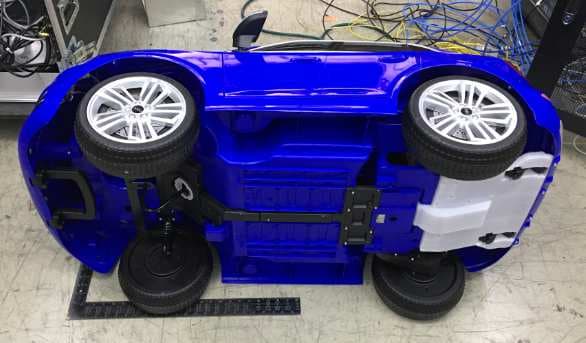
2ABGL-007
Mar 26, 2020KT1551I, KT1552I, KT1546I, KT1547I
Equipment Class
DSS - Part 15 Spread Spectrum Transmitter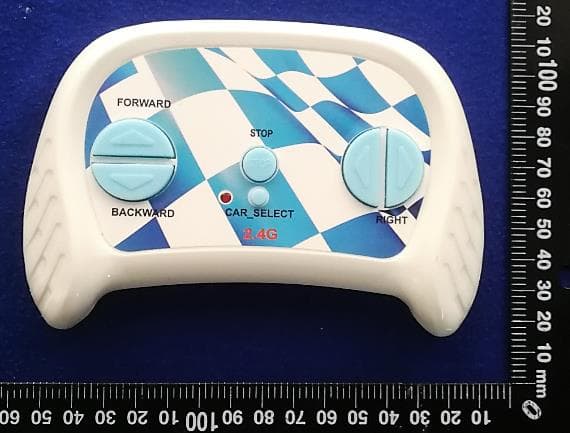
2ABGL-003
Mar 07, 20202.4G Remote Control
Equipment Class
DXX - Part 15 Low Power Communication Device Transmitter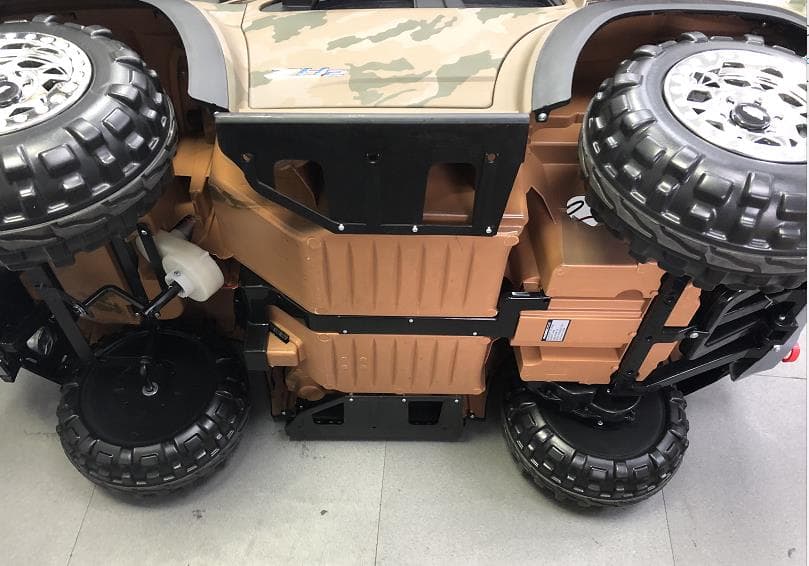
2ABGL-009
Feb 22, 20206V Luxury Chevy Colorado Camo
Equipment Class
DSS - Part 15 Spread Spectrum Transmitter
2ABGLSW77771-2
Jan 19, 2014SCH CYCLENAV BIKE NAVIGATION
Equipment Class
DSS - Part 15 Spread Spectrum Transmitter
2ABGLSW77774-2
Jan 08, 2014Sch BluTunes Bike Speaker
Equipment Class
DSS - Part 15 Spread Spectrum Transmitter