2AEKFBH100Sport Helmets
LIVALL Tech Co., Ltd.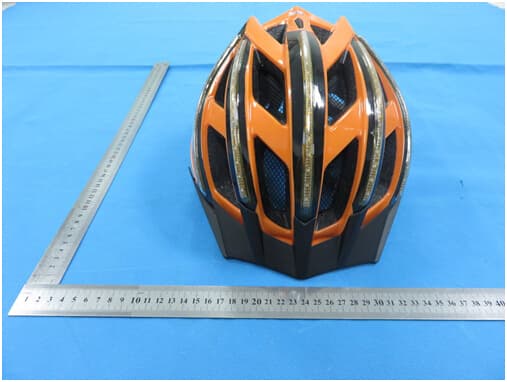
Click to zoom
Application Details
- Equipment Class
- DXX - Part 15 Low Power Communication Device Transmitter
- Date of Grant
- May 10, 2015
- Application Purpose
- Original Equipment
- Date of Application
- May 10, 2015
- Equipment Note
- Sport Helmets
- Frequency Range
- 2402.00000000 - 2480.00000000
- Company
- LIVALL Tech Co., Ltd.
- Country
- China
Documents & Files
Document Text
Text extracted from the exhibit documents filed with the FCC. Open a document above to read the original.
Users Manual
User Manual SPORT HELMETS Model:BH100 I. Introduction This smart safe-riding helmet (hereinafter referred to as “bling helmet”) is made of the lightest and safest materials, which makes it more comfortable and safer. Its fine ventilating structure inside enables air to flow smoothly through so as to achieve the best cooling effect. It also has Bluetooth speaker, smart outline lighting and warning tail light. Warning tail light Bluetooth speaker Button “+” Charging port Button “□” Button “-” II. Packing list One helmet one hag tag One USB charging cable One warranty card One product instruction III. Wearing instruction Usage: This safety helmet adopts a fixed setting, easy to operate, putting on or taking off the helmet only with the buckle. Flatten the drawstrings on both side and make them clinging to your face, buckle up it when the helmet is tightly putted on. If the drawstrings become loose, please take off the helmet and adjust them properly. When adjusting the drawstrings, please use one hand to fix the buckle and then adjust the drawstrings within proper tightness. If you want to strengthen the rear drawstring, pull it tight from its back, use one hand to fix the helmet and another one to fix the drawstring under the chin and adjust the four drawstrings to a most appropriate position. Front Brim Front drawstring Buckle Rear drawstring Adjustment buckle Back Proper wearing The helmet must be worn closely to your head. If you want to lower the front to cover your forehead, you could make the drawstring close to your chin and loose the rear drawstring; if you want to heighten the front of the helmet, loose the drawstring and tighten the rear drawstring. Comfort adjustment: In order to check the tightness of the helmet, you could put on the helmet and buckle up it, open your mouth to feel whether the drawstrings are closely attached to you chin, and then move your helmet forward and backward, if the helmet becomes loose, then the tightness of the drawstring must be strengthened and make sure that the thickness of the pad is proper. The helmet could not be able to move forth and back much distance; the helmet could not be taken off if the buckle is not opened. Note: It is necessary to reaffirm whether the helmet is in a good condition every time you wear. Checking Make sure that the helmet must be put on your head correctly and firmly . Readjust the tightness of the drawstrings to a proper position if the helmet still shakes. For the best protection effect, please make sure that the helmet is suitable for you and could be tightly wore. Check the adjustment again every time you wear to ensure that the helmet could be closely put on your head. IV. Operating Instruction Start up: Long press “□” for 2s till you hear the “start up” sounds, meanwhile the outline light and tail light will flash twice in orange. Power off: When the device is in a state of working, long press “□” till you hear the “power off” sounds, meanwhile the outline light and tail light would flash once in orange. Connecting to Bluetooth earphone: When the device is power off, long press “□” till you hear the “matching” sounds, means the device starts matching; scan the device with your phone which the Bluetooth is available. and click it to connect when spotting the equipment of “BH100”. The speakers on both sides will make the noise of “matching completed” when the connection is completed. Answer and hang up calls: When there’s an incoming call, the device would give out notification voice, press “□” to answer the call and long press for 1S to reject; during calls, press “□” to hang up. Redial calls: When the device is powered, quick press “□” twice to dial the last number. Music player: When the device is powered, press “□” to play music (need to open the music player APP in your phone before this operation). Long press “-” to play the previous song and “+” the next song. Livall Smart Safety Helmet Volume adjustment: During music playing or taking calls, press “+” to increase volume while “-” to decrease Notification voice switches of Bluetooth speaker: The default setting is English. When the product is powered, first hold “-” and then press “+” to cycle switch languages, from EnglishÆChineseÆFrenchÆSpanish; when the language is selected, loose “-”. Charging: Use the USB cable to connect the USB port beneath the tail light to the charger with USB (DC 5V) port. When it’s connected, the two indicator lights in the middle of the tail light would flash red (no such indicator under normal standby state) and green when the charging is done. The electricity of the charger is suggested to be > 1A and the charging time about 3.5h. Factory Reset: Hold “□” till the outline light shows white, and about 20 seconds later, the white light would automatically fade away and the product is reset. V. Precautions Temperature The safety helmet would be damaged under over 150 0 F (65.6 0 C). Under hot weather, if the helmet is put in dark vehicle or storage bag, its temperature would be even higher. Heat would incur irregular misshaping to the surface of the helmet, like bubbling or pits. If this happens, please discard this helmet immediately and replace it with a new one. To insure a proper use of this helmet, please carefully read this Instruction before use so as to get to know the features, performance, wearing, maintenance and other aspects of the product. Safety precautions This helmet is designed to burden damages and injuries from external impact. Although such injury may seem minor, it could damage the helmet. If the helmet is damaged from falling or other causes, please discard the helmet and replace it with a new one. Some accidents are unavoidable for whatever safety helmet and the damaging degree may differ from the impacting; even at a slow speed, severe head injuries or life threatening damages may incur. So please make sure that you’ve completely and carefully read this Instruction and have arranged all possible protection…
Text truncated - open the document above for the full version.
Cover Letter(s)
Shenzhen Qianhai Livall LOT Technology Co., Ltd. Room 2504, Xinwen Building,No.1002 Shennan Middle Road, Futian District,Shenzhen,China TEL: +86-755-25951623 FAX: +86-755-25951623 Date (30/04/2015) TUV SUD BABT TCB Octagon House, Segensworth Road, Fareham, Hampshire, PO15 5RL Confidentiality Request FCC ID: 2AEKFBH100 Pursuant to Sections 0.457(d)(1)(ii) and 0.459 of the Commission’s Rules, Shenzhen Qianhai Livall LOT Technology Co., Ltd. hereby requests permanent confidential treatment of information accompanying this application as outlined below: 1.Schematics 2.Bill of Materials/Parts List 3.Block Diagrams 4.Theory of Operation The above materials contain trade secrets and proprietary information not customarily released to the public. The public disclosure of these matters might be harmful to the Applicant and provide unjustified benefits to its competitors. The Applicant understands that pursuant to Rule 0.457(d)(1)(ii), disclosure of this Application and all accompanying materials will not be made before the date of the Grant for this Application. Yours sincerely, Company Officer: YongZheng Ye Telephone Number: +86-755-25951623 Email: [email protected]
External Photos
External Photos TOP VIEW OF EUT BOTTOM VIEW OF EUT FRONT VIEW OF EUT BACK VIEW OF EUT LEFT VIEW OF EUT RIGHT VIEW OF EUT VIEW OF EUT(Port)
ID Label/Location Info
FCC ID Label Location FCC ID: 2AEKFBH100
Internal Photos
Internal Photos OPEN VIEW OF EUT INTERNAL VIEW OF EUT-1 INTERNAL VIEW OF EUT-2 INTERNAL VIEW OF EUT-3 INTERNAL VIEW OF EUT-4 Bluetooth Antenna INTERNAL VIEW OF EUT-5 INTERNAL VIEW OF EUT-6 INTERNAL VIEW OF EUT-7
RF Exposure Info
RF Exposure evaluation Product Description: SPORT HELMETS Model Number: BH100 FCC ID: 2AEKFBH100 According to 447498 D01 General RF Exposure Guidance v05 The 1-g and 10-g SAR test exclusion thresholds for 100 MHz to 6 GHz at test separation distances ≤ 50 mm are determined by: [(max. power of channel, including tune-up tolerance, mW)/(min. test separation distance, mm)] ·[√f(GHz)] ≤ 3.0 for 1-g SAR and ≤ 7.5 for 10-g extremity SAR, where f(GHz) is the RF channel transmit frequency in GHz Power and distance are rounded to the nearest mW and mm before calculation According to the follow transmitter output power(P t )formula: P t =(E x d) 2 /(30 x g t ) P t =transmitter output power in watts g t =numeric gain of the transmitting antenna (unitess) E=electric field strength in V/m d=measurement distance in meters (m) According to the above test data,Emax=96.68dBuv/m=0.068V/m,d=3m,g t =1 P t =(E x d) 2 /(30 x g t )=(0.068x3) 2 /(30x1)=0.00138W=1.38mW The result is rounded to one decimal place for comparison Worse case is as below: [2480MHz -1.38mW output power] (1.38mW /5mm) .[√2.480(GHz)]= 0.43<3.0 for 1-g SAR Then SAR evaluation is not required NOTE: The transmitter output power formula you can refer to Part15F (K). For the maximum power, you can refer FCC test report.
Test Report
Page 1 of 58 FCC Test Report Report No.: AGC04099150401FE03 FCC ID : 2AEKFBH100 APPLICATION PURPOSE : Original Equipment PRODUCT DESIGNATION : SPORT HELMETS BRAND NAME : Livall MODEL NAME : BH100 CLIENT : Shenzhen Qianhai Livall LOT Technology Co., Ltd. DATE OF ISSUE : Apr.24,2015 STANDARD(S) TEST PROCEDURE(S) : FCC Part 15 Rules REPORT VERSION : V1.0 Attestation of Global Compliance (Shenzhen) Co., Ltd CAUTION: This report shall not be reproduced except in full without the written permission of the test laboratory and shall not be quoted out of context. Report No.: AGC04099150401FE03 Page 2 of 58 Report Revise Record Report Version Revise Time Issued Date Valid VersionNotes V1.0 / Apr.24,2015 Valid Original Report Report No.: AGC04099150401FE03 Page 3 of 58 TABLE OF CONTENTS 1. VERIFICATION OF CONFORMITY ...................................................................................... 4 2. GENERAL INFORMATION .................................................................................................. 5 2.1. PRODUCT DESCRIPTION ........................................................................................................... 5 2.2. TABLE OF CARRIER FREQUENCYS .......................................................................................... 5 3. MEASUREMENT UNCERTAINTY........................................................................................ 6 4. DESCRIPTION OF TEST MODES ........................................................................................ 6 5. SYSTEM TEST CONFIGURATION ...................................................................................... 7 5.1. CONFIGURATION OF EUT SYSTEM .......................................................................................... 7 5.2. EQUIPMENT USED IN EUT SYSTEM ......................................................................................... 7 5.3. SUMMARY OF TEST RESULTS .................................................................................................. 7 6. TEST FACILITY .................................................................................................................... 8 7 ALL TEST EQUIPMENT LIST ............................................................................................... 8 8. RADIATED EMISSION ......................................................................................................... 9 8.1TEST LIMIT ..................................................................................................................................... 9 8.2. MEASUREMENT PROCEDURE ................................................................................................ 10 8.3. TEST SETUP .............................................................................................................................. 12 8.4. TEST RESULT(Worst modulation:GFSK) ................................................................................... 14 9. BAND EDGE EMISSION .................................................................................................... 33 9.1. MEASUREMENT PROCEDURE ................................................................................................ 33 9.2 TEST SETUP ............................................................................................................................... 33 9.3 RADIATED TEST RESULT(Worst modulation:GFSK) ................................................................. 34 10. 20DB BANDWIDTH .......................................................................................................... 38 10.1. MEASUREMENT PROCEDURE .............................................................................................. 38 10.2. TEST SET-UP (BLOCK DIAGRAM OF CONFIGURATION) ..................................................... 38 10.3. LIMITS AND MEASUREMENT RESULTS ................................................................................ 38 11. FCC LINE CONDUCTED EMISSION TEST ..................................................................... 45 11.1. LIMITS OF LINE CONDUCTED EMISSION TEST ................................................................... 45 11.2. BLOCK DIAGRAM OF LINE CONDUCTED EMISSION TEST ................................................. 45 11.3. PRELIMINARY PROCEDURE OF LINE CONDUCTED EMISSION TEST .............................. 46 11.4. FINAL PROCEDURE OF LINE CONDUCTED EMISSION TEST ............................................. 46 11.5. TEST RESULT OF LINE CONDUCTED EMISSION TEST ....................................................... 47 APPENDIX A: PHOTOGRAPHS OF TEST SETUP ............................................................... 49 APPENDIX B: PHOTOGRAPHS OF EUT .............................................................................. 51 Report No.: AGC04099150401FE03 Page 4 of 58 1. VERIFICATION OF CONFORMITY Applicant Shenzhen Qianhai Livall LOT Technology Co., Ltd. Address Room 2504, Xinwen Building, No.1002 Shennan Middle Road, Futian District, Shenzhen, China Manufacturer Shenzhen Qianhai Livall LOT Technology Co., Ltd. Address Room 2504, Xinwen Building, No.1002 Shennan Middle Road, Futian District, Shenzhen, China Product Designation SPORT HELMETS Brand Name Livall Test Model BH100 Date of test Apr.22,2015 to Apr.23,2015 Deviation None Condition of Test Sample Normal Report Template AGCRT-US-BR/RF We hereby certify that: The above equipment was tested by by Compliance Certification Service(Shenzhen) Inc. The test data, data evaluation, test procedures, and equipment configurations shown in this report were made in accordance with the procedures given in ANSI C63.4 (2009) and the energy emitted by the sample EUT tested as described in this report is in compliance with radiated emission limits of FCC Rules Part 15.249. Prepared By Water Zuo Apr.24,2015 Checked By Forrest Lei Apr.24,2015 Authorized By Solger Zhang Apr.24,2015 Report No.: AGC04099150401FE03 Page 5 of 58 2. GENERAL INFORMATI…
Text truncated - open the document above for the full version.
Test Setup Photos
APPENDIX IV PHOTOGRAPHS OF TEST SETUP FCC LINE CONDUCTED EMISSION TEST SETUP FCC RADIATED EMISSION TEST SETUP
Contact Information
Applicant
YongZheng Ye
Test Firm
Compliance Certification Services Inc.Hank Lee
Technical Specifications
| # | Rule Parts | Frequency Range | Power Output |
|---|---|---|---|
| 1 | 15C | 2.40 GHz - 2.48 GHz | - |
Other Applications from LIVALL Tech Co., Ltd.

2AEKF-LTS21
Jun 07, 2022LTS21 Multifunction Sports Headphones
Equipment Class
DSS - Part 15 Spread Spectrum Transmitter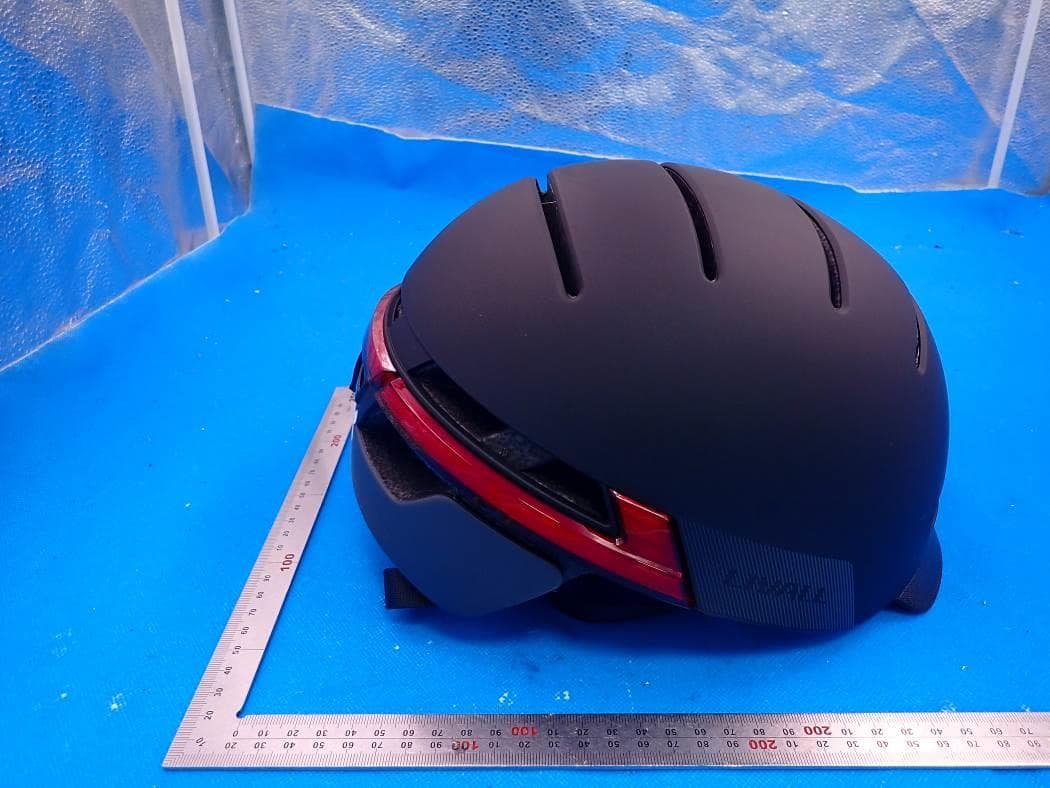
2AEKFBH51XX
Jul 15, 2021Bling Helmet
Equipment Class
DSS - Part 15 Spread Spectrum Transmitter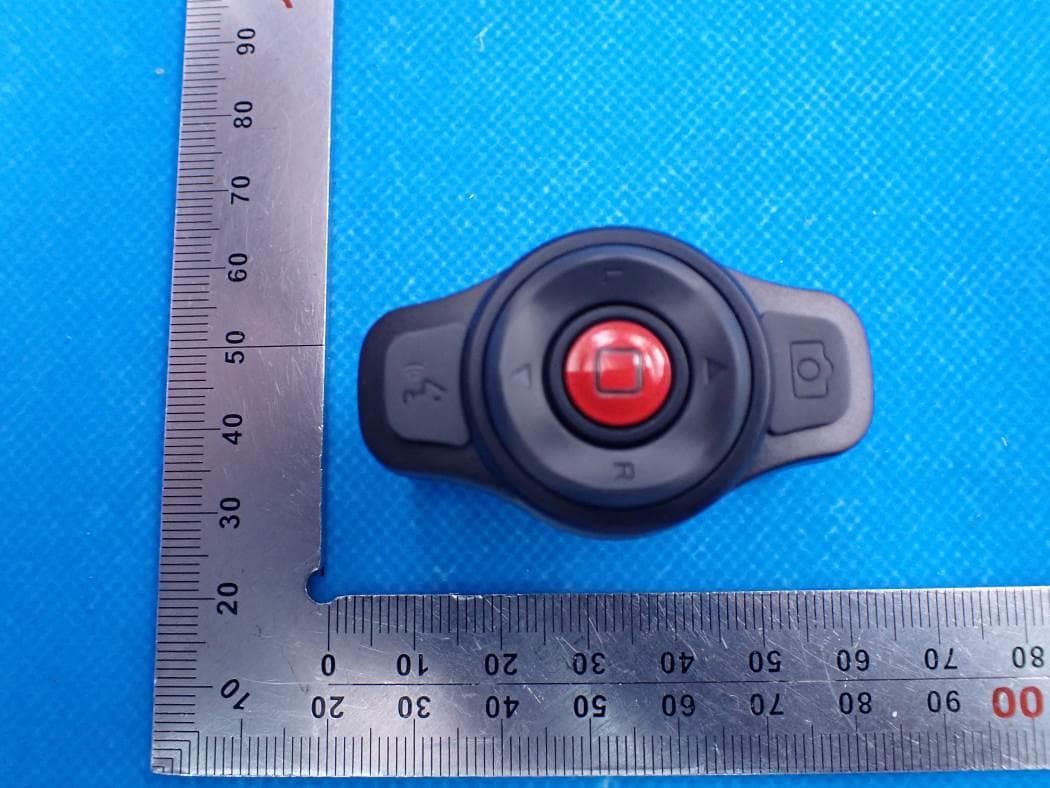
2AEKF-BR80
Jun 29, 2021Bling Remote Controller
Equipment Class
DTS - Digital Transmission System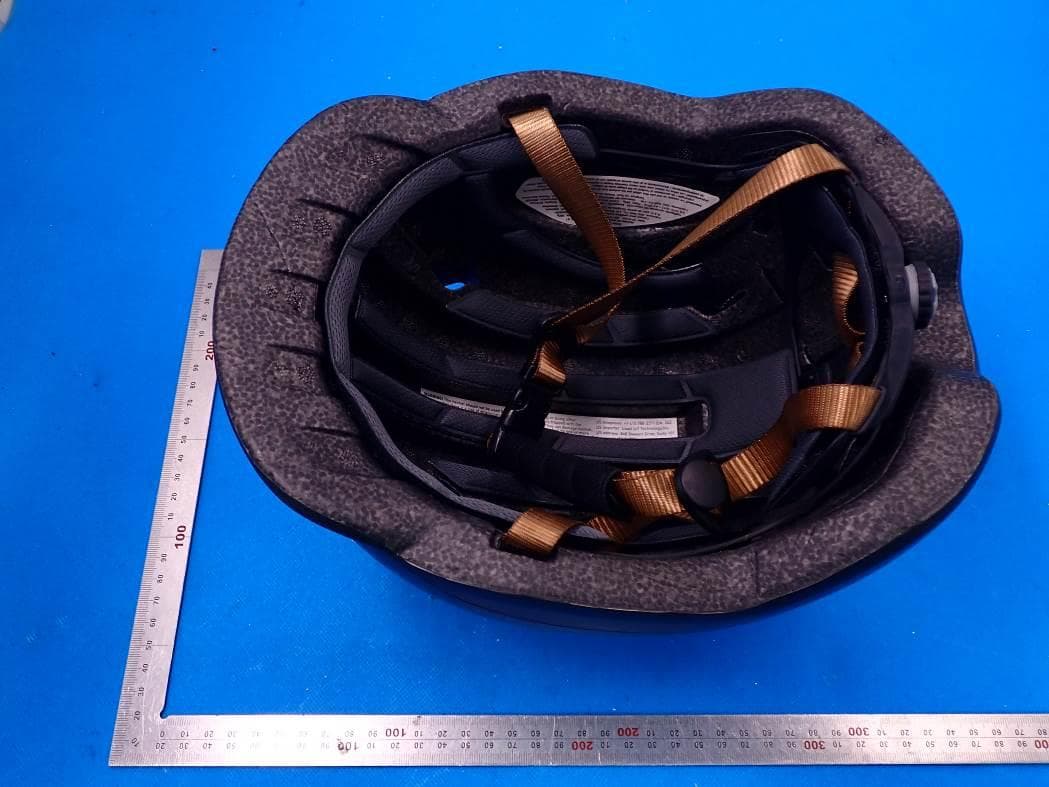
2AEKF-C20
May 20, 2021Smart Commuter Helmet C20
Equipment Class
DTS - Digital Transmission System
2AEKFP1
Nov 19, 2015Nano Cadence
Equipment Class
DXX - Part 15 Low Power Communication Device Transmitter