2AVD2-MS31901Monster Bluetooth Speaker
Shenzhen Monster Creative Technology Co., Ltd.
Click to zoom
Application Details
- Equipment Class
- DSS - Part 15 Spread Spectrum Transmitter
- Date of Grant
- Mar 22, 2020
- Application Purpose
- Original Equipment
- Date of Application
- Mar 22, 2020
- Equipment Note
- Monster Bluetooth Speaker
- Frequency Range
- 2402.00000000 - 2480.00000000
- Country
- China
Documents & Files
Document Text
Text extracted from the exhibit documents filed with the FCC. Open a document above to read the original.
Users Manual
MS31901 USER MANUAL Power/Charging For better enjoyment, you should fully charge the speaker before use. The package includes a USB Type-C charging cable (With data transmission function) that can be connected to your computer or other device made for standard USB compatible charging. Charing with 5V/2A or above power adapter (not included). Caution: ONLY use computer USB output or standard 5 volt only power adapter for charging. Damage may occur if non-standard USB power adapter is used for charging. Do not charge if connector and/or device is wet or damaged. Power On/Off In power off mode, press and hold the Power On/Off Button for about 2 seconds to power on the speaker, you hear the opening tone. To power off the speaker, press and hold the Power On/Off Button for about 2 seconds again, you will hear a shutdown tone. Caution: If no Bluetooth device is connected, the speaker will be turned off within about 15 minutes. Pairing • When you unbox the speaker and power it on for the first time, it will enter to pairing mode automatically. • If Bluetooth device is connected, press and hold the MFB for about 2 seconds, disconnect and ready to pair another device. • If speaker does not connect any Bluetooth device, it will enter to pairing mode automatically. During pairing, activate Bluetooth on your phone and set it to search for new Monster device for pairing. When the speaker is connected successfully, connected tone will be heard and the The white LED indicator changes from a breathing effect to a steady light. Volume Control Short press the Volume Button “ ” or “ ” to turn volume up or down. Music Play/Pause: In the music playback mode, press the MFB to play/pause music. Track forward: In the music playback mode, press and hold the Volume “ ” Button for 2 seconds for next song. Track backward: In the music playback mode, press and hold the Volume “ ” Button for 2 seconds for previous song. SD Card Playback After powering on, short press the “Power On Key” to switch to the built-in SD mode for playback. If you need to use Bluetooth playback, you can use the "Power Key" button to switch the audio source. Data deletion / copy in SD When the speaker is off, please use a USB Type-C data cable, plug one end into the speaker's charging port, and the other end into the computer's USB port. Then turn on the speaker, wait for the computer to search for "removable device name", and open "My Computer" to find it. After this device, you can delete or copy the contents of the device. Power Saving Setting • In Bluetooth mode, if there is no Bluetooth connection, or there is no music playback or data transmission on the Bluetooth connection, it will automatically turn off after 15 minutes. • In SD card mode, if there is no music playing, it will automatically turn off after 15 minutes. Reset Paired Device List After power on, no music playing, press the Volume “ ” and Volume “ ” Buttons simultaneously for about 3 seconds. LED Indicator Guide Status Description Voice/Tone Power On Mode LED Indicator: White LED stays On about 1 second Opening Tone Power Off Mode LED Indicator: Off white LED “Goodbye” Pairing Mode LED Indicator: Respiration status of white LED light “Discovering” Bluetooth Connected Mode LED Indicator: White LED is always on “Your device is connected” Bluetooth playback Mode LED Indicator: Off white LED - SD Mode Mode LED Indicator: Off white LED “Play by TF Card“ SD card data Mode Mode LED Indicator: White LED flashes quickly - Charging Charging LED Indicator: red LED lights when charging, turns off after fully charged - Battery Low “Battery Low“ Battery Use Caution • Fully charge before use. • If the battery is not properly replaced, there is an explosion risk and it can only be replaced with a battery of the same type and equivalent. It is recommended to consult the service provider, do not replace privately. • The battery (battery pack or battery pack combination) must not be exposed to sunshine, fire or similar overheated environments. FCC Statement Changes or modifications not expressly approved by the party responsible for compliance could void the user's authority to operate the equipment. This equipment has been tested and found to comply with the limits for a Class B digital device, pursuant to Part 15 of the FCC Rules. These limits are designed to provide reasonable protection against harmful interference in a residential installation. This equipment generates uses and can radiate radio frequency energy and, if not installed and used in accordance with the instructions, may cause harmful interference to radio communications. However, there is no guarantee that interference will not occur in a particular installation. If this equipment does cause harmful interference to radio or television reception, which can be determined by turning the equipment off and on, the user is encouraged to try to correct the interference by one or more of the following measures: • Reorient or relocate the receiving antenna. • Increase the separation between the equipment and receiver. • Connect the equipment into an outlet on a circuit different from that to which the receiver is connected. • Consult the dealer or an experienced radio/TV technician for help. This device complies with part 15 of the FCC rules. Operation is subject to the following two conditions (1) this device may not cause harmful interference, and (2) this device must accept any interference received, including interference that may cause undesired operation.
ID Label/Location Info
Earphone Design Roadmap 2019 Monster 153 –Black- CMF 深圳市玖木通科技有限公司 产品型号版本日期 制图审核批准滕斌斌 单位尺寸 备注 A0 mm 202003-05 丝印按键符号 丝印尺寸:40.5x4.76mm 丝印颜色:10390C 镭雕LOGO 尺寸:7.5x5.6mm 左右对称 丝印信息 尺寸:53x14.6mm 丝印颜色:10390C Product: Monster Bluetooth Speaker Model No.: MS31901 Rechargeable Battery: 3.7V 800mAh Input: DC 5V 1A FCC ID: 2AVD2-MS31901 Designed in California Made in China
Internal Photos
Internal Photos M/N:MS31901 Internal Photos M/N:MS31901 Internal Photos M/N:MS31901 Internal Photos M/N:MS31901 Bluetooth ant
RF Exposure Info
FCC ID: 2AVD2-MS31901 EST Technology Co., Ltd Report No. ESTE-R2003073 Page 1 of 3 FCC RF EXPOSURE REPORT Shenzhen Monster Creative Technology Co., Ltd. Monster Bluetooth speaker Model Number: MS31901 Additional Model: M153, M156, M158, M159 FCC ID: 2AVD2-MS31901 Prepared for: Shenzhen Monster Creative Technology Co., Ltd. No. 303, Building 1, Hezhou Jinfo Industrial Zone, Hezhou Village, Hangcheng Street, Baoan District, Shenzhen, China Prepared By: EST Technology Co., Ltd. Chilingxiang, Qishantou, Santun, Houjie, Dongguan, Guangdong, China Tel: 86-769-83081888-808 Report Number: ESTE-R2003073 Date of Test: Mar. 07, 2020-Mar. 11, 2020 Date of Report: Mar. 19, 2020 FCC ID: 2AVD2-MS31901 EST Technology Co., Ltd Report No. ESTE-R2003073 Page 2 of 3 1. Applicable Standards FCC Part 2(Section 2.1093) FCC KD B447498 D01 General RF Exposure Guidance v06 2. Exposure Evaluation of Portable or Mobile Devices Human exposure to RF emissions from portable devices (47 CFR §2.1093), as defined by the FCC, must be evaluated with respect to the FCC-adopted limits for SAR. Evaluation of mobile devices, as defined by the FCC, may also be performed with respect to SAR limits, but in such cases it is usually simpler and more cost-effective to evaluate compliance with respect to field strength or power density limits. For certain devices that are designed to be used in both mobile and portable configurations similar to those described in 47 CFR §2.1091(d)(4), such as certain desktop phones and wireless modem modules, compliance for mobile configurations is also satisfied when the same device is evaluated for SAR compliance in portable configurations. SAR Test Exclusion Thresholds for 100 MHz – 6 GHz and ≤ 50 mm The 1-g and 10-g SAR test exclusion thresholds for 100 MHz to 6 GHz at test separation distances ≤ 50 mm are determined by [(max. power of channel, including tune-up tolerance, mW)/(min. test separation distance, mm)] · [√f(GHz)] ≤3.0 for 1-g SAR and ≤ 7.5 for 10-g extremity SAR where • f(GHz) is the RF channel transmit frequency in GHz • Power and distance are rounded to the nearest mW and mm before calculation • The result is rounded to one decimal place for comparison The test exclusions are applicable only when the minimum test separation distance is ≤ 50 mm and for transmission frequencies between 100 MHz and 6 GHz. When the minimum test separation distance is < 5 mm, a distance of 5 mm is applied to determine SAR test exclusion. FCC ID: 2AVD2-MS31901 EST Technology Co., Ltd Report No. ESTE-R2003073 Page 3 of 3 3. Evaluation Results Mode Frequency (MHz) Peak output Power (dBm) Peak output Power (mW) Target power (dBm) Results GFSK 2402 -3.26 0.4721 -3±1 0.196 2441 -1.68 0.6792 -1±1 0.312 2480 -0.87 0.8185 0±1 0.397 8-DPSK 2402 -5.02 0.3148 -5±1 0.123 2441 -3.34 0.4634 -3±1 0.197 2480 -2.42 0.5728 -2±1 0.250 Note: 1. [(max. power of channel, including tune-up tolerance, mW)/(min. test separation distance, mm)] * [√f(GHz)] < 3.0. 2. SAR Test Exclusion Thresholds is 3.0 for separation distance 5mm. Therefore, SAR test is not required. End of Test Report
Test Report
FCC ID: 2AVD2-MS31901 EST Technology Co., Ltd Report No. ESTE-R2003072 Page 1 of 72 FCC PART 15C TEST REPORT FOR CERTIFICATION On Behalf of Shenzhen Monster Creative Technology Co., Ltd. Monster Bluetooth speaker Model Number: MS31901 Additional Model: M153, M156, M158, M159 FCC ID: 2AVD2-MS31901 Prepared for: Shenzhen Monster Creative Technology Co., Ltd. No. 303, Building 1, Hezhou Jinfo Industrial Zone, Hezhou Village, Hangcheng Street, Baoan District, Shenzhen, China Prepared By: EST Technology Co., Ltd. Chilingxiang, Qishantou, Santun, Houjie, Dongguan, Guangdong, China Tel: 86-769-83081888-808 Report Number: ESTE-R2003072 Date of Test: Mar. 07, 2020-Mar. 11, 2020 Date of Report: Mar. 19, 2020 FCC ID: 2AVD2-MS31901 EST Technology Co., Ltd Report No. ESTE-R2003072 Page 2 of 72 TABLE OF CONTENTS Description Page TEST REPORT VERIFICATION......................................................................................................................... 3 1. GENERAL INFORMATION ................................................................................................................. 5 1.1. Description of Device (EUT) ........................................................................................................... 5 1.2. Antenna Information ........................................................................................................................ 5 2. SUMMARY OF TEST ......................................................................................................................... 6 2.1. Summary of test result ...................................................................................................................... 6 2.2. Test Facilities ................................................................................................................................... 7 2.3. Measurement uncertainty ................................................................................................................. 8 2.4. Assistant equipment used for test ..................................................................................................... 8 2.5. Block Diagram ................................................................................................................................. 8 2.6. Test mode ......................................................................................................................................... 9 2.7. Channel List ................................................................................................................................... 10 2.8. Power Setting of Test Software ...................................................................................................... 10 2.9. Test Equipmen ................................................................................................................................ 11 3. MAXIMUM PEAK OUTPUT POWER ................................................................................................. 12 3.1. Limit ............................................................................................................................................... 12 3.2. Test Setup ....................................................................................................................................... 12 3.3. Spectrum Analyzer Setting ............................................................................................................. 12 3.4. Test Procedure ................................................................................................................................ 12 3.5. Test Result ...................................................................................................................................... 13 4. 20 DB BANDWIDTH ....................................................................................................................... 17 4.1. Limit ............................................................................................................................................... 17 4.2. Test Setup ....................................................................................................................................... 17 4.3. Spectrum Analyzer Setting ............................................................................................................. 17 4.4. Test Procedure ................................................................................................................................ 17 4.5. Test Result ...................................................................................................................................... 18 5. CARRIER FREQUENCY SEPARATION .............................................................................................. 22 5.1. Limit ............................................................................................................................................... 22 5.2. Test Setup ....................................................................................................................................... 22 5.3. Spectrum Analyzer Setting ............................................................................................................. 22 5.4. Test Procedure ................................................................................................................................ 22 5.5. Test Result ...................................................................................................................................... 23 6. NUMBER OF HOPPING CHANNEL .................................................................................................. 27 6.1. Limit ............................................................................................................................................... 27 6.2. Test Setup .............................................................................................................…
Text truncated - open the document above for the full version.
Test Setup Photos
Conducted Test M/N:MS31901 Radiated Test (Below 1GHz) M/N:MS31901 Radiated Test (Above 1GHz) M/N:MS31901
Contact Information
Applicant
run long wang(R & D Manager)
Test Firm
EST Technology Co., Ltd.Iceman Hu
[email protected]+86 0769-83081888
Technical Specifications
| # | Rule Parts | Frequency Range | Power Output |
|---|---|---|---|
| 1 | 15C | 2.40 GHz - 2.48 GHz | 818.00 µW |
Other Applications from Shenzhen Monster Creative Technology Co., Ltd.
2AVD2-H32
Jun 30, 2026PORTABLE BLUETOOTH SPEAKER
Equipment Class
DSS - Part 15 Spread Spectrum Transmitter
2AVD2-MH22280
Dec 19, 2025BLUETOOTH HEADPHONE
Equipment Class
DSS - Part 15 Spread Spectrum Transmitter
2AVD2-W55
Dec 17, 2025BLUETOOTH HEADPHONE
Equipment Class
DSS - Part 15 Spread Spectrum Transmitter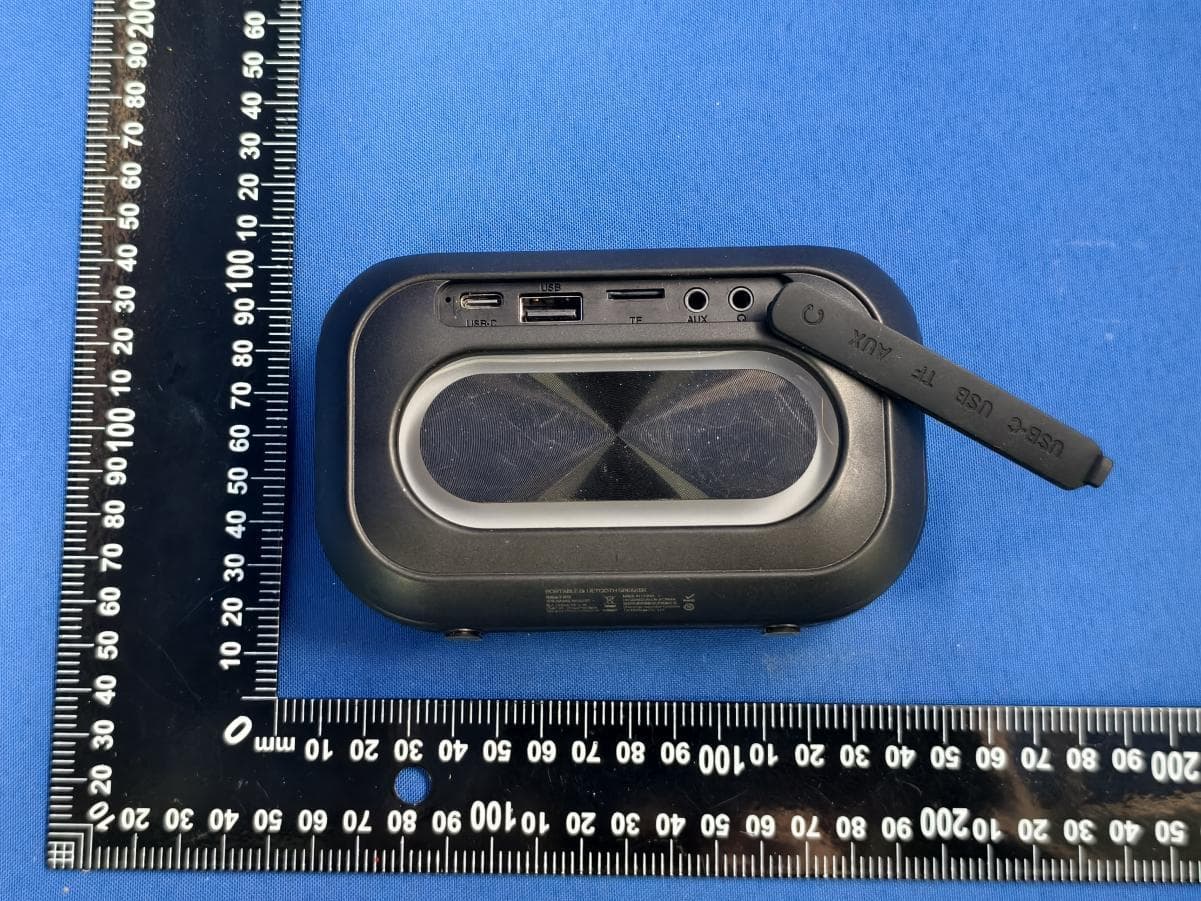
2AVD2-MS62110
Dec 16, 2025PORTABLE BLUETOOTH SPEAKER
Equipment Class
DSS - Part 15 Spread Spectrum Transmitter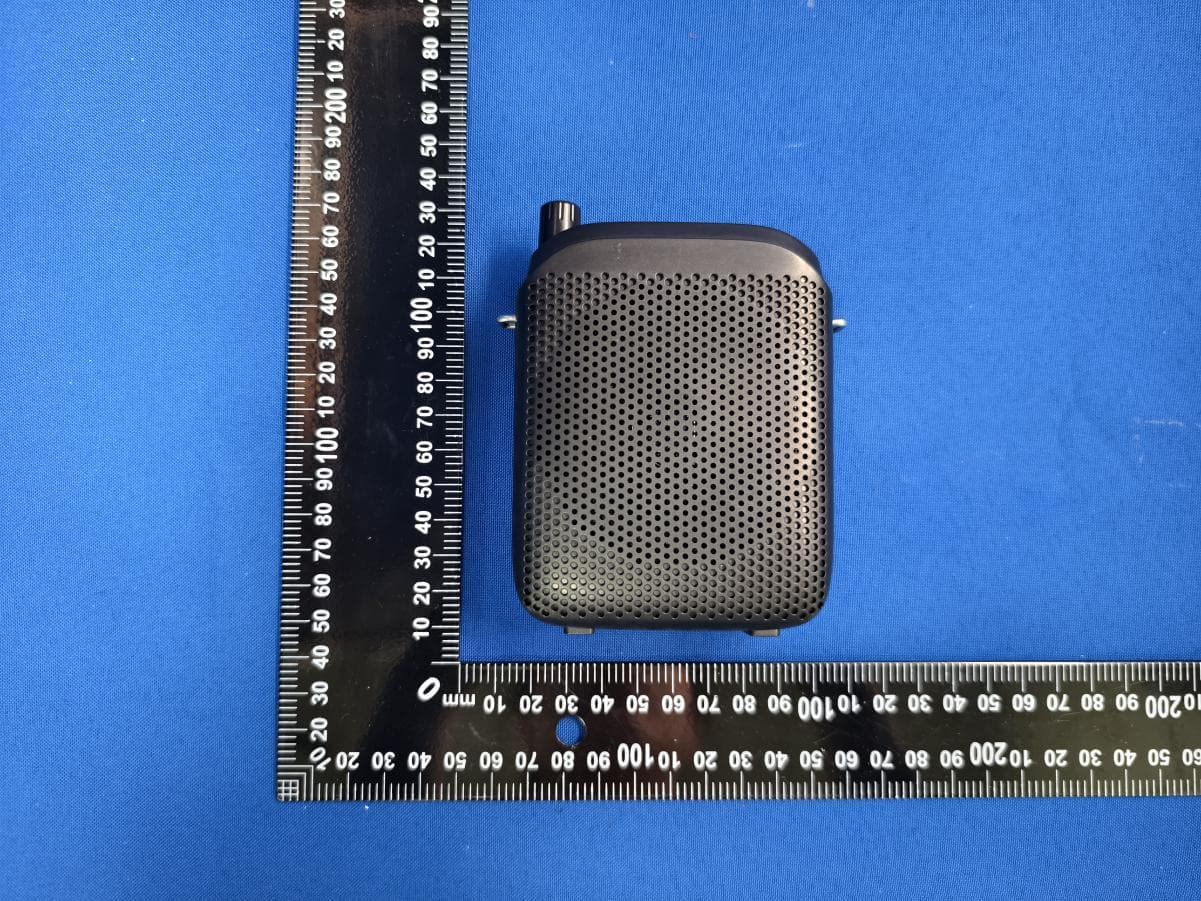
2AVD2-MS62144
Dec 12, 2025PORTABLE VOICE AMPLIFIER
Equipment Class
DSS - Part 15 Spread Spectrum Transmitter