A3LSTHA255Dual-Mode Cellular (AMPS/TDMA) Phone
Samsung Electronics Co Ltd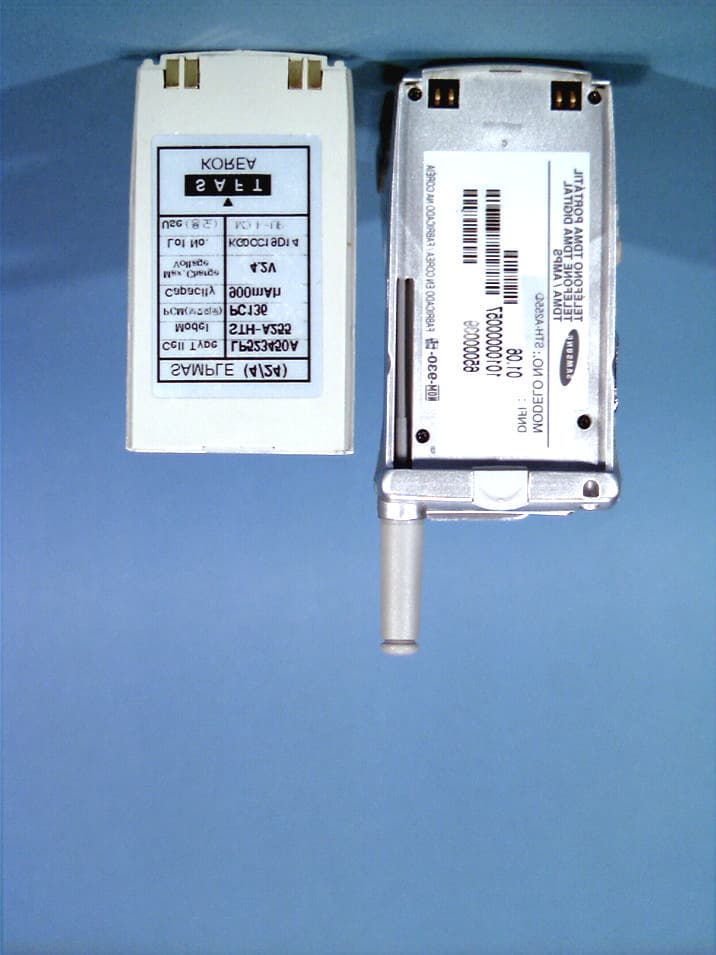
Click to zoom
Application Details
- Equipment Class
- TNE - Licensed Non-Broadcast Transmitter Held to Ear
- Date of Grant
- May 09, 2002
- Application Purpose
- Original Equipment
- Date of Application
- Feb 03, 2002
- Equipment Note
- Dual-Mode Cellular (AMPS/TDMA) Phone
- Frequency Range
- 824.04000000 - 848.97000000
- Company
- Samsung Electronics Co Ltd
- Country
- United States
Documents & Files
Document Text
Text extracted from the exhibit documents filed with the FCC. Open a document above to read the original.
Users Manual
Printed in Korea Code No. : GH68-xxxxxA English. 02/2002. Rev. 1.0 ELECTRONICS World Wide Webhttp://www.samsungmobile.com TDMA MOBILE TELEPHONE STH-A255 Draft version (2002/01/25) * Some contents in this manual may differ from your phone depending on the software of the phone or your service provider. Please, be sure to read thismanual before using your phone.And keep the manual afterreading it and use any time youhave a question. For more information about RF exposure, please visit the FCC website at www.fcc.gov FCC RF EXPOSURE INFORMATION In August 1996 the Federal Communications Commission (FCC) of the United States with its action in Report and Order FCC 96-326 adopted an updated safety standard for human exposure to radio frequency electromagnetic energy emitted by FCC regulated transmitters. Those guidelines are consistent with the safety standard previously set by both U.S. and international standards bodies. The design of this phone complies with the FCC guidelines and these international standards. Use only the supplied or an approved antenna. Unauthorized antennas, modifications, or attachments could impair call quality, damage the phone, or result in violation of FCC regulations. Do not use the phone with a damaged antenna. If a damaged antenna comes into contact with the skin, a minor burn may result. Please contact your local dealer for replacement antenna. Body-worn Operation This device was tested for typical body-worn operations with the back of the phone kept 2.0cm. from the body. To maintain compliance with FCC RF exposure guidelines, use only belt-clips, holsters or similar accessories that maintain a 2.0cm separation distance between the user’s body and the back of the phone, including the antenna, whether extended or retracted. The use of third-party belt-clips, holsters and similar accessories should not contain metallic components in its assembly. The use of accessories that do not satisfy these requirements may not comply with FCC RF exposure guidelines, and should be avoided. WARNING! Read this information before using your phone ii i FCC RF EXPOSURE INFORMATION In August 1996 the Federal Communications Commission (FCC) ofthe United States with its action in Report and Order FCC 96-326adopted an updated safety standard for human exposure to radiofrequency electromagnetic energy emitted by FCC regulatedtransmitters. Those guidelines are consistent with the safetystandard previously set by both U.S. and international standardsbodies. The design of this phone complies with the FCCguidelines and these international standards. Use only the supplied or an approved antenna. Unauthorizedantennas, modifications, or attachments could impair call quality,damage the phone, or result in violation of FCC regulations.Do not use the phone with a damaged antenna. If a damagedantenna comes into contact with the skin, a minor burn mayresult. Please contact your local dealer for replacement antenna.Body-worn OperationThis device was tested for typical body-worn operations withthe back of the phone kept 0.78 inches (2.0cm) from the body . T o maintain compliance with FCC RF exposure guidelines use only belt-clips, holster or similar accessories that maintain a 0.78inches (2.0cm) separation between the user’ s body and the phone, including the antenna, whether extended or retractedThe use of third-party belt-clips, holsters and similar accessories should not contain metallic components in the assembly. The use of accessories that do not satisfy these requirements may not with FCC RF exposure guidelines, and should be avoided. Vehicle Mounted External Antenna (optional, ifavailable.)A minimum separation distance of 7.9 inches (20cm) must bemaintained Between a person and the vehicle mounted externalantenna to satisfy FCC RF exposure requirements.For more information about RF exposure, please visit the FCCwebsite at www .fcc.gov SAR Information & FCC ID Labeling THIS MODEL PHONE MEETS THE GOVERNMENT’SREQUIREMENTS FOR EXPOSURE TO RADIO WAVES.Your wireless phone is a radio transmitter and receiver. It isdesigned and manufactured not to exceed the emission limits forexposure to radiofrequency (RF) energy set by the FederalCommunications Commission of the U.S. Government. Theselimits are part of comprehensive guidelines and establishpermitted levels of RF energy for the general population. Theguidelines are based on standards that were developed byindependent scientific organizations through periodic andthorough evaluation of scientific studies. The standards include asubstantial safety margin designed to assure the safety of allpersons, regardless of age and health.The exposure standard for wireless mobile phones employs aunit of measurement know as the Specific Absorption Rate, orSAR. The SAR limit set by the FCC is 1.6W/kg.* Tests for SARare conducted using standard operating positions specified bythe FCC with the phone transmitting at its highest certifiedpower level in all tested frequency bands. Although the SAR isdetermined at the highest certified power level, the actual SARlevel of the phone while operating can be well below themaximum value. This is because the phone is designed tooperate at multiple power levels so as to use only the powerrequired to reach the network. In general, the closer you are to awireless base station antenna, the lower the power output.Before a phone model is available for sale to the public, it mustbe tested and certified to the FCC that it does not exceed thelimit established by the government-adopted requirement forsafe exposure. The tests are performed in positions and locations(e.g., at the ear and worn on the body) as required by the FCC foreach model. The highest SAR value for this model phone whentested for use at the ear is 1.484 W/kg and when worn on the body, as described in this user guide, is 1.240 W/kg . (Body-worn measurements differ among phone models, depending uponavailable accessories and FCC requirements). While there maybe differences…
Text truncated - open the document above for the full version.
Users Manual
Printed in Korea Code No. : GH68-xxxxxA English. 02/2002. Rev. 1.0 ELECTRONICS World Wide Webhttp://www.samsungmobile.com TDMA MOBILE TELEPHONE STH-A255 Draft version (2002/01/25) * Some contents in this manual may differ from your phone depending on the software of the phone or your service provider. Please, be sure to read thismanual before using your phone.And keep the manual afterreading it and use any time youhave a question. For more information about RF exposure, please visit the FCC website at www.fcc.gov FCC RF EXPOSURE INFORMATION In August 1996 the Federal Communications Commission (FCC) of the United States with its action in Report and Order FCC 96-326 adopted an updated safety standard for human exposure to radio frequency electromagnetic energy emitted by FCC regulated transmitters. Those guidelines are consistent with the safety standard previously set by both U.S. and international standards bodies. The design of this phone complies with the FCC guidelines and these international standards. Use only the supplied or an approved antenna. Unauthorized antennas, modifications, or attachments could impair call quality, damage the phone, or result in violation of FCC regulations. Do not use the phone with a damaged antenna. If a damaged antenna comes into contact with the skin, a minor burn may result. Please contact your local dealer for replacement antenna. Body-worn Operation This device was tested for typical body-worn operations with the back of the phone kept 1.5cm. from the body. To maintain compliance with FCC RF exposure guidelines, use only belt-clips, holsters or similar accessories that maintain a 1.5cm separation distance between the user’s body and the back of the phone, including the antenna, whether extended or retracted. The use of third-party belt-clips, holsters and similar accessories should not contain metallic components in its assembly. The use of accessories that do not satisfy these requirements may not comply with FCC RF exposure guidelines, and should be avoided. WARNING! Read this information before using your phone ii i FCC RF EXPOSURE INFORMATION In August 1996 the Federal Communications Commission (FCC) ofthe United States with its action in Report and Order FCC 96-326adopted an updated safety standard for human exposure to radiofrequency electromagnetic energy emitted by FCC regulatedtransmitters. Those guidelines are consistent with the safetystandard previously set by both U.S. and international standardsbodies. The design of this phone complies with the FCCguidelines and these international standards. Use only the supplied or an approved antenna. Unauthorizedantennas, modifications, or attachments could impair call quality,damage the phone, or result in violation of FCC regulations.Do not use the phone with a damaged antenna. If a damagedantenna comes into contact with the skin, a minor burn mayresult. Please contact your local dealer for replacement antenna.Body-worn OperationThis device was tested for typical body-worn operations withthe back of the phone kept 0.78 inches (2.0cm) from the body . T o maintain compliance with FCC RF exposure guidelines use only belt-clips, holster or similar accessories that maintain a 0.78inches (2.0cm) separation between the user’ s body and the phone, including the antenna, whether extended or retractedThe use of third-party belt-clips, holsters and similar accessories should not contain metallic components in the assembly. The use of accessories that do not satisfy these requirements may not with FCC RF exposure guidelines, and should be avoided. Vehicle Mounted External Antenna (optional, ifavailable.)A minimum separation distance of 7.9 inches (20cm) must bemaintained Between a person and the vehicle mounted externalantenna to satisfy FCC RF exposure requirements.For more information about RF exposure, please visit the FCCwebsite at www .fcc.gov SAR Information & FCC ID Labeling THIS MODEL PHONE MEETS THE GOVERNMENT’SREQUIREMENTS FOR EXPOSURE TO RADIO WAVES.Your wireless phone is a radio transmitter and receiver. It isdesigned and manufactured not to exceed the emission limits forexposure to radiofrequency (RF) energy set by the FederalCommunications Commission of the U.S. Government. Theselimits are part of comprehensive guidelines and establishpermitted levels of RF energy for the general population. Theguidelines are based on standards that were developed byindependent scientific organizations through periodic andthorough evaluation of scientific studies. The standards include asubstantial safety margin designed to assure the safety of allpersons, regardless of age and health.The exposure standard for wireless mobile phones employs aunit of measurement know as the Specific Absorption Rate, orSAR. The SAR limit set by the FCC is 1.6W/kg.* Tests for SARare conducted using standard operating positions specified bythe FCC with the phone transmitting at its highest certifiedpower level in all tested frequency bands. Although the SAR isdetermined at the highest certified power level, the actual SARlevel of the phone while operating can be well below themaximum value. This is because the phone is designed tooperate at multiple power levels so as to use only the powerrequired to reach the network. In general, the closer you are to awireless base station antenna, the lower the power output.Before a phone model is available for sale to the public, it mustbe tested and certified to the FCC that it does not exceed thelimit established by the government-adopted requirement forsafe exposure. The tests are performed in positions and locations(e.g., at the ear and worn on the body) as required by the FCC foreach model. The highest SAR value for this model phone whentested for use at the ear is 1.484 W/kg and when worn on the body, as described in this user guide, is 1.240 W/kg . (Body-worn measurements differ among phone models, depending uponavailable accessories and FCC requirements). While there maybe differences…
Text truncated - open the document above for the full version.
Users Manual
Printed in Korea Code No. : GH68-xxxxxA English. 02/2002. Rev. 1.0 ELECTRONICS World Wide Webhttp://www.samsungmobile.com TDMA MOBILE TELEPHONE STH-A255 Draft version (2002/01/25) * Some contents in this manual may differ from your phone depending on the software of the phone or your service provider. Please, be sure to read thismanual before using your phone.And keep the manual afterreading it and use any time youhave a question. For more information about RF exposure, please visit the FCC website at www.fcc.gov FCC RF EXPOSURE INFORMATION In August 1996 the Federal Communications Commission (FCC) of the United States with its action in Report and Order FCC 96-326 adopted an updated safety standard for human exposure to radio frequency electromagnetic energy emitted by FCC regulated transmitters. Those guidelines are consistent with the safety standard previously set by both U.S. and international standards bodies. The design of this phone complies with the FCC guidelines and these international standards. Use only the supplied or an approved antenna. Unauthorized antennas, modifications, or attachments could impair call quality, damage the phone, or result in violation of FCC regulations. Do not use the phone with a damaged antenna. If a damaged antenna comes into contact with the skin, a minor burn may result. Please contact your local dealer for replacement antenna. Body-worn Operation This device was tested for typical body-worn operations with the back of the phone kept 1.5cm. from the body. To maintain compliance with FCC RF exposure guidelines, use only belt-clips, holsters or similar accessories that maintain a 1.5cm separation distance between the user’s body and the back of the phone, including the antenna, whether extended or retracted. The use of third-party belt-clips, holsters and similar accessories should not contain metallic components in its assembly. The use of accessories that do not satisfy these requirements may not comply with FCC RF exposure guidelines, and should be avoided. WARNING! Read this information before using your phone ii i FCC RF EXPOSURE INFORMATION In August 1996 the Federal Communications Commission (FCC) ofthe United States with its action in Report and Order FCC 96-326adopted an updated safety standard for human exposure to radiofrequency electromagnetic energy emitted by FCC regulatedtransmitters. Those guidelines are consistent with the safetystandard previously set by both U.S. and international standardsbodies. The design of this phone complies with the FCCguidelines and these international standards. Use only the supplied or an approved antenna. Unauthorizedantennas, modifications, or attachments could impair call quality,damage the phone, or result in violation of FCC regulations.Do not use the phone with a damaged antenna. If a damagedantenna comes into contact with the skin, a minor burn mayresult. Please contact your local dealer for replacement antenna.Body-worn OperationThis device was tested for typical body-worn operations with the back of the phone kept 0.5 9 inches (1.5cm) from the body . T o maintain compliance with FCC RF exposure guidelines use only belt-clips, holster or similar accessories that maintain a 0.59inches (1.5cm) separation between the user’ s body and the phone, including the antenna, whether extended or retractedThe use of third-party belt-clips, holsters and similar accessories should not contain metallic components in the assembly. The use of accessories that do not satisfy these requirements may not with FCC RF exposure guidelines, and should be avoided. Vehicle Mounted External Antenna (optional, ifavailable.)A minimum separation distance of 7.9 inches (20cm) must bemaintained Between a person and the vehicle mounted externalantenna to satisfy FCC RF exposure requirements.For more information about RF exposure, please visit the FCCwebsite at www .fcc.gov SAR Information & FCC ID Labeling THIS MODEL PHONE MEETS THE GOVERNMENT’SREQUIREMENTS FOR EXPOSURE TO RADIO WAVES.Your wireless phone is a radio transmitter and receiver. It isdesigned and manufactured not to exceed the emission limits forexposure to radiofrequency (RF) energy set by the FederalCommunications Commission of the U.S. Government. Theselimits are part of comprehensive guidelines and establishpermitted levels of RF energy for the general population. Theguidelines are based on standards that were developed byindependent scientific organizations through periodic andthorough evaluation of scientific studies. The standards include asubstantial safety margin designed to assure the safety of allpersons, regardless of age and health.The exposure standard for wireless mobile phones employs aunit of measurement know as the Specific Absorption Rate, orSAR. The SAR limit set by the FCC is 1.6W/kg.* Tests for SARare conducted using standard operating positions specified bythe FCC with the phone transmitting at its highest certifiedpower level in all tested frequency bands. Although the SAR isdetermined at the highest certified power level, the actual SARlevel of the phone while operating can be well below themaximum value. This is because the phone is designed tooperate at multiple power levels so as to use only the powerrequired to reach the network. In general, the closer you are to awireless base station antenna, the lower the power output.Before a phone model is available for sale to the public, it mustbe tested and certified to the FCC that it does not exceed thelimit established by the government-adopted requirement forsafe exposure. The tests are performed in positions and locations(e.g., at the ear and worn on the body) as required by the FCC foreach model. The highest SAR value for this model phone whentested for use at the ear is 1.390 W/kg and when worn on the body , as described in this user guide, is 1.270 W/kg . (Body-worn measurements differ among phone models, depending uponavailable accessories and FCC requirements). While there maybe differen…
Text truncated - open the document above for the full version.
Attestation Statements
November 21, 2001 Federal Communications Commission Authorization and Evaluation Division Equipment Authorization Branch 7435 Oakland Mills Road Columbia, MD 21046 To whom it may concern: We, the undersigned, hereby authorize PCTEST Engineering Laboratory Inc, to act on our behalf in all matters relating to applications for equipment authorization, including the signing of all documents relating to these matters. Any and all acts carried out by PCTEST Engineering Laboratory, Inc, on our behalf shall have the same effect as acts of our own. We also hereby certify that no party to this application is subject to a denial of benefits, including FCC benefits, pursuant to Section 5301 of the Anti-Drug Abuse Act of 1988, 21, U.S.C. 853(a) We hereby certify that the Handheld Portable Cellular Telephone (FCC ID: A3LSTHA255, MODELS: STH-A255) is so designed that it complies with all the requirements for ESN protection specified in Section 22.919 of the FCC Rules. a) The transmitter in service has a unique ESN. b) The ESN host component is permanently attached to a main circuit board of the mobile transmitter and the integrity of the unit operating software cannot be altered. The ESN is plated from fraudulent contact and tampering. The ESN is encoded using multiplication by a polynomial and the ESN data programmed in the memory with other information. c) The ESN is factory-set and cannot be altered, transferred, removed or otherwise able to be manipulated. Cellular mobile equipment is specifically designed such that any attempt to remove, temper with, or change the ESN chip, its logic system, or firmware originally programmed by the manufacturer will render the mobile transmitter inoperative. November 21, 2001 Federal Communications Commission Equipment Approval Services 7435 Oakland Mills Road Columbia, MD 21046 SUBJECT:Samsung Electronics Co., Ltd. FCC ID: A3LSTHA255 Users Manual RF Exposure Warning Statement Gentlemen: Samsung Electronics Co., Ltd., hereby confirms that the attached RF exposure warning page will be readily visible to the user, and will be placed at a prominent location in the front section of the users manual. If you have any further questions regarding this matter, please do not hesitate to contact me or PCTEST Lab at (410) 290-6652. November 21, 2001 Federal Communications Commission Equipment Approval Services 7435 Oakland Mills Road Columbia, MD 21046 SUBJECT: FCC E911 REQUIREMENTS PER §22.921 Gentlemen: Samsung Electronics Co., Ltd. hereby certifies that the analog cellular telephone (FCC ID: A3LSTHA255), using the Automatic A/B Roaming – Intelligent Retry method, meets the E911 requirements specified in Section 22.921 of the FCC Rules. This procedure recognizes when a “9-1-1” call is made and, at such time, will override any programming in the mobile unit that determines the handling of a non-911 call and permit the call to be handled by other analog carriers. Should you have any questions or comments concerning the above, please contact the undersigned.
Attestation Statements
November 21, 2001 Federal Communications Commission Equipment Authorization branch 7435 Oakland Mills Road Columbia, MD 21046 In re: SAMSUNG ELECTRONICS FCC ID: A3LSTHA255 (Models: STH-A255) FCC Part 22 Certification Request for Confidentiality Gentlemen: In accordance with 0.459 of CFR 47, SAMSUNG hereby requests confidentiality of the attachments (Block Diagrams, Circuit Diagrams, Circuit Descriptions, Parts List, Tune-up Procedure, and Antenna Specifications) for the subject application. These documents contain detailed system and equipment description and related information about the product that SAMSUNG considers to be proprietary, confidential, and a custom design and, otherwise, would not release to the general public. Since this design is a basis from which future technological products will evolve, SAMSUNG considers that this information would be of benefit to its competitors, and that disclosure of the information in these documents would give competitors an unfair advantage in the market.
Cover Letter(s)
January 25, 2002 Federal Communications Commission Equipment Approval Services 7435 Oakland Mills Road Columbia, MD 21046 SUBJECT:SAMSUNG ELECTRONICS CO., LTD. FCC ID: A3LSTHA255 Part 22 Certification Gentlemen: Attached herewith, on behalf of SAMSUNG ELECTRONICS CO., LTD. is an application for Part 22 Certification of the following Dual-Mode Cellular (AMPS/TDMA) Phone: FCC ID:A3LSTHA255 TRADE / MODEL(s):SAMSUNG STH-A255 EUT TYPE:Licensed Non-Broadcast Transmitter Held to Ear (TNE) Tx Freq. Range:824.04 – 848.97 MHz (AMPS) 824.04 – 848.97 MHz (TDMA) Rx Freq. Range:869.04 – 893.97 MHz (AMPS) 869.04 – 893.97 MHz (TDMA) Max. RF Output Power:0.392 W ERP AMPS (25.933 dBm) / 0.440 W ERP TDMA (26.433 dBm) Attached is the applicant’s Letter of Authorization, Confidentiality Request, ESN affidavit, E911 compliance statement, RF measurement report data and plots, RF Exposure measurement report, FCC ID label and location, test setup photographs, internal and external photographs, block diagrams (confidential), schematic diagrams & circuit description (confidential), operational description (confidential), parts list & tune-up procedure (confidential), and the user's manual. Should you have any questions or comments concerning the above, please contact the undersigned. cc:Mr. Wallace Oh Engineering Manager SAMSUNG American QA Lab
Cover Letter(s)
April 30, 2002 Federal Communications Commission Equipment Approval Services 7435 Oakland Mills Road Columbia, MD 21046 Attn: Mr. Stan Lyles SUBJECT: Samsung Electronics Co., Ltd. FCC ID: A3LSTHA255 731 Confirmation No.: EA668657 Correspondence Reference No.: 22143 Request for Tech. Info.: 3/1/02 Dear Joe: Transmitted herewith, on behalf of Samsung Electronics Co., Ltd. is an amendment provided in response to the request for technical information dated March 1, 2002. 1. Please find attached the revised pages (11,12, and 13) of the test report. 2. Please find attached the audio frequency response data. 3. Please find attached the modulation limiting test data. 4. Please find attached the revised users manual. 5. Please find attached the revised SAR Test Photo with the ear-microphone. 6. We would like to confirm that the phone can not be operated in the Tx Mode with the clam shell closed. 7. Please find attached the print-outs from the dielectric parameter measurement equipment of the liquid parameters. 8. We would like to inform you that the ERP and radiated spurious data was taken with a conducted power of 26.0dBm in the AMPS mode. 9. Please find attached the system manufacturer verification data. We trust this information is sufficient for the immediate grant of this application. If you have any further questions, please do not hesitate to contact us. cc: Samsung Electronics Co., Ltd.
Cover Letter(s)
May 8, 2002 Federal Communications Commission Equipment Approval Services 7435 Oakland Mills Road Columbia, MD 21046 Attn: Mr. Stan Lyles SUBJECT: Samsung Electronics Co., Ltd. FCC ID: A3LSTHA255 731 Confirmation No.: EA668657 Correspondence Reference No.: 22816 Request for Tech. Info.: 5/7/02 Dear Stan: Transmitted herewith, on behalf of Samsung Electronics Co., Ltd. is an amendment provided in response to the request for technical information dated March 7, 2002. 1. Please find attached the revised pages on the users manual. 2. Per our conversation with Martin Perrine today (May 8, 2002) we are submitting the system validation plots per IEEE 1528. We trust this information is sufficient for the immediate grant of this application. If you have any further questions, please do not hesitate to contact us. cc: Samsung Electronics Co., Ltd.
External Photos
© 2002 PCTEST Lab FCC ID: A3LSTHA255 (Model: STH-A255) NVLAP Lab Code: 100431-0 SAMSUNG Dual-Mode Cellular Phone (AMPS/TDMA) © 2002 PCTEST Lab FCC ID: A3LSTHA255 (Model: STH-A255) NVLAP Lab Code: 100431-0 SAMSUNG Dual-Mode Cellular Phone (AMPS/TDMA) © 2002 PCTEST Lab FCC ID: A3LSTHA255 (Model: STH-A255) NVLAP Lab Code: 100431-0 SAMSUNG Dual-Mode Cellular Phone (AMPS/TDMA) © 2002 PCTEST Lab FCC ID: A3LSTHA255 (Model: STH-A255) NVLAP Lab Code: 100431-0 SAMSUNG Dual-Mode Cellular Phone (AMPS/TDMA) © 2002 PCTEST Lab FCC ID: A3LSTHA255 (Model: STH-A255) NVLAP Lab Code: 100431-0 SAMSUNG Dual-Mode Cellular Phone (AMPS/TDMA) © 2002 PCTEST Lab FCC ID: A3LSTHA255 (Model: STH-A255) NVLAP Lab Code: 100431-0 SAMSUNG Dual-Mode Cellular Phone (AMPS/TDMA) © 2002 PCTEST Lab FCC ID: A3LSTHA255 (Model: STH-A255) NVLAP Lab Code: 100431-0 SAMSUNG Dual-Mode Cellular Phone (AMPS/TDMA) © 2002 PCTEST Lab FCC ID: A3LSTHA255 (Model: STH-A255) NVLAP Lab Code: 100431-0 SAMSUNG Dual-Mode Cellular Phone (AMPS/TDMA)
ID Label/Location Info
© 2002PCTEST Lab FCC ID SAMPLE LABEL & LOCATION LABELLING REQUIREMENTS PER §§ 2.925 The Label shown shall be permanently affixed at a conspicuous location on the device and be readily visible to the user at the time of purchase. (SEE NEXT PAGE) SAMSUNG ELECTRONICS CO., LTD. MODEL NO: STH-A255 FCC ID: A3LSTHA255 MADE IN KOREA SAMSUNG ELECTRONICS CO., LTD
Internal Photos
© 2002 PCTEST Lab FCC ID: A3LSTHA255 (Model: STH-A255) NVLAP Lab Code: 100431-0 SAMSUNG Dual-Mode Cellular Phone (AMPS/TDMA) © 2002 PCTEST Lab FCC ID: A3LSTHA255 (Model: STH-A255) NVLAP Lab Code: 100431-0 SAMSUNG Dual-Mode Cellular Phone (AMPS/TDMA) © 2002 PCTEST Lab FCC ID: A3LSTHA255 (Model: STH-A255) NVLAP Lab Code: 100431-0 SAMSUNG Dual-Mode Cellular Phone (AMPS/TDMA) © 2002 PCTEST Lab FCC ID: A3LSTHA255 (Model: STH-A255) NVLAP Lab Code: 100431-0 SAMSUNG Dual-Mode Cellular Phone (AMPS/TDMA) © 2002 PCTEST Lab FCC ID: A3LSTHA255 (Model: STH-A255) NVLAP Lab Code: 100431-0 SAMSUNG Dual-Mode Cellular Phone (AMPS/TDMA) © 2002 PCTEST Lab FCC ID: A3LSTHA255 (Model: STH-A255) NVLAP Lab Code: 100431-0 SAMSUNG Dual-Mode Cellular Phone (AMPS/TDMA) © 2002 PCTEST Lab FCC ID: A3LSTHA255 (Model: STH-A255) NVLAP Lab Code: 100431-0 SAMSUNG Dual-Mode Cellular Phone (AMPS/TDMA) © 2002 PCTEST Lab FCC ID: A3LSTHA255 (Model: STH-A255) NVLAP Lab Code: 100431-0 SAMSUNG Dual-Mode Cellular Phone (AMPS/TDMA) © 2002 PCTEST Lab FCC ID: A3LSTHA255 (Model: STH-A255) NVLAP Lab Code: 100431-0 SAMSUNG Dual-Mode Cellular Phone (AMPS/TDMA) © 2002 PCTEST Lab FCC ID: A3LSTHA255 (Model: STH-A255) NVLAP Lab Code: 100431-0 SAMSUNG Dual-Mode Cellular Phone (AMPS/TDMA)
RF Exposure Info
SAMSUNG FCC ID: A3LSTHA255 -- FM Body SAR SAM Phantom; Flat Section; Probe: ET3DV6 - SN1560 -- Probe Cal Date 20/02/01 Med. Parameters 835 MHz Muscle: σ = 0.96 mho/m ε r = 55.2 ρ = 1.00 g/cm 3 ; Antenna Position -- In; Crest Factor 1.0 SAR (1g): 1.27 mW/g, SAR (10g): 0.898 mW/g SAMSUNG DualMode TDMA Phone Model: STH-A255 FM Mode, Ch.0991 [824.04MHz]; Flip = closed; Flat Phantom; Standard Battery Conducted Power = 26.0dBm; Spacing = 2.0cm from flat phantom to extended/retracted antenna, No BeltClip/No Holster Test Date -- 01/24/2002 [FCC/OET Bulletin 65 - Supplement C, July 2001] SAR Tot [mW/g] 1.01E-1 3.04E-1 5.07E-1 7.09E-1 9.12E-1 PCTEST Engineering Laboratory, Inc. SAMSUNG FCC ID: A3LSTHA255 -- FM Body SAR SAM Phantom; Flat Section; Probe: ET3DV6 - SN1560 -- Probe Cal Date 20/02/01 Med. Parameters 835 MHz Muscle: σ = 0.96 mho/m ε r = 55.2 ρ = 1.00 g/cm 3 ; Antenna Position -- Out; Crest Factor 1.0 SAR (1g): 1.21 mW/g, SAR (10g): 0.855 mW/g SAMSUNG DualMode TDMA Phone Model: STH-A255 FM Mode, Ch.0991 [824.04MHz]; Flip = closed; Flat Phantom; Standard Battery Conducted Power = 26.0dBm; Spacing = 2.0cm from flat phantom to extended/retracted antenna, No BeltClip/No Holster Test Date -- 01/24/2002 [FCC/OET Bulletin 65 - Supplement C, July 2001] SAR Tot [mW/g] 7.16E-2 2.15E-1 3.58E-1 5.01E-1 6.44E-1 PCTEST Engineering Laboratory, Inc. SAMSUNG FCC ID: A3LSTHA255 -- FM Body SAR SAM Phantom; Flat Section; Probe: ET3DV6 - SN1560 -- Probe Cal Date 20/02/01 Med. Parameters 835 MHz Muscle: σ = 0.96 mho/m ε r = 55.2 ρ = 1.00 g/cm 3 ; Antenna Position -- In; Crest Factor 1.0 SAR (1g): 1.08 mW/g, SAR (10g): 0.763 mW/g SAMSUNG DualMode TDMA Phone Model: STH-A255 FM Mode, Ch.0383 [836.49MHz]; Flip = closed; Flat Phantom; Standard Battery Conducted…
Text truncated - open the document above for the full version.
Contact Information
Applicant
Jenni Chun(General Manager)
Technical Contact
PCTEST Engineering Laboratory, Inc.Randy Ortanez
[email protected]410-290-6652
6660-B Dobbin Road · Columbia, Maryland · United States
Non-Technical Contact
PCTEST Engineering Laboratory, Inc.Randy Ortanez
[email protected]410-290-6652
Test Firm
PCTEST Engineering Laboratory, Inc.Randy Ortanez
Technical Specifications
| # | Rule Parts | Frequency Range | Power Output | Emission | Tolerance |
|---|---|---|---|---|---|
| 3 | 22.901(d) | 824.04 MHz - 848.97 MHz | 440.00 mW | 30K0DXW | 2.5 ppm |
Other Applications from Samsung Electronics Co Ltd
A3LSMS741B
Aug 05, 2026Portable Handset
Equipment Class
6VL - 15E 6 GHZ Very Low Power DeviceA3LSMX940
Jul 31, 2026BT,BLE Tablet DTS,UNII a,b,g,n,ac,ax,be and digitizer
Equipment Class
DTS - Digital Transmission SystemA3LSMS741U
Jul 30, 2026Portable Handset
Equipment Class
6CD - 15E 6 GHz Low Power Dual ClientA3LSMX840
Jul 27, 2026BT,BLE Tablet DTS,UNII a,b,g,n,ac,ax and Digitizer
Equipment Class
DSS - Part 15 Spread Spectrum TransmitterA3LSMX848U
Jul 27, 2026WCDMA, LTE, 5G NR Tablet BT,BLE, DTS,UNII a b g n ac ax and Digitizer
Equipment Class
JBP - Part 15 Class B Computing Device Peripheral