ABZ99FT3091Mobile VHF 2-way radio
Motorola Solutions, Inc.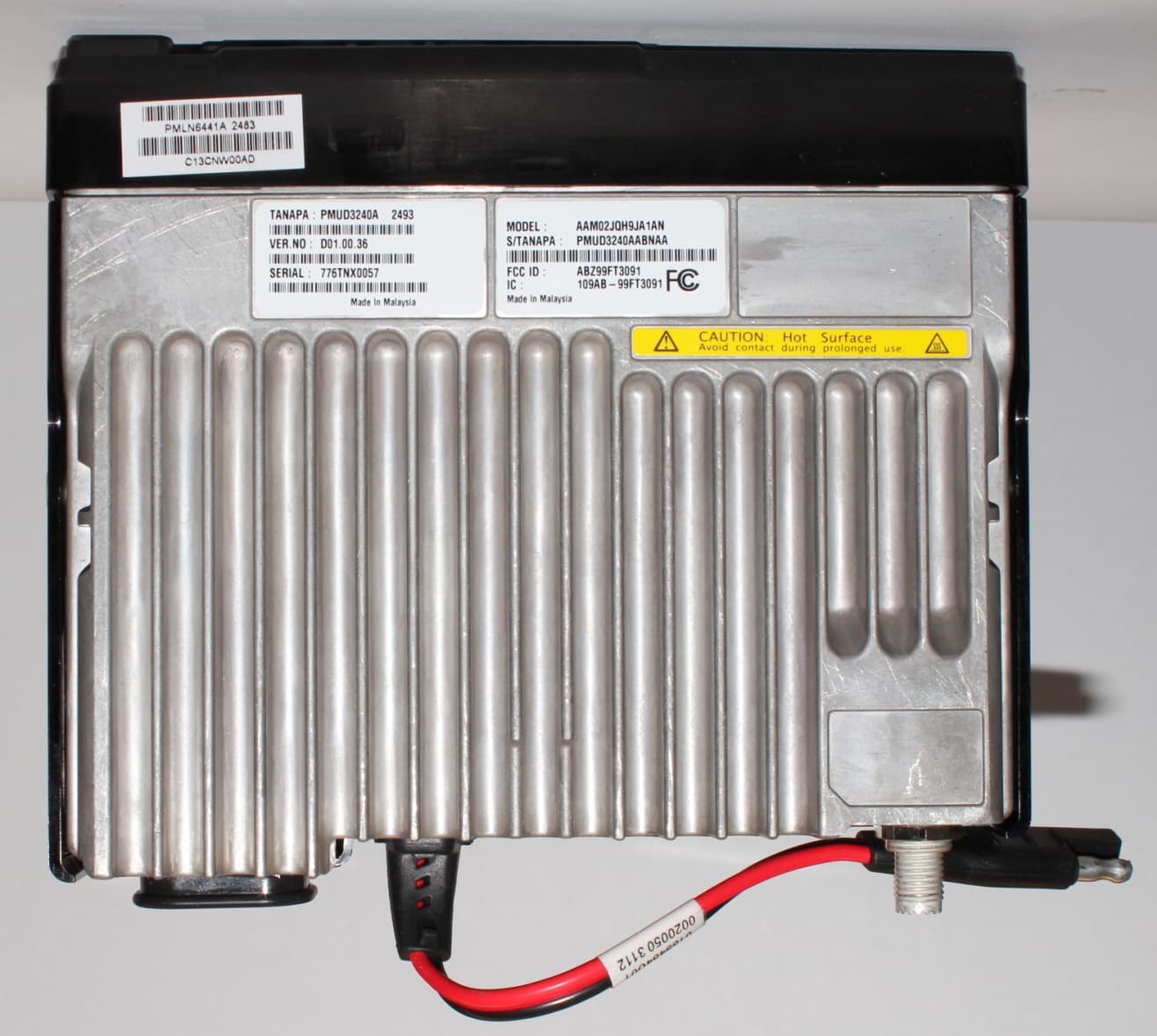
Click to zoom
Application Details
- Equipment Class
- TNB - Licensed Non-Broadcast Station Transmitter
- Date of Grant
- Jun 02, 2013
- Application Purpose
- Original Equipment
- Date of Application
- Mar 24, 2013
- Equipment Note
- Mobile VHF 2-way radio
- Frequency Range
- 136.00000000 - 174.00000000
- Company
- Motorola Solutions, Inc.
- Country
- United States
Documents & Files
Document Text
Text extracted from the exhibit documents filed with the FCC. Open a document above to read the original.
Users Manual
M MOTOTRBO XPR TM 2500 Alpha Numeric Display Mobile User Guide 68009613001-A NAG.book Page i Thursday , January 3, 2013 3:15 PM NAG.book Page ii Thursday, January 3, 2013 3:15 PM Declaration of Conformity English i Declaration of Conformity This declaration is applicable to your radio only if your radio is labeled with the FCC logo shown below. DECLARATION OF CONFORMITYPer FCC CFR 47 Part 2 Section 2.1077(a)Responsible Party Name: Motorola Solutions, Inc.Address: 1303 East Algonquin Road, Schaumburg, IL 60196-1078, U.S.A.Phone Number: 1-800-927-2744Hereby declares that the product: Model Name: XPR 2500 conforms to the following regulations: FCC Part 15, subpart B, section 15.107(a), 15.107(d) and section 15.109(a) Class B Digital DeviceAs a personal computer peripheral, this device complies with Part 15 of the FCC Rules. This device complies with Industry Canada licence-exempt RSS standard(s). Operation is subject to th e following two conditions: 1. This device may not cause harmful interference, and 2. This device must accept any interference received, including interference that may cause undesired operation. NAG.book Page i Thursday , January 3, 2013 3:15 PM Declaration of Conformity English ii Note: This equipment has been tested and found to comply with the li mits for a Class B digital device, pursuant to part 15 of the FCC Rules. These limits are designed to provide reasonable protection against harmful interference in a residential installation. This equipment generates, us es and can radiate radio frequency energy and, if not installed and used in accordance with the instructions, may cause harmful interference to radio communications. However, there is no guarantee that interference wi ll not occur in a particular installation. If this equipment does cause harmful interference to radi o or television reception, which can be determined by turning the equipment off and on, the user is encouraged to try to correct the interference by one or more of the following measures: • Reorient or relocate the receiving antenna. • Increase the separation between the equipment and receiver. • Connect the equipment into an outlet on a circuit differ ent from that to which the receiver is connected. • Consult the dealer or an experienc ed radio/TV technician for help. NAG.book Page ii Thursday, January 3, 2013 3:15 PM Contents English iii ContentsThis User Guide contains all the information you need to use the MOTOTRBO XPR Series Digital Mobile Radios . Declaration of Conformity . . . . . . . . . . . . . . . . . . . . . iImportant Safety Information . . . . . . . . . . . . . . . . . . x Product Safety and RF Exposure Compliance . . . x Software Version . . . . . . . . . . . . . . . . . . . . . . . . . . . . xComputer Software Copyrights . . . . . . . . . . . . . . . xi Getting Started . . . . . . . . . . . . . . . . . . . . . . . . . . . . . . 1 How to Use This User Guide . . . . . . . . . . . . . . . . . . 1What Your Dealer/System Administrator Can Tell You . . . . . . . . . . . . . . . . . . . . . . . . . . . . . . . 2Powering Up the Radio . . . . . . . . . . . . . . . . . . . . . . . 2Adjusting the Volume . . . . . . . . . . . . . . . . . . . . . . . . 3 Identifying Radio Controls . . . . . . . . . . . . . . . . . . . . 4 Radio Controls . . . . . . . . . . . . . . . . . . . . . . . . . . . . . 5Programmable Buttons . . . . . . . . . . . . . . . . . . . . . . . 6 Assignable Radio Functions . . . . . . . . . . . . . . . . . 6Assignable Settings or Utility Functions . . . . . . . . . 8 Accessing the Programmed Functions . . . . . . . . . . . 8Push-To-Talk (PTT) Button . . . . . . . . . . . . . . . . . . . . 9 Switching Between Conventional Analog and Digital Mode . . . . . . . . . . . . . . . . . . . . . . . . . . . . . . . . . . . . . 9Using the Volume/Channel Knob . . . . . . . . . . . . . . 10IP Site Connect . . . . . . . . . . . . . . . . . . . . . . . . . . . 10Capacity Plus . . . . . . . . . . . . . . . . . . . . . . . . . . . . . 11Linked Capacity Plus . . . . . . . . . . . . . . . . . . . . . . . 11 Identifying Status Indicators . . . . . . . . . . . . . . . . . . 13 Display Icons . . . . . . . . . . . . . . . . . . . . . . . . . . . . . . 13Call Icons . . . . . . . . . . . . . . . . . . . . . . . . . . . . . . . . 15Advanced Menu Icons . . . . . . . . . . . . . . . . . . . . . . 15Mini Notice Icons . . . . . . . . . . . . . . . . . . . . . . . . . . . 16Sent Item Icons . . . . . . . . . . . . . . . . . . . . . . . . . . . 16LED Indicators . . . . . . . . . . . . . . . . . . . . . . . . . . . . 17Indicator Tones . . . . . . . . . . . . . . . . . . . . . . . . . . . . 18Audio Tones . . . . . . . . . . . . . . . . . . . . . . . . . . . . . . 18 Receiving and Making Calls . . . . . . . . . . . . . . . . . . 18 Selecting a Zone . . . . . . . . . . . . . . . . . . . . . . . . . . . 19Selecting a Channel . . . . . . . . . . . . . . . . . . . . . . . . 19Receiving and Responding to a Radio Call . . . . . . 20 Receiving and Responding to a Group Call . . . . . 20Receiving and Responding to a Private Call . . . 21 Receiving an All Call . . . . . . . . . . . . . . . . . . . . . . 22Receiving and Responding to a Selective Call . . 22 Receiving and Responding to a Phone Call . . . . 23 Phone Call as Private Call . . . . . . . . . . . . . . . . 23 NAG.book Page iii Thursday, January 3, 2013 3:15 PM Contents English iv Phone Call as Group Call . . . . . . . . . . . . . . . . 23Phone Call as All Call . . . . . . . . . . . . . . . . . . . 24 Making a Radio Call . . . . . . . . . . . . . . . . . . . . . . . . 24 Making a Group Call . . . . . . . . . . . . . . . . . . . . . . 25Making a Private Call . . . . . . . . . . . . . . . . . . . . . 25Making an All Call . . . . . . . . . . . . . . . . . . . . . . . . 26Making a Selective Call . . . . . . . . . . . . . . . . . . . . 27Making a Phone Call . . . . . . . . . . . . . . . . . . . . . . 27 Stopping a Radio Call . . . . . . . . . . . . . . . . . . . . . …
Text truncated - open the document above for the full version.
Users Manual
English RF Energy Exposure and Product Safety Guide for Mobile Two-Way Radios Installed in Vehicles, Vessels or as Fixed Site Control Stations ATTENTION! The information provided in this document supersedes the general safety information contained in user guides published prior to January 2008. BEFORE USING THIS RADIO, READ THIS BOOKLET WHICH CONTAINS IMPORTANT OPERATING INSTRUCTIONS FOR SAFE USAGE AND RF ENERGY AWARENESS AND CONTROL INFORMATION FOR COMPLIANCE WITH RF ENERGY EXPOSURE LIMITS IN APPLICABLE NATIONAL AND INTERNATIONAL STANDARDS. *6881095C99* 6881095C99-J *NNTN7851D* NNTN7851D Motorola Solutions, Inc. 1303 E. Algonquin Rd., Schaumburg, IL 60196, U.S.A. MOTOROLA, MOTO, MOTOROLA SOLUTIONS and the Stylized M logo are trademarks or registered trademarks of Motorola Trademark Holdings, LLC and are used under license. All other trademarks are the property of their respective owners. © 2005 – 2012 Motorola Solutions, Inc. All rights reserved. 6881095C99_SafetyM_Eng.fm Page 1 Tuesday, March 20, 2012 2:43 PM 2 English RF Energy Exposure Awareness and Control Information, and Operational Instructions for FCC Occupational Use Requirements NOTICE: This radio is intended for use in occupational/controlled conditions, where users have full knowledge of their exposure and can exercise control over their exposure to meet FCC limits. This radio device is NOT authorized for general population, consumer, or any other use. This two-way radio uses electromagnetic energy in the radio frequency (RF) spectrum to provide communications between two or more users over a distance. It uses radio frequency (RF) energy or radio waves to send and receive calls. RF energy is one form of electromagnetic energy. Other forms include, but are not limited to, sunlight and x-rays. RF energy, however, should not be confused with these other forms of electromagnetic energy, which when used improperly, can cause biological damage. Very high levels of x-rays, for example, can damage tissues and genetic material. Experts in science, engineering, medicine, health, and industry work with organizations to develop standards for safe exposure to RF energy. These standards provide recommended levels of RF exposure for both workers and the general public. These recommended RF exposure levels include substantial margins of protection. All Motorola two-way radios are designed, manufactured, and tested to ensure they meet government-established RF exposure levels. In addition, manufacturers also recommend specific operating instructions to users of two-way radios. These instructions are important because they inform users about RF energy exposure and provide simple procedures on how to control it. 6881095C99_SafetyM_Eng.fm Page 2 Tuesday, March 20, 2012 2:43 PM 3 English Please refer to the following Web sites for more information on what RF energy exposure is and how to control your exposure to assure compliance with established RF exposure limits. http://www.fcc.gov/oet/rfsafety/rf-faqs.html http://www.osha.gov/SLTC/radiofrequencyradiation/index.html Federal Communication Commission Regulations The FCC rules require manufacturers to comply with the FCC RF energy exposure limits for mobile two-way radios before they can be marketed in the U.S. When two-way radios are used as a consequence of employment, the FCC requires users to be fully aware of and able to control their exposure to meet occupational requirements. Exposure awareness can be facilitated by the use of a label directing users to specific user awareness information. Your Motorola two-way radio has a RF exposure product label. Also, your Motorola user manual, or separate safety booklet, includes information and operating instructions required to control your RF exposure and to satisfy compliance requirements. Compliance with RF Exposure Standard Your Motorola two-way radio is designed and tested to comply with a number of national and international standards and guidelines (listed below) regarding human exposure to radio frequency electromagnetic energy. This radio complies with the IEEE and ICNIRP exposure limits for occupational/ controlled RF exposure environment at duty factors of up to 50% talk-50% listen and is authorized by the FCC for occupational use only. In terms of measuring RF energy for compliance with the FCC exposure guidelines, your radio antenna radiates measurable RF energy only while it is transmitting (during talking), not when it is receiving (listening) or in standby mode. 6881095C99_SafetyM_Eng.fm Page 3 Tuesday, March 20, 2012 2:43 PM 4 English Your Motorola two-way radio complies with the following RF energy exposure standards and guidelines: • United States Federal Communications Commission (FCC), Code of Federal Regulations; 47 CFR et seq. • FCC, OET Bulletin 65 • Institute of Electrical and Electronic Engineers (IEEE) C95.1 • International Commission on Non-Ionizing Radiation Protection (ICNIRP) • Ministry of Health (Canada) Safety Code 6 • Industry Canada RSS-102 • Australian Communications Authority Radiocommunications Standard et seq. • ANATEL ANNEX to Resolution No. 303 et seq. RF Exposure Compliance and Control Guidelines and Operating Instructions To control exposure to yourself and others and to ensure compliance with the RF exposure limits, always adhere to the following procedures. Guidelines: • User awareness instructions should accompany device when transferred to other users. • DO NOT use this device if the operational requirements described herein are not met. 6881095C99_SafetyM_Eng.fm Page 4 Tuesday, March 20, 2012 2:43 PM 5 English Instructions: •Transmit no more than the rated duty factor of 50% of the time. To transmit (talk), push the Push-To-Talk (PTT) button or, for radios equipped with VOX, speak into the microphone. The red LED will illuminate when the radio is transmitting. To receive calls, release the PTT button, or, for radios equipped with VOX, stop talking. The red LED will extinguish when the radio stops tran…
Text truncated - open the document above for the full version.
Users Manual
-i m MOTOTRBO ™ Mobile Installation Guide XPR 2500 Display Mobile 68009622001-A 0 i Foreword This manual is intended for use by experienced technicians familiar with similar types of equipment. Specifically, it contains installation information required for the XPR 2000 Series Mobile Radios. For information related to the service of the XPR 2000 Series Mobile Radios, refer to Related Publications on page v for the list of applicable manuals available separately. Product Safety and RF Exposure Compliance See Installation Requirements for Compliance with Radio Frequency (RF) Energy Exposure Safety Standards on page ii. Manual Revisions Changes which occur after this manual is printed are described in PMRs (Publication Manual Revisions). These PMRs provide complete replacement pages for all added, changed, and deleted items. To obtain PMRs, go to: http://www.motorola.com/businessonline Parts Ordering See Appendix A: Replacement Parts Ordering for information on how to obtain replacement parts. For part numbers, refer to the MOTOTRBO XPR 2500 Mobile Basic Service Manual (Motorola publication part number 68009620001). . Computer Software Copyrights The Motorola products described in this manual may include copyrighted Motorola computer programs stored in semiconductor memories or other media. Laws in the United States and other countries preserve for Motorola certain exclusive rights for copyrighted computer programs, including, but not limited to, the exclusive right to copy or reproduce in any form the copyrighted computer program. Accordingly, any copyrighted Motorola computer programs contained in the Motorola products described in this manual may not be copied, reproduced, modified, reverse-engineered, or distributed in any manner without the express written permission of Motorola. Furthermore, the purchase of Motorola products shall not be deemed to grant either directly or by implication, estoppel, or otherwise, any license under the copyrights, patents or patent applications of Motorola, except for the normal non-exclusive license to use that arises by operation of law in the sale of a product. Document Copyrights No duplication or distribution of this document or any portion thereof shall take place without the express written permission of Motorola. No part of this manual may be reproduced, distributed, or transmitted in any form or by any means, electronic or mechanical, for any purpose without the express written permission of Motorola. Disclaimer The information in this document is carefully examined, and is believed to be entirely reliable. However, no responsibility is assumed for inaccuracies. Furthermore, Motorola reserves the right to make changes to any products herein to improve readability, function, or design. Motorola does not assume any liability arising out of the applications or use of any product or circuit described herein; nor does it cover any license under its patent rights nor the rights of others. Trademarks MOTOROLA, MOTO, MOTOROLA SOLUTIONS and the Stylized M logo are trademarks or registered trademarks of Motorola Trademark Holdings, LLC and are used under license. All other trademarks are the property of their respective owners. © 2013 Motorola Solutions, Inc. All rights reserved. ii Installation Requirements for Compliance with Radio Frequency (RF) Energy Exposure Safety Standards ATTENTION! This radio is intended for use in occupational/controlled conditions, where users have full knowledge of their exposure and can exercise control over their exposure to meet FCC limits. This radio device is NOT authorized for general population, consumer, or any other use. To ensure compliance to RF Energy Safety Standards: •Install only Motorola approved antennas and accessories. •Be sure that antenna installation is per Antenna Installation on page 2-10 of this manual. •Be sure that Product Safety and RF Safety Booklet enclosed with this radio is available to the end user upon completion of the installation of this radio. Before using this product, the operator must be familiar with the RF energy awareness information and operating instructions in the Product Safety and RF Exposure booklet enclosed with each radio (Motorola publication part number 6881095C99_) to ensure compliance with Radio Frequency (RF) energy exposure limits. This radio has a transmitter Time-out Timer that disables the transmitter during a transmission after a pre- defined time period, which by default is set to 60 seconds. For a list of Motorola-approved antennas and other accessories, visit the following web site, which lists approved accessories for your radio model: http://www.motorolasolutions.com For radios installed in vehicles fuelled by liquefied petroleum gas, refer to the (U.S.) National Fire Protection Association standard, NFPA58, for storage, handling, and/or container information. It is recommended NOT to change the default 60 seconds time period for the Time-out Timer as the radio is intended for intermittent duty cycle operation. ! W A R N I N G ! C a u t i o n Table of Contentsiii Table of Contents Foreword ..........................................................................................................i Product Safety and RF Exposure Compliance .............................................................................................i Manual Revisions .........................................................................................................................................i Parts Ordering ..............................................................................................................................................i Computer Software Copyrights ....................................................................................................................i Document Copyrights ...................................................................................................................................i Disclaimer.................…
Text truncated - open the document above for the full version.
Attestation Statements
MOTOROLA SOLUTIONS, INC FCC ID: ABZ99FT3091 IC: 109AB-99FT3091 EXHIBIT 2 SHEET 1 OF 1 CERTIFICATION OF DATA Pursuant to 47 CFR 2.1517 (g) The technical data supplied with this application, having been taken under my supervision, is hereby duly certified. The following is a statement of my qualifications: 1) I have received a BSEE degree in Electrical Engineering from the University of Illinois, Urbana, Illinois and a MSEE degree in Electrical Engineering from University of Illinois at Chicago, Chicago, Illinois. 2) I have 29 years experience in developing, testing, and certifying Land Mobile Communications Products. NAME: Robert M. Kraus SIGNATURE: /s/ Bob Kraus (signed) DATE: January 7, 2013 POSITION: Engineering Manager I hereby certify that the above application was prepared under my direction and that to the best of my knowledge and belief, the facts set forth in the application and accompanying technical data are true and correct. NAME: Mike Ramnath SIGNATURE: /s/ Mike Ramnath (signed) DATE: January 7, 2013 POSITION: Manager. Regulatory Compliance
Cover Letter(s)
8000 West Sunrise Boulevard. Plantation. Florida 33322 EXHIBIT 13A FCC ID: ABZ99FT3091 March 25, 2013 Office of Engineering and Technology Laboratory Division Equipment Authorization Branch FCC Laboratory 7435 Oakland Mills Road Columbia, MD 21046 Subject: Application for Certification of Transmitter with FCC ID: ABZ99FT3091 Dear Sir or Madam: Motorola Solutions, Inc., 8000 West Sunrise Boulevard, Fort Lauderdale , herein submits application for Certification of the equipment identified by FCC ID number ABZ99FT3091. This transmitter is primarily intended for use in a mobile radio application with capabilities for conventional and 2 to 1 TDMA digital communications with a conducted transmit power which is adjustable from 25 - 45 Watts, Rated Power and 54 Watts Max. We are requesting Certification for Rule Parts 22, 74, 80, 90.210, and 90.201e. The subject transmitter complies with CFR Title 47, Section 90.203, in that the operator cannot directly program the transmit frequencies using only the normally accessible external controls of the unit. Enclosed is a complete Certification Application. Please contact me at 954-723-5793, if you require any additional information. Sincerely, /s/ Mike Ramnath (signed) Manager, Regulatory Compliance Mike Ramnath (signed above) Email: [email protected]
Cover Letter(s)
8000 West Sunrise Boulevard, Plantation. Florida 33322 EXHIBIT 13B FCC ID: ABZ99FT3091 REQUEST FOR CONFIDENTIALITY March 27 th , 2013 Office of Engineering and Technology Laboratory Division Equipment Authorization Branch FCC Laboratory 7435 Oakland Mills Road Columbia, MD 21046 Subject: Request for Confidentiality for application for Certification of Transmitter with FCC ID: ABZ99FT3091 Dear Sir or Madam: Motorola Solutions is requesting that Exhibit 4 (Circuit Descriptions), Exhibit 5 (Schematic Diagrams), Exhibit 10 (Parts List and Tune Up Procedures), and Exhibit 12 (Operational Description) not be made routinely available for public inspection. Motorola considers the information in these exhibits to be classified as trade secrets, pursuant to 47 CFR Section 0.457(d), 0.459, and Section 552(b)(4) of the Freedom of Information Act. Please mark Exhibits 4, 5, 10, and 12 as “Confidential”. Please contact me at (954) 723-5793 if you require any additional information. Sincerely, Mike Ramnath (signed above) Manager, Regulatory Compliance Mike Ramnath (signed above) Email: [email protected]
Cover Letter(s)
8000 West Sunrise Boulevard. Plantation. Florida 33322 EXHIBIT 13A FCC ID: ABZ99FT3091 May 6, 2013 Office of Engineering and Technology Laboratory Division Equipment Authorization Branch FCC Laboratory 7435 Oakland Mills Road Columbia, MD 21046 Subject: Application for Certification of Transmitter with FCC ID: ABZ99FT3091 Dear Sir or Madam: Motorola Solutions, Inc., 8000 West Sunrise Boulevard, Fort Lauderdale , herein submits application for Certification of the equipment identified by FCC ID number ABZ99FT3091. This transmitter is primarily intended for use in a mobile radio application with capabilities for conventional and 2 to 1 TDMA digital communications with a conducted transmit power which is adjustable from 25 - 45 Watts, Rated Power and 54 Watts Max. We are requesting Certification for Rule Parts 90.210 and 90.201e. The subject transmitter complies with CFR Title 47, Section 90.203, in that the operator cannot directly program the transmit frequencies using only the normally accessible external controls of the unit. Enclosed is a complete Certification Application. Please contact me at 954-723-5793, if you require any additional information. Sincerely, /s/ Mike Ramnath (signed) Manager, Regulatory Compliance Mike Ramnath (signed above) Email: [email protected]
Cover Letter(s)
FCC ID: ABZ99FT3091 __________________________________________________________ 8000 West Sunrise Boulevard, Fort Lauderdale, Florida 33322. May 06 th , 2013 Office of Engineering and Technology Laboratory Division Equipment Authorization Branch 7435 Oakland Mills Road Columbia, MD 21046 Att: JC Chen Subject: Response to second Correspondence 42860 for Certification of Transmitter with FCC ID: ABZ99FT3091, Correspondence Number 43721, and Confirmation Number EA779063. Dear Mr. Chen, Please see below for our responses to your April 19, 2013 FCC communication: 1. The proposed grant note code BM (50-55%) is inappropriate when 90.205(s) allows only up to 20% power variation. Response 1: The Grant Note is for Variable Power of the radio 25-45 Watt and the power varies up to 55% of the rated power of 45 Watts. Rule Part 90.205 (s) may not applicable to the Grant Notes for Variable Power. 2. Tune-up procedure on Page 7 of Exhibit 10C indicates that the maximum power limit in a production unit is 56 W. This would exceed the authorized 45 W + 20% = 54 Watts permitted by 90.205(s). Please clarify. Response 2: This is a typographical error. The maximum power is 54 Watts and Exhibit 10 is now corrected. 3. The test setup photo Exhibit 7B contains only photos of antennas. Response 3: Photos now include the vehicle, see Exhibit 7B. 4. You are requesting Parts 22, 74, and 80 grants, in addition to Part 90, while the test report only demonstrates compliance with Part 90 rules. It is the applicant’s responsibility to show compliance with the appropriate regulations instead of asking the Commission to take the data to find which rule sections that the data comply. Your approach is also contradictory when all 25 kHz test results are labeled "Not for FCC Review" and yet 25 kHz authorization is being requested for non-Part 90 rules parts. Please revise test report to compare test results against applicable rules sections that the applicant is requesting authorization. FCC ID: ABZ99FT3091 __________________________________________________________ 8000 West Sunrise Boulevard, Fort Lauderdale, Florida 33322. Response 4: We have dropped the request for Rule Part 22, 74, and 80 at this time. See the amended Cover Letter to reflect this. 5. MPE/SAR assessment report also shows inconsistency in that if results outside 150.8- 173.4 MHz are not applicable for FCC compliance demonstration (cover page), then there is no basis to approve operation outside this band. Response 5: We have added a frequency Justification letter requesting the extended frequency range to aid certification in other countries including Canada according to the guidance given in KDB 634817. 6. It appears to this reviewer that the proper emission designators for 2-slot 4FSK should be F7D/F7E/F7W instead of F1D/F1E/F1W, the latter is currently given to both 1-slot 4FSK and 2-slot TDMA modes in Exhibit 6E. Response 6: Based on recent FCC proceedings on emission designators addressing the ARRL waiver request for TRBO both the ARRL and the FCC use the term single slot TDMA to describe the subscribers talking to a 2 Slot TDMA base station, such as TRBO or P25 Phase 2. While Motorola has historically labeled TRBO and P25 Phase 2 subscribers as 2 Slot TDMA radios the FCC now defines these subscribers as 1 slot TDMA because a given subscriber operates on 1 of the 2 available slots. The NPRM and Order, DA 13-542 dated March 25, 2013, and NPRM and Order, FCC12-121 dated October 2, 2012 on the ARRL waiver that uses the single slot terminology. For future filings we are open to use 1 slot TDMA as the descriptor. 7. Page 117 of the user’s manual lists many UHF antennas. Please clarify whether this device is applying for authorization in the UHF (403-527 MHz) band? Response 7: A single User Manual is used for both VHF and UHF models domestically and international markets. The VHF antennas, that is, antennas specified with an operating range between 136-174 MHz, are used with the VHF models (136-174 MHz). If you require any additional information, please contact me at (954) 723-5793 (Phone). Sincerely, /s/ Mike Ramnath (signed) Mike Ramnath Manager, Regulatory Compliance 954-723-5793
Cover Letter(s)
FCC ID: ABZ99FT3091 EXHIBIT 13C __________________________________________________________ Motorola Solutions Inc. 8000 West Sunrise Boulevard, Fort Lauderdale, Florida 33322 May 6 th , 2013 Office of Engineering and Technology Laboratory Division Equipment Authorization Branch 7435 Oakland Mills Road Columbia, MD 21046 Subject: Extended Frequencies Justification. Gentlemen: To aid equipment authorization in other countries which accept the United States FCC Grant for Certification, Motorola Solutions is requesting that the FCC lists the frequencies 136-174 MHz on the FCC Grant. For the FCC’s Rule Parts 90 applications, this radio is used in systems by Federal and Public Safety agencies including Police, Fire, and Emergency Medical Services, etc. as indicated in the table below. Equipment programming is the responsibility of Authorized Service Personnel. Also, the radio complies with 47 CFR Part 90.203(e), in that the operator cannot directly program the transmit frequencies using the normally accessible external controls. Per the FCC’s KDB 634817 guidance, as an alternative to listing the exact frequencies, we acknowledge that it is a violation of the FCC Rules if this device operates on unauthorized frequencies. Sincerely, Mike Ramnath (signed above) Manager, Regulatory Compliance Email: [email protected]
External Photos
MOTOROLA SOLUTIONS, INC FCC ID: ABZ99FT3091 IC: 109AB-99FT3091 EXHIBIT 3 SHEET 1 OF 5 GENERAL VIEW, 128 CHANNEL MODEL WITH MICROPHONE (CLOSE-UP OF RF EXPOSURE LABEL ON FOLLOWING PAGE) MOTOROLA SOLUTIONS, INC FCC ID: ABZ99FT3091 IC: 109AB-99FT3091 EXHIBIT 3 SHEET 2 OF 5 RF EXPOSURE LABEL (CLOSE-UP VIEW) MOTOROLA SOLUTIONS, INC FCC ID: ABZ99FT3091 IC: 109AB-99FT3091 EXHIBIT 3 SHEET 3 OF 5 FRONT VIEW, 128 CHANNEL MODEL FRONT VIEW, 99 CHANNEL MODEL FRONT VIEW, 16 CHANNEL MODEL MOTOROLA SOLUTIONS, INC FCC ID: ABZ99FT3091 IC: 109AB-99FT3091 EXHIBIT 3 SHEET 4 OF 5 BOTTOM VIEW, SHOWING FCC ID LABEL (CLOSE-UP OF FCC ID LABEL ON FOLLOWING PAGE) MOTOROLA SOLUTIONS, INC FCC ID: ABZ99FT3091 IC: 109AB-99FT3091 EXHIBIT 3 SHEET 5 OF 5 CLOSE-UP VIEW OF 128 CHANNEL MODEL FCC ID LABEL CLOSE-UP VIEW OF 99 CHANNEL MODEL FCC ID LABEL CLOSE-UP VIEW OF 16 CHANNEL MODEL FCC ID LABEL
ID Label/Location Info
MOTOROLA SOLUTIONS, INC FCC ID: ABZ99FT3091 IC: 109AB-99FT3091 EXHIBIT 1 SHEET 1 OF 2 IDENTIFICATION LABEL Pursuant to 47 CFR 2.1033(c) LOCATION A nameplate of the type presented below will be affixed to every transmitter. It will be placed on the bottom of the unit near the front. Shown below are the photos of the actual labels affixed to the cast chassis of the transmitter. Which label gets incorporated depends on the number of channels. TYPE The label is a paper polyester film laminated with a pressure sensitive adhesive backing. The adhesive is a permanent type acrylic with a minimum peel strength of 40 oz/inch. 128 CHANNEL MODEL 99 CHANNEL MODEL 16 CHANNEL MODEL MOTOROLA SOLUTIONS, INC FCC ID: ABZ99FT3091 IC: 109AB-99FT3091 EXHIBIT 1A SHEET 1 OF 1 EXHIBIT 1A – G…
Text truncated - open the document above for the full version.
Contact Information
Applicant
Matthew Nawrocki
Technical Contact
Motorola Solutions IncMike Ramnath
[email protected]954-723-5793
8000 West Sunrise Blvd · Plantation, Florida · United States
Technical Specifications
| # | Rule Parts | Frequency Range | Power Output | Emission | Tolerance |
|---|---|---|---|---|---|
| 6 | 90.21 | 136 MHz - 174 MHz | 45 W | 7K60FXE | 0.5 ppm |
Other Applications from Motorola Solutions, Inc.

ABZ89FT4940
Aug 06, 2026Non Broadcast Transmitter
Equipment Class
TNB - Licensed Non-Broadcast Station TransmitterABZ89FT4950
Jun 25, 2026Non-Broadcast Transmitter
Equipment Class
TNB - Licensed Non-Broadcast Station TransmitterABZ89FT5901
Jun 20, 2024Non Broadcast Transmitter
Equipment Class
TNB - Licensed Non-Broadcast Station Transmitter
ABZ99FT5101B
May 02, 2023Non Broadcast Transmitter
Equipment Class
PCB - PCS Licensed Transmitter
ABZ99FT3095B
Mar 26, 2023Non Broadcast Transmitter
Equipment Class
TNB - Licensed Non-Broadcast Station Transmitter