AEZA5527SACellular CDMA Phone
Sanyo Electric Co Ltd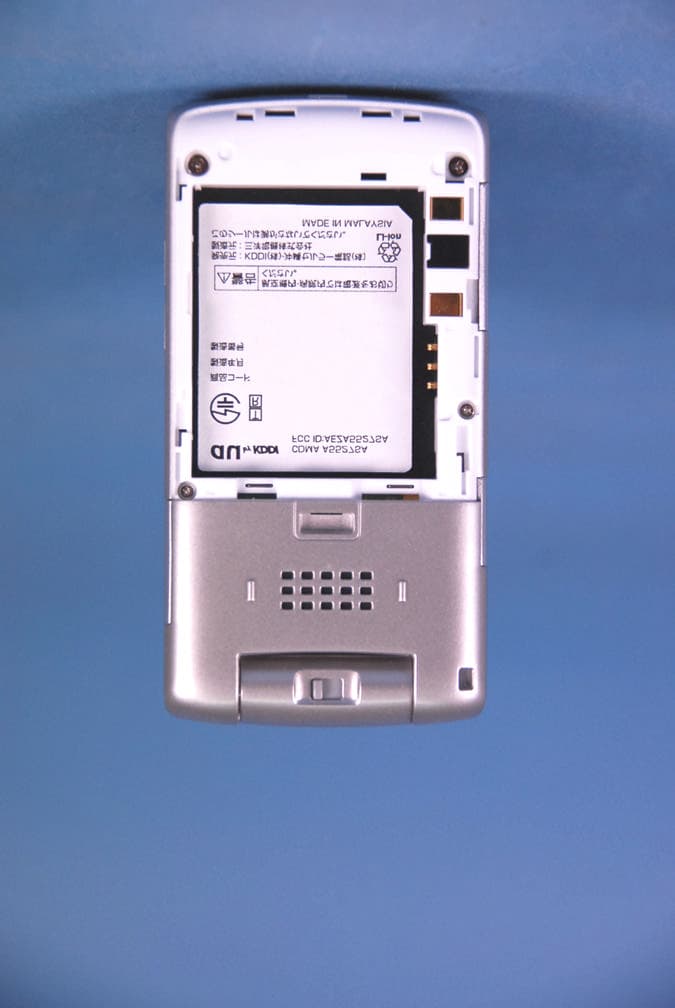
Click to zoom
Application Details
- Equipment Class
- TNE - Licensed Non-Broadcast Transmitter Held to Ear
- Date of Grant
- May 29, 2007
- Application Purpose
- Original Equipment
- Date of Application
- May 29, 2007
- Equipment Note
- Cellular CDMA Phone
- Frequency Range
- 824.70000000 - 848.31000000
- Company
- Sanyo Electric Co Ltd
- Country
- United States
Documents & Files
Document Text
Text extracted from the exhibit documents filed with the FCC. Open a document above to read the original.
Users Manual
Operating Instructions Name & Function of Parts a Optial Sensor b Main display c Macro Mode Selector Switch d Address book key e Mail key f Send / Pair key g Dial keys h Microphone i Built-in Antenna j Earpiece k Application key l EZ apps key m Center key n EZweb key o Clear / Manner key p Power / End key q Infrares Port r Camera lens s Flash t Incoming indicator u Sub display v Strap Hole w Speaker x Battery Pack Cover y Battery Pack z Charging Terminals A Flat-type Earphone Jack B External Connector C microSD Memory Card Slot D Speaker phone / Light key E Memo key - 1 - ■ Power saving during standby In order to minimize the power consumption, the A5527SA display turns automatically to power saving mode when key operation is stopped for a while. The indication restores with key operation. ■key In this manual, the point at which to press the key is indicated as shown below. Example) Press or→ Getting Ready to Make a Call 1 Charging with the Sanyo AC Adapter 02 The battery charger can be charged by directly inserting the Sanyo AC Adapter 02 connector into the external connection terminal on the A5527SA Main Unit. 2 Turning the power on Press and holdor more than one second. ◆Turning the power off Press and hold for more than one second. Switch to English 1. Presson the standby screen. 2. Select "機能" and press (選択). 3. Press. 4. Select "English" and press (選択). Displaying your own phone number 1. While in standby mode press. 2. Select "Private Info" and press (Select). 3. Select "Profile" and press (Select) to display your au telephone number. Making a Call 1. Enter the phone number you want to call. Area code - Local code - Subscriber's number. <Example> 03-0001-XXXX Always include the area code, even when calling to a number in the same area you are in. If you enter a wrong number: ● Pressbriefly - the last dialed digit will be deleted. ● Press and hold - the entire phone number will be deleted. 2. Press to make a call. - 2 - Making an International Call 1. Enter the phone number you want to call using the following pattern. International dial code - Country code - Area code - Subscriber's number 2. Press to make a call. <Example> to call United States, number 212-123-XXXX in the USA. Operation Explanation 1 Pressing "005345" Access code 2 Pressing "1" Country code of United States: 1 3 Pressing "212" Area code ※ : 212 4 Pressing "123-XXXX" Subscriber's number: 123-XXXX 5 Press The following operation is the same as the normal telephone operation. ※ When the first number of the area code is "0", press the area code number without "0". Adjusting the receiver volume 1. During a call, press . : Volume level raised : Volume level lowered Answering a call 1. The ringer tone sounds/vibrator buzzes, and the incoming call lamp flashes. 2. Press to answer the call. An incoming call can also be answered by pressing any of the ~ ,,, ,keys. If you do not answer the call or the caller disconnects before the call is answered, " Missed Call X " will be displayed. (A number appears in the "X".) Entering characters This is the method of entering names for registering address book and writing mail. 1. Press (Char.). 2. Select the entry mode you want. "Kanji", "Hiragana" entry mode (full size) "Number" entry mode (half size) "Katakana" entry mode (full size) "Pictographs" entry mode (full size) "Katakana" entry mode (half size) "Symbol" entry mode "Alphanumeric" entry mode (full size) "Face marks" entry mode "Number" entry mode (full size) "Alphanumeric" entry mode (half size) When you press the(Undo) just after the characters are confirmed, the characters return to the previous state. - 3 - [Assignment of characters and key functions] Characters are assigned to each key as shown below. Press a key repeatedly to cycle through characters assigned to that key. Entry mode key Kanji・Hiragana Katakana ・ Alphanumeric ・ Alphanumeric ・ Number ・ あいうえおぁぃぅぇぉ1 アイウエオァィゥェォ1. @ - _ / : ~ 1 . @ - _ / : ~ 1 1 かきくけこ2 カキクケコ2 ABC2 abc2 2 さしすせそ3 サシスセソ3 DEF3 def3 3 たちつてとっ4 タチツテトッ4 GHI4 ghi4 4 なにぬねの5 ナニヌネノ5 JKL5 jkl5 5 はひふへほ6 ハヒフヘホ6 MNO6 mno6 6 まみむめも7 マミムメモ7 PQRS7 pqrs7 7 やゆよゃゅょ8 ヤユヨャュョ8 TUV8 tuv8 8 らりるれろ9 ラリルレロ9 WXYZ9 wxyz9 9 わをんゎ、。-・~!? (space)0 ワヲン、。ー-・.!? (space)0 0 , . - ~ ! ? (space) 0 0 , . - ~ ! ? (space) 0 0 ゙ (Voiced Sound symbol) ゚(Semi-voiced Sound symbol) ― Switches lowercase/uppercase Switches list of Pictographs, Face marks, and Characters Reverse toggle of entered characters, line change (after confirm) Remarks: ■ “~”can be inputted only when inputting full-sized characters.It changes to“ ~”when inputting helf-sized characters. ■ “ワ”(lowercase character) can be inputted only when inputting full-sized characters. ■ indicates a space. ■ Inputting voiced sound symbol/semi-voiced sound symbol or switching uppercase/lowcase can be done by pressing after inputting the character. (A list of Pictographs, Face marks, and Characters is displayed if you press it after the inputted character is set.) < Example >つ→っ→づ→つ ハ→バ→パ→ハ a→A→a - 4 - Registering in the Address Book You can register frequently used phone numbers and E-mail addresses. Up to 1000 addresses can be registered in the address book. ■ Registering in the address book 1. Press and hold for more than one second. The address book registration screen list is displayed. 2. Enter the item you want. Select the icon of the item you want by and press(Select) to enter it. As for the items you can enter, see "Items to register in the address book". 3. Press (Set.) . 4. Press (Complete) . - 5 - ■ Items to register in the address book The following data can be put in the address book. Name Up to 12 full size (24 half size) characters Pronunciation Up to 24 half size characters Registered automatically after "Name" is entered. Phone No.1~3 Up to 36 digits Sellecting from 5 Phone number types and “No Settings”. E-mail address 1~3 Up to 64 half size alphanumeric characters Sellecting from 5 E-mail address types and “No Settings”. Group You can classify it into 20 classes for ma…
Text truncated - open the document above for the full version.
External Photos
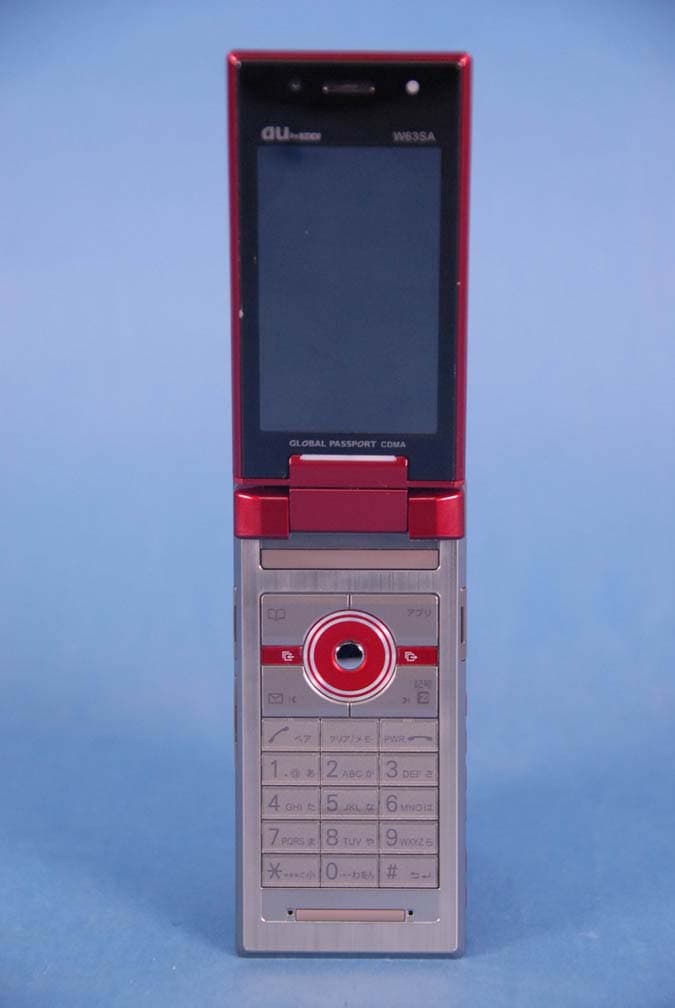
SANYO FCC ID: AEZA5527SA EUT Photographs © 2007 PCTEST Lab. Cellular CDMA Phone Model: A5527SA SANYO FCC ID: AEZA5527SA EUT Photographs © 2007 PCTEST Lab. Cellular CDMA Phone Model: A5527SA SANYO FCC ID: AEZA5527SA EUT Photographs © 2007 PCTEST Lab. Cellular CDMA Phone Model: A5527SA SANYO FCC ID: AEZA5527SA EUT Photographs © 2007 PCTEST Lab. Cellular CDMA Phone Model: A5527SA SANYO FCC ID: AEZA5527SA EUT Photographs © 2007 PCTEST Lab. Cellular CDMA Phone Model: A5527SA SANYO FCC ID: AEZA5527SA EUT Photographs © 2007 PCTEST Lab. Cellular CDMA Phone Model: A5527SA SANYO FCC ID: AEZA5527SA EUT Photographs © 2007 PCTEST Lab. Cellular CDMA Phone Model: A5527SA
ID Label/Location Info
A5527SA Rating Label
Internal Photos
SANYO FCC ID: AEZA5527SA EUT Photographs © 2007 PCTEST Lab. Cellular CDMA Phone Model: A5527SA SANYO FCC ID: AEZA5527SA EUT Photographs © 2007 PCTEST Lab. Cellular CDMA Phone Model: A5527SA SANYO FCC ID: AEZA5527SA EUT Photographs © 2007 PCTEST Lab. Cellular CDMA Phone Model: A5527SA SANYO FCC ID: AEZA5527SA EUT Photographs © 2007 PCTEST Lab. Cellular CDMA Phone Model: A5527SA SANYO FCC ID: AEZA5527SA EUT Photographs © 2007 PCTEST Lab. Cellular CDMA Phone Model: A5527SA SANYO FCC ID: AEZA5527SA EUT Photographs © 2007 PCTEST Lab. Cellular CDMA Phone Model: A5527SA SANYO FCC ID: AEZA5527SA EUT Photographs © 2007 PCTEST Lab. Cellular CDMA Phone Model: A5527SA SANYO FCC ID: AEZA5527SA EUT Photographs © 2007 PCTEST Lab. Cellular CDMA Phone Model: A5527SA SANYO FCC ID: AEZA5527SA EUT Photographs © 2007 PCTEST Lab. Cellular CDMA Phone Model: A5527SA SANYO FCC ID: AEZA5527SA EUT Photographs © 2007 PCTEST Lab. Cellular CDMA Phone Model: A5527SA SANYO FCC ID: AEZA5527SA EUT Photographs © 2007 PCTEST Lab. Cellular CDMA Phone Model: A5527SA SANYO FCC ID: AEZA5527SA EUT Photographs © 2007 PCTEST Lab. Cellular CDMA Phone Model: A5527SA SANYO FCC ID: AEZA5527SA EUT Photographs © 2007 PCTEST Lab. Cellular CDMA Phone Model: A5527SA
RF Exposure Info
Reviewed by: FCC ID: AEZA5527SA CERTIFICATION REPORT Quality Manager SAR Filename: Test Dates: EUT Type: 0702230104.AEZ February 26, 2007 Cellular CDMA Phone Page 1 of 24 © 2007 PCTEST Engineering Laboratory, Inc. REV 4.1C 02/02/07 Applicant Name: Date of Testing: Sanyo Fisher Company February 26, 2007 21605 Plummer Street Test Site/Location: Chatsworth, CA 91311 PCTEST Lab, Columbia, MD, USA USA Test Report Serial No.: 0702230104.AEZ FCC ID: AEZA5527SA APPLICANT: SANYO FISHER COMPANY EUT Type: Cellular CDMA Phone Application Type: Certification FCC Rule Part(s): §2.1093 FCC/OET Bulletin 65 Supplement C [July 2001] FCC Classification: Non-Broadcast Transmitter Held to Ear (TNE) Model(s): A5527SA Tx Frequency: 824.70 - 848.31 MHz (Cellular CDMA) Conducted Power: 24.41 dBm CDMA Max. SAR Measurement: 0.546 W/kg CDMA850 Head SAR 0.296 W/kg CDMA850 Body SAR Test Device Serial No.: Pre-Production [S/N: 2DF00132] This wireless portable device has been shown to be capable of compliance for localized specific absorption rate (SAR) for uncontrolled environment/general population exposure limits specified in ANSI/IEEE Std. C95.1-2005 and has been tested in accordance with the measurement procedures specified in FCC/OET Bulletin 65 Supplement C (2001) and IEEE Std. 1528-2003. I attest to the accuracy of data. All measurements reported herein were performed by me or were made under my supervision and are correct to the best of my knowledge and belief. I assume full responsibility for the completeness of these measurements and vouch for the qualifications of all persons taking them. Grant Conditions: Power output is ERP for Part 22. SAR compliance for body-worn operating configuration is based on a separation distance of 2.2cm between the back of the unit and the body of the user. End-users must be informed of the body-worn operating requirements for satisfying RF exposure compliance. Belt clips or holsters not specified in this filing may not contain metallic components. PCTEST certifies that no party to this application has been denied the FCC benefits pursuant to Section 5301 of the Anti-Drug Abuse Act of 1988, 21 U.S.C. 862. PCTEST ENGINEERING LABORATORY, INC. 6660-B Dobbin Road, Columbia, MD 21045 USA Tel. 410.290.6652 / Fax 410.290.6554 http://www.pctestlab.com CERTIFICATE OF COMPLIANCE (SAR EVALUATION) Reviewed by: FCC ID: AEZA5527SA CERTIFICATION REPORT Quality Manager SAR Filename: Test Dates: EUT Type: 0702230104.AEZ February 26, 2007 Cellular CDMA Phone Page 2 of 24 © 2007 PCTEST Engineering Laboratory, Inc. REV 4.1C 02/02/07 TABLE OF CONTENTS 1 INTRODUCTION ............................................................................................................................. 3 2 TEST SITE LOCATION ................................................................................................................... 4 3 SAR MEASUREMENT SETUP ....................................................................................................... 5 4 DASY E-FIELD PROBE SYSTEM .................................................................................................. 7 5 PROBE CALIBRATION PROCESS ................................................................................................ 8 6 PHANTOM AND EQUIVALENT TISSUES...................................................................................... 9 7 DOSIMETRIC ASSESSMENT & PHANTOM SPECS................................................................... 10 8 DEFINITION OF REFERENCE POINTS ...................................................................................... 11 9 TEST CONFIGURATION POSITIONS ......................................................................................... 12 10 ANSI/IEEE C95.1-2005 RF EXPOSURE LIMITS......................................................................... 14 11 MEASUREMENT UNCERTAINTIES ............................................................................................ 15 12 SYSTEM VERIFICATION.............................................................................................................. 16 13 FCC 3G MEASUREMENT PROCEDURES – JUNE 2006 ........................................................... 17 14 SAR DATA SUMMARY ................................................................................................................. 19 15 EQUIPMENT LIST......................................................................................................................... 21 16 CONCLUSION............................................................................................................................... 22 17 REFERENCES .............................................................................................................................. 23 Reviewed by: FCC ID: AEZA5527SA CERTIFICATION REPORT Quality Manager SAR Filename: Test Dates: EUT Type: 0702230104.AEZ February 26, 2007 Cellular CDMA Phone Page 3 of 24 © 2007 PCTEST Engineering Laboratory, Inc. REV 4.1C 02/02/07 1 INTRODUCTION The FCC has adopted the guidelines for evaluating the environmental effects of radio frequency (RF) radiation in ET Docket 93-62 on Aug. 6, 1996 to protect the public and workers from the potential hazards of RF emissions due to FCC-regulated portable devices.[1] The safety limits used for the environmental evaluation measurements are based on the criteria published by the American National Standards Institute (ANSI) for localized specific absorption rate (SAR) in IEEE/ANSI C95.1-2005 Standard for Safety Levels with Respect to Human Exposure to Radio Frequency Electromagnetic Fields, 3 kHz to 300 GHz. (c) 2005 by the Institute of Electrical and Electronics Engineers, Inc., New York, New York 10017.[2] The measurement procedure described in IEEE/ANSI C95.3-2002 Recommended Practice for the Measurement of Potentially Hazardous Electromagnetic Fields - RF and Microwave[3] is used for guidance in measuring the Specific Absorption Rate (SAR) due to the RF …
Text truncated - open the document above for the full version.
Test Report
Reviewed by: FCC ID: AEZA5527SA FCC Pt. 22 Cellular CDMA MEASUREMENT REPORT (CERTIFICATION) Quality Manager Test Report S/N: Test Dates: EUT Type: 0702230103.AEZ February 28, 2007 Cellular CDMA Phone Page 1 of 26 © 2007 PCTEST Engineering Laboratory, Inc. REV 6.2C 02/19/07 Applicant Name: Date of Testing: Sanyo Fisher Company February 28, 2007 21605 Plummer Street Test Site/Location: Chatsworth, CA 91311 PCTEST Lab., Columbia, MD, USA USA Test Report Serial No.: 0702230103.AEZ FCC ID: AEZA5527SA APPLICANT: SANYO FISHER COMPANY Application Type: Certification FCC Classification: Licensed Non-Broadcast Transmitter Held to Ear (TNE) FCC Rule Part(s): §2; §22(H) EUT Type: Cellular CDMA Phone Model(s): A5527SA Tx Frequency Range: 824.70 - 848.31MHz (Cell. CDMA) Max. RF Output Power: 0.278 W ERP Cell. CDMA (24.44 dBm) Emission Designator(s): 1M27F9W (CDMA) Test Device Serial No.: identical prototype [S/N: 2DF00132] This equipment has been shown to be capable of compliance with the applicable technical standards as indicated in the measurement report and was tested in accordance with the measurement procedures specified in §2.947. I attest to the accuracy of data. All measurements reported herein were performed by me or were made under my supervision and are correct to the best of my knowledge and belief. I assume full responsibility for the completeness of these measurements and vouch for the qualifications of all persons taking them. Grant Conditions: Power output listed is ERP for Part 22. PCTEST certifies that no party to this application has been denied the FCC benefits pursuant to Section 5301 of the Anti-Drug Abuse Act of 1988, 21 U.S.C. 862. PCTEST ENGINEERING LABORATORY, INC. 6660-B Dobbin Road, Columbia, MD 21045 USA Tel. 410.290.6652 / Fax 410.290.6554 http://www.pctestlab.com CERTIFICATE OF COMPLIANCE FCC Part 22 Certification Reviewed by: FCC ID: AEZA5527SA FCC Pt. 22 Cellular CDMA MEASUREMENT REPORT (CERTIFICATION) Quality Manager Test Report S/N: Test Dates: EUT Type: 0702230103.AEZ February 28, 2007 Cellular CDMA Phone Page 2 of 26 © 2007 PCTEST Engineering Laboratory, Inc. REV 6.2C 02/19/07 TABLE OF CONTENTS FCC PART 22 MEASUREMENT REPORT..................................................................................3 1.0 INTRODUCTION ..............................................................................................................................4 1.1 MEASUREMENT PROCEDURE .............................................................................................................................. 4 1.2 SCOPE ...................................................................................................................................................................... 4 1.3 TESTING FACILITY .................................................................................................................................................. 4 2.0 PRODUCT INFORMATION..............................................................................................................5 2.1 EQUIPMENT DESCRIPTION ................................................................................................................................... 5 2.2 EMI SUPPRESSION DEVICE(S)/MODIFICATIONS ................................................................................................ 5 3.0 DESCRIPTION OF TESTS ..............................................................................................................6 3.1 OCCUPIED BANDWIDTH EMISSION LIMITS ......................................................................................................... 6 3.2 CELLULAR - BASE FREQUENCY BLOCKS ............................................................................................................ 6 3.3 CELLULAR - MOBILE FREQUENCY BLOCKS ........................................................................................................ 6 3.4 SPURIOUS AND HARMONIC EMISSIONS AT ANTENNA TERMINAL .................................................................. 7 3.5 RADIATED SPURIOUS AND HARMONIC EMISSIONS .......................................................................................... 7 3.6 FREQUENCY STABILITY / TEMPERATURE VARIATION ...................................................................................... 7 4.0 TEST EQUIPMENT CALIBRATION DATA ......................................................................................8 5.0 SAMPLE CALCULATIONS ..............................................................................................................9 6.0 TEST RESULTS .............................................................................................................................10 6.1 EFFECTIVE RADIATED POWER OUTPUT DATA ................................................................................................ 11 6.2 CELLULAR CDMA RADIATED MEASUREMENTS................................................................................................ 12 6.3 FREQUENCY STABILITY (CELLULAR CDMA) ..................................................................................................... 15 7.0 PLOT(S) OF EMISSIONS ..............................................................................................................17 8.0 CONCLUSION................................................................................................................................23 EXHIBIT A – TEST SETUP PHOTOGRAPHS ............................................................................................24 EXHIBIT B – INTERNAL PHOTOGRAPHS ................................................................................................25 EXHIBIT C – EXTERNAL PHOTOGRAPHS ...............................................................................................26 Reviewed by: FCC ID: AEZA5527SA FCC Pt. 22 Cellular CDMA MEASUREMENT REPORT (CERTIFICATION) Quality Manager Test Report S/N: Test Dates: EUT Type: 0702230103.A…
Text truncated - open the document above for the full version.
Test Setup Photos
SANYO FCC ID: AEZA5527SA EUT Photographs © 2007 PCTEST Lab. Cellular CDMA Phone Model: A5527SA SANYO FCC ID: AEZA5527SA EUT Photographs © 2007 PCTEST Lab. Cellular CDMA Phone Model: A5527SA SANYO FCC ID: AEZA5527SA EUT Photographs © 2007 PCTEST Lab. Cellular CDMA Phone Model: A5527SA SANYO FCC ID: AEZA5527SA EUT Photographs © 2007 PCTEST Lab. Cellular CDMA Phone Model: A5527SA
Test Setup Photos
SANYO FCC ID: AEZA5527SA EUT Photographs © 2006 PCTEST Lab. Single Band CDMA Phone Model: A5527SA SANYO FCC ID: AEZA5527SA EUT Photographs © 2006 PCTEST Lab. Single Band CDMA Phone Model: A5527SA SANYO FCC ID: AEZA5527SA EUT Photographs © 2006 PCTEST Lab. Single Band CDMA Phone Model: A5527SA SANYO FCC ID: AEZA5527SA EUT Photographs © 2006 PCTEST Lab. Single Band CDMA Phone Model: A5527SA SANYO FCC ID: AEZA5527SA EUT Photographs © 2006 PCTEST Lab. Single Band CDMA Phone Model: A5527SA SANYO FCC ID: AEZA5527SA EUT Photographs © 2006 PCTEST Lab. Single Band CDMA Phone Model: A5527SA SANYO FCC ID: AEZA5527SA EUT Photographs © 2006 PCTEST Lab. Single Band CDMA Phone Model: A5527SA SANYO FCC ID: AEZA5527SA EUT Photographs © 2006 PCTEST Lab. Single Band CDMA Phone Model: A5527SA SANYO FCC ID: AEZA5527SA EUT Photographs © 2006 PCTEST Lab. Single Band CDMA Phone Model: A5527SA SANYO FCC ID: AEZA5527SA EUT Photographs © 2006 PCTEST Lab. Single Band CDMA Phone Model: A5527SA SANYO FCC ID: AEZA5527SA EUT Photographs © 2006 PCTEST Lab. Single Band CDMA Phone Model: A5527SA SANYO FCC ID: AEZA5527SA EUT Photographs © 2006 PCTEST Lab. Single Band CDMA Phone Model: A5527SA SANYO FCC ID: AEZA5527SA EUT Photographs © 2006 PCTEST Lab. Single Band CDMA Phone Model: A5527SA SANYO FCC ID: AEZA5527SA EUT Photographs © 2006 PCTEST Lab. Single Band CDMA Phone Model: A5527SA SANYO FCC ID: AEZA5527SA EUT Photographs © 2006 PCTEST Lab. Single Band CDMA Phone Model: A5527SA
Contact Information
Applicant
Hideaki Mukaida
Technical Contact
PCTEST Engineering Laboratory, Inc.Randy Ortanez
[email protected]410-290-6652
6660-B Dobbin Road · Columbia, Maryland · United States
Test Firm
PCTEST Engineering Laboratory, Inc.Randy Ortanez
Technical Specifications
| # | Rule Parts | Frequency Range | Power Output | Emission | Tolerance |
|---|---|---|---|---|---|
| 1 | 22H | 824.7 MHz - 848.31 MHz | 278.00 mW | 1M27F9W | 2.5000000000 ppm |
Other Applications from Sanyo Electric Co Ltd
AEZW63SA
Mar 30, 2008Cellular CDMA Phone with Bluetooth
Equipment Class
TNE - Licensed Non-Broadcast Transmitter Held to Ear
AEZSCP-3800
Mar 09, 2008Cellular/ PCS CDMA Phone with Bluetooth
Equipment Class
JBP - Part 15 Class B Computing Device Peripheral
AEZSCP-25H
Sep 12, 2007Cellular/ PCS CDMA Phone with Bluetooth
Equipment Class
DSS - Part 15 Spread Spectrum Transmitter
AEZCPE-400-2C0
Jun 14, 2007W-CDMA subscriber terminal
Equipment Class
TNB - Licensed Non-Broadcast Station Transmitter
AEZNVM-4070
Jun 04, 2007PND (Personal Navigation Device)
Equipment Class
DXT - Part 15 Low Power Transceiver, Rx Verified