ALH36923130UHF/FM HANDHELD TRANSCEIVER
Kenwood USA Corporation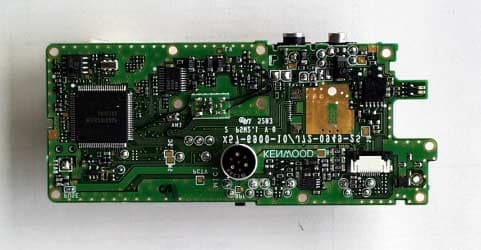
Click to zoom
Application Details
- Equipment Class
- TNF - Licensed Non-Broadcast Transmitter Held to Face
- Date of Grant
- Jun 02, 2004
- Application Purpose
- Original Equipment
- Date of Application
- Jun 02, 2004
- Equipment Note
- UHF/FM HANDHELD TRANSCEIVER
- Frequency Range
- 450.00000000 - 470.00000000
- Company
- Kenwood USA Corporation
- Country
- United States
Documents & Files
Document Text
Text extracted from the exhibit documents filed with the FCC. Open a document above to read the original.
Users Manual
KENWOOD CORPORATION TK-2200 FCC ID:ALH36913120 TK-3200 FCC ID:ALH36923130 INSTRUCTION MANUAL TK-2200/TK-3200 THANK YOU! We are grateful you chose KENWOOD for your land mobile radio applications. We believe this easy-to-use transceiver will provide dependable communications to keep personnel operating at peak efficiency. KENWOOD transceivers incorporate the latest in advanced technology. As a result, we feel strongly that you will be pleased with the quality and features of this product. NOTICES TO THE USER WARNING: ** GOVERNMENT LAW PROHIBITS THE OPERATION OF UNLICENSED RADIO TRANSMITTERS WITHIN THE TERRITORIES UNDER GOVERNMENT CONTROL. ** ILLEGAL OPERATION IS PUNISHABLE BY FINE OR IMPRISONMENT OR BOTH. ** REFER SERVICE TO QUALIFIED TECHNICIANS ONLY. ** DO NOT OPERATE YOUR TRANSCEIVER IN EXPLOSIVE ATMOSPHERES (GASES, DUST, FUMES, ETC.). ** TURN OFF YOUR TRANSCEIVER WHILE TAKING ON FUEL, OR WHILE PARKED IN GASOLINE SERVICE STATIONS. SAFETY: It is important that the operator is aware of and understands hazards common to the operation of any transceiver. WARNING: EXPLOSIVE ATMOSPHERES (GASES, DUST, FUMES, etc.) Turn off your transceiver while taking on fuel, or while parked in gasoline service stations. One or more of the following statements may be applicable: FCC WARNING This equipment generates or uses radio frequency energy. Changes or modifications to this equipment may cause harmful interference unless the modifications are expressly approved in the instruction manual. The user could lose the authority to operate this equipment if an unauthorized change or modification is made. INFORMATION TO THE DIGITAL DEVICE USER REQUIRED BY THE FCC This equipment has been tested and found to comply with the limits for a Class B digital device, pursuant to Part 15 of the FCC Rules. These limits are designed to provide reasonable protection against harmful interference in a residential installation. This equipment generates, uses and can generate radio frequency energy and, if not installed and used in accordance with the instructions, may cause harmful interference to radio communications. However, there is no guarantee that the interference will not occur in a particular installation. If this equipment does cause harmful interference to radio or television reception, which can be determined by turning the equipment off and on, the user is encouraged to try to correct the interference by one or more of the following measures: . Reorient or relocate the receiving antenna. . Increase the separation between the equipment and receiver. . Connect the equipment to an outlet on a circuit different from that to which the receiver is connected. . Consult the dealer for technical assistance. KENWOOD CORPORATION TK-2200 FCC ID:ALH36913120 TK-3200 FCC ID:ALH36923130 ATTENTION (U.S.A. Only): The RBRC Recycle seal found on KENWOOD nickel-metal hydride (Ni-MH) battery packs indicates KENWOOD ’s voluntary participation in an industry program to collect and recycle Ni-MH batteries after their operating life has expired. The RBRC program is analternative to disposing Ni-MH batteries with your regular refuse or in municipal waste streams, which is illegal in some areas. For information on Ni-MH battery recycling in your area, call (toll free) 1-800-8-BATTERY (1-800-822-8837). KENWOOD ’s involvement in this program is part of our commitment to preserve our environment and conserve our natural resources. UNPACKING AND CHECKING EQUIPMENT Note: The following unpacking instructions are for use by your KENWOOD dealer, an authorized KENWOOD service facility, or the factory. Carefully unpack the transceiver. We recommend that you identify the items listed in the following table before discarding the packing material. If any items are missing or have been damaged during shipment, file a claim with the carrier immediately. ** Accessories Quantity Item Part Number TK-2200 TK-3200 Instruction Manual B62 –1791 - *0 1 1 Belt Hook J29 –0712 - 08 1 1 Screw Set N99-2043-05 1 1 Cap B09 – 0680 - *3 1 1 Holder J19 – 5472 - *3 1 1 Battery Assy. W09 –1000- *5 1 1 Charger W08 –0969- *5 1 1 AC Adapter W08 –0970- *5 1 1 Pamphlet B59 –2377- *0 1 1 KENWOOD CORPORATION TK-2200 FCC ID:ALH36913120 TK-3200 FCC ID:ALH36923130 Installing/ Removing the Optional Battery Pack PREPARATION The battery pack is not charged at the factory; charge it before use. CAUTION: ** DO NOT RECHARGE THE BATTERY PACK IF IT IS ALREADY FULLY CHARGED. DOING SO MAY CAUSE THE LIFE OF THE BATTERY PACK TO SHORTEN OR THE BATTERY PACK MAY BE DAMAGED. ** AFTER RECHARGING THE BATTERY PACK, DISCONNECT IT FROM THE CHARGER. IF THE CHARGER POWER IS RESET (TURNED ON AFTER BEING TURNED OFF), RECHARGING WILL START AGAIN AND THE BATTERY PACK WILL BECOME OVERCHARGED. ** DO NOT SHORT THE BATTERY TERMINALS OR DISPOSE OF THE BATTERY BY FIRE. ** NEVER ATTEMPT TO REMOVE THE CASING FROM THE BATTERY PACK. 1 Match the guides of the battery pack with the corresponding grooves on the upper rear of the transceiver, then firmly press the battery pack t 2 To remove the battery pack, lift the safety catch, press the release latch, then pull the battery pack away from the transceiver. KENWOOD CORPORATION TK-2200 FCC ID:ALH36913120 TK-3200 FCC ID:ALH36923130 Installing the Antenna Screw the antenna into the connector on the top of the transceiver by holding the antenna at its base and turning it clockwise until secure. Installing the Belt Clip Using the 2 screws, affix the belt clip in place. KENWOOD CORPORATION TK-2200 FCC ID:ALH36913120 TK-3200 FCC ID:ALH36923130 Installing the Cap over the Speaker/Microphone Jacks If you are not using an optional speaker/ microphone, install the cap over the SP/MIC jacks using the supplied screw. Note: To keep the transceiver water resistant, you must cover the SP/MIC jacks with the cap or the cap or the speaker/microphone connector. Installing the Optional Speaker/ Microphone 1 Insert the speaker / microphone plugs into the SP/MIC jacks. 2 Install the speaker / mic…
Text truncated - open the document above for the full version.
Cover Letter(s)
6/2/2004 Federal Communications Commission EQUIPMENT APPROVAL SERVICES P.O. Box 358315 Pittsburgh, PA 15251-5315 Attention: Authorization and Evaluation Division Reference: FCC ID: ALH36923130 Model: TK-3200 Dear Sir: Pursuant to Sections 0.457(d)(1)(ii) and 0.459 of the Commission's Rules, the Applicant hereby requests confidential treatment of some of the information accompanying this Application, as listed below: Block Diagram Schematic Diagrams Circuit Description Parts List Active Devices Tuning Procedure These materials contain trade secrets and proprietary information not customarily released to the public. The public disclosure of these matters might be harmful to the Applicant and provide unjustified benefits to its competitors. The Applicant understands that pursuant to Rule 0.457 (d)(1)(ii), disclosure of the Application and all accompanying documentation will not be made before the date of Grant for the Application. Sincerely yours, Morton Flom, P. Eng.
External Photos
TK-3200 FCC ID:ALH36923130 Front View Rear View TK-3200 FCC ID:ALH36923130 To p View Bottom View TK-3200 FCC ID:ALH36923130 Right View Left View
ID Label/Location Info
TK-3200 FCC ID:ALH36923130
Internal Photos
TK-3200 FCC ID:ALH36923130 Component Side View Foil Side View
Test Report
© 2004 Celltech Labs Inc. 1 of 22 Test Report S/N: 050704-506ALH Test Date(s): May 17-18, 2004 Test Type: FCC/IC SAR Evaluation Celltech Labs Inc. declares under its sole responsibility that this wireless portable device has demonstrated compliance with the Specific Absorption Rate (SAR) RF exposure requirements specified in FCC 47 CFR §2.1093 and Health Canada’s Safety Code 6. The device was tested in accordance with the measurement standards and procedures specified in FCC OET Bulletin 65, Supplement C (Edition 01-01) and Industry Canada RSS-102 Issue 1 (Provisional) for the Occupational / Controlled Exposure environment. All measurements were performed in accordance with the SAR system manufacturer recommendations. I attest to the accuracy of data. All measurements were performed by me or were made under my supervision and are correct to the best of my knowledge and belief. I assume full responsibility for the completeness of these measurements and vouch for the qualifications of all persons taking them. This test report shall not be reproduced partially, or in full, without the prior written approval of Celltech Labs Inc. The results and statements contained in this report pertain only to the device(s) evaluated. Russell W. Pipe Senior Compliance Technologist Celltech Labs Inc. DECLARATION OF COMPLIANCE SAR RF EXPOSURE EVALUATION Test Lab CELLTECH LABS INC. Testing and Engineering Services 1955 Moss Court Kelowna, B.C. Canada V1Y 9L3 Phone: 250-448-7047 Fax: 250-448-7046 e-mail: [email protected] web site: www.celltechlabs.com Applicant Information KENWOOD USA CORPORATION 3975 John Creek Court, Suite 300 Suwanee, GA 30024 Rule Part(s): FCC 47 CFR §2.1093; IC RSS-102 Issue 1 (Provisional) Test Procedure(s): FCC OET Bulletin 65, Supplement C (Edition 01-01) Device Classification: Licensed Non-Broadcast Transmitter Held to Face (TNF) Device Type: Portable FM UHF PTT Radio Transceiver FCC IDENTIFER: ALH36923130 Model(s): TK-3200 Modulation: FM (UHF) Tx Frequency Range: 450 - 470 MHz Max. RF Output Power Measured: 33.16 dBm - Conducted (460 MHz) Antenna Type(s) Tested: Stubby (P/N: KRA-17M) Stubby (P/N: KRA-23M) Whip (P/N: KRA-27M) Battery Type(s) Tested: NiMH 7.5 V, 1500 mAh (P/N: KNB-29N) NiCd 7.5 V, 1100 mAh (P/N: KNB-30A) Body-Worn Accessories Tested: Plastic Belt-Clip Speaker-Microphone (P/N: KMC-21) Headset Boom-Microphone (P/N: KHS-21) Max. SAR Levels Measured: Face-held: 1.97 W/kg (50% Duty Cycle) Body-worn: 2.75 W/kg (50% Duty Cycle) © 2004 Celltech Labs Inc. 2 of 22 Test Report S/N: 050704-506ALH Test Date(s): May 17-18, 2004 Test Type: FCC/IC SAR Evaluation TABLE OF CONTENTS 1.0INTRODUCTION.....................................................................3 2.0DESCRIPTION OF DUT............................................................ 3 3.0SAR MEASUREMENT SYSTEM................................................ 4 4.0MEASUREMENT SUMMARY..................................................... 5-7 5.0DETAILS OF SAR EVALUATION............................................... 8 6.0EVALUATION PROCEDURES................................................... 8 7.0SYSTEM PERFORMANCE CHECK............................................. 9 8.0SIMULATED EQUIVALENT TISSUES......................................... 10 9.0SAR SAFETY LIMITS............................................................... 10 10.0ROBOT SYSTEM SPECIFICATIONS.......................................... 11 11.0PROBE SPECIFICATION......................................................... 12 12.0PLANAR PHANTOM................................................................ 12 13.0VALIDATION PHANTOM........................................................... 12 14.0DEVICE HOLDER.................................................................... 12 15.0TEST EQUIPMENT LIST........................................................... 13 16.0MEASUREMENT UNCERTAINTIES............................................ 14-15 17.0REFERENCES........................................................................16 APPENDIX A - SAR MEASUREMENT DATA............................................... 17 APPENDIX B - SYSTEM PERFORMANCE CHECK DATA............................ 18 APPENDIX C - SYSTEM VALIDATION PROCEDURES................................. 19 APPENDIX D - PROBE CALIBRATION...................................................... 20 APPENDIX E - MEASURED FLUID DIELECTRIC PARAMETERS................... 21 APPENDIX F - SAR TEST SETUP & DUT PHOTOGRAPHS.......................... 22 © 2004 Celltech Labs Inc. Kenwood USA Corporation FCC ID: ALH36923130 3 of 22 Portable UHF PTT Radio Transceiver (450-470MHz) Test Report S/N: 050704-506ALH Test Date(s): May 17-18, 2004 Test Type: FCC/IC SAR Evaluation This measurement report demonstrates compliance of the Kenwood USA Corporation Model: TK-3200 Portable FM UHF PTT Radio Transceiver FCC ID: ALH36923130 with the SAR (Specific Absorption Rate) RF exposure requirements specified in FCC 47 CFR §2.1093 (see reference [1]), and Health Canada’s Safety Code 6 (see reference [2]) for the Occupational / Controlled Exposure environment. The measurement procedures described in FCC OET Bulletin 65, Supplement C (Edition 01-01) (see reference [3]) and IC RSS-102 Issue 1 (Provisional) (see reference [4]), were employed. A description of the product, operating configuration, detailed summary of the test results, methodology and procedures used in the evaluation, equipment used, and the various provisions of the rules are included within this test report. FCC Rule Part(s) 47 CFR §2.1093 IC Rule Part(s) RSS-102 Issue 1 (Provisional) Test Procedure(s) FCC OET Bulletin 65, Supplement C (Edition 01-01) Device Classification Licensed Non-Broadcast Transmitter Held to Face (TNF) Device Type Portable FM UHF PTT Radio Transceiver FCC IDENTIFIER ALH36923130 Model(s) TK-3200 Serial No. U9 (Identical Prototype) Modulation FM (UHF) Tx Frequency Range 450 - 470 MHz Max. RF Output Power Measured 33.16 dBm Conducted 460 MHz Stubby Length…
Text truncated - open the document above for the full version.
Contact Information
Applicant
Angelina Seay(Regulatory Support Engineer)
Test Firm
M. Flom Associates, Inc.Morton Flom
Technical Specifications
| # | Rule Parts | Frequency Range | Power Output | Emission | Tolerance |
|---|---|---|---|---|---|
| 2 | 90,90.210,95A | 450 MHz - 470 MHz | 2 W | 11K0F3E | 2.5 ppm |
Other Applications from Kenwood USA Corporation
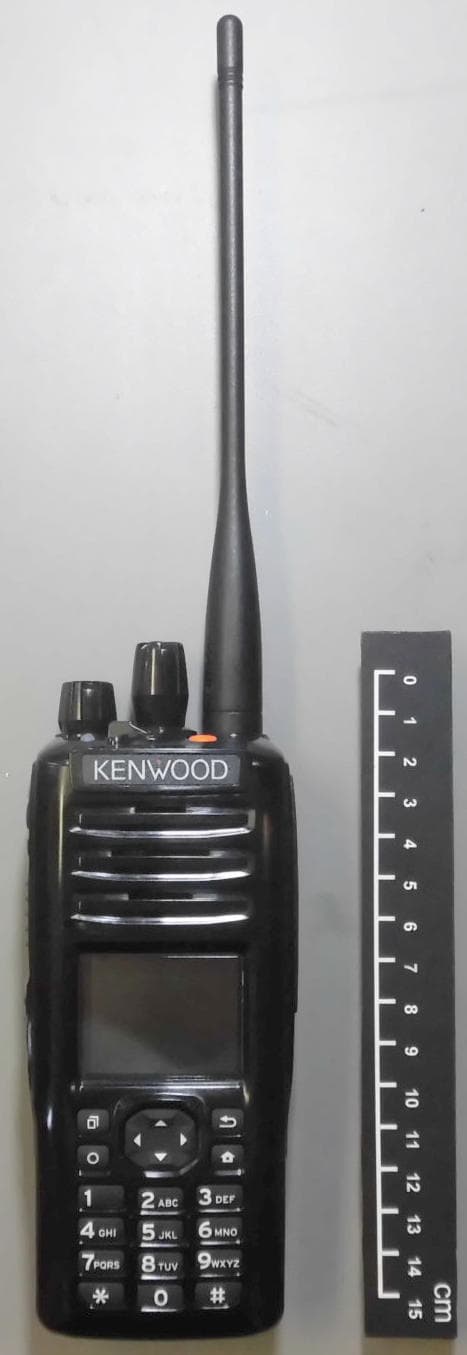
ALH442000
Jul 06, 2014Push to talk radio.
Equipment Class
DXX - Part 15 Low Power Communication Device Transmitter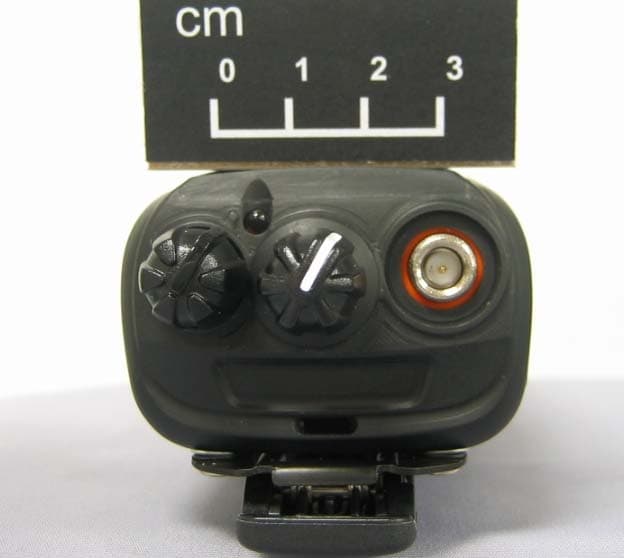
ALH443801
Dec 09, 2013UHF Digital Transceiver
Equipment Class
TNF - Licensed Non-Broadcast Transmitter Held to Face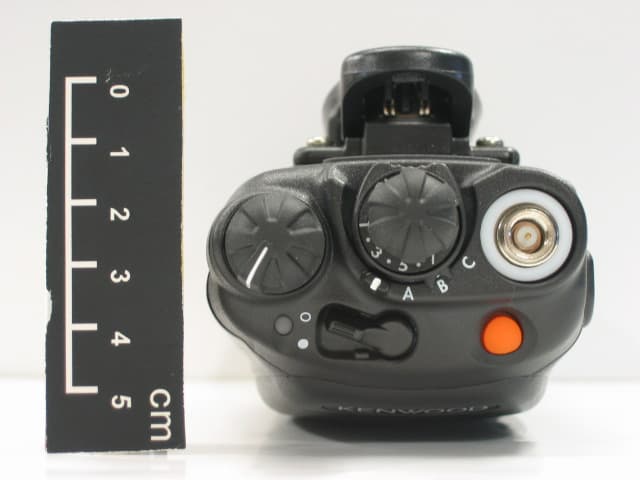
ALH468800
Oct 22, 2013PORTABLE LMR RADIO
Equipment Class
TNF - Licensed Non-Broadcast Transmitter Held to Face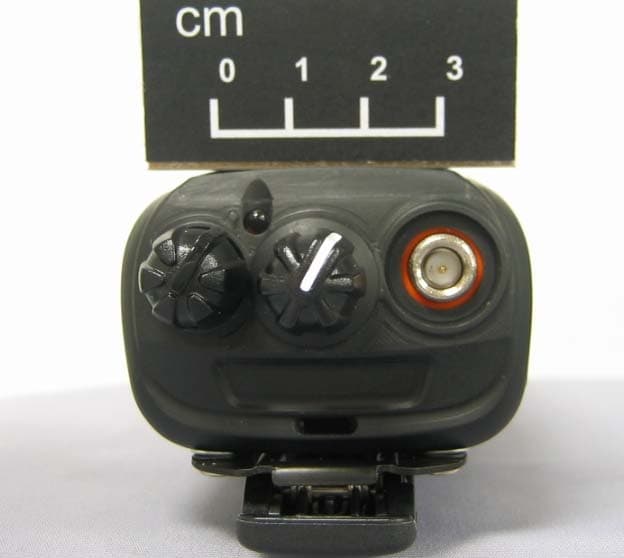
ALH443700
Aug 18, 2013VHF Digital Transceiver Models NX-240-P, NX-240-K, NX-240-M, NX-240-M2, NX-240V-K
Equipment Class
TNF - Licensed Non-Broadcast Transmitter Held to Face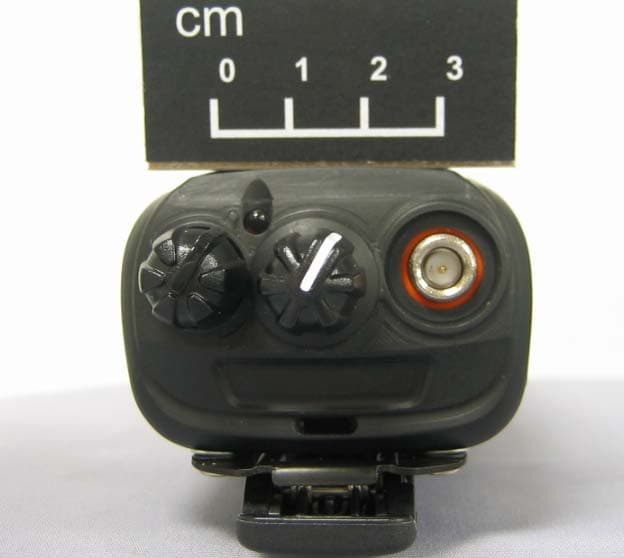
ALH443800
Aug 07, 2013Model NX-340 Digital Transceiver
Equipment Class
TNF - Licensed Non-Broadcast Transmitter Held to Face