ALH437301UHF FM Transceiver
Kenwood USA Corporation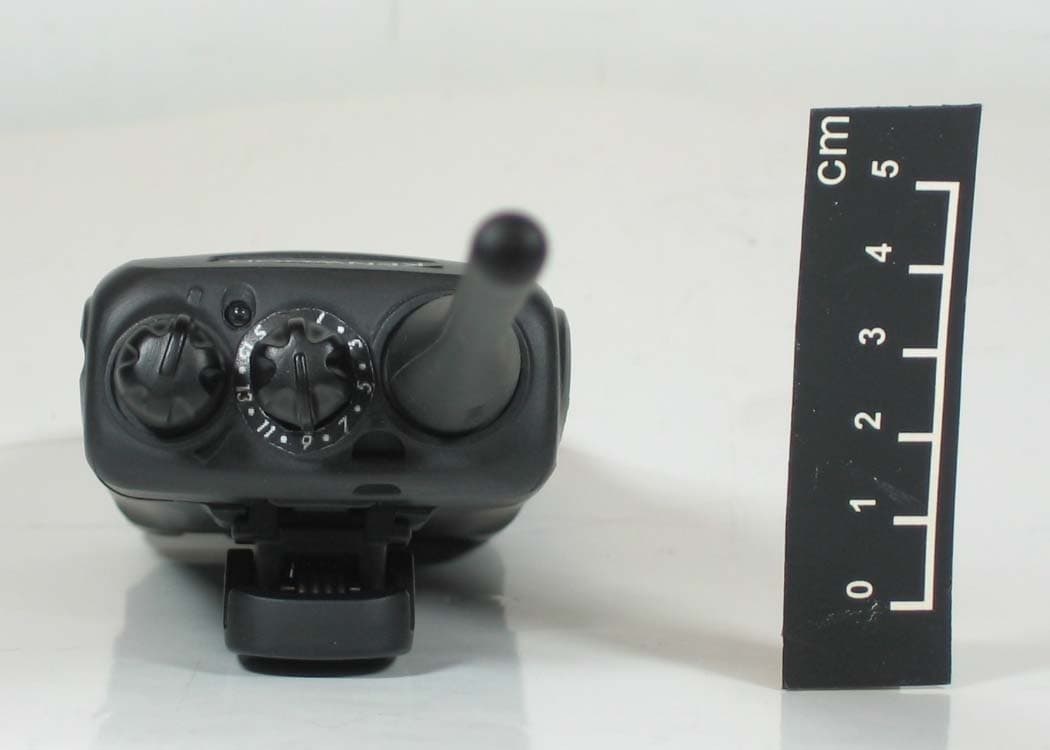
Click to zoom
Application Details
- Equipment Class
- TNF - Licensed Non-Broadcast Transmitter Held to Face
- Date of Grant
- Nov 08, 2010
- Application Purpose
- Original Equipment
- Date of Application
- Nov 08, 2010
- Equipment Note
- UHF FM Transceiver
- Frequency Range
- 406.10000000 - 430.00000000
- Company
- Kenwood USA Corporation
- Country
- United States
Documents & Files
Document Text
Text extracted from the exhibit documents filed with the FCC. Open a document above to read the original.
Users Manual
VHF FM TRANSCEIVER TK-2000 TK-U100 ( V ) UHF FM TRANSCEIVER TK-3000 TK-U100 ( U ) INSTRUCTION MANUAL © B62-2229-00 (K, M, C) 09 08 07 06 05 04 03 02 01 00 Thank You We are grateful you have chosen Kenwood for your land mobile radio applications. noTices To The user ◆ Government law prohibits the operation of unlicensed radio transmitters within the territories under government control. ◆ Illegal operation is punishable by fine and/or imprisonment. ◆ Refer service to qualified technicians only. Safety: It is important that the operator is aware of, and understands, hazards common to the operation of any transceiver. PrecauTions • Do not charge the transceiver and battery pack when they are wet. • Ensure that there are no metallic items located between the transceiver and the battery pack. • Do not use options not specified by Kenwood. • If the die-cast chassis or other transceiver part is damaged, do not touch the damaged parts. • If a headset or headphone is connected to the transceiver, reduce the transceiver volume. Pay attention to the volume level when turning the squelch off. • Do not place the microphone cable around your neck while near machinery that may catch the cable. • Do not place the transceiver on unstable surfaces. • Ensure that the end of the antenna does not touch your eyes. • When the transceiver is used for transmission for many hours, the radiator and chassis will become hot. Do not touch these locations when replacing the battery pack. • Do not immerse the transceiver in water. • Always switch the transceiver power off before installing optional accessories. • For safety reasons, we recommend that the AC adapter (for the battery charger) should be connected to an easily accessible AC socket. Turn the transceiver power off in the following locations: • In explosive atmospheres (inflammable gas, dust particles, metallic powders, grain powders, etc.). • While taking on fuel or while parked at gasoline service stations. • Near explosives or blasting sites. • In aircrafts. (Any use of the transceiver must follow the instructions and regulations provided by the airline crew.) • Where restrictions or warnings are posted regarding the use of radio devices, including but not limited to medical facilities. • Near persons using pacemakers. • Do not disassemble or modify the transceiver for any reason. • Do not place the transceiver on or near airbag equipment while the vehicle is running. When the airbag inflates, the transceiver may be ejected and strike the driver or passengers. • Do not transmit while touching the antenna terminal or if any metallic parts are exposed from the antenna covering. Transmitting at such a time may result in a high-frequency burn. • If an abnormal odor or smoke is detected coming from the transceiver, switch the transceiver power off immediately, remove the battery pack from the transceiver, and contact your Kenwood dealer. • Use of the transceiver while you are driving may be against traffic laws. Please check and observe the vehicle regulations in your area. • Do not expose the transceiver to extremely hot or cold conditions. • Do not carry the battery pack with metal objects, as they may short the battery terminals. • Danger of explosion if the battery is incorrectly replaced; replace only with the same type. • When operating the transceiver in areas where the air is dry, it is easy to build up an electric charge (static electricity). When using a earphone accessory in such conditions, it is possible for the transceiver to send an electric shock through the earphone and to your ear. We recommend you use only a speaker/microphone in these conditions, to avoid electric shocks. Information concerning the battery pack: The battery pack includes flammable objects such as organic solvent. Mishandling may cause the battery to rupture producing flames or extreme heat, deteriorate, or cause other forms of damage to the battery. Please observe the following prohibitive matters. • Do not disassemble or reconstruct battery! The battery pack has a safety function and protection circuit to avoid danger. If they suffer serious damage, the battery may generate heat or smoke, rupture, or burst into flame. • Do not short-circuit the battery! Do not join the + and – terminals using any form of metal (such as a paper clip or wire). Do not carry or store the battery pack in containers holding metal objects (such as wires, chain-necklace or hairpins). If the battery pack is short-circuited, excessive current will flow and the battery may generate heat or smoke, rupture, or burst into flame. It will also cause metal objects to heat up. • Do not incinerate or apply heat to the battery! If the insulator is melted, the gas release vent or safety function is damaged, or the electrolyte is ignited, the battery may generate heat or smoke, rupture, or burst into flame. • Do not leave the battery near fire, stoves, or other heat generators (areas reaching over 80° C/ 176°F)! If the polymer separator is melted due to high temperature, an internal short-circuit may occur in the individual cells and the battery may generate heat or smoke, rupture, or burst into flame. • Do not immerse the battery in water or get it wet by other means! If the battery’s protection circuit is damaged, the battery may charge at extreme current (or voltage) and an abnormal chemical reaction may occur. The battery may generate heat or smoke, rupture, or burst into flame. • Do not charge the battery near fire or under direct sunlight! If the battery’s protection circuit is damaged, the battery may charge at extreme current (or voltage) and an abnormal chemical reaction may occur. The battery may generate heat or smoke, rupture, or burst into flame. • Use only the specified charger and observe charging requirements! If the battery is charged in unspecified conditions (under high temperature over the regulated value, excessive high voltage or current over regulated value, or with a remodeled charger), i…
Text truncated - open the document above for the full version.
Cover Letter(s)
October 8, 2010 Federal Communications Commission Authorization & Evaluation Division 7345 Oakland Mills Road Columbia, Maryland 21046 To Whom It May Concern: This letter will authorize Compliance Testing LLC to act as our Agent in all FCC matters. This appointment is effective until otherwise notified by us. This is to advise that we are in full compliance with the Anti-Drug Abuse Act. The Applicant is not subject to a denial of federal benefits pursuant to Section 5301 of the Anti-Drug Abuse Act of 1988, 21 USC 862, and no party to the application is subject to a denial of federal benefits pursuant to that section. Sincerely,
Cover Letter(s)
October 8 th , 2010 Federal Communications Commission 7435 Oakland Mills Road Columbia, MD 21046 Attn: Reviewing Engineer RE: CONFIDENTIALITY REQUEST FOR MODEL: TK-3000-2, FCC ID: ALH437301. To Whom It May Concern: This letter serves as an official request for permanent confidentiality pursuant to 47 CFR Section 0.459 of the Commission Rules. We have requested that the Block Diagram, Schematic Diagrams, Circuit Description, Parts List, Active Devices and Tuning Procedure required to be submitted with this application be withheld from public review. The documents are company proprietary information that should never get into the possession of our competition. Please contact me if you require any additional information. Sincerely,
External Photos
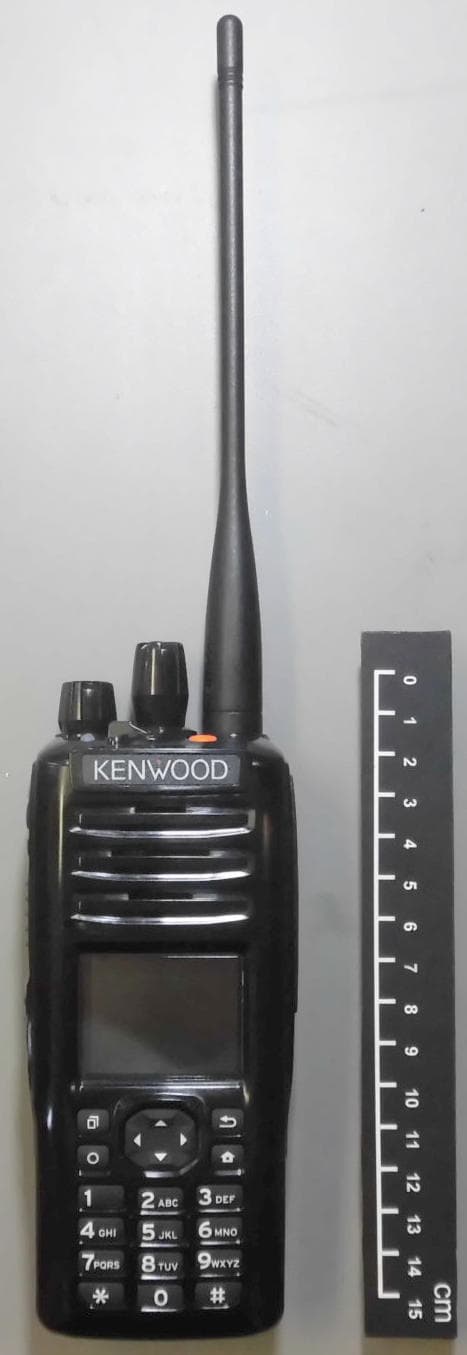
TK-3000-2 FCC ID: ALH437301 Front View TK-3000-2 FCC ID: ALH437301 Rear View TK-3000-2 FCC ID: ALH437301 Left View TK-3000-2 FCC ID: ALH437301 Right View TK-3000-2 FCC ID: ALH437301 Top View Bottom View
ID Label/Location Info
TK-3000-2 FCC ID: ALH437301
Internal Photos
TK-3000-2 FCC ID: ALH437301 TK-3000-2 FCC ID: ALH437301 TK-3000-2 FCC ID: ALH437301
RF Exposure Info
Radio FRequency eneRgy SaFety inFoRmation This Kenwood transceiver has been tested and complies with the standards listed below, in regards to Radio Frequency (RF) energy and electromagnetic energy (EME) generated by the transceiver. • FCC RF exposure limits for Occupational Use Only. RF Exposure limits adopted by the FCC are generally based on recommendations from the National Council on Radiation Protection and Measurements, & the American National Standards Institute. • FCC OET Bulletin 65 Edition 97-01 Supplement C • American National Standards Institute (C95.1 – 1992) • American National Standards Institute (C95.3 – 1992) This Kenwood transceiver generates RF EME while transmitting. RF EME (Radio Frequency Electric & Magnetic Energy) has the potential to cause slight thermal, or heating effects to any part of your body less than the recommended distance from this radio transmitter’s antenna. RF energy exposure is determined primarily by the distance to and the power of the transmitting device. In general, RF exposure is minimized when the lowest possible power is used or transmission time is kept to the minimum required for consistent communications, and the greatest distance possible from the antenna to the body is maintained. The transceiver has been designed for and is classified for Occupational Use Only. Occupational/ controlled exposure limits are applicable to situations in which persons are exposed to RF energy as a consequence of their employment, and such persons have been made aware of the potential for exposure and can exercise control over their exposure. This means you can use the transceiver only if you are aware of the potential hazards of operating a transceiver and are familiar in ways to minimize these hazards. This transceiver is not intended for use by the general public in uncontrolled environments. Uncontrolled environment exposure limits are applicable to situations in which the general public may be exposed to RF energy, or in which the persons who are exposed as a consequence of their employment may not be fully aware of the potential for exposure or cannot exercise control over their exposure. The following list provides you with the information required to ensure that you are aware of RF exposure and of how to operate this transceiver so that the FCC RF exposure limitations are not exceeded. • While transmitting (holding the PTT switch or speaking with VOX enabled), always keep the antenna and the radio at least 3 cm (1 3/16 inches) from your body or face, as well as from any bystanders. A LED on the top of the radio shows red when the transmitter is operating in both PTT and VOX modes. • Do not transmit for more than 50% of the total transceiver use time; transmitting over 50% of the total use time may exceed the limits in accordance to the FCC RF exposure requirements. Nominal transceiver operation is 5% transmission time, 5% reception time, and 90% stand-by time. • Use only the specified antenna for this transceiver; this may be either the antenna provided with the transceiver or another antenna authorized by Kenwood . Use only Kenwood authorized accessories (antennas, battery packs, belt clips, Speaker/ Mics or headsets etc.): When worn on the body, always place the radio in a Kenwood recommended clip or carrying case meant for this product. The use of other than recommended or approved body- worn accessories may result in RF exposure levels which exceed the FCC’s occupational/ controlled environment RF exposure limits. To ensure that your exposure to RF EME is within the FCC limits for occupational use, you must observe and adhere to the above points. Electromagnetic Interference Compatibility Electronic devices are susceptible to electromagnetic interference (EMI) if they are not adequately shielded or designed for electromagnetic compatibility. Because this transceiver generates RF energy, it can cause interference to such equipment. • Turn OFF your transceiver where signs are posted to do so. Hospitals and health care facilities use equipment that is sensitive to electromagnetic radiation. • Turn OFF your transceiver while on board an aircraft when so instructed. Use of the transceiver must be in accordance with airline regulations and/or crew instructions. B59-2546-00
Test Report
p1070006, d1090022 Rev 1.0 Date: September 30, 2010 Applicant: Kenwood USA Corporation Communications Division 3970 Johns Creek Court, Suite 100 Suwanee, GA 30024 Attention of: Joel E. Berger, Research & Development Ph: (678) 474-4722 Fax: (687) 474 -4731 E-mail: [email protected] Equipment: TK-3000-2 FCC ID: ALH437301 FCC Rules: Part 90 Enclosed please find your copy of the Engineering Test Report for which you are subject to the restrictions as listed on the attached summary. Please retain a copy of this report for your archival purposes. This report may not be reproduced, except in full, without written permission from Compliance Testing, LLC. Once a Telecommunication Certification Body (TCB) issues a Grant the Federal Communication Commission (FCC) has 30 days to review the application and request added information. It is your decision whether or not to market the equipment subject to a possible recall before the end of the 30 days. If your equipment is still retained by us, it will be returned to you 30 days after approval is achieved. Our invoice for services has been directed to your Accounts Payable Department. For any additional information please contact us. Sincerely, Compliance Testing p1070006, d1090022 Rev 1.0 Test Report for FCC ID: ALH437301 Model: TK-3000-2 Description: UHF FM Transceiver to Federal Communications Commission Rule Part(s) 90 Date of Report: September 30, 2010 On the Behalf of the Applicant: Kenwood USA Corporation At the Request of: Kenwood USA Corporation Communications Division 3970 Johns Creek Court, Suite 100 Suwanee, GA 30024 Attention of: Joel E. Berger, Research & Development Ph: (678) 474-4722 Fax: (687) 474 -4731 E-mail: [email protected] By Compliance Testing, LLC 3356 N. San Marcos Place, Suite 107 Chandler, Arizona 85225-7176 (866) 311-3268 phone, (480) 926-3598 fax p1070006, d1090022 Rev 1.0 Page 2 of 35 Test Report Revision History Revision Date Revised By Reason for revision 1.0 September 30, 2010 J. Erhard Original Document p1070006, d1090022 Rev 1.0 Page 3 of 35 The Applicant has been cautioned as to the following: 15.21 Information to the User The user’s manual or instruction manual for an intentional radiator shall caution the user that changes or modifications not expressly approved by the party responsible for compliance could void the user's authority to operate the equipment. 15.27(a) Special Accessories Equipment marketed to a consumer must be capable of complying with the necessary regulations in the configuration in which the equipment is marketed. Where special accessories, such as shielded cables and/or special connectors are required to enable an unintentional or intentional radiator to comply with the emission limits in this part, the equipment must be marketed with, i.e. shipped and sold with, those special accessories. However, in lieu of shipping or packaging the special accessories with the unintentional or intentional radiator, the responsible party may employ other methods of ensuring that the special accessories are provided to the consumer, without additional charge. Information detailing any alternative method used to supply the special accessories for a grant of equipment authorization or retained in the verification records, as appropriate. The party responsible for the equipment, as detailed in § 2.909 of this chapter, shall ensure that these special accessories are provided with the equipment. The instruction manual for such devices shall include appropriate instructions on the first page of text concerned with the installation of the device that these special accessories must be used with the device. It is the responsibility of the user to use the needed special accessories supplied with the equipment. p1070006, d1090022 Rev 1.0 Page 4 of 35 Testimonial and Statement of Certification This is to Certify: 1. That the application was prepared either by, or under the direct supervision of, the undersigned. 2. That the technical data supplied with the application was taken under my direction and supervision. 3. That the data was obtained on representative units, randomly selected. 4. That, the facts set forth in the application and accompanying technical data is true and correct to the best of my knowledge and belief. Certifying Engineer: J. Erhard: Engineering Manager p1070006, d1090022 Rev 1.0 Page 5 of 35 Table of Contents Rule Description Page 2.1033(c)(14) Rule Summary 6 . Standard Test Conditions and Engineering Practices 7 2.1033(c) General Information Required 9 Test Results Summary 11 2.1046 Carrier Output Power (Conducted) 12 2.1051 Conducted Spurious Emissions 13 2.1053 Field Strength of Spurious Radiation 17 90.210 Emission Masks (Occupied Bandwidth) 20 90.214 Transient Frequency Behavior 25 2.1047 Audio Low Pass Filter (Voice Input) 28 2.1047 Audio Frequency Response 29 2.1047 Modulation Limiting 30 90.213 Frequency Stability (Temperature Variation) 33 90.213 Frequency Stability (Voltage Variation) 34 Test Equipment Utilized 35 p1070006, d1090022 Rev 1.0 Page 6 of 35 Sub-part 2.1033(c)(14): Test and Measurement Data All tests and measurement data shown were performed in accordance with FCC Rules and Regulations, Volume II; Part 2, Sub-part J, Sections 2.947, 2.1033(c), 2.1041, 2.1046, 2.1047, 2.1079, 2.1051, 2.1053, 2.1055, 2.1057 and the following individual Parts: 90. p1070006, d1090022 Rev 1.0 Page 7 of 35 Standard Test Conditions and Engineering Practices Except as noted herein, the following conditions and procedures were observed during the testing: In accordance with ANSI/C63.4-2009, and unless otherwise indicated in the specific measurement results, the ambient temperature of the actual EUT was maintained within the range of 10 to 40C (50 to 104 F) unless the particular equipment requirements specify testing over a different temperature range. Also, unless otherwise indicated, the humidity levels were in the range of 10% to 90% relative humidity. Environmental Conditions Temperature…
Text truncated - open the document above for the full version.
Test Report
Applicant: Kenwood USA Corporation FCC ID: ALH437301 Model(s): TK-3000-2 DUT Type: Portable FM UHF PTT Radio Transceiver Transmit Frequency Range: 406.1 - 430.0 MHz 2010 Celltech Labs Inc. This document is not to be reproduced in whole or in part without the prior written permission of Celltech Labs Inc. Page 1 of 49 Date(s) of Evaluation September 28-29, 2010 Test Report Serial No. 092410ALH-T1051-S90U Test Report Revision No. Rev. 1.0 (Initial Release) Test Report Issue Date October 05, 2010 Description of Test(s) Specific Absorption Rate RF Exposure Category Occupational (Controlled) Test Lab Certificate No. 2470.01 DECLARATION OF COMPLIANCE - SAR RF EXPOSURE EVALUATION (FCC) Name CELLTECH LABS INC. Test Lab Information Address 21-364 Lougheed Road, Kelowna, B.C. V1X 7R8 Canada Test Lab Accreditation(s) A2LA ISO/IEC 17025:2005 (A2LA Test Lab Certificate No. 2470.01) Name KENWOOD USA CORPORATION Applicant Information Address 3970 Johns Creek Court, Suite 100, Suwanee, GA 30024 United States FCC 47 CFR §2.1093 OET Bulletin 65, Supplement C KDB 447498 D01v04 IEEE1528-2003 Standards & Procedures Applied IEC62209-1:2005 Device Classification(s) FCC Licensed Non-Broadcast Transmitter Held to Face (TNF) - FCC Part 90 Device RF Exposure Category FCC Occupational / Controlled Application Type(s) FCC TCB Certification Device Identifier(s) FCC ID: ALH437301 Device Model(s) TK-3000-2 Date of Sample Receipt September 24, 2010 Date(s) of Evaluations September 28-29, 2010 Test Sample Serial No. No. 00000026 (Identical Prototype) Hardware Revision No. Revision 0 Firmware Revision No. Revision 0 Device Description Portable FM UHF Push-To-Talk (PTT) Radio Transceiver Transmit Frequency Range(s) 406.1 - 430.0 MHz (UHF Band) Co-located Transmitter(s) None Manufacturer’s Rated Output Power 4 Watts (Conducted) Manufacturer’s Tolerance Spec. +/- 0 dB 36.0 dBm 4.0 Watts 406.1 MHz Average Conducted 36.0 dBm 4.0 Watts 418.0 MHz Average Conducted RF Output Power Level(s) Tested 36.0 dBm 4.0 Watts 430.0 MHz Average Conducted Antenna Type(s) Tested Detachable Whip P/N: T90-1097-05 Nc = 3 Length: 171 mm Battery Type(s) Tested Lithium-ion 7.4 V 1130 mAh P/N: KNB-63L Body-worn Accessories Tested Metal Belt-Clip P/N: J29-0751-05 Audio Accessories Tested Speaker-Microphone P/N: KMC-45 Face-held 2.90 W/kg 1g50% PTT duty cycle Occupational / Controlled Exp. Max. SAR Level(s) Evaluated Body-worn 3.67 W/kg 1g50% PTT duty cycle Occupational / Controlled Exp. FCC/IC Spatial Peak SAR Limit Head/Body 8.0 W/kg 1g50% PTT duty cycle Occupational / Controlled Exp. Celltech Labs Inc. declares under its sole responsibility that this wireless portable device has demonstrated compliance with the Specific Absorption Rate (SAR) RF exposure requirements specified in FCC 47 CFR §2.1093 for the Occupational / Controlled Exposure environment. The device was tested in accordance with the measurement procedures specified in FCC OET Bulletin 65, Supplement C (Edition 01-01), IEEE Standard 1528-2003 and IEC International Standard 62209-1:2005. All measurements were performed in accordance with the SAR system manufacturer recommendations. I attest to the accurac y of data. All measurements were performed by me or were made under my supervision and are c orrect to the best of my knowledge and belief. I assume full responsibility for the completeness of these measurements and vouch for the qualifications of all persons taking them. This test report shall not be reproduced partially, or in full, without the prior written approval of Celltech Labs Inc. The results and statements contained in this report pertain only to the device(s) evaluated. Test Report Approved BySean JohnstonLab Manager Celltech Labs Inc. Applicant: Kenwood USA Corporation FCC ID: ALH437301 Model(s): TK-3000-2 DUT Type: Portable FM UHF PTT Radio Transceiver Transmit Frequency Range: 406.1 - 430.0 MHz 2010 Celltech Labs Inc. This document is not to be reproduced in whole or in part without the prior written permission of Celltech Labs Inc. Page 2 of 49 Date(s) of Evaluation September 28-29, 2010 Test Report Serial No. 092410ALH-T1051-S90U Test Report Revision No. Rev. 1.0 (Initial Release) Test Report Issue Date October 05, 2010 Description of Test(s) Specific Absorption Rate RF Exposure Category Occupational (Controlled) Test Lab Certificate No. 2470.01 TABLE OF CONTENTS 1.0 INTRODUCTION __________________________________________________________________ 4 2.0 SAR MEASUREMENT SYSTEM ______________________________________________________ 4 3.0 RF CONDUCTED OUTPUT POWER MEASUREMENTS ___________________________________ 4 4.0 FCC POWER THRESHOLDS FOR PTT DEVICES (f< 0.5 GHz) _____________________________ 5 5.0 SAR PROBE CALIBRATION & MEASUREMENT FREQUENCIES ___________________________ 5 6.0 NO. OF TEST CHANNELS (N C )_______________________________________________________ 5 7.0 SAR MEASUREMENT SUMMARY ____________________________________________________ 6 8.0 FLUID DIELECTRIC PARAMETERS___________________________________________________ 6 9.0 DETAILS OF SAR EVALUATION _____________________________________________________ 7 10.0 SAR EVALUATION PROCEDURES__________________________________________________ 7 11.0 SYSTEM PERFORMANCE CHECK __________________________________________________ 8 12.0 SIMULATED EQUIVALENT TISSUES ________________________________________________ 9 13.0 SAR LIMITS _____________________________________________________________________ 9 14.0 ROBOT SYSTEM SPECIFICATIONS ________________________________________________ 10 15.0 PROBE SPECIFICATION (ET3DV6) _________________________________________________ 11 16.0 BARSKI PLANAR PHANTOM______________________________________________________ 11 17.0 DEVICE HOLDER _______________________________________________________________ 11 18.0 TEST EQUIPMENT LIST __________________________________________________________ 12 19.0 MEASUREMENT UNCERTAINTIES _________________________________________________ 13 20.0 REFERENCES ________…
Text truncated - open the document above for the full version.
Test Setup Photos
Page 1 of 2 Test Setup Photos: Kenwood: TK-3000-2 FCC ID: ALH437301 Conducted #1 Conducted #2 Page 2 of 2 Radiated #1 Radiated #2
Contact Information
Applicant
Angelina Seay(Regulatory Support Engineer)
Technical Specifications
| # | Rule Parts | Frequency Range | Power Output | Emission | Tolerance |
|---|---|---|---|---|---|
| 2 | 9 | 406.1 MHz - 430 MHz | 4 W | 11K0F3E | 2.5 ppm |
Other Applications from Kenwood USA Corporation
ALH442000
Jul 06, 2014Push to talk radio.
Equipment Class
DXX - Part 15 Low Power Communication Device Transmitter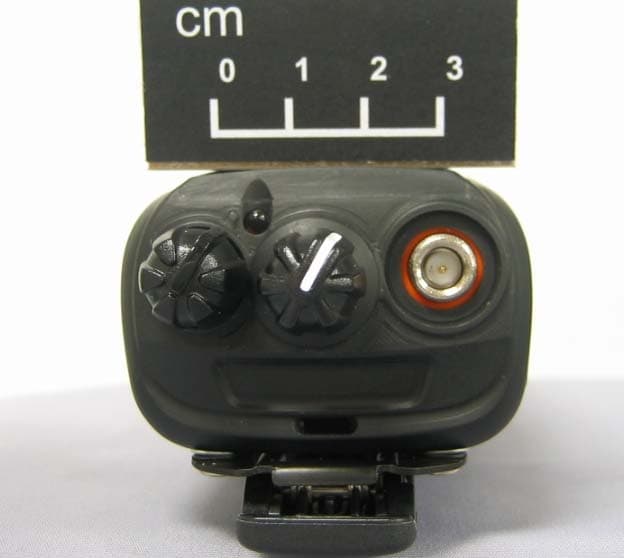
ALH443801
Dec 09, 2013UHF Digital Transceiver
Equipment Class
TNF - Licensed Non-Broadcast Transmitter Held to Face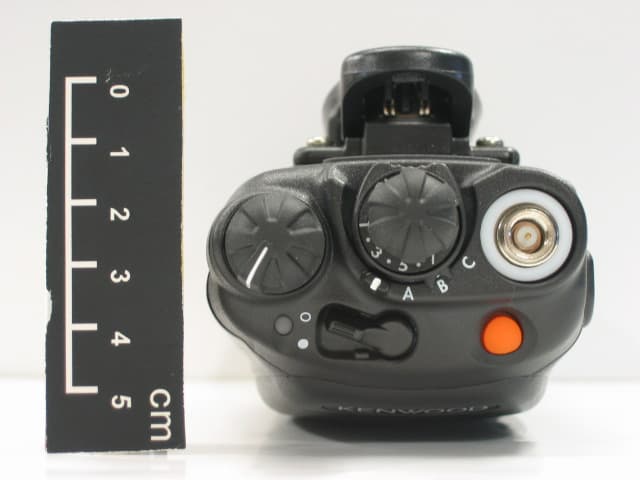
ALH468800
Oct 22, 2013PORTABLE LMR RADIO
Equipment Class
TNF - Licensed Non-Broadcast Transmitter Held to Face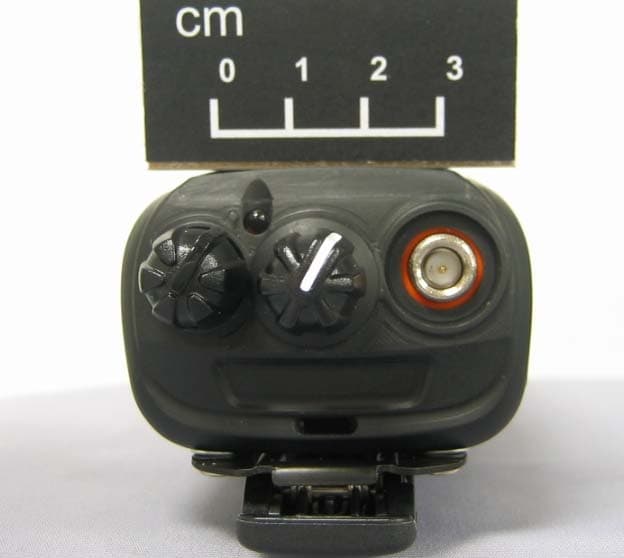
ALH443700
Aug 18, 2013VHF Digital Transceiver Models NX-240-P, NX-240-K, NX-240-M, NX-240-M2, NX-240V-K
Equipment Class
TNF - Licensed Non-Broadcast Transmitter Held to Face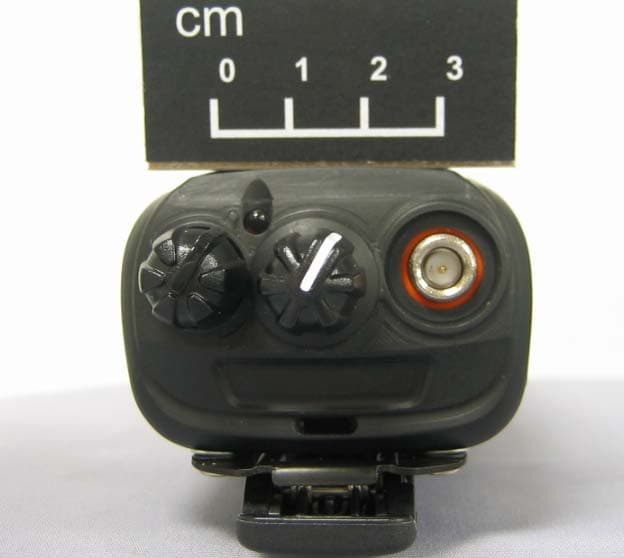
ALH443800
Aug 07, 2013Model NX-340 Digital Transceiver
Equipment Class
TNF - Licensed Non-Broadcast Transmitter Held to Face