ANO20020100MTNIBM Integrated Bluetooth with 56K Modem
International Business Machines Corporation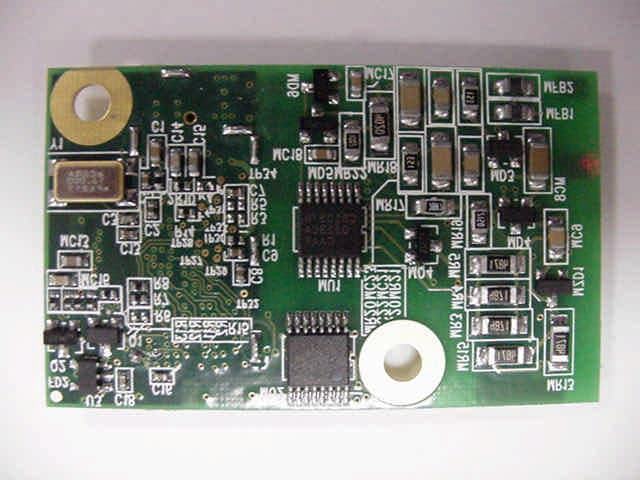
Click to zoom
Application Details
- Equipment Class
- DSS - Part 15 Spread Spectrum Transmitter
- Date of Grant
- Jan 20, 2003
- Application Purpose
- Original Equipment
- Date of Application
- Jan 20, 2003
- Equipment Note
- IBM Integrated Bluetooth with 56K Modem
- Frequency Range
- 2402.00000000 - 2480.00000000
- Country
- United States
Documents & Files
Document Text
Text extracted from the exhibit documents filed with the FCC. Open a document above to read the original.
Users Manual
FCC Test Report FCC ID: ANO20020100MTN Document Number: FCC 19-0207-0 Prepared by T. Murota User’s Manual The descriptions marked in yellow are the related portion for the applying LMA transmitter. Part Number: 92P1285 Wireless Regulatory Notice for ThinkPad R40 Series This notice is a supplementary document of the “ThinkPad ® R40 Series Service and Troubleshooting Guide.” Please read this document before you use the ThinkPad R40 Series computer. The ThinkPad R40 Series computer complies with the radio frequency and safety standards of any country or region in which it has been approved for wireless use. You are requested to install and use your ThinkPad computer in strict accordance with the instructions as described hereafter. Avis relatif aux appareils sans fil pour les ThinkPad R40 Series Le présent document complète le manuel “ThinkPad ® R40 Series - Guide de maintenance et d’identification des incidents”. L’ordinateur ThinkPad R40 Series est conforme aux normes de radiofréquence et de sécurité en vigueur dans les pays ou régions où son utilisation sans fil a été acceptée. L’ordinateur doit être installé et utilisé conformément aux instructions fournies ci-après. Avant d’utiliser votre ordinateur ThinkPad R40, veuillez lire ce document. Hinweis zu drahtlosen Einheiten für den ThinkPad R40 Series Dieser Hinweis ergänzt die Informationen im Handbuch “ThinkPad ® R40 - Service und Fehlerbehebung”. Der ThinkPad R40 erfüllt die Funkfrequenz- und Sicherheitsstandards der Länder und Regionen, in denen er für die Verwendung als drahtlose Einheit zugelassen ist. Der ThinkPad R40 muss exakt wie nachfolgend beschrieben installiert und verwendet werden. Lesen Sie unbedingt die entsprechenden Informationen in diesem Dokument, bevor Sie den ThinkPad R40 verwenden. © Copyright IBM Corp. 20031 Aviso de regulación de conexiones inalámbricas para ThinkPad R40 Series Este aviso es un documento adicional del manual“ThinkPad ® R40 Series Guía de servicio y de resolución de problemas”. El sistema ThinkPad R40 Series satisface los estándares de seguridad y de frecuencia de radio de cualquier paísoregión en el que se haya aprobado su utilización para conexiones inalámbricas. Se solicita al usuario que instale y utilice el sistema ThinkPad siguiendo estrictamente las instrucciones que se describen a continuación. Antes de utilizar el sistema ThinkPad R40, lea este documento. Informazioni importanti sulle norme per la tecnologia senza fili per ThinkPad R40 Series Queste informazioni importanti costituiscono un documento integrativo della Guida all’assistenza e alla risoluzione dei problemi per“ThinkPad ® R40 Series.” L’elaboratore ThinkPad R40èconforme agli standard di sicurezza e di frequenza radio di ciascun paese in cuièstato approvato per l’utilizzo della tecnologia senza fili.È, quindi, necessario installare ed utilizzare l’elaboratore ThinkPad in stretta osservanza alle istruzioni di seguito riportate. Prima di utilizzare l’elaboratore ThinkPad R40, leggere il presente documento. ThinkPad R40 Series- tietokoneen langattomien yhteyksien käyttöäkoskeva huomautus Tämäasiakirja on“ThinkPad ® R40 Series -tietokone, Käyttöja vianmääritys” -julkaisun lisäosa. ThinkPad R40 Series -tietokone on sen maan tai alueen radiotaajuus- ja turvallisuusstandardien mukainen, jossa se on hyväksytty langattomien yhteyksien käyttöävarten. Käyttäjän tulee asentaa ThinkPad-tietokone ja käyttääsitäjäljempänäesitettyjen ohjeiden mukaisesti. Ennen kuin aloitat ThinkPad R40 -tietokoneen käytön, lue tämäasiakirja. Kennisgeving met betrekking tot draadloze communicatie voor ThinkPad R40 Series Deze kennisgeving is een aanvulling op de publicatie“ThinkPad ® R40 Series Service en probleemoplossing.” De ThinkPad R40 Series voldoet aan de standaards voor radiofrequenties en veiligheid in elk land of gebied waarin deze computer is goedgekeurd voor draadloos gebruik. U wordt verzocht uw ThinkPad-computer te installeren en 2 te gebruiken in strikte overeenstemming met de instructies hierna beschreven. Lees dit document voordat u de ThinkPad R40-computer gaat gebruiken. Bemækning vedr. den trådløse facilitet i ThinkPad R40 Serie-computeren Denne bemærkning er et supplement til bogen“ThinkPad ® R40 Serie Guide til service og fejlfinding”. ThinkPad R40 Serie-computeren overholder de radiofrekvens- og sikkerhedsstandarder i de lande og områder, hvor den er godkendt til trådløs brug. Du skal installere og bruge ThinkPad-computeren i nøje overensstemmelse med instruktionerne i de følgende afsnit. Læs dette dokument, før du bruger ThinkPad R40-computeren. Merknad om regulering av trådløs kommunikasjon for ThinkPad R40 Series Denne merknaden kommer i tillegg til opplysningene i“ThinkPad ® R40 Series Håndbok for service og problemløsing” ThinkPad R40 Series-maskinen er i overensstemmelse med standardene for radiofrekvenssignaler og sikkerhet i alle land eller regioner der den er godkjent for trådløbruk. Du blir bedt omåinstallere og bruke ThinkPad-maskinen i henhold til instruksjonene som følger. Du målese dette dokumentet før du bruker ThinkPad R40-maskinen. Information om radiokommunikations- och säkerhetsnormer för ThinkPad R40 Series Det här dokumentet kompletterar informationen i handboken“ThinkPad ® R40 Series Service och felsökning”. ThinkPad R40 Series uppfyller radiokommunikations- och säkerhetsnormerna ideländer och regioner där datorn har godkänts förtrådlös användning. Användarna måste installera och använda sina ThinkPad-datorer i enlighet med respektive lands bestämmelser om radiokommunikation. Läs det här dokumentet innan du använder ThinkPad R40-datorn. Aviso Regulador de Dispositivos Sem Fio para ThinkPad R40 Series Este avisoéum documento complementar do“Guia de Serviços e Resolução de Problemas do ThinkPad ® R40 Series”. O computador ThinkPad R40 Series estáde acordo com a freqüência de radio e com os padrões de segurança de qualquer paísouregião em que seu uso sem fio tenha sido aprovado. Recomendamos que vocêinstale e utilize se…
Text truncated - open the document above for the full version.
Attestation Statements
FCC Test Report FCC ID: ANO20020100MTN Document Number: FCC 19-0207-0 Prepared by T. Murota 1/2 Bluetooth Attestation Statements according FCC 15.247 and RSS-210 6.2.2(o) 1. Equally average use of frequencies in data mode(15.247(a), 6.2.2(o)), and behaviour for short transmissions (15.247(g), 6.2.2(o)): The generation of the hopping sequence in connection mode depends essentially on two input values: 1. LAP/UAP of the master of the connection 2. Internal master clock The LAP (lower address part) are the 24 LSB’s of the 48 BD_ADDRESS. The BD_ADDRESS is an unambiguous number of every Bluetooth unit. The UAP (upper address part) are the 24 MSB’s of the 48 BD_ADDRESS. The internal clock of a Bluetooth unit is derived from a free running clock which is never adjusted and is never turned off. For synchronization with other units only offset are used. It has no relation to the time of the day. Its resolution is at least half the RX/TX slot length of 312.5 μs. The clock has a cycle of about one day (23h30). In most case it is implemented as 28 bit counter. For the deriving of the hopping sequence the entire LAP (24 bits), 4 LSB’s (4 bits) (Input 1) and the 27 MSB’s of the clock (Input 2) are used. With this input values different mathematical procedures (permutations, additions, XOR-operations) are performed to generate the sequence. This will be done at the beginning of every new transmission. Regarding short transmissions the Bluetooth system has the following behavior: The first connection between the two devices is established, a hopping sequence was generated. For transmitting the wanted data the complete hopping sequence was not used. The connection ended. The second connection will be established. A new hopping sequence is generated. Due to the fact that the Bluetooth clock has a different value, because the period between the two transmission is longer (and it cannot be shorter) than the minimum resolution of the clock (312.5 μs). The hopping sequence will always differ from the first one. 2. Pseudo random Frequency Hopping Sequence (15.247(a), 6.2.2(o)) The following is an example of a 79 pseudo random hopping sequence in data mode: 40, 21, 44, 23, 42, 53, 46, 55, 48, 33, 52, 35, 50, 65, 54, 67, 56, 37, 60, 39, 58, 69, 62, 71, 64, 25, 68, 27, 66, 57, 70, 59, 72, 29, 76, 31, 74, 61, 78, 63, 01, 41, 05, 43, 03, 73, 07, 75, 09, 45, 13, 47, 11, 77, 15, 00, 64, 49, 66, 53, 68, 02, 70, 06, 01, 51, 03, 55, 05, 04 3. Derivation and examples for a hopping sequence in hybrid mode (15.247(g), 6.2.2(o)) For the generation of the inquiry and page hop sequences the same procedures as described for the data mode are used (see the item 1), but this time with different input vectors: · For the inquiry hop sequence, a predefined fixed address is always used. This results in the same 32 frequencies used by all devices doing an inquiry but every time with a different start frequency and phase in this sequence. · For the page hop sequence, the device address of the paged unit is used as input vector. This results in the use of a subset of 32 frequencies which is specific for that initial state of the connection establishment between the two units. A page to different devices would result in a different subset of 32 frequencies. So it is ensured that also in hybrid mode the frequency use equally averaged. FCC Test Report FCC ID: ANO20020100MTN Document Number: FCC 19-0207-0 Prepared by T. Murota 2/2 Example of a hopping sequence in inquiry mode: 48, 50, 09, 13, 52, 54,41, 45, 56, 58, 11, 15, 60, 62, 43, 47, 00, 02, 64, 68, 04, 06, 17, 21, 08, 10, 66, 70, 12, 14, 19, 23 Example of a hopping sequence in paging mode: 08, 57, 68, 70, 51, 02, 42, 40, 04, 61, 44, 46, 63, 14, 50, 48, 16, 65, 52, 54, 67, 18, 58, 56, 20, 53, 60, 62, 55, 06, 66, 64 4. Receiver input bandwidth and synchronization in hybrid mode (15.247(a)/(g), 6.2.2(o)): The receiver input bandwidth is the same as in the data mode (1 MHz). When two Bluetooth devices establish contact for the first time, one device sends an inquiry access code, the other device is scanning for this inquiry access code. If two devices have been connected previously and want to start a new transmission, a similar procedure takes place. The only difference is, instead of the inquiry access code, an special access code, derived from the BD_ADDRESS of the paged device will be, will be sent by the master of this connection. Due to the fact that both units have been connected before (in the inquiry procedure) the paging unit has timing and frequency information about the page scan of the paged unit. For this reason the time to establish the connection is reduced considerable. 5. Co-ordination of the hopping sequence in data mode to avoid simultaneous occupancy by multiple transmitters (15.247(h), 6.2.2(o)): Bluetooth units which want to communicate with other units must be organised in a structure called PICONET. This PICONET consist of maximum 8 Bluetooth units. One unit is the master the other seven are the slaves. The master co-ordinates frequency occupation in this piconet for all units. As the master hop sequence is derived from it’s BD address which is unique for every Bluetooth device, additional masters intending to establish new PICONET will always use different hop sequences.
Cover Letter(s)
Prepared by T. Murota 2/2 Outline of Submission 1. Objective This is a Certification Compliance Report for FCC Part 15 subpart C, DTS device. - The applying equipment: IBM Integrated Bluetooth with 56K Modem - FCC ID : ANO20020100MTN 2. Product Description The applying modular transmitter device is an OEM Bluetooth card supplied by Actiontec Electronics, Inc. The modular device complies with the Bluetooth standard Class II, 3mW specification. And the modular also has a modem interface. i.e. it is a combo card of Bluetooth with modem function. The certification or DoC for the modem conformance is performed by Actiontec. 3. Installation of the applying transmitter One host device (IBM laptop PC, ThinkPad R40 Series) is specified in this application. And an unique electrical connector (so called BIOS Lock) is employed for the host to satisfy the FCC rule Part 15.203 or RSS-210 Ë5.5. However, the applying modular transmitter is preinstalled by IBM to the host (R40 Series), and there is no user installable option card supplied for this host. Therefore no installation instruction is provided for user’s manual. As for a broken card of the applying module, IBM or a responsible party will provide a spare part with a replacement instruction. The BIOS Lock function is effective for the user’s maintenance.
Cover Letter(s)
FCC Test Report FCC ID: ANO20020100MTN Document Number: FCC 19-0207-0 Prepared by T. Murota 1/1 Limited Modular Transmitter Approval Qualification 1. The modular transmitter has its own RF shielding cover on the back side, which shields over the VCO, SAW and etc. 2. The modular transmitter works with its own data buffering and modulation circuits. No input terminal from an external source to control the modulation, RF or data processing is implemented on the board. 3. The modular transmitter has its own voltage regulator, and local reference oscillator. 4. The modular transmitter complies with the antenna requirements of Section 15.203 and 204(c) with an unique control logic. Please refer the separated exhibit “Confidential_BIOS_Lock.pdf”. Each antenna system used for the applying module shall be approved with the module. This application includes a built_in type antenna of IBM laptop computer ThinkPad R40 Series. The Class II permissive change submissions are being in plan for each additional antenna system. 5. The modular transmitter was tested in a stand-alone configuration with the built_in antenna of the subjected host device connected to the proper AC adapter. It complied with the AC power line conducted requirements found in Section 15.207. 6. The modular transmitter is labeled with its own FCC ID number. Also the host device in which the modular is plugged has the proper FCC ID indication. Please refer the separated exhibit for the antenna of the host device (R40_Antenna_Info.pdf). 7. The modular transmitter complies with the applied specific rule and operating requirements applicable to the transmitter, and the adequate instructions along with the module to be explained to users are provided with the user’s manual. 8. The modular transmitter complies with the applicable RF exposure requirements. The proper RF exposure evaluations were performed with the host device in line with the FCC Rule , Section 2.1093 in making a reference to the footnote 14 of the Section 3 in Supplement C of OET Bulletin 65.
Cover Letter(s)
IBM Japan Ltd. 1623-14, Shimotsuruma, Yamato Kanagawa 242-8502, Japan November 18, 2002 PCTEST Engineering Laboratory, Inc. 6660-B Dobbin Road Columbia, MD 21045 Subject: Request for FCC Certification of Part 15, Subpart C Dear sir : Please find enclosed an IBM’s application document for the FCC Part 15, Subpart C certification. - FCC ID : ANO20020100MTN - Applying equipment name : IBM integrated Bluetooth with 56K Modem -Device type : 2400M-2483.5MHz DTS device (Bluetooth LMA transmitter) The applying product is an antenna separated type, standard Bluetooth modular transmitter device plugged into a specific laptop PC (IBM ThinkPad R40 Series). If any further information is required concerning this application, please contact us. Sincerely, Akihisa Sakurai Manager, EMC Engineering Yamato Laboratory, IBM Japan Ltd.
Cover Letter(s)
IBM Japan Ltd. 1623-14, Shimotsuruma, Yamato Kanagawa 242-8502, Japan November 18, 2002 PCTEST Engineering Laboratory, Inc. 6660-B Dobbin Road Columbia, MD 21045 Subject: Confidentiality Request for FCC Certification of Part 15, Subpart C Dear sir : Please find enclosed an IBM’s application for the FCC Part 15, Subpart C certification : - FCC ID : ANO20020100MTN - Applying equipment name: IBM integrated Bluetooth with 56K Modem -Device type : 2400M-2483.5MHz DTS device (Bluetooth LMA transmitter) Pursuant to 47 CFR section 0.457(d) and 0.459, we hereby request confidentiality for the schematics, detailed block diagrams, detailed theories of operation, and parts list. The subjected files are as follows. - Confidential_Schematic_Diagrams.pdf - Confidential_Block_Diagrams.pdf - Confidential_Circuitry_Description.pdf - Confidential_Parts_List.pdf - Confidential_BIOS_Lock.pdf (Detail technical circuitry description for an unique electrical coupling method between the applying LMA device and specified antennas) Sincerely, Akihisa Sakurai Manager, EMC Engineering Yamato Laboratory, IBM Japan Ltd.
Cover Letter(s)
FCC ID: ANO20020100MTN Document Number: FCC-19-0207-1 Prepared by T. Murota. 1/8 IBM Japan Ltd. 1623-14, Shimotsuruma, Yamato-shi Kanagawa-ken 242-8502, Japan To whom this may concern January 15, 2003 TCB Requested Information FCC ID : ANO20020100MTN Applicant : International Business Machines Corporation Correspondence Reference Number : 230114e.ANO 731 Confirmation Number : TC1375 Original Requested Date : January 15, 2003 Subject 1) Please confirm all transmitters (FCC IDs) this device will be collocated or installed. Please clarify whether all these transmitters can transmit simultaneously ? Answer 1) The application does not refer any collocated transmitter. But according to the acceptance of the FCC, a low power Bluetooth transmitter like this application is allowed collocation with a domain WLAN transmitter, when the RF Safety evaluation for the WLAN device meets the requirement. Please refer the Attachment of this exhibit. Currently the following three WLAN transmitters are being inspected including the collocation with the applying Bluetooth transmitter on the same host system (IBM ThinkPad R40 Series). - FCC ID: ANO20020300D3L - FCC ID: ANO20020200BRX - FCC ID: ANOU58H004 Subject 2) Please address the references in the users manual (pages 7, 14) regarding operation in the 5.2GHz Band (5.15 - 5.25 GHz). Please send test data, if available, or revise users manual accordingly. Answer 2) Please see the Answer 1). We already submitted the RF Safety evaluation for the application of the domain transmitter(ANO20020300D3L). Subject 3) Please clarify the FCC IDs that are listed in the users manual (pages 6, 7, 8, 10). Please confirm if these FCC IDs are valid for this device. Please revised accordingly. Answer 3) Please see the Answer 1). The all FCC IDs including this application are being certified. Subject 4) The 20dB BW plots shown on pages 35-37 are labeled as "Band-edge". Please clarify. Answer 4) The plots are conducted traces required by the FCC Notice DA 00-705. So the page 36 must not be necessary but is just a reference. We also attach the radiated band-edge plots in this exhibit for a sure. Sincerely, January 15, 2003 Toshiya Murota, Staff Engineer, EMC Engineering, Yamato Laboratory, IBM Japan Ltd. FCC ID: ANO20020100MTN Document Number: FCC-19-0207-1 Prepared by T. Murota. 2/8 Attachment Reply comments from FCC/OET/Lab/EAB, 3 Sep. 2002. General comments: 1) TCBs can do BIOS lock LMAs. The BIOS lock grant condition must be on the grants. EAB will circulate a processing info sheet for TCBs. 2) Only 5mW PCMCIA options were shown by IBM. Other powers may have separate considerations. >>> "George Kavelak" <[email protected]> 08/12/02 09:36AM >>> >>> Re: Confirmation of August 8, 2002 Meeting Results >>> Thank you for taking the time to meet with us to answer our questions regarding TCB authorization capability for LMA and co-located transmitters. Projected quantities of IBM application submissions will necessitate our ability to use of TCBs for expedient application processing. This note is to document our understanding of the results of our meeting with you on August 8, 2002 at the FCC Columbia Lab. Please confirm or correct any misunderstanding. Attendees: Joe Dichoso, FCC, OET Laboratory Division, Equipment Authorization Branch Tim Harrington, FCC, OET Laboratory Division, Equipment Authorization Branch Toshiya Murota, IBM-Japan George Kavelak, IBM We presented the four "Discussion Items" in the attached file: (See attached file: FCC-Aug2002.pdf) Discussion Item 1: This laptop configuration of co-transmitters (a 50-100 mW 2.4 GHz WLAN LMA [with BIOS Lock] with transmit antenna in the top of the laptop display panel and a 5 mW wireless PCMCIA device in the PCMCIA slot in the laptop base) represents that which IBM currently has obtained FCC certification by submission directly to the FCC. You have agreed that this configuration of co-transmitters can be submitted to an appropriate TCB for certification. It does not violate conditions of the TCB Exclusion List of 17 July 2002. TCB Exclusion List II) b) is compliant and TCB Exclusion List II) f) is compliant. You indicated that TCB Exclusion List II) h) would not be an applicable condition for determination due to the separation (>15-20 cm; even 10-20 cm may be acceptable for these low Bluetooth device transmit powers) between the transmit antennas and their relative powers. EAB: As discussed in meeting, if display section antenna can be treated as mobile, July 02 TCB Excl List II) h) 2) does not apply. II) h) 2) also depends on colocation conditions and definition, where in general above 1 GHz colocation should be considered if devices are within 20 cm of each other. For example, per II) h) 2) TCB could not do 50mW LAN and 2mW Bluetooth if antennas for both are in base section. Devices used within 20 cm of a person’s body are subject to SAR limits. For subnotebooks with separation less than 20 cm to display section antenna, EAB may establish power thresholds relative to base section antenna where SAR evaluation is not needed. Discussion Item 2: This laptop configuration is the same as Discussion Item 1 with the addition of a low power Bluetooth transmitter built into the laptop. You agreed that this configuration of co-transmitters could be submitted to an appropriate TCB for FCC ID: ANO20020100MTN Document Number: FCC-19-0207-1 Prepared by T. Murota. 3/8 certification. TCB Exclusion List II) h) would not be an applicable condition for determination due to the separation (>15-20 cm; even 10-20 cm may be acceptable with these transmit powers) of the transmit antennas and their relative powers. EAB: Comments from Discussion Item 1 apply. Converse situation of 50-100mW LAN in keyboard section with Bluetooth in display requires separate consideration. IBM picture states “FCC ID: zzzzz (for PC)” – note that ID goes with transmitter configuration, not PC. Discussion Item 3: This laptop configuration is the same as Discussion Item 2…
Text truncated - open the document above for the full version.
External Photos
FCC Test Report FCC ID: ANO20020100MTN Document Number: FCC 19-0207-0 Prepared by T. Murota 1/2 External Photos Top side without label FCC Test Report FCC ID: ANO20020100MTN Document Number: FCC 19-0207-0 Prepared by T. Murota 2/2 Back side Antenna terminal
ID Label/Location Info
FCC Test Report FCC ID: ANO20020100MTN Document Number: FCC 19-0207-0 Prepared by T. Murota 1/1 Product Labeling Top side
Internal Photos
FCC Test Report FCC ID: ANO20020100MTN Document Number: FCC 19-0207-0 Prepared by T. Murota 1/1 Internal Photos Back side Antenna terminal
Internal Photos
FCC Test Report FCC ID: ANO20020100MTN Document Number: FCC-19-0207-0 Prepared by T. Murota 1/8 Host Unit Information of ThinkPad R40 Series l Host PC Information l Host PC Labeling l Antenna Information FCC Test Report FCC ID: ANO20020100MTN Document Number: FCC-19-0207-0 Prepared by T. Murota 2/8 Host PC Information The inverted F-figure type antenna is built in the left side hinge section of main body. Bluetooth Antenna IBM integrated Bluetooth with 56K Modem IBM ThinkPad R40 Series FCC Test Report FCC ID: ANO20020100MTN Document Number: FCC-19-0207-0 Prepared by T. Murota 3/8 IBM ThinkPad R40 Series, LCD 15 inch Model LCD 14 inch Model LCD 13 inch Model FCC Test Report FCC ID: ANO20020100MTN Document Number: FCC-19-0207-0 Prepared by T. Murota 4/8 Host PC Labeling Bottom view, Front side The applying LMA transmitter is pre-installed by IBM, and the FCC ID is also labeled on the host PC’s enclosure. This PC label shows a case of multiple transmitters device with a built-in type transmitter certified separately as FCC ID: ANO20020300D3L. FCC Test Report FCC ID: ANO20020100MTN Document Number: FCC-19-0207-0 Prepared by T. Murota 5/8 A different label of the applying Host PC (ThinkPad R40 Series) FCC ID of the applying LMA transmitter pre-installed by IBM FCC ID indicator label for an user installable mini-PCI LMA adapter FCC Test Report FCC ID: ANO20020100MTN Document Number: FCC-19-0207-0 Prepared by T. Murota 6/8 -30 -20 -10 0 10 H V H+V 180º 270° 0º 90° Peak 190º Antenna Information 1. Antenna Specification Transmission Antenna assembly overview ManufactureAntenna typeCable type and length Gain (dBi) Note 1) Amphenol K.A.E. Inverted F type Antenna coax 80mm 1.52 dBi (peak) Notes: 1a. Includes all cable losses. 1b. Antenna type should be Omni Directional and have gain of 2.0 dBi or less, regarding the IBM internal specification. 2. Radiation characteristic of antennas Note1) The measurement was performed at 3 frequencies (2400, 2450, 2500MHz). Note2) The maximum antenna gain was found around 190 degree angle from measuring apparatus in Vertical polarization at the middle frequency (2400MHz). Hori (dBi) ave.-6.51 Vert (dBi) ave-4.92 H+V (dBi) ave.-2.63 Peak(dBi) ( V ) 1.52 Center Frequency :2400MHz Measuring Apparatus 3m Peak 190° Inverted F Antenna FCC Test Report FCC ID: ANO20020100MTN Document Number: FCC-19-0207-0 Prepared by T. Murota 7/8 3. Antenna Location Bluetooth Antenna Inverted-F type P/N: 3301BZ9066A FCC Test Report FCC ID: ANO20020100MTN Document Number: FCC-19-0207-0 Prepared by T. Murota 8/8 4. Exterior Photos of Antennas Manufacturer: Amphenol Corp. Parts Number: 3301BZ9066A Inverted-F type antenna Cable : coax 80 mm
RF Exposure Info
FCC Test Report FCC ID: ANO20020100MTN Document Number: FCC 19-0207-0 Prepared by T. Murota 1/1 RF Exposure Evaluation The built_in antenna connected to the applying modular transmitter is located at the left hinge portion under keyboard of the host device (IBM ThinkPad R40 Series). The distance from the antenna to PC’s bottom edge is approximately 2.5 cm. i.e. the closest antenna separation from person’s body (lap) is 2.5 cm. Therefore the applying transmitter device with the subjected antenna is categorized as a portable device by FCC CFR 47 section 2.1093. The footnote 14 of the Section 3 in Supplement C to OET Bulletin 65 states “ 14 .......... If a device, its antenna or other radiating structures are operating at closer than 2.5 cm from a person’s body or in contact with the body, SAR evaluation may be necessary when the output is more than 50–100 mW, depending on the device operating configurations and exposure conditions.” The conducted output power of the applying Bluetooth transmitter is 2.5mW(4.0dBm) and the antenna gain is 1.52 dBi. Therefore both conducted and radiated powers are far below 50mW, so the applying modular transmitter with this built_in antenna satisfies the RF exposure evaluation regarding CFR 47 Part 15.247(b)(4) without a SAR compliance test report.
Test Report
FCC Test Report FCC ID: ANO20020100MTN Document Number: FCC 19-0207-0 Emission Test Report Standard: FCC Part 15 Subpart C / IC RSS-210 Document Number : FCC 19-0207-0 Product: IBM integrated Bluetooth with 56K Modem measured with IBM ThinkPad R40 Series FCC ID: ANO20020100MTN IC: 349E-BMDC200 January 7, 2003 Prepared : EMC Staff Engineer Takeshi Asano Signature: IBM Japan, Ltd. EMC Engineering LAB-S59 1623-14, Shimotsuruma, Yamato-shi Kanagawa-ken 242, Japan Phone: +81-46-215-4779 Fax: +81-46-273-7420 E-Mail: [email protected] Reviewed and Checked : EMC Staff Engineer Toshiya Murota Signature: IBM Japan, Ltd. EMC Engineering LAB-S59 1623-14, Shimotsuruma, Yamato-shi Kanagawa-ken 242, Japan Phone: +81-46-215-6574 Fax: +81-46-273-7420 E-Mail: [email protected] Approved : Manager, EMC Engineering Akihisa Sakurai Signature: IBM Japan, Ltd. EMC Engineering LAB-S59 1623-14, Shimotsuruma, Yamato-shi Kanagawa-ken 242, Japan Phone: +81-46-215-2613 Fax: +81-46-273-7420 E-Mail: [email protected] FCC Test Report FCC ID: ANO20020100MTN Document Number: FCC 19-0207-0 MEASUREMENT / TECHNICAL REPORT – Part 15 Subpart C (Intentional Radiator) IBM integrated Bluetooth with 56K Modem with ThinkPad R40 Series Host PC Machine Type: 2681/2682/2683/2722/2723/2724 FCC ID : ANO20020100MTN January 7, 2003 This report concerns: (check one) Original Grant ̧ Class I change Class II change Equipment type: Wireless LAN device This report shall not be reproduced except in full, without the written permission of this test lab. The measurement results contained in this report relate only to the item which was tested. Measurement procedure used is ANSI C63.4-2000 unless otherwise specified. Other test procedure: The FCC has issued provisional acceptance of this test laboratory for Declaration of Conformity testing per letter dated 1997. APPLICANT ANTI-DRUG ABUSE CERTIFICATION: By checking yes, the applicant certifies that, in the case of an individual applicant, he or she is not subject to a denial of federal benefits, that includes FCC benefits, pursuant to Section 5301 of the Anti-Drug Abuse of 1988, 21 U.S.C. 853(a), or, in the case of a non-individual applicant (e.g. corporation, partnership or other unincorporated association), no party to the application is subject to a denial of federal benefits, that includes FCC benefits, pursuant to that section. For the definition of a “party” for these purposes, see 47 CFR 1.2002(b). Yes or No “Report shall not be reproduced except in full, without the written approval of the laboratory” “the report must not be used by the client to claim product endorsement by NVLAP or any agency of the US government” Prepared by: Takeshi Asano IBM Japan Corporation, Yamato EMC Enginnering LAB-S59, 1623-14, Shimotsuruma, Yamato-shi Kanagawa-ken 242-8502, Japan Tel: +81-46-215-4779 Fax: +81-46-273-7420 FCC Test Report FCC ID: ANO20020100MTN Document Number: FCC 19-0207-0 …
Text truncated - open the document above for the full version.
Contact Information
Applicant
John Maas(Corp Program Manager EMC)
Technical Contact
PCTEST Engineering Lab., Inc.Randy Ortanez
[email protected]410-290-6652
6660-B Dobbin Road · Columbia, Maryland · United States
Test Firm
IBM JapanAkihisa Sakurai
Technical Specifications
| # | Rule Parts | Frequency Range | Power Output |
|---|---|---|---|
| 1 | 15C | 2.40 GHz - 2.48 GHz | 2.50 mW |
Other Applications from International Business Machines Corporation

ANO-7054SC
Jun 30, 2005Bluetooth Enabled Handheld Scanner
Equipment Class
DSS - Part 15 Spread Spectrum Transmitter
ANO-7054
Jun 28, 2005Model 7054 Mobile Tablet
Equipment Class
DTS - Digital Transmission System
ANOX41T
May 02, 2005ThinkPad X41 Tablet Series
Equipment Class
DCD - Part 15 Low Power Transmitter Below 1705 kHz
ANO20040700HER
Dec 08, 2004Model: J07M067 Bluetooth Standard Class 2 Adapter
Equipment Class
DSS - Part 15 Spread Spectrum Transmitter
ANO20040601CX2
Oct 06, 2004Model: WM3B2915ABG (802.11a/b/g WLAN Adapter)
Equipment Class
DTS - Digital Transmission System