AYBACB-BH119ABluetooth Mono Headset
AIPO International Co., Ltd.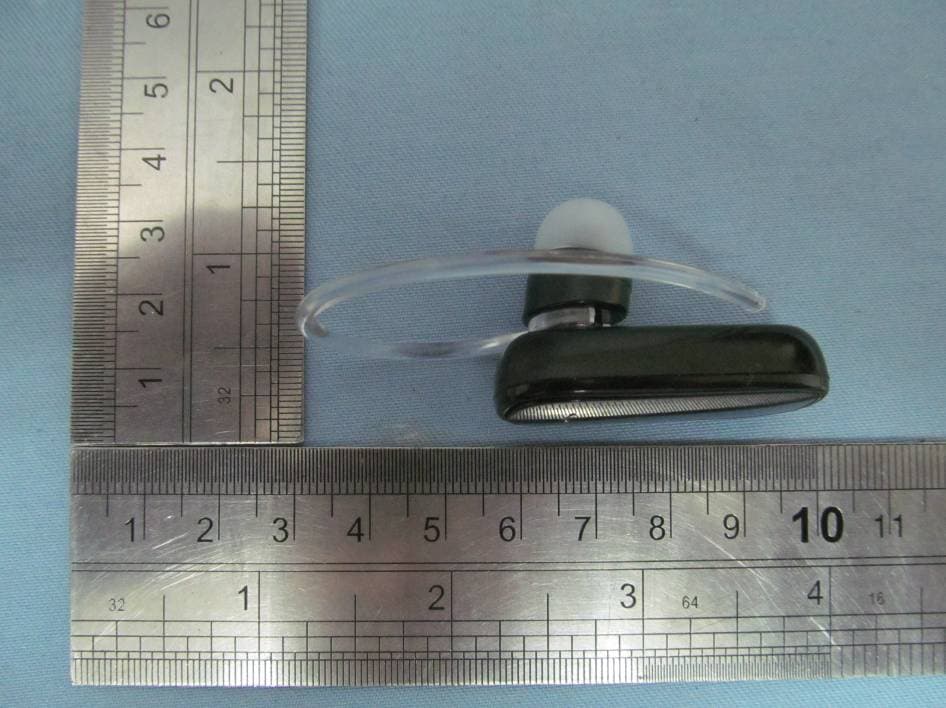
Click to zoom
Application Details
- Equipment Class
- DSS - Part 15 Spread Spectrum Transmitter
- Date of Grant
- Feb 21, 2012
- Application Purpose
- Original Equipment
- Date of Application
- Feb 21, 2012
- Equipment Note
- Bluetooth Mono Headset
- Frequency Range
- 2402.00000000 - 2480.00000000
- Company
- AIPO International Co., Ltd.
- Country
- China
Documents & Files
Document Text
Text extracted from the exhibit documents filed with the FCC. Open a document above to read the original.
Users Manual
Bluetooth Mono Headset USER MANUAL FCC ID: AYBACB-BH119A Model : ACB-BH119A Contents 1. Introduction Bluetooth wireless technology 2. Get started Overview Chargers and batteries Switch the headset on or off Pair the headset with A compatible phone Disconnect the headset From the phone Reconnect the paired headset to your phone Troubleshooting 3. Basic use Call handing Adjust the earphone volume 4. Battery information 5. Care and maintenance 1. Introduction The Bluetooth headset BH119A allows you freedom to make and receive calls while on the move or in the office ,You can connect the headset to a compatible phone that supports Bluetooth wireless technology. Read this user guide carefully before using the headset .Read also the user guide for your phone, which provides important safety and maintenance information. Keep the headset out of reach of small children . Bluetooth wireless technology Bluetooth wireless technology makes it possible to connect compatible communication devices without using cables. A Bluetooth connection does not require that the phone and the headset be in line of sight, but both devices should be within 10 meters(30feet) of each other , Connections can be subject to interference from obstructions, such as walls or other electronic devices. The headset is compliant with Bluetooth Specification 2.0 supporting the following profiles : Headset profiles 1.1 and Hands-Free Profiles 1.5 check with the manufactures of other devices to determine their compatibility with this device . There may be restrictions on using Bluetooth technology in some locations .Check with your local authorities or service provider. 2. Get started Over view: Before you can start using the headset, you must charge the battery and pair the headset with a compatible phone. Note: Parts of the headset are magnetic, Metallic materials may be attracted to the headset .Do not place credit cards or other magnetic storage media near the headset, because information stored on them may be erased . Charger and batteries Check the model number of any charger before using it with this device. The Bluetooth headset BH119A is intended for use with the chargers that is included in the package. Charge the battery This device has an internal, rechargeable battery. It Connect the charger cable to the headset. 1. Connect the charger to a wall outlet. The red indicator light is displayed during charging. If charging does not start, disconnect the charger, pug it again, and retry. Charging the battery fully may take up to 2 hours. 2. When the battery is fully charged, the red indicator light turns off. Disconnect the charger from the wall outlet and the headset. The fully charged battery has power for up to 4 hours of talk-time or up to 100 hours of standby time. However, the talk and standby times may vary when used with different mobile phones, products that use a Bluetooth connection, usage settings, usage styles, and environments. When the battery is running out of power, the red indicator light starts to flash. Switch the headset on or off To switch on, press and hold the power key for 3 seconds. The blue indicator light starts to flash. To switch off, press and hold the power key for 4 seconds until headset beep and the red indicator light is displayed briefly. Pair the headset with a compatible phone 1. make sure your headset is turn off 2. push the answer key for 8 second until the blue and red light flashes alternately 3. Activate the Bluetooth feature on the phone, and set the phone to search for Bluetooth devices. See the user guide of your phone for instructions. 4. Select the headset (BH119A) from the list of found devices. 5. Enter the passcode 0000 to pair and connect the headset to your phone. In some phones you may need to make the connection separately after pairing. See the user guide of your phone for details. You only need to pair the headset with your phone once. 6. If the pairing is successful, the headset’s blue light will flash 3 times briefly for the first time follow by a single flash every 7 seconds. The headset’s name appears in the phone menu where you can view the currently paired Bluetooth devices. Disconnect the headset from the phone To disconnect the headset from your phone(for example, to connect the phone to another Bluetooth device), do one of the following: ·Switch off the headset. ·Disconnect the headset in the Bluetooth menu of your phone. ·Move the headset more than 10 meters(30 feet) away from the phone. You do not need to delete the pairing with the headset to disconnect it. Reconnect the paired headset to your phone To connect the headset to your phone, switch on the headset, make the connection in the Bluetooth menu of your phone, or press and hold the answer/end key. You can set your phone to connect with the headset automatically when the headset is switched on. See the user guide of your phone for details. ■ Troubleshooting If you cannot connect the headset to your phone, do as follows: · Ensure that the headset is charged, switched on, paired with and connected to your phone. · Ensure that the Bluetooth feature is activated on your phone. · Check that the headset is within 10 meter(30 feet ) of your phone and that there are no obstructions between the headset and the phone, such as walls or other electronic devices. 3. Basic use ■ Call handling To make a call, use your phone in the normal way when the headset is connected to your phone. If your phone supports voice dialing with this device, press the answer/end key when no call is in progress, and proceed as described in the user guide of your phone. To answer a call, press the answer/end key one time, or use the phone keys. If the automatic answer function is set on, the phone automatically answers the incoming call after one ring. To end a call, press the answer/end key for 3 second, or use the phone keys. ■ Adjust the earphone volume Press the volume key up to increase or down to decrease the volume during a call. 4…
Text truncated - open the document above for the full version.
Cover Letter(s)
Feb Fed Aut FCC Re: Pur s requ 1: B 2: C 3: O 4: P Th e rele app Th e all a app Sin c AIP Co Te l bruary 13, deral Comm thorization C ID: AYBA : Confiden suant to Se uests confid Block Diagra Circuit Diagra Operational D Parts List e above mat ased to the licant and p e Applicant u accompanyi lication. cerely, PO Intern ntact per : 0755-83 2012 munication and Evalu ACB-BH11 ntiality Re ctions 0.457 ential treatm m am Description terials conta e public. The rovide unjus understands ng docume n national C rson: Arie 3738568 n Commiss uation Divis 9A quest 7 and 0.459 ment of infor ain trade se e public dis stified benef that pursua ntation will Co., Ltd. el Huang sion sion 9 of the Com rmation appl ecrets and p sclosure of t fits to its com nt to Rules 0 not be mad mmission’s R ied this app proprietary these matte mpetitors. 0.457, disclo e before th Rules, the a lication as o information ers might be osure of this e date of th applicant he outlined belo not custom e harmful to s Application he Grant for ereby ow: marily o the n and r this
External Photos
TOP VIEW OF EUT BOTTOM VIEW OF EUT LEFT VIEW OF EUT RIGHT VIEW OF EUT FRONT VIEW OF EUT BACK VIEW OF EUT
ID Label/Location Info
FCC ID Label Location Bluetooth Mono Headset Model:ACB-BH119A FCC ID: AYBACB-BH119A
Internal Photos
OPEN VIEW OF EUT INTERNAL VIEW OF EUT FRONT VIEW OF PCB BACK VIEW OF PCB Bluetooth Antenna
Test Report
FCC Test Report Report No.: AGC08F120202‐2F2 FCC ID : AYBACBBH119A PRODUCT DESIGNATION : Bluetooth Mono Headset BRAND NAME : N/A TEST MODEL : ACB‐BH119A CLIENT : AIPO International Co., Ltd. DATE OF ISSUE : Feb.21, 2012 STANDARD(S) : FCC Part 15 Rules Attestation of Global Compliance Co., Ltd. CAUTION: This report shall not be reproduced except in full without the written permission of the test laboratory and shall not be quoted out of context. Report No.: AGC08F120202-2F2 Page 1 of 37 VERIFICATION OF COMPLIANCE Applicant AIPO International Co., Ltd. Floor 5, block A, NO.8 East zone, Shangxue Technology Industrial Park Bantian, Buji Town, Longgang District, ShenZhen, China Manufacturer AIPO International Co., Ltd. Floor 5, block A, NO.8 East zone, Shangxue Technology Industrial Park Bantian, Buji Town, Longgang District, ShenZhen, China Product Designation Bluetooth Mono Headset Brand Name N/A Model Name ACB-BH119A FCC ID AYBACB-BH119A Report Number AGC08F120202-2F2 Date of Test Feb.11, 2012 to Feb.21, 2012 WE HEREBY CERTIFY THAT: The above equipment was tested by Attestation of Global Compliance Co., Ltd. The test data, data evaluation, test procedures, and equipment configurations shown in this report were made in accordance with the procedures given in ANSI C63.4 (2003) and the energy emitted by the sample EUT tested as described in this report is in compliance with radiated emission limits of FCC Rules Part 15.247. Tested By: Curoky Chen Feb.21, 2012 Reviewed By: Forrest Lei Feb.21, 2012 Approved By: Solger Zhang Feb.21, 2012 Report No.: AGC08F120202-2F2 Page 2 of 37 TABLE OF CONTENTS 1. GENERAL INFORMATION .................................................................................................................................................... 4 1.1 PRODUCT DESCRIPTION .............................................................................................................................................. 4 1.2 TABLE OF CARRIER FREQUENCYS .......................................................................................................................... 4 1.3 RECEIVER INPUT BANDWIDTH ................................................................................................................................... 5 1.4 EXAMPLE OF A HOPPING SEQUENCY IN DATA MODE ........................................................................................ 6 1.5 EQUALLY AVERAGE USE OF FREQUENCIES AND BEHAVIOUR ....................................................................... 6 1.6 RELATED SUBMITTAL(S) / GRANT (S) ...................................................................................................................... 6 1.7 TEST METHODOLOGY ................................................................................................................................................... 6 1.8 MEASUREMENT UNCERTAINTY ................................................................................................................................. 6 1.9 TEST FACILITY ................................................................................................................................................................. 7 1.10 SPECIAL ACCESSORIES ............................................................................................................................................ 7 1.11 EQUIPMENT MODIFICATIONS ................................................................................................................................... 7 2. SYSTEM TEST CONFIGURATION ...................................................................................................................................... 8 2.1 CONFIGURATION OF TESTED SYSTEM .................................................................................................................... 8 2.2 EQUIPMENT USED IN EUT SYSTEM .......................................................................................................................... 8 3. SUMMARY OF TEST RESULTS ........................................................................................................................................... 9 4. DESCRIPTION OF TEST MODES ....................................................................................................................................... 9 5. PEAK OUTPUT POWER ..................................................................................................................................................... 10 5.1 MEASUREMENT PROCEDURE .................................................................................................................................. 10 5.2 TEST SET-UP (BLOCK DIAGRAM OF CONFIGURATION) ................................................................................... 10 5.3 MEASUREMENT EQUIPMENT USED ........................................................................................................................ 11 5.4 LIMITS AND MEASUREMENT RESULT .................................................................................................................... 11 6. 20 DB BANDWIDTH ............................................................................................................................................................. 12 6.1 MEASUREMENT PROCEDURE .................................................................................................................................. 12 6.2 TEST SET-UP (BLOCK DIAGRAM OF CONFIGURATION) ................................................................................... 12 6.3 MEASUREMENT EQUIPMENT USED ........................................................................................................................ 12 6.4 LIMITS AND MEASUREMENT RESULTS .................................................................................................................. 12 7. CONDUCTED SPURIOUS EMISSION .............................................…
Text truncated - open the document above for the full version.
Test Setup Photos
RADIATED SPURIOUS EMISSION
Contact Information
Applicant
Ariel. Huang
Test Firm
Attestation of Global Compliance Shenzhen Co. Ltd.Forrest Lei
Technical Specifications
| # | Rule Parts | Frequency Range | Power Output |
|---|---|---|---|
| 1 | 15C | 2.40 GHz - 2.48 GHz | 1.90 mW |
Other Applications from AIPO International Co., Ltd.
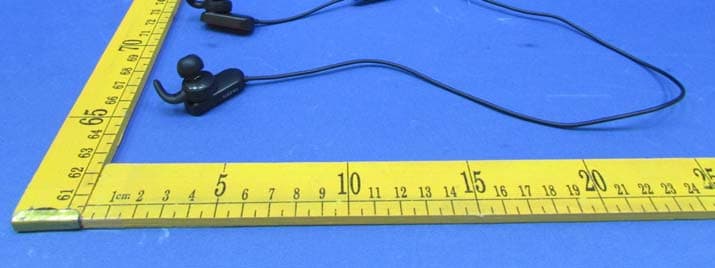
AYBHAEBT5
Aug 23, 2015Bluetooth Headphone
Equipment Class
DSS - Part 15 Spread Spectrum Transmitter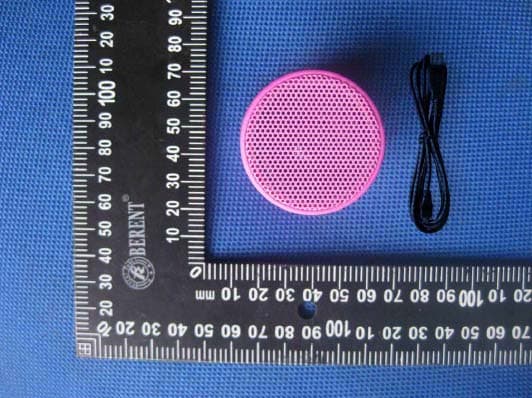
AYBBSK09
Jun 03, 2014Bluetooth Speaker
Equipment Class
DTS - Digital Transmission System
AYBIMW545
Jul 09, 2013Bluetooth Speaker
Equipment Class
DSS - Part 15 Spread Spectrum Transmitter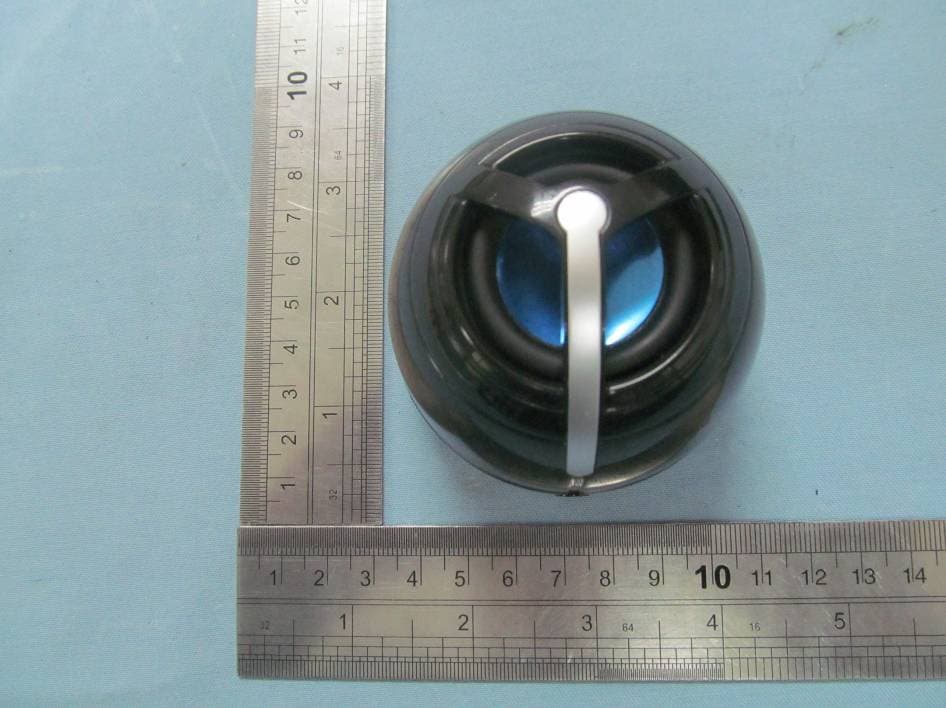
AYBACB-BSP03E
Feb 21, 2012Bluetooth Speaker with Microphone
Equipment Class
DSS - Part 15 Spread Spectrum Transmitter