AZ489FT4860CLS Series Two-Way Radios
Motorola Solutions, Inc.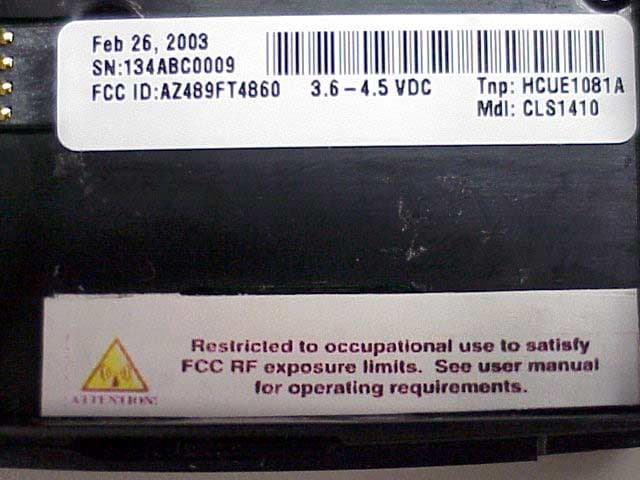
Click to zoom
Application Details
- Equipment Class
- TNF - Licensed Non-Broadcast Transmitter Held to Face
- Date of Grant
- Mar 19, 2003
- Application Purpose
- Original Equipment
- Date of Application
- Mar 19, 2003
- Equipment Note
- CLS Series Two-Way Radios
- Frequency Range
- 458.00000000 - 470.00000000
- Company
- Motorola Solutions, Inc.
- Country
- United States
Documents & Files
Document Text
Text extracted from the exhibit documents filed with the FCC. Open a document above to read the original.
Users Manual
1 D R A F T @6864110W15@ 6864110W15-O 031092o Models CLS1110 and CLS1410 SERIES TWO-WAY RADIO User's Guide 6864110w15o.book Page 1 Thursday, February 13, 2003 9:46 PM 2 D R A F T 6864110w15o.book Page 2 Thursday, February 13, 2003 9:46 PM 1 D R A F T Contents Introduction ................................ 2FCC Licensing Information ...... 4Safety and General Information 6Radio Controls ......................... 13Getting Started ......................... 14 Installing the Swivel Belt Holster ................................. 14 Installing the Batteries ............ 15Charging the Battery............... 16Turning Your Radio On and Off........................................ 19 Adjusting the Volume.............. 20Reading the Display ............... 20 Talking and Receiving ............. 21 Basic Radio Operation............ 21Signal Strength and Channel Busy Indicators............................. 21 Talk Range ............................. 22Handsfree Use (CLS1410 only) ................... 22 Locking the Keypad ................ 24Monitoring a Channel ............. 24Scanning (CLS1410 Only)...... 24 Programming Features ............ 26 Factory Default Settings.......... 27Entering Programming Mode .. 28 Cloning Radio Settings ............ 32Advanced Features .................. 33Troubleshooting ...................... 35Use and Care............................. 38Frequencies and Bandwidths.. 39Spirit GT Series Programming 45Warranty .................................... 46 6864110w15o.book Page 1 Thursday, February 13, 2003 9:46 PM Introduction 2 D R A F T Introduction Thank you for purchasing a Motorola _ Series Radio. Your radio is a product of Motorola’s 70 plus years of experience as a world leader in designing and manufacturing communications equipment. The _ Series radios provide cost- effective communications for businesses such as retail st ores, restaurants, hotels, and schools. Motorola professional two- way radios are the perfect communications solution for all of today’ s fast-paced industries. Please read this guide carefully so you know how to properly operate the radio before use. Package Contents • _ Series Radio • Swivel Belt Holster • Lithium Ion Battery • Drop-In Charger with Transformer • User's Guide • Accessory Brochure •Warranty Card 6864110w15o.book Page 2 Thursday, February 13, 2003 9:46 PM Introduction 3 D R A F T For product-related questions, please call: 1-800-448-6686 in the USA 1-888-390-6456 TTY (Text Telephone) On the Web: www.motorola.com/radios/professional ATTENTION Before using this product, read the RF energy awareness information and operating instructions in the Safety and General Information section of this guide to ensure compliance with RF ene rgy exposure limits. MOTOROLA and the Stylized M Logo are registered in the US Patent & Trademark Office. All other product or service names are the property of their respective owners.© Motorola, Inc. 2003. 6864110w15o.book Page 3 Thursday, February 13, 2003 9:46 PM FCC Licensing Information 4 D R A F T FCC Licensing Information_ Series professional two-way radios operate on radio frequencies that are regulated by the Federal Communications Commission (FCC). In order to transmit on these frequencies, you are required to have a license issued by the FCC.Application is made available on FCC Forms 601, schedules D and H, and remittance form 159. If ordering the forms by mail, phone, or from the FCC website, please request document number 000601 , which includes all forms and instructions. If using the FCC Fax-on-Demand system, use the 7-digit order numbers listed below.To obtain the required forms, please use the following contact information: Before filling out your application, you must decide which frequency(ies) you can operate on. See Frequencies and Bandwidths on page 39. For questions on determining your radio frequency, please call Motorola Product Services at 1-800-448-6686.Changes or modifications not expressly approved by Motorola may void the user’s authority granted by the FCC to operate this radio and should not be made. To comply with FCC requirements, transmitter adjustments should Faxed contact the Fax-On-Demand system at: Mailed call the FCC forms hotline at: By Phone or Web or for questions regarding FCC license contact the FCC at: 1-202-418-0177 1-800-418-FORM 1-800-418-3676 1-888-CALL-FCC 1-888-225-5322 or: http://www.fcc.gov Request forms 3060001, 3060003, and 3060006 Request document 000601 Request document 000601 6864110w15o.book Page 4 Thursday, February 13, 2003 9:46 PM FCC Licensing Information 5 D R A F T be made only by or under the supervision of a person certified as technically qualified to perform transmitter maintenance and repairs in the private land mobile and fixed services as certified by an organization representative of the user of those services. Replacement of any transmitter component (crystal, semiconductor, etc.) not authorized by the FCC equipment authorization for this radio could violate FCC rules.Note: Use of this radio outside the country where it was intended to be distributed is subject to government regulations and may be prohibited. 6864110w15o.book Page 5 Thursday, February 13, 2003 9:46 PM Safety and General Information 6 D R A F T Safety and General InformationImportant Information on Safe and Efficient Operation.Read This Information Before Using Your Radio.The information provided in this document supersedes the general safety information contained in user guides published prior to December 1, 2002.Transmit and Receive ProcedureYour two-way radio contains a transmitter and a receiver. To control your exposure and ensure compliance with the occupational/c ont roll ed e nvi ro nme nt RF e xpos ur e l imi ts, al ways adh er e t o t he f oll owin g pr oc ed ur e: • Trans mit no mo re th an 50% of th e time . • To transmit (talk), press the Push to Talk (PTT) button. • To receive calls, release the PTT button. Transmitting 50% of the time, or less, is importan…
Text truncated - open the document above for the full version.
Attestation Statements
FCC ID: AZ489FT4860 STATEMENT OF CERTIFICATION The technical data supplied with this application, having been taken under my supervision is hereby duly certified. The following is a statement of my qualifications: 1) B.S.E.E. from the University of Miami. 2) M.E from University of Florida. 3) 9 years of Design and Development experience in the field of two-way radio communications. Name: Wayne Phang Signature: /s/ Wayne Phang (signed) Date: February 21, 2003 Position: Engineering Section Manager I hereby certify that the above application was prepared under my direction and that to the best of my knowledge and belief, the facts set forth in the application and accompanying technical data are true and correct: Name: Lorenzo Cruger Signature: /s/ Lorenzo Cruger (signed) Date: February 21, 2003 Position: Engineering Manager EXHIBIT 2
Cover Letter(s)
FCC ID: AZ489FT4860 ______________________________________________________________________________ 8000 West Sunrise Boulevard, Fort Lauderdale, Florida 33322. Confidentiality Request 13 th March 2003 Authorization & Evaluation Division Federal Communications Commission Laboratory 7435 Oakland Mills Road Columbia, MD 21046 Subject: Application for Certification of Transmitter with FCC ID: AZ489FT4860. Dear Sir or Madam: Motorola is requesting that Exhibit 4 (Circuit Descriptions), Exhibit 5 (Schematic Diagrams), Exhibit 10 (Parts List and Tune Up Procedures), and Exhibit 12 (Operational Description) not be made routinely available for public inspection. Motorola considers the information in these exhibits to be classified as trade secrets, pursuant to 47 CFR Section 0.457(d) and Section 552(b)(4) of the Freedom of Information Act. Please mark Exhibits 4, 5, 10, and 12 as “Confidential.” Please contact me if you require any additional information. Sincerely, /s/ Mike Ramnath FCC Liaison Tel: (954) 723-5793 E-mail: [email protected] EXHIBIT 13a
Cover Letter(s)
FCC ID: AZ489FT4860 ______________________________________________________________________________ 8000 West Sunrise Boulevard, Fort Lauderdale, Florida 33322. Date: 13 th March 2003 Authorization & Evaluation Division Federal Communications Commission Laboratory 7435 Oakland Mills Road Columbia, MD 21046 Subject: Application for Certification of Transmitter with FCC ID: AZ489FT4860. Gentlemen: Motorola Inc, 8000 West Sunrise Boulevard, Fort Lauderdale, Florida, herein submits application for Certification of the subject transmitter. This transmitter is intended for use in a Portable Radio environment with capabilities for clear communications with a transmit power of 1.07 Watt ERP operating within the following frequency ranges: 458 - 470 MHz. The intended use of this transceiver includes applications covered in the Code of Federal Regulations Title 47 Rule Part 90. The subject transmitter complies with Section 90.203 of the Rules in that the operator cannot directly program transmit frequencies using the unit's normally accessible external controls. A complete Certification application is enclosed, contact Mike Ramnath at (954) 723- 5793 or Fax (954) 723-4794 if you require any additional information. Sincerely, /s/ Mike Ramnath Mike Ramnath FCC Liaison Email: [email protected] EXHIBIT 13
Cover Letter(s)
FCC ID: AZ489FT4860 ___________________________________________________________________________________________________________ Motorola Solutions Inc. 8000 West Sunrise Boulevard, Fort Lauderdale, Florida 33322 EXHIBIT 13A December 1, 2018 Office of Engineering and Technology Laboratory Division Equipment Authorization Branch Federal Communications Commission Laboratory 7435 Oakland Mills Road Columbia, MD 21046 Subject: Inquiry pertaining to FCC ID: AZ489FT4860; Correspondence Reference Number: 423341 Dear Sir/Madam, Motorola Solutions Inc herein submits the following response to the questions asked: For the first Section I: The first part is what was provided in the correspondence. The parts in blue, bold font are copied from the CFR (more complete than info provided). Then Motorola Solutions, Inc response. Section I a) 90.203(e) (operators are precluded from programming and transmitting using the equipment's external operation controls on frequencies other than any programmed by the manufacturer or service or maintenance personnel); 90.203(e) Except as provided in paragraph (g) of this section, transmitters designed to operate above 25 MHz shall not be certified for use under this part if the operator can program and transmit on frequencies, other than those programmed by the manufacturer, service or maintenance personnel, using the equipment's external operation controls. a) 90.203(e)Response: <Motorola Solution, Inc> Our device is not excluded from certification under 90.203(e) since the operator cannot program and transmit on frequencies other that those programmed by the manufacturer, service or maintenance personnel using the equipment's external controls. b) 90.203(g)(1) (procedures for making configuration modifications and altering transmit frequencies not available with operating information normally supplied to device end users); 90.203(g)(3) (external devices or specifically programmed modules for device frequency programming are available only to service/maintenance personnel); 90.203(g) Transmitters having frequency programming capability and that are designed to operate above 25 MHz are exempt from paragraphs (e) and (f) of this section if the design of such transmitters: (1) Is such that transmitters with external controls normally available to the operator must be internally modified to place the equipment in the programmable mode. Further, while in the programmable mode, the equipment shall not be capable of transmitting. The procedures for making the modification and altering the frequency program shall not be made available with the operating information normally supplied to the end user of the equipment; or (2) Requires the transmitter to be programmed for frequencies through controls normally inaccessible to the operator; or (3) Requires equipment to be programmed for frequencies through use of external devices or specifically programmed modules made available only to service/maintenance personnel; or (4) Requires equipment to be programmed through cloning (copying a program directly from another transmitter) using devices and procedures made available only to service/maintenance personnel. b) 90.203(g)Response: FCC ID: AZ489FT4860 ___________________________________________________________________________________________________________ Motorola Solutions Inc. 8000 West Sunrise Boulevard, Fort Lauderdale, Florida 33322 EXHIBIT 13A <Motorola Solution, Inc> Our device is not subject to 90.203(g). It would only be so if the operator could program and transmit on frequencies other that those programmed by the manufacturer, service or maintenance personnel using the equipment's external controls (exemption to certification limit per 90.203(e)). c) 90.427(b) (only licensee frequencies can be programmed into device). 90.427(b) Except for frequencies used in accordance with §90.417, no person shall program into a transmitter frequencies for which the licensee using the transmitter is not authorized. c) 90.427(b)Response: <Motorola Solution, Inc> All of MSI’s devices are programmable within a band of frequencies and programming cannot be restricted to only the licensee’s authorized frequency by the manufacturer. Programming and license compliance is the responsibility of the service/maintenance personnel and licensee. Section II. PROFESSIONAL INSTALLER AND SERVICE PERSONNEL CONFIGURATION CONTROLS Response: <Motorola Solution, Inc> Service personnel have limited access to configure the device to operate on the licensee's frequency through software that is password controlled. A description of the control procedure that ensures only service personnel have access to this capability can be provided if required. Section III. USER CONFIGURATION CONTROL Response: <Motorola Solution, Inc> The end user cannot configure radio frequency performance or parameter controls beyond the feature operations and frequencies pre-programmed by the manufacturer or service/maintenance personnel. If you require any additional information, please contact me at (954) 723-4707. Sincerely, Deanna Zakharia Regulatory Compliance Manager E-mail: [email protected]
Cover Letter(s)
FCC ID: AZ489FT4860 ___________________________________________________________________________________________________________ Motorola Solutions Inc. 8000 West Sunrise Boulevard, Fort Lauderdale, Florida 33322 EXHIBIT 13A December 1, 2018 Office of Engineering and Technology Laboratory Division Equipment Authorization Branch Federal Communications Commission Laboratory 7435 Oakland Mills Road Columbia, MD 21046 Subject: Inquiry pertaining to FCC ID: AZ489FT4860; Correspondence Reference Number: 423341 Dear Sir/Madam, Motorola Solutions Inc herein submits the following response to the questions asked: For the first Section I: The first part is what was provided in the correspondence. The parts in blue, bold font are copied from the CFR (more complete than info provided). Then Motorola Solutions, Inc response. Section I a) 90.203(e) (operators are precluded from programming and transmitting using the equipment's external operation controls on frequencies other than any programmed by the manufacturer or service or maintenance personnel); 90.203(e) Except as provided in paragraph (g) of this section, transmitters designed to operate above 25 MHz shall not be certified for use under this part if the operator can program and transmit on frequencies, other than those programmed by the manufacturer, service or maintenance personnel, using the equipment's external operation controls. a) 90.203(e)Response: <Motorola Solution, Inc> Our device is not excluded from certification under 90.203(e) since the operator cannot program and transmit on frequencies other that those programmed by the manufacturer, service or maintenance personnel using the equipment's external controls. b) 90.203(g)(1) (procedures for making configuration modifications and altering transmit frequencies not available with operating information normally supplied to device end users); 90.203(g)(3) (external devices or specifically programmed modules for device frequency programming are available only to service/maintenance personnel); 90.203(g) Transmitters having frequency programming capability and that are designed to operate above 25 MHz are exempt from paragraphs (e) and (f) of this section if the design of such transmitters: (1) Is such that transmitters with external controls normally available to the operator must be internally modified to place the equipment in the programmable mode. Further, while in the programmable mode, the equipment shall not be capable of transmitting. The procedures for making the modification and altering the frequency program shall not be made available with the operating information normally supplied to the end user of the equipment; or (2) Requires the transmitter to be programmed for frequencies through controls normally inaccessible to the operator; or (3) Requires equipment to be programmed for frequencies through use of external devices or specifically programmed modules made available only to service/maintenance personnel; or (4) Requires equipment to be programmed through cloning (copying a program directly from another transmitter) using devices and procedures made available only to service/maintenance personnel. b) 90.203(g)Response: FCC ID: AZ489FT4860 ___________________________________________________________________________________________________________ Motorola Solutions Inc. 8000 West Sunrise Boulevard, Fort Lauderdale, Florida 33322 EXHIBIT 13A <Motorola Solution, Inc> Our device is not subject to 90.203(g). It would only be so if the operator could program and transmit on frequencies other that those programmed by the manufacturer, service or maintenance personnel using the equipment's external controls (exemption to certification limit per 90.203(e)). c) 90.427(b) (only licensee frequencies can be programmed into device). 90.427(b) Except for frequencies used in accordance with §90.417, no person shall program into a transmitter frequencies for which the licensee using the transmitter is not authorized. c) 90.427(b)Response: <Motorola Solution, Inc> All of MSI’s devices are programmable within a band of frequencies and programming cannot be restricted to only the licensee’s authorized frequency by the manufacturer. Programming and license compliance is the responsibility of the service/maintenance personnel and licensee. Section II. PROFESSIONAL INSTALLER AND SERVICE PERSONNEL CONFIGURATION CONTROLS Response: <Motorola Solution, Inc> Service personnel have limited access to configure the device to operate on the licensee's frequency through software that is password controlled. A description of the control procedure that ensures only service personnel have access to this capability can be provided if required. Section III. USER CONFIGURATION CONTROL Response: <Motorola Solution, Inc> The end user cannot configure radio frequency performance or parameter controls beyond the feature operations and frequencies pre-programmed by the manufacturer or service/maintenance personnel. If you require any additional information, please contact me at (954) 723-4707. Sincerely, Deanna Zakharia Regulatory Compliance Manager E-mail: [email protected]
External Photos
FCC ID: AZ489FT4860 EXTERNAL PHOTOGRAPHS 1 Front view of Radio 2 Rear view of Radio with battery cover. 3 Rear view of radio without battery cover. EXHIBIT 3 FCC ID: AZ489FT4860 EXHIBIT 3A FCC ID: AZ489FT4860 FCC ID: AZ489FT4860 EXHIBIT 3B
ID Label/Location Info
FCC ID: AZ489FT4860 LIST OF EXHIBITS DESCRIPTION EXHIBIT REFERENCE I. Identification label information 1 2.983-(f) & General Information 1a 1. Production Plans 2.981-(a) 2. Application References 2.1061 3. Data Submittal Procedure 4. Similar Applications II. Certification of Data 2 III. External Photographs 3 2.983-(g) IV. Block Diagrams 4 1. Frequency Stabilizing 4A 2. Modulation Limiting 4B and Post Limiter Filter 3.Harmonic Suppression 4C 4.Power Limiting 4D V. Schematic Diagrams 5 2.983-(d)-7 VI. Test Report 6 1. Data Index 6 2. RF Output Data 6A 2.985 3. Modulation Characteristics 2.987 A. Audio Response & Low Pass Filter Response 6B, 9C B. Modulation Limiting 6D 4. Occupied Bandwidth 6E 2.989 5. Radiated Spurious Emissions 6F 2.993 6. Frequency Stability (Temperature & Supply Voltage) 6G 2.995 7. Transient Frequency Behavior 6H 90.214 VII. Test Set-up Procedures 7 2.999 VIII. Instruction Manual 8 2.983-(d)-8 IX. Internal Photographs. 9 2.983-(g) X. Parts List and Tune-Up procedures 10 2.983-(d)-6, 9 XI. RF Exposure Information 11 2.1093 XII. Operational Description 12 2.983-(d)1-5 1. Technical Characteristics 2. Application XIII. Cover Letter 13 FCC ID: AZ489FT4860 IDENTIFICATION LABEL LOCATION X See the attached Photograph or Sketch Back of Radio Back of Radio under Belt Clip TYPE X The label is a paper polyester film laminate with a pressure sensitive adhesive backing. The adhesive is a permanent type acrylic with minimum peel strength of 40 oz/ inch. The label is laser etched into the Urethane paint, exposing the Nickel plating on the Zamak casting substrate. Since no adhesive is required, the label is permanent and tamper-proof. (** - NOTE- The label attached below is a paper polyester film laminate, as described above. This is just for sample purposes, as the actual label is laser etched into the casting) MARKINGS (TEXT) See Photograph, Exhibit 1. FCC ID: AZ489FT4860 EXHIBIT 1 FCC ID: AZ489FT4860 GENERAL INFORMATION I. Production Plans—Pursuant 2.983 ( c ). Quantity production is planned. II. Application References -- Pursuant 2.1061 Reference is made to the following Motorola “Application References” 1. Portable Products and their application. 2. Portable Products Transmitter Modulations Methods. III. Data Submittal Procedure: Data is supplied in accordance with Part 2, Sub-part J of the Commissions’ Rules. IV. Similar, currently Type Accepted Transmitter, FCC ID: AZ489FT4851. EXHIBIT 1a
Internal Photos
FCC ID: AZ489FT4860 INTERNAL PHOTOGRAPHS: 1. Display side view of PC Board 2. Component side view of PC Board FCC ID: AZ489FT4860 FCC ID: AZ489FT4860
Parts List/Tune Up Info
FCC ID: AZ489FT4860 EXHIBIT 10 Confidentiality Requested PARTS LIST, TUNE-UP PROCEDURE, FREQ-SENSITIVE, & RF POWER CIRCUITS Schematic Designator Device Circuit Key Non/Motorola Type Application Source Y801 TSX-1A Crystal Osc. Reference Toyocom Q802 21T11 Dual Diodes Reference ROHM Q801 MMBT3904 NPN Reference OnSemiconductor U501 5185165C03 Digital IC DFP99 Motorola U401 5185164C01 Analog IC AFP 99 Motorola U301 5185163C03 RF IC RFP99 Motorola Q203 MRF9482 MOSFET PA Final Stage Motorola U201 T30C30 RF IC PA Driver & LNA TEMIC Q201 MMBD352 Schottky Diodes LNA OnSemiconductor Q202 4805656W70 NPN LNA Toshiba Q604 MUN5111T1 PNP DC voltage switch OnSemiconductor D601 1SV229 Varactor Diode VCO Toshiba D602* 1SV304 Varactor Diode VCO Toshiba Q601 NE68519 NPN VCO NEC Q602 NE68519 NPN VCO Buffer NEC Q622* NE68519 NPN VCO NEC U101 MASWSS0021 RF Switch Antenna Switch MACOM • These parts are not actually used during this radio's operation. ____________________________________________________________________________ COMMENTS: The Motorola designators are special code numbers for active devices used in Motorola radios. These devices are either identical or derived from the device family listed under Source, by the manufacturer or are proprietary to Motorola. Service people do not have access to any cross- references or given any information on proprietary devices and are prevented from making unauthorized substitutions. FCC ID: AZ489FT4860 EXHIBIT 10 TUNE UP PROCEDURE, FREQUENCY SENSITIVE AND RF POWER CIRCUITS The following tune-up procedure is for the factory only. There will be no customer tuning. There are a total of 4 tuning adjustments. All on-board tuning is performed automatically utilizing software commands. An SCI interface bus is provided for programming. D/A’s replace typical manually adjusted potentiometers. All tuning information is stored in the micro-controller’s internal EEPROM. For more detailed information regarding the SCI bus and software protocols, refer to section 3.2. All tuning adjustments should be performed with DC voltage applied to the radio’s power terminals. It is preferable to use a DC Power Supply with voltage sense lines available and to use the sense connections at the radio supply input. Nominal battery voltage for the Model Series is 3.8 +/- 0.1 V. All RF signals from test equipment should be terminated at 50 ohms. “Standard RF input signal level” is defined as 1 mV into 50 ohms, or -47 dBm. “Standard test modulation” is defined as a 1 kHz tone @ +/- 1.5 kHz deviation for 12.5 kHz channel spaced radios and +/- 3.0 kHz deviation for 25 kHz channel spaced radios Critical frequency sensitive and RF power circuits along with their operation in the radio are also described below in sections 10.1 - 10.5. The radio’s codeplug information (i.e., tuning squelch, warping the TCXO, etc.) is protected by checksums, which are corrected when the radio is tuned. In the unlikely event of the tuning data being subsequently corrupted then the radio will not transmit and indicate an error to the user. (The only exception to this is the codeplug area which stores the radio’s previous user selected settings, If the checksum of this area is not correct, then the radio automatically uses a pre-defined set of codeplug values). Table 10.0 UHF Channel Freqs. Channel Freqs. Channel Freqs. Channel Freqs. 1 464.5000 15 461.1875 29 462.9125 43 466.2625 2 464.5500 16 461.2125 30 464.4875 44 466.2875 3 467.6250 17 461.2375 31 464.5125 45 466.3125 4 467.8125 18 461.2625 32 464.5375 46 466.3375 5 467.8500 19 461.2875 33 464.5625 47 466.3625 6 467.8750 20 461.3125 34 466.0375 48 467.875 7 467.9000 21 461.3375 35 466.0625 49 467.8375 8 467.9250 22 461.3625 36 466.0875 50 467.8625 9 461.0375 23 462.7625 37 466.1125 51 464.8875 10 461.0625 24 462.7875 38 466.1375 52 467.9125 11 461.0875 25 462.8125 39 466.1625 53 469.4875 12 461.1125 26 462.8375 40 466.1875 54 469.5125 13 461.1375 27 462.8625 41 466.2125 55 469.5375 14 461.6250 28 462.8875 42 466.2375 56 469.5625 FCC ID: AZ489FT4860 EXHIBIT 10 10.1 VCO Circuit The VCO for this product is NOT tuned. The VCO operates "as built", but is tested to make certain that the tuning voltages (VCO_CNTL) necessary to cover the required frequency range of all the radio's frequency channels falls within the given 1.0 to 4.0 Volt spec limit. The VCO operates at 2X the radio's carrier frequency range (which is 461.0375MHz to 469.5625MHz in the case of UHF. Therefore, the VCO operates over the frequency range from 922.075MHz to 939.125MHz for UHF). The VCO RF signal supplies U301 for both Rx and Tx operation, as well as supplying U501 as part of the radio's Phase Locked Loop. The VCO level into each IC is on the order of -5 to -10 dBm. The VCO signal is divided by 2 internal to U301, so it is now operating on the same frequency as the radio's channel frequency (± some small frequency offset of less than 50 Hz). This divided VCO signal serves as the Local Oscillator (LO) for the Rx path Mixer which is internal to U301, and it also provides the initial carrier frequency of the transmitted signal of the radio. 10.2 Transmitter Circuit The transmitter for this product produces 1 watt of transmitted RF power. The transmitted power is set by way of factory tuning and testing of the radios. The VCO as described in section 5.1 is where the RF signal originates that eventually will be the transmitted signal for 1 watt out of the radio's antenna. This power tuning adjustment is done on designated frequency bands within the radio's frequency range in order to cover the entire list of possible customer channel frequencies. The radio's specification tuning limits are as follows (conducted measurement): 1W Radio (0.9W < Tuned_Tx_Power < 1.25W) Continuing from where section 5.1 left off, the divided VCO signal feeds a transmit buffer internal to U301 when the radio is in Tx mode of operation. This buffer amplifies the divided VCO signal (ie the carrier frequency of the radio) to about +…
Text truncated - open the document above for the full version.
RF Exposure Info
Certificate Number: 1449-02 CGISS EME Test Laboratory 8000 West Sunrise Blvd Fort Lauderdale, FL. 33322 S.A.R. EME Compliance Test Report Part 1 of 2 Attention: FCC Date of Report: March 07, 2003 Report Revision: Rev. A Manufacturer: Motorola China Product Description: 1.5 Watts fixed antenna UHF/RBR/ 4 channel w/ display FCC ID: AZ489FT4860 Device Model: HCUE1081A Form-SAR-Rpt-Rev. 1.00 Page 1 of 17 Test Period: 2/13/03 – 2/14/03 EME Technician: Ed Church (EME Technician) EME Engineer: Deanna Zakharia (Sr. Staff Eng.) Author: Michael Sailsman (EME Regulatory Affairs Liaison) Note: Based on the information and the testing results provided herein, the undersigned certifies that when used as stated in the operating instructions supplied, said product complies with the national and international reference standards and guidelines listed in section 2.0 of this report. Signature on File 3/7/03 Ken Enger Date Approved Senior Resource Manager, Product Safety and EME Director Note: This report shall not be reproduced without written approval from an officially designated representative of the Motorola EME Laboratory. TABLE OF CONTENTS 1.0 Introduction 2.0 Reference Standards and Guidelines 3.0 Description of Test Sample 3.1 Test Signal 3.2 Test Output Power 4.0 Description of Test Equipment 4.1 Description of S.A.R Measurement System 4.2 Description of Phantom 4.2.1 Flat Phantom 4.2.2 SAM phantom 4.3 Simulated Tissue Properties 4.3.1 Type of Simulated Tissue 4.3.2 Simulated Tissue Composition 4.4 Test condition 5.0 Description of Test Procedure 5.1 Device Test Positions 5.1.1 Abdomen 5.1.2 Head 5…
Text truncated - open the document above for the full version.
Contact Information
Applicant
Deanna Zakharia(Regulatory Compliance Manager)
Test Firm
Motorola Inc.Jonathan Munroe
Technical Specifications
| # | Rule Parts | Frequency Range | Power Output | Emission | Tolerance |
|---|---|---|---|---|---|
| 2 | 9 | 458 MHz - 470 MHz | 1.07 W | 11K0F3E | 2.5 ppm |
Other Applications from Motorola Solutions, Inc.
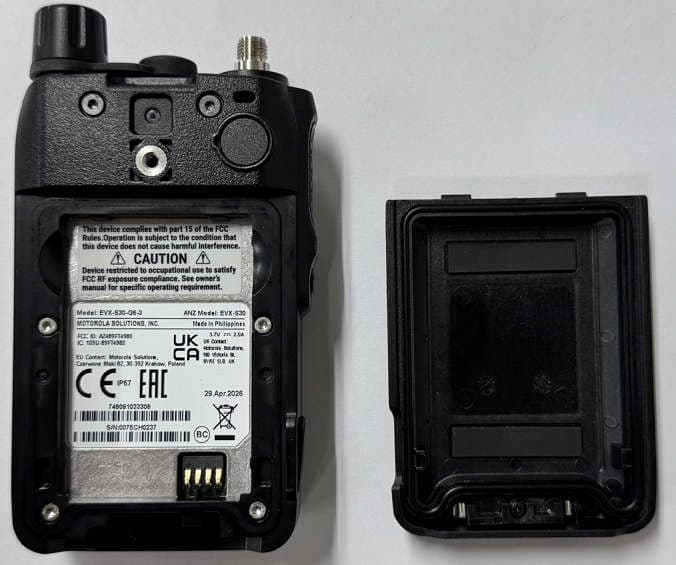
AZ489FT4980
Sep 08, 2026Portable two way radio
Equipment Class
TNF - Licensed Non-Broadcast Transmitter Held to FaceAZ489FT4981
Aug 14, 2026Handheld Portable - TANAPA BPR 45 400-470 MHZ 4W NKP
Equipment Class
TNF - Licensed Non-Broadcast Transmitter Held to Face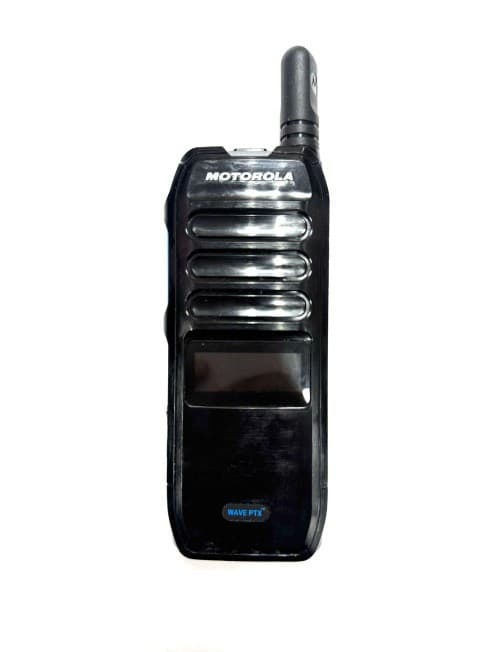
AZ489FT7187
Jul 13, 2026Portable 2-Way Radio with Bluetooth, Bluetooth LE, WIFI 2.4GHz, WIFI 5GHz, LTE
Equipment Class
DSS - Part 15 Spread Spectrum TransmitterAZ499FT6031
May 11, 2026Operation Critical Wireless Earpiece PTT
Equipment Class
DSS - Part 15 Spread Spectrum Transmitter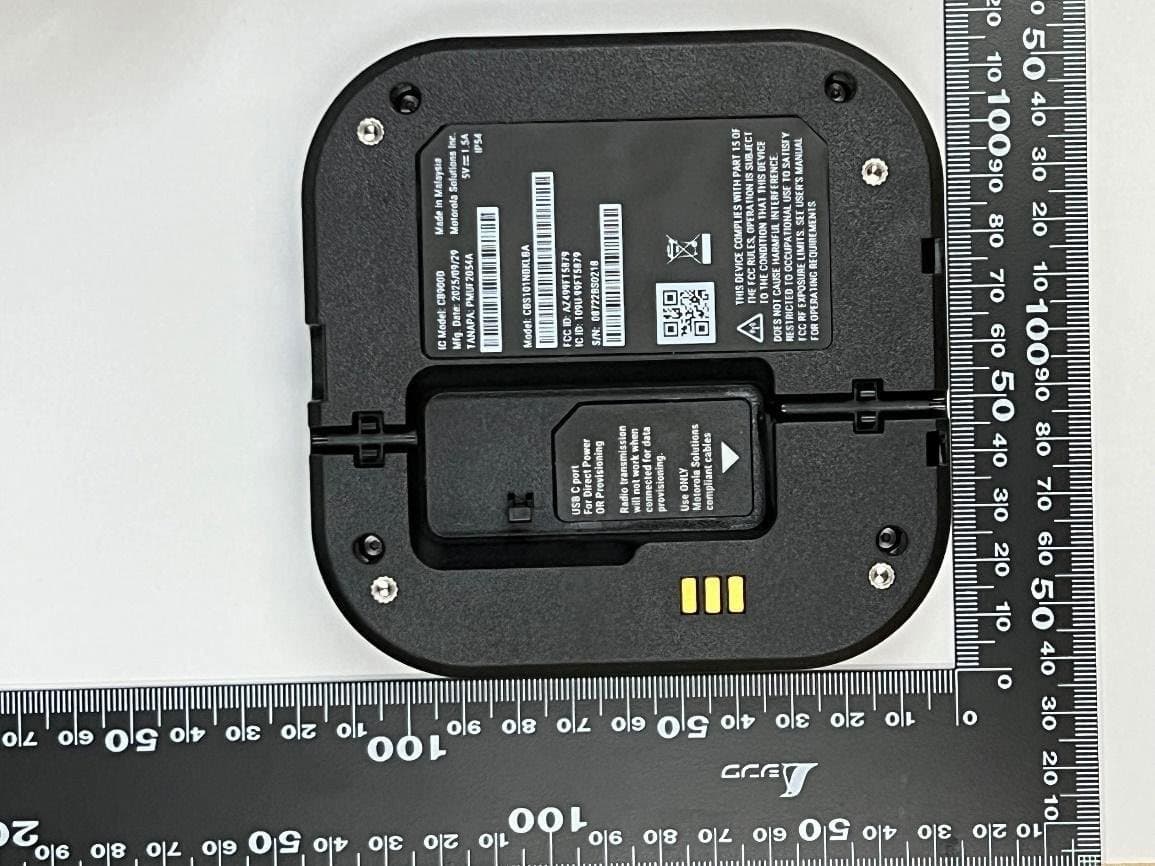
AZ499FT5879
Dec 19, 20252-way Portable Radio with BT, BTLE, WIFI, NFC and LTE
Equipment Class
DSS - Part 15 Spread Spectrum Transmitter