AZ489FT5832iDEN i315 with MOTOtalk
Motorola Solutions, Inc.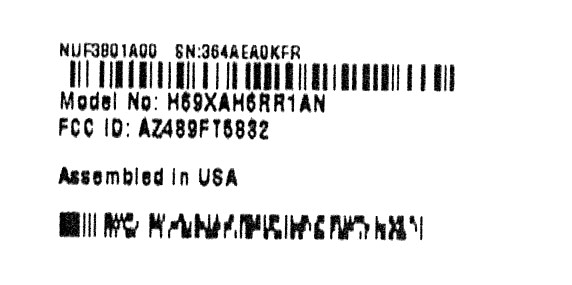
Click to zoom
Application Details
- Equipment Class
- DSS - Part 15 Spread Spectrum Transmitter
- Date of Grant
- Jun 06, 2004
- Application Purpose
- Original Equipment
- Date of Application
- Apr 15, 2004
- Equipment Note
- iDEN i315 with MOTOtalk
- Frequency Range
- 902.00000000 - 928.00000000
- Company
- Motorola Solutions, Inc.
- Country
- United States
Documents & Files
Document Text
Text extracted from the exhibit documents filed with the FCC. Open a document above to read the original.
Users Manual
Motorola iDEN Digital Multi-service Data-capable Phone i 315 Phone User’s Guide BETA DRAFT @NNTN5504A@NNTN5504A IMPORTANT NOTICE: PLEASE READ PRIOR TO USING YOUR PHONEThe SIM card provided in this kit is intended for use with the phone provided in this package. Loss of certain features will result when using a SIM card from one of the following models: i 30 sx , i 35 s , i 50 sx , i 55 sr , i 58 sr , i 60 c , i 80 s , i 85 s , i 88 s , i 90 c , i 95 cl series, and the i 2000 series. For more information on SIM card compatibility, go to www.motorola.com/iden/support.Defects or damage to your Motorola phone that result from the use of non-Motorola branded or certified Accessories, including but not limited to replacement housings and or other peripheral accessories, are excluded from warranty coverage. Please refer to the text of Motorola's Limited One Year warranty in this user’s guide for complete details. i ContentsGetting Started........................................... 1 Locating Your SIM Card ....................................2Activating Service ..............................................5Powering On and Off.........................................5Enabling Over-the-Air Security..........................6Phone Programming .........................................6Finding Your Phone Number.............................7Phone Basics ....................................................7SIM Card Security ...........................................11Locking the Keypad .........................................14Accessories .....................................................15For More Information .......................................15 Making Calls ............................................. 16 Phone Calls .....................................................16Private Calls ....................................................16Receiving Calls................................................16Call Icons.........................................................17Ways to Enter Calls.........................................17Using Speakerphone .......................................19 Using Mute ......................................................20Making Emergency Phone Calls .....................20 MOTOtalk ..................................................21 Using MOTOtalk..............................................21Switching to MOTOtalk ...................................22Setup Options .................................................22MOTOtalk Icons ..............................................23Channels and Codes.......................................23MOTOtalk Private Calls...................................25Making a MOTOtalk Call .................................26Receiving a MOTOtalk Call .............................26Assigning a MOTOtalk Number in Contacts ...26Recent Calls ....................................................26Making Emergency Calls from MOTOtalk .......26 Call Alerts..................................................27 Sending Call Alerts..........................................27Receiving Call Alerts .......................................27Using the Call Alert Queue..............................27 Recent Calls ..............................................29 Storing Recent Calls to Contacts ....................29 ii Deleting Recent Calls......................................30 Contacts ................................................... 31 Viewing Contacts.............................................32Creating Entries...............................................33Storing Numbers Faster ..................................34Editing Entries .................................................35Deleting Entries ...............................................35Checking Capacity ..........................................35Creating Pauses and Waits.............................36International Numbers .....................................36Accessing Contacts with GSM Phones ...........37 Call Forwarding........................................ 38 Forwarding All Calls ........................................38Turning Off Call Forwarding ............................39Forwarding Missed Calls .................................39Viewing Call Forwarding Settings....................40 Advanced Calling Features..................... 41 Call Waiting .....................................................41Call Hold ..........................................................423-Way Calling ..................................................42 Creating Pauses and Waits While Dialing.......43Making International Calls ...............................43Setting One Touch PTT ..................................43Group Calls .....................................................44Call Timers ......................................................45Using Your Phone as a Modem ......................46Making TTY Calls ............................................47 Memo .........................................................49Ring Tones ................................................50 Setting Your Phone to Vibrate.........................50Turning Ring Tones Off ...................................50Ring and Vibrate .............................................51Assigning Ring Tones to Contacts ..................51Viewing Ring Tone Assignments ....................52Downloading More Ring Tones .......................52Managing Memory ..........................................52Deleting Custom Ring Tones ..........................52 Entering Text ............................................54 Using Alpha Mode ...........................................54Using Word Mode ...........................................54 iii Special Function Keys.....................................55Using Numeric Mode .......................................56Using Symbols Mode ......................................56 Messages ................................................. 57 Message Notifications .........…
Text truncated - open the document above for the full version.
Attestation Statements
FCC Application for Motorola i315 FCC ID: AZ489FT5832 IDEN, Motorola Inc., 8000 W. Sunrise Blvd. Plantation, FL 33322 www.mot.com/iden Page 1 of 1 EXHIBIT 2: STATEMENT OF CERTIFICATION – Pursuant 47 CFR 2.907 The technical data supplied with this application, having been taken under my supervision is hereby duly certified. The following is a statement of my qualifications: B.S. Electrical Engineering, 1983, Iowa State University M.S.E. Microwaves and Communications, 1990 Arizona State University 20 Years Experience in RF/Microwave Design/ Development/ Measurement NAME: John Goshinska SIGNATURE: DATE: April 9, 2004 TITLE: Hardware Lead Electrical Engineer I hereby certify that the above application was prepared under my direction and that to the best of my knowledge and belief, the facts set forth in the application and accompanying technical data are true and correct: NAME: Bob Muszkiewicz SIGNATURE: DATE: April 9, 2004 TITLE: Engineer Manager
Cover Letter(s)
Applicant: Motorola Inc FCC ID: AZ489FT5832 iDEN, Motorola Inc., 8000 W. Sunrise Blvd., Plantation, FL 33322 www.mot.com/iDEN Page: 13- 1 15 th April 2004 Authorization & Evaluation Division Federal Communications Commission Laboratory 7435 Oakland Mills Road Columbia, MD 21046 Gentlemen; Motorola Inc., 8000 West Sunrise Boulevard, Fort Lauderdale, Florida 33322, herein submits its application for Certification of the transmitter with FCC ID AZ489FT5830. This variable output power (0.088 to 700 milliwatt) transmitter is part of a handheld transceiver used in a SMR and EA SMR trunking system operating in the United States 806-821/851-866MHz and 896-901/935-940 MHz frequency band. It also possesses a transmitter that operates in the ISM band (902 – 927 MHz). The two transmitters are configured so that only one transmitter can operate at a time. Certification is sought for this transceiver, and performance data is provided for that purpose. This transceiver possesses two distinct modes of operation. The operation mode is selected via the user menu. The two transceivers can only operate independent of each other and only one mode can operate at a time. The first transceiver is of the receive-first type described in International Telecommunications Union Recommendation ITU-R M.1221 entitled Technical And Operational Requirements For Cellular Multimode Mobile Radio Stations. It must first find, acquire and lock onto a control channel from a predefined set of control channel frequencies assigned to a companion Authorized base station (e.g. – FCC ID: ABZ89FC5792). Transmission is not possible until lock to a base station control channel has been achieved, then transmission is limited to digitally modulated service request bursts on the reverse control channel. Upon recognition of a proper request, the control channel base station transmitter will then assign the transceiver a traffic channel for transmission of digital voice or circuit-switched data from the set of frequencies for which the trunking system is licensed. Attached Exhibit 12.1 provides additional descriptive details. The second transceiver is frequency hopping spread spectrum operating in the unlicensed ISM (902- 928 MHz) band. It uses an FSK (Frequency Shift Key) modulation, 50KHz spacing up to 1 watt. The protocol is defined to have 10 interleaved hopsets of 50 frequencies each with 500 kHz separation between set members. All 10 hopsets span the entire ISM band. In the ISM transceiver mode, conversations are held only via the speakerphone; the earpiece is disabled. In addition, the ISM transceiver mode does not function while plugged into a wall charger unit. It is expected that this handheld time division multiplexed transceiver marketed in the United States will also be used for itinerant operation with companion Authorized Base Stations by users requesting trunked radio and telephone interconnect service while roaming outside the United States. In some countries the companion base stations are licensed to operate at frequencies in the 821-825/866-870 MHz band in addition to some of those in the 806-821/851-866 MHz band normally used in United States SMR systems. Consequently, this transmitter has been designed to meet FCC requirements for operation in the 806-821 MHz band over the more global band of 806 - 825 MHz when used with a companion Authorized Base Station. Thus, performance data is provided Applicant: Motorola Inc FCC ID: AZ489FT5832 iDEN, Motorola Inc., 8000 W. Sunrise Blvd., Plantation, FL 33322 www.mot.com/iDEN Page: 13- 2 to substantiate FCC compliant operation with a Companion Base Station over the broader 806 to 825 MHz band expected for global use of this handheld transceiver. To facilitate global roaming it is kindly requested that a note be provided in the Grant for Equipment Authorization, which states that this ‘receive first’ type of equipment is compliant for transmitter operation over the broader range 806-825 MHz when used with a compatible Authorized Base Station. This will aid equipment authorization in foreign countries, which accept a United States FCC Grant for Equipment Authorization, yet not jeopardize United States public safety or cellular systems licensed to operate in the 821-825 MHz frequency band since no compatible base station may be authorized on those frequencies in the United States. It is also expected that this transceiver type will be marketed outside the United States and brought into the United States for itinerant “roaming” operation on compatible 806 - 821 MHz base stations located within the United States. Consequently, upon receipt of Authorization, only those units of this equipment type authorized for marketing in countries outside the United States will also bear a label with the specified FCC identifier. In accordance with 47 CFR 2.1093(c) this transmitter may be used in “covered” SMR service so it has been subjected to routine environmental evaluation for RF exposure and found to be compliant with the limits specified in 47 CFR 2.1093(d)(2). The subject transmitter complies with 47 CFR 90.203 of the rules in that the operator cannot directly program transmit frequencies using only the unit's normally accessible external controls. This transceiver can function as a Part 15.3(r) computer peripheral device when functioning as an RF modem when connected to a computer via a data cable (ref: Exhibit 12.1). For this reason a Declaration of Conformity has been prepared and is provided on Page 5 of the user Manual in the Exhibit 8. Enclosed is a complete Certification Application comprised of 12 Exhibits. Contact me at (954) 723- 5793 if you require any additional information. Sincerely, /s/ Mike Ramnath (signed) Mike Ramnath Manager, Regulatory Compliance Email: [email protected]
Cover Letter(s)
FCC ID: AZ489FT5832 ______________________________________________________________________________ iDEN, Motorola Inc 8000 West Sunrise Boulevard, Fort Lauderdale, Florida 33322. (954) 723-5793 CONFIDENTIALITY REQUESTED Date: 15th April 2004 Authorization & Evaluation Division Federal Communications Commission Laboratory 7435 Oakland Mills Road Columbia, MD 21046 Subject: Confidentiality Request for Transmitter with FCC ID: AZ489FT5832. Dear Sir or Madam: Motorola is requesting that Exhibit 4 (Circuit Descriptions), Exhibit 5 (Schematic Diagrams), Exhibit 10 (Parts List and Tune Up Procedures), and Exhibit 12 (Operational Description) not be made routinely available for public inspection. Motorola considers the information in these exhibits to be classified as trade secrets, pursuant to 47 CFR Section 0.457(d) and Section 552(b)(4) of the Freedom of Information Act. Please mark Exhibits 4, 5, 10, and 12 as “Confidential.” Please contact me if you require any additional information. Sincerely, /s/ Mike Ramnath (signed) Manager, Regulatory Compliance Tel: (954) 723-5793 E-mail: [email protected] FCC ID: AZ489FT5832 ______________________________________________________________________________ iDEN, Motorola Inc 8000 West Sunrise Boulevard, Fort Lauderdale, Florida 33322. (954) 723-5793 EXHIBIT 13B
External Photos
FCC Application for Motorola i315 FCC ID: AZ489FT5832 IDEN, Motorola Inc., 8000 W. Sunrise Blvd. Plantation, FL 33322 www.mot.com/iden Page 1 of 2 EXHIBIT 3: EXTERNAL PHOTOGRAPHS – Pursuant 47 CFR 2.1033(c)12 Note: The radio housing style and color will vary. Figure 3-1. Photograph of Front, antenna retracted. Figure 3-2. Photograph of back. Figure 3-3 Connector Cover Closed. Figure 3-4 Connector Cover Open. FCC Application for Motorola i315 FCC ID: AZ489FT5832 IDEN, Motorola Inc., 8000 W. Sunrise Blvd. Plantation, FL 33322 www.mot.com/iden Page 1 of 2 Figure 3-5. Antenna extended. Figure 3-5. Battery cover open showing location of FCC label. Figure 3-6. FCC Label.
ID Label/Location Info
FCC Application for Motorola i315 FCC ID: AZ489FT5832 IDEN, Motorola Inc., 8000 W. Sunrise Blvd. Plantation, FL 33322 www.mot.com/iden Page 1 of 2 EXHIBIT 1A: GENERAL INFORMATION – Pursuant 47 CFR 2.948, 2.1061 1A.1 Production Plans Quantity production is planned. 1A.2 Application References – Pursuant 47 CFR 2.948 and 2.1061 Reference is made to the following Motorola “Application References.” 1. Open Air test Site (FCC Registration: 91932; Industry Canada: IC3679) 2. Florida Atlantic University EMI Lab (FCC Registration: 90599; Industry Canada: IC46405-4076) 3. Florida Atlantic University EMI Lab, Boca Raton, Florida which is accredited to ISO/IEC 25 from the American Association for Laboratory Accreditation (FCC Registration: 90599/Industury Canada: IC46405-4076) 1A.3 Data Submittal Procedure Data located in Exhibit 6 is supplied in accordance with Part 2, Sub-part J and Part 90, Sub-part I and Sub-part S of the Commission’s rules. 1A.4 Similar, currently Type Accepted Transmitter FCC ID: AZ49FT5828 1A.5 Additional Considerations This transceiver possesses two distinct modes of operation. The operation mode is selected via the user menu. The two transceivers can only operate independent of each other and only one mode can operate at a time. The first transceiver is of the receive-first type described in International Telecommunications Union Recommendation ITU-R M.1221 entitled Technical And Operational Requirements For Cellular Multimode Mobile Radio Stations. It must first find, acquire and lock onto a control channel from a predefined set of control channel frequencies assigned to a companion Authorized base station (e.g. – FCC ID: ABZ89FC5792). Transmission is not possible until lock to a base station control channel has been achieved, then transmission is limited to digitally modulated service request bursts on the reverse control channel. Upon recognition of a proper request, the control channel base station transmitter will then assign the transceiver a traffic channel for transmission of digital voice or circuit-switched data from the set of frequencies for which the trunking system is licensed. Attached Exhibit 12.1 provides additional descriptive details. The second transceiver is frequency hopping spread spectrum operating in the unlicensed ISM (902-928 MHz) band. It uses an 8FSK (Frequency Shift Key) modulation, 50KHz spacing up to 1 watt. The protocol is defined to have 10 interleaved hopsets of 50 frequencies each with 500 kHz separation between set members. All 10 hopsets span the entire ISM band. In the ISM transceiver mode, conversations are held only via the speakerphone; the earpiece is disabled. In addition, the ISM transceiver mode does not function while plugged into a wall charger unit. FCC Application for Motorola i315 FCC ID: AZ489FT5832 IDEN, Motorola Inc., 8000 W. Sunrise Blvd. Plantation, FL 33322 www.mot.com/iden Page 1 of 2 This radio product also integrates a receiver that will receive and process signals from Global Positioning satellites. The radio can also function as a Part 15.3(r) computer peripheral device when functioning as an RF modem when connected to a computer via a data cable accessory (Exhibit 12). A Declaration of Conformity in accordance with 47 CFR 2.1077(a) is provided in Exhibit 8 as evidence of compliance with Part 15 requirements for these additional Class B digital device functionalities per 47 CFR 15.101(a). Compliance with Part 15 requirements for direct-conversion (zero IF superheterodyne) receiver has been determined by verification in accordance with 47 CFR 15.1.
Internal Photos
FCC Application for Motorola i315 FCC ID: AZ489FT5832 EXHIBIT 9: INTERNAL PHOTOGRAPHS – Pursuant 47 CFR 2.1033(c)12 Figure 9-1. Internal photo with shields intact. Figure 9-2. Internal photo with shields intact. Figure 9-3. Internal photo showing the keypad and display. IDEN, Motorola Inc., 8000 W. Sunrise Blvd. Plantation, FL 33322 www.mot.com/iden Page 1 of 2 FCC Application for Motorola i315 FCC ID: AZ489FT5832 Figure 9-4. Internal photo of electronic assembly with shields removed. Figure 9-5. Internal photo of electronic assembly with shields removed. IDEN, Motorola Inc., 8000 W. Sunrise Blvd. Plantation, FL 33322 www.mot.com/iden Page 2 of 2
RF Exposure Info
PCTEST ENGINEERING LABORATORY, INC. 6660 – B Dobbin Road • Columbia, MD 21045 • USA Telephone 410.290.6652 / Fax 410.290.6654 http://www.pctestlab.com (email: [email protected]) CERTIFICATE OF COMPLIANCE (SAR EVALUATION) PCTEST SAR REPORT FCC CERTIFICATION Reviewed by: Quality Manager SAR Filename: SAR.240319197-R3.AZ4 Test Dates: April 2-8 & 16-17, 2004 Phone Type: Dual-Mode PTT Phone (iDEN/ISM) FCC ID: AZ489FT5832 Page 1 of 118 © 2004 PCTEST Engineering Laboratory, Inc APPLICANT NAME & ADDRESS: DATE & LOCATION OF TESTING: MOTOROLA, INC. Dates of Tests: April 2-8 & 16-17, 2004 8000 West Sunrise Blvd. Test Report S/N: SAR.240319197-R3.AZ4 Ft. Lauderdale, FL 33322 Test Site: PCTEST Lab, Columbia MD FCC ID: AZ489FT5832 APPLICANT: MOTOROLA, INC. EUT Type: Dual-Mode PTT Phone (iDEN/ISM) Tx Frequency: 806.013 – 824.987 MHz (iDEN/33) / 896.019 – 901.981 MHz (iDEN II/33) 902.525 – 927.475 MHz (ISM) Max. RF Output Power: 28.33 dBm Conducted iDEN/33 28.23 dBm Conducted iDEN II/33 29.10 dBm Conducted ISM Max. SAR Measurement: 1.453 W/kg iDEN/33 Head SAR; 1.258W/kg iDEN/66 Body SAR; 0.097 W/kg iDEN/16 Face SAR 1.131 W/kg iDEN II/33 Head SAR; 0.340 W/kg iDEN II/33 Body SAR; 0.078 W/kg iDEN II/16 Face SAR: 0.588 W/kg ISM Face SAR; 0.584 W/kg ISM Body SAR Trade Name/Model(s): H69XAH6RR1AN FCC Classification: Licensed Non-Broadcast Transmitter Held to Ear (TNE) FCC Rule Part(s): §2.1093; FCC/OET Bulletin 65 Supplement C [July 2001] Application Type: Certification Test Device Serial No.: identical prototype [S/N: #364ADW003L] This wireless portable device has been shown to be capable of compliance for localized specific absorption rate (SAR) for uncontrolled environment/general population exposure limits specified in ANSI/IEEE Std. C95.1-1992 and had been tested in accordance with the measurement procedures specified in FCC/OET Bulletin 65 Supplement C (2001) and IEEE Std. 1528 D1.2 (April 2003). I attest to the accuracy of data. All measurements reported herein were performed by me or were made under my supervision and are correct to the best of my knowledge and belief. I assume full responsibility for the completeness of these measurements and vouch for the qualifications of all persons taking them. PCTEST certifies that no party to this application has been denied the FCC benefits pursuant to Section 5301 of the Anti-Drug Abuse Act of 1988, 21 U.S.C. 862. PCTEST SAR REPORT FCC CERTIFICATION Reviewed by: Quality Manager SAR Filename: SAR.240319197-R3.AZ4 Test Dates: April 2-8 & 16-17, 2004 Phone Type: Dual-Mode PTT Phone (iDEN/ISM) FCC ID: AZ489FT5832 Page 2 of 118 © 2004 PCTEST Engineering Laboratory, Inc TABLE OF CONTENTS 1. INTRODUCTION / SAR DEFINITION................................................................................3 2. SAR MEASUREMENT SETUP............................................................................................4 3. DASY4 E-FIELD PROBE SYSTEM.......................................................................................5 4. PROBE CALIBRATION PROCESS......................................................................................6 5. PHANTOM & EQUIVALENT TISSUES................................................................................7 6. TEST SYSTEM SPECIFICATIONS........................................................................................8 7. DOSIMETRIC ASSESSMENT & PHANTOM SPECS...............................................................9 8. DEFINITION OF REFERENCE POINTS.............................................................................10 9. TEST CONFIGURATION POSITIONS..............................................................................11 10. ANSI/IEEE C95.1 - 1992 RF EXPOSURE LIMITS................................................................14 11. MEASUREMENT UNCERTAINTIES..................................................................................15 12. SYSTEM VERIFICATION.................................................................................................16 13. SAR TEST DATA SUMMARY.......................................................................................18-37 15. SAR TEST EQUIPMENT..........................................................................................38 16. CONCLUSION..............................................................................................................39 17. REFERENCES.................................................................................................................40 APPENDIX A: SAR TEST DATA ..........................................................................41-64 APPENDIX B: SAR TEST SETUP PHOTOGRAPHS ..................................................65-88 APPENDIX C: DIPOLE VALIDATION ................................................................. 89-96 APPENDIX D: PROBE CALIBRATION ..............................................................97-118 PCTEST SAR REPORT FCC CERTIFICATION Reviewed by: Quality Manager SAR Filename: SAR.240319197-R3.AZ4 Test Dates: April 2-8 & 16-17, 2004 Phone Type: Dual-Mode PTT Phone (iDEN/ISM) FCC ID: AZ489FT5832 Page 3 of 118 © 2004 PCTEST Engineering Laboratory, Inc 1. INTRODUCTION / SAR DEFINITION The FCC has adopted the guidelines for evaluating the environmental effects of radiofrequency radiation in ET Docket 93-62 on Aug. 6, 1996 to protect the public and workers from the potential hazards of RF emissions due to FCC-regulated portable devices.[1] The safety limits used for the environmental evaluation measurements are based on the criteria published by the American National Standards Institute (ANSI) for localized specific absorption rate (SAR) in IEEE/ANSI C95.1-1992 Standard for Safety Levels with Respect to Human Exposure to Radio Frequency Electromagnetic Fields, 3 kHz to 300 GHz. (c) 1992 by the Institute of Electrical and Electronics Engineers, Inc., New York, New York 10017.[2] The measurement procedure described in IEEE/ANSI C95.3-1992 Recommended Pra…
Text truncated - open the document above for the full version.
RF Exposure Info
PCTEST SAR REPORT FCC CERTIFICATION Reviewed by: Quality Manager SAR Filename: SAR.240319197-R3.AZ4 Test Dates: April 2-8 & 16-17, 2004 Phone Type: Dual-Mode PTT Phone (iDEN/ISM) FCC ID: AZ489FT5832 Page 53 of 118 © 2004 PCTEST Engineering Laboratory, Inc PCTEST SAR REPORT FCC CERTIFICATION Reviewed by: Quality Manager SAR Filename: SAR.240319197-R3.AZ4 Test Dates: April 2-8 & 16-17, 2004 Phone Type: Dual-Mode PTT Phone (iDEN/ISM) FCC ID: AZ489FT5832 Page 54 of 118 © 2004 PCTEST Engineering Laboratory, Inc PCTEST SAR REPORT FCC CERTIFICATION Reviewed by: Quality Manager SAR Filename: SAR.240319197-R3.AZ4 Test Dates: April 2-8 & 16-17, 2004 Phone Type: Dual-Mode PTT Phone (iDEN/ISM) FCC ID: AZ489FT5832 Page 55 of 118 © 2004 PCTEST Engineering Laboratory, Inc PCTEST SAR REPORT FCC CERTIFICATION Reviewed by: Quality Manager SAR Filename: SAR.240319197-R3.AZ4 Test Dates: April 2-8 & 16-17, 2004 Phone Type: Dual-Mode PTT Phone (iDEN/ISM) FCC ID: AZ489FT5832 Page 56 of 118 © 2004 PCTEST Engineering Laboratory, Inc PCTEST SAR REPORT FCC CERTIFICATION Reviewed by: Quality Manager SAR Filename: SAR.240319197-R3.AZ4 Test Dates: April 2-8 & 16-17, 2004 Phone Type: Dual-Mode PTT Phone (iDEN/ISM) FCC ID: AZ489FT5832 Page 57 of 118 © 2004 PCTEST Engineering Laboratory, Inc PCTEST SAR REPORT FCC CERTIFICATION Reviewed by: Quality Manager SAR Filename: SAR.240319197-R3.AZ4 Test Dates: April 2-8 & 16-17, 2004 Phone Type: Dual-Mode PTT Phone (iDEN/ISM) FCC ID: AZ489FT5832 Page 58 of 118 © 2004 PCTEST Engineering Laboratory, Inc PCTEST SAR REPORT FCC CERTIFICATION Reviewed by: Quality Manager SAR Filename: SAR.240319197-R3.AZ4 Test Dates: April 2-8 & 16-17, 2004 Phone Type: Dual-Mode PTT Phone (iDEN/ISM) FCC ID: AZ489FT5832 Page 59 of 118 © 2004 PCTEST Engineering Laboratory, Inc PCTEST SAR REPORT FCC CERTIFICATION Reviewed by: Quality Manager SAR Filename: SAR.240319197-R3.AZ4 Test Dates: April 2-8 & 16-17, 2004 Phone Type: Dual-Mode PTT Phone (iDEN/ISM) FCC ID: AZ489FT5832 Page 60 of 118 © 2004 PCTEST Engineering Laboratory, Inc PCTEST SAR REPORT FCC CERTIFICATION Reviewed by: Quality Manager SAR Filename: SAR.240319197-R3.AZ4 Test Dates: April 2-8 & 16-17, 2004 Phone Type: Dual-Mode PTT Phone (iDEN/ISM) FCC ID: AZ489FT5832 Page 61 of 118 © 2004 PCTEST Engineering Laboratory, Inc PCTEST SAR REPORT FCC CERTIFICATION Reviewed by: Quality Manager SAR Filename: SAR.240319197-R3.AZ4 Test Dates: April 2-8 & 16-17, 2004 Phone Type: Dual-Mode PTT Phone (iDEN/ISM) FCC ID: AZ489FT5832 Page 62 of 118 © 2004 PCTEST Engineering Laboratory, Inc PCTEST SAR REPORT FCC CERTIFICATION Reviewed by: Quality Manager SAR Filename: SAR.240319197-R3.AZ4 Test Dates: April 2-8 & 16-17, 2004 Phone Type: Dual-Mode PTT Phone (iDEN/ISM) FCC ID: AZ489FT5832 Page 63 of 118 © 2004 PCTEST Engineering Laboratory, Inc PCTEST SAR REPORT FCC CERTIFICATION Reviewed by: Quality Manager SAR Filename: SAR.240319197-R3.AZ4 Test Dates: April 2-8 & 16-17, 2004 Phone Type: Dual-Mode PTT Phone (iDEN/ISM) FCC ID: AZ489FT5832 Page 64 of 118 © 2004 PCTEST Engineering Laboratory, Inc PCTEST SAR REPORT FCC CERTIFICATION Reviewed by: Quality Manager SAR Filename: SAR.240319197-R3.AZ4 Test Dates: April 2-8 & 16-17, 2004 Phone Type: Dual-Mode PTT Phone (iDEN/ISM) FCC ID: AZ489FT5832 Page 65 of 118 © 2004 PCTEST Engineering Laboratory, Inc APPENDIX B: SAR TEST SETUP PHOTOGRAPHS PCTEST SAR REPORT FCC CERTIFICATION Reviewed by: Quality Manager SAR Filename: SAR.240319197-R3.AZ4 Test Dates: April 2-8 & 16-17, 2004 Phone Type: Dual-Mode PTT Phone (iDEN/ISM) FCC ID: AZ489FT5832 Page 66 of 118 © 2004 PCTEST Engineering Laboratory, Inc Left Head – Cheek Touch Position PCTEST SAR REPORT FCC CERTIFICATION Reviewed by: Quality Manager SAR Filename: SAR.240319197-R3.AZ4 Test Dates: April 2-8 & 16-17, 2004 Phone Type: Dual-Mode PTT Phone (iDEN/ISM) FCC ID: AZ489FT5832 Page 67 of 118 © 2004 PCTEST Engineering Laboratory, Inc Left Head – Cheek Touch Position (Close-up) PCTEST SAR REPORT FCC CERTIFICATION Reviewed by: Quality Manager SAR Filename: SAR.240319197-R3.AZ4 Test Dates: April 2-8 & 16-17, 2004 Phone Type: Dual-Mode PTT Phone (iDEN/ISM) FCC ID: AZ489FT5832 Page 68 of 118 © 2004 PCTEST Engineering Laboratory, Inc Left Head –15° Tilt Position PCTEST SAR REPORT FCC CERTIFICATION Reviewed by: Quality Manager SAR Filename: SAR.240319197-R3.AZ4 Test Dates: April 2-8 & 16-17, 2004 Phone Type: Dual-Mode PTT Phone (iDEN/ISM) FCC ID: AZ489FT5832 Page 69 of 118 © 2004 PCTEST Engineering Laboratory, Inc Left Head –15° Tilt Position (Close-up) PCTEST SAR REPORT FCC CERTIFICATION Reviewed by: Quality Manager SAR Filename: SAR.240319197-R3.AZ4 Test Dates: April 2-8 & 16-17, 2004 Phone Type: Dual-Mode PTT Phone (iDEN/ISM) FCC ID: AZ489FT5832 Page 70 of 118 © 2004 PCTEST Engineering Laboratory, Inc Right Head – Cheek Touch Position PCTEST SAR REPORT FCC CERTIFICATION Reviewed by: Quality Manager SAR Filename: SAR.240319197-R3.AZ4 Test Dates: April 2-8 & 16-17, 2004 Phone Type: Dual-M…
Text truncated - open the document above for the full version.
Contact Information
Applicant
Deanna Zakharia(Regulatory Compliance Manager)
Technical Contact
Motorola IncMike Ramnath
[email protected]954-723-5793
8000 West Sunrise Blvd · Ft. Lauderdale, Florida · United States
Test Firm
MotorolaWilliam Elliott
Technical Specifications
| # | Rule Parts | Frequency Range | Power Output |
|---|---|---|---|
| 1 | 15C | 902 MHz - 928 MHz | 891.00 mW |
Other Applications from Motorola Solutions, Inc.
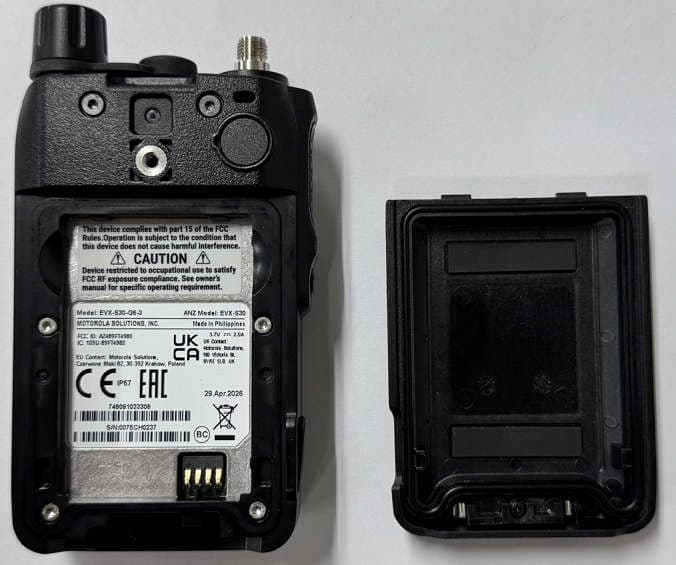
AZ489FT4980
Sep 08, 2026Portable two way radio
Equipment Class
TNF - Licensed Non-Broadcast Transmitter Held to FaceAZ489FT4981
Aug 14, 2026Handheld Portable - TANAPA BPR 45 400-470 MHZ 4W NKP
Equipment Class
TNF - Licensed Non-Broadcast Transmitter Held to Face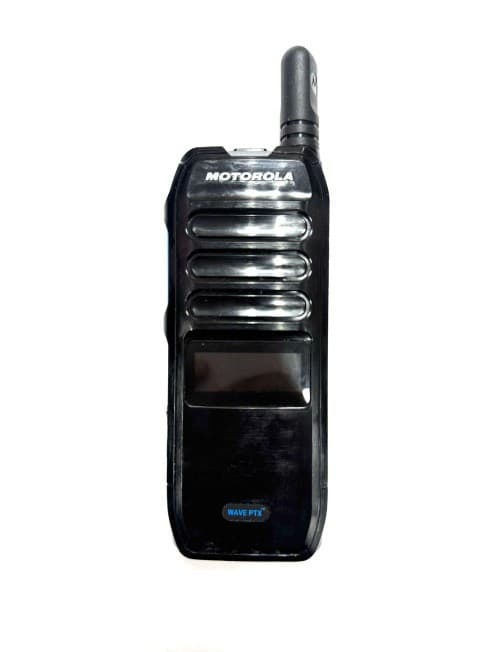
AZ489FT7187
Jul 13, 2026Portable 2-Way Radio with Bluetooth, Bluetooth LE, WIFI 2.4GHz, WIFI 5GHz, LTE
Equipment Class
DSS - Part 15 Spread Spectrum TransmitterAZ499FT6031
May 11, 2026Operation Critical Wireless Earpiece PTT
Equipment Class
DSS - Part 15 Spread Spectrum Transmitter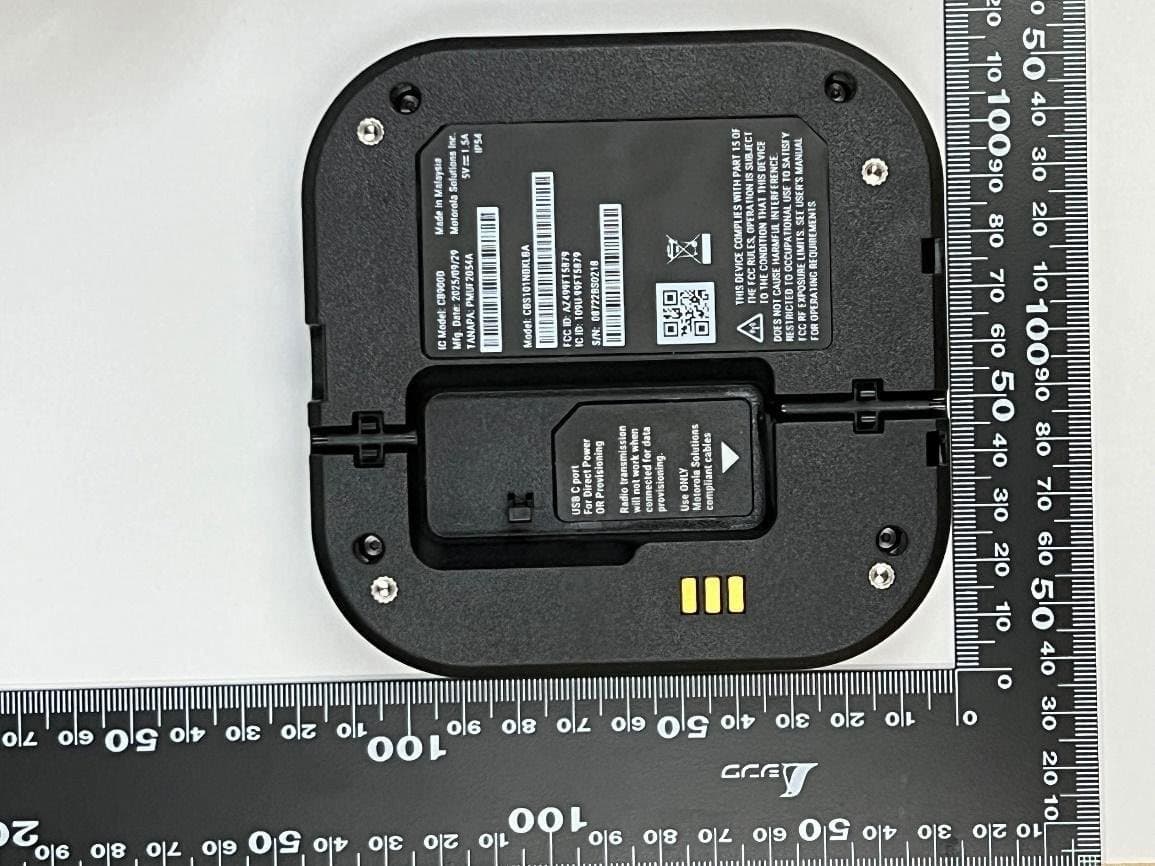
AZ499FT5879
Dec 19, 20252-way Portable Radio with BT, BTLE, WIFI, NFC and LTE
Equipment Class
DSS - Part 15 Spread Spectrum Transmitter