AZ489FT7004Handheld Data Terminal with Bluetooth Modem
Motorola Solutions, Inc.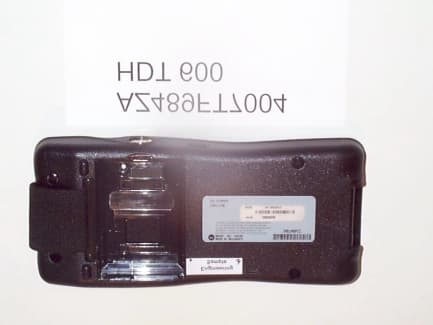
Click to zoom
Application Details
- Equipment Class
- DSS - Part 15 Spread Spectrum Transmitter
- Date of Grant
- Jul 20, 2003
- Application Purpose
- Original Equipment
- Date of Application
- Mar 10, 2003
- Equipment Note
- Handheld Data Terminal with Bluetooth Modem
- Frequency Range
- 2402.00000000 - 2480.00000000
- Company
- Motorola Solutions, Inc.
- Country
- United States
Documents & Files
Document Text
Text extracted from the exhibit documents filed with the FCC. Open a document above to read the original.
Users Manual
Applicant: Motorola, Inc. FCC ID: AZ489FT7004 Exhibit 8 Exhibit VIII User Information and User Manual 1) User Card/Booklet - 2 pages, contains important information for safe usage and RF energy awareness and control information for compliance with RF energy exposure limits 2) User Service Manual HDT 600 Data Terminal - 29 PDF pages total, 22 numbered pages Please find the information required by Part 15.19, 15.21 & 15.105 in Owners Manual on page 7 of this PDF file, or click tab to FCC INTERFERENCE WARNING. Note: Items 1 & 2 above follow this cover page 68P02963C77-APlease retain for future use BEFORE USING THIS RADIO TERMINAL, READ THIS BOOKLET WHICH CONTAINS IMPORTANT OPERATING INSTRUCTIONS FOR SAFE USAGE AND RF ENERGY AWARENESS AND CONTROL INFORMATION FOR COMPLIANCE WITH RF ENERGY EXPOSURE LIMITS IN APPLICABLE NATIONAL AND INTERNATIONAL STAN- DARDS. The information provided in this document supersedes information contained in user guides published prior to February 2002. For radio terminals that have been approved as intrinsically safe, read the instruc- tions and information on intrinsic safety in this booklet. Compliance with RF Energy Exposure Standards Notice: This radio terminal is intended for use in occupational/controlled applica- tions, where users have been made aware of the potential for exposure and can ex- ercise control over their exposure. This radio terminal device is NOT authorized for general population, consumer or similar use. Federal Communication Commission Regulations: The FCC established limits for safe exposure to radio frequency (RF) emissions from portable two-way radios. The FCC requires manufacturers to demonstrate compliance with RF exposure limits before portable two-way radios can be market- ed in the U.S. When two-way radios are approved for occupational /controlled envi- ronment exposure limits, the FCC requires users to be fully aware of and exercise control over their exposure. Awareness and control of RF exposure can be accom- plished by the use of labels, or by education or training through appropriate means, such as information and instructions in user manuals or safety booklets. Your Mo- torola two-way radio terminal has a RF exposure information label in the battery compartment. This user safety booklet includes useful information about RF expo- sure and helpful instructions on how to control your RF exposures. Your Motorola two-way radio terminal is designed and tested to comply with a num- ber of national and international standards and guidelines (listed below) regarding human exposure to radio frequency electromagnetic energy. This radio terminal complies with the IEEE (FCC) and ICNIRP exposure limits for occupational/con- trolled RF exposure environment at usage factors of up to 50% transmit -50% re- ceive. In terms of measuring RF energy for compliance with the FCC exposure guidelines, your radio terminal radiates measurable RF energy only while it is trans- mitting, not when it is receiving or in standby mode. Note: that the approved batter- ies, supplied with this radio terminal are rated for a 5-5-90 duty cycle (5% transmit- 5% receive - 90% standby), even though this radio terminal complies with the FCC occupational exposure limits at usage factors of up to 50% transmit. Your Motorola two-way radio terminal complies with the following RF energy exposure standards and guidelines: •United States Federal Communications Commission, Code of Federal Regula- tions; 47CFR part 2 sub-part J •American National Standards Institute (ANSI) / Institute of Electrical and Elec- tronic Engineers (IEEE) C95. 1-1992 •Institute of Electrical and Electronic Engineers (IEEE) C95.1-1999 Edition •International Commission on Non-Ionizing Radiation Protection (ICNIRP) 1998 •Ministry of Health (Canada) Safety Code 6. Limits of Human Exposure to Radio frequency Electromagnetic Fields in the Frequency Range from 3 kHz to 300 GHz, 1999 •Australian Communications Authority Radio communications (Electromagnetic Radiation - Human Exposure) Standard 2001. •ANATEL, Brasil Regulatory Authority, Resolution 256 (April 11, 2001) "addi- tional requirements for SMR, cellular and PCS product certification." Compliance and Control Guidelines and Operating Instructions for portable two-way radio terminals To control your exposure and ensure compliance with the occupational /controlled environment exposure limits always adhere to the following Procedures. •If you are not using a body-worn accessory and are not using the radio termi- nal in the intended use position in front of the face, then ensure the antenna and the radio terminal are kept 2.5 cm (one inch) from the body when transmit- ting. Keeping the radio terminal at a proper distance is important because of RF exposures decrease with distance from the antenna. •Use only Motorola approved supplied or replacement batteries, and accesso- HANDHELD PORTABLE TERMINAL HDT600 ab ries. Use of non-Motorola-approved, batteries and accessories may exceed FCC RF exposure guidelines. For additional information on RF exposure awareness information, visit the following Motorola website: www.mot.com/rfhealth. Electromagnetic Interference/Compatibility Note:Nearly every electronic device is susceptible to electromagnetic interference (EMI) if inadequately shielded, designed, or otherwise configured for electromagnet- ic compatibility. Facilities To avoid electromagnetic interference and/or compatibility conflicts, turn off your ra- dio terminal in any facility where posted notices instruct you to do so. Hospitals or health care facilities may be using equipment that is sensitive to external RF energy. Aircraft When instructed to do so, turn off your radio terminal when on board an aircraft. Any use of a radio terminal must be in accordance with applicable regulations per airline crew instructions. Medical Devices Pacemakers The Advanced Medical Technology Association (AdvaMed) recommends that a minimum separation of 6 inches (15 centimeter…
Text truncated - open the document above for the full version.
Users Manual
Ownerís Manual HDT 600 Handheld Data Terminal 68P02966C70-A 68P02966C70-A @6802966C70@ a Inca very small format.book Page 1 Thursday, May 22, 2003 7:57 PM Commercial, Government and Industrial Solutions Sector 1301 E. Algonquin Road, Schaumburg, IL 60196 68P02966C70-A June, 2003 © Motorola Inc., 2003 Contents COMPUTER SOFTWARE COPYRIGHTS...................... iii FCC INTERFERENCE WARNING................................. vi What is the HDT 600 Terminal ........................................ 1 HDT 600 Parts ................................................................ 3 Unpacking ....................................................................... 4 HDT 600 Cradle Connections ......................................... 5 Installing the Battery........................................................ 6 Removing the Battery...................................................... 6 First Time Battery Charge ............................................... 7 Charging the Battery ....................................................... 8 Battery Maintenance ...................................................... 9 Turning on the HDT 600 ................................................ 10 Suspend Mode .............................................................. 10 Turning off the HDT 600 ................................................ 10 Using the HDT 600........................................................ 11 Using the Stylus Pen ..................................................... 11 Scanning With the HDT 600 (Optional) ......................... 12 Resetting the HDT 600.................................................. 13 Cradle Installation ......................................................... 14 Maintaining the HDT 600 .............................................. 16 Accessories ................................................................... 17 What to Do If ................................................................. 18 Battery Warnings and Disposal ..................................... 20 Inca very small format.book Page i Thursday, May 22, 2003 7:57 PM ii This page intentionally left blank Inca very small format.book Page ii Thursday, May 22, 2003 7:57 PM iii COMPUTER SOFTWARE COPYRIGHTS The Motorola products described in this instruction manual may include copyrighted Motorola computer programs stored in semiconductor memories or other media. Laws in the United States and other countries preserve for Motorola certain exclusive rights for copyrighted computer programs, including the exclu- sive right to copy or reproduce in any form the copyrighted computer program. Accordingly, any copy- righted Motorola computer programs contained In the Motorola products described in this instruction manual may not be copied or reproduced in any manner without the express written permission of Motor- ola. Furthermore, the purchase of Motorola products shall not be deemed to grant either directly or by implication, estoppel. or otherwise. any license under the copyrights, patents or patent applications of Motorola, except for the normal non-exclusive, royalty free license to use that arises by operation of law in the sale of a product. EPS ñ 34440- B This warranty applies within the fifty (50) United States, the District of Columbia and Canada. LIMITED WARRANTY MOTOROLA COMMUNICATION PRODUCTS If the affected product is being purchased pursuant to a written Communications System Agreement signed by Motorola, the warranty contained in that written agreement will apply. Otherwise, the follow- ing warranty applies. I. WHAT THIS WARRANTY COVERS AND FOR HOW LONG: Motorola Inc. or, if applicable, Motorola Canada Limited ("Motorola") warrants the Motorola manu- factured radio communications product, including original equipment crystal devices and channel ele- ments ("Product"), against material defects in material and workmanship under normal use and service for a period of One (1) Year from the date of shipment. Motorola, at its option, will at no charge either repair the Product (with new or reconditioned parts), replace it with the same or equivalent Product (using new or reconditioned Product), or refund the pur- chase price of the Product during the warranty period provided purchaser notifies Motorola according to the terms of this warranty. Repaired or replaced Product is warranted for the balance of the original applicable warranty period. All replaced parts of the Product shall become the property of Motorola. This express limited warranty is extended by Motorola to the original end user purchaser purchasing the Product for purposes of leasing or for commercial, industrial, or governmental use only, and is not assignable or transferable to any other party. This is the complete warranty for the Product manufac- tured by Motorola. Motorola assumes no obligations or liability for additions or modifications to this warranty unless made in writing and signed by an officer of Motorola. Unless made in a separate writ- ten agreement between Motorola and the original end user purchaser, Motorola does not warrant the installation, maintenance or service of the Product. Motorola cannot be responsible in any way for any ancillary equipment not furnished by Motorola which is attached to or used in connection with the Product, or for operation of the Product with any ancillary equipment, and all such equipment is expressly excluded from this warranty. Because each system which may use the Product is unique, Motorola disclaims liability for range, coverage, or oper- ation of the system as a whole under this warranty. Inca very small format.book Page iii Thursday, May 22, 2003 7:57 PM iv II. GENERAL PROVISIONS: This warranty sets forth the full extent of Motorolaís responsibilities regarding the Product. Repair, replacement or refund of the purchase price, at Motorolaís option, is the exclusive remedy. THIS WARRANTY IS GIVEN IN LIEU OF ALL OTHER EXPRESS WARRANTIES. MOTOROLA DIS- CLAIMS ALL OTHER W…
Text truncated - open the document above for the full version.
Users Manual
Please retain for future use 6802965C93-B July, 2003 @6802965C93@ Commercial, Government and Industrial Solutions Sector 1301 E. Algonquin Road, Schaumburg, IL 60196Copyright © 2003 Motorola All Rights Reserved. Safety and General Information RF Operational Characteristics Your data terminal contains a radio frequency transmitter to convey the information you wish to send as well as occasional automatic signals used to sustain connection to the wireless network, and a receiver which enables you to receive communication and connection information from the network.For data radio terminals that have been approved as intrinsically safe, read the in-structions and information on intrinsic safety in this booklet.PORTABLE RADIO PRODUCT OPERATION AND EME EXPOSUREYour Motorola radio product is designed to comply with the following national and international standards and guidelines regarding exposure of human beings to radio frequency electromagnetic energy (EME): • United States Federal Communications Commission, Code of Federal Regula- tions; 47CFR part 2 sub-part J • American National Standards Institute (ANSI) / Institute of Electrical and Elec- tronic Engineers (IEEE) C95. 1-1992 • Institute of Electrical and Electronic Engineers (IEEE) C95.1-1999 Edition• International Commission on Non-Ionizing Radiation Protection (ICNIRP) 1998 • Ministry of Health (Canada) Safety Code 6. Limits of Human Exposure to Radio frequency Electromagnetic Fields in the Frequency Range from 3 kHz to 300 GHz, 1999 • Australian Communications Authority Radio communications (Electromagnetic Radiation - Human Exposure) Standard 2003. • ANATEL, Brasil Regulatory Authority, Resolution 256 (April 11, 2001) "addi- tional requirements for SMR, cellular and PCS product certification." To assure optimal radio product performance and make sure human exposure to radio frequency electromagnetic energy is within the guidelines set forth in the above standards, always adhere to the following procedures: Body-worn operationTo maintain compliance with FCC RF exposure guidelines, if you wear a radio prod-uct on your body when transmitting, always place the radio product in a Motorola approved holster or carry case for this product . When placing your data ter- minal in a carry case approved for body-worn applications for this device, it must be inserted with the display facing away from the user's body . Use of non-Motorola-approved accessories may exceed FCC RF exposure guidelines. For additional information on RF exposure awareness information, visit the following Motorola website: www.mot.com/rfhealth. Electro Magnetic Interference/Compatibility NOTE: Nearly every electronic device is susceptible to electromag- netic interference (EMI) if inadequately shielded, designed or otherwise configured for electromagnetic compatibility. FacilitiesTo avoid electromagnetic interference and/or compatibility conflicts, turn off your ra-dio data terminal in any facility where posted notices instruct you to do so. Hospitals or health care facilities may be using equipment that is sensitive to external RF en-ergy.AircraftWhen instructed to do so, turn off your radio data terminal when on board an aircraft. Any use of a radio data terminal must be in accordance with applicable regulations per airline crew instructions. IMPORTANT INFORMATION ON SAFE AND EFFICIENT OPERATION.READ THIS INFORMATION BEFORE USING YOUR HANDHELD DATA TERMINAL. HANDHELD DATATERMINALHDT 600 ab Medical DevicesPacemakersThe Advanced Medical Technology Association (AdvaMed) recommends that a minimum separation of 6 inches (15 centimeters) be maintained between a hand-held wireless radio data terminal and a pacemaker. These recommendations are consistent with those of the U.S. Food and Drug Administration.Persons with pacemakers should: • ALWAYS keep the radio data terminal more than 6 inches (15 centimeters) from their pacemaker when the radio data terminal is turned ON. • Do not carry the radio data terminal in the breast pocket.• Turn the radio data terminal OFF immediately if you have any reason to sus- pect that interference is taking place. Hearing AidsSome digital wireless radio data terminals may interfere with some hearing aids. In the event of such interference, you may want to consult your hearing aid manufac-turer to discuss alternatives.Other Medical DevicesIf you use any other personal medical device, consult the manufacturer of your de-vice to determine if it is adequately shielded from RF energy. Your physician may be able to assist you in obtaining this information.Use While DrivingCheck the laws and regulations on the use of radio products in the area where you drive. Always obey them. When using the radio product while driving, please: • Give full attention to driving and to the road.• Use hands-free operation, if available.• Pull off the road and park before making or answering a call if driving condi- tions so require. Operational WarningsFor Vehicles With an Air BagDo not place a portable radio product in the area over the air bag or in the air bag deployment area. Air bags inflate with great force. If a portable radio is placed in the air bag deployment area and the air bag inflates, the radio product may be propelled with great force and cause serious injury to occupants of the vehicle.Potentially Explosive AtmospheresTurn off your radio data terminal prior to entering any area with a potentially explosive atmosphere, unless it is a radio data terminal type especially qualified for use in such areas as "Intrinsically Safe" (for example, Factory Mutual, CSA, UL, or CENELEC). Do not remove, install, or charge batteries in such areas. Sparks in a potentially explosive atmosphere can cause an explosion or fire resulting in bodily injury or even death. NOTE: The areas with potentially explosive atmospheres referred to above include fueling areas such as below decks on boats, fuel or chemical transfer or storage facilities, areas where the air contains chemica…
Text truncated - open the document above for the full version.
Attestation Statements
Applicant: Motorola, Inc.FCC ID: AZ489FT7004 Exhibit 2 FCC Certification Report for the FCC ID: AZ489FT7004 HDT 600 Terminal New Certification Exhibit 2 - Certification Data
Cover Letter(s)
Applicant: Motorola, Inc.FCC ID: AZ489FT7004 Exhibit 13 EXHIBIT XIII - Cover Letters New Certification Report for the FCC ID: AZ489FT7004 HDT 600 Terminal Cover Letter 1.) Certification action requested Cover Letter 2.) Request for Confidentiality under Part 0.459. Cover Letter 3.) Motorola Agent authorization letter allowing Rod Munro to sign FCC Form 731 on behalf of Motorola, Inc. Motorola, Inc., 8000 W. Sunrise Blvd., Plantation, FL 33322 Page 1 Date: 7 th March 2003 Authorization & Evaluation Division Federal Communication Commission Laboratory 7435 Oakland Mills Road Columbia, MD 21046 Gentlemen: This letter authorizes Rod Munro, President of Spectrum Technology, Inc. to act for Motorola, Inc for the purpose of signing the FCC Form 731 electronically on behalf of Motorola, Inc. solely with respect to the HDT600 with FCC ID: AZ489FT7004. Also, to check ‘yes” in item 15 of the said form Section 5301 (Anti-Drug Abuse) certification. The applicant, Motorola, Inc., must certify that neither the applicant nor any party to the applicant is subject to denial of Federal benefits, that includes FCC benefits, pursuant to section 5301 of the Anti-Drug Abuse act of 1988, 21 USC Subpart 862 because of a conviction for possession or distribution of a controlled substance. See 47 CFR 1.2002(b) for the definition of a “party” for these purposes. Please contact me at 954.723.5793 if you require any additional information. Sincerely, /s/ Mike Ramnath FCC Liaison Email: [email protected]
External Photos
Applicant: Motorola, Inc.FCC ID: AZ489FT7004 Exhibit 31 EXHIBIT 3 EXTERNAL PHOTOS HDT 600 Terminal Front and rear view of terminal 1 of 3 Applicant: Motorola, Inc.FCC ID: AZ489FT7004 Exhibit 32 HDT 600 Terminal Rear view, battery removed and FCC Identifier label location 2 of 3 FCC IDENTIFICATION LABEL FACSIMILE ON FOLLOWING PAGE Applicant: Motorola, Inc.FCC ID: AZ489FT7004 Exhibit 33 HDT 600 Terminal Identifier Label for the FCC ID:AZ489FT7004, 3 of 3 Model:F4415A Label location: Back side of the hand held terminal. DataTAC case ( F4415A VA00052AA ) HDT 600 Terminal End View of Terminal and IrDA port used in the Office Dock 5 of 5
ID Label/Location Info
Applicant: Motorola, Inc. FCC ID: AZ489FT7004 Exhibit 1 LIST OF EXHIBITS DESCRIPTION EXHIBITSREFERENCE I.Identification label Information12.1033 (b) 7 & 2.925 & General Information1A 1. Production Plans2.1031 2. Application ReferencesN/A 3. Data submittal Procedure 4. Similar Certified Transmitter II.Certification Data2 III.External Photographs32.1033 (b) 7 IV.Block Diagrams (Circuit Diagrams) 42.1033 (b) 5 V. Schematic Diagrams & Antenna Assembly52.1033 (b) 5 VI. Test Report #1, Part 15.247 – New Certification 62.1033 (b) 6 Eleven Common Bluetooth Items6 Six tests required615.247 (a, b, c, g, h) 1) The Occupied Bandwidth Section 15.247(a)!ii 2) Conducted Output Power Section 15.247(b)1 3) EIRP limit Section 15.247(b)3 4) RF safety Section 15.247(b)4 see Exhibit XII 5) Spurious Emissions Section 15.247 (c) 6) Power Spectral Density in Acquistion Mode Test Report #2, Part 90 –Supplemental Report for Previously Certified Transmitter Exhibit 6A – RF Power Output 2.1046 Exhibit 6G – Transmitter Radiated Spurious Emissions 2.1053 Exhibit 6G - Equivalent Isotropic Radiated Power VII.Test Set-up Procedures72.1041 VIII.Instruction Manual82.1033 (b) 3 IX.Internal Photographs92.1033 (b) 7 X.Part List and Tune Up Procedures10N/A XI.RF Exposure Information112.1093 & 15.247 (b)4 XII.Operational Description122.1033 (b) 1, 2, 4, 8 Antenna Requirements1215.203 Technical Characteristics 1 - 5 1. Application XIII. Cover Letter, Action Requested13 Cover Letter, Authorization to sign FCC Form 73113 Please NOTE: Exhibits 4, 5 and 12 are requested to held confidential Applicant: Motorola, Inc. FCC ID: AZ489FT7004 Exhibit 1 EXHIBIT 1. FCC IDENTIFICATION LABEL Required Under Section: 47 CFR 2.1033(c) 11 FCC ID: AZ489FT7004 Identifier label for the Model: F4415A DataTAC case ( F4415A VA00052AA ) Applicant: Motorola, Inc. FCC ID: AZ489FT7004 Exhibit 1 FCC ID: Label Location on back of the terminal. Applicant: Motorola, Inc. FCC ID: AZ489FT7004 Exhibit 1 EXHIBIT 1A. General Information --- 47 CFR 2.1031 and 2.1061. 1A.1. Production Plans -- Pursuant 47 CFR 2.1031 Quantity production is planned. 1A.2. Application References -- Pursuant 47 CFR 2.1061 Reference is made to the following Motorola "Application References" 1. Part 15.247 Intentional Radiators and their application 2. Part 90 Land mobile 1A.3. Data Submittal Procedure Data located in Exhibit 6 is supplied in accordance with Part 2, Sub-part J and Part 15, Sub-part C and Part 90 of the Commission’s rules and will be submitted electronically. 1A.4. Similar, currently Certified Intentional Radiator This HDT 600 Terminal is manufactured by Motorola, Inc. The terminal contains one Part 15.247, FHSS, Bluetooth intentional radiator and one co-located Part 90, 800 MHz transmitter. The Motorola manufactured Bluetooth intentional radiator is a new product Certification based on the Broadcom single chip solution. This device meets all required Bluetooth Qualification Testing, BQB. It is similar in operation to a previously Certified Motorola intertional radiator, under the FCC ID: AZ489FT7005. The Part 90, DataTAC radio modem, with Slotted DSMA, 4-level FSK modulation, has previously been Certified under the FCC ID: PQS- BM28001, by the manufacturer and grantee Wavenet Technology Pty., Ltd. This transmitter module would be considered physically and electrically identical to the original transmitter as define by Part 2.908.
Internal Photos
Applicant: Motorola, Inc.FCC ID: AZ489FT7004 Exhibit 91 EXHIBIT IX - INTERNAL PHOTOS HDT 600 Terminal V iew Bluetooth PCB both sides of board with top shield in place 1 of 5 Applicant: Motorola, Inc.FCC ID: AZ489FT7004 Exhibit 92 HDT 600 Terminal View of the Bluetooth PCB both sides of board top shield removed 2 of 5 Applicant: Motorola, Inc.FCC ID: AZ489FT7004 Exhibit 93 HDT 600 Terminal Main Board, DataTAC Modem under shield (left) - Rear cover (right)3 of 5 Applicant: Motorola, Inc.FCC ID: AZ489FT7004 Exhibit 94 HDT 600 Terminal Main Board (left) - 800 MHz DataTac Modem (right)4 of 5 Applicant: Motorola, Inc.FCC ID: AZ489FT7004 Exhibit 95 HDT 600 Terminal Front cover (left) - Bluetooth transmitter ( upper right) - Display (right) 5 of 5
RF Exposure Info
Certificate Number: 1449-02 CGISS EME Test Laboratory 8000 West Sunrise Blvd Fort Lauderdale, FL. 33322 S.A.R. EME Compliance Test Report Part 1 of 2 Attention: FCC Date of Report: December 13, 2002 Report Revision: Rev. O Manufacturer: Motorola South - ARAD Product Description: Data Terminal w/ 1.8W Data TAC: FDMA, 4-level FSK modulation; 1mW Bluetooth: Frequency Hopping Spread Spectrum (FHSS) FCC ID: AZ489FT7004 Device Model: F4415A (VA00052AA) Form-SAR-Rpt-Rev. 1.00 Page 1 of 21 Test Period: 11/27/02 – 12/05/02 Test Engineer: Stephen Whalen (Sr. EME engineer) Author: Michael Sailsman EME Regulatory Affairs Note: Based on the information and the testing results provided herein, the undersigned certifies that when used as stated in the operating instructions supplied, said product complies with the national and international reference standards and guidelines listed in section 2.0 of this report. Signature on File 12/13/02 ____________________________________________________________ _________________________ Ken Enger Date Approved Senior Resource Manager, Laboratory Director, CGISS EME Lab Note: This report shall not be reproduced without written approval from an officially designated representative of the Motorola EME Laboratory. TABLE OF CONTENTS 1.0 Introduction 2.0 Reference Standards and Guidelines 3.0 Description of Test Sample 3.1 Test Signal 3.2 Test Output Power 4.0 Description of Test Equipment 4.1 Description of S.A.R Measurement System 4.2 Description of Phantom 4.2.1 Flat Phantom 4.2.2 SAM phantom 4.3 Simulated Tissue Properties 4.3.1 Type of Simulated Tissue 4.3.2 Simulated Tissue Composition 4.4 Test condition 5.0 Description of Test Procedure 5.1 Device Test Positions 5.1.1 Abdomen 5.1.2 Head 5.1.3 Face 5.2 Test Position Photographs 5.3 Probe Scan Procedures 6.0 Measurement Uncertainty 7.0 S.A.R. Test Results 7.1 S.A.R. results 7.2 Peak S.A.R. location 7.3 Highest S.A.R. results calculation methodology 8.0 Conclusion Appendix A: Power Slump Data/Shortened scan Appendix B: Data Results Appendix C: Dipole System Performance Check Results Appendix D: Calibration Certificates Appendix E: Illustration of Body-worn Accessories Appendix F: Accessories and options test status and separation distances Form-SAR-Rpt-Rev. 1.00 Page 2 of 21 REVISION HISTORY Date Revision Comments 12/13/02 O Initial release Prototype results Form-SAR-Rpt-Rev. 1.00 Page 3 of 21 1.0 Introduction This report details the utilization, test setup, test equipment, and test results of the Specific Absorption Rate (S.A.R.) measurements performed at the CGISS EME Test Lab for model number F4415A (VA00052AA), FCC ID: AZ489FT7004. The applicable exposure environment is Occupational/Controlled. The test results included herein represent the highest S.A.R. levels applicable to this product and clearly demonstrate compliance with FCC Occupational/Controlled RF Exposure limits of 8.0 mW/g per the requirements of 47 CFR 2.1093(d). 2.0 Reference Standards and Guidelines This product is designed to comply with the following national and international standards and guidelines. • United States Federal Communications Commission, Code of Federal Regulations; 47CFR part 2 sub-part J • American National Standards Institute (ANSI) / Institute of Electrical and Electronic Engineers (IEEE) C95. 1-1992 • Institute of Electrical and Electronic Engineers (IEEE) C95.1-1999 Edition • International Commission on Non-Ionizing Radiation Protection (ICNIRP) 1998 • Ministry of Health (Canada) Safety Code 6. Limits of Human Exposure to Terminal frequency Electromagnetic Fields in the Frequency Range from 3 kHz to 300 GHz, 1999 • Australian Communications Authority Terminal communications (Electromagnetic Radiation - Human Exposure) Standard 2001 • ANATEL, Brazil Regulatory Authority, Resolution 256 (April 11, 2001) "additional requirements for SMR, cellular and PCS product certification." Form-SAR-Rpt-Rev. 1.00 Page 4 of 21 3.0 Description of Test Sample FCC ID: AZ489FT7004 is a hand held data terminal equipped with Bluetooth and DataTAC radio modems. The Bluetooth radio modem uses Frequency hopping Spread Spectrum (FHSS) modulation. The Bluetooth modem is used for applications where data is exchanged between an external Bluetooth device. The Bluetooth modem’s maximum duty cycle is set by the 802.11 standards. For single-slot operation the Bluetooth device transmits 366 out of 625 micro-seconds. The DataTAC radio modem (FCC ID: PQS- BM28001) operates using FDMA 4-level FSK modulation supporting RD-LAP 19200 and RD-LAP 9600 protocols. Using a detection methodology called Slotted Digital Sense Multiple Access (S-DSMA), transmissions are initiated only if a channel is free. The radio transmits one single packet of 512 bytes of data. Subsequent packets are sent after intervals of 200msec. There is a 1 second interval after a predefined number of packets. The duty cycle of the DataTAC radio transmission is limited by the DataTAC RF modem to 10%. The Bluetooth and DataTAC transmitters do not transmit simultaneously. This device is used for data acquisition. This device will be marketed to and used by employees solely for work-related operations, such as public safety agencies, e.g. police, fire and emergency medical. User training is the responsibility of these agencies, who can be expected to employ the usage instructions, safety information and operational cautions set forth in the user's manual, instructional sessions or other means. Motorola also makes available to its custome…
Text truncated - open the document above for the full version.
Contact Information
Applicant
Deanna Zakharia(Regulatory Compliance Manager)
Technical Contact
Spectrum Technology IncRod Munro
[email protected]425 771-4482
209 Dayton Street · Edmonds, Washington · United States
Test Firm
Spectrum Technology Inc.Rod Munro
Technical Specifications
| # | Rule Parts | Frequency Range | Power Output |
|---|---|---|---|
| 1 | 15C | 2.40 GHz - 2.48 GHz | 1.02 mW |
Other Applications from Motorola Solutions, Inc.
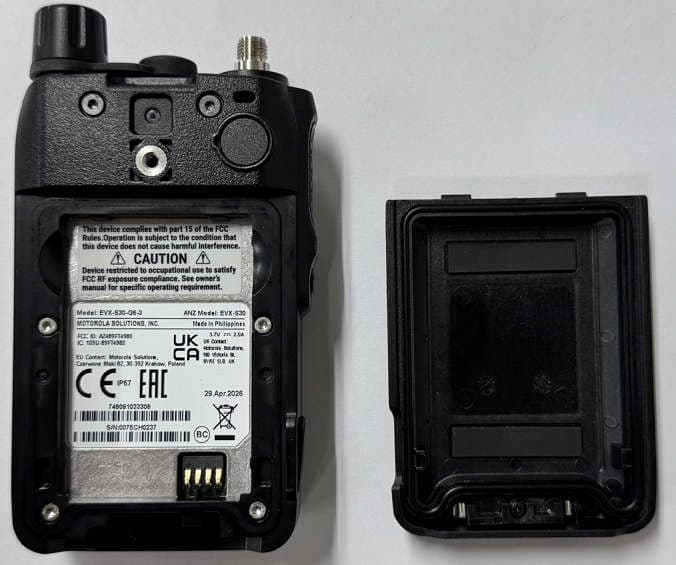
AZ489FT4980
Sep 08, 2026Portable two way radio
Equipment Class
TNF - Licensed Non-Broadcast Transmitter Held to FaceAZ489FT4981
Aug 14, 2026Handheld Portable - TANAPA BPR 45 400-470 MHZ 4W NKP
Equipment Class
TNF - Licensed Non-Broadcast Transmitter Held to Face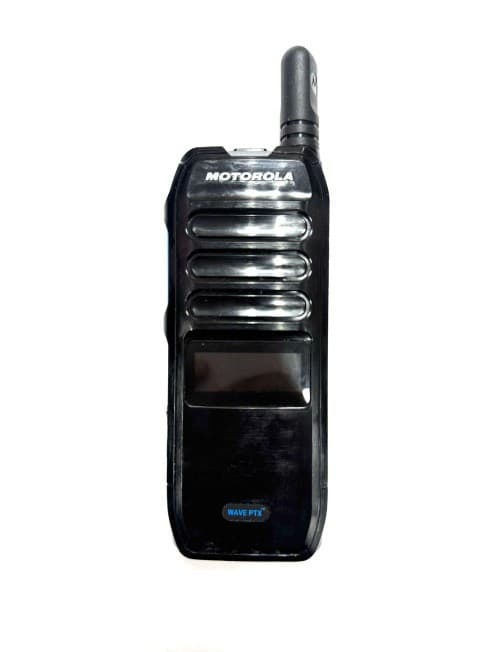
AZ489FT7187
Jul 13, 2026Portable 2-Way Radio with Bluetooth, Bluetooth LE, WIFI 2.4GHz, WIFI 5GHz, LTE
Equipment Class
DSS - Part 15 Spread Spectrum TransmitterAZ499FT6031
May 11, 2026Operation Critical Wireless Earpiece PTT
Equipment Class
DSS - Part 15 Spread Spectrum Transmitter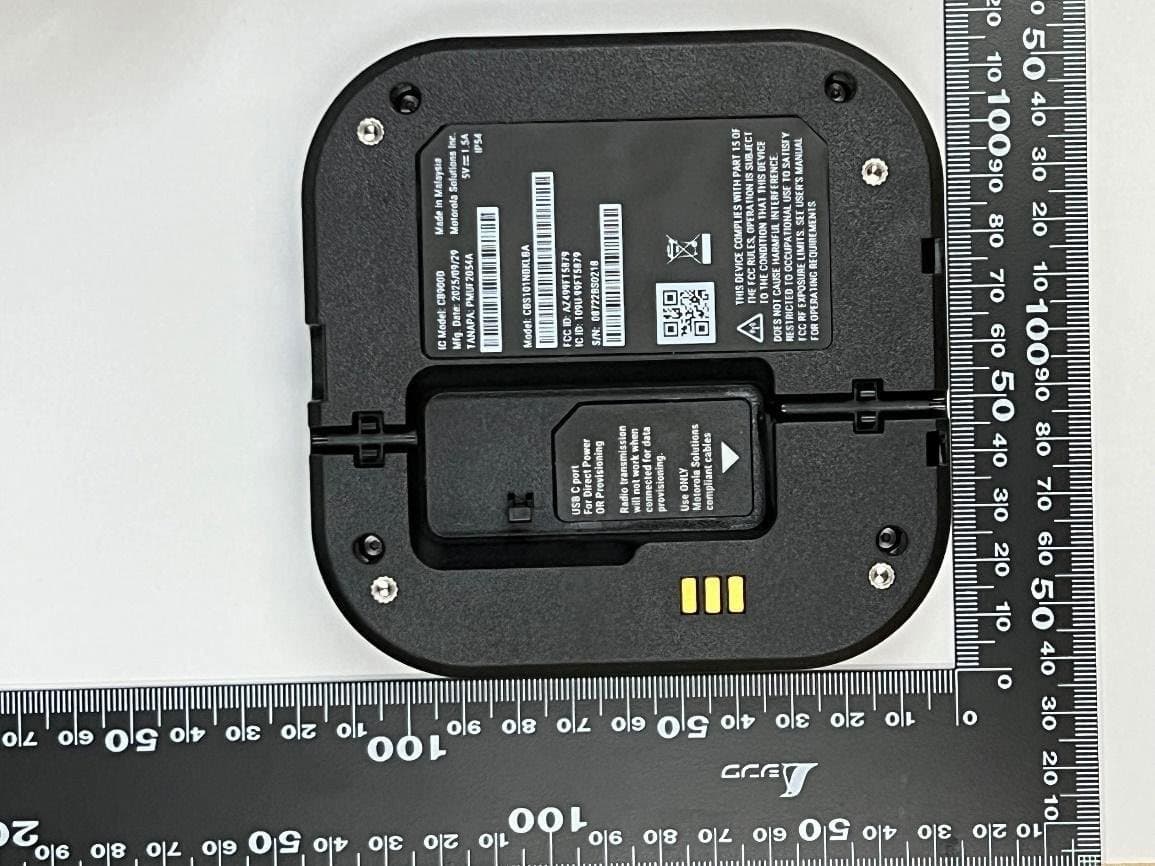
AZ499FT5879
Dec 19, 20252-way Portable Radio with BT, BTLE, WIFI, NFC and LTE
Equipment Class
DSS - Part 15 Spread Spectrum Transmitter