AZ489FT7165Mobile 2-way radio
Motorola Solutions, Inc.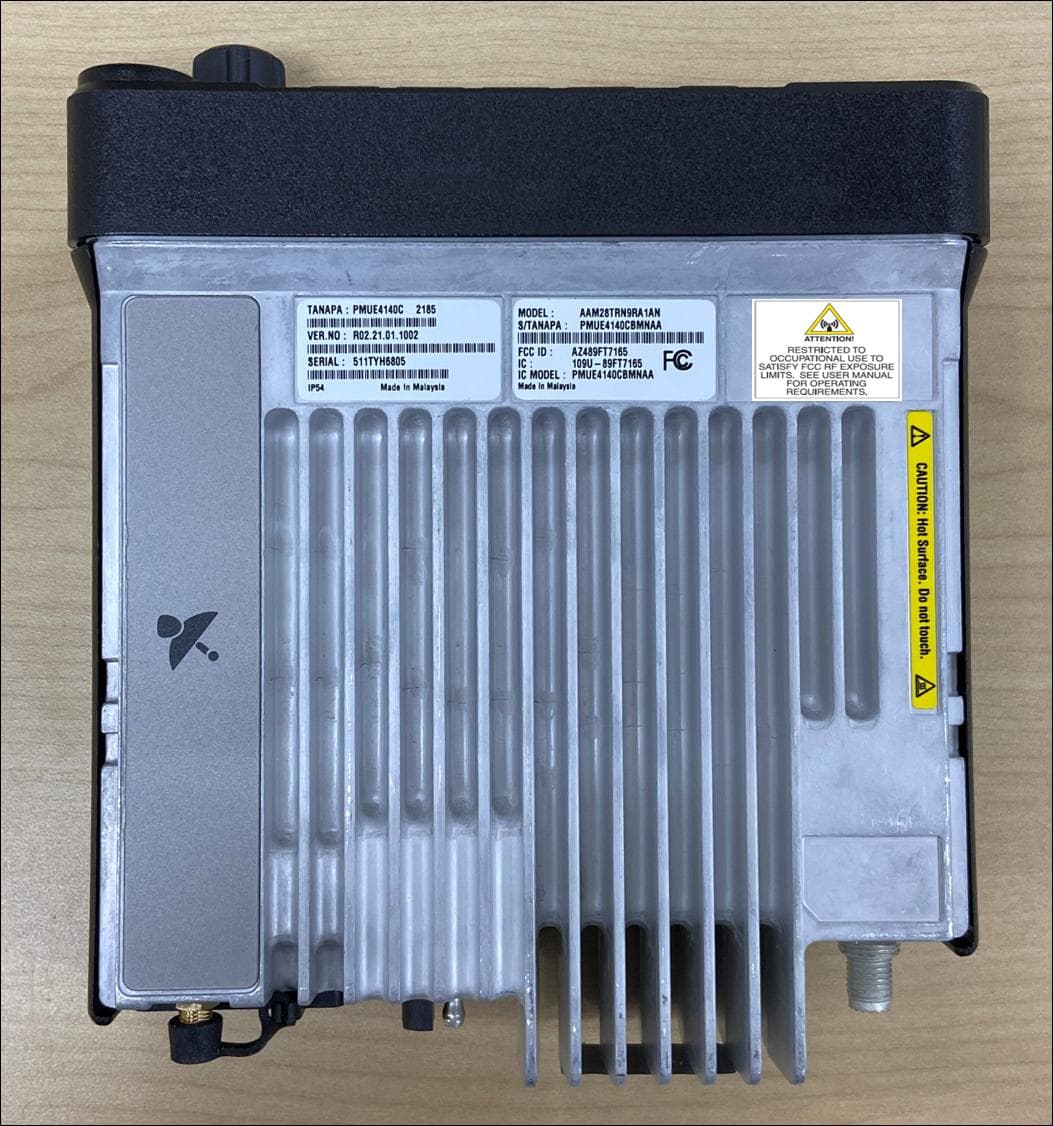
Click to zoom
Application Details
- Equipment Class
- TNB - Licensed Non-Broadcast Station Transmitter
- Date of Grant
- Dec 21, 2022
- Application Purpose
- Original Equipment
- Date of Application
- Dec 21, 2022
- Equipment Note
- Mobile 2-way radio
- Frequency Range
- 467.75000000 - 467.82500000
- Company
- Motorola Solutions, Inc.
- Country
- United States
Documents & Files
Document Text
Text extracted from the exhibit documents filed with the FCC. Open a document above to read the original.
Users Manual
XPR 5000/XPR 5000e Series Mobile Radio User Guide MOTOTRBO ™ PROFESSIONAL DIGITAL TWO-WAY RADIO *MN008323A01* MN008323A01-AA OCTOBER 2022 © 2022 Motorola Solutions, Inc. All rights reserved Contents Legal and Support.....................................................................................................10 Intellectual Property and Regulatory Notices...............................................................................10 Legal and Compliance Statements..............................................................................................11 Supplier's Declaration of Conformity.................................................................................11 Important Safety Information.............................................................................................12 Notice to Users (FCC).......................................................................................................12 Notice to Users (Industry Canada)....................................................................................12 Maritime Radio Use in the VHF Frequency Range...........................................................12 Special Channel Assignments............................................................................... 13 Operating Frequency Requirements......................................................................13 Declaration of Compliance for the Use of Distress and Safety Frequencies......... 15 Technical Parameters for Interfacing External Data Sources................................16 Warranty and Service Support.....................................................................................................16 Batteries and Chargers Warranty..................................................................................... 16 The Workmanship Warranty.................................................................................. 16 The Capacity Warranty.......................................................................................... 16 Limited Warranty...............................................................................................................16 MOTOROLA SOLUTIONS COMMUNICATION PRODUCTS............................... 16 I. WHAT THIS WARRANTY COVERS AND FOR HOW LONG:........................... 16 II. GENERAL PROVISIONS...................................................................................17 III. STATE LAW RIGHTS:......................................................................................17 IV. HOW TO GET WARRANTY SERVICE............................................................17 V. WHAT THIS WARRANTY DOES NOT COVER................................................17 VI. PATENT AND SOFTWARE PROVISIONS......................................................18 VII. GOVERNING LAW..........................................................................................18 Chapter 1: Read Me First........................................................................................19 1.1 Introduction............................................................................................................................20 1.2 Software Version................................................................................................................... 20 Chapter 2: Radio Care............................................................................................ 21 Chapter 3: Getting Started......................................................................................22 3.1 Turning the Radio On............................................................................................................ 22 3.2 Turning the Radio Off............................................................................................................ 22 3.3 Adjusting the Volume.............................................................................................................22 Chapter 4: Radio Overview.................................................................................... 23 4.1 Keypad Microphone Overview...............................................................................................25 MN008323A01-AA Contents 2 4.2 Programmable Buttons..........................................................................................................25 4.3 Icons......................................................................................................................................28 4.3.1 Display Icons............................................................................................................29 4.3.2 Wave Icons..............................................................................................................31 4.3.3 Advanced Menu Icons............................................................................................. 31 4.3.4 Bluetooth Devices Icons.......................................................................................... 32 4.3.5 Call Icons.................................................................................................................32 4.3.6 Job Tickets Icons.....................................................................................................33 4.3.7 Mini Notice Icons......................................................................................................34 4.3.8 Sent Items Icons......................................................................................................34 4.4 LED Indications......................................................................................................................34 Chapter 5: System Overview..................................................................................36 5.1 Capacity Max.........................................................................................................................36 5.2 Connect Plus................................................................…
Text truncated - open the document above for the full version.
Users Manual
MOTOTRBO ™ Mobile XPR 4000/5000/5000e Series INSTALLATION GUIDE MOTOTRBO ™ MOBILE PROFESSIONAL DIGITAL TWO-WAY RADIO *6880309T23* 6880309T23-FB DECEMBER 2020 © 2020 Motorola Solutions, Inc. All rights reserved Contents List of Figures..............................................................................................................4 List of Tables...............................................................................................................5 Foreword......................................................................................................................6 Product Safety and RF Exposure Compliance.............................................................................. 6 Computer Software Copyrights......................................................................................................6 Document Copyrights.................................................................................................................... 6 Disclaimer......................................................................................................................................6 Trademarks....................................................................................................................................6 Document History.......................................................................................................8 Related Publications...................................................................................................9 Notations Used in This Manual................................................................................10 Mobile Radio Model Numbering Scheme................................................................11 Commercial Warranty...............................................................................................13 I. What This Warranty Covers And For How Long.......................................................................13 II. General Provisions.................................................................................................................. 13 III. State Law Rights (Applicable Only in U.S.A.).........................................................................14 IV. How To Get Warranty Service................................................................................................14 V. What This Warranty Does Not Cover......................................................................................14 VI. Patent And Software Provisions.............................................................................................14 VII. Governing Law...................................................................................................................... 15 Chapter 1: Introduction...........................................................................................16 1.1 Mobile Radio Description.......................................................................................................16 1.1.1 Dimensions.............................................................................................................. 16 1.1.2 Connections on the Back of the Radio.....................................................................17 1.2 Standard Configurations........................................................................................................18 1.2.1 Dash Mount Configuration....................................................................................... 18 1.2.2 Remote Mount Configuration...................................................................................19 1.3 Base/Control Stations ...........................................................................................................19 Chapter 2: Installation Details for Standard Configurations...............................21 2.1 Planning the Installation.........................................................................................................21 2.1.1 Tools Required for Installation................................................................................. 21 2.1.2 Installation Example.................................................................................................21 2.1.3 Wiring Diagrams...................................................................................................... 22 2.2 Radio Mounting......................................................................................................................24 2.2.1 Dash Mount with Trunnion.......................................................................................25 6880309T23-FB Contents 2 2.2.2 Locking Kit (Optional)...............................................................................................27 2.2.2.1 Installing Locking Kit for All Radios............................................................27 2.3 DIN Mount..............................................................................................................................28 2.3.1 Installing the Frame into the Dashboard..................................................................28 2.3.2 Mounting the Radio in the Frame.............................................................................29 2.3.3 Removing the Radio from the Frame.......................................................................30 2.4 Remote Mount with Trunnion.................................................................................................30 2.5 Power Cables........................................................................................................................ 31 2.6 Ignition Sense Cable..............................................................................................................32 2.7 Antenna Installation............................................................................................................... 33 2.7.1 Selecting an Antenna Site/Location on a Metal Body Vehicle............…
Text truncated - open the document above for the full version.
Users Manual
en-US es-LA fr-CA pt-BR RF Energy Exposure Training and Product Safety Information for Mobile Two-Way Radios installed in Vehicles or as Fixed Site Control Stations Formation sur l’exposition aux RF et information sur la sécurité du produit pour radios bidirectionnelles mobiles installées dans des v éhicules ou comme stations de contrôle à emplacements fixes Capacitación sobre la exposición a energía de radiofrecuencia e información de protección del producto para radios de dos vías m óviles instalados en vehículos o como estaciones de control fijas Treinamento sobre a Exposição à Energia de RF e Informações de Segurança do Produto para Rádios Portáteis Bidirecionais Instalados em Veículos ou como Estações de Controle de Site Fixo https://learning.motorolasolutions.com/User_Documentation Caution Before using this radio, read this booklet which contains important operating instructions. For information on product details, brochures, user manuals and approved accessories. Please refer to www.motorolasolutions.com. Compliance with RF Exposure Standards National and international regulations require manufacturers to comply with the RF energy exposure limits for mobile two-way radios before they can be marketed. Your Motorola Solutions two-way radio is designed, manufactured, and tested to comply with all applicable national and international regulations for human exposure to radio frequency electromagnetic energy. When two-way radios are used as a consequence of employment, applicable regulations may require users to be fully aware of and able to control their exposure to meet occupational requirements. RF Energy Exposure Awareness and Control Information and Operational Instructions for Occupational Use Notice: This radio is intended for use in occupational/controlled conditions where users are aware of their exposure and can exercise control over their exposure to meet the requirements in national and international regulations. This radio device is not authorized for general population, consumer use. For more information on what RF energy exposure is, and how to control your exposure to ensure compliance with established RF exposure limits, consult the following websites: •https://www.fcc.gov/ •https://www.osha.gov/ •https://osha.europa.eu/en •http://www.who.int/peh-emf/project/en/ •http://www.ic.gc.ca/eic/site/smt-gst.nsf/eng/sf11467.html •http://www.ic.gc.ca/eic/site/smt-gst.nsf/eng/sf01904.html For additional user training information on exposure requirements, consult the following websites: •https://www.motorolasolutions.com/en_us/about/company-overview/corporate- responsibility/governance-and-policies/wireless-communication-and-health- faqs.html •http://learning.motorolasolutions.com/ English 1 RF Exposure Compliance and Control Guidelines To control exposure to yourself and others, and to ensure compliance with the relevant RF exposure limits, always adhere to the following guidelines: • Do not remove any of the RF Exposure Labels if present from this device or its related accessories. • Attach these instructions to the device when you transfer it to other users. • Do not use this device if the operational requirements described herein are not met. Notice to Users (FCC) This device complies with Part 15 of the FCC rules per the following conditions: • This device may not cause harmful interference. • The device must accept any interference received, including interference that may cause undesired operation. • Changes or modifications made to this device, not expressly approved by Motorola Solutions, could void the authority of the user to operate this equipment. Operating Instructions • Transmit no more than 50% of the time. To transmit (talk), press the Push-To- Talk (PTT) button. To receive calls, release the PTT button. Transmitting more than 50% of the time may cause RF exposure compliance requirements to be exceeded. • Transmit only when people (bystanders) outside the vehicle are at least at the minimum lateral distance (as shown in Tables 1 and 2) away from the vehicle body. This separation will ensure that there is sufficient distance from a properly installed (according to the installation instructions) externally-mounted antenna to satisfy the relevant RF exposure limits. • To ensure continued compliance with applicable RF exposure limits, use only Motorola Solutions approved, supplied or replacement antennas, batteries, and accessories. • For a list of Motorola Solutions approved accessories please refer to your user manual or visit www.motorolasolutions.com Table 1 lists the minimum lateral distance for bystanders from the body of a vehicle (For example, truck, van, car, motorcycle) equipped with an approved, properly installed single-band mobile radio and associated antenna(s). These lateral distances, for single-band radios, depend on the radio rated power. English 2 Table 1: Rated Power of Vehicle-Installed Single-Band Mobile Radio and Minimum Lateral Distance from Vehicle Body Single-Band Mobile Radio Rated Power (see Notice) Minimum Lateral Distance of By- standers from Vehicle Body Less than 7 W8 in. (20 cm) 7 to 14 W1 ft (30 cm) 15 to 39 W2 ft (60 cm) 40 to 110 W3 ft (90 cm) Notice: If you are not sure of the rated power of your single-band radio, contact your Motorola Solutions representative or dealer and supply the radio model number found on the radio model label. If you cannot determine the rated power, then assure 3 ft (90 cm) separation for bystanders from the body of the vehicle. Table 2 lists the minimum lateral distance for bystanders from the body of a vehicle (For example, truck, van, car, motorcycle) equipped with an approved, properly installed multi-band mobile radio and associated antenna(s). These lateral distances, for multi-band radios, depend on whether the radio is installed on a motorcycle, or on other kinds of vehicles. Table 2: Rated Power of Vehicle-Installed Multi-Band Mobile Radio and Minimum Lateral Distance from Vehicle Body Type of Veh…
Text truncated - open the document above for the full version.
Attestation Statements
Applicant: Motorola Solutions Inc FCC ID: AZ489FT7165/ IC: 109U-89FT7165 EXHIBIT 2 Revision 1 (2 Aug 2022) SHEET 1 OF 2 EXHIBIT 2 Statement of Certification (Pursuant to FCC Part 2.907, 2.908 and RSP 100 Sec 4) 2.1 Statement of Certification Transceiver type described herein (AZ489FT7165/109U-89FT7165) is in compliance with all applicable parts of the FCC rules and ISED RSS standards. Each unit manufactured, imported, or marketed will conform to the samples tested herein, within the statistical variations that can be expected due to high volume production and test measurement error. NAME: Ong Khye Siang SIGNATURE: DATE: 14 th Sep 2022 TITLE: Engineering Manager Applicant: Motorola Solutions Inc FCC ID: AZ489FT7165/ IC: 109U-89FT7165 EXHIBIT 2 Revision 1 (2 Aug 2022) SHEET 2 OF 2 2.2 Attestation Statement (Equipment Class DTS and DSS – Bluetooth/WiFi) This device contains an embedded Bluetooth device and WiFi device that are compliant with the applicable FCC Part 15C and ISED RSS 247 regulations. Part 15.247 (a)(1) / RSS 247 Section 5.1 ● The hopping sequence must be pseudo random. ● Each frequency must be used equally on the average by each transmitter ● The receivers input bandwidth is approximately equal to the transmit bandwidth ● The receiver hops in sequence with the transmitted signal Part 15.247 (g) / RSS 247 Section 5.1 ● The system is designed to comply with all of the regulations in this section when the transmitter is presented with a continuous data (or information) Part 15.247(h) / RSS 247 Section 5.1 ● The system does not coordinate its channel selection/hopping sequence with other frequency hopping systems for the express purpose of avoiding the simultaneous occupancy of individual hopping frequencies by multiple transmitters. NAME: Tai Wen Qi SIGNATURE: DATE: 14 th Sep 2022 TITLE: Electrical Engineer
Cover Letter(s)
FCC ID: AZ489FT7165 ___________________________________________________________________________________________________________ Motorola Solutions Inc. 8000 West Sunrise Boulevard, Fort Lauderdale, Florida 33322 EXHIBIT 13A Revision 3 (9 Sept 2022) Date: December 12, 2022 Office of Engineering and Technology Laboratory Division Equipment Authorization Branch Federal Communications Commission Laboratory 7435 Oakland Mills Road Columbia, MD 21046 Subject: Application for Certification of Transmitter with FCC ID: AZ489FT7165 Dear Sir/Madam, Motorola Solutions, Inc (8000 West Sunrise Boulevard, Fort Lauderdale, Florida) herein submits application for Certification of the subject transmitter. This transmitter is intended for use in a mobile radio application with capabilities for clear and coded communications with a variable transmit power operating within the following frequency ranges: Product Name Model Numbers Frequency Range RF Power FCC Rules Part XPR 5350e XPR 5550e XPR 5550e AAM28TRC9RA1AN AAM28TRN9RA1AN AAM28TRN9WA1AN LMR: 450 – 527 MHz 48W (Max declared) 22, 74, 90 LMR: 467.75 - 467.825 MHz 2W (Max declared) (2W ERP) 80 BT: 2402-2480 MHz 2.79mW (max measured conducted peak) 15C BTLE 4.0: 2402-2480MHz 3.86mW (max measured conducted peak) 15C WLAN 802.11 b/g/n: 2412-2462 MHz 122.46mW (max measured conducted peak) 15C We are requesting certification under Part(s) of the Commission’s Rules listed above to allow operation of this equipment. The subject transmitter complies with Section 90.203 and 80.203(b) of the Rules in that the operator cannot directly program transmit frequencies using the unit's normally accessible external controls. A complete Certification application is enclosed. If you require any additional information, please contact me at (954) 723-4707. Sincerely, Deanna Zakharia Regulatory Compliance Manager E-mail: [email protected]
Cover Letter(s)
FCC ID: AZ489FT7165 ___________________________________________________________________________________________________________ Motorola Solutions Inc. 8000 West Sunrise Boulevard, Fort Lauderdale, Florida 33322 EXHIBIT 13B Revision 1 (2 Aug 2022) CONFIDENTIALITY REQUEST 12 December 2022 Office of Engineering and Technology Laboratory Division Equipment Authorization Branch FCC Laboratory 7435 Oakland Mills Road Columbia, MD 21046 Subject: Confidentiality Request for Transmitter with FCC ID: AZ489FT7165 Dear Sir / Madam, Motorola Solutions Inc is requesting that Exhibit 4 (Circuit Descriptions), Exhibit 5 (Schematic Diagrams), Exhibit 10 (Parts List and Tune Up Procedures), and Exhibit 12 (Operational Description) not be made routinely available for public inspection. Motorola Solutions Inc considers the information in these exhibits to be classified as trade secrets, pursuant to 47 CFR Section 0.457(d), 0.459 and Section 552(b)(4) of the Freedom of Information Act. Please mark Exhibits 4, 5, 10, and 12 as “Confidential.” Please contact me if you require any additional information. Sincerely, ____________________ Deanna Zakharia Regulatory Compliance Manager E-mail: [email protected]
Cover Letter(s)
FCC ID: AZ489FT7165 _____________________________________________________________________________________________________________ Motorola Solutions Inc. 8000 West Sunrise Boulevard, Fort Lauderdale, Florida 33322 EXHIBIT 13C Revision 1 (2 Aug 2022) December 12, 2022 Authorization & Evaluation Division Federal Communications Commission Laboratory 7435 Oakland Mills Road Columbia, MD 21046 Subject: Extended Frequencies Justification for Certification of Transmitter with FCC ID: AZ489FT7165. Dear Sir/Madam: This transmitter is designed to operate in the frequency ranges as described in the Exhibit 13a. To aid equipment authorization in other countries which accept the United States FCC Grant for Certification, Motorola Solutions is requesting that the FCC lists the above applicable frequencies range under FCC Rule Parts 22, 74, 80, and 90 on the FCC Grant. For the FCC’s Rule Parts 22, 74, 80 and 90 applications, this radio is used in systems by Federal and Public Safety agencies including Police, Fire, and Emergency Medical Services, etc. as indicated in the table below. Equipment programming is the responsibility of Authorized Service Personnel. Also, the radio complies with 47 CFR Part 90.203(e) and 80.203(b), in that the operator cannot directly program the transmit frequencies using the normally accessible external controls. Per the FCC’s KDB634817 guidance, as an alternative to listing the exact frequencies, we acknowledge that it’s a violation of the FCC Rules if this device operates on unauthorized frequencies. Frequency Range (MHz) Part 22 Part 74 Part 80 Part 90 Federal Other Regions 450-454 x x 454-456 x 456-460 x x x 460-462.5375 x 462.5375-462.7375* x x 462.7375-467.5375 x x 467.5375-467.7375 x 467.7375-470 x x 470-512 x x x 512-520 x x *Canada Please contact me if you required any additional information. FCC ID: AZ489FT7165 _____________________________________________________________________________________________________________ Motorola Solutions Inc. 8000 West Sunrise Boulevard, Fort Lauderdale, Florida 33322 EXHIBIT 13C Revision 1 (2 Aug 2022) Sincerely, Deanna Zakharia Regulatory Compliance Manager E-mail: [email protected]
Cover Letter(s)
Federal Communications CommissionDA 12-642 Before the Federal Communications Commission Washington, D.C. 20554 In the Matter of Implementation of Sections 309(j) and 337 of the Communications Act of 1934 as Amended Promotion of Spectrum Efficient Technologies on Certain Part 90 Frequencies ) ) ) ) ) ) ) WT Docket No. 99-87 RM-9332 ORDER Adopted: April 25, 2012Released: April 26, 2012 By the Chief, Wireless Telecommunications Bureau, Chief, Public Safety and Homeland Security Bureau, and Chief, Office of Engineering and Technology: I.INTRODUCTION 1.In this Order, we waive, on our own motion, the January 1, 2013 deadline for private land mobile radio (PLMR) licensees in the 470-512 MHz band to migrate to narrowband (12.5 kHz or narrower) technology. 1 We also waive a related rule pertaining to manufacture and importation of PLMR equipment.We take this action in light of recent legislation directing the Commission to reallocate spectrum in the 470-512 MHz band. II. BACKGROUND 2.In 1995, the Commission adopted rule changes to promote the efficient use of the PLMR service and facilitate the introduction of advanced technologies. 2 To promote the transition to a more efficient narrowband channel plan, the Commission provided, inter alia, that “only increasingly efficient equipment” would be approved. 3 The Commission did not set a date after which it would no longer approve equipment with a wideband (25 kHz) mode, or after which such equipment could no longer be manufactured or used. 4 The Commission contemplated that, as systems reached the end of their service life and new radios were needed, users would migrate to the narrower bandwidth multi-mode radios in 1 See Implementation of Sections 309(j) and 337 of the Communications Act of 1934 as Amended,Second Report and Order and Second Further Notice of Proposed Rulemaking, WT Docket No. 99-87, 18 FCC Rcd 3034 (2003) (Second R&O); Implementation of Sections 309(j) and 337 of the Communications Act of 1934 as Amended,Third Memorandum Opinion and Order, Third Further Notice of Proposed Rule Making and Order, WT Docket No. 99- 87, 19 FCC Rcd 25045 (2004) (Third MO&O). Specifically, these narrowbanding deadlines apply to frequencies in the 150.8-162.0125 MHz, 173.2-173.4 MHz, and 421-512 MHz bands. Narrowbanding in the 150.05-150.8 MHz, 162-174 MHz, and 406.1-420 MHz bands, which are allocated primarily for Federal Government use, is governed by a different schedule. See Amendment of Parts 2 and 90 of the Commission’s Rules to Provide for Narrowband Private Land Mobile Radio Channels in the 150.05-150.8 MHz, 162-174 MHz, and 406.1-420 MHz Bands that Are Allocated for Federal Government Use, Report and Order, ET Docket No. 04-243, 20 FCC Rcd 5793 (2005); 47 C.F.R. § 90.265. Similarly, the narrowbanding requirements for 700 MHz public safety narrowband systems are subject to a different schedule, and are not affected by this proceeding. See47 C.F.R. §§ 90.203(m), (n), 90.535. 2 SeeReplacement of Part 90 by Part 88 to Revise the Private Land Mobile Radio Services and Modify the Policies Governing Them, Report andOrder and Further Notice of Proposed Rule Making, PR Docket No. 92-235, 10 FCC Rcd 10076, 10077 ¶ 1 (1995). 3 Id.at 10081 ¶ 7. 4 Id.at 10100 ¶ 40. 4213 Federal Communications CommissionDA 12-642 order to avoid the adjacent-channel interference that could occur from systems using the adjacent narrowband channels. 5 3.Subsequently,the Commission determined that the 1995 rules failed to provide adequate incentive to realize the Commission’s spectrum efficiency goals in these bands, and stronger measures would be required to bring about a timely transition to narrowband technology. 6 The Commission therefore amended the rules to provide that, by January 1, 2013, Industrial/Business and Public Safety Radio Pool licensees in the 150-174 MHz and 421-512 MHz bands must migrate to 12.5 kHz channel bandwidth or utilize a technology that achieves equivalent efficiency. 7 In addition, beginning January 1, 2013, the manufacture or import of equipment capable of operating with only one voice path per 25kHz of spectrum, i.e., equipment that includes a 25 kHz mode, will be prohibited. 8 4.Congressrecently enacted the Middle Class Tax Relief and Job Creation Act of 2012. 9 Section 6103 of the legislation provides that, not later than nine years after the date of enactment, the Commission shall “reallocate the spectrum in the 470-512 MHz band (referred to in this section as the ‘T- Band spectrum’) currently used by public safety eligibles as identified in section 90.303 of title 47, Code of Federal Regulations” and “begin a system of competitive bidding under section 309(j) of the Communications Act of 1934 (47 U.S.C. 309(j)) to grant new initial licenses for the use of the spectrum.” 10 Italso provides that “reloc…
Text truncated - open the document above for the full version.
Contact Information
Applicant
Arine Lee(Certification Manager)
Test Firm
Motorola Penang Advanced Communication LaboratoryMohd Azuan Shah Yaakap
Technical Specifications
| # | Rule Parts | Frequency Range | Power Output | Emission | Tolerance |
|---|---|---|---|---|---|
| 9 | 8 | 467.75 MHz - 467.825 MHz | 2 W | 16K0F3E | 0.5 ppm |
Other Applications from Motorola Solutions, Inc.
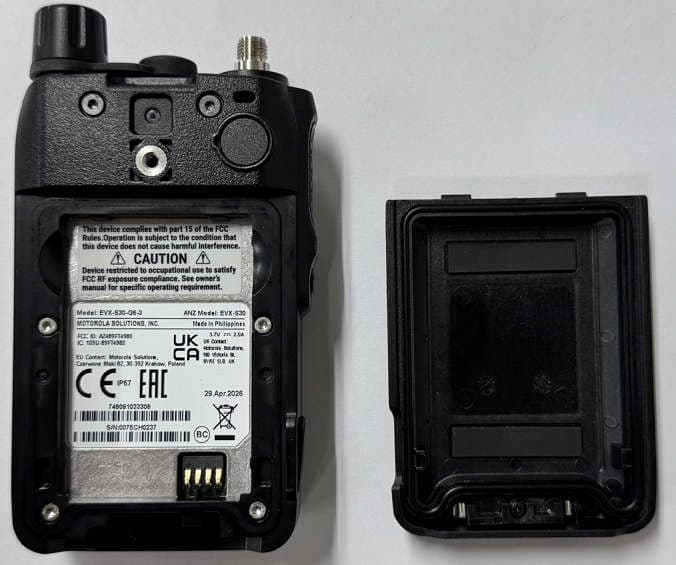
AZ489FT4980
Sep 08, 2026Portable two way radio
Equipment Class
TNF - Licensed Non-Broadcast Transmitter Held to FaceAZ489FT4981
Aug 14, 2026Handheld Portable - TANAPA BPR 45 400-470 MHZ 4W NKP
Equipment Class
TNF - Licensed Non-Broadcast Transmitter Held to Face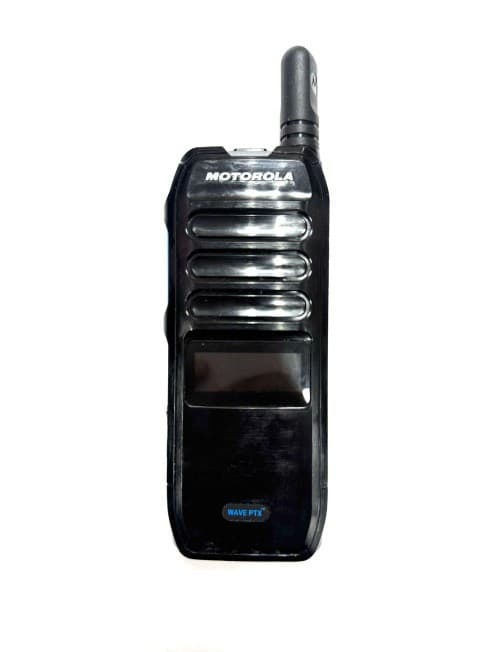
AZ489FT7187
Jul 13, 2026Portable 2-Way Radio with Bluetooth, Bluetooth LE, WIFI 2.4GHz, WIFI 5GHz, LTE
Equipment Class
DSS - Part 15 Spread Spectrum TransmitterAZ499FT6031
May 11, 2026Operation Critical Wireless Earpiece PTT
Equipment Class
DSS - Part 15 Spread Spectrum Transmitter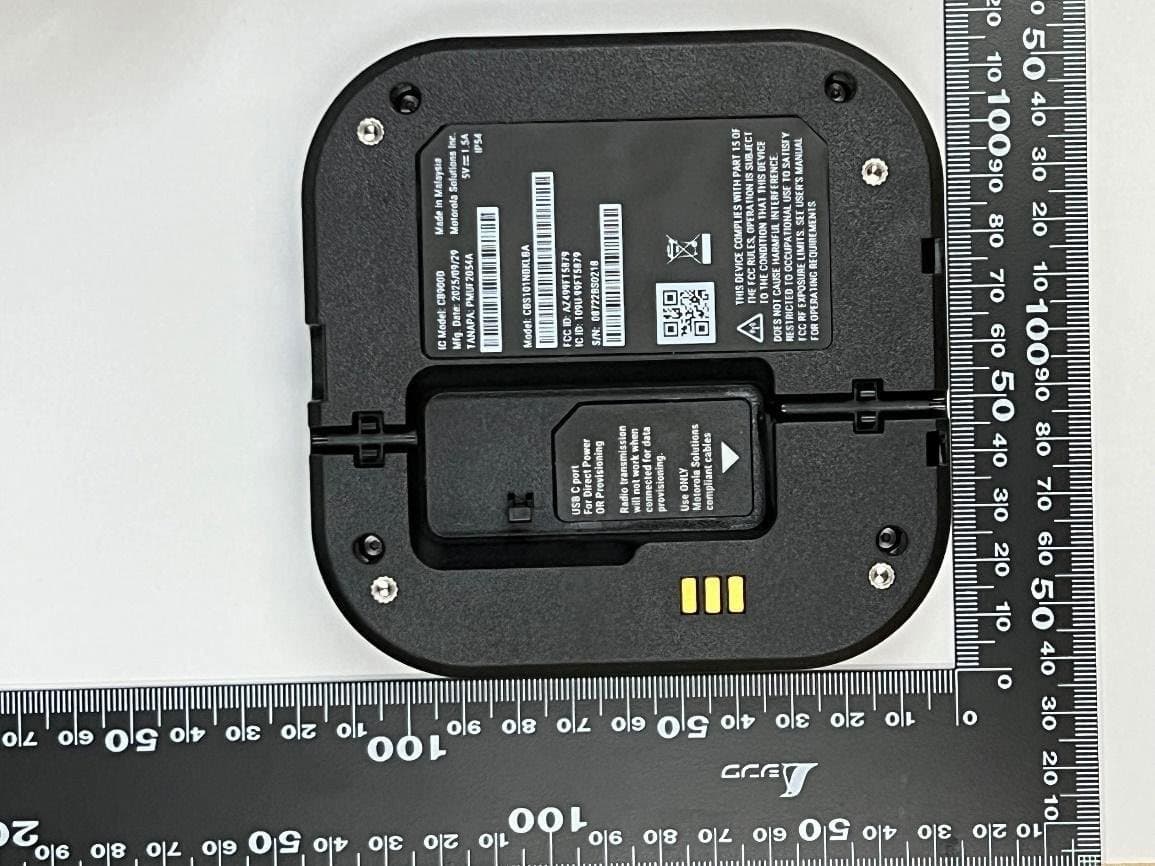
AZ499FT5879
Dec 19, 20252-way Portable Radio with BT, BTLE, WIFI, NFC and LTE
Equipment Class
DSS - Part 15 Spread Spectrum Transmitter