AZ492FT7045LTE Vehicular Subscriber Modem
Motorola Solutions, Inc.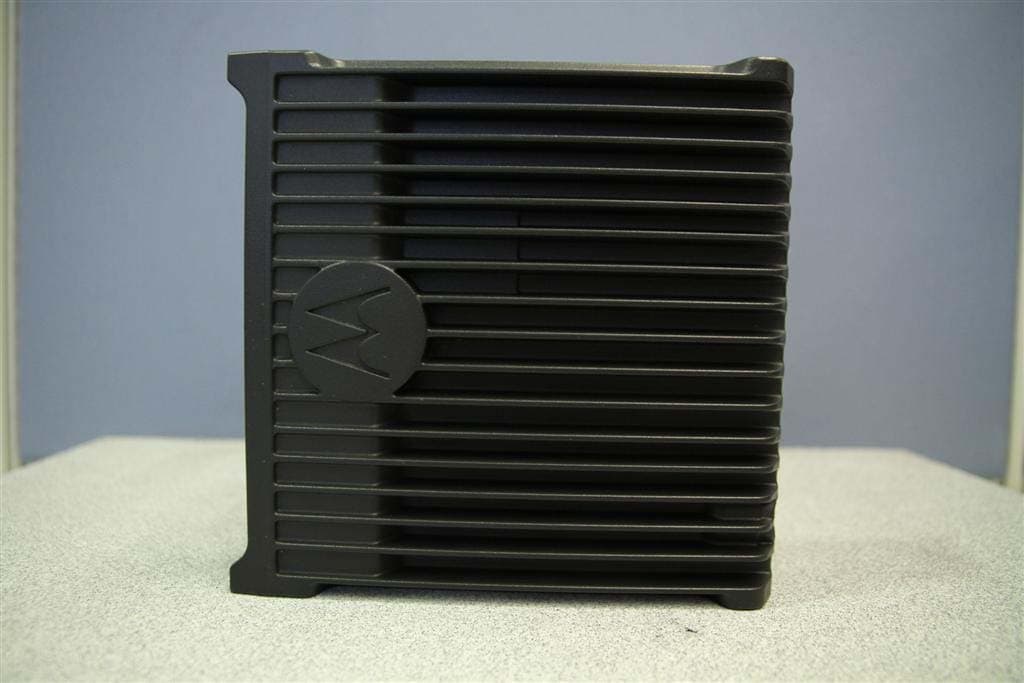
Click to zoom
Application Details
- Equipment Class
- PCB - PCS Licensed Transmitter
- Date of Grant
- Sep 27, 2011
- Application Purpose
- Original Equipment
- Date of Application
- Jul 28, 2011
- Equipment Note
- LTE Vehicular Subscriber Modem
- Frequency Range
- 788.00000000 - 793.00000000
- Company
- Motorola Solutions, Inc.
- Country
- United States
Documents & Files
Document Text
Text extracted from the exhibit documents filed with the FCC. Open a document above to read the original.
Users Manual
VML700 - LTE Vehicular Subscriber Modem (VSM) Installation Guide VML700 - LTE VSM Installation Guide 6802987C90 Revision A June 2011 iiVML700 Installation Guide © 2011 by Motorola Solutions, Inc. All rights reserved. No part of this publication may be reproduced or used in any form, or by any electrical or mechanical means, without permission in writing from Motorola. This includes electronic or mechanical means, such as photocopying, recording, or information storage and retrieval systems. The material in this manual is subject to change without notice. The software is provided strictly on an “as is” basis. All software, including firmware, furnished to the user is on a licensed basis. Motorola grants to the user a non-transferable and non-exclusive license to use each software or firmware program delivered hereunder (licensed program). Except as noted below, such license may not be assigned, sublicensed, or otherwise transferred by the user without prior written consent of Motorola. No right to copy a licensed program in whole or in part is granted, except as permitted under copyright law. The user shall not modify, merge, or incorporate any form or portion of a licensed program with other program material, create a derivative work from a licensed program, or use a licensed program in a network without written permission from Motorola. The user agrees to maintain Motorola’s copyright notice on the licensed programs delivered hereunder, and to include the same on any authorized copies it makes, in whole or in part. The user agrees not to decompile, disassemble, decode, or reverse engineer any licensed program delivered to the user or any portion thereof. Motorola reserves the right to make changes to any software or product to improve reliability, function, or design. Motorola does not assume any product liability arising out of, or in connection with, the application or use of any product, circuit, or application described herein. No license is granted, either expressly or by implication, estoppel, or otherwise under any Motorola, Inc., intellectual property rights. An implied license only exists for equipment, circuits, and subsystems contained in Motorola products. MOTOROLA SOLUTIONS and the Stylized M Logo and Symbol and the Symbol logo are registered in the US Patent & Trademark Office. Bluetooth is a registered trademark of Bluetooth SIG. Microsoft, Windows and ActiveSync are either registered trademarks or trademarks of Microsoft Corporation. All other product or service names are the property of their respective owners. Patents This product is covered by one or more of the patents listed on the website: http://www.motorola.com/enterprisemobility/patents. Warranty For the complete Motorola hardware product warranty statement, go to: http://www.motorola.com/enterprisemobility/warranty. Legal Notice The VML700 OSS legal notice may be found in the root directory of the LTE VSM Software CD (P/N 82013113001). Revision History Changes to the original manual are listed below: ChangeDateDescription AInitial release ivVML700 Installation Guide Table of Contentsv Patents........................................................................................................................... ii Warranty ........................................................................................................................ ii Legal Notice................................................................................................................... ii Revision History............................................................................................................. iii About This Guide Introduction .................................................................................................................... vii Configurations................................................................................................................ vii Chapter Descriptions ..................................................................................................... viii Notational Conventions.................................................................................................. ix Related Documents ....................................................................................................... ix Service Information........................................................................................................ ix Safety............................................................................................................................. x FCC Interference ........................................................................................................... x Chapter 1: VML700 Description The VML700 Unit .......................................................................................................... 1-1 Modem .......................................................................................................................... 1-2 Connectors Panel ......................................................................................................... 1-2 LED Indicator Panel with On/Off Button and SIM Card Door ........................................ 1-4 LED Indicators Functions .............................................................................................. 1-5 Control .......................................................................................................................... 1-5 SIM Card........................................................................................................................ 5 Chapter 2: Installation Unpacking and Inspecting the Shipment ...................................................................... 2-1 Safety and General Information .................................................................................... 2-1 Planning the Installation ................................................................................................ 2-3 Installation C…
Text truncated - open the document above for the full version.
Users Manual
English Product Safety and RF Energy Exposure Booklet for Mobile Two-Way Radios Installed in Vehicles or as Fixed Site Control Stations ATTENTION! The information provided in this document supersedes the general safety information contained in user guides published prior to January 2008. BEFORE USING THIS RADIO, READ THIS BOOKLET WHICH CONTAINS IMPORTANT OPERATING INSTRUCTIONS FOR SAFE USAGE AND RF ENERGY AWARENESS AND CONTROL INFORMATION FOR COMPLIANCE WITH RF ENERGY EXPOSURE LIMITS IN APPLICABLE NATIONAL AND INTERNATIONAL STANDARDS. *6881095C99* 6881095C99-H *NNTN7851B* NNTN7851C Motorola Solutions, Inc. 1303 E. Algonquin Rd., Schaumburg, IL 60196, U.S.A. MOTOROLA, MOTO, MOTOROLA SOLUTIONS and the Stylized M logo are trademarks or registered trademarks of Motorola Trademark Holdings, LLC and are used under license. All other trademarks are the property of their respective owners. © 2005 – 2011 Motorola Solutions, Inc. All rights reserved. 2 English RF Energy Exposure Awareness and Control Information, and Operational Instructions for FCC Occupational Use Requirements NOTICE: This radio is intended for use in occupational/controlled conditions, where users have full knowledge of their exposure and can exercise control over their exposure to meet FCC limits. This radio device is NOT authorized for general population, consumer, or any other use. This two-way radio uses electromagnetic energy in the radio frequency (RF) spectrum to provide communications between two or more users over a distance. It uses radio frequency (RF) energy or radio waves to send and receive calls. RF energy is one form of electromagnetic energy. Other forms include, but are not limited to, sunlight and x-rays. RF energy, however, should not be confused with these other forms of electromagnetic energy, which when used improperly, can cause biological damage. Very high levels of x-rays, for example, can damage tissues and genetic material. Experts in science, engineering, medicine, health, and industry work with organizations to develop standards for safe exposure to RF energy. These standards provide recommended levels of RF exposure for both workers and the general public. These recommended RF exposure levels include substantial margins of protection. All Motorola two-way radios are designed, manufactured, and tested to ensure they meet government-established RF exposure levels. In addition, manufacturers also recommend specific operating instructions to users of two-way radios. These instructions are important because they inform users about RF energy exposure and provide simple procedures on how to control it. 3 English Please refer to the following Web sites for more information on what RF energy exposure is and how to control your exposure to assure compliance with established RF exposure limits. http://www.fcc.gov/oet/rfsafety/rf-faqs.html http://www.osha.gov/SLTC/radiofrequencyradiation/index.html Federal Communication Commission Regulations The FCC rules require manufacturers to comply with the FCC RF energy exposure limits for mobile two-way radios before they can be marketed in the U.S. When two-way radios are used as a consequence of employment, the FCC requires users to be fully aware of and able to control their exposure to meet occupational requirements. Exposure awareness can be facilitated by the use of a label directing users to specific user awareness information. Your Motorola two-way radio has a RF exposure product label. Also, your Motorola user manual, or separate safety booklet, includes information and operating instructions required to control your RF exposure and to satisfy compliance requirements. Compliance with RF Exposure Standard Your Motorola two-way radio is designed and tested to comply with a number of national and international standards and guidelines (listed below) regarding human exposure to radio frequency electromagnetic energy. This radio complies with the IEEE and ICNIRP exposure limits for occupational/ controlled RF exposure environment at duty factors of up to 50% talk-50% listen and is authorized by the FCC for occupational use only. In terms of measuring RF energy for compliance with the FCC exposure guidelines, your radio antenna radiates measurable RF energy only while it is transmitting (during talking), not when it is receiving (listening) or in standby mode. 4 English Your Motorola two-way radio complies with the following RF energy exposure standards and guidelines: • United States Federal Communications Commission (FCC), Code of Federal Regulations; 47 CFR et seq. • FCC, OET Bulletin 65 • Institute of Electrical and Electronic Engineers (IEEE) C95.1 • International Commission on Non-Ionizing Radiation Protection (ICNIRP) • Ministry of Health (Canada) Safety Code 6 • Industry Canada RSS-102 • Australian Communications Authority Radiocommunications Standard et seq. • ANATEL ANNEX to Resolution No. 303 et seq. RF Exposure Compliance and Control Guidelines and Operating Instructions To control exposure to yourself and others and to ensure compliance with the RF exposure limits, always adhere to the following procedures. Guidelines: • User awareness instructions should accompany device when transferred to other users. • DO NOT use this device if the operational requirements described herein are not met. 5 English Instructions: •Transmit no more than the rated duty factor of 50% of the time. To transmit (talk), push the Push-To-Talk (PTT) button or, for radios equipped with VOX, speak into the microphone. The red LED will illuminate when the radio is transmitting. To receive calls, release the PTT button, or, for radios equipped with VOX, stop talking. The red LED will extinguish when the radio stops transmitting. Transmitting 50% of the time, or less, is important because this radio generates measurable RF energy exposure only when transmitting (in terms of measuring for standards compliance). •Transmit only when people outside the vehicle are at least the recommend…
Text truncated - open the document above for the full version.
Users Manual
Please retain for future use 6802987C69-A @6802987C69@ September, 2011 Motorola Solutions, Inc. 1301 E. Algonquin Road, Schaumburg, IL 60196 U.S.A. MOTOROLA, MOTO, MOTOROLA SOLUTIONS and the Stylized M logo are trade- marks or registered trademarks of Motorola Trademark Holdings, LLC and are used under license. All other trademarks are the property of their respective owners. © 2005 – 2011 Motorola Solutions, Inc. All rights reserved. RF Energy Exposure and Product Safety Guide for Subscriber Modem installed in Vehicles ATTENTION! . RF Energy Exposure Awareness and Control Informa- tion, and Operational Instructions for FCC Occupational Use Requirements . This vehicular subscriber modem uses electromagnetic energy in the radio frequency (RF) spectrum to provide communications between two or more users over a distance. It uses radio frequency (RF) energy or radio waves to send and receive calls. RF energy is one form of electromagnetic energy. Other forms include, but are not limited to, sunlight and x-rays. RF energy, however, should not be confused with these other forms of electromagnetic energy, which when used improperly, can cause biological damage. Very high lev- els of x-rays, for example, can damage tissues and genetic material. Experts in science, engineering, medicine, health, and industry work with organizations to develop standards for safe exposure to RF energy. These standards provide recommended levels of RF exposure for both workers and the general public. These recommended RF exposure levels include substantial margins of protection. All Motorola modems are designed, manufactured, and tested to ensure they meet government-established RF exposure levels. In addition, manu- facturers also recommend specific operating instructions to users of modems. These instructions are important because they inform users about RF energy exposure and provide simple procedures on how to con- trol it. Please refer to the following Web sites for more information on what RF energy exposure is and how to control your exposure to assure compliance with established RF exposure limits. http://www.fcc.gov/oet/rfsafety/rf-faqs.html l Federal Communication Commission Regulations The FCC rules require manufacturers to comply with the FCC RF energy exposure limits for mobile modems before they can be marketed in the U.S. When modems are used as a consequence of employment, the FCC requires users to be fully aware of and able to control their exposure to meet occupational requirements. Exposure awareness can be facilitated by the use of a label directing users to specific user awareness information. Your Motorola modem has a RF exposure product label. Also, your Motor- ola user manual, or separate safety booklet, includes information and oper- ating instructions required to control your RF exposure and to satisfy compliance requirements. Compliance with RF Exposure Standard Your Motorola vehicular subscriber modem is designed and tested to com- ply with a number of national and international standards and guidelines (listed below) regarding human exposure to radio frequency electromag- netic energy. In terms of measuring RF energy for compliance with FCC exposure guide- lines, your vehicular subscriber modem radiates measurable RF energy only while it is transmitting (during data transmission), not when it is receiving (data receiving) or in standby mode. Your Motorola vehicular subscriber modem complies with the follow- ing RF energy exposure standards and guidelines: • United States Federal Communications Commission (FCC), Code of Federal Regulations; 47 CFR et seq. • FCC, OET Bulletin 65 • Institute of Electrical and Electronic Engineers (IEEE) C95.1 • International Commission on Non-Ionizing Radiation Protection (ICNIRP) • Ministry of Health (Canada) Safety Code 6 • Industry Canada RSS-102 • Australian Communications Authority Radiocommunications Standard et seq. • ANATEL ANNEX to Resolution No. 303 et seq. RF Exposure Compliance and Control Guidelines and Operating Instruction To control exposure to yourself and others and to ensure compliance with the RF exposure limits, always adhere to the following proce- dures. Guidelines: • User awareness instructions should accompany device when trans- ferred to other users. • DO NOT use this device if the operational requirements described herein are not met. • Transmit only when people outside the vehicle are at least the rec- ommended minimum lateral distance away, as shown in Table 1, from the body of a vehicle with a properly installed antenna. This separation distance will ensure that there is sufficient distance from a properly installed (according to installation instructions) externally- mounted antenna to satisfy the RF exposure requirements in the stan- dards listed above. NOTE: Table 1 below lists the recommended lateral distance for peo- ple in an uncontrolled environment from the body of a vehicle with an approved, properly installed transmitting antenna (i.e., monopoles over a ground plane, or dipoles) at several different ranges of rated radio power for mobile radios installed in a vehicle. Table 1. Rated Power of Vehicle-Installed Mobile modem and Recom- mended Minimum Lateral Distance from Vehicle Body • When a mobile radio is used in conjunction with another co-located transmitter such as a Vehicular Repeater, it is the vehicle operator’s responsibility to take appropriate steps to keep bystanders at the required separation distance from the vehicle to ensure compliance with the FCC's RF energy exposure limits for the general population. See the co-located transmitter’s user manual for more details. NOTE: If you are not sure of the rated power of your radio, contact your Motorola representative or dealer and supply the radio model number found on the radio model label. If you can not determine the rated power out, then assure 3-feet separation from the body of the vehicle. The maxi- mum power shown on the FCC Grant may be higher than the…
Text truncated - open the document above for the full version.
Attestation Statements
Applicant: Motorola FCC ID: AZ492FT7045 SHEET 1 of 1 EXHIBIT 2 Exhibit 2: Statement of Certification — Pursuant to 47 CFR 2.907 The technical data supplied with this application, having been taken under my supervision is hereby duly certified. The following is a statement of my qualifications: 1. B.Sc. TE in Electrical Engineering, Holon Institute of Technology, Israel 2. 10 years experience in RF design and measurement techniques NAME: Moti Rachmilov SIGNATURE: Moti Rachmilov (signed) DATE: 07/03/2011 POSITION: Senior RF Engineer 3. I hereby certify that the above application was prepared under my direction and that to the best of my knowledge and belief, the facts set forth in the application and accompanying technical data are true and correct. NAME: Dannenberg Nir SIGNATURE: Dannenberg Nir (signed) DATE: 07/04/2011 POSITION: Hardware Engineering Manager
Attestation Statements
8000 West Sunrise Boulevard, Fort Lauderdale, Florida 33322. USA FCC ID: AZ492FT7045 Date: 20 th September 2011 Stan Lyles Office of Engineering and Technology Laboratory Division Equipment Authorization Branch Federal Communications Commission Laboratory 7435 Oakland Mills Road Columbia, MD 21046 Subject: Response to Correspondence Number 40338 for FCC ID: AZ492FT7045 with EA329816 Dear Stan: Motorola, 8000 West Sunrise Boulevard, Fort Lauderdale, Florida, herein submits responses to the above correspondence dated 9 th September 2011. Q1. In order to demonstrate compliance with the requirements of § 90.203(p) the manufacturer is required to submit an attestation that clearly states the following: The user device submitted for certification in this application provides support for 3GPP Band Class 14 frequencies and 3GPP Standard E- UTRA release 8 (or future releases) with associated interfaces in order to support service and network capabilities that are documented in the Commission’s Waiver Order, released on May 12, 2010, Interoperability Order, released on December 10, 2010, and 3rd Report and Order, released on January 26, 2011 and all future requirements. R1. Motorola affirms that the VML700-LTE Vehicular Modem, provides support for 3GPP Band Class 14 frequencies and 3GPP Standard E-UTRA release 8 (or future releases) with associated interfaces in order to support service and network capabilities that are documented in the Commission’s Waiver Order, released on May 12, 2010, Interoperability Order, released on December 10, 2010, and 3rd Report and Order, released on January 26, 2011 and future requirements. Sincerely, Mike Ramnath (signed above) Manager, Regulatory Compliance Tel: (954) 723-5793 E-mail: [email protected] EXHIBIT 13 R-2
Cover Letter(s)
8000 West Sunrise Boulevard, Fort Lauderdale, Florida 33322. USA FCC ID: AZ492FT7045 Date: 27 th July 2011 Office of Engineering and Technology Laboratory Division Equipment Authorization Branch Federal Communications Commission Laboratory 7435 Oakland Mills Road Columbia, MD 21046 Subject: Application for Certification of Transmitter with FCC ID: AZ492FT7045 Dear Sir or Madam: Motorola, 8000 West Sunrise Boulevard, Fort Lauderdale, Florida, herein submits application for Certification of the subject transmitter. This transmitter is intended for use in a Mobile Radio environment with capabilities for clear and coded communications with a variable transmit power operating within the following frequency range: - EVDO-BC0 824-849 MHz 224mW (nominal) - EVDO-BC1 1850-1910 MHz 224mW (nominal) - LTE B13 777-787 MHz 224mW (nominal) - LTE B14 788-798 MHz 224mW (nominal) The subject transmitter complies with parts 15, 22, 24, 27 and 90 of the Rules in that the operator cannot directly program transmit frequencies using the unit's normally accessible external controls. Additionally, the radio is equipped with a WiFi 802.11b/g transmitter capable of clear communication with fixed power operating within the following frequency ranges: - WiFi 2401-2472 MHz 17.8 mW (nominal) The WiFi transmitter complies with the requirements of FCC Part 15 subpart C. A complete application for certification is enclosed; please contact me if you require any additional information. Sincerely, Mike Ramnath Mike Ramnath Manager, Regulatory Compliance Tel: (954) 723-5793 E-mail: [email protected] EXHIBIT 13a
Cover Letter(s)
8000 West Sunrise Boulevard, Fort Lauderdale, Florida 33322. USA REQUEST FOR CONFIDENTIALITY Date: 27 th July 2011 Authorization & Evaluation Division Federal Communications Commission Laboratory 7435 Oakland Mills Road Columbia, MD 21046 Subject: Application for Certification of Transmitters with FCC ID: AZ492FT7045 Dear Sir/Madam: Motorola Solutions Inc (Motorola) is requesting that Exhibit 4 (Circuit Descriptions), Exhibit 5 (Schematic Diagrams), Exhibit 10 (Parts List and Tune Up Procedures), and Exhibit 12 (Operational Description) not be made routinely available for public inspection. Motorola considers the information in these exhibits to be classified as trade secrets, pursuant to 47 CFR Sections 0.457(d), 0.459 and 552(b)(4) of the Freedom of Information Act. This information is only for internal Motorola use and the use of dealers and service providers that have entered into confidential business agreements with Motorola. In addition, Motorola is also requesting that the FCC Exhibit 9 (Internal photos) and Exhibit (Installation Manual) as Temporary or Short-Term Confidentiality as outline in Public Notice DA 04- 1705, dated June 15, 2004. This provision will give Motorola temporary confidentiality prior to product launch. Please mark Exhibits 4, 5, 10, and 12 as “Confidential” and Exhibit 8 and 9 as “Temporary Confidential”. Contact me if you require any additional information. Sincerely, Mike Ramnath (signed) Mike Ramnath Manager, Regulatory Compliance Tel: (954) 723-5793 E-mail: [email protected] EXHIBIT 13b
Cover Letter(s)
8000 West Sunrise Boulevard, Fort Lauderdale, Florida 33322. USA FCC ID: AZ492FT7045 Date: 8 th September 2011 Stan Lyles Office of Engineering and Technology Laboratory Division Equipment Authorization Branch Federal Communications Commission Laboratory 7435 Oakland Mills Road Columbia, MD 21046 Subject: Response to Correspondence Number 40272 for FCC ID: AZ492FT7045 with EA725943 Dear Stan: Motorola, 8000 West Sunrise Boulevard, Fort Lauderdale, Florida, herein submits responses to the above correspondence dated 29 th August 2011. 1) fyi the general policy for filings at FCC since approx. 1998 is that all licensed services are submitted in a single f-731; for devices having part 24 PCS operations the single equipment class is PCB (or PCE, etc) For FCC reference purposes, please explain your rationale for submitting composite f-731 PCB and TNB, in lieu of all exhibits under PCB as required. Response: Looking back now, we should have filed all the exhibits using one Form 731 and one Equipment Class Description. When we filed prior filings our experience is that we encounter countless difficulties with up-loading the files and would have to engage the help of George Tannahill. If we can rectify the issue and request the Equipment Class Description be changed to PCB and have all the exhibits under one Form 731. We are open to the FCC’s recommendations on this issue. 2) RF exposure installation and operating instructions of the form typically used for part 90 private land mobile radio devices, with 50 % duty factor operations, do not seem applicable nor appropriate for device such as this Per OET Lab policy (KDB pub 447498, etc), occupational training and labeling are not required for devices that comply with the general population exposure limits - please revise filing accordingly. Response: This product will be sold to Public Safety agencies. Also, it will be placed in the trunk of automobiles. Even though it meets or exceeds the FCC RF Exposure limit for the Uncontrolled Population Limits, Motorola chose to certify it to the Controlled Population Limits by adding the required User Manual language and RF Safety Label. We have since modified the RF Safety Guide, see attached. 3) op. desc. mentions "Gobi300" - we are aware of "Gobi3000", but not "Gobi300" - in case this actually uses Gobi3000, please revise op. desc and any other parts of filing where applicable. Response: We have corrected the information in Exhibit 12 as attached. 8000 West Sunrise Boulevard, Fort Lauderdale, Florida 33322. USA 4) For the part 15 intentional radiator portion of this composite f-731, external photos cites 2.1033(c)(12) - that is not applicable for part 15 - rather 2.1033(b)(7) is applicable - accordingly external photos must explicitly show antenna used for part 15 transmissions - please revise. Response: Photo of antenna is enclosed as Exhibit 3a. 5) For the part 15 intentional radiator portion of this composite f-731, please document compliance with 15.203 unique connector requirements and the 15.204 requirement that only specifically authorized antenna(s) can be attached AND will be marketed with the transmission system. Response: The Part 15 intentional radiator antenna (WLAN) requires that it be installed by a professional installer, who will be authorized by Motorola. According to 15.203, “Further, this requirement does not apply to intentional radiators that must be professionally installed , such as perimeter protection systems and some field disturbance sensors, or to other intentional radiators which, in accordance with § 15.31(d), must be measured at the installation site. However, the installer shall be responsible for ensuring that the proper antenna is employed so that the limits in this part are not exceeded.” 6) for the part 15 intentional radiator portion of this composite f-731, further to 2.1033(b)(4) please describe and show antenna radiating element construction details. Response: Please see the attached WLAN antenna specifications including construction. 7) Please address compliance for 90.203(p). Response: Motorola confirms that this radio shows support and complies with applicable sections of FCC Rule Part 90.203 (p). Sincerely, Mike Ramnath (signed above) Manager, Regulatory Compliance Tel: (954) 723-5793 E-mail: [email protected] EXHIBIT 13 R
Cover Letter(s)
To: Date:9/20/2011 00:00:00 Stan Lyles Message: Dear Stan: Motorola, 8000 West Sunrise Boulevard, Fort Lauderdale, Florida, herein submits responses to the above correspondence dated 9th September 2011. Q1.In order to demonstrate compliance with the requirements of § 90.203(p) the manufacturer is required to submit an attestation that clearly states the following: The user device submitted for certification in this application provides support for 3GPP Band Class 14 frequencies and 3GPP Standard E-UTRA release 8 (or future releases) with associated interfaces in order to support service and network capabilities that are documented in the Commission?s Waiver Order, released on May 12, 2010, Interoperability Order, released on December 10, 2010, and 3rd Report and Order, released on January 26, 2011 and all future requirements. R1.Motorola affirms that the VML700-LTE Vehicular Modem, provides support for 3GPP Band Class 14 frequencies and 3GPP Standard E-UTRA release 8 (or future releases) with associated interfaces in order to support service and network capabilities that are documented in the Commission?s Waiver Order, released on May 12, 2010, Interoperability Order, released on December 10, 2010, and 3rd Report and Order, released on January 26, 2011 and future requirements. Sincerely, Mike Ramnath (signed) Manager, Regulatory Compliance Tel: (954) 723-5793 E-mail: [email protected] BTW: We tried to upload the above but it comes back as 'upload failed'. Subject: FCC Equipment Authorization System
External Photos
Applicant: Motorola FCC ID: AZ492FT7045 EXHIBIT 3 SHEET 1 of 5 Exhibit 3: External Photographs -- Pursuant to 47 CFR 2.1033(c) (12) External Photographs The following photographs are attached. 3.1 Front view. 3.2 Bottom view with screws. 3.3 Connector side. 3.4 FCC label location…
Text truncated - open the document above for the full version.
Contact Information
Applicant
Deanna Zakharia(Regulatory Compliance Manager)
Technical Contact
Motorola Solutions IncMike Ramnath
[email protected]954-723-5793
8000 West Sunrise Blvd · Plantation, Florida · United States
Test Firm
QualiTech EMC Laboratory (ECI Telecom)Yossi Zucker
Technical Specifications
| # | Rule Parts | Frequency Range | Power Output | Emission | Tolerance |
|---|---|---|---|---|---|
| 8 | 27 | 788 MHz - 793 MHz | 296.00 mW | 4M48G7D | 2.5 ppm |
Other Applications from Motorola Solutions, Inc.
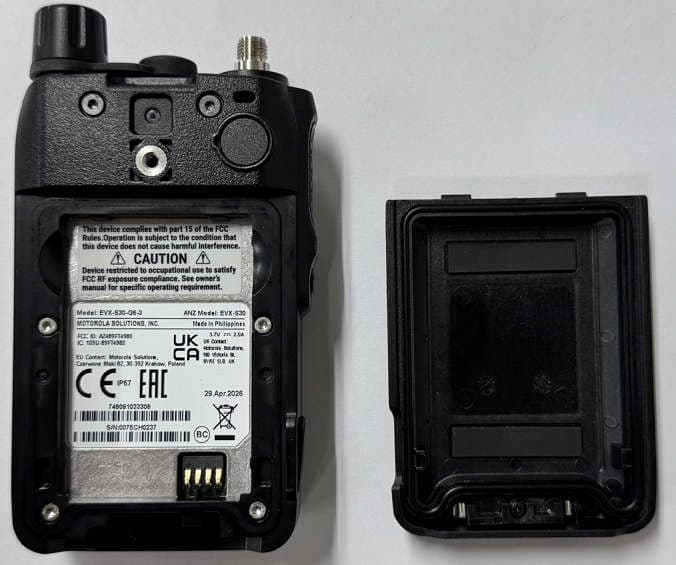
AZ489FT4980
Sep 08, 2026Portable two way radio
Equipment Class
TNF - Licensed Non-Broadcast Transmitter Held to FaceAZ489FT4981
Aug 14, 2026Handheld Portable - TANAPA BPR 45 400-470 MHZ 4W NKP
Equipment Class
TNF - Licensed Non-Broadcast Transmitter Held to Face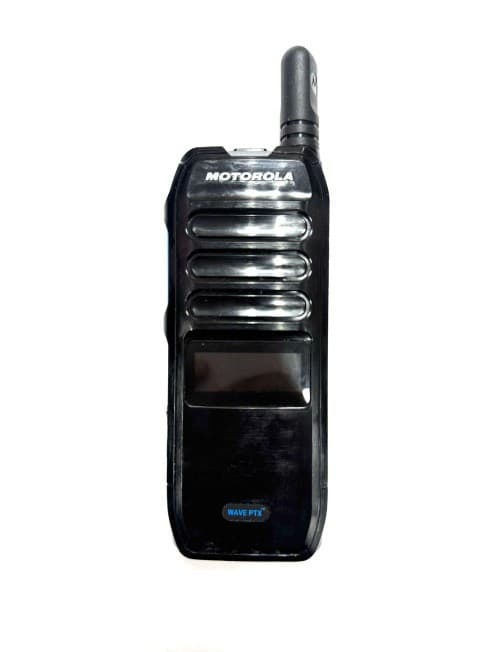
AZ489FT7187
Jul 13, 2026Portable 2-Way Radio with Bluetooth, Bluetooth LE, WIFI 2.4GHz, WIFI 5GHz, LTE
Equipment Class
DSS - Part 15 Spread Spectrum TransmitterAZ499FT6031
May 11, 2026Operation Critical Wireless Earpiece PTT
Equipment Class
DSS - Part 15 Spread Spectrum Transmitter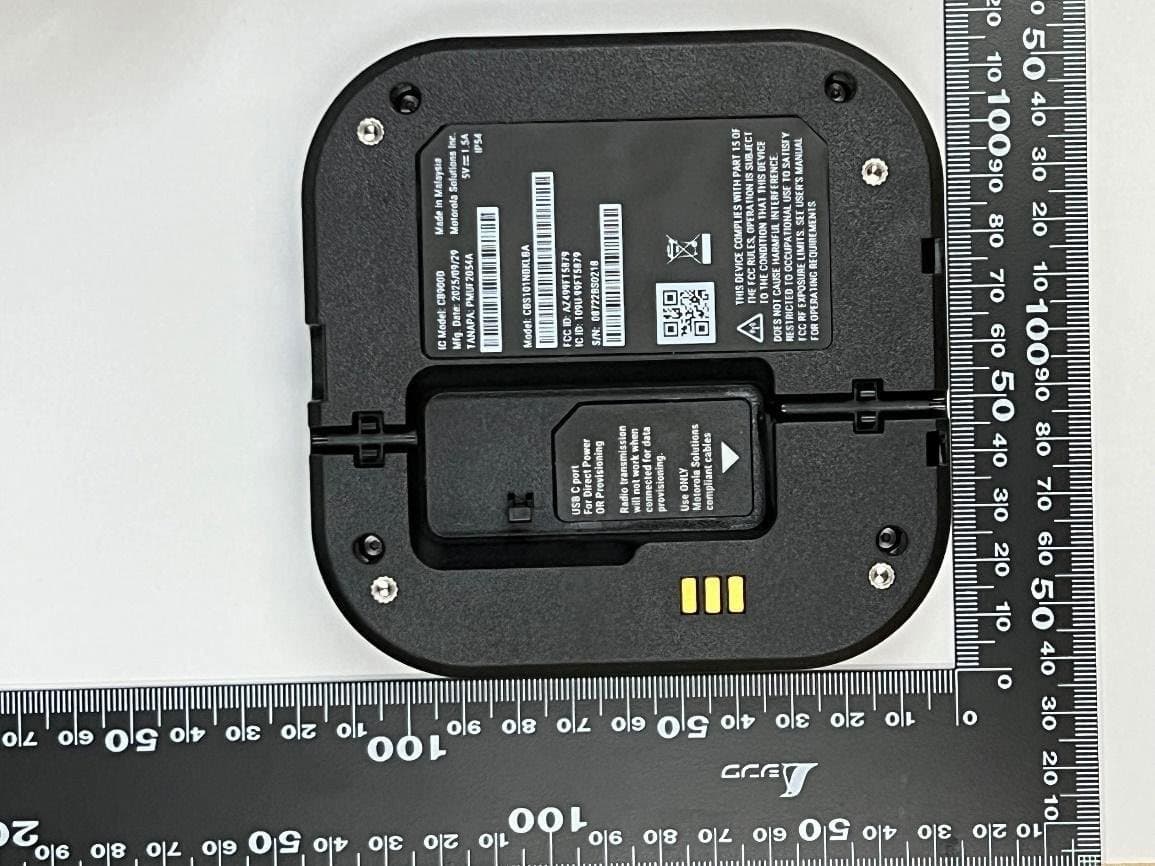
AZ499FT5879
Dec 19, 20252-way Portable Radio with BT, BTLE, WIFI, NFC and LTE
Equipment Class
DSS - Part 15 Spread Spectrum Transmitter