B5D300750Cordless Telephone Headset
Bosch Security Systems, Inc.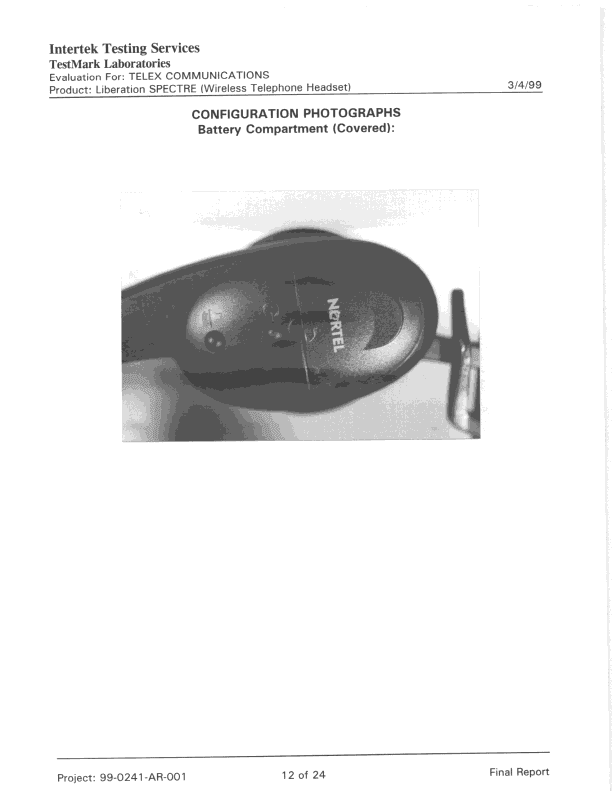
Click to zoom
Application Details
- Equipment Class
- DXX - Part 15 Low Power Communication Device Transmitter
- Date of Grant
- Aug 25, 1999
- Application Purpose
- Original Equipment
- Date of Application
- Mar 07, 1999
- Equipment Note
- Cordless Telephone Headset
- Frequency Range
- 0.48433000 - 0.49488000
- Company
- Bosch Security Systems, Inc.
- Country
- United States
Documents & Files
Document Text
Text extracted from the exhibit documents filed with the FCC. Open a document above to read the original.
Test Report
Document Update for FCC ID B5D300750 Reference:J. Dichoso email to G.Wright, 4/13/99 Update Explanation: The data on page 6 lists measurements taken at 1 meter, but the table header states that the measurements were taken at 3 meters. The table shows limits per FCC 15.209 restated for 1 meter per calculation listed on page 3. Page 3 also states that all measurements were taken at 1 meter. We have confirmed that the data were taken at 1 meter. Measurements recorded at 3 meters, per industry standard, were unable to generate a reading above the noise floor of the test equipment. The unit was brought into 1 meter so that readings above the noise floor could be measured. These values recorded at 1 meter show that all requirements of FCC 15.209 are met. Unfortunately, a standard template table was used in listing the data from the six highest radiated peaks, which incorrectly called out a measurement of 3 meters instead of the 1 meter actually used. The following page lists the information measured accurately: To replace table on page 6 of Wireless Telephone Headset document Six Highest Radiated Peaks (Measured at 3 meters) Frequency (MHz) Peak Amplitude (dBμμV/m)) Class B Limit (dBμμV/m)) Limit Delta (dB) Polarization (H/V) and Axis Results .49488Below Noise Floor 73.7---VCompliant *****Compliant *****Compliant *****Compliant *****Compliant *****Compliant Six Highest Radiated Peaks (Measured at 1 meter) Frequency (MHz) Peak Amplitude (dBμμV/m)) Class B Limit (dBμμV/m)) Limit Delta (dB) Polarization (H/V) and Axis Results .4948886.592.8-6.3V y Compliant .4948885.592.8-7.3H z Compliant .4948874.892.8-18.0H x Compliant .4948871.992.8-20.9V x Compliant .4948864.192.8-28.7V z Compliant .49488Below Noise Floor 92.8---H y Compliant * All other emissions were below the ambient noise floor. A bandwidth plot of the fundamental is shown below for Channel A. This channel has a fundamental of 494880 Hz. Channel B fundamental is 484330 Hz. Each channel has a frequency tolerance of less than 100 Hz. This tolerance includes unit-to-unit production variability as well as variation due to temperature changes within the operating temperature range for each unit (frequency stability). The frequency stability portion of the tolerance is less than 10 Hz., while the production variation portion of the tolerance is well less than 90Hz. Overall frequency tolerance is less than 100 Hz. The bandwidth of the fundamental is equivalent for both A and B channels. Channel A bandwidth shown below, taken with a spectrum analyzer set at 3Hz resolution bandwidth and a 1000 Hz span, shows that the bandwidth is ~ +- 7 Hz at the -30 dB downpoint. Thus the fundamental is always below 495000 Hz.
Contact Information
Applicant
James R Andersen(Principal Electrical Engineer)
Technical Contact
Telex CommunicationsGreg Wright
[email protected]612-887-5515
9600 Aldrich Avenue South · Minneapolis, Minnesota · United States
Non-Technical Contact
Telex CommunicationsGreg Wright
[email protected]612-887-5515
Technical Specifications
| # | Rule Parts | Frequency Range | Power Output | Tolerance |
|---|---|---|---|---|
| 1 | 15C | 0.48433 MHz - 0.49488 MHz | - | % |
Other Applications from Bosch Security Systems, Inc.
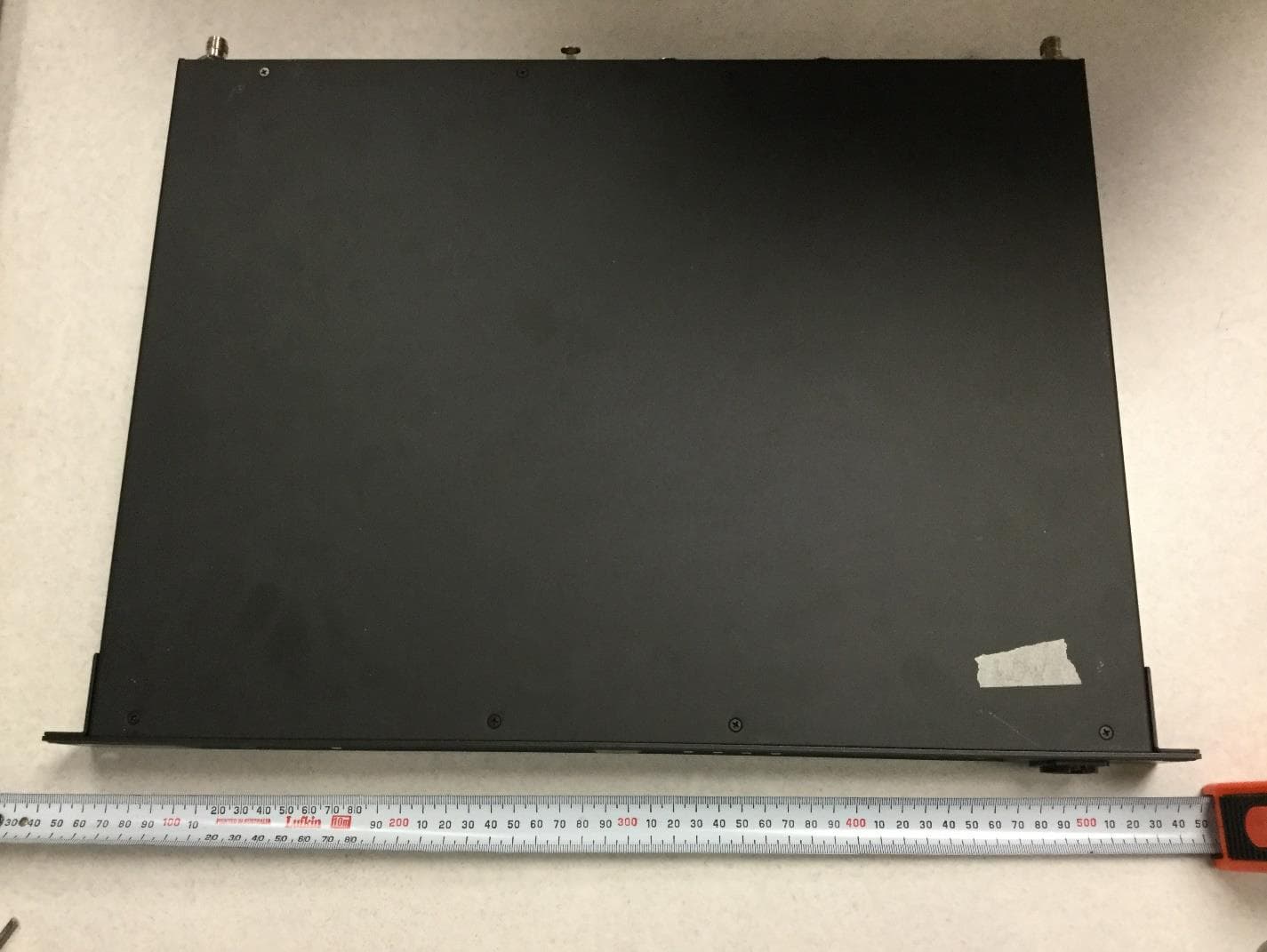
B5DM540
Jun 02, 2020Wireless microphone base station
Equipment Class
TLD - Licensed LPAS Device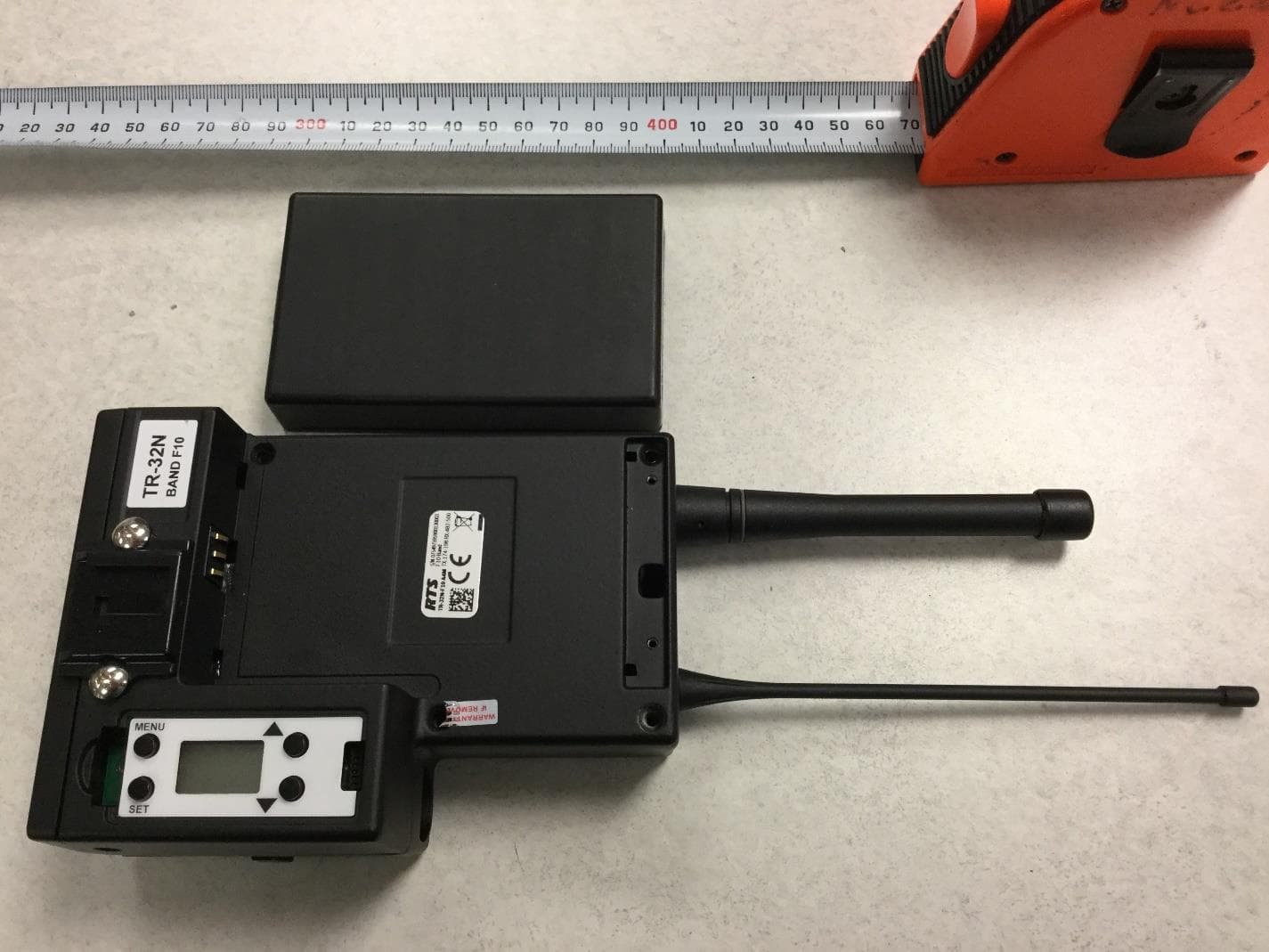
B5DM542
Jun 01, 2020Wireless beltpack
Equipment Class
TLD - Licensed LPAS Device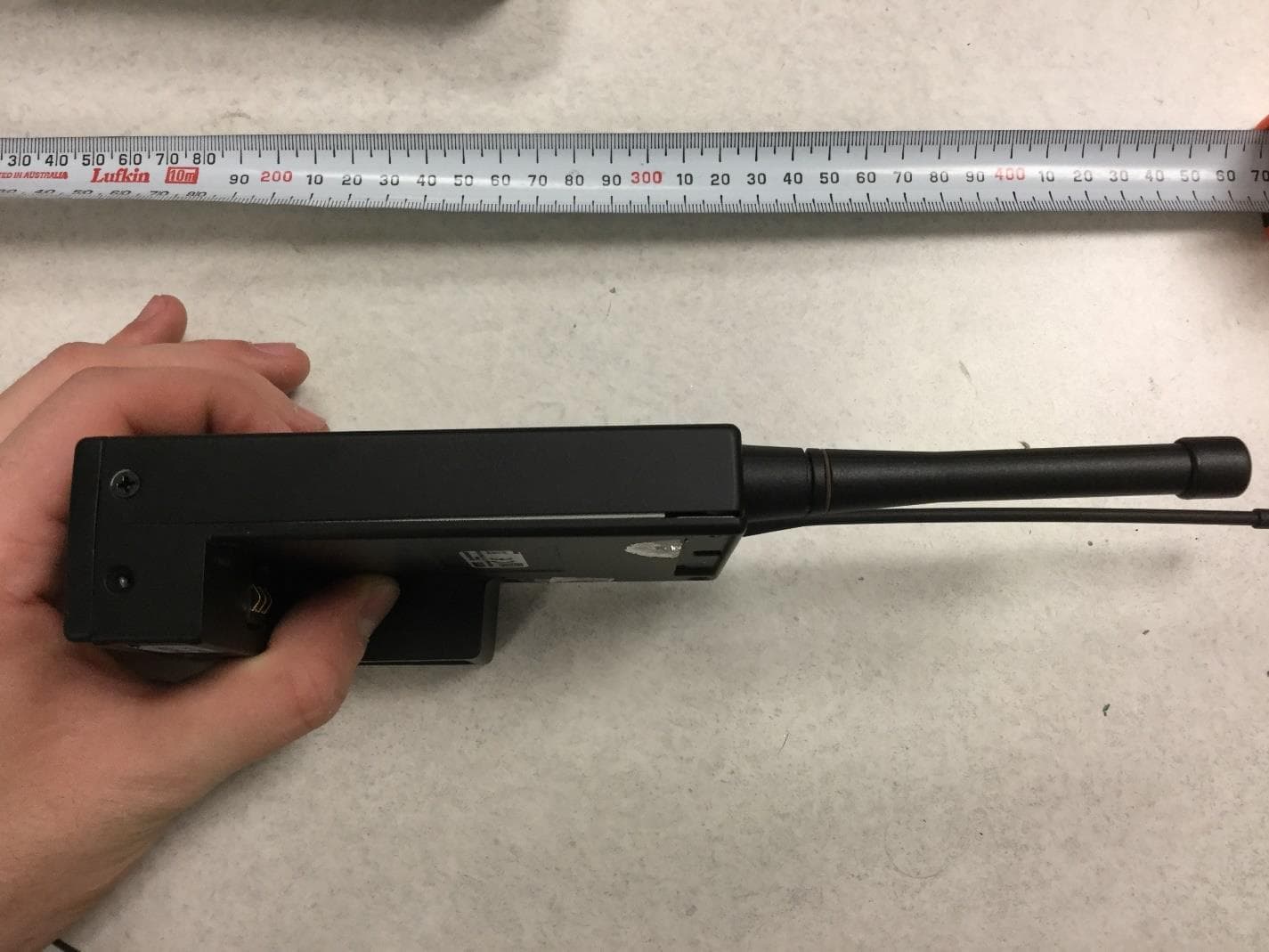
B5DM541
May 27, 2020Wireless beltpack
Equipment Class
TLD - Licensed LPAS Device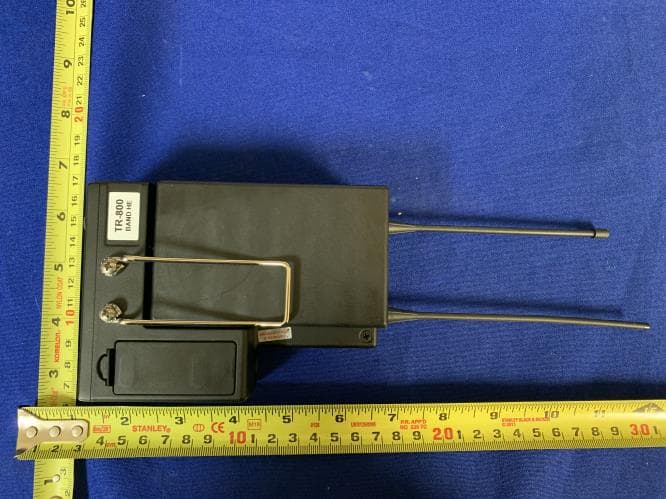
B5DM536
Mar 18, 2020Single Receiver UHF Wireless Intercom Beltpack
Equipment Class
TLD - Licensed LPAS Device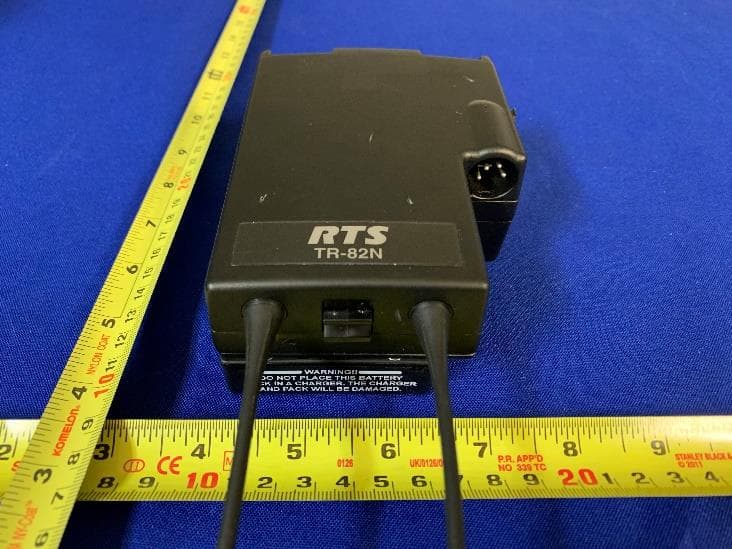
B5DM539
Mar 18, 2020Dual Receiver Narrowband UHF Wireless Intercom Beltpack
Equipment Class
TLD - Licensed LPAS Device