CB2SAHL5CUniversal Garage Door Opener Transmitter w/ FHSS Transmitter
Johnson Controls Interiors L.L.C.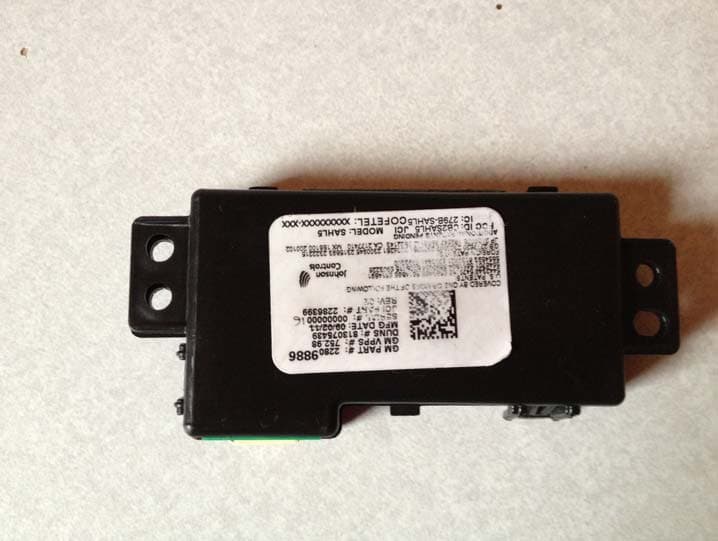
Click to zoom
Application Details
- Equipment Class
- DSR - Part 15 Remote Control/Security Device Transceiver
- Date of Grant
- Dec 19, 2012
- Application Purpose
- Original Equipment
- Date of Application
- Dec 19, 2012
- Equipment Note
- Universal Garage Door Opener Transmitter w/ FHSS Transmitter
- Frequency Range
- 411.00000000 - 440.00000000
- Country
- United States
Documents & Files
Document Text
Text extracted from the exhibit documents filed with the FCC. Open a document above to read the original.
Users Manual
HomeLink and the HomeLink house are registered trademarks of Johnson Controls, Inc. Programming and Information Guide The HomeLink Wireless Control System provides a convenient way to replace up to three hand- held radio-frequency (RF) transmitters used to activate devices such as gate operators, garage door openers, entry door locks, security systems, even home lighting. Additional HomeLink information can be found on the Internet at www.homelink.com . Product and vehicle specific programming videos and other HomeLink related information can also be found at YouTube.com listed at the end of this document. Precautions ! Before programming HomeLink to a garage door opener or gate operator, make sure that people and objects are out of the way of the device to prevent potential harm or damage. When programming a garage door opener, it is advised to park outside of the garage. Do not use HomeLink with any garage door opener that lacks safety stop and reverse features as required by U.S. federal safety standards (this includes any garage door opener model manufactured before April 1, 1982). A garage door that cannot detect an object - signaling the door to stop and reverse - does not meet current U.S. federal safety standards. For more information, contact HomeLink at: www.homelink.com . Retain the original transmitter of the RF device you are programming for use in other vehicles as well as for future HomeLink programming. It is also suggested that upon the sale of the vehicle, the programmed HomeLink buttons be erased for security purposes. Refer to “Erasing HomeLink Buttons”. Programming HomeLink Note: Some vehicles may require the ignition switch to be turned on or to the second (“accessories”) position for programming and/or operation of HomeLink. It is also recommended that a new battery be placed in the hand-held transmitter of the device being programmed to HomeLink for quicker training and accurate transmission of the radio-frequency signal. 1. Position the end of your hand-held transmitter 1–3 inches (5–14 cm) away from the HomeLink button you wish to program while keeping the indicator light in view. 2. Simultaneously press and hold both the chosen HomeLink and hand-held transmitter buttons until the HomeLink indicator light changes from a slow to either a rapid blink (rolling code) or solid ON state (fixed code). Now you may release both the HomeLink and hand-held transmitter buttons. Note: Some devices may require you to replace this Programming Step 2 with procedures noted in the “Gate Operator / Canadian Programming” section. If the HomeLink indicator light does not change to a rapidly blinking light after performing these steps, contact HomeLink at www.homelink.com. HomeLink and the HomeLink house are registered trademarks of Johnson Controls, Inc. 3. Firmly press, hold for five seconds and release the programmed HomeLink button up to two separate times to activate the door. If the door does not activate, press and hold the just- trained HomeLink button and observe the indicator light. If the indicator light stays on constantly, programming is complete and your device should activate when the HomeLink button is pressed and released. If the indicator light blinks continuously, continue with “Programming” steps 4-6 to complete the programming of a rolling code equipped device (most commonly a garage door opener). 4. At the garage door opener receiver (motor-head unit) in the garage, locate the “learn” or “smart” button. This can usually be found where the hanging antenna wire is attached to the motor-head unit. 5. Firmly press and release the “learn” or “smart” button. (The name and color of the button may vary by manufacturer.) There are typically 30 seconds to initiate step 6. 6. Return to the vehicle and firmly press, hold for two seconds and release the programmed HomeLink button. Repeat the “press/hold/release” sequence a second time, and, depending on the brand of the garage door opener (or other rolling code equipped device), repeat this sequence a third time to complete the programming process. HomeLink should now activate your rolling code equipped device. Gate Operator / Canadian Programming Canadian radio-frequency laws require transmitter signals to “time-out” (or quit) after several seconds of transmission – which may not be long enough for HomeLink to pick up the signal during programming. Similar to this Canadian law, some U.S. gate operators are designed to “time-out” in the same manner. If you live in Canada or you are having difficulties programming a gate operator or garage door opener by using the “Programming” procedures, replace “Programming HomeLink” step 2 with the following: Note: If programming a garage door opener or gate operator, it is advised to unplug the device during the “cycling” process to prevent possible overheating. 2. Continue to press and hold the HomeLink button while you press and release - every two seconds (“cycle”) your hand-held transmitter until the HomeLink indicator light changes from a slow to either a rapid blink (rolling code) or solid ON state (fixed code). Now you may release both the HomeLink and hand-held transmitter buttons. Proceed with “Programming” step 3 to complete. Using HomeLink To operate, simply press and release the programmed HomeLink button. Activation will now occur for the trained device (i.e. garage door opener, gate operator, security system, entry door lock, home/office lighting, etc.). For convenience, the hand-held transmitter of the device may also be used at any time. HomeLink and the HomeLink house are registered trademarks of Johnson Controls, Inc. In the event that there are still programming difficulties or questions, please review the training video listed at the YouTube.com location listed below. Erasing HomeLink Buttons To erase programming from the three buttons (individual buttons cannot be erased but can be “reprogrammed” as outlined below), follow the step noted: Press and hold the two…
Text truncated - open the document above for the full version.
External Photos
Exterior Photograph Front View Rear View Homelink inside housing Rear View with HL apart from Assembly Unit Front View with HL apart from Assembly Unit
Internal Photos
Interior Photographs Internal View- Front Internal View- Rear PCB side Close-up of Homelink RF
Test Report
Johnson Controls Interiors, LLC. Page 1 of 30 Model: SAHL5C Technical Report to the FCC and Industry Canada Regarding Johnson Controls Interiors, L.L.C. Homelink© V Model: SAHL5C FCC ID: CB2SAHL5C IC: 279B- SAHL5C Emission Designator : 77KL1D 12/13/2012 A report concerning approval for Johnson Controls Homelink® model SAHL5C Please issue grant immediately upon review. Measurements Made by: Measurements Reviewed by: Bolay Bun Edward Thomsen RF Test Site Technician Test / EMC Engineer Johnson Controls Interiors, LLC. Johnson Controls Interiors, LLC Report and Application Prepared by: Report Submitted by: Bolay Bun Edward Thomsen RF Test Site Technician Test / EMC Engineer Johnson Controls Interiors, LLC. Johnson Controls Interiors, LLC. Johnson Controls Interiors, LLC. Page 2 of 30 Model: SAHL5C 1. General Information 1.1. Product Description: The Johnson Controls Interiors HomeLink® HL5 Universal Garage Door Opener is a low-power transceiver OEM device that is installed into an overhead area of the automobile. The installation is provided by trained technicians during the course of the manufacture of the automobile. It is powered by the 12 Volt system of the automobile. This Universal Garage Door Opener has the capability to 1. Learn the frequency and bit code format of the user’s existing garage door remote control devices and 2. Reproduce and transmit the frequency and bit code format to remotely operate the user’s garage door. The unit is designed for the periodic operation of a control signal, which typically activates a garage door opener receiver. The unit is supplied to the automobile manufacturer without harness. For testing purposes a typical assembly and 2-conductor cable harness were used to power to the unit. The unit is only operational when the user depresses the control button. It becomes inactive after release of the control button. The three-button HomeLink® unit replaces up to three hand-held transmitters. In addition to the typical operation of the garage door, the unit will learn the radio frequency codes of other transmitter types to activate entry door locks, estate gates, security systems, and home or office lighting. The antenna system is an integral part of the unit. It cannot be altered nor replaced by the user. Service of this system is only available from the Automobile Manufacturer’s Dealerships and Johnson Controls Interiors, LLC. 1.2. Related Grants None. 1.3. Test Methodology Radiated Emissions testing was performed according to ANSI C63.4-2003. The power source for this product is a 12V automotive vehicle battery, thus conducted emissions measurements are not required. The unit is supplied to the automobile manufacturer without harness. For testing purposes a 2-conductor cable harness was used to interface to the unit. Johnson Controls Interiors, LLC. Page 3 of 30 Model: SAHL5C 1.4. Test Facility The Open Area Test Site where these measurements were taken is located on the grounds of Johnson Controls Automotive Interiors System’s Edgar D. Prince Technical Campus, in the city of Holland, county of Ottawa, state of Michigan, United States of America. The site is a fully enclosed 10m weather-protected OATS. All structure materials above the conducting ground-plane are non-metallic and consist of wood, laminated lumber, fiberglass, glue, plastic, or fiberglass reinforced plastic. The site contains a 15-foot diameter turntable capable of supporting large cars and light trucks under test. Tabletop testing was conducted on a smaller 3m turntable described in the site recertification report. The test site has been fully described in a reports filled with the FCC and Industry Canada. The report filed with the FCC is dated December 20, 2011, was accepted by the FCC in a letter dated January 10, 2012. The report filled with Industry Canada, dated June 7, 2011, was accepted via a letter dated June 7, 2011 . Our OATS is registered with the IC under file number IC# 279B-1. 1.5. Accreditation The Johnson Controls, Inc. - Electronics Validation Lab is accredited to ISO 17025 by the American Association for Laboratory Accreditation (A2LA). Our laboratory scope and accreditation certificate (# 1425.02) are available from their web site www.a2la.org . Our scope of accreditation covers ANSI C63.4 Radiated Emissions at 3m, FCC 47 CFR Part 15, and IC RSS-210. 2. Product Labeling The FCC Identifier assigned is FCC ID: CB2SAHL5C. The Industry Canada certification number is 279B-SAHL5C. These identifiers will be labeled on the product housing. The label will be placed on the exterior of the HL5 housing using an acrylic adhesive that will permanently affix the label. Because of the small size of the device and because the installation is inside a portion of the automobile, the following statements will appear in the user’s manual. Refer to attachment “Users Manual.pdf” for the entire text of the user’s manual. “This device complies with Part 15 of the FCC rules and with RSS-210 of the Industry Canada. Operation is subject to the following two conditions: (1) This device may not cause harmful interference, (2) This device must accept any interference that may be received including interference that may cause undesired operation. WARNING: The transmitter has been tested and complies with FCC and Industry Canada rules. Changes or modifications not expressly approved by the party responsible for the compliance could void the user’s authority to operate the device.” 2.1. Label Drawing and Location on Product. The label drawing is included in the “FCC ID Label Artwork.pdf” attachment. A diagram showing the location of the label on the assembly is included in the “Label_Location.pdf” attachment. Johnson Controls Interiors, LLC. Page 4 of 30 Model: SAHL5C 3. Test Configuration Radiated Emission measurements presented in the report were made in accordance with ANSI C63.4 Figure 9(c). The EUT was placed on a 1 x 1.5m non-metallic table elevated 80cm above a conducting ground plane. The harne…
Text truncated - open the document above for the full version.
Test Report
Johnson Controls Interiors L.L.C. Electronics Test Laboratory 915 East 32 nd Street, Holland MI 49423. Tel: 616-394-6194, Fax: 616-394-6100 FCC ID: CB2 SAHL5C & IC 279B- SAHL5C Certification Application. Noise floor levels from 1860 MHz to 4330 MHz
Test Setup Photos
Test Set Up Test Set Up Flat Test Set Up Side Test Set Up End
Contact Information
Applicant
Rick Markiewicz(Electronics Engineering Manager)
Technical Contact
Johnson ControlsEdward Allen Thomsen
[email protected]616-394-1749
915 East 32nd Street · Holland, Michigan · United States
Non-Technical Contact
Johnson ControlsJ. Mark Condon
[email protected]616-394-8713
Test Firm
Johnson Controls Interiors LLCEdward Thomsen
Technical Specifications
| # | Rule Parts | Frequency Range | Power Output |
|---|---|---|---|
| 4 | 15.231 | 411 MHz - 440 MHz | - |
Other Applications from Johnson Controls Interiors L.L.C.

CB2-BLUE15M-TCU
Mar 20, 2014Automotive Telematics Module with Handsfree Bluetooth
Equipment Class
DSS - Part 15 Spread Spectrum Transmitter
CB2-BLUE15M
Jan 19, 2014Bluetooth Telematics Device
Equipment Class
DSS - Part 15 Spread Spectrum Transmitter
CB262932
Jul 15, 2013Automotive Electronics Infotainment Head Unit with Bluetooth and WLAN
Equipment Class
DTS - Digital Transmission System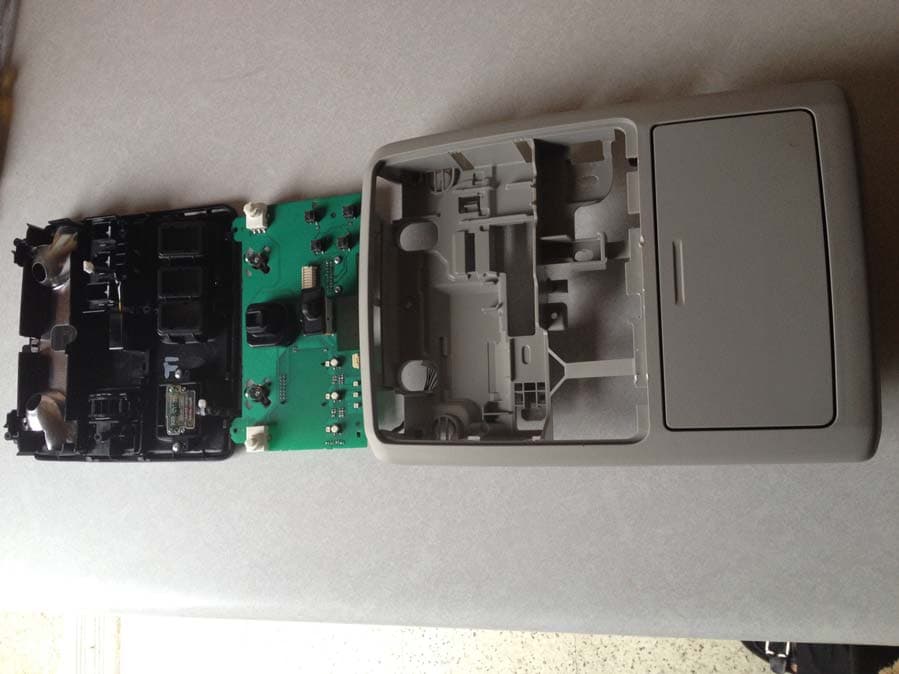
CB2775AHL5
Apr 29, 2013Universal Garage Door Opener w/ FHSS TX
Equipment Class
DSR - Part 15 Remote Control/Security Device Transceiver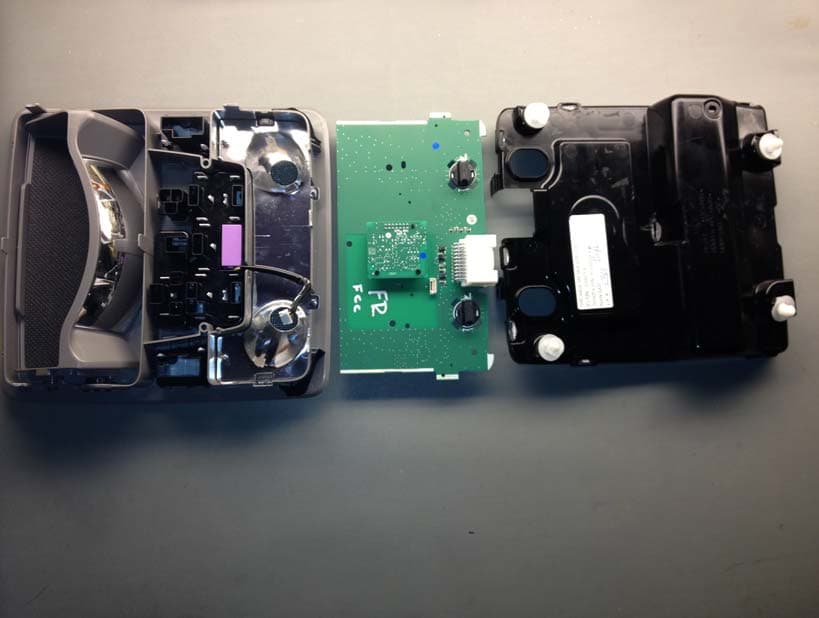
CB2440AHL5
Feb 24, 2013Universal Garage Door TX w/ FHSS TX
Equipment Class
DSS - Part 15 Spread Spectrum Transmitter