CJ6DCE45380ATri-Mode Dual-Band Analog/PCS Phone
Dynabook Inc.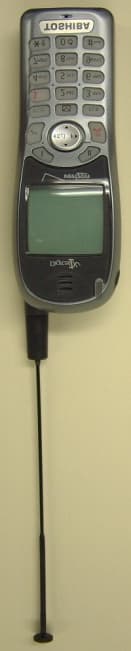
Click to zoom
Application Details
- Equipment Class
- PCE - PCS Licensed Transmitter held to ear
- Date of Grant
- Jan 03, 2002
- Application Purpose
- Original Equipment
- Date of Application
- Dec 10, 2001
- Equipment Note
- Tri-Mode Dual-Band Analog/PCS Phone
- Frequency Range
- 824.04000000 - 848.97000000
- Company
- Dynabook Inc.
- Country
- Japan
Documents & Files
Document Text
Text extracted from the exhibit documents filed with the FCC. Open a document above to read the original.
Users Manual
9155GPX OWNER'S MANUAL Draft December 2001 TABLE OF CONTENTS SAFETY INFORMATION FOR WIRELESS HANDHELD PHONES .................................. 1 SAR INFORMATION ......................................................... 2 FUNCTIONS ...................................................................... 3 GETTING STARTED ......................................................... 5 BASIC OPERATION .......................................................... 6 Placing Calls ................................................................. 6 Receiving Calls ............................................................. 8 During Calls................................................................... 9 Standby.......................................................................... 11 OPERATING PROCEDURES ........................................... 12 APPLICANT: TOSHIBA CORPORATIONTRANSCEIVER TYPE: CJ6DCE45380A EXHIBIT Type “User Manual” 1 SAFETY INFORMATION FOR WIRELESS HANDHELD PHONES SAFETY INFORMATION FOR WIRELESS HANDHELD PHONES Read this information before using your handheld portable Cellular Telephone. Your wireless handheld portable telephone is a low power radio transmitter and receiver. When it is ON, it receives and also sends out radio frequency (RF) sig- nals. FCC RF EXPOSURE INFORMATION In August 1996, the Federal Communications Commis- sion (FCC) of the United States, with its action in Re- port and Order FCC 96-326, adopted an updated safety standard for human exposure to radio frequency (RF) electromagnetic energy emitted by FCC regulated trans- mitters. Those guidelines are consistent with the safety standard previously set by both U.S. and international standards bodies. The design of this phone complies with the FCC guidelines and these international stan- dards. Use only the supplied or an approved antenna. Unau- thorized antennas, damaged antennas, modifications, or attachments could impair call quality, damage the phone, or result in violation of FCC regulations. Please contact your local dealer for replacement antenna. Body-worn Operation This device was tested for typical body-worn operations with the BC-9100 belt-clip and LB-9100 holster mod- els, offered by Audiovox as an accessory to this phone, and found to comply with FCC RF exposure require- ments. Third-party belt-clips, holsters and similar ac- cessories should be avoided, as they have not been tested and may not comply with FCC RF exposure lim- its. For more information about RF exposure, please visit the FCC website at www.fcc.gov . 2 phones used by the public is 1.6 watts/kg (W/kg) averaged over one gram of tissue. The standard incorporates a sub- stantial margin of safety to give additional protection for the public and to account for any variations in measurements. SAR INFORMATION SAR INFORMATION THIS MODEL PHONE MEETS THE GOVERNMENT’S RE- QUIREMENTS FOR EXPOSURE TO RADIO WAVES. Your wireless phone is a radio transmitter and receiver. It is designed and manufactured not to exceed the emission limits for exposure to radiofrequency (RF) energy set by the Fed- eral Communications Commission of the U.S. Government. These limits are part of comprehensive guidelines and estab- lish permitted levels of RF energy for the general population. The guidelines are based on standards that were developed by independent scientific organizations through periodic and thorough evaluation of scientific studies. The standards include a substantial safety margin designed to assure the safety of all persons, regardless of age and health. The exposure standard for wireless mobile phones employs a unit of measurement known as the Specific Absorption Rate, or SAR. The SAR limit set by the FCC is 1.6 W/kg. * Tests for SAR are conducted with the phone transmitting at its highest certified power level in all tested frequency bands. Although the SAR is determined at the highest certified power level, the ac- tual SAR level of the phone while operating can be well below the maximum value. This is because the phone is designed to operate at multiple power levels so as to use only the power required to reach the network. In general, the closer you are to a wireless base station antenna, the lower the power output. Before a phone model is available for sale to the public, it must be tested and certified to the FCC that it does not ex- ceed the limit established by the government-adopted require- ment for safe exposure. The tests are performed in positions and locations (e.g., at the ear and worn on the body) as re- quired by the FCC for each model. The highest SAR value for this model phone when tested for use at the ear is 1.45 W/kg and when worn on the body, as described in this user guide, is 0.72 W/kg. (Body-worn measurements differ among phone models, depending upon available accessories and FCC re- quirements). While there may be differences between the SAR levels of various phones and at various positions, they all meet the government requirement for safe exposure. The FCC has granted an Equipment Authorization for this model phone with all reported SAR levels evaluated as in com- pliance with the FCC RF exposure guidelines. SAR informa- tion on this model phone is on file with the FCC and can be found under the Display Grant section of http://www.fcc.gov/ oet/fccid after searching on FCC ID CJ6DCE45380A. Additional information on Specific Absorption Rates (SAR) can be found on the Cellular Telecommunications & Internet As- sociation (CTIA) web-site at http://phonefacts.net. * In the United States and Canada, the SAR limit for mobile 3 FUNCTIONSFUNCTIONS External View Rm ABCDEFGHIJKL MNOPQRSTUVWX YZ1234567890 2 1 3 ABC DEF 5 4 6 JKL GHI PQRS MNO 8 7 9 TUV WXYZ 0 CLR Rcl F V Retractable Whip Antenna Incoming Call & Charging Indicator (LED) Earpiece Power/Data Connector Graphic Display End Key with Power On/Off Clear Key Soft Key 2 Multi Function Key Up-arrow Recall Function Down-arrow Microphone Voice Activated Dialing & Space Key Powe…
Text truncated - open the document above for the full version.
Cover Letter(s)
APPLICANT: TOSHIBA CORPORATIONTRANSCEVER TYPE: CJ6DCE45380A PAGE 1 OF EXHIBIT T ype“Cover Letters” LIST OF EXHIBITS EXHIBIT Type.DESCRIPTION Attestation Statement(4 Pages) Request for confidentiality(1 Pages) Block Diagram of Handheld Portable Telephone Transceiver(1 Pages) Cover Letters (List of Exhibit)(1 Pages) External Photos(2 Pages) ID Label / Location Information(3 Pages) Internal Photos(10 Pages) Operational Description(13 Pages) Parts List / Tune Up Information(22 Pages) Schematic Diagram of Transceiver RF/BB(3 Pages) Test Report (Include Exhibit type RF Exposure Information)(238 Pages) Test Set Up(4 Pages) User Manual(13 Pages)
External Photos
APPLICANT: TOSHIBA CORPORATIONTRANSCEIVER TYPE:CJ6DCE45380A PAGE 1 OF EXHIBIT T ype“External Photos” Handheld Portable General Appearance APPLICANT: TOSHIBA CORPORATIONTRANSCEIVER TYPE:CJ6DCE45380A PAGE 2 OF EXHIBIT T ype“External Photos” Handheld Portable Inside View (Showing FCC ID Nameplate)
External Photos
© 2001 PCTEST Lab TOSHIBA FCC ID: CJ6DCE45380A (Model: CDM-9155GPX) NVLAP Lab Code: 100431-0 Tri-Mode Dual-Band Analog/PCS Phone (AMPS/CDMA) © 2001 PCTEST Lab TOSHIBA FCC ID: CJ6DCE45380A (Model: CDM-9155GPX) NVLAP Lab Code: 100431-0 Tri-Mode Dual-Band Analog/PCS Phone (AMPS/CDMA) © 2001 PCTEST Lab TOSHIBA FCC ID: CJ6DCE45380A (Model: CDM-9155GPX) NVLAP Lab Code: 100431-0 Tri-Mode Dual-Band Analog/PCS Phone (AMPS/CDMA)
External Photos
© 2001 PCTEST Lab TOSHIBA FCC ID: CJ6DCE45380A (Model: CDM-9155GPX) NVLAP Lab Code: 100431-0 Tri-Mode Dual-Band Analog/PCS Phone (AMPS/CDMA) © 2001 PCTEST Lab TOSHIBA FCC ID: CJ6DCE45380A (Model: CDM-9155GPX) NVLAP Lab Code: 100431-0 Tri-Mode Dual-Band Analog/PCS Phone (AMPS/CDMA) © 2001 PCTEST Lab TOSHIBA FCC ID: CJ6DCE45380A (Model: CDM-9155GPX) NVLAP Lab Code: 100431-0 Tri-Mode Dual-Band Analog/PCS Phone (AMPS/CDMA) © 2001 PCTEST Lab TOSHIBA FCC ID: CJ6DCE45380A (Model: CDM-9155GPX) NVLAP Lab Code: 100431-0 Tri-Mode Dual-Band Analog/PCS Phone (AMPS/CDMA)
Internal Photos
APPLICANT: TOSHIBA CORPORATIONTRANSCEIVER TYPE:CJ6DCE45380A PAGE 1 OF EXHIBIT T ype“Internal Photos” Handheld Portable MAIN Board (W ith Shield Case and Cover) APPLICANT: TOSHIBA CORPORATIONTRANSCEIVER TYPE:CJ6DCE45380A PAGE 2 OF EXHIBIT T ype“Internal Photos” Handheld Portable MAIN Board (Front side , W ith Shield Cover Removed) APPLICANT: TOSHIBA CORPORATIONTRANSCEIVER TYPE:CJ6DCE45380A PAGE 3 OF EXHIBIT T ype“Internal Photos” Handheld Portable MAIN Board (Front side , W ith Shield Cover and LCD holder Removed) APPLICANT: TOSHIBA CORPORATIONTRANSCEIVER TYPE:CJ6DCE45380A PAGE 4 OF EXHIBIT T ype“Internal Photos” Handheld Portable MAIN Board (Front side ,W ithout Shield Cover ,W ith LCD holder Removed)
Internal Photos
APPLICANT: TOSHIBA CORPORATION TRANSCEIVER TYPE:CJ6DCE45380A PAGE 5 OF EXHIBIT Type “Internal Photos” Handheld Portable MAIN Board (Back side , With shield cover) APPLICANT: TOSHIBA CORPORATION TRANSCEIVER TYPE:CJ6DCE45380A PAGE 6 OF EXHIBIT Type “Internal Photos” Handheld Portable MAIN Board (Back side , With shield cover removed) VCTCXO : DSA751HAD APPLICANT: TOSHIBA CORPORATION TRANSCEIVER TYPE:CJ6DCE45380A PAGE 7 OF EXHIBIT Type “Internal Photos” Handheld Portable MAIN Board (Back side , With shield cover removed) VCTCXO : VC-TCXO-204C2 APPLICANT: TOSHIBA CORPORATION TRANSCEIVER TYPE:CJ6DCE45380A PAGE 8 OF EXHIBIT Type “Internal Photos” Handheld Portable MAIN Board (Back side , With shield cover removed) VCTCXO : KT16-ECV27L-19.680M-TA
Internal Photos
APPLICANT: TOSHIBA CORPORATION TRANSCEIVER TYPE:CJ6DCE45380A PAGE 9 OF EXHIBIT Type “Internal Photos” Handheld Portable Key Board (Front side ) Handheld Portable Key Board (Back side) APPLICANT: TOSHIBA CORPORATION TRANSCEIVER TYPE:CJ6DCE45380A PAGE 10 OF EXHIBIT Type “Internal Photos” Handheld Portable Inner Case (Front side) Handheld Portable Inner Case (Back side)
RF Exposure Info
© 2001 PCTEST Engineering Lab., Inc. PCTEST Engineering Laboratory, Inc. 6660-B Dobbin Road • Columbia, MD 21045 • U.S.A. TEL (410) 290-6652 • FAX (410) 290-6654 http://www.pctestlab.com CERTIFICATE OF COMPLIANCE (SAR EVALUATION) TOSHIBA CORPORATION Dates of Tests: November 26-30, 2001 Technology & Quality Management Division Test Report S/N: SAR.211126661.CJ6 Digital Media Equipment & Services Co. Test Site: PCTEST Lab, Columbia, MD USA 1-1 Shibaura 1-Chome, Minatoku Tokyo, 105-01, JAPAN Attn: Peter Leone, Manager - Product Standard & Safety Co. FCC ID CJ6DCE45380A APPLICANT TOSHIBA CORPORATION EUT Type: Tri-Mode Dual-Band Analog/PCS Phone (AMPS/CDMA) Tx Frequency: 824.04 — 848.97 MHz (AMPS) / 824.70 — 848.31 MHz (CDMA) 1851.25 — 1908.75 MHz (PCS CDMA) Rx Frequency: 869.04 — 893.97 MHz (AMPS) / 869.70 — 893.31 MHz (CDMA) 1931.25 — 1988.75 MHz (PCS CDMA) Max. RF Output Power: 0.613 W ERP AMPS (27.872 dBm) / 0.344 W ERP CDMA (25.367 dBm) 0.461 W EIRP PCS CDMA (26.639 dBm) Max. SAR Measurement: 1.450mW/g AMPS Head SAR; 0.724mW/g AMPS Body SAR 0.849mW/g CDMA Head SAR; 0.388mW/g CDMA Body SAR 1.240mW/g PCS Head SAR; 0.283mW/g PCS Body SAR Trade Name/Model(s): TOSHIBA CDM-9155GPX FCC Classification: Licensed Portable Transmitter Held to Ear (PCE) FCC Rule Part(s): §2.1093; FCC/OET Bulletin Supplement C [July 2001] Application Type: Certification This wireless portable device has been shown to be capable of continued compliance for localized specific absorption rate (SAR) for uncontrolled environment/general population exposure limits specified in ANSI/IEEE Std. C95.1-1992 and had been tested in accordance with the measurement procedures specified in ANSI/IEEE Std. C95.3-1992 and IEEE Std. 1528 (Draft Aug.2000). I attest to the accuracy of data. All measurements reported herein were performed by me or were made under my supervision and are correct to the best of my knowledge and belief. I assume full responsibility for the completeness of these measurements and vouch for the qualifications of all persons taking them. NVLAP accreditation does not constitute any product endorsement by NVLAP or any agency of the United States Government. PCTEST certifies that no party to this application has been denied the FCC benefits pursuant to Section 5301 of the Anti-Drug Abuse Act of 1988, 21 U.S.C. 862. 211126661.CJ6 SAR Measurement Report FCC Part 24/22 Certification © 2001 PCTEST Lab i Table of Contents 1.1 SCOPE 1 2.1 INTRODUCTION / SAR DEFINITION 2 3.1 SAR MEASUREMENT SET-UP 3 4.1 E-FIELD PROBE SYSTEM 4 5.1 E-FIELD PROBE CALIBRATION PROCESS 5-6 6.1 PHANTOM, HOLDER, & EQUIVALENT TISSUE 7 7.1 SYSTEM SPECIFICATIONS 8 8.1 MEASUREMENT PROCESS 9 9.1 HEAD SAR TEST POSITIONS OF THE PHONE 10 10.1 BODY SAR TEST SETUP 11 11.1 ANSI/IEEE C95.1 RF EXPOSURE LIMITS 12 12.1 MEASUREMENT UNCERTAINTIES 13 13.1 TEST DATA SUMMARY 14-28 14.1 SAR TEST EQUIPMENT LIST 29 15.1 CONCLUSION 30 16.1 REFERENCES 31 Test Report S/N: SAR.211126661.CJ6 SAR Measurement Report Test Date(s): November 26-30, 2001 FCC Part 24/22 Certification TOSHIBA FCC ID: CJ6DCE45380A (Model: CDM-9155GPX) © 2001 PCTEST Lab Tri-Mode Dual-Band Analog/PCS Phone (AMPS/CDMA) 1 SAR MEASUREMENT REPORT 1.1 Scope Environmental evaluation measurements of specific absorption rate 1 (SAR) distributions in simulated human head and body tissues exposed to radiofrequency (RF) radiation from wireless portable devices for compliance with the rules and regulations of the U.S. Federal Communications Commission (FCC). 2 Company Name: TOSHIBA CORPORATION Address: Technology & Quality Management Division Digital Media Equipment & Services Co. 1-1 Shibaura 1-Chome, Minatoku Tokyo, 105-01, JAPAN Attention: Peter Leone, Manager, Product Standard & Safety Co. • EUT Type: Tri-Mode Dual-Band Analog/PCS Phone • Trade Name / Model: TOSHIBA CDM-9155GPX • FCC IDENTIFIER: CJ6DCE45380A • Tx Frequency: 824.04 — 848.97 MHz (AMPS) 824.70 — 848.31 MHz (CDMA) 1851.25 — 1908.75 MHz (PCS CDMA) • Rx Frequency: 869.04 — 893.97 MHz (AMPS) 869.70 — 893.31 MHz (CDMA) 1931.25 — 1988.75 MHz (PCS CDMA) • FCC Classification: Licensed Portable Transmitter Held to Ear (PCE) • Modulation(s): AMPS / CDMA • FCC Rule Part(s): §2.1093, OET Bulletin 65, Supplement C (July 2001) • Max. RF Output Power: 0.613 W ERP - AMPS (27.872 dBm) 0.344 W ERP - CDMA (25.367 dBm) 0.461 W EIRP - PCS CDMA (26.639 dBm) • Max SAR Measurement: 1.450mW/g AMPS Head SAR; 0.724mW/g AMPS Body SAR 0.849mW/g CDMA Head SAR; 0.388mW/g CDMA Body SAR 1.240mW/g PCS Head SAR; 0.283mW/g PCS Body SAR • Application Type: Certification • Dates of Tests: November 26-30, 2001 Place of Tests: PCTEST Engineering Lab. Columbia, MD, U.S.A. • Report Serial No.: SAR.211126661.CJ6 1 Specific Absorption Rate (SAR) is a measure of the rate of energy absorption due to exposure to an RF transmitting source (wireless portable device). 2 IEEE/ANSI Std. C95.1-1992 limits are used to determine compliance with FCC ET Docket 93-62. Fig. 1 SAR Test Setup Test Report S/N: SAR.211126661.CJ6 SAR Measurement Report Test Date(s): November 26-30, 2001 FCC Part 24/22 Certification TOSHIBA FCC ID: CJ6DCE45380A (Model: CDM-9155GPX) © 2001 PCTEST Lab Tri-Mode Dual-Band Analog/PCS Phone (AMPS/CDMA) 2 2.1 INTRODUCTION The FCC has adopted the guidelines for evaluating the environmental effects of radiofrequency radiation in ET Docket 93-62 on Aug. 6, 1996 to protect the public and workers from the potential hazards of RF emissions due to FCC-regulated portable devices.[1] The safety limits used for the environmental evaluation measurements are based on the criteria published by the American National Standards Institute (ANSI) for localized specific absorption rate (SAR) in IEEE/ANSI C95.1-1992 Standard for Safety Levels with Respect to Human Exposure to Radio Frequency Electromagnetic Fields, 3 kHz to 300 GHz. (c) 1992 by the Institute of Electrical and Electronics Engineers, Inc., New York, New York 10017.[2] The measurement procedure described in IEEE/ANSI C95.3-1992 Recommended …
Text truncated - open the document above for the full version.
RF Exposure Info
© 2001 PCTEST Lab TOSHIBA FCC ID: CJ6DCE45380A (Model: CDM-9155GPX) NVLAP Lab Code: 100431-0 Tri-Mode Dual-Band Analog/PCS Phone (AMPS/CDMA) © 2001 PCTEST Lab TOSHIBA FCC ID: CJ6DCE45380A (Model: CDM-9155GPX) NVLAP Lab Code: 100431-0 Tri-Mode Dual-Band Analog/PCS Phone (AMPS/CDMA) © 2001 PCTEST Lab TOSHIBA FCC ID: CJ6DCE45380A (Model: CDM-9155GPX) NVLAP Lab Code: 100431-0 Tri-Mode Dual-Band Analog/PCS Phone (AMPS/CDMA) © 2001 PCTEST Lab TOSHIBA FCC ID: CJ6DCE45380A (Model: CDM-9155GPX) NVLAP Lab Code: 100431-0 Tri-Mode Dual-Band Analog/PCS Phone (AMPS/CDMA) © 2001 PCTEST Lab TOSHIBA FCC ID: CJ6DCE45380A (Model: CDM-9155GPX) NVLAP Lab Code: 100431-0 Tri-Mode Dual-Band Analog/PCS Phone (AMPS/CDMA) © 2001 PCTEST Lab TOSHIBA FCC ID: CJ6DCE45380A (Model: CDM-9155GPX) NVLAP Lab Code: 100431-0 Tri-Mode Dual-Band Analog/PCS Phone (AMPS/CDMA)
RF Exposure Info
© 2001 PCTEST Lab TOSHIBA FCC ID: CJ6DCE45380A (Model: CDM-9155GPX) NVLAP Lab Code: 100431-0 Tri-Mode Dual-Band Analog/PCS Phone (AMPS/CDMA) © 2001 PCTEST Lab TOSHIBA FCC ID: CJ6DCE45380A (Model: CDM-9155GPX) NVLAP Lab Code: 100431-0 Tri-Mode Dual-Band Analog/PCS Phone (AMPS/CDMA) © 2001 PCTEST Lab TOSHIBA FCC ID: CJ6DCE45380A (Model: CDM-9155GPX) NVLAP Lab Code: 100431-0 Tri-Mode Dual-Band Analog/PCS Phone (AMPS/CDMA) © 2001 PCTEST Lab TOSHIBA FCC ID: CJ6DCE45380A (Model: CDM-9155GPX) NVLAP Lab Code: 100431-0 Tri-Mode Dual-Band Analog/PCS Phone (AMPS/CDMA) © 2001 PCTEST Lab TOSHIBA FCC ID: CJ6DCE45380A (Model: CDM-9155GPX) NVLAP Lab Code: 100431-0 Tri-Mode Dual-Band Analog/PCS Phone (AMPS/CDMA) © 2001 PCTEST Lab TOSHIBA FCC ID: CJ6DCE45380A (Model: CDM-9155GPX) NVLAP Lab Code: 100431-0 Tri-Mode Dual-Band Analog/PCS Phone (AMPS/CDMA) © 2001 PCTEST Lab TOSHIBA FCC ID: CJ6DCE45380A (Model: CDM-9155GPX) NVLAP Lab Code: 100431-0 Tri-Mode Dual-Band Analog/PCS Phone (AMPS/CDMA) © 2001 PCTEST Lab TOSHIBA FCC ID: CJ6DCE45380A (Model: CDM-9155GPX) NVLAP Lab Code: 100431-0 Tri-Mode Dual-Band Analog/PCS Phone (AMPS/CDMA) © 2001 PCTEST Lab TOSHIBA FCC ID: CJ6DCE45380A (Model: CDM-9155GPX) NVLAP Lab Code: 100431-0 Tri-Mode Dual-Band Analog/PCS Phone (AMPS/CDMA) © 2001 PCTEST Lab TOSHIBA FCC ID: CJ6DCE45380A (Model: CDM-9155GPX) NVLAP Lab Code: 100431-0 Tri-Mode Dual-Band Analog/PCS Phone (AMPS/CDMA) © 2001 PCTEST Lab TOSHIBA FCC ID: CJ6DCE45380A (Model: CDM-9155GPX) NVLAP Lab Code: 100431-0 Tri-Mode Dual-Band Analog/PCS Phone (AMPS/CDMA) © 2001 PCTEST Lab TOSHIBA FCC ID: CJ6DCE45380A (Model: CDM-9155GPX) NVLAP Lab Code: 100431-0 Tri-Mode Dual-Band Analog/PCS Phone (AMPS/CDMA)
RF Exposure Info
TOSHIBA FCC ID: CJ6DCE45380A -- Cellular CDMA Body SAR Generic Twin Phantom; Flat Section; Probe: ET3DV6 - SN1560 -- Probe Cal Date 20/02/01 Med. Parameters 835 MHz Muscle: σ = 0.97 mho/m ε r = 55.2 ρ = 1.00 g/cm 3 ; Antenna Position -- In; Crest Factor 1.0 SAR (1g): 0.388 mW/g, SAR (10g): 0.273 mW/g TOSHIBA TriMode phone Model:CDM-9155GPX Cellular CDMA Mode, Ch.1013 [824.70MHz]; Flat Phantom; Standard Battery Conducted Power = 24.5dBm; Spacing = 2.2cm from flat phantom to back of phone, w/BeltClip Test Date -- 11/29/2001 SAR Tot [mW/g] 3.81E-2 1.14E-1 1.91E-1 2.67E-1 3.43E-1 PCTEST Engineering Laboratory, Inc. TOSHIBA FCC ID: CJ6DCE45380A -- Cellular CDMA Body SAR Generic Twin Phantom; Flat Section; Probe: ET3DV6 - SN1560 -- Probe Cal Date 20/02/01 Med. Parameters 835 MHz Muscle: σ = 0.97 mho/m ε r = 55.2 ρ = 1.00 g/cm 3 ; Antenna Position -- Out; Crest Factor 1.0 SAR (1g): 0.343 mW/g, SAR (10g): 0.241 mW/g TOSHIBA TriMode phone Model:CDM-9155GPX Cellular CDMA Mode, Ch.1013 [824.70MHz]; Flat Phantom; Standard Battery Conducted Power = 24.5dBm; Spacing = 2.2cm from flat phantom to back of phone, w/BeltClip Test Date -- 11/29/2001 SAR Tot [mW/g] 3.40E-2 1.02E-1 1.70E-1 2.38E-1 3.06E-1 PCTEST Engineering Laboratory, Inc. TOSHIBA FCC ID: CJ6DCE45380A -- Cellular CDMA Body SAR Generic Twin Phantom; Flat Section; Probe: ET3DV6 - SN1560 -- Probe Cal Date 20/02/01 Med. Parameters 835 MHz Muscle: σ = 0.97 mho/m ε r = 55.2 ρ = 1.00 g/cm 3 ; Antenna Position -- In; Crest Factor 1.0 SAR (1g): 0.325 mW/g, SAR (10g): 0.228 mW/g TOSHIBA TriMode phone Model:CDM-9155GPX Cellular CDMA Mode, Ch.1013 [824.70MHz]; Flat Phantom; Standard Battery Conducted Power = 24.5dBm; Spacing = 2.5cm from flat phantom to back of phone, w/Holster Test Date -- 11/29/2001 SAR Tot [mW/g] 3.15E-2 9.45E-2 1.58E-1 2.21E-1 2.83E-1 PCTEST Engineering Laboratory, Inc. TOSHIBA FCC ID: CJ6DCE45380A -- Cellular CDMA Body SAR Generic Twin Phantom; Flat Section; Probe: ET3DV6 - SN1560 -- Probe Cal Date 20/02/01 Med. Parameters 835 MHz Muscle: σ = 0.97 mho/m ε r = 55.2 ρ = 1.00 g/cm 3 ; Antenna Position -- Out; Crest Factor 1.0 SAR (1g): 0.296 mW/g, SAR (10g): 0.208 mW/g TOSHIBA TriMode phone Model:CDM-9155GPX Cellular CDMA Mode, Ch.1013 [824.70MHz]; Flat Phantom; Standard Battery Conducted Power = 24.5dBm; Spacing = 2.5cm from flat phantom to back of phone, w/Holster Test Date -- 11/29/2001 SAR Tot [mW/g] 2.90E-2 8.70E-2 1.45E-1 2.03E-1 2.61E-1 PCTEST Engineering Laboratory, Inc.
RF Exposure Info
TOSHIBA FCC ID: CJ6DCE45380A -- Cellular CDMA Head SAR Generic Twin Phantom; Right Hand Section; Probe: ET3DV6 - SN1560 -- Probe Cal Date 20/02/01 Med. Parameters 835 MHz Brain: σ = 0.90 mho/m ε r = 41.5 ρ = 1.00 g/cm 3 ; Antenna Position -- In; Crest Factor 1.0 SAR (1g): 0.839 mW/g, SAR (10g): 0.579 mW/g TOSHIBA TriMode Model:CDM-9155GPX Cellular CDMA Mode, Ch.1013 [824.70MHz]; Standard Battery Conducted Power = 24.5dBm; Right Head Phantom, Cheek/Touch Position Test Date -- 11/29/2001 SAR Tot [mW/g] 8.46E-2 2.54E-1 4.23E-1 5.92E-1 7.61E-1 PCTEST Engineering Laboratory, Inc. TOSHIBA FCC ID: CJ6DCE45380A -- Cellular CDMA Head SAR Generic Twin Phantom; Right Hand Section; Probe: ET3DV6 - SN1560 -- Probe Cal Date 20/02/01 Med. Parameters 835 MHz Brain: σ = 0.90 mho/m ε r = 41.5 ρ = 1.00 g/cm 3 ; Antenna Position -- Out; Crest Factor 1.0 SAR (1g): 0.807 mW/g, SAR (10g): 0.560 mW/g TOSHIBA TriMode Model:CDM-9155GPX Cellular CDMA Mode, Ch.1013 [824.70MHz]; Standard Battery Conducted Power = 24.5dBm; Right Head Phantom, Cheek/Touch Position Test Date -- 11/29/2001 SAR Tot [mW/g] 7.85E-2 2.35E-1 3.93E-1 5.49E-1 7.07E-1 PCTEST Engineering Laboratory, Inc. TOSHIBA FCC ID: CJ6DCE45380A -- Cellular CDMA Head SAR Generic Twin Phantom; Right Hand Section; Probe: ET3DV6 - SN1560 -- Probe Cal Date 20/02/01 Med. Parameters 835 MHz Brain: σ = 0.90 mho/m ε r = 41.5 ρ = 1.00 g/cm 3 ; Antenna Position -- In; Crest Factor 1.0 SAR (1g): 0.794 mW/g, SAR (10g): 0.546 mW/g TOSHIBA TriMode Model:CDM-9155GPX Cellular CDMA Mode, Ch.0383 [836.49MHz]; Standard Battery Conducted Power = 24.5dBm; Right Head Phantom, Cheek/Touch Position Test Date -- 11/29/2001 SAR Tot [mW/g] 7.85E-2 2.35E-1 3.93E-1 5.49E-1 7.07E-1 PCTEST Engineering Laboratory, Inc. TOSHIBA FCC ID: CJ6DCE45380A -- Cellular CDMA Head SAR Generic Twin Phantom; Right Hand Section; Probe: ET3DV6 - SN1560 -- Probe Cal Date 20/02/01 Med. Parameters 835 MHz Brain: σ = 0.90 mho/m ε r = 41.5 ρ = 1.00 g/cm 3 ; Antenna Position -- Out; Crest Factor 1.0 SAR (1g): 0.823 mW/g, SAR (10g): 0.569 mW/g TOSHIBA TriMode Model:CDM-9155GPX Cellular CDMA Mode, Ch.0383 [836.49MHz]; Standard Battery Conducted Power = 24.5dBm; Right Head Phantom, Cheek/Touch Position Test Date -- 11/29/2001 SAR Tot [mW/g] 8.06E-2 2.42E-1 4.03E-1 5.64E-1 7.25E-1 PCTEST Engineering Laboratory, Inc. TOSHIBA FCC ID: CJ6DCE45380A -- Cellular CDMA Head SAR Generic Twin Phantom; Right Hand Section; Probe: ET3DV6 - SN1560 -- Probe Cal Date 20/02/01 Med. Parameters 835 MHz Brain: σ = 0.90 mho/m ε r = 41.5 ρ = 1.00 g/cm 3 ; Antenna Position -- In; Crest Factor 1.0 SAR (1g): 0.843 mW/g, SAR (10g): 0.578 mW/g TOSHIBA TriMode Model:CDM-9155GPX Cellular CDMA Mode, Ch.0777 [848.31MHz]; Standard Battery Conducted Power = 24.5dBm; Right Head Phantom, Cheek/Touch Position Test Date -- 11/29/2001 SAR Tot [mW/g] 8.38E-2 2.51E-1 4.19E-1 5.87E-1 7.54E-1 PCTEST Engineering Laboratory, Inc. TOSHIBA FCC ID: CJ6DCE45380A -- Cellular CDMA Head SAR Generic Twin Phantom; Right Hand Section; Probe: ET3DV6 - SN1560 -- Probe Cal Date 20/02/01 Med. Parameters 835 MHz Brain: σ = 0.90 mho/m ε r = 41.5 ρ = 1.00 g/cm 3 ; Antenna Position -- Out; Crest Factor 1.0 SAR (1g): 0.849 mW/g, SAR (10g): 0.584 mW/g TOSHIBA TriMode Model:CDM-9155GPX Cellular CDMA Mode, Ch.0777 [848.31MHz]; Standard Battery Conducted Power = 24.5dBm; Right Head Phantom, Cheek/Touch Position Test Date -- 11/29/2001 SAR Tot [mW/g] 8.31E-2 2.49E-1 4.16E-1 5.82E-1 7.48E-1 PCTEST Engineering Laboratory, Inc.
RF Exposure Info
835MHz Brain Dipole Validation Generic Twin Phantom; Flat Section; Probe: ET3DV6 - SN1560 -- Probe Cal Date 20/02/01 Med. Parameters 835 MHz Brain: σ = 0.90 mho/m ε r = 41.5 ρ = 1.00 g/cm 3 ; Antenna Position -- Out; Crest Factor 1.0 SAR (1g): 2.09 mW/g, SAR (10g): 1.40 mW/g 835MHz Brain Dipole Validation (D835V2 S/N: 406) Frequency: 835 MHz; Antenna Input Power: 250 [mW] PCTEST Brain Tissue Simulating Liquid [11-28-2001] SAR Tot [mW/g] 2.12E-1 6.35E-1 1.06E+0 1.48E+0 1.90E+0 PCTEST Engineering Laboratory, Inc. 835MHz Brain Dipole Validation Generic Twin Phantom; Flat Section; Probe: ET3DV6 - SN1560 -- Probe Cal Date 20/02/01 Med. Parameters 835 MHz Brain: σ = 0.90 mho/m ε r = 41.5 ρ = 1.00 g/cm 3 ; Antenna Position -- Out; Crest Factor 1.0 SAR (1g): 2.19 mW/g, SAR (10g): 1.44 mW/g 835MHz Brain Dipole Validation (D835V2 S/N: 406) Frequency: 835 MHz; Antenna Input Power: 250 [mW] PCTEST Brain Tissue Simulating Liquid [11-29-2001] SAR Tot [mW/g] 2.29E-1 6.86E-1 1.14E+0 1.60E+0 2.06E+0 PCTEST Engineering Laboratory, Inc. 835MHz Muscle Dipole Validation Generic Twin Phantom; Flat Section; Probe: ET3DV6 - SN1560 -- Probe Cal Date 20/02/01 Med. Parameters 835 MHz Muscle: σ = 0.97 mho/m ε r = 55.2 ρ = 1.00 g/cm 3 ; Antenna Position -- Out; Crest Factor 1.0 SAR (1g): 2.19 mW/g, SAR (10g): 1.47 mW/g 835MHz Muscle Dipole Validation (D835V2 S/N: 406) Frequency: 835 MHz; Antenna Input Power: 250 [mW] PCTEST Muscle Tissue Simulating Liquid [11-29-2001] SAR Tot [mW/g] 2.19E-1 6.57E-1 1.10E+0 1.53E+0 1.97E+0 PCTEST Engineering Laboratory, Inc. 1900MHz Brain Dipole Validation Generic Twin Phantom; Flat Section; Probe: ET3DV6 - SN1560 -- Probe Cal Date 20/02/01 Med. Parameters 1900 MHz Brain: σ = 1.60 mho/m ε r = 40.0 ρ = 1.00 g/cm 3 ; Antenna Position -- Out; Crest Factor 1.0 SAR (1g): 9.52 mW/g, SAR (10g): 4.90 mW/g 1900MHz Brain Dipole Validation (D1900V2 S/N: 502) Frequency: 1900 MHz; Antenna Input Power: 250 [mW] PCTEST Brain Tissue Simulating Liquid [11/27/2001] SAR Tot [mW/g] 0.92E+0 2.77E+0 4.64E+0 6.50E+0 8.47E+0 PCTEST Engineering Laboratory, Inc. 1900MHz Muscle Dipole Validation Generic Twin Phantom; Flat Section; Probe: ET3DV6 - SN1560 -- Probe Cal Date 20/02/01 Med. Parameters 1900 MHz Muscle: σ = 1.52 mho/m ε r = 53.3 ρ = 1.00 g/cm 3 ; Antenna Position -- Out; Crest Factor 1.0 SAR (1g): 9.67 mW/g, SAR (10g): 4.99 mW/g 1900MHz Muscle Dipole Validation (D1900V2 S/N: 502) Frequency: 1900 MHz; Antenna Input Power: 250 [mW] PCTEST Muscle Tissue Simulating Liquid [11/30/2001] SAR Tot [mW/g] 9.42E-1 2.80E+0 4.72E+0 6.65E+0 8.40E+0 PCTEST Engineering Laboratory, Inc.
RF Exposure Info
TOSHIBA FCC ID: CJ6DCE45380A -- FM Body SAR Generic Twin Phantom; Flat Section; Probe: ET3DV6 - SN1560 -- Probe Cal Date 20/02/01 Med. Parameters 835 MHz Muscle: σ = 0.97 mho/m ε r = 55.2 ρ = 1.00 g/cm 3 ; Antenna Position -- In; Crest Factor 1.0 SAR (1g): 0.724 mW/g, SAR (10g): 0.507 mW/g TOSHIBA TriMode phone Model:CDM-9155GPX FM Mode, Ch.0991 [824.04MHz]; Flat Phantom; Standard Battery Conducted Power = 27.2dBm; Spacing = 2.2cm from flat phantom to back of phone, w/BeltClip Test Date -- 11/29/2001 SAR Tot [mW/g] 7.19E-2 2.16E-1 3.59E-1 5.03E-1 6.47E-1 PCTEST Engineering Laboratory, Inc. TOSHIBA FCC ID: CJ6DCE45380A -- FM Body SAR Generic Twin Phantom; Flat Section; Probe: ET3DV6 - SN1560 -- Probe Cal Date 20/02/01 Med. Parameters 835 MHz Muscle: σ = 0.97 mho/m ε r = 55.2 ρ = 1.00 g/cm 3 ; Antenna Position -- Out; Crest Factor 1.0 SAR (1g): 0.601 mW/g, SAR (10g): 0.420 mW/g TOSHIBA TriMode phone Model:CDM-9155GPX FM Mode, Ch.0991 [824.04MHz]; Flat Phantom; Standard Battery Conducted Power = 27.2dBm; Spacing = 2.2cm from flat phantom to back of phone, w/BeltClip Test Date -- 11/29/2001 SAR Tot [mW/g] 6.06E-2 1.82E-1 3.03E-1 4.24E-1 5.45E-1 PCTEST Engineering Laboratory, Inc. TOSHIBA FCC ID: CJ6DCE45380A -- FM Body SAR Generic Twin Phantom; Flat Section; Probe: ET3DV6 - SN1560 -- Probe Cal Date 20/02/01 Med. Parameters 835 MHz Muscle: σ = 0.97 mho/m ε r = 55.2 ρ = 1.00 g/cm 3 ; Antenna Position -- In; Crest Factor 1.0 SAR (1g): 0.612 mW/g, SAR (10g): 0.428 mW/g TOSHIBA TriMode phone Model:CDM-9155GPX FM Mode, Ch.0383 [836.49MHz]; Flat Phantom; Standard Battery Conducted Power = 27.2dBm; Spacing = 2.2cm from flat phantom to back of phone, w/BeltClip Test Date -- 11/29/2001 SAR Tot [mW/g] 6.16E-2 1.85E-1 3.08E-1 4.31E-1 5.54E-1 PCTEST Engineering Laboratory, Inc. TOSHIBA FCC ID: CJ6DCE45380A -- FM Body SAR Generic Twin Phantom; Flat Section; Probe: ET3DV6 - SN1560 -- Probe Cal Date 20/02/01 Med. Parameters 835 MHz Muscle: σ = 0.97 mho/m ε r = 55.2 ρ = 1.00 g/cm 3 ; Antenna Position -- Out; Crest Factor 1.0 SAR (1g): 0.581 mW/g, SAR (10g): 0.406 mW/g TOSHIBA TriMode phone Model:CDM-9155GPX FM Mode, Ch.0383 [836.49MHz]; Flat Phantom; Standard Battery Conducted Power = 27.2dBm; Spacing = 2.2cm from flat phantom to back of phone, w/BeltClip Test Date -- 11/29/2001 SAR Tot [mW/g] 5.74E-2 1.72E-1 2.87E-1 4.02E-1 5.17E-1 PCTEST Engineering Laboratory, Inc. TOSHIBA FCC ID: CJ6DCE45380A -- FM Body SAR Generic Twin Phantom; Flat Section; Probe: ET3DV6 - SN1560 -- Probe Cal Date 20/02/01 Med. Parameters 835 MHz Muscle: σ = 0.97 mho/m ε r = 55.2 ρ = 1.00 g/cm 3 ; Antenna Position -- In; Crest Factor 1.0 SAR (1g): 0.563 mW/g, SAR (10g): 0.393 mW/g TOSHIBA TriMode phone Model:CDM-9155GPX FM Mode, Ch.0799 [848.97MHz]; Flat Phantom; Standard Battery Conducted Power = 27.2dBm; Spacing = 2.2cm from flat phantom to back of phone, w/BeltClip Test Date -- 11/29/2001 SAR Tot [mW/g] 5.89E-2 1.77E-1 2.94E-1 4.12E-1 5.30E-1 PCTEST Engineering Laboratory, Inc. TOSHIBA FCC ID: CJ6DCE45380A -- FM Body SAR Generic Twin Phantom; Flat Section; Probe: ET3DV6 - SN1560 -- Probe Cal Date 20/02/01 Med. Parameters 835 MHz…
Text truncated - open the document above for the full version.
Contact Information
Applicant
Ryuichi Kamimura(Senior Manager)
Technical Contact
Toshiba America Information Systems, Inc.Peter Leone
[email protected](949)587-6473
9740 Irvine Boulevard · Irvine, California · United States
Technical Specifications
| # | Rule Parts | Frequency Range | Power Output | Emission | Tolerance |
|---|---|---|---|---|---|
| 4 | 22H | 824.04 MHz - 848.97 MHz | 613.00 mW | 40K0F1D | 2.5 ppm |
Other Applications from Dynabook Inc.
CJ6PA5347RT
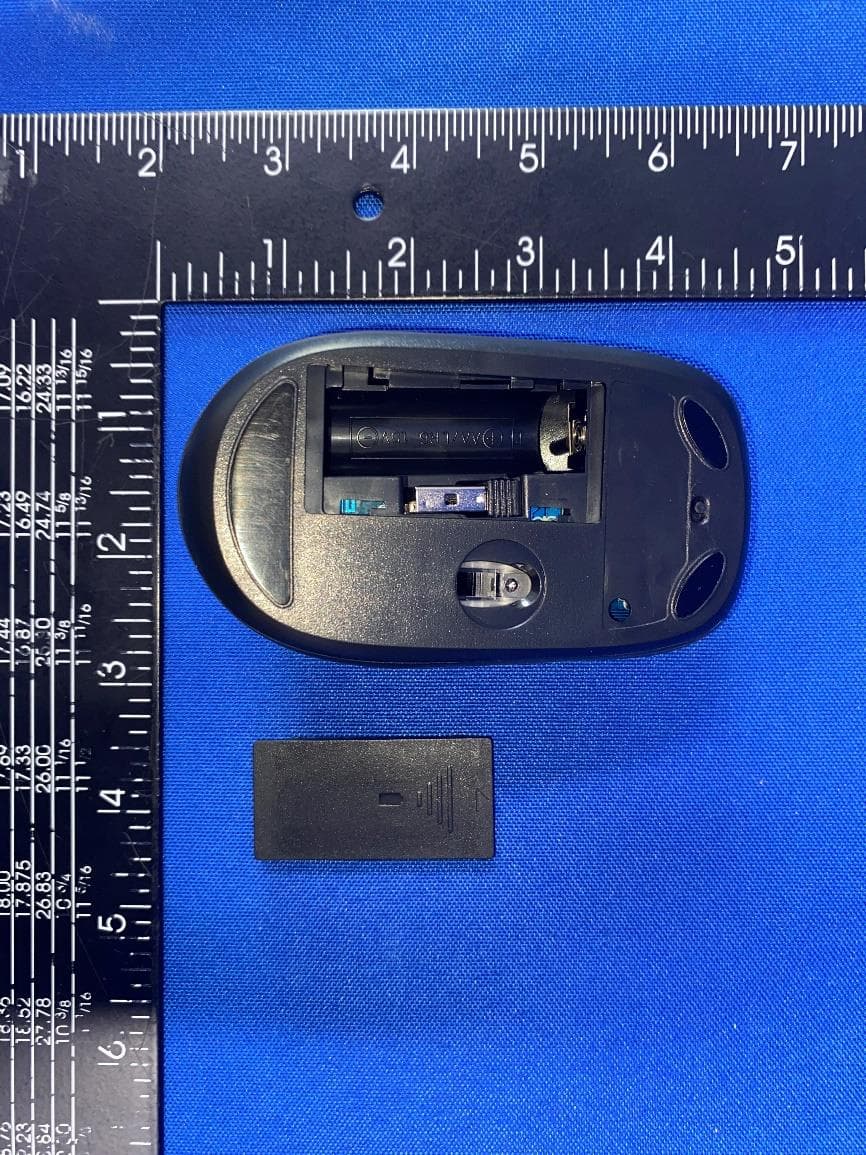
Oct 20, 2022dynabook Wireless Optical Silent Mouse
Equipment Class
DXX - Part 15 Low Power Communication Device Transmitter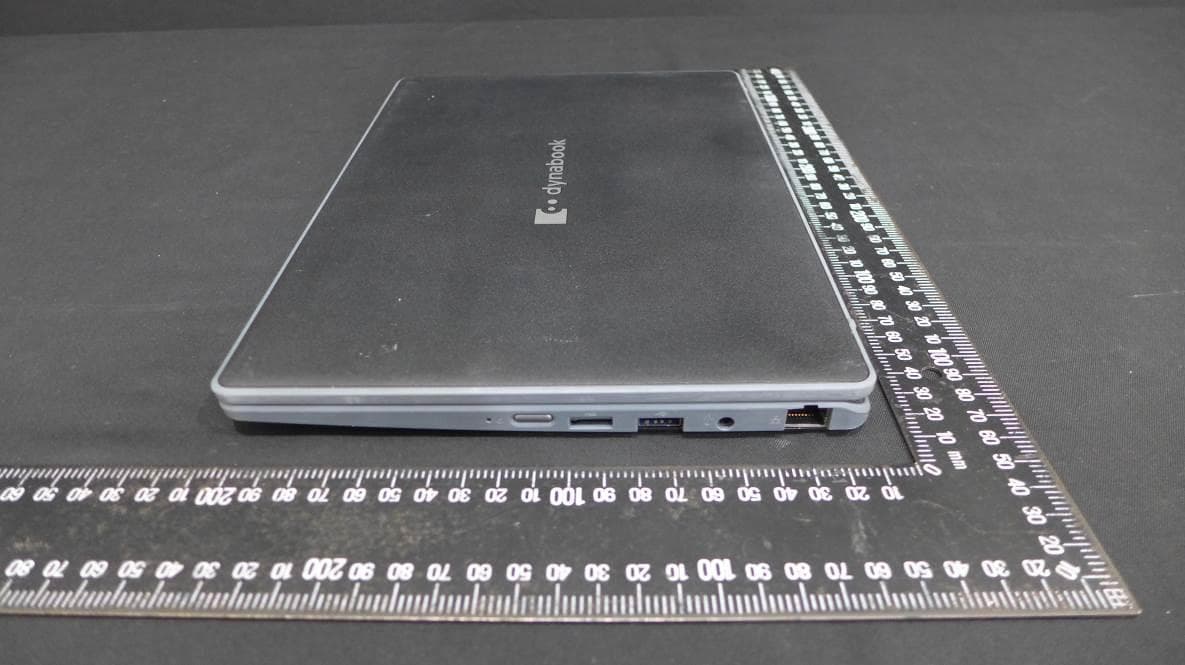
CJ6PYT0XPC
Apr 28, 2021Notebook Computer
Equipment Class
DSS - Part 15 Spread Spectrum Transmitter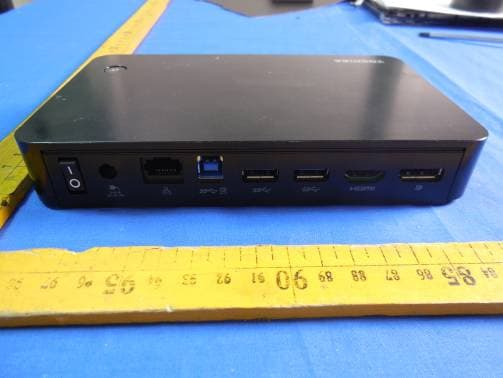
CJ6UPA5238WL
Sep 01, 2015dynadock WiAC
Equipment Class
NII - Unlicensed National Information Infrastructure TX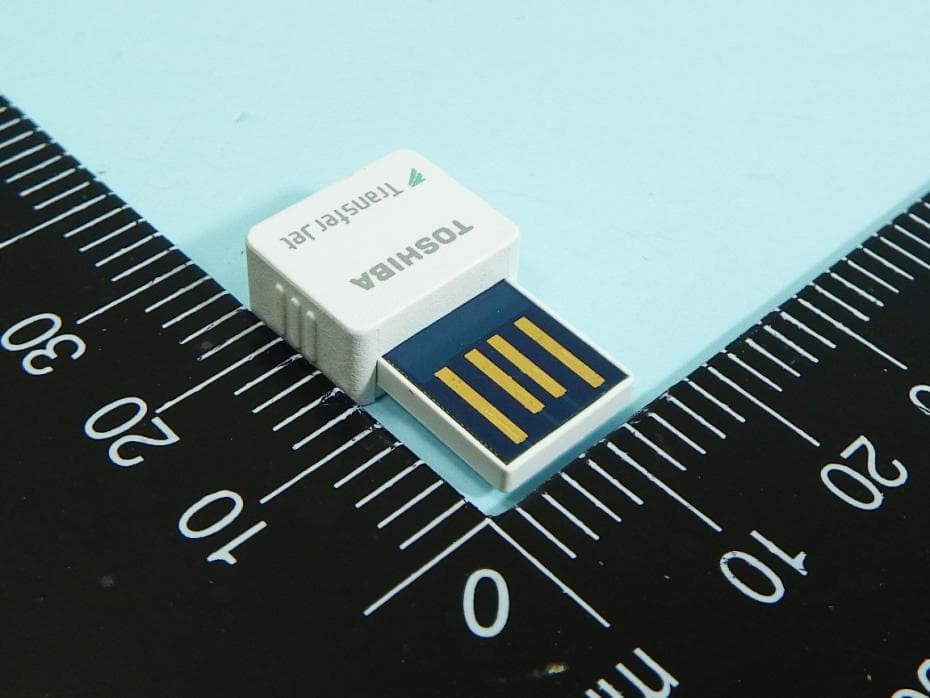
CJ6UPA5144TJ
Aug 07, 2014TransferJet USB Adapter
Equipment Class
JBP - Part 15 Class B Computing Device Peripheral
CJ6UPA5145TJ
Aug 07, 2014TransferJet MicroUSB Adapter
Equipment Class
UWB - Ultra Wideband Transmitter