CJ6UPA3232BTBluetooth Module
Dynabook Inc.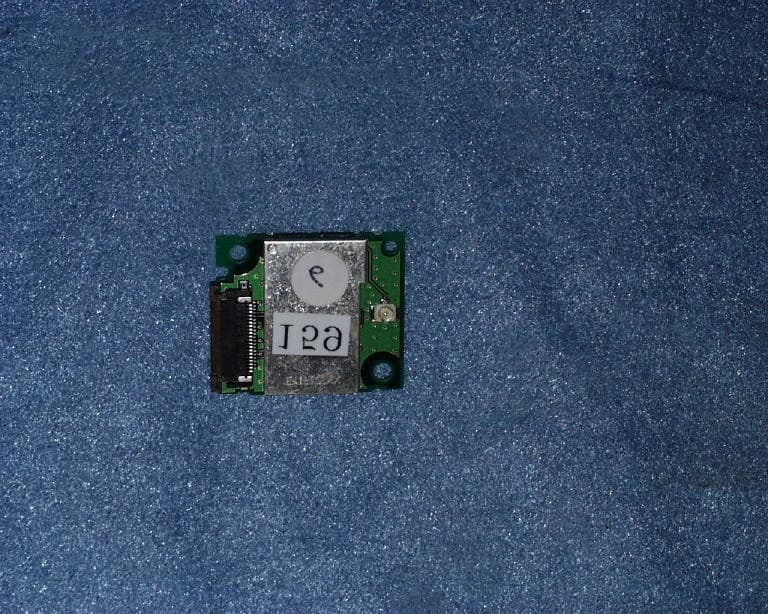
Click to zoom
Application Details
- Equipment Class
- DSS - Part 15 Spread Spectrum Transmitter
- Date of Grant
- Oct 15, 2002
- Application Purpose
- Original Equipment
- Date of Application
- Oct 15, 2002
- Equipment Note
- Bluetooth Module
- Frequency Range
- 2402.00000000 - 2480.00000000
- Company
- Dynabook Inc.
- Country
- Japan
Documents & Files
Document Text
Text extracted from the exhibit documents filed with the FCC. Open a document above to read the original.
Users Manual
- 1 - Information sheet Bluetooth wireless technology Interoperability Bluetooth™ Cards from TOSHIBA are designed to be interoperable with any product with Bluetooth wireless technology that is based on Frequency Hopping Spread Spectrum (FHSS) radio technology, and is compliant to: Bluetooth Specification Ver.1.1, as defined and approved by The Bluetooth Special Interest Group. Logo certification with Bluetooth wireless technology as defined by The Bluetooth Special interest Group. CAUTIONS: 1. Bluetooth wireless technology is a new innovative technology, and TOSHIBA has not confirmed compatibility of its Bluetooth™ products with all PCs and/or equipment using Bluetooth wireless technology other than TOSHIBA portable computers. Always use Bluetooth™ cards from TOSHIBA in order to enable wireless networks over two or more (up to a total of seven) TOSHIBA portable computers using these cards. Please contact TOSHIBA PC product support on Web site http://www.toshiba-europe.com/computers/tnt/bluetooth.htm in Europe or http://www.pc.support.global.toshiba.com in the United States for more information. 2. When you use Bluetooth™ cards from TOSHIBA close to 2.4 GHz Wireless LAN devices, Bluetooth transmissions might slow down or cause errors. If you detect certain interference while you use Bluetooth™ cards from TOSHIBA, always change the frequency, move your PC to the area outside of the interference range of 2.4 GHz Wireless LAN devices (40 meters/43.74 yards or more) or stop transmitting from your PC. Please contact TOSHIBA PC product support on Web site http://www.toshiba-europe.com/computers/tnt/bluetooth.htm in Europe or http://www.pc.support.global.toshiba.com in the United States for more information. 3. Bluetooth™ and WirelessLAN devices operate within the same radio frequency range and may interfere with one another. If you use Bluetooth™ and WirelessLAN devices simultaneously, you may occasionally experience a less than optimal network performance or even lose your network connection. If you should experience any such problem, immediately turn off either one of your Bluetooth™ or WirelessLAN. Please contact Toshiba PC product support on web site http://www.toshiba-europe.com/computers/tnt/bluetooth.htm in Europe or http://www.pc.support.global.toshiba.com in the United States for more information. Bluetooth wireless technology and your Health The products with Bluetooth wireless technology, like other radio devices, emit radio frequency electromagnetic energy. The level of energy emitted by devices with Bluetooth wireless technology however is far much less than the electromagnetic energy emitted by wireless devices like for example mobile phones. Because products with Bluetooth wireless technology operate within the guidelines found in radio frequency safety standards and recommendations, TOSHIBA believes Bluetooth wireless technology is safe for use by consumers. These standards and recommendations reflect the consensus of the scientific community and result from deliberations of panels - 2 - and committees of scientists who continually review and interpret the extensive research literature. In some situations or environments, the use of Bluetooth wireless technology may be restricted by the proprietor of the building or responsible representatives of the organization. These situations may for example include: Using the equipment with Bluetooth wireless technology on board of airplanes, or In any other environment where the risk of interference to other devices or services is perceived or identified as harmful. If you are uncertain of the policy that applies on the use of wireless devices in a specific organization or environment (e.g. airports), you are encouraged to ask for authorization to use the device with Bluetooth wireless technology prior to turning on the equipment. Regulatory statements General This product complies with any mandatory product specification in any country/ region where the product is sold. In addition, the product complies with the following. European Union (EU) and EFTA This equipment complies with the R&TTE directive 1999/5/EC and has been provided with the CE mark accordingly. Canada Industry Canada(IC) This device complies with RSS 210 of Industry Canada. Operation is subject to the following two conditions: (1) this device may not cause interference, and (2) this device must accept any interference, including interference that may cause undesired operation of this device.” L ‘ utilisation de ce dispositif est autorisée seulement aux conditions suivantes : (1) il ne doit pas produire de brouillage et (2) l’ utilisateur du dispositif doit étre prét à accepter tout brouillage radioélectrique reçu, même si ce brouillage est susceptible de compromettre le fonctionnement du dispositif. The term "IC" before the equipment certification number only signifies that the Industry Canada chnical specifications were met. IC : 248H-DPA350S Caution: FCC Interference Statement This device complies with part15 of the FCC rules. Operation is subject to the following two conditions: This device may not cause harmful interference, and This device must accept any interference received, including interference that may cause undesired operation. Note that any changes or modifications to this equipment not expressly approved by the manufacturer may void the authorization to operate this equipment. - 3 - Caution: Exposure to Radio Frequency Radiation The radiated output power of the Bluetooth™ Cards from TOSHIBA is far below the FCC radio frequency exposure limits. Nevertheless, the Bluetooth™ Cards from TOSHIBA shall be used in such a manner that the potential for human contact during normal operation is minimized. This device has been tested with Wireless LAN ( FCC ID:CJ6PA3171WL) for co-location requirements. This device and its antenna(s) must not be co-located or operating in conjunction with any other antenna or transmitter. NOTE : Changes or modifications mad…
Text truncated - open the document above for the full version.
Users Manual
This sheet is for information only. The Bluetooth module must be installed by Toshiba or Toshiba OEM dealers.
Cover Letter(s)
From: Anne Liang Sent: Wednesday, October 16, 2002 10:04 AM To: Mike Kuo; CLIENT ADVOCATES Cc: Steve Cheng; Michael Heckrotte Subject: RE: Toshiba Corporation, FCC ID:CJ6UPA3232BT, AN02T2303 Hi, Mike, 1. Module approval cover letter and module transmitter characteristics: see attached 2 files; 2. Antenna installation manual: attached; 3. Users Manual with RF warnings: Attached; 4. Two FCC ID formats: Attached; 5. Revised report with amended data sheets: Attached. Thank you very much, Anne -----Original Message----- From: Mike Kuo Sent: Tuesday, October 15, 2002 3:21 PM To: Anne Liang; CLIENT ADVOCATES Cc: Steve Cheng; Michael Heckrotte Subject: Toshiba Corporation, FCC ID:CJ6UPA3232BT, AN02T2303 Question #1: This application is for transmitter module approval. Please provide a cover letter to address modular approval requirements per FCC public notice DA001407. Question #2: Please provide antenna installation instruction to be followed by the system integrator. Question #3: User Manual does not include RF exposure statement and the information required under section 15.21 and 15.19(a)(3) of FCC rules. Please provide revised user manual to comply these requirements. Question #4: Per Public Notice DA001407 requirements, please provide two FCC ID label formats. One of label shall be placed on the device and the other one shall be placed on the outside of end device. Question #5: Page 42 of test report, it refer the radiated restricted bandedge measurement file but there is no such data provided. Please provide it. Best Regards Mike Kuo / TCB Certifier The items indicated above must be submitted before processing can continue on the above referenced application. Failure to provide the requested information within 60 days of the original e-mail date may result in application dismissal and forfeiture of the filing fee. Also, please note that partial responses increase processing time and should not be submitted. Any questions about the content of this correspondence should be directed to the e-mail address listed below the name of the sender.
Cover Letter(s)
Bluetooth Declaration Per FCC 15.247 Requirements 1 Output power and channel separation of a Bluetooth device in the different operating modes: The different operating modes (data-mode, acquisition-mode) of a Bluetooth device don’t influence the output power and the channel spacing. There is only one transmitter which is driven by identical input parameters concerning these two parameters. Only a different hopping sequence will be used. For this reason the check of these RF parameters in one op-mode is sufficient. 2 Frequency range of a Bluetooth device: Hereby we declare that the maximum frequency of this device is: 2402 – 2480 MHz. This is according the Bluetooth Core Specification V 1.0B (+ critical errata) for devices which will be operated in the USA. This was checked during the Bluetooth Qualification tests (Test Case: TRM/CA/04-E). Other frequency ranges ( e.g. for Spain, France, Japan) which are allowed according the Core Specification are not supported by this device. 3 Co-ordination of the hopping sequence in data mode to avoid simultaneous occupancy by multiple transmitters: Bluetooth units which want to communicate with other units must be organized in a structure called piconet. This piconet consist of max. 8 Bluetooth units. One unit is the master the other seven are the slaves. The master co-ordinates frequency occupation in this piconet for all units. As the master hop sequence is derived from it’s BD address which is unique for every Bluetooth device, additional masters intending to establish new piconets will always use different hop sequences. 4 Example of a hopping sequence in data mode: Example of a 79 hopping sequence in data mode: 40, 21, 44, 23, 42, 53, 46, 55, 48, 33, 52, 35, 50, 65, 54, 67, 56, 37, 60, 39, 58, 69, 62, 71, 64, 25, 68, 27, 66, 57, 70, 59, 72, 29, 76, 31, 74, 61, 78, 63, 01, 41, 05, 43, 03, 73, 07, 75, 09, 45, 13, 47, 11, 77, 15, 00, 64, 49, 66, 53, 68, 02, 70, 06, 01, 51, 03, 55, 05, 04 5 Equally average use of frequencies in data mode and behaviour for short transmissions: The generation of the hopping sequence in connection mode depends essentially on two input values: 1. LAP/UAP of the master of the connection 2. Internal master clock The LAP (lower address part) are the 24 LSB’s of the 48 BD_ADDRESS. The BD_ADDRESS is an unambiguous number of every Bluetooth unit. The UAP (upper address part) are the 24 MSB’s of the 48 BD_ADDRESS. The internal clock of a Bluetooth unit is derived from a free running clock which is never adjusted and is never turned off. For synchronisation with other units only offset are used. It has no relation to the time of the day. Its resolution is at least half the RX/TX slot length of 312.5 μs. The clock has a cycle of about one day (23h30). In most case it is implemented as 28 bit counter. For the deriving of the hopping sequence the entire LAP (24 bits), 4 LSB’s (4 bits) (Input 1) and the 27 MSB’s of the clock (Input 2) are used. With this input values different mathematical procedures (permutations, additions, XOR-operations) are performed to generate the sequence. This will be done at the beginning of every new transmission. Regarding short transmissions the Bluetooth system has the following behaviors: The first connection between the two devices is established, a hopping sequence was generated. For transmitting the wanted data the complete hopping sequence was not used. The connection ended. The second connection will be established. A new hopping sequence is generated. Due to the fact that the Bluetooth clock has a different value, because the period between the two transmission is longer (and it cannot be shorter) than the minimum resolution of the clock (312.5 μs). The hopping sequence will always differ from the first one. 6 Receiver input bandwidth and behaviors for repeated single or multiple packets: The input bandwidth of the receiver is 1 MHz. In every connection one Bluetooth device is the master and the other one is the slave. The master determines the hopping sequence (see chapter 5). The slave follows this sequence. Both devices shift between RX and TX time slot according to the clock of the master. Additionally the type of connection (e.g. single or multislot packet) is set up at the beginning of the connection. The master adapts its hopping frequency and its TX/RX timing according to the packet type of the connection. Also the slave of the connection will use these settings. Repeating of a packet has no influence on the hopping sequence. The hopping sequence generated by the master of the connection will be followed in any case. That means, a repeated packet will not be send on the same frequency, it is send on the next frequency of the hopping sequence. 7 Dwell time in data mode The dwell time of 0.3797s within a 30 second period in data mode is independent from the packet type (packet length). The calculation for a 30 second period is a follows: Dwell time = time slot length * hop rate / number of hopping channels *30s Example for a DH1 packet (with a maximum length of one time slot) Dwell time = 625 μs * 1600 1/s / 79 * 30s = 0.3797s (in a 30s period) For multislot packet the hopping is reduced according to the length of the packet. Example for a DH5 packet (with a maximum length of five time slots) Dwell time = 5 * 625 μs * 1600 * 1/5 *1/s / 79 * 30s = 0.3797s (in a 30s period) This is according the Bluetooth Core Specification V 1.0B (+ critical errata) for all Bluetooth devices. There for all Bluetooth devices comply with the FCC dwell time requirement in data mode. This was checked during the Bluetooth Qualification tests. The Dwell time in hybrid mode is measured and stated in the test report. 8 Channel Separation in hybrid mode The nominal channel spacing of the Bluetooth system is 1Mhz independent of the operating mode. The maximum “initial carrier frequency tolerance” which is allowed for Bluetooth is fcenter = 75 kHz. This was checked during the Bluetooth Qualification tests (Test Case:…
Text truncated - open the document above for the full version.
Cover Letter(s)
Toshiba Corporation FCC ID:CJ6UPA3232BT Request for transmitter modular approval Transmitter Module Characteristics Item Requirements EUT 1 Have its own RF shielding Device is equipped with Metal shielding to cover RF section. Refer to Page 2 of external photos 2 Have buffered modulation/data inputs (if such inputs are provided), All inputs to the modules are buffered through logic or microprocessor inputs. 3 Have it own power supply regulation Internal 1.8V power regulator. Refer to Block diagram 4 Meet the antenna requirements of Section 15.203 Device is equipped with unique antenna ( u.FL(v)- LP-040) connector. Refer to page 1 of external photos 5 Be tested in a stand-alone configuration, i.e., the antenna, AC or DC power and data input/output lines must be connected to the module but, the module must not be inside another case during testing Device was tested outside the host computer as stand-alone configuration. Refer to setup photos. 6 Be labeled with its own FCC ID number, and if the FCC ID is not visible when the module is installed inside another device, then the outside of the device into which the module is installed must also display a label referring to the enclosed module. Two proposed FCC ID label format are included in the filing. One of label is to be placed on the module and the other label is to be placed on the outside of system. Refer to FCC ID label format and location file. 7 Address compliance with the Commission's RF exposure limits in Sections 1.1310 and 2.1093. In addition, spread spectrum transmitters operating under Section 15.247 are required to address RF exposure compliance in accordance with Section 15.247(b)(4). The max. output power measured is 0.0014W which is below the low threshold. SAR evaluation is exempted. Antenna will be installed to provide at least 20cm separation distance to the body.
ID Label/Location Info
Bottom side view Regulatory Label Regulatory Label of Bluetooth on bottom of PC Regulatory Label of Bluetooth module Label with P/N and BD address Country of Origin label FCC ID:CJ6UPA3232BT Country of Origin label Label with P/N and BD address
Internal Photos
Single Film Antenna for Bluetooth
Internal Photos
WLAN and Bluetooth Antenna locations
Operational Description
Bluetooth Brand As for the standard of Bluetooth TM , research development and decision of a standard is performed by the Bluetooth TM SIG (Special Interest Group). Bluetooth TM SIG is the joint achievements of nine leading companies, Toshiba , Ericsson, Nokia, Intel, IBM, 3Com, Lucent Technologies, Microsoft, Motorola. More than 1300 other manufacturers, from all parts of the world and various field of business, have now also joined the Bluetooth TM family. Toshiba Personal Computer that integrates Bluetooth device passed Bluetooth TM Qualification Program and it is accepted to use the Bluetooth trademark. For more information on Bluetooth TM SIG, please refer to the Bluetooth TM Official site. (http://www.bluetooth.com/) Bluetooth Technical Facts A tiny Bluetooth TM microchip, incorporating a radio transceiver, is built into digital devices. The Bluetooth TM technology makes all connections instantly and without an inch of cable. It facilitates fast and secure transmissions of both voice and data, even when the devices are not within line-of-sight. The radio operates in a globally available frequency band, ensuring compatibility worldwide. Also, the radio operates in the 2.45GHz band, which is license-free and available to any radio system in the world. A Bluetooth radio link has a maximum data transfer rate of 724kbit/s. The normal range of the Bluetooth radio is either 10 meters or 100 meters, depending on your Bluetooth equipment.
Test Report
FCC CFR47 PART 15 SUBPART C CERTIFICATION TEST REPORT FOR BLUETOOTH MODULE MODEL: PA3232U-1BTM FCC ID: CJ6UPA3232BT REPORT NUMBER: 02U1501-1 ISSUE DATE: SEPTEMBER 30, 2002 Prepared for TOSHIBA CORPORATION DIGITAL MEDIA NETWORK COMPANY 2-9, SUEHIRO-CHO, OME, TOKYO, 198-8710 JAPAN Prepared by COMPLIANCE CERTIFICATION SERVICES 561F MONTEREY ROAD, MORGAN HILL, CA 95037, USA TEL: (408) 463-0885 FAX: (408) 463-0888 REPORT NO: 02U1501-1 DATE: SEPTEMBER 30, 2002 EUT: Bluetooth Transciever Module FCC ID: CJ6UPA3232BT Page 2 of 2 COMPLIANCE CERTIFICATION SERVICES DOCUMENT NO: CCSUP4031A 561F MONTEREY ROAD, MORGAN HILL, CA 95037 USA TEL: (408) 463-0885 FAX: (408) 463-0888 This report shall not be reproduced except in full, without the written approval of CCS. This document may be altered or revised by Compliance Certification Services personnel only, and shall be noted in the revision section of the document. TABLE OF CONTENTS 1. TEST RESULT CERTIFICATION.................................................................................................3 2. EUT DESCRIPTION.........................................................................................................................4 3. TEST METHODOLOGY..................................................................................................................4 4. FACILITIES AND ACCREDITATION..........................................................................................4 4.1. FACILITIES AND EQUIPMENT.................................................................................................4 4.2. LABORATORY ACCREDITATIONS AND LISTINGS.................................................................4 4.3. TABLE OF ACCREDITATIONS AND LISTINGS........................................................................5 5. CALIBRATION AND UNCERTAINTY.........................................................................................6 5.1. MEASURING INSTRUMENT CALIBRATION............................................................................6 5.2. MEASUREMENT UNCERTAINTY..............................................................................................6 5.3. TEST AND MEASUREMENT EQUIPMENT...............................................................................7 6. SETUP OF EQUIPMENT UNDER TEST.......................................................................................8 7. APPLICABLE RULES....................................................................................................................10 8. TEST SETUP, PROCEDURE AND RESULT..............................................................................15 8.1. 20 dB BANDWIDTH...................................................................................................................15 8.2. HOPPING FREQUENCY SEPARATION..................................................................................19 8.3. NUMBER OF HOPPING CHANNELS......................................................................................20 8.4. TIME OF OCCUPANCY............................................................................................................23 8.5. PEAK POWER............................................................................................................................25 8.6. PEAK POWER SPECTRAL DENSITY.......................................................................................29 8.7. MAXIMUM PERMISSIBLE EXPOSURE...................................................................................33 8.8. SPURIOUS EMISSIONS – CONDUCTED MEASUREMENTS.................................................35 8.9. UNDESIRABLE EMISSIONS – RADIATED MEASUREMENTS..............................................41 8.10. SETUP PHOTOS........................................................................................................................54 REPORT NO: 02U1501-1 DATE: SEPTEMBER 30, 2002 EUT: Bluetooth Transciever Module FCC ID: CJ6UPA3232BT Page 3 of 3 COMPLIANCE CERTIFICATION SERVICES DOCUMENT NO: CCSUP4031A 561F MONTEREY ROAD, MORGAN HILL, CA 95037 USA TEL: (408) 463-0885 FAX: (408) 463-0888 This report shall not be reproduced except in full, without the written approval of CCS. This document may be altered or revised by Compliance Certification Services personnel only, and shall be noted in the revision section of the document. 1. TEST RESULT CERTIFICATION COMPANY NAME: TOSHIBA CORPORATION DIGITAL MEDIA NETWORK COMPANY 2-9, SUEHIRO-CHO, OME TOKYO, 198-8710 JAPAN EUT DESCRIPTION: BLUETOOTH MODULE MODEL NAME: PA3232U-1BTM DATE TESTED: AUGUST 30 - SEPTEMBER 5, 2002 TYPE OF EQUIPMENT INTENTIONAL RADIATOR EQUIPMENT TYPE 2.4 - 2.4835 GHz TRANSCEIVER MEASUREMENT PROCEDURE ANSI 63.4 / 1992, TIA/EIA 603 PROCEDURE CERTIFICATION FCC RULE CFR 47 PART 15.C Compliance Certification Services, Inc. tested the above equipment for compliance with the requirements set forth in CFR 47, PART 15, Subpart C. The equipment in the configuration described in this report, shows the measured emission levels emanating from the equipment do not exceed the specified limit. This report only documents the RF conducted and RF radiated performance of the radio module. AC mains conducted emissions and digital device radiated emissions performance is documented by Toshiba Document Number OFA-H3355 dated September 20, 2002, FCC ID: CJ6UPP350SY, Certification Pending.. Note: This document reports conditions under which testing was conducted and results of tests performed. This document may not be altered or revised in any way unless done so by Compliance Certification Services and all revisions are duly noted in the revisions section. Any alteration of this document not carried out by Compliance Certification Services will constitute fraud and shall nullify the document. Approved & Released For CCS By: Tested By: THU CHAN MIKE HECKROTTE SENIOR EMC ENGINEER CHIEF ENGINEER COMPLIANCE CERTIFICATION SERVICES COMPLIANCE CERTIFICATION SERVICES REPORT…
Text truncated - open the document above for the full version.
Test Setup Photos
REPORT NO: 02U1501-1 DATE: SEPTEMBER 30, 2002 EUT: Bluetooth Transciever Module FCC ID: CJ6UPA3232BT Page 46 of 46 COMPLIANCE CERTIFICATION SERVICES DOCUMENT NO: CCSUP4031A 561F MONTEREY ROAD, MORGAN HILL, CA 95037 USA TEL: (408) 463-0885 FAX: (408) 463-0888 This report shall not be reproduced except in full, without the written approval of CCS. This document may be altered or revised by Compliance Certification Services personnel only, and shall be noted in the revision section of the document. 8.10. SETUP PHOTOS ANTENNA PORT CONDUCTED RF MEASUREMENT SETUP REPORT NO: 02U1501-1 DATE: SEPTEMBER 30, 2002 EUT: Bluetooth Transciever Module FCC ID: CJ6UPA3232BT Page 47 of 47 COMPLIANCE CERTIFICATION SERVICES DOCUMENT NO: CCSUP4031A 561F MONTEREY ROAD, MORGAN HILL, CA 95037 USA TEL: (408) 463-0885 FAX: (408) 463-0888 This report shall not be reproduced except in full, without the written approval of CCS. This document may be altered or revised by Compliance Certification Services personnel only, and shall be noted in the revision section of the document. RADIATED RF MEASUREMENT SETUP: ANTENNA IN X-AXIS ORIENTATION REPORT NO: 02U1501-1 DATE: SEPTEMBER 30, 2002 EUT: Bluetooth Transciever Module FCC ID: CJ6UPA3232BT Page 48 of 48 COMPLIANCE CERTIFICATION SERVICES DOCUMENT NO: CCSUP4031A 561F MONTEREY ROAD, MORGAN HILL, CA 95037 USA TEL: (408) 463-0885 FAX: (408) 463-0888 This report shall not be reproduced except in full, without the written approval of CCS. This document may be altered or revised by Compliance Certification Services personnel only, and shall be noted in the revision section of the document. RADIATED RF MEASUREMENT SETUP: ANTENNA IN Y-AXIS ORIENTATION REPORT NO: 02U1501-1 DATE: SEPTEMBER 30, 2002 EUT: Bluetooth Transciever Module FCC ID: CJ6UPA3232BT Page 49 of 49 COMPLIANCE CERTIFICATION SERVICES DOCUMENT NO: CCSUP4031A 561F MONTEREY ROAD, MORGAN HILL, CA 95037 USA TEL: (408) 463-0885 FAX: (408) 463-0888 This report shall not be reproduced except in full, without the written approval of CCS. This document may be altered or revised by Compliance Certification Services personnel only, and shall be noted in the revision section of the document. RADIATED RF MEASUREMENT SETUP: ANTENNA IN Z-AXIS ORIENTATION END OF REPORT
Contact Information
Applicant
Ryuichi Kamimura(Senior Manager)
Test Firm
Compliance Certification Services IncSteve Cheng
Technical Specifications
| # | Rule Parts | Frequency Range | Power Output |
|---|---|---|---|
| 1 | 15C | 2.40 GHz - 2.48 GHz | 1.40 mW |
Other Applications from Dynabook Inc.
CJ6PA5347RT
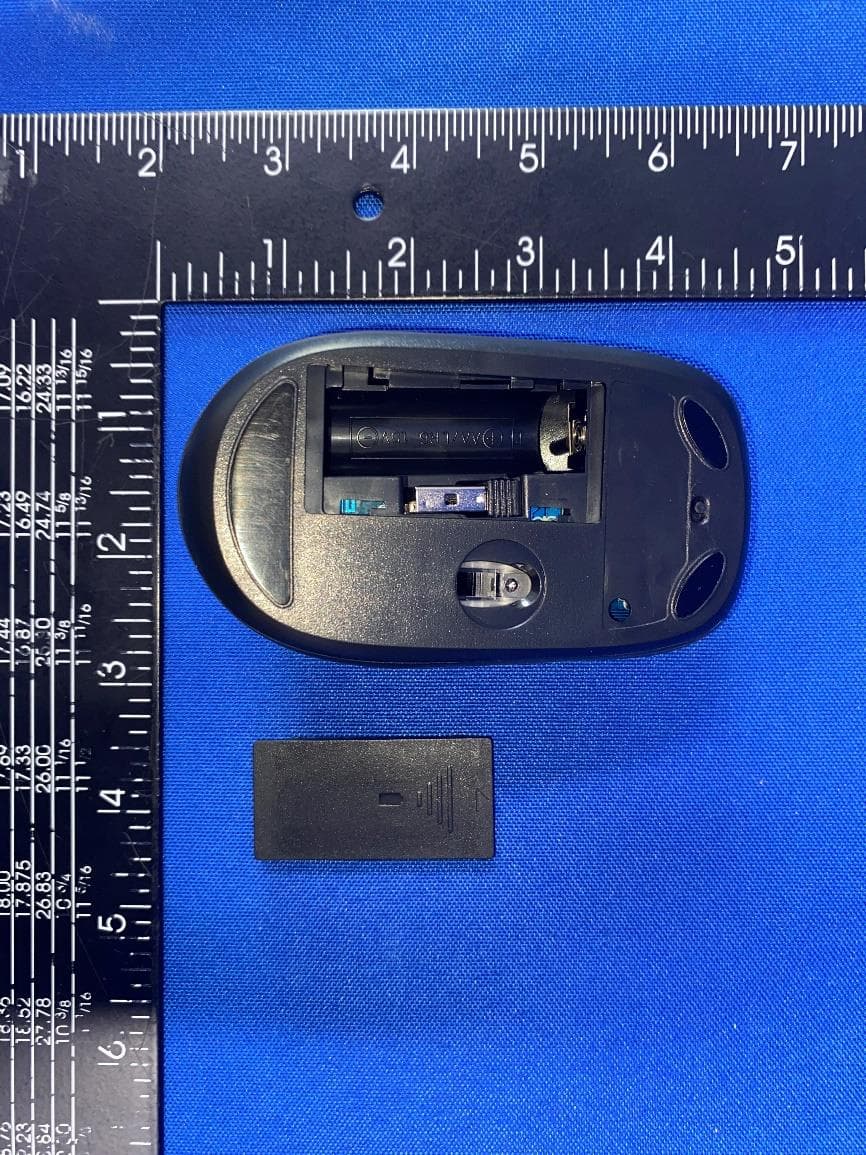
Oct 20, 2022dynabook Wireless Optical Silent Mouse
Equipment Class
DXX - Part 15 Low Power Communication Device Transmitter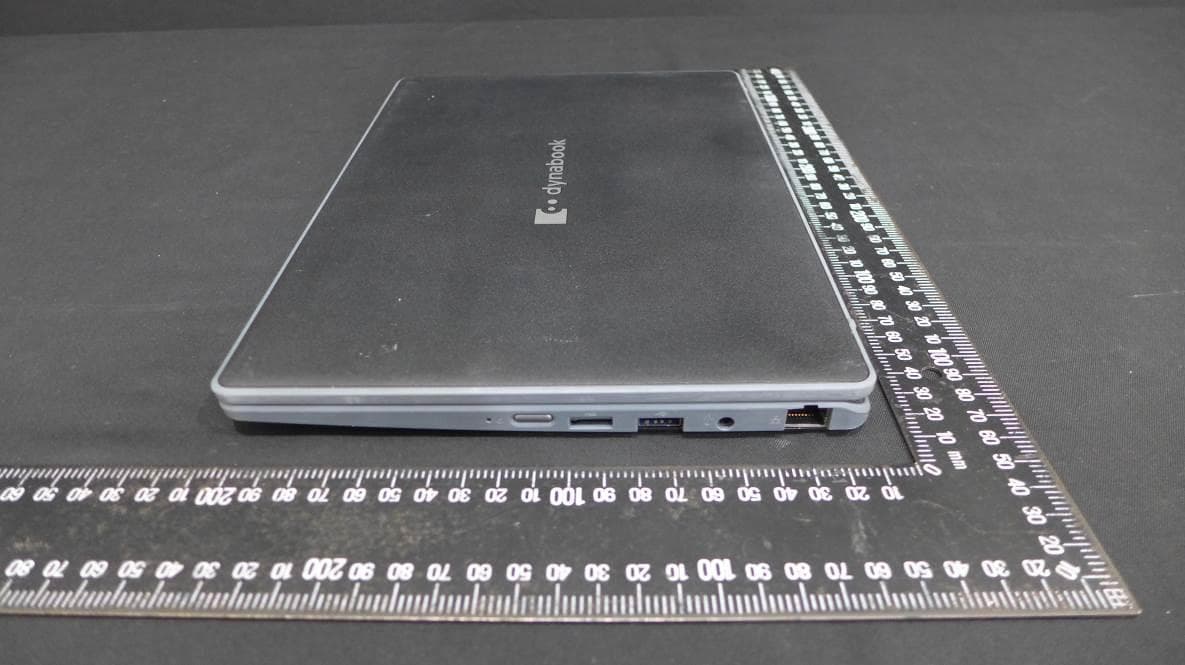
CJ6PYT0XPC
Apr 28, 2021Notebook Computer
Equipment Class
DSS - Part 15 Spread Spectrum Transmitter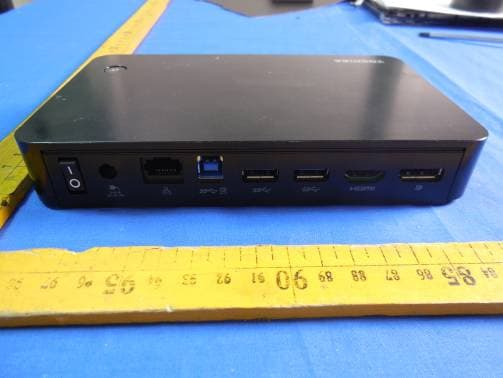
CJ6UPA5238WL
Sep 01, 2015dynadock WiAC
Equipment Class
NII - Unlicensed National Information Infrastructure TX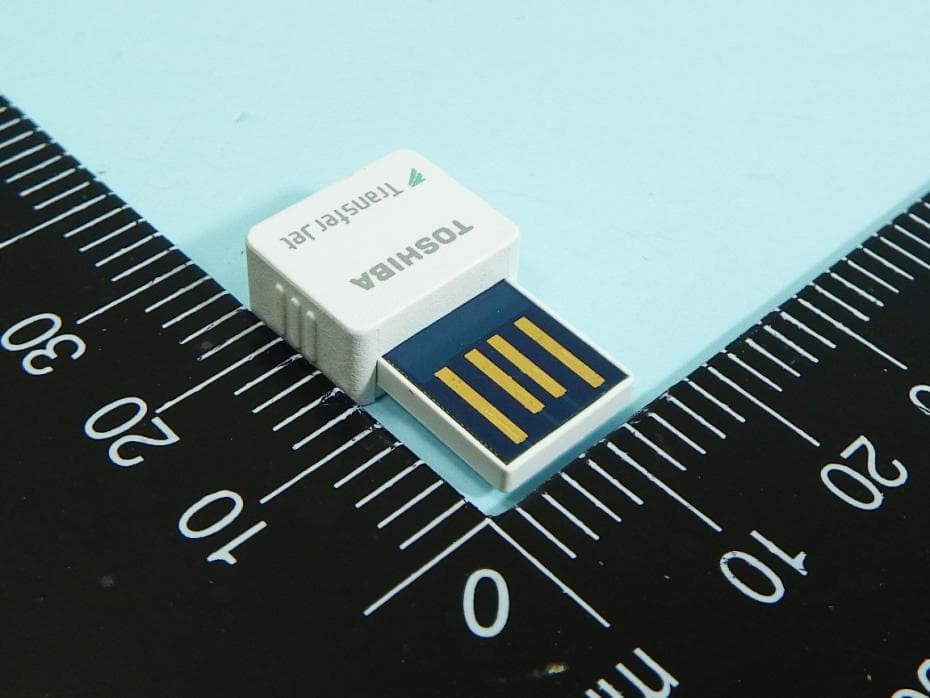
CJ6UPA5144TJ
Aug 07, 2014TransferJet USB Adapter
Equipment Class
JBP - Part 15 Class B Computing Device Peripheral
CJ6UPA5145TJ
Aug 07, 2014TransferJet MicroUSB Adapter
Equipment Class
UWB - Ultra Wideband Transmitter