CJ6UPP350BTNotebook PC with Bluetooth. Port�g� 3500
Dynabook Inc.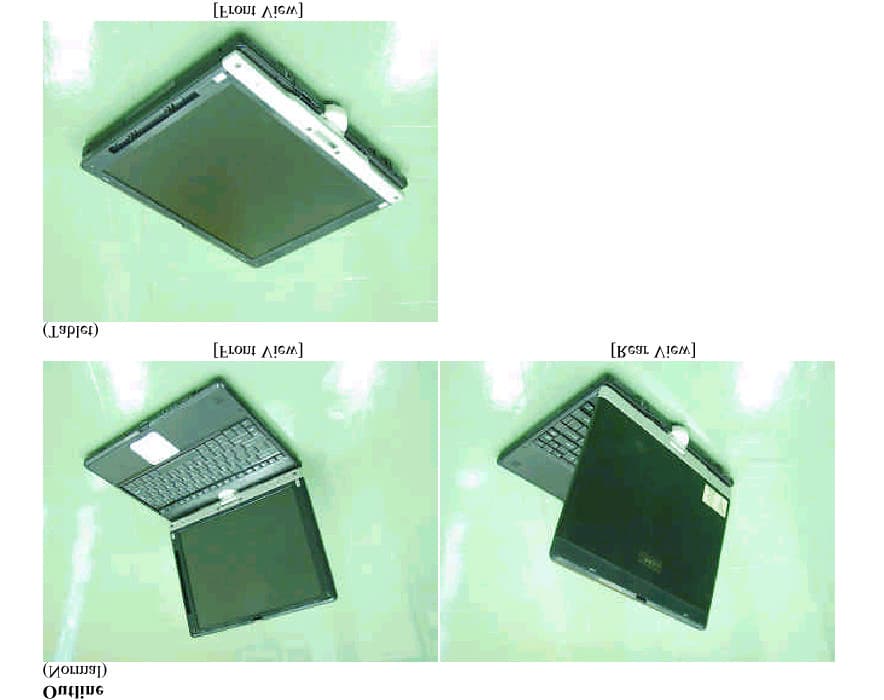
Click to zoom
Application Details
- Equipment Class
- DSS - Part 15 Spread Spectrum Transmitter
- Date of Grant
- Feb 01, 2003
- Application Purpose
- Original Equipment
- Date of Application
- Feb 01, 2003
- Equipment Note
- Notebook PC with Bluetooth. Port�g� 3500
- Frequency Range
- 2402.00000000 - 2480.00000000
- Company
- Dynabook Inc.
- Country
- Japan
Documents & Files
Document Text
Text extracted from the exhibit documents filed with the FCC. Open a document above to read the original.
Users Manual
TOSHIBA 3500 Portable Personal Computer User’s Manual Copyright © 2002 by TOSHIBA Corporation. All rights reserved. Under the copyright laws, this manual cannot be reproduced in any form without the prior written permission of TOSHIBA. No patent liability is assumed, with respect to the use of the informa- tion contained herein. TOSHIBA 3500 Portable Personal Computer User’s Manual First edition November 2002 Disclaimer This manual has been validated and reviewed for accuracy. The instructions and descriptions it contains are accurate for the TOSHIBA 3500 Portable Personal Computer at the time of this manual’s production. However, succeeding computers and manuals are subject to change without notice. TOSHIBA assumes no liability for damages incurred directly or indirectly from errors, omissions or discrepancies between the computer and the manual. Trademarks Intel and Pentium are registered trademarks and SpeedStep is a trademark of Intel Corporation. Windows and Microsoft are registered trademarks of Microsoft Corporation. Photo CD is a trademark of Eastman Kodak. Other trademarks and registered trademarks not listed above may be used in this manual. FCC information Product Name : Portégé 3500 Model number : PP350 FCC notice "Declaration of Conformity Information" This equipment has been tested and found to comply with the limits for a Class B digital device, pursuant to part 15 of the FCC rules. These limits are designed to provide reasonable protection against harmful interference in a residential installa- tion. This equipment generates, uses and can radiate radio frequency energy and, if not installed and used in accordance with the instructions, may cause harmful interference to radio communications. However, there is no guarantee that interfer- ence will not occur in a particular installation. If this equipment does cause harmful interference to radio or television reception, which can be determined by turning the equipment off and on, the user is encouraged to try to correct the interference by one or more of the following measures: ❑Reorient or relocate the receiving antenna. ❑Increase the separation between the equipment and receiver. ❑Connect the equipment into an outlet on a circuit different from that to which the receiver is connected. ❑Consult the dealer or an experienced radio/TV technician for help. WARNING: Only peripherals complying with the FCC class B limits may be attached to this equipment. Operation with non-compliant peripher- als or peripherals not recommended by TOSHIBA is likely to result in interference to radio and TV reception. Shielded cables must be used between the external devices and the computer’s external monitor port, USB port and microphone jack. Changes or modifications made to this equipment, not expressly approved by TOSHIBA or parties authorized by TOSHIBA could void the user’s authority to operate the equipment. The modular cable that comes with the computer must be used to connect a modem. Connect the end of the modular cable with the core to the computer. FCC conditions This device complies with part 15 of the FCC Rules. Operation is subject to the following two conditions: 1. This device may not cause harmful interference. 2. This device must accept any interference received, including interference that may cause undesired operation. Contact Address:TOSHIBA America Information Systems, Inc. 9740 Irvine Boulevard Irvine, California 92618-1697 Telephone:(949) 583-3000 EU Declaration of Conformity TOSHIBA declares, that the product: PP350* conforms to the following Standards: Supplementary Information:“The product complies with the requirements of the Low Voltage Directive 73/23/EEC, the EMC Directive 89/336/EEC and/or the R&TTE Directive 1999/05/EEC.” This product is carrying the CE-Mark in accordance with the related European Directives. Responsible for CE-Marking is TOSHIBA Europe, Hammfelddamm 8, 41460 Neuss, Germany. VCCI Class B Information Modem warning notice Conformity Statement The equipment has been approved to [Commission Decision “CTR21”] for pan- European single terminal connection to the Public Switched Telephone Network (PSTN). However, due to differences between the individual PSTNs provided in different countries/regions the approval does not, of itself, give an unconditional assurance of successful operation on every PSTN network termination point. In the event of problems, you should contact your equipment supplier in the first instance. Network Compatibility Statement This product is designed to work with, and is compatible with the following networks. It has been tested to and found to conform with the additional require- ments conditional in EG 201 121. GermanyATAAB AN005,AN006,AN007,AN009,AN010 and DE03,04,05,08,09,12,14,17 GreeceATAAB AN005,AN006 and GR01,02,03,04 PortugalATAAB AN001,005,006,007,011 and P03,04,08,10 SpainATAAB AN005,007,012, and ES01 SwitzerlandATAAB AN002 All other countries/regionsATAAB AN003,004 Specific switch settings or software setup are required for each network, please refer to the relevant sections of the user guide for more details. The hookflash (timed break register recall) function is subject to separate national type approvals. It has not been tested for conformity to national type regulations, and no guarantee of successful operation of that specific function on specific national networks can be given. Japan regulations Region selection If you are using the computer in Japan, technical regulations described in the Telecommunications Business Law require that you select the Japan region mode. It is illegal to use the modem in Japan with any other selection. Redial Up to two redial attempts can be made. If more than two redial attempts are made, the modem will return Black Listed. If you are experiencing problems with the Black Listed code, set the interval between redials at one minute or longer. Japan’s Telecommunications Business Law permits up to two redials on analogue telephones, bu…
Text truncated - open the document above for the full version.
Users Manual
- 1 - Information sheet Bluetooth wireless technology Interoperability Bluetooth™ Cards from TOSHIBA are designed to be interoperable with any product with Bluetooth wireless technology that is based on Frequency Hopping Spread Spectrum (FHSS) radio technology, and is compliant to: Bluetooth Specification Ver.1.1, as defined and approved by The Bluetooth Special Interest Group. Logo certification with Bluetooth wireless technology as defined by The Bluetooth Special interest Group. CAUTIONS: 1. Bluetooth wireless technology is a new innovative technology, and TOSHIBA has not confirmed compatibility of its Bluetooth™ products with all PCs and/or equipment using Bluetooth wireless technology other than TOSHIBA portable computers. Always use Bluetooth™ cards from TOSHIBA in order to enable wireless networks over two or more (up to a total of seven) TOSHIBA portable computers using these cards. Please contact TOSHIBA PC product support on Web site http://www.toshiba-europe.com/computers/tnt/bluetooth.htm in Europe or http://www.pc.support.global.toshiba.com in the United States for more information. 2. When you use Bluetooth™ cards from TOSHIBA close to 2.4 GHz Wireless LAN devices, Bluetooth transmissions might slow down or cause errors. If you detect certain interference while you use Bluetooth™ cards from TOSHIBA, always change the frequency, move your PC to the area outside of the interference range of 2.4 GHz Wireless LAN devices (40 meters/43.74 yards or more) or stop transmitting from your PC. Please contact TOSHIBA PC product support on Web site http://www.toshiba-europe.com/computers/tnt/bluetooth.htm in Europe or http://www.pc.support.global.toshiba.com in the United States for more information. 3. Bluetooth™ and WirelessLAN devices operate within the same radio frequency range and may interfere with one another. If you use Bluetooth™ and WirelessLAN devices simultaneously, you may occasionally experience a less than optimal network performance or even lose your network connection. If you should experience any such problem, immediately turn off either one of your Bluetooth™ or WirelessLAN. Please contact Toshiba PC product support on web site http://www.toshiba-europe.com/computers/tnt/bluetooth.htm in Europe or http://www.pc.support.global.toshiba.com in the United States for more information. Bluetooth wireless technology and your Health The products with Bluetooth wireless technology, like other radio devices, emit radio frequency electromagnetic energy. The level of energy emitted by devices with Bluetooth wireless technology however is far much less than the electromagnetic energy emitted by wireless devices like for example mobile phones. Because products with Bluetooth wireless technology operate within the guidelines found in radio frequency safety standards and recommendations, TOSHIBA believes Bluetooth wireless technology is safe for use by consumers. These standards and recommendations reflect the consensus of the scientific community and result from deliberations of panels - 2 - and committees of scientists who continually review and interpret the extensive research literature. In some situations or environments, the use of Bluetooth wireless technology may be restricted by the proprietor of the building or responsible representatives of the organization. These situations may for example include: Using the equipment with Bluetooth wireless technology on board of airplanes, or In any other environment where the risk of interference to other devices or services is perceived or identified as harmful. If you are uncertain of the policy that applies on the use of wireless devices in a specific organization or environment (e.g. airports), you are encouraged to ask for authorization to use the device with Bluetooth wireless technology prior to turning on the equipment. Regulatory statements General This product complies with any mandatory product specification in any country/ region where the product is sold. In addition, the product complies with the following. European Union (EU) and EFTA This equipment complies with the R&TTE directive 1999/5/EC and has been provided with the CE mark accordingly. Canada Industry Canada(IC) This device complies with RSS 210 of Industry Canada. Operation is subject to the following two conditions: (1) this device may not cause interference, and (2) this device must accept any interference, including interference that may cause undesired operation of this device.” L ‘ utilisation de ce dispositif est autorisée seulement aux conditions suivantes : (1) il ne doit pas produire de brouillage et (2) l’ utilisateur du dispositif doit étre prét à accepter tout brouillage radioélectrique reçu, même si ce brouillage est susceptible de compromettre le fonctionnement du dispositif. The term "IC" before the equipment certification number only signifies that the Industry Canada chnical specifications were met. IC : 248H-DPA350S Caution: FCC Interference Statement This device complies with part15 of the FCC rules. Operation is subject to the following two conditions: This device may not cause harmful interference, and This device must accept any interference received, including interference that may cause undesired operation. Note that any changes or modifications to this equipment not expressly approved by the manufacturer may void the authorization to operate this equipment. - 3 - Caution: Exposure to Radio Frequency Radiation The radiated output power of the Bluetooth™ Cards from TOSHIBA is far below the FCC radio frequency exposure limits. Nevertheless, the Bluetooth™ Cards from TOSHIBA shall be used in such a manner that the potential for human contact during normal operation is minimized. This device has been tested with Wireless LAN ( FCC ID:CJ6PA3171WL) for co-location requirements. This device and its antenna(s) must not be co-located or operating in conjunction with any other antenna or transmitter. NOTE : Changes or modifications mad…
Text truncated - open the document above for the full version.
Internal Photos
Bluetooth Antenna Top Bluetooth Antenna Bottom
Internal Photos
Single Film Antenna for Bluetooth
Operational Description
Bluetooth Brand As for the standard of Bluetooth TM , research development and decision of a standard is performed by the Bluetooth TM SIG (Special Interest Group). Bluetooth TM SIG is the joint achievements of nine leading companies, Toshiba , Ericsson, Nokia, Intel, IBM, 3Com, Lucent Technologies, Microsoft, Motorola. More than 1300 other manufacturers, from all parts of the world and various field of business, have now also joined the Bluetooth TM family. Toshiba Personal Computer that integrates Bluetooth device passed Bluetooth TM Qualification Program and it is accepted to use the Bluetooth trademark. For more information on Bluetooth TM SIG, please refer to the Bluetooth TM Official site. (http://www.bluetooth.com/) Bluetooth Technical Facts A tiny Bluetooth TM microchip, incorporating a radio transceiver, is built into digital devices. The Bluetooth TM technology makes all connections instantly and without an inch of cable. It facilitates fast and secure transmissions of both voice and data, even when the devices are not within line-of-sight. The radio operates in a globally available frequency band, ensuring compatibility worldwide. Also, the radio operates in the 2.45GHz band, which is license-free and available to any radio system in the world. A Bluetooth radio link has a maximum data transfer rate of 724kbit/s. The normal range of the Bluetooth radio is either 10 meters or 100 meters, depending on your Bluetooth equipment.
RF Exposure Info
in accordance with the requirements of FCC Report and Order: ET Docket 93-62, and OET Bulletin 65 Supplement C for Touch Screen Platform With Bluetooth + IEEE 802.11b Co-Working MODEL: Portege 3500 FCC ID: CJ6UPP350BT SEPTEMBER 27, 2002 REPORT NO: 02U1463-2 Prepared for Toshiba Corporation Digital Media Network Company 2-9, Suehiro-cho, Ome Tokyo, 198-8710, Japan Prepared by COMPLIANCE CERTIFICATION SERVICES 561F MONTEREY ROAD MORGAN HILL, CA 95037 USA TEL: (408) 463-0885 REPORT NO: 02U1463-2 DATE: September 26, 2002 FCC ID: CJ6UPP350BT COMPLIANCE CERTIFICATION SERVICES Page: 2 of 27 This report shall not be reproduced except in full, without the written approval of CCS. This document may be altered or revised by Compliance Certification Services personnel only, and shall be noted in the revision section of the document. CERTIFICATE OF COMPLIANCE (SAR EVALUATION) Date of Tests: September 26, 2002 Report No: 02U1463-2 APPLICANT: Toshiba Corporation Digital Media Network Company 2-9, Suehiro-cho, Ome Tokyo, 198-8710, Japan MODEL: Portege 3500 FCC ID: CJ6PUPP350BT DEVICE CATEGORY: PORTABLE DEVICES EXPOSURE CATEGORY: GENERAL POPULATION/UNCONTROLLED EXPOSURE Test Sample is a: Production unit Operating mode: Maximum continuous output Tx Frequency: Wireless LAN - Blutooth - 2412 ~ 2462 MHz 2402 ~ 2480 MHz Max. O/P Power (Conducted): Wireless LAN - Blutooth - 15.93 dBm (2462 MHz) 1.40 dBm (2480 MHz) Max. SAR (1g): 0.396 mW/g (2412 MHz) Application Type: Certification FCC Rule Part(s): §15.247 This wireless portable device has been shown to be capable of compliance for localized specific absorption rate (SAR) for uncontrolled environment/general population exposure limits specified in ANSI/IEEE Std. C95.1-1992 and had been tested in accordance with the measurement procedures specified in FCC OET 65 Supplement C (released on 6/29/2001 see Test Report). I attest to the accuracy of data. All measurements reported herein were performed by me or were made under my supervision and are correct to the best of my knowledge and belief. I assume full responsibility for the completeness of these measurements and vouch for the qualifications of all persons taking them. Steve Cheng EMC Engineering Manager REPORT NO: 02U1463-2 DATE: September 26, 2002 FCC ID: CJ6UPP350BT COMPLIANCE CERTIFICATION SERVICES Page: 3 of 27 This report shall not be reproduced except in full, without the written approval of CCS. This document may be altered or revised by Compliance Certification Services personnel only, and shall be noted in the revision section of the document. TABLE OF CONTENT 1. EUT DESCRIPTION............................................................................................4 2. REQUIREMENTS FOR COMPLIANCE TESTING DEFINED BY THE FCC ...............5 3. DOSIMETRIC ASSESSMENT SYSTEM...............................................................5 3.1. MEASUREMENT SYSTEM DIAGRAM..............................................................6 3.2. SYSTEM COMPONENTS.................................................................................7 4. EVALUATION PROCEDURE..............................................................................9 5. MEASUREMENT UNCERTAINTY......................................................................12 6. EXPOSURE LIMIT ............................................................................................13 7. MEASUREMENT RESULTS..............................................................................14 7.1. SYSTEM VALIDATION.....................................................................................14 7.2. TEST LIQUID CONFIRMATION.......................................................................15 7.3. EUT TUNE-UP PROCEDURE ..........................................................................16 7.4. EUT SETUP PHOTOS.....................................................................................17 7.5. SAR MEASUREMENT RESULT.......................................................................19 7.5.1. Dualband Film Antenna.......................................................................19 7.5.2. Wideband Film Antenna......................................................................20 8. EUT PHOTOS.................................................................................................. 21 9. EQUIPMENTS LIST & CALIBRATION STATUS ..................................................25 10. REFERENCES................................................................................................. 26 11. ATTACHMENT................................................................................................. 27 REPORT NO: 02U1463-2 DATE: September 26, 2002 FCC ID: CJ6UPP350BT COMPLIANCE CERTIFICATION SERVICES Page: 4 of 27 This report shall not be reproduced except in full, without the written approval of CCS. This document may be altered or revised by Compliance Certification Services personnel only, and shall be noted in the revision section of the document. 1. EUT DESCRIPTION APPLICANT: Toshiba Corporation Digital Media Network Company 2-9, Suehiro-cho, Ome Tokyo, 198-8710, Japan MODEL: Portege 3500 FCC ID: CJ6PUPP350BT DEVICE CATEGORY: PORTABLE DEVICES EXPOSURE CATEGORY: GENERAL POPULATION/UNCONTROLLED EXPOSURE Test Sample is a: Production unit Operating mode: Maximum continuous output Tx Frequency: Wireless LAN - Blutooth - 2412 ~ 2462 MHz 2402 ~ 2480 MHz Max. O/P Power (Conducted): Wireless LAN - Blutooth - 15.93 dBm (2462 MHz) 1.40 dBm (2480 MHz) Max. SAR (1g): 0.396 mW/g (2412 MHz) Application Type: Certification FCC Rule Part(s): §15.247 Antenna Type: Thin film omni antenna 1 Specific Absorption Rate (SAR) is a measure of the rate of energy absorption due to exposure to an RF transmitting source (wireless portable device). 2 IEEE/ANSI Std. C95.1-1992 limits are used to determine compliance with FCC ET Docket 93-62. REPORT NO: 02U1463-2 DATE: September 26, 2002 FCC ID: CJ6UPP350BT COMPLIANCE CERTIFICATION SERVICES…
Text truncated - open the document above for the full version.
RF Exposure Info
Toshiba, NIMBUS (Wideband Film Antenna); Frequency: 2412 MHz Frequency: 2450 MHz; Crest factor: 1.0 Medium: Muscle 2450 MHz: σ = 2.06 mho/m ε r = 51.1 ρ = 1.00 g/cm 3 SAM-1 Phantom; Flat Section; Position: (90°,90°) Probe: ET3DV6 - SN1578; ConvF(4.10,4.10,4.10); SAR:Cube 5x5x7: Peak: 0.429 mW/g, SAR (1g): 0.209 mW/g, SAR (10g): 0.101 mW/g, (Worst-case extrapolation) Penetration depth: 7.1 (6.7, 8.1) [mm]; Powerdrift: -0.05 dB Coarse: Dx = 15.0, Dy = 15.0, Dz = 0.0 Ambient Temperature (degree C): 23 Liquid Temperature (degree C): 22.3 SAR Tot [mW/g] 2.16E-2 6.48E-2 1.08E-1 1.51E-1 1.94E-1 09/26/02 COMPLIANCE CERTIFICATION SERVICES Toshiba, NIMBUS (Wideband Film Antenna); Frequency: 2437 MHz Frequency: 2450 MHz; Crest factor: 1.0 Medium: Muscle 2450 MHz: σ = 2.06 mho/m ε r = 51.1 ρ = 1.00 g/cm 3 SAM-1 Phantom; Flat Section; Position: (90°,90°) Probe: ET3DV6 - SN1578; ConvF(4.10,4.10,4.10); SAR:Cube 5x5x7: Peak: 0.488 mW/g, SAR (1g): 0.235 mW/g, SAR (10g): 0.112 mW/g, (Worst-case extrapolation) Penetration depth: 6.8 (6.4, 7.9) [mm]; Powerdrift: 0.12 dB Coarse: Dx = 15.0, Dy = 15.0, Dz = 0.0 Ambient Temperature (degree C): 23 Liquid Temperature (degree C): 22.4 SAR Tot [mW/g] 2.58E-2 7.74E-2 1.29E-1 1.81E-1 2.32E-1 09/26/02 COMPLIANCE CERTIFICATION SERVICES Toshiba, NIMBUS (Wideband Film Antenna); Frequency: 2462 MHz Frequency: 2450 MHz; Crest factor: 1.0 Medium: Muscle 2450 MHz: σ = 2.06 mho/m ε r = 51.1 ρ = 1.00 g/cm 3 SAM-1 Phantom; Flat Section; Position: (90°,90°) Probe: ET3DV6 - SN1578; ConvF(4.10,4.10,4.10); SAR:Cube 5x5x7: Peak: 0.541 mW/g, SAR (1g): 0.262 mW/g, SAR (10g): 0.126 mW/g, (Worst-case extrapolation) Penetration depth: 7.0 (6.6, 8.0) [mm]; Powerdrift: 0.11 dB Coarse: Dx = 15.0, Dy = 15.0, Dz = 0.0 Ambient Temperature (degree C): 23 Liquid Temperature (degree C): 22.4 SAR Tot [mW/g] 2.82E-2 8.46E-2 1.41E-1 1.97E-1 2.54E-1 09/26/02 COMPLIANCE CERTIFICATION SERVICES Toshiba, NIMBUS (Wideband Film Antenna); Frequency: 2462 MHz Frequency: 2450 MHz; Crest factor: 1.0 Medium: Muscle 2450 MHz: σ = 2.06 mho/m ε r = 51.1 ρ = 1.00 g/cm 3 SAM-1 Phantom; Section; Position: Probe: ET3DV6 - SN1578; ConvF(4.10,4.10,4.10); SAR:: , , () Penetration depth: 6.7 (6.4, 7.7) [mm]; Z-Axis: Dx = 0.0, Dy = 0.0, Dz = 2.0 Ambient Temperature (degree C): 23 Liquid Temperature (degree C): 22.4 09/26/02 COMPLIANCE CERTIFICATION SERVICES 0.0 0.1 0.2 0.3 0.4 0.5 0.6 0102030405060708090100110 SAR tot [mW/g] [mm] Toshiba, NIMBUS (Wideband Film Antenna); Frequency: 2412MHz Frequency: 2450 MHz; Crest factor: 1.0 Medium: Muscle 2450 MHz: σ = 2.06 mho/m ε r = 51.1 ρ = 1.00 g/cm 3 SAM-1 Phantom; Flat Section; Position: (90°,90°) Probe: ET3DV6 - SN1578; ConvF(4.10,4.10,4.10); SAR:Cube 5x5x7: Peak: 0.0275 mW/g, SAR (1g): 0.0139 mW/g, SAR (10g): 0.0080 mW/g, (Worst-case extrapolation) Penetration depth: 14.9 (6.3, 35.3) [mm]; Powerdrift: -0.03 dB Coarse: Dx = 15.0, Dy = 15.0, Dz = 0.0 Ambient Temperature (degree C): 23 Liquid Temperature (degree C): 22.2 SAR Tot [mW/g] 1.40E-3 4.20E-3 7.00E-3 9.80E-3 1.26E-2 09/26/02 COMPLIANCE CERTIFICATION SERVICES Toshiba, NIMBUS (Wideband Film Antenna); Frequency: 2437MHz Frequency: 2450 MHz; Crest factor: 1.0 Medium: Muscle 2450 MHz: σ = 2.06 mho/m ε r = 51.1 ρ = 1.00 g/cm 3 SAM-1 Phantom; Flat Section; Position: (90°,90°) Probe: ET3DV6 - SN1578; ConvF(4.10,4.10,4.10); SAR:Cube 5x5x7: Peak: 0.0311 mW/g, SAR (1g): 0.0164 mW/g, SAR (10g): 0.0093 mW/g, (Worst-case extrapolation) Penetration depth: 8.2 (7.7, 9.9) [mm]; Powerdrift: -0.17 dB Coarse: Dx = 15.0, Dy = 15.0, Dz = 0.0 Ambient Temperature (degree C): 23 Liquid Temperature (degree C): 22.2 SAR Tot [mW/g] 1.50E-3 4.50E-3 7.50E-3 1.05E-2 1.35E-2 09/26/02 COMPLIANCE CERTIFICATION SERVICES Toshiba, NIMBUS (Wideband Film Antenna); Frequency: 2437 MHz Frequency: 2450 MHz; Crest factor: 1.0 Medium: Muscle 2450 MHz: σ = 2.06 mho/m ε r = 51.1 ρ = 1.00 g/cm 3 SAM-1 Phantom; Section; Position: Probe: ET3DV6 - SN1578; ConvF(4.10,4.10,4.10); SAR:: , , () Penetration depth: 8.8 (7.5, 11.2) [mm]; Z-Axis: Dx = 0.0, Dy = 0.0, Dz = 2.0 Ambient Temperature (degree C): 23 Liquid Temperature (degree C): 22.2 09/26/02 COMPLIANCE CERTIFICATION SERVICES 0.00 0.01 0.02 0.03 0.04 0102030405060708090100110 SAR tot [mW/g] [mm] Toshiba, NIMBUS (Wideband Film Antenna); Frequency: 2462 MHz Frequency: 2450 MHz; Crest factor: 1.0 Medium: Muscle 2450 MHz: σ = 2.06 mho/m ε r = 51.1 ρ = 1.00 g/cm 3 SAM-1 Phantom; Flat Section; Position: (90°,90°) Probe: ET3DV6 - SN1578; ConvF(4.10,4.10,4.10); SAR:Cube 5x5x7: Peak: 0.0301 mW/g, SAR (1g): 0.0126 mW/g, SAR (10g): 0.0078 mW/g, (Worst-case extrapolation) Penetration depth: 43.1 (4.3, 308.6) [mm]; Powerdrift: 0.10 dB Coarse: Dx = 15.0, Dy = 15.0, Dz = 0.0 Ambient Temperature (degree C): 23 Liquid Temperature (degree C): 22.3 SAR Tot [mW/g] 1.30E-3 3.90E-3 6.50E-3 9.10E-3 1.17E-2 09/26/02 COMPLIANCE CERTIFICATION SERVICES Toshiba, NIMBUS (Wideband Film Antenna); Frequency: 2412 MHz Frequency: 2450 MHz; Crest factor: 1.0 Medium: Muscle 2450 MHz: σ = 2.06 mho/m ε r = 51.1 ρ = 1.00 g/cm 3 SAM-1 Phantom; Flat Section; Position: (90°,90°) Probe: ET3DV6 - SN1578; ConvF(4.10,4.10,4.10); SAR:Cube 5x5x7: Peak: 0.690 mW/g, SAR (1g): 0.328 mW/g, SAR (10g): 0.145 mW/g, (Worst-case extrapolation) Penetration depth: 6.7 (6.4, 7.6) [mm]; Powerdrift: -0.13 dB Coarse: Dx = 15.0, Dy = 15.0, Dz = 0.0 Ambient Temperature (degree C): 23 Liquid Temperature (degree C): 22.1 SAR Tot [mW/g] 2.71E-2 8.13E-2 1.36E-1 1.90E-1 2.44E-1 09/26/02 COMPLIANCE CERTIFICATION SERVICES Toshiba, NIMBUS (Wideband Film Antenna); Frequency: 2412 MHz Frequency: 2450 MHz; Crest factor: 1.0 Medium: Muscle 2450 MHz: σ = 2.06 mho/m ε r = 51.1 ρ = 1.00 g/cm 3 SAM-1 Phantom; Section; Position: Probe: ET3DV6 - SN1578; ConvF(4.10,4.10,4.10); SAR:: , , () Penetration depth: 6.2 (5.7, 7.4) [mm]; Z-Axis: Dx = 0.0, Dy = 0.0, Dz = 2.0 Ambient Temperature (degree C): 23 Liquid Temperature (degree C): 22.1 09/26/02 COMPLIANCE CERTIFICATION SERVICES 0.0 0.1 0.2 0.3 0.4 0.5…
Text truncated - open the document above for the full version.
RF Exposure Info
Toshiba, NIMBUS (Dualband Film Antenna); Frequency: 2412 MHz Frequency: 2450 MHz; Crest factor: 1.0 Medium: Muscle 2450 MHz: σ = 2.06 mho/m ε r = 51.1 ρ = 1.00 g/cm 3 SAM-1 Phantom; Flat Section; Position: (90°,90°) Probe: ET3DV6 - SN1578; ConvF(4.10,4.10,4.10); SAR:Cube 5x5x7: Peak: 0.299 mW/g, SAR (1g): 0.153 mW/g, SAR (10g): 0.0759 mW/g, (Worst-case extrapolation) Penetration depth: 7.6 (7.3, 8.2) [mm]; Powerdrift: -0.06 dB Coarse: Dx = 15.0, Dy = 15.0, Dz = 0.0 Ambient Temperature (degree C): 23 Liquid Temperature (degree C): 21.6 SAR Tot [mW/g] 1.61E-2 4.83E-2 8.05E-2 1.13E-1 1.45E-1 09/26/02 COMPLIANCE CERTIFICATION SERVICES Toshiba, NIMBUS (Dualband Film Antenna); Frequency: 2437 MHz Frequency: 2450 MHz; Crest factor: 1.0 Medium: Muscle 2450 MHz: σ = 2.06 mho/m ε r = 51.1 ρ = 1.00 g/cm 3 SAM-1 Phantom; Flat Section; Position: (90°,90°) Probe: ET3DV6 - SN1578; ConvF(4.10,4.10,4.10); SAR:Cube 5x5x7: Peak: 0.352 mW/g, SAR (1g): 0.177 mW/g, SAR (10g): 0.0873 mW/g, (Worst-case extrapolation) Penetration depth: 7.5 (7.1, 8.5) [mm]; Powerdrift: -0.01 dB Coarse: Dx = 15.0, Dy = 15.0, Dz = 0.0 Ambient Temperature (degree C): 23 Liquid Temperature (degree C): 21.4 SAR Tot [mW/g] 1.78E-2 5.34E-2 8.90E-2 1.25E-1 1.60E-1 09/26/02 COMPLIANCE CERTIFICATION SERVICES Toshiba, NIMBUS (Dualband Film Antenna); Frequency: 2437 MHz Frequency: 2450 MHz; Crest factor: 1.0 Medium: Muscle 2450 MHz: σ = 2.06 mho/m ε r = 51.1 ρ = 1.00 g/cm 3 SAM-1 Phantom; Section; Position: Probe: ET3DV6 - SN1578; ConvF(4.10,4.10,4.10); SAR:: , , () Penetration depth: 7.3 (6.9, 8.4) [mm]; Z-Axis: Dx = 0.0, Dy = 0.0, Dz = 2.0 Ambient Temperature (degree C): 23 Liquid Temperature (degree C): 21.4 09/26/02 COMPLIANCE CERTIFICATION SERVICES 0.0 0.1 0.2 0.3 0.4 0102030405060708090100110 SAR tot [mW/g] [mm] Toshiba, NIMBUS (Dualband Film Antenna); Frequency: 2462 MHz Frequency: 2450 MHz; Crest factor: 1.0 Medium: Muscle 2450 MHz: σ = 2.06 mho/m ε r = 51.1 ρ = 1.00 g/cm 3 SAM-1 Phantom; Flat Section; Position: (90°,90°) Probe: ET3DV6 - SN1578; ConvF(4.10,4.10,4.10); SAR:Cube 5x5x7: Peak: 0.250 mW/g, SAR (1g): 0.125 mW/g, SAR (10g): 0.0620 mW/g, (Worst-case extrapolation) Penetration depth: 7.4 (6.9, 8.4) [mm]; Powerdrift: -0.06 dB Coarse: Dx = 15.0, Dy = 15.0, Dz = 0.0 Ambient Temperature (degree C): 23 Liquid Temperature (degree C): 21.3 SAR Tot [mW/g] 1.32E-2 3.96E-2 6.60E-2 9.24E-2 1.19E-1 09/26/02 COMPLIANCE CERTIFICATION SERVICES Toshiba, NIMBUS (Daulband Film Antenna); Frequency: 2412 MHz Frequency: 2450 MHz; Crest factor: 1.0 Medium: Muscle 2450 MHz: σ = 2.06 mho/m ε r = 51.1 ρ = 1.00 g/cm 3 SAM-1 Phantom; Flat Section; Position: (90°,90°) Probe: ET3DV6 - SN1578; ConvF(4.10,4.10,4.10); SAR:Cube 5x5x7: Peak: 0.0250 mW/g, SAR (1g): 0.0128 mW/g, SAR (10g): 0.0076 mW/g, (Worst-case extrapolation) Penetration depth: 8.5 (6.5, 13.8) [mm]; Powerdrift: 0.10 dB Coarse: Dx = 15.0, Dy = 15.0, Dz = 0.0 Ambient Temperature (degree C): 23 Liquid Temperature (degree C): 21.2 SAR Tot [mW/g] 1.30E-3 3.90E-3 6.50E-3 9.10E-3 1.17E-2 09/26/02 COMPLIANCE CERTIFICATION SERVICES Toshiba, NIMBUS (Dualband Film Antenna); Frequency: 2437 MHz Frequency: 2450 MHz; Crest factor: 1.0 Medium: Muscle 2450 MHz: σ = 2.06 mho/m ε r = 51.1 ρ = 1.00 g/cm 3 SAM-1 Phantom; Flat Section; Position: (90°,90°) Probe: ET3DV6 - SN1578; ConvF(4.10,4.10,4.10); SAR:Cube 5x5x7: Peak: 0.0310 mW/g, SAR (1g): 0.0165 mW/g, SAR (10g): 0.0090 mW/g, (Worst-case extrapolation) Penetration depth: 9.7 (8.7, 11.0) [mm]; Powerdrift: -0.08 dB Coarse: Dx = 15.0, Dy = 15.0, Dz = 0.0 Ambient Temperature (degree C): 23 Liquid Temperature (degree C): 21.2 SAR Tot [mW/g] 1.70E-3 5.10E-3 8.50E-3 1.19E-2 1.53E-2 09/26/02 COMPLIANCE CERTIFICATION SERVICES Toshiba, NIMBUS (Dualband Film Antenna); Frequency: 2437 MHz Frequency: 2450 MHz; Crest factor: 1.0 Medium: Muscle 2450 MHz: σ = 2.06 mho/m ε r = 51.1 ρ = 1.00 g/cm 3 SAM-1 Phantom; Section; Position: Probe: ET3DV6 - SN1578; ConvF(4.10,4.10,4.10); SAR:: , , () Penetration depth: 9.5 (7.4, 13.3) [mm]; Z-Axis: Dx = 0.0, Dy = 0.0, Dz = 2.0 Ambient Temperature (degree C): 23 Liquid Temperature (degree C): 21.2 09/26/02 COMPLIANCE CERTIFICATION SERVICES 0.000 0.010 0.020 0.030 0102030405060708090100110 SAR tot [mW/g] [mm] Toshiba, NIMBUS (Dualband Film Antenna); Frequency: 2462 MHz Frequency: 2450 MHz; Crest factor: 1.0 Medium: Muscle 2450 MHz: σ = 2.06 mho/m ε r = 51.1 ρ = 1.00 g/cm 3 SAM-1 Phantom; Flat Section; Position: (90°,90°) Probe…
Text truncated - open the document above for the full version.
Contact Information
Applicant
Ryuichi Kamimura(Senior Manager)
Test Firm
Compliance Certification Services IncSteve Cheng
Technical Specifications
| # | Rule Parts | Frequency Range | Power Output |
|---|---|---|---|
| 1 | 15C | 2.40 GHz - 2.48 GHz | 1.40 mW |
Other Applications from Dynabook Inc.
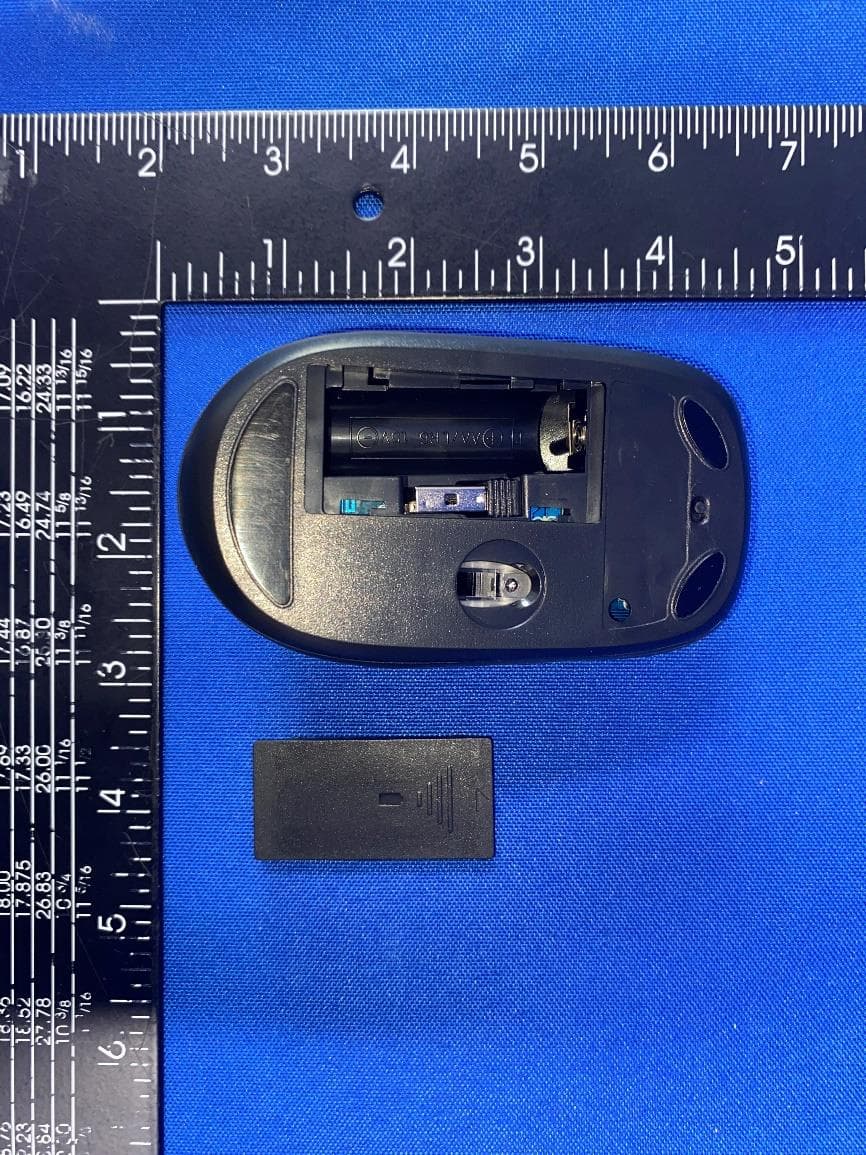
CJ6PA5347RT
Oct 20, 2022dynabook Wireless Optical Silent Mouse
Equipment Class
DXX - Part 15 Low Power Communication Device Transmitter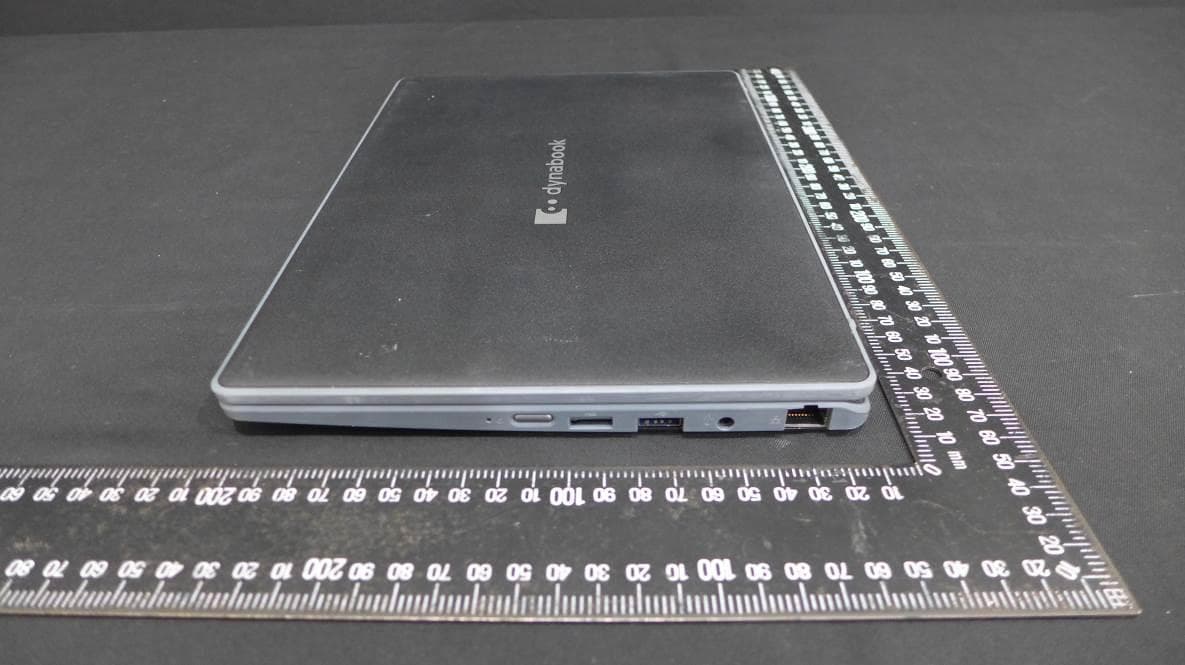
CJ6PYT0XPC
Apr 28, 2021Notebook Computer
Equipment Class
DSS - Part 15 Spread Spectrum Transmitter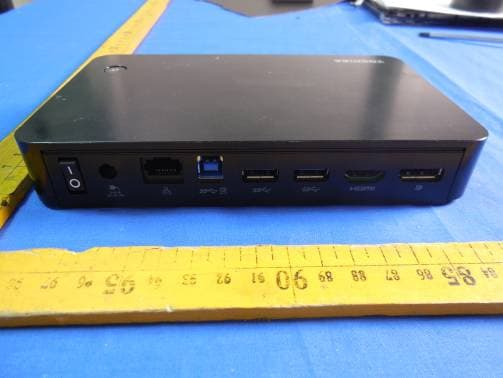
CJ6UPA5238WL
Sep 01, 2015dynadock WiAC
Equipment Class
NII - Unlicensed National Information Infrastructure TX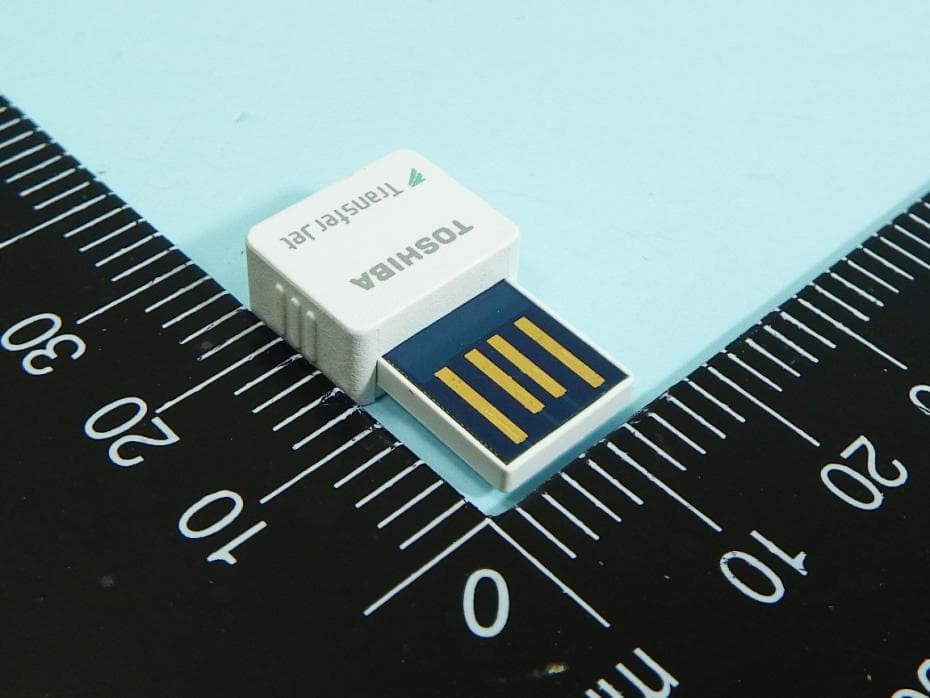
CJ6UPA5144TJ
Aug 07, 2014TransferJet USB Adapter
Equipment Class
JBP - Part 15 Class B Computing Device Peripheral
CJ6UPA5145TJ
Aug 07, 2014TransferJet MicroUSB Adapter
Equipment Class
UWB - Ultra Wideband Transmitter