CJ6UPP350SYNotebook PC with Bluetooth and WLAN. Port�g� 3500
Dynabook Inc.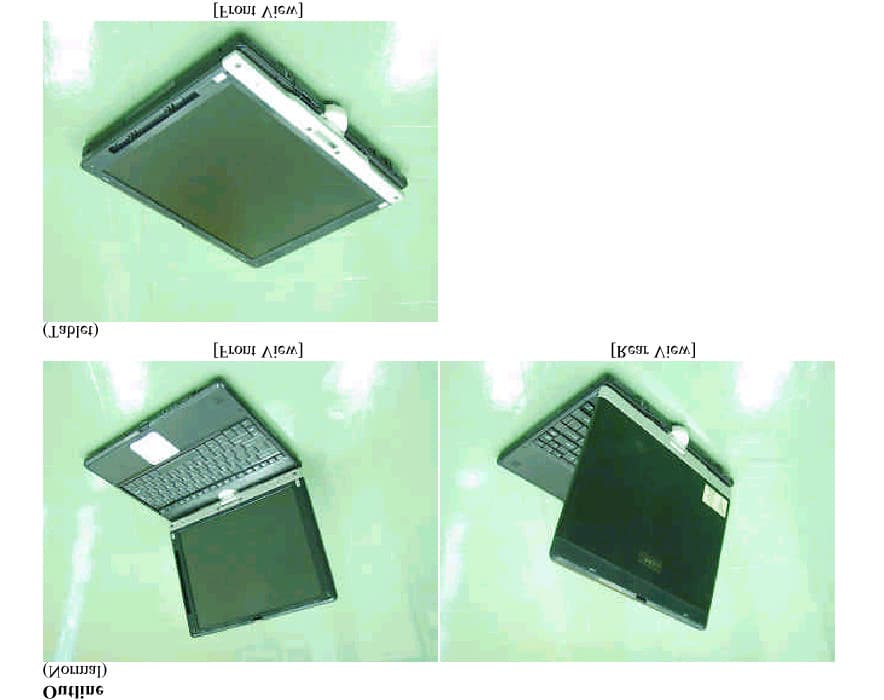
Click to zoom
Application Details
- Equipment Class
- DTS - Digital Transmission System
- Date of Grant
- Oct 16, 2002
- Application Purpose
- Original Equipment
- Date of Application
- Oct 16, 2002
- Equipment Note
- Notebook PC with Bluetooth and WLAN. Port�g� 3500
- Frequency Range
- 2412.00000000 - 2462.00000000
- Company
- Dynabook Inc.
- Country
- Japan
Documents & Files
Document Text
Text extracted from the exhibit documents filed with the FCC. Open a document above to read the original.
Users Manual
1 Information sheet Wireless Interoperability The TOSHIBA Wireless LAN Mini PCI Card products are designed to be interoperable with any wireless LAN product that is based on Direct Sequence Spread Spectrum(DSSS) radio technology, and is compliant to: ■ The IEEE 802.11 Standard on Wireless LANs(Revision B), as defined and approved by the Institute of Electrical and Electronics Engineers. ■ The Wireless Fidelity(WiFi) certification as defined by the WECA Wireless Ethernet Compatibility Alliance. CAUTION Bluetooth™ and WirelessLAN devices operate within the same radio frequency range and may interfere with one another. If you use Bluetooth™ and WirelessLAN devices simultaneously, you may ccasionally experience a less than optimal network performance or even lose your network connection. If you should experience any such problem, immediately turn off either one of your Bluetooth™ or WirelessLAN. Please contact Toshiba PC product support on web site http://www.toshiba-europe.com/computers/tnt/bluetooth.htm in Europe or http://www.pc.support.global.toshiba.com in the United States for more information. Wireless LAN and your Health Wireless LAN products, like other radio devices, emit radio frequency electromagnetic energy. The level of energy emitted by Wireless LAN devices however is far much less than the electromagnetic energy emitted by wireless devices like for example mobile phones. Because Wireless LAN products operate within the guidelines found in radio frequency safety standards and recommendations, TOSHIBA believes Wireless LAN is safe for use by consumers. These standards and recommendations reflect the consensus of the scientific community and result from deliberations of panels and committees of scientists who continually review and interpret the extensive research literature. In some situations or environments, the use of Wireless LAN may be restricted by the proprietor of the building or responsible representatives of the organization. These situations may for example include: ■ Using the Wireless LAN equipment on board of airplanes, or ■ In any other environment where the risk of interference to other devices or services is perceived or identified as harmful. If you are uncertain of the policy that applies on the use of wireless devices in a specific organization or environment (e.g. airports), you are encouraged to ask for authorization to use the Wireless LAN device prior to turning on the equipment. 2 Regulatory Information The TOSHIBA Wireless LAN Mini PCI Card must be installed and used in strict accordance with the manufacturer’s instructions as described in the user documentation that comes with the product. This device complies with the following radio frequency and safety standards. Canada – Industry Canada (IC) This device complies with RSS 210 of Industry Canada. Operation is subject to the following two conditions: (1) this device may not cause interference , and (2) this device must accept any interference, including interference that may cause undesired operation of this device.” L ‘ utilisation de ce dispositif est autorisée seulement aux conditions suivantes : (1) il ne doit pas produire de brouillage et (2) l’ utilisateur du dispositif doit étre prêt à accepter tout brouillage radioélectrique reçu, même si ce brouillage est susceptible de compromettre le fonctionnement du dispositif. The term "IC" before the equipment certification number only signifies that the Industry Canada technical specifications were met. IC: 248H-DPA350S Europe – EU Declaration of Conformity This device complies with the essential requirements of the R&TTE Directive 1999/5/EC with essential test suites as per standards: ■ EN 60950 Safety of Information Technology equipment ■ ETS 300 328 Technical requirements for radio equipment ■ ETS 300 826 General EMC requirements for radio equipment. For outdoor usage only channel 10 (2457 MHz) and 11 (2462 MHz) is allowed. For private usage outside buildings across public grounds over less than 300m no special registration with IBPT/BIPT is required. Registration to IBPT/BIPT is required for private usage outside buildings across public grounds over more than 300m. An IBPT/BIPT license is required for public usage outside building. For registration and license please contact IBPT/BIPT. Gebruik buiten gebouw alleen op kanalen 10 (2457 MHz) en 11 (2462 MHz). Voor privé-gebruik buiten gebouw over publieke groud over afstand kleiner dan 300m geen registratie bij BIPT/IBPT nodig; voor gebruik over afstand groter dan 300m is wel registratie bij BIPT/IBPT nodig. Voor publiek gebruik buiten gebouwen is licentie van BIPT/IBPT verplicht. Voor registratie of licentie kunt u contact opnemen met BIPT. België/ Belgique: L’utilisation en extérieur est autorisé sur le canal 10 (2457 MHz) et 11 (2462 MHz). Dans le cas d’une utilisation privée, à l’extérieur d’un bâtiment, au-dessus d’un espace public, aucun enregistrement n’est nécessaire pour une distance de moins de 300m. Pour une distance supérieure à 300m un enregistrement auprès de I’IBPT est requise. Pour une utilisation publique à I’extérieur de bâtiments, une licence de I’IBPT est requise. Pour les enregistrements et licences, veuillez contacter I’IBPT. License required for outdoor installations. Check with reseller for procedure to follow Deutschland: Anmeldung im Outdoor-Bereich notwendig, aber nicht genehmigungspflichtig.Bitte mit Händler die Vorgehensweise abstimmen. Restricted frequency band: only channels 10 and 11 (2457 MHz and 2462 MHz respectively) may be used in France. License required for every installation, indoor and outdoor installations. Please contact ART for procedure to follow. France: Bande de fréquence restreinte : seuls les canaux 10 à 11 (2457 et 2462 MHz respectivement) doivent être utilisés en France. Toute utilisation, qu’elle soit intérieure ou extérieure, est soumise à autorisation. Vous pouvez contacter I’Autorité de Régulation des Télécommuniations (http://www.art-telecom.fr) …
Text truncated - open the document above for the full version.
Users Manual
TOSHIBA 3500 Portable Personal Computer User’s Manual Copyright © 2002 by TOSHIBA Corporation. All rights reserved. Under the copyright laws, this manual cannot be reproduced in any form without the prior written permission of TOSHIBA. No patent liability is assumed, with respect to the use of the informa- tion contained herein. TOSHIBA 3500 Portable Personal Computer User’s Manual First edition November 2002 Disclaimer This manual has been validated and reviewed for accuracy. The instructions and descriptions it contains are accurate for the TOSHIBA 3500 Portable Personal Computer at the time of this manual’s production. However, succeeding computers and manuals are subject to change without notice. TOSHIBA assumes no liability for damages incurred directly or indirectly from errors, omissions or discrepancies between the computer and the manual. Trademarks Intel and Pentium are registered trademarks and SpeedStep is a trademark of Intel Corporation. Windows and Microsoft are registered trademarks of Microsoft Corporation. Photo CD is a trademark of Eastman Kodak. Other trademarks and registered trademarks not listed above may be used in this manual. FCC information Product Name : Portégé 3500 Model number : PP350 FCC notice "Declaration of Conformity Information" This equipment has been tested and found to comply with the limits for a Class B digital device, pursuant to part 15 of the FCC rules. These limits are designed to provide reasonable protection against harmful interference in a residential installa- tion. This equipment generates, uses and can radiate radio frequency energy and, if not installed and used in accordance with the instructions, may cause harmful interference to radio communications. However, there is no guarantee that interfer- ence will not occur in a particular installation. If this equipment does cause harmful interference to radio or television reception, which can be determined by turning the equipment off and on, the user is encouraged to try to correct the interference by one or more of the following measures: ❑Reorient or relocate the receiving antenna. ❑Increase the separation between the equipment and receiver. ❑Connect the equipment into an outlet on a circuit different from that to which the receiver is connected. ❑Consult the dealer or an experienced radio/TV technician for help. WARNING: Only peripherals complying with the FCC class B limits may be attached to this equipment. Operation with non-compliant peripher- als or peripherals not recommended by TOSHIBA is likely to result in interference to radio and TV reception. Shielded cables must be used between the external devices and the computer’s external monitor port, USB port and microphone jack. Changes or modifications made to this equipment, not expressly approved by TOSHIBA or parties authorized by TOSHIBA could void the user’s authority to operate the equipment. The modular cable that comes with the computer must be used to connect a modem. Connect the end of the modular cable with the core to the computer. FCC conditions This device complies with part 15 of the FCC Rules. Operation is subject to the following two conditions: 1. This device may not cause harmful interference. 2. This device must accept any interference received, including interference that may cause undesired operation. Contact Address:TOSHIBA America Information Systems, Inc. 9740 Irvine Boulevard Irvine, California 92618-1697 Telephone:(949) 583-3000 EU Declaration of Conformity TOSHIBA declares, that the product: PP350* conforms to the following Standards: Supplementary Information:“The product complies with the requirements of the Low Voltage Directive 73/23/EEC, the EMC Directive 89/336/EEC and/or the R&TTE Directive 1999/05/EEC.” This product is carrying the CE-Mark in accordance with the related European Directives. Responsible for CE-Marking is TOSHIBA Europe, Hammfelddamm 8, 41460 Neuss, Germany. VCCI Class B Information Modem warning notice Conformity Statement The equipment has been approved to [Commission Decision “CTR21”] for pan- European single terminal connection to the Public Switched Telephone Network (PSTN). However, due to differences between the individual PSTNs provided in different countries/regions the approval does not, of itself, give an unconditional assurance of successful operation on every PSTN network termination point. In the event of problems, you should contact your equipment supplier in the first instance. Network Compatibility Statement This product is designed to work with, and is compatible with the following networks. It has been tested to and found to conform with the additional require- ments conditional in EG 201 121. GermanyATAAB AN005,AN006,AN007,AN009,AN010 and DE03,04,05,08,09,12,14,17 GreeceATAAB AN005,AN006 and GR01,02,03,04 PortugalATAAB AN001,005,006,007,011 and P03,04,08,10 SpainATAAB AN005,007,012, and ES01 SwitzerlandATAAB AN002 All other countries/regionsATAAB AN003,004 Specific switch settings or software setup are required for each network, please refer to the relevant sections of the user guide for more details. The hookflash (timed break register recall) function is subject to separate national type approvals. It has not been tested for conformity to national type regulations, and no guarantee of successful operation of that specific function on specific national networks can be given. Japan regulations Region selection If you are using the computer in Japan, technical regulations described in the Telecommunications Business Law require that you select the Japan region mode. It is illegal to use the modem in Japan with any other selection. Redial Up to two redial attempts can be made. If more than two redial attempts are made, the modem will return Black Listed. If you are experiencing problems with the Black Listed code, set the interval between redials at one minute or longer. Japan’s Telecommunications Business Law permits up to two redials on analogue telephones, bu…
Text truncated - open the document above for the full version.
Cover Letter(s)
From: Anne Liang Sent: Wednesday, October 16, 2002 3:51 PM To: Mike Kuo; CLIENT ADVOCATES Cc: Steve Cheng; Michael Heckrotte Subject: RE: Toshiba Corporation, FCC ID:CJ6UPP350SY, AN02T2304 Hi, Mike, Questions 2,3 4,6,7 were addressed by Toshiba Nori's email to you directly. Revised confidentiality letter and WLAN schematics will be provided by Toshiba tonight. Regarding Question #1, this is a typographical error in the report. The correct power is +1.4 dBm (1.38 mW). Revised report is attached here; Regarding Question #5, Page 20 of SAR report: Please see revised SAR report. Thank you very much, Anne -----Original Message----- From: CERTADM Sent: Tuesday, October 15, 2002 5:39 PM To: '[email protected]' Subject: Toshiba Corporation, FCC ID:CJ6UPP350SY, AN02T2304 Notice_content ------------- Question #1: Page 4 of 15.247 test report, it indicates the max. output power for Bluetooth module is 1.17dBm. This information does not match with pending Bluetooth pending application under FCC ID:CJ6UPA3232BT. The max. output power listed under Bluetooth application is 1.4dBm. Please explain. Question #2: This device will be filed as composite device with the following three categories: JBP-Personal Computer, DSS-Spread Spectrum Transmitter ( for bluetooth function ) and DTS-Digital Transmission System ( Wireless Lan Function ) per FCC instruction in the previous e-mail. Please confirm. Question #3: The Wireless LAN module installed in this notebook computer is previously certified LMA device ( FCC ID:CJ6PA3171WL). The only difference between previously certified is with alternate antennas. Please confirm. Question #4: Based upon the review of FCC ID:CJ6PA3171WL, the max.conducted output power certified is 0.085W. However, the max. conducted output power measured during SAR tests on the Wireless LAN is 0.039W. Please explain. Question #5: Page 20 of SAR report: Please check the max. readings for co- location. The readings specified in the table do not agree with the SAR plots. Question #6: Request for confidentiality : The information contains in the theory of operation are the same information listed in the user manual. Please remove theory of operation from request for confidentiality letter. Question #7: User Manual does not contain RF exposure information . Please provide revised user manual to comply this requirements. Best Regards Mike Kuo / TCB Certifier The items indicated above must be submitted before processing can continue on the above referenced application. Failure to provide the requested information within 60 days of the original e-mail date may result in application dismissal and forfeiture of the filing fee. Also, please note that partial responses increase processing time and should not be submitted. Any questions about the content of this correspondence should be directed to the e-mail address listed below the name of the sender.
Cover Letter(s)
Page 1 of 4 Compliance Certification Services 561F Monterey Road, Morgan Hill CA 95037 Tel: (408)463-0885, Fax: (408)463-0888 Federal Communication Commissions Date :Oct. 17, 2002 7435 Oakland Mills Road Columbia MD 21046 Applicant : Toshiba Corporation, Product Safety Group FCC ID: CJ6UPP350SY Subject: Composite Device Review Summary To Whom It May Concern: This is statement made by Compliance Certification Services ( CCS ) which is the Telecommunication Certification Body ( TCB ) issued the Grant of Equipment Authorization . The information contains in this letter is to explain the review processes done on the above mentioned application. Portable Device configuration : Equipment under Test ( EUT) is a Notebook Computer with Touch Screen Platform with Bluetooth Transceiver and 802.11b Wireless LAN transceiver build in. As described in the Chapter 3 of user manual, this notebook computer can be used as Tablet PC mode which the separation distance between Bluetooth antenna and Wireless LAN antenna will be less than 20cm. Based section 2.1093 of FCC rules and considering the TCB exclusion list dated July, 2002, the output power of Wireless LAN transceiver is above low threshold and SAR evaluation is required to qualify for TCB review. Composite Device : EUT can be configured and sold in four different ways : 1. Sold as Notebook Computer without the Bluetooth and Wireless LAN transceiver installed . ( JBP-Personal Computer ) 2. Sold as Notebook Computer with Bluetooth transceiver installed. ( DSS – Spread Spectrum Transmitter ) 3. Sold As Notebook Computer with Wireless LAN transceiver installed ( DTS – Digital Transmission System ) 4. Sold as Notebook computer with Wireless LAN and Bluetooth transceiver installed and with simultaneous transmission ( Co-location ) Page 2 of 4 Compliance Certification Services 561F Monterey Road, Morgan Hill CA 95037 Tel: (408)463-0885, Fax: (408)463-0888 Per FCC instruction given on 10/11/2002 ( attached at the end ), EUT is processed as composite device with three way filings ( JBC/DSS/DTS ) under the single FCC ID: CJ6UPP350SY. Bluetooth Transceiver : The Bluetooth Transceiver installed in the EUT has been previously certified as Transceiver Module under FCC ID: CJ6UPA3232BT with max. peak output power of 0.0014W. Wireless LAN Transceiver : The Wireless LAN Transceiver installed in the EUT has been previous certified as Limited Module Approval under FCC ID:CJ6PA3171WL with max. peak output power of 0.085W. Technical reports submitted and test conditions : 1. Bluetooth Transceiver : All RF conducted emission tests included in this filing are those test data reported in FCC ID:CJ6UPA3232BT. Radiated spurious emission tests co-located with Wireless LAN FCC ID:CJ6PA3171WL has been performed in the configuration #4. SAR evaluation ( as non-dominant TX ) with Co- location ( Wireless LAN – Dominant TX) requirements has been tested in the configuration #4 2. Wireless LAN Transceiver : All RF conducted emission tests included in this filing are those test data reported in FCC ID:CJ6PA3171WL. Radiated spurious emission tests co-located with Bluetooth FCC ID:CJ6UPA3232BT has been performed in the configuration #3 and #4. SAR evaluation ( as dominant TX ) has been evaluated in the configuration #3 and also with Bluetooth co-location requirements in the configuration #4. 3. Notebook Computer : All tests required under 15.107 and 15.109 has been tested based upon ANSI C63.4 measurement procedures. Best Regards Mike C.I. Kuo / Director of Certification Division Compliance Certification Services Oct. 17, 2002 ( FCC instruction attached on next page ) Page 3 of 4 Compliance Certification Services 561F Monterey Road, Morgan Hill CA 95037 Tel: (408)463-0885, Fax: (408)463-0888 "Joe Dichoso" <[email protected] To: Peter Leone/CSE/IRV/TOSHIBA-TAIS@TOSHIBA-TAIS v> cc: "Rich Fabina" <[email protected]>, "Tim Harrington" <[email protected]> 10/11/2002 08:57 Subject: Composite approvals of specific PC's with optional AM TX's, Re: 1 ID w/ 2 Tx ** High Priority ** Hello Peter, After discussion with Rich, he just informed me of a policy we had based on 2.907 and 2.908 and it affects the response, below, which I gave to you earlier. You can obtain a composite application for the PC with two transmitters. However, two additional and separate identifiers are required for versions of the PC that has only one transmitter. Therefore, for your proposal, you will need possibly four different fcc identifiers. One possibly for the PC with no tx. One for the PC with two tx's. One for the PC with the BT tx. And one for the PC with the WLAN tx. Please contact me if you have any questions. +++++++++++++++++++++++++++++++++ See below comments from Joe D. Composite application will be for specific notebook, specific LAN, specific BT. One label can be there for all Tx combinations listed below. Per current TCB list, TCB cannot do if these are modules, so this approval is only for a specific model. This TX configuration in other models requires new application. >>> Joe Dichoso 09/27/02 04:50PM >>> Page 4 of 4 Compliance Certification Services 561F Monterey Road, Morgan Hill CA 95037 Tel: (408)463-0885, Fax: (408)463-0888 This is reference to Peter's request for a laptop PC with two optional radios. Please handle the RF safety requirements for this system. It is my understanding that the antennas are built into the PC and the cards are installed at a later date only by Toshiba dealers. End user's do not install the antenna-less radio and there is no user manual information or instructions to open the radio compartment.(This interpretation not applicable for desktop PC's because user's usually open these to change memory, cards.. etc...) ++++++++++++++++++++++++++++++++++++++++ Assuming that the system configuration, is not on the exclusion list and TCB's can approve it, the system should be filed as a three-way composite application consisting of the PC and two optional transmitter's. This allows one fcc …
Text truncated - open the document above for the full version.
ID Label/Location Info
PROPOSED FCC ID LABEL AND LOCATION FCC ID LABEL TOSHIBA AMERICA INFORMATION SYSTEM, INC. This device complies with Part 15 of FCC rules. FCC ID: CJ6UPP350SY
Internal Photos
Bluetooth Antenna Top Bluetooth Antenna Bottom
Internal Photos
Bluetooth Antenna Top Bluetooth Antenna Bottom
Operational Description
G-1 A PPENDIX G Appendix G Wireless LAN This appendix describes Wireless LAN features and TOSHIBA Wireless LAN card specifications. For details on Wireless LAN settings, refer to the LAN Card Settings and Client Manager help file. These references have the latest information. About TOSHIBA Wireless solution The Wireless LAN card Kit enables you to: qConnect your computer to a peer-to-peer workgroup of Wireless computing devices. qConnect your computer to a Local Area Network (LAN) Infrastructure that includes Wireless LAN Access Points, or other IEEE802.11 compliant LAN systems. qExpand the capabilities of your Wireless LAN Access Points, to support Wireless devices that have been equipped with Wireless LAN card. NOTE: The internal Wireless LAN card can’t be used with the TOSHIBA Wireless LAN PC card. G-2 User's Manual A PPENDIX G Peer-to-peer workgroup The peer-to-peer workgroup configuration enables you to quickly set up a small Wireless workgroup, where the workgroup participants can exchange files using features such as Files and Printer Sharing as supported by Microsoft Networking. Figure G-1 Peer-to-peer Wireless workgroup You can use this option to set up a temporary or ad-hoc network in environment where no access points are available, for example in Small Office/Home Office (SOHO) environments. As long as the stations are within range of one another, this is the easiest and least expensive way to set up a Wireless network. G-3 A PPENDIX G Enterprise networking Figure G-2 Stand-alone Wireless LAN With the Wireless LAN Access Points you can connect to a corporate Local Area Network (LAN) infrastructure to have Wireless access to all network facilities. LAN Infrastructures may either be. qStand-alone Wireless LANs as pictured in Figure G-2 Appendix G G-4 User's Manual A PPENDIX G qWireless network infrastructures connected to an existing Ethernet network as pictured in Figure G-3. Figure G-3 LAN Infrastructure Configuration The Wireless LAN card functions like any standard wired Ethernet card except it gives you the freedom of Wireless connections. Where an Ethernet card requires a cable connection to a hub and/or patch panel, the cable physically limits the location of the wired connection. A Wireless LAN allows you connect your computer to a Local Area Network (LAN) from anywhere within the Wireless coverage area. NOTE: The Wireless LAN card is a radio product. Refer to the flyer Information to the User for regulatory information that may apply in your country/region. G-5 A PPENDIX G Wireless LAN card features The TOSHIBA Wireless LAN mini-PCI card is a Wireless network card that fits into a mini-PCI Type IIIA slot. Wireless LAN card types The Wireless LAN card is a Wireless network card that complies with the IEEE 802.11 standard on Wireless LANs (Revision B). The Wireless LAN card supports data rates up to 11 Mbit/s. This logo is a Certification Mark of the Wireless Ethernet Compat- ibility Alliance, Inc. qWi-Fi (Wireless Fidelity) certified by the Wireless Ethernet Compatibility Alliance (WECA). This means that your Wireless hardware will communicate with other vendors’ IEEE 802.11 compliant Wireless LAN products. The above indicated mark is a Certification Mark of the Wireless Ethernet Compatibility Alliance, Inc., qFully compatible with any other Wireless LAN system based on Direct Sequence Spread Spectrum (DSSS) radio technology that complies with the IEEE 802.11 standard on Wireless LANs (Revision B). Wireless LAN cards The Wireless LAN card supports the following Wireless LAN features: qAutomatic Transmit Rate Select mechanism in the transmit range of 11, 5.5, 2 and 1 Mbit/s. qFrequency Channel Selection (2.4 GHz). qRoaming over multiple channels. CERTIFIED Appendix G G-6 User's Manual A PPENDIX G qCard Power Management. qWired Equivalent Privacy (WEP) data encryption, based on the 128 bit RC4 encryption algorithm. Card specifications Table G-1 Physical specifications Form FactorMini-PCI TypeIIIA Dimensions Weight Temperature and Humidity Operation0 to 55 CMaximum humidity 95% Transit-20 to 70 C15 to 95% (no condensation) Storage-10 to 60 C10 to 90% (no condensation) Although the card may still operate in the range of –20 to 70 C, operation outside the range of 0 to 55 C may no longer be according to specifications. Table G-2 Power Characteristic Doze Mode45mA Receive Mode250mA Transmit Mode350mA Power Supply3.3V Table G-3 Networking Characteristics CompatibilitynIEEE 802.11 Standard for Wireless LANS (DSSS) nWi-Fi (Wireless Fidelity) certified by the Wireless Ethernet Compatibility Alliance (WECA) NetworknMicrosoft Windows® Networking Operating System G-7 A PPENDIX G HostMicrosoft Windows® XP OperatingnNDIS5.1 Miniport Driver System Media AccessCSMA/CA (Collision Avoidance) with ProtocolAcknowledgment (ACK) Data RatenHigh11 Mb/s nMedium5.5 Mb/s nStandard 2 Mb/s nLow1 Mb/s The cards use an automatic Transmit Rate Select mechanism. Radio characteristics Radio characteristics of Wireless LAN cards may vary according to: qCountry/region where the product was purchased qType of product Wireless communication is often subject to local radio regulations. Although Wireless LAN networking products have been designed for operation in the license- free 2.4 GHz band, local radio regulations may impose limitations on the use of Wireless communication equipment. NOTE: Refer to the flyer Information to the User for regulatory informa- tion that may apply in your country/region. Table G-4 Radio characteristics R-F Frequency Band2.4GHz (2400-2483.5 MHz) Modulation TechniqueDirect Sequence Spread Spectrum nCCK for High & Medium Transmit Rate nDQPSK for Standard Transmit Rate nDBPSK for Low Transmit Rate Spreading11-chip Barker Sequence Bit Error Rate (BER)Better than 10 -5 Nominal Output Power15 dBm Transmit RateHighMediumStandard Low SpeedSpeedSpeedSpeed 11 Mb/s5.5 Mb/s2 Mb/s1Mb/s Appendix G G-8 User's Manual A PPENDIX G Receiver Sensitivity-83 dBm-87 dBm-91 dBm-94 dBm Delay Spread65 ns2…
Text truncated - open the document above for the full version.
RF Exposure Info
in accordance with the requirements of FCC Report and Order: ET Docket 93-62, and OET Bulletin 65 Supplement C for Touch Screen Platform With Bluetooth + IEEE 802.11b Co-Working MODEL: NIMBUS FCC ID: CJ6UPP350SY SEPTEMBER 27, 2002 REPORT NO: 02U1463-2 Prepared for Toshiba Corporation Digital Media Network Company 2-9, Suehiro-cho, Ome Tokyo, 198-8710, Japan Prepared by COMPLIANCE CERTIFICATION SERVICES 561F MONTEREY ROAD MORGAN HILL, CA 95037 USA TEL: (408) 463-0885 REPORT NO: 02U1463-2 DATE: September 26, 2002 FCC ID: CJ6UPP350SY COMPLIANCE CERTIFICATION SERVICES Page: 2 of 27 This report shall not be reproduced except in full, without the written approval of CCS. This document may be altered or revised by Compliance Certification Services personnel only, and shall be noted in the revision section of the document. CERTIFICATE OF COMPLIANCE (SAR EVALUATION) Date of Tests: September 26, 2002 Report No: 02U1463-2 APPLICANT: Toshiba Corporation Digital Media Network Company 2-9, Suehiro-cho, Ome Tokyo, 198-8710, Japan MODEL: NIMBUS FCC ID: CJ6PUPP350SY DEVICE CATEGORY: PORTABLE DEVICES EXPOSURE CATEGORY: GENERAL POPULATION/UNCONTROLLED EXPOSURE Test Sample is a: Production unit Operating mode: Maximum continuous output Tx Frequency: Wireless LAN - Blutooth - 2412 ~ 2462 MHz 2402 ~ 2480 MHz Max. O/P Power (Conducted): Wireless LAN - Blutooth - 15.93 dBm (2462 MHz) 1.40 dBm (2480 MHz) Max. SAR (1g): 0.396 mW/g (2412 MHz) Application Type: Certification FCC Rule Part(s): §15.247 This wireless portable device has been shown to be capable of compliance for localized specific absorption rate (SAR) for uncontrolled environment/general population exposure limits specified in ANSI/IEEE Std. C95.1-1992 and had been tested in accordance with the measurement procedures specified in FCC OET 65 Supplement C (released on 6/29/2001 see Test Report). I attest to the accuracy of data. All measurements reported herein were performed by me or were made under my supervision and are correct to the best of my knowledge and belief. I assume full responsibility for the completeness of these measurements and vouch for the qualifications of all persons taking them. Steve Cheng EMC Engineering Manager REPORT NO: 02U1463-2 DATE: September 26, 2002 FCC ID: CJ6UPP350SY COMPLIANCE CERTIFICATION SERVICES Page: 3 of 27 This report shall not be reproduced except in full, without the written approval of CCS. This document may be altered or revised by Compliance Certification Services personnel only, and shall be noted in the revision section of the document. TABLE OF CONTENT 1. EUT DESCRIPTION............................................................................................4 2. REQUIREMENTS FOR COMPLIANCE TESTING DEFINED BY THE FCC ...............5 3. DOSIMETRIC ASSESSMENT SYSTEM...............................................................…
Text truncated - open the document above for the full version.
Contact Information
Applicant
Ryuichi Kamimura(Senior Manager)
Test Firm
Compliance Certification Services IncSteve Cheng
Technical Specifications
| # | Rule Parts | Frequency Range | Power Output |
|---|---|---|---|
| 1 | 15C | 2.41 GHz - 2.46 GHz | 85.00 mW |
Other Applications from Dynabook Inc.
CJ6PA5347RT
Oct 20, 2022dynabook Wireless Optical Silent Mouse
Equipment Class
DXX - Part 15 Low Power Communication Device Transmitter
CJ6PYT0XPC
Apr 28, 2021Notebook Computer
Equipment Class
DSS - Part 15 Spread Spectrum Transmitter
CJ6UPA5238WL
Sep 01, 2015dynadock WiAC
Equipment Class
NII - Unlicensed National Information Infrastructure TX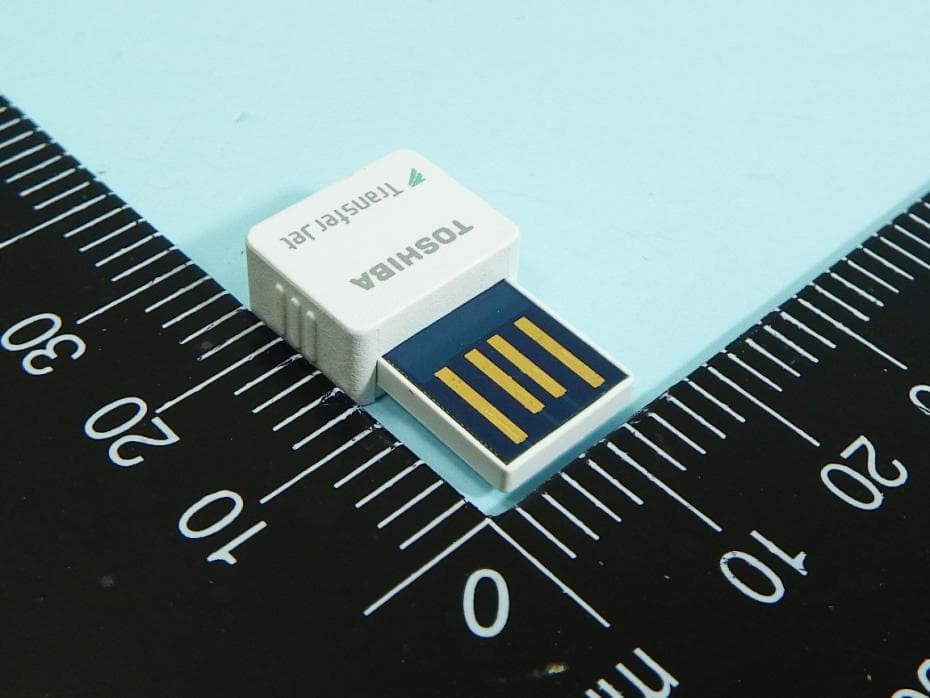
CJ6UPA5144TJ
Aug 07, 2014TransferJet USB Adapter
Equipment Class
JBP - Part 15 Class B Computing Device Peripheral
CJ6UPA5145TJ
Aug 07, 2014TransferJet MicroUSB Adapter
Equipment Class
UWB - Ultra Wideband Transmitter