H9P4121CDMARadio data terminal with 3 included radios
Symbol Technologies Inc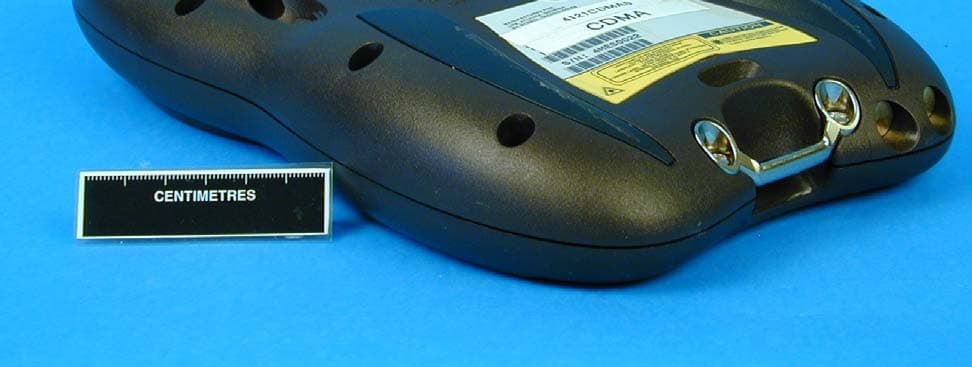
Click to zoom
Application Details
- Equipment Class
- PCT - PCS Licensed Transmitter worn on body
- Date of Grant
- May 11, 2005
- Application Purpose
- Original Equipment
- Date of Application
- May 11, 2005
- Equipment Note
- Radio data terminal with 3 included radios
- Frequency Range
- 824.70000000 - 843.10000000
- Company
- Symbol Technologies Inc
- Country
- United States
Documents & Files
Document Text
Text extracted from the exhibit documents filed with the FCC. Open a document above to read the original.
Users Manual
4121CDMA Preliminary DIAD IV Te r m i n a l © 2003 SYMBOL TECHNOLOGIES, INC. All rights reserved. Symbol reserves the right to make changes to any product to improve reliability, function, or design. Symbol does not assume any product liability arising out of, or in connection with, the application or use of any product, circuit, or application described herein. No license is granted, either expressly or by implication, estoppel, or otherwise under any patent right or patent, covering or relating to any combination, system, apparatus, machine, material, method, or process in which Symbol products might be used. An implied license only exists for equipment, circuits, and subsystems contained in Symbol products. Symbol, the Symbol logo, and Spectrum24 are registered trademarks of Symbol Technologies, Inc. Other product names mentioned in this manual may be trademarks or registered trademarks of their respective companies and are hereby acknowledged. Symbol Technologies, Inc. One Symbol Plaza Holtsville, N.Y. 11742-1300 http://www.symbol.com Patents This product is covered by one or more of the following U.S. and foreign Patents: U.S. Patent No. 4,593,186; 4,603,262; 4,607,156; 4,652,750; 4,673,805; 4,736,095; 4,758,717; 4,760,248; 4,806,742; 4,816,660; 4,845,350; 4,896,026; 4,897,532; 4,923,281; 4,933,538; 4,992,717; 5,015,833; 5,017,765; 5,021,641; 5,029,183; 5,047,617; 5,103,461; 5,113,445; 5,130,520; 5,140,144; 5,142,550; 5,149,950; 5,157,687; 5,168,148; 5,168,149; 5,180,904; 5,216,232; 5,229,591; 5,230,088; 5,235,167; 5,243,655; 5,247,162; 5,250,791; 5,250,792; 5,260,553; 5,262,627; 5,262,628; 5,266,787; 5,278,398; 5,280,162; 5,280,163; 5,280,164; 5,280,498; 5,304,786; 5,304,788; 5,306,900; 5,324,924; 5,337,361; 5,367,151; 5,373,148; 5,378,882; 5,396,053; 5,396,055; 5,399,846; 5,408,081; 5,410,139; 5,410,140; 5,412,198; 5,418,812; 5,420,411; 5,436,440; 5,444,231; 5,449,891; 5,449,893; 5,468,949; 5,471,042; 5,478,998; 5,479,000; 5,479,002; 5,479,441; 5,504,322; 5,519,577; 5,528,621; 5,532,469; 5,543,610; 5,545,889; 5,552,592; 5,557,093; 5,578,810; 5,581,070; 5,589,679; 5,589,680; 5,608,202; 5,612,531; 5,619,028; 5,627,359; 5,637,852; 5,664,229; 5,668,803; 5,675,139; 5,693,929; 5,698,835; 5,705,800; 5,714,746; 5,723,851; 5,734,152; 5,734,153; 5,742,043; 5,745,794; 5,754,587; 5,762,516; 5,763,863; 5,767,500; 5,789,728; 5,789,731; 5,808,287; 5,811,785; 5,811,787; 5,815,811; 5,821,519; 5,821,520; 5,823,812; 5,828,050; 5,848,064; 5,850,078; 5,861,615; 5,874,720; 5,875,415; 5,900,617; 5,902,989; 5,907,146; 5,912,450; 5,914,478; 5,917,173; 5,920,059; 5,923,025; 5,929,420; 5,945,658; 5,945,659; 5,946,194; 5,959,285; 6,002,918; 6,021,947; 6,029,894; 6,031,830; 6,036,098; 6,047,892; 6,050,491; 6,053,413; 6,056,200; 6,065,678; 6,067,297; 6,082,621; 6,084,528; 6,088,482; 6,092,725; 6,101,483; 6,102,293; 6,104,620; 6,114,712; 6,115,678; 6,119,944; 6,123,265; 6,131,814; 6,138,180; 6,142,379; 6,172,478; 6,176,428; 6,178,426; 6,186,400; 6,188,681; 6,209,788; 6,209,789; 6,216,951; 6,220,514; 6,243,447; 6,244,513; 6,247,647; 6,308,061; 6,250,551; 6,295,031; 6,308,061; 6,308,892; 6,321,990; 6,328,213; 6,330,244; 6,336,587; 6,340,114; 6,340,115; 6,340,119; 6,348,773; 6,380,949; 6,394,355; D305,885; D341,584; D344,501; D359,483; D362,453; D363,700; D363,918; D370,478; D383,124; D391,250; D405,077; D406,581; D414,171; D414,172; D418,500; D419,548; D423,468; D424,035; D430,158; D430,159; D431,562; D436,104. Invention No. 55,358; 62,539; 69,060; 69,187, NI-068564 (Taiwan); No. 1,601,796; 1,907,875; 1,955,269 (Japan); European Patent 367,299; 414,281; 367,300; 367,298; UK 2,072,832; France 81/03938; Italy 1,138,713 rev. 06/02 P r e l i m i n a r y 1 Quick Reference Introduction The 4121GPRS Terminal is a durable hand-held or vehicle-mount radio data terminal. You can enter data by using the custom keypad, bar code scanner, or a combination of the two. You can transmit data from the terminal immediately by the radio link to a host computer. The main features of this terminal include: •Ergonomic design with illuminated color LCD display •Windows ® CE Operating System •Intel XScale TM application processor technology •Wireless Personal Area Network (WPAN), Wireless Local Area Network (WLAN) and optional Wireless Wide Area Net- work (WWAN) radios •1-Dimensional scanning capability •Color TFT LCD display •Touch screen •Printing support •IrDA-compliant interface for printing and communications. •Speaker and Microphone •Acoustic Modem and Dialer •Indicator •Power Management •Diagnostics •Application Software Loader •Systems Software Loader •Application Program Interfaces. Preliminary 2 DIAD IV Terminal About This Guide This guide provides instructions for the set up and operation of the terminal. The following topics are included: •Accessories on page 2 •Parts of the Terminal on page 3 •Getting Started on page 3 •Charging the Internal Battery on page 4 •Operating the Terminal on page 4 •Maintaining the Terminal on page 5 •Troubleshooting on page 6 •Regulatory Information on page 8. Accessories The following optional accessories are available from Symbol Technologies: •Belt Attachment •DIAD IV Depot Charger •Stylus •DIAD IV Vehicle Holder. P r e l i m i n a r y 3 Quick Reference Parts of the Terminal Note:The battery status LED lights only when the battery is charging in the DIAD IV Depot Charger. When the ter- minal is not charging, this LED is application depen- dent. Getting Started Before the terminal is used for the first time: 1. Remove the protective film covers from the LCD display and battery charging contacts. 2. Charge the internal battery using the DIAD IV Depot Charg- er. Before using the terminal for the first time, a full charge cycle is recommended. This can take up to six hours. Exit window LCD display Scan keys Stop complet e key Key state key Escape key Delete key Speaker Key state indicator Photo sensor Battery status LED Microphone Space key Backspace key Soft key cycle key P r e l i m i n a r y 4 …
Text truncated - open the document above for the full version.
Users Manual
DIAD IV Terminal Licensing, Patent and Regulatory Information © 2003 - 2004 SYMBOL TECHNOLOGIES, INC. All rights reserved. Symbol and UPS' rights and obligations with relation to the DIAD IV product, including without limitation product liability and license grants, will be in accordance with Purchase Agreements number: 2001 - 11204 - 01, 2001 - 11204 - 02 and 2001 - 11204 - 03, dated February 13, 2003. Symbol reserves the right to make changes to any product to improve reliability, function, or design. Symbol and the Symbol logo are registered trademarks of Symbol Technologies, Inc. Other product names mentioned in this manual may be trademarks or registered trademarks of their respective companies and are hereby acknowledged. Symbol Technologies, Inc. One Symbol Plaza Holtsville, N.Y. 11742-1300 http://www.symbol.com Patents For patent information, go to: www.symbol.com/patents. 72-63596-01 Revision C — June 2004 Regulatory Information All Symbol devices are designed to be compliant with rules and regulations in the countries listed in sections 4.5 of Exhibit 2 of the Agreement and will be labeled as required. Any changes or modifications to Symbol Technologies equipment, not expressly approved by Symbol Technologies, could void the user's authority to operate the equipment. Antenna's, use only the supplied or an approved replacement antenna. Unauthorized antennas, modifications, or attachments could cause damage and may violate regulations. Radio Modules This device contains approved radio modules. These modules are identified below. • Symbol Compact Flash RLAN (11Mbps DSSS) radio card, Type: LA-4137 • Motorola Triband GSM GPRS G18 module, or Motorola CDMA C18 module • Symbol Bluetooth TM Module, Type: 21-64381. This device incorporates the International Roaming feature (IEEE802.11d) which will ensure the product operates on the correct channels for the particular country of use. This device contains a Bluetooth qualified module, Bluetooth ID: B01285 or B00813. Country Approvals Regulatory markings are applied to the device signifying the radio (s) are approved for use in the following countries: United States, Canada, Australia, Japan & Europe 1. Please refer to the Symbol Declaration of Conformity (DoC) for details of other country markings. This is available at http://www2.symbol.com/doc/. Note 1 : For 2.4GHz Products: Europe includes, Austria, Belgium, Czech Republic, Croatia, Cyprus, Denmark, Estonia, Finland, France, Germany, Greece, Hungary, Iceland, Ireland, Italy, Latvia, Liechtenstein, Lithuania, Luxembourg, Malta, Netherlands, Norway, Poland, Portugal, Slovak Republic, Slovenia, Spain, Sweden, Switzerland and the United Kingdom. Operation of the device without regulatory approval is illegal. Health and Safety Recommendations Ergonomic Recommendations Caution: Even the best-designed products can be a potential source of injury/illness if used incorrectly. In order to avoid or minimize risk of ergonomic injury, follow the general recommendations below. Consult with your local Health & Safety Manager to ensure that you are meeting your company’s safety programs to prevent employee injury. • Reduce or eliminate repetitive motion. • Maintain a neutral posture and avoid awkward positions. • Reduce or eliminate excessive force. • Keep objects that are used frequently within easy reach. • Perform tasks at correct heights. • Reduce or eliminate vibration. • Reduce or eliminate direct pressure. • Provide adjustable workstations. • Avoid static exertions. • Provide adequate clearance. • Provide a suitable working environment. • Improve work procedures. • Take periodic rest breaks. For Vehicle installations and use 1. An air bag inflates with great force. DO NOT place objects, including either installed or portable wireless equipment, in the area over the air bag or in the air bag deployment area. If in-vehicle wireless equipment is improperly installed and the air bag inflates, serious injury could result. 2. Position your device within easy reach. Be able to access your device without removing your eyes from the road. 3. Do not take notes or use the device while driving to the point of distracting from driving. Reading or Jotting down text takes attention away from your primary responsibility, driving safely. Cell Phone/Terminal Warnings Effect on Vehicles RF signals may affect improperly installed or inadequately shielded electronic systems in motor vehicles (including safety systems). Check with the manufacturer or its representative regarding your vehicle. You should also consult the manufacturer of any equipment that has been added to your vehicle. Safety on Aircraft You are required to switch OFF mobile phones when on board an aircraft as operation may be dangerous and illegal. Pacemakers It is recommended by pacemaker manufacturers that a minimum of 15cm (6 inches) be maintained between a handheld wireless phone and a pacemaker to avoid any possible interference with the pacemaker. These recommendations are consistent with independent research and recommendations by Wireless Technology Research. Persons with Pacemakers: • Should ALWAYS keep the device more than 15cm (6 inches) from their pacemaker when turned ON. • Should not carry the device in a breast pocket. • Should use the ear furthest from the pacemaker to minimise the potential for interference. • If you have any reason to suspect that interference is taking place, turn OFF your device. Radio Frequency Interference Requirements Note: This equipment has been tested and found to comply with the limits for a Class B digital device, pursuant to Part 15 of the FCC rules. These limits are designed to provide reasonable protection against harmful interference in a residential installation. This equipment generates, uses and can radiate radio frequency energy and, if not installed and used in accordance with the instructions, may cause harmful interference to radio communications. However there is no guarantee that interference…
Text truncated - open the document above for the full version.
Cover Letter(s)
Regulatory Engineering MB/TCB/Application Letter/H9P4121CDMA 27 th April 2005 BABT 34 Molesey Road WALTON-ON-THAMES Surrey KT12 4RQ Subject: Request for Original Equipment Grant (H9P4121CDMA) This certification request is for the Symbol Mobile Computer with FCC ID: H9P4121CDMA. Symbol Technologies has integrated three approved radio transmitters into a new terminal, these radios are identified below: Approved Radios Symbol, LA-4137, 802.11b Compact Flash Radio FCC ID: H9PLA4137 Symbol, 21, Bluetooth Radio Module FCC ID: H9P2164381 Motorola C18, Dual band CDMA Radio FCC ID: IHDT56CW1 No electrical or mechanical modifications were made to these transmitters from the time of the original FCC submission. Intended Use The Data Terminal is designed to be used in the hand and can be clipped onto the users belt using a Symbol supplied Belt Clip. SAR A SAR Report is submitted to support a ‘portable ’ FCC application. The worst case RF Exposure SAR test results data (0.714 W/kg), taken in direct contact (0 cm), is under the current 1.6 W/kg limit set in 2.1093 for portable devices. Collocation The WWAN (CDMA) and WPAN (Bluetooth) radios are able to transmit at the same time, testing has been performed to show compliance. Regulatory Engineering • Web Site: http://ww.symbol.com Antennas New antennas were used with each transmitter as follows: Radio Antenna P/N Type Gain (Av) WLAN radio 10-674160-03 Monopole -4dBi WPAN module 10-674160-03 Monopole -4dBi WWAN radio 10-674160-03 Monopole -5dBi Symbol respectfully request that the Antenna Type and Gain be listed in the comments section of the Grant Exhibits The following Exhibits are electronically submitted as attachments. Exhibit Description Confidential 1 ID Label/Location Info 3 External Photos 4 Block Diagram x 5 Schematics Antenna Information x 6 Technical Report - FCC Report/ 01/ 02 / 03 Single Transmit - FCC Report/ 04/ 05 Simultaneous Transmit 7 Test Setup Photographs 8 User Manual - Regulatory Information Sheet 9 Internal Photos 10 Parts List x 11 RF Exposure - SAR Report 12 Operating Description x 13 Cover Letters - Agent letter 14 Confidentiality Letter Respectfully, Marco Belli Symbol Regulatory Compliance Direct Tel: +44 118 945 7313 Direct Fax: +44 118 945 7274 Email: [email protected] Regulatory Engineering • Web Site: http://ww.symbol.com
Cover Letter(s)
Regulatory Engineering MB/TCB/Confidentiality/H9P4121CDMA 27 th April 2005 BABT 34 Molesey Road WALTON-ON-THAMES Surrey KT12 4RQ Confidentiality Request Pursuant to Sections 0.457(d)(1)(ii) and 0.459 of the Commission’s Rules, Symbol Technologies Inc. hereby requests confidential treatment of information accompanying as outlined below: • Schematics • Block Diagrams • Parts List (Bill of Materials) • Theory of Operation • Antenna Specifications The above materials contain trade secrets and proprietary information not customarily released to the public. The public disclosure of these matters might be harmful to the Applicant and provide unjustified benefits to its competitors. The Applicant understands that pursuant to Rule 0.457(d)(1)(ii), disclosure of this Application and all accompanying materials will not be made before the date of the Grant for this Application. Yours sincerely, Marco Belli Symbol Regulatory Compliance Direct Tel: +44 118 945 7313 Direct Fax: +44 118 945 7274 Email: [email protected] Regulatory Engineering • Web Site: http://ww.symbol.com
Cover Letter(s)
4 th September, 2004 To whom it may concern, Symbol Technologies Inc. may use the following documents of c18 – CDMA OEM cellular modem, prepared by Motorola for FCC submission (FCC ID: IHDT56CW1). 1. FCC identification (nameplate) information 2. c18 External Photos 3. c18 Internal Photos 4. c18 Developer Kits Manual 5. Transceiver Adjustments/Tune-Up Procedure 6. SAR Test Report for Motorola Mobile Cellular Phone FCC ID IHDT56CW1 7. Specification Compliance Statement 8. EMC Test Report Number – 9491-1 9. c18 FCC Grant - FCC Identifier: IHDT56CW1 10. Request for additional information (FCC ID: IHDT56CW1) Yours faithfully, Emile Saul Motorola Israel Motorola Israel Next 2 Core Solutions Division Tel: +972 (03) 565 81 64 Fax: +972 (03) 565 85 01 e-mail: [email protected]
Cover Letter(s)
Regulatory Engineering MB/Agent Authorisation/2005 27 th April 2005 BABT 34 Molesey Road Walton on Thames Surrey KT12 4RQ Agent Authorisation Dear Sir or Madam: We, Symbol Technologies, Inc. One Symbol Plaza Holtsville, NY 11742-1300, hereby authorize TÜV Product Service Limited, Octagon House, Concord Way, Segensworth North, Fareham, Hampshire, United Kingdom, PO15 5RL, to act as our agent in all matters relating to applications for equipment authorization, including the signing of all documents relating to these matters. I further certify that the applicant nor any party to the application is subject to a denial of Federal benefits, that includes FCC benefits, pursuant to Section 5301 of the Anti-Drug Abuse Act of 1988, 21 U.S.C. Section 862. This authorization expires on (1 st January 2006). Sincerely, Alan Parrish Director Regulatory Compliance Direct Tel: +44 118 945 7483 Direct Fax: +44 118 945 7274 Email: [email protected] Regulatory Engineering • Intranet site: http://wiley.symbol.com/regulatory/index.html
Cover Letter(s)
Regulatory Engineering MB/4121CDMA/Simultanious TX 27 th April 2005 BABT 34 Molesey Road WALTON-ON-THAMES Surrey KT12 4RQ Attestation: Simultaneous Transmit CDMA / RLAN This is to confirm that the Software drivers for the WWAN (CDMA) and WLAN (RLAN 802.11b) prevent both transmitters from being active at the same time. This system prevents the CDMA and RLAN signals transmitting simultaneously. Bluetooth / RLAN Both 802.11b and Bluetooth operate in the same 2.4 GHz unlicensed frequency band. Therefore, there is a mutual interference between the two wireless systems that may result in severe performance degradation. Coexistence is a method that allows the two radio systems to share the same RF spectrum without interfering with each other. The Symbol-defined coexistence mechanism between Bluetooth and 802.11b is Alternating Wireless Medium Access (AWMA). In this mechanism there is synchronization between the Bluetooth and 802.11b radio systems, which is provided by a handshaking signal called Media Free (MF). MF is generated by the 802.11b radio and synchronous to the 802.11b AP beacon (AP output over radio waves). The MF signal produces a Bluetooth quantum (time interval that Bluetooth can be on-the-air) once every beacon period. The remainder of the period is for 802.11b use. The RF output from the BT module is routed to an RF mux/switch. This provides for a shared antenna between the S24 radio and the BT radio. Whenever the module is not in use, the mux simply connects the S24 signal to the antenna. During brief periods of reception and transmission, the module flips the switch for BT communication. The MF signal is used to synchronize the BT and S24 shared use of the antenna. This coexistence system prevents the RLAN and BT signals transmitting simultaneously. Yours sincerely, Marco Belli Symbol Regulatory Compliance Regulatory Engineering • Web Site: http://ww.symbol.com
External Photos
FCC ID: H9P4121CDMA SYMBOL TECHNOLOGIES INC 4121CDMA HANDHELD DATA TERMINAL ©2005 Not to be reproduced without the permission of TÜV Product Service Ltd Page 1 of 6 PHOTOGRAPHS OF EQUIPMENT Front View FCC ID: H9P4121CDMA SYMBOL TECHNOLOGIES INC 4121CDMA HANDHELD DATA TERMINAL ©2005 Not to be reproduced without the Permission of TÜV Product Service Ltd Page 2 of 6 PHOTOGRAPHS OF EQUIPMENT Rear View FCC ID: H9P4121CDMA SYMBOL TECHNOLOGIES INC 4121CDMA HANDHELD DATA TERMINAL ©2005 Not to be reproduced without the Permission of TÜV Product Service Ltd Page 3 of 6 PHOTOGRAPHS OF EQUIPMENT Top View FCC ID: H9P4121CDMA SYMBOL TECHNOLOGIES INC 4121CDMA HANDHELD DATA TERMINAL ©2005 Not to be reproduced without the Permission of TÜV Product Service Ltd Page 4 of 6 PHOTOGRAPHS OF EQUIPMENT Bottom View FCC ID: H9P4121CDMA SYMBOL TECHNOLOGIES INC 4121CDMA HANDHELD DATA TERMINAL ©2005 Not to be reproduced without the Permission of TÜV Product Service Ltd Page 5 of 6 PHOTOGRAPHS OF EQUIPMENT Left Hand Side View FCC ID: H9P4121CDMA SYMBOL TECHNOLOGIES INC 4121CDMA HANDHELD DATA TERMINAL ©2005 Not to be reproduced without the Permission of TÜV Product Service Ltd Page 6 of 6 PHOTOGRAPHS OF EQUIPMENT Right Hand Side View
ID Label/Location Info
FCC ID: H9P4121CDMA SYMBOL TECHNOLOGIES INC 4121CDMA DATA TERMINAL ID Label / Location
Internal Photos
FCC ID: H9P4121CDMA SYMBOL TECHNOLOGIES INC 4121CDMA HANDHELD DATA TERMINAL ©2005 Not to be reproduced without the permission of TÜV Product Service Ltd Page 1 of 14 PHOTOGRAPHS OF EQUIPMENT Internal View 1 FCC ID: H9P4121CDMA SYMBOL TECHNOLOGIES INC 4121CDMA HANDHELD DATA TERMINAL ©2005 Not to be reproduced without the permission of TÜV Product Service Ltd Page 2 of 14 PHOTOGRAPHS OF EQUIPMENT Internal View 2 FCC ID: H9P4121CDMA SYMBOL TECHNOLOGIES INC 4121CDMA HANDHELD DATA TERMINAL ©2005 Not to be reproduced without the permission of TÜV Product Service Ltd Page 3 of 14 PHOTOGRAPHS OF EQUIPMENT Internal View 3 FCC ID: H9P4121CDMA SYMBOL TECHNOLOGIES INC 4121CDMA HANDHELD DATA TERMINAL ©2005 Not to be reproduced without the permission of TÜV Product Service Ltd Page 4 of 14 PHOTOGRAPHS OF EQUIPMENT Internal View 4 FCC ID: H9P4121CDMA SYMBOL TECHNOLOGIES INC 4121CDMA HANDHELD DATA TERMINAL ©2005 Not to be reproduced without the permission of TÜV Product Service Ltd Page 5 of 14 PHOTOGRAPHS OF EQUIPMENT Internal View 5 FCC ID: H9P4121CDMA SYMBOL TECHNOLOGIES INC 4121CDMA HANDHELD DATA TERMINAL ©2005 Not to be reproduced without the permission of TÜV Product Service Ltd Page 6 of 14 PHOTOGRAPHS OF EQUIPMENT Internal View 6 FCC ID: H9P4121CDMA SYMBOL TECHNOLOGIES INC 4121CDMA HANDHELD DATA TERMINAL ©2005 Not to be reproduced without the permission of TÜV Product Service Ltd Page 7 of 14 PHOTOGRAPHS OF EQUIPMENT Internal View 7 FCC ID: H9P4121CDMA SYMBOL TECHNOLOGIES INC 4121CDMA HANDHELD DATA TERMINAL ©2005 Not to be reproduced without the permission of TÜV Product Service Ltd Page 8 of 14 PHOTOGRAPHS OF EQUIPMENT Internal View 8 FCC ID: H9P4121CDMA SYMBOL TECHNOLOGIES INC 4121CDMA HANDHELD DATA TERMINAL ©2005 Not to be reproduced without the permission of TÜV Product Service Ltd Page 9 of 14 PHOTOGRAPHS OF EQUIPMENT Internal View 9 FCC ID: H9P4121CDMA SYMBOL TECHNOLOGIES INC 4121CDMA HANDHELD DATA TERMINAL ©2005 Not to be reproduced without the permission of TÜV Product Service Ltd Page 10 of 14 PHOTOGRAPHS OF EQUIPMENT Internal View 10 FCC ID: H9P4121CDMA SYMBOL TECHNOLOGIES INC 4121CDMA HANDHELD DATA TERMINAL ©2005 Not to be reproduced without the permission of TÜV Product Service Ltd Page 11 of 14 PHOTOGRAPHS OF EQUIPMENT Internal View 11 FCC ID: H9P4121CDMA SYMBOL TECHNOLOGIES INC 4121CDMA HANDHELD DATA TERMINAL ©2005 Not to be reproduced without the permission of TÜV Product Service Ltd Page 12 of 14 PHOTOGRAPHS OF EQUIPMENT Internal View 12 FCC ID: H9P4121CDMA SYMBOL TECHNOLOGIES INC 4121CDMA HANDHELD DATA TERMINAL ©2005 Not to be reproduced without the permission of TÜV Product Service Ltd Page 13 of 14 PHOTOGRAPHS OF EQUIPMENT Internal View 13 FCC ID: H9P4121CDMA SYMBOL TECHNOLOGIES INC 4121CDMA HANDHELD DATA TERMINAL ©2005 Not to be reproduced without the permission of TÜV Product Service Ltd Page 14 of 14 PHOTOGRAPHS OF EQUIPMENT Internal View 14
Internal Photos
APPLICANT: MOTOROLA INC. FCC ID: IHDT56CW1 EXHIBIT 9 1 Front View (Shields Removed) Rear View (Shields Removed) APPLICANT: MOTOROLA INC. FCC ID: IHDT56CW1 EXHIBIT 9 2 Front View (With Shield)Rear View (With Shield)
RF Exposure Info
REPORT ON Specific Absorption Rate Testing of the Symbol Handheld Data Terminal 4121CDMA Report No WS613597/01 Issue 1 April 2005 Competence. Certainty. Quality TUV Product Service Ltd, Octagon House, Concorde Way, Segensworth North, Fareham, Hampshire, PO15 5RL, United Kingdom Tel: +44 (0) 1489 558100. Website: www.tuvps.co.uk Report Number WS613597/01 Issue 1 Page 1 of 41 REPORT ON: Specific Absorption Rate Testing of the Symbol Handheld Data Terminal 4121CDMA Report No: WS613597/01 Issue 1 PREPARED FOR: Symbol (UK) Ltd One Symbol Plaza Holtsville NY 11742-1300 New York United States of America ATTESTATION: The wireless portable device described within this report has been shown to be capable of compliance for localised specific absorption rate (SAR) for FCC standard Supplement C (Edition 01-01) to OET Bulletin 65 (Edition 97-01) and RSS-102 Issue 1 (Provisional) September 25, 1999 of 1.6 W/kg. The measurements shown in this report were made in accordance with the procedures specified in Supplement C (Edition 01-01) to OET Bulletin 65 (Edition 97-01), RSS-102 Issue 1 (Provisional) September 25, 1999. All reported testing was carried out on a sample of equipment to demonstrate compliance with the above standards. The sample tested was found to comply with the requirements in the applied rules. A. Miller Senior SAR Test Engineer APPROVED BY: M J Hardy UKAS Signatory DATED: 19 th April 2005 DISTRIBUTION: Symbol (UK) Ltd Copy No: 1 BABT Copy No.: 2 Copy No.: 1 Note: The test results reported herein relate only to the item tested as identified above and on the Status Page. Report Number WS613597/01 Issue 1 Page 2 of 41 CONTENTS Section Page No 1 REPORT SUMMARY 1.1 Status ............................................................................................................................... 4 1.2 Declaration of Build Status ............................................................................................... 5 1.2 Summary........................................................................................................................... 6 1.3 Test Results Summary...................................................................................................... 7 2 TEST DETAILS 2.1 Robot System Specification ............................................................................................ 11 2.2 Probe and Amplifier Specification ................................................................................... 12 2.3 SAR Measurement Procedure........................................................................................ 13 2.4 SAR Distributions (Area Scans – 2D) ............................................................................. 16 3 TEST EQUIPMENT USED 3.1 Table of Test Equipment Used ...................................................................................... 32 3.2 Test Software .................................................................................................................. 32 3.3 Dielectric Properties of Simulant Liquids ........................................................................ 33 3.4 Test Conditions ............................................................................................................... 34 3.5 Measurement Uncertainty............................................................................................... 35 4 PHOTOGRAPHS 4.1 Test Positional Photographs ........................................................................................... 37 4.2 Photographs of Test Sample .......................................................................................... 38 5 ACCREDITATION, DISCLAIMERS AND COPYRIGHT 5.1 Accreditation, Disclaimers and Copyright ....................................................................... 41 Annex A Probe Calibration Procedure .........................................................................................A.2 Report Number WS613597/01 Issue 1 Page 3 of 41 SECTION 1 REPORT SUMMARY Specific Absorption Rate Testing of the Symbol Handheld Data Terminal 4121CDMA MAXIMUM 1g SAR TESTING RESULTS Position Frequency (MHz) Max 1g SAR (W/kg) SAR Drift (dB) Front Top of Device Placed Against Phantom 824.70 0.276 0.00 Front Top of Device Placed Against Phantom 1851.25 0.714 -0.08 Front Top of Device Placed Against Phantom 2412.00 0.292 -0.01 The maximum 1g volume averaged SAR level measured for all the tests performed did not exceed the limits for General Population/Uncontrolled Exposure (W/kg) Partial Body of 1.6 W/kg. Level defined in Supplement C (Edition 01-01) to OET Bulletin 65 (97-01). Report Number WS613597/01 Issue 1 Page 4 of 41 1.1 STATUS MANUFACTURING DESCRIPTION Handheld Data Terminal STATUS OF TEST Specific Absorption Rate Testing APPLICANT Symbol Technologies Inc MANUFACTURER Symbol Technologies Inc TYPE 4121CDMA PART NUMBER 4121CDMA0 SERIAL NUMBER S/N: 4XEQ0155 HARDWARE VERSION Rev 5 (to be released as Rev A) RADIO CDMA CDMA2000 (1XRTT) Radio Card TYPE Motorola C18 BANDS US CELL 800MHz US PCS 1900MHz RADIO LAN Symbol Compact Flash RLAN Radio TYPE LA4137 POWER 100mW RADIO BLUETOOTH Symbol Bluetooth Module TYPE 21-64381 POWER 100mW (restricted in this terminal integration to 1mW) BATTERY MANUFACTURER Symbol Technologies Inc PART NUMBER 31-57157-01 (Li Ion 7.2v) TEST SPECIFICATIONS: US Federal Government, Code of Federal Regulations, Title 47 Telecommunication, Chapter I Federal Communications Commission, part 2, section 1093. Federal Communications Commission (FCC) OET Bulletin 65c, Edition 01-01, Evaluating Compliance with FCC Guidelines for Human Exposure to Radiofrequency Electromagnetic Fields – Additional Information for Evaluating Compliance of Mobile and Portable Devices with FCC Limits for Human Exposure to Radiofrequency Emissions RSS-102 Issue 1 (Provisional) September 25, 1999: Evaluation Procedure for Mobile and Portable Radio Transmitters with respect to Health Canada’s Safety Code 6 for Exposure of Hum…
Text truncated - open the document above for the full version.
Test Report
REPORT ON Limited FCC CFR 47: Parts 15 B and 22 H Testing in Support of an Application for Grant of Equipment Authorisation of a Symbol 4121CDMA Handheld Data Terminal FCC ID: H9P4121CDMA Report No OR613597/002 Issue 1 April 2005 Competence. Certainty. Quality. TUV Product Service Ltd, Octagon House, Concord Way, Segensworth North, Fareham, Hampshire, PO15 5RL, United Kingdom Tel: +44 (0) 1489 558100. Website: www.tuvps.co.u…
Text truncated - open the document above for the full version.
Contact Information
Applicant
Qianlin Zhou(Regulatory Specialist)
Technical Contact
Symbol Technologies Inc.Marco Belli
[email protected]+44 1189457313
One Symbol Plaza · New York, New York · United States
Non-Technical Contact
Symbol Technologies IncMarco Belli
[email protected]+441189457313
Test Firm
TUV SUD Product ServiceJensen Adams
Technical Specifications
| # | Rule Parts | Frequency Range | Power Output | Emission | Tolerance |
|---|---|---|---|---|---|
| 2 | 22H | 824.7 MHz - 843.1 MHz | 145.00 mW | 1M25F9W | 300 Hz |
Other Applications from Symbol Technologies Inc

H9PCCHUB1
Jun 30, 2015Customer Concierge
Equipment Class
NII - Unlicensed National Information Infrastructure TX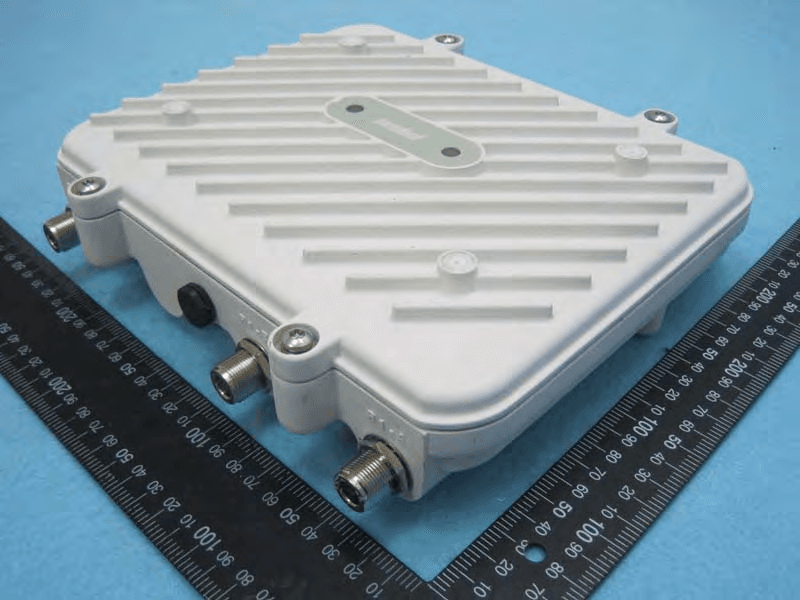
H9PAP7562
May 10, 2015802.11 abgn/ac Access Point
Equipment Class
DTS - Digital Transmission System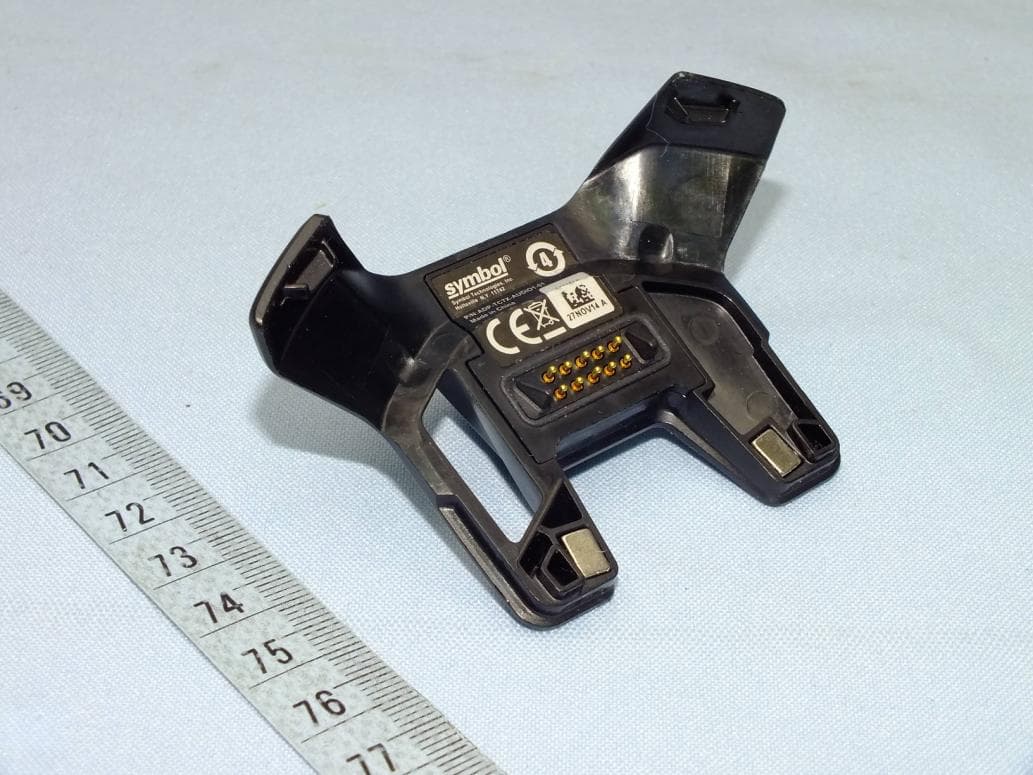
H9PTC75AH
Mar 26, 2015Touch Computer
Equipment Class
NII - Unlicensed National Information Infrastructure TX
H9PRA1202
Sep 24, 2014UHF Narrowband Radio Module
Equipment Class
TNB - Licensed Non-Broadcast Station Transmitter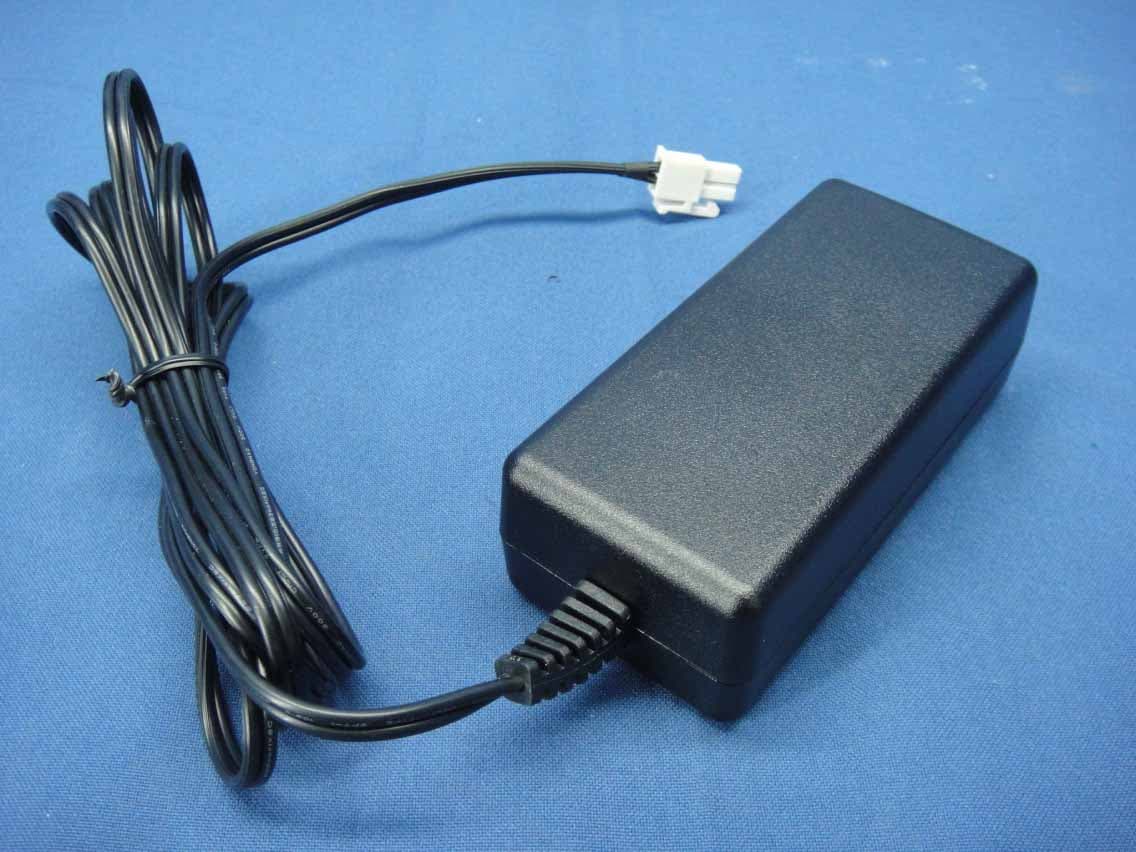
H9PEMG101
Aug 26, 2014802.15.4 Gateway
Equipment Class
DTS - Digital Transmission System