H9PMC9090R6RFID Gun with WLAN and BT
Symbol Technologies Inc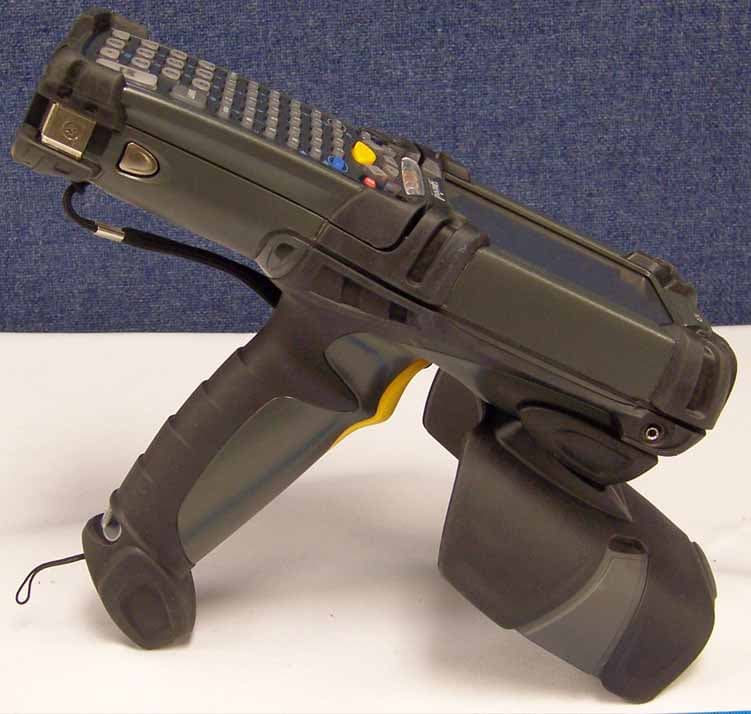
Click to zoom
Application Details
- Equipment Class
- DSS - Part 15 Spread Spectrum Transmitter
- Date of Grant
- Aug 13, 2006
- Application Purpose
- Original Equipment
- Date of Application
- Aug 11, 2006
- Equipment Note
- RFID Gun with WLAN and BT
- Frequency Range
- 2402.00000000 - 2480.00000000
- Company
- Symbol Technologies Inc
- Country
- United States
Documents & Files
Document Text
Text extracted from the exhibit documents filed with the FCC. Open a document above to read the original.
Users Manual
© 2006 SYMBOL TECHNOLOGIES, INC. All rights reserved. Symbol reserves the right to make changes to any product to improve reliability, function, or design. Symbol does not assume any product liability arising out of, or in connection with, the application or use of any product, circuit, or application described herein. No license is granted, either expressly or by implication, estoppel, or otherwise under any patent right or patent, covering or relating to any combination, system, apparatus, machine, material, method, or process in which Symbol products might be used. An implied license exists only for equipment, circuits, and subsystems contained in Symbol products. Symbol and the Symbol logo are registered trademarks of Symbol Technologies, Inc. Other product names mentioned in this manual may be trademarks or registered trademarks of their respective companies and are hereby acknowledged. Symbol Technologies, Inc. One Symbol Plaza Holtsville, N.Y. 11742-1300 http://www.symbol.com Patents This product may be covered by one or more U.S. and foreign Patents. For patent information go to: http://www.symbol.com/patents. Warranty For the complete Symbol hardware product warranty statement, go to: http://www.symbol.com/warranty. Service Information Contact information is provided on the Symbol contact web site: http://www.symbol.com/contactsupport MC9090-G RFID REGULATORY INFORMATION Microsoft ® Mobile ® 5.0 END-USER LICENSE AGREEMENT • You have acquired a device (“DEVICE”) that includes software licensed by Symbol Technologies, Inc. from an affiliate of Microsoft Corporation (“MS”). Those installed software products of MS origin, as well as associated media, printed materials, and “online” or electronic documentation (“SOFTWARE”) are protected by international intellectual property laws and treaties. The SOFTWARE is licensed, not sold. All rights reserved. • IF YOU DO NOT AGREE TO THIS END USER LICENSE AGREEMENT (“EULA”), DO NOT USE THE DEVICE OR COPY THE SOFTWARE. INSTEAD, PROMPTLY CONTACT Symbol Technologies, Inc. FOR INSTRUCTIONS ON RETURN OF THE UNUSED DEVICE(S) FOR A REFUND. ANY USE OF THE SOFTWARE, INCLUDING BUT NOT LIMITED TO USE ON THE DEVICE, WILL CONSTITUTE YOUR AGREEMENT TO THIS EULA (OR RATIFICATION OF ANY PREVIOUS CONSENT). • SOFTWARE includes software already installed on the DEVICE (“DEVICE Software”) and MS software contained on the CD-ROM disk (“Companion CD”). GRANT OF SOFTWARE LICENSE. This EULA grants you the following license: DEVICE Software. You may use the DEVICE Software as installed on the DEVICE. Companion CD. A Companion CD is included with your DEVICE, and you may install and use the Microsoft® ActiveSync® component on one (1) or more personal computers to exchange information with one (1) or more computing devices that contain a compatible version of the Microsoft® Windows Mobile™ Version 5.0 operating system. For other software component(s) contained on the Companion CD, you may install and use such components only in accordance with the terms of the printed or online end user license agreement(s) provided with such component(s). In the absence of an end user license agreement for particular component(s) of the Companion CD, you may install and use only one (1) copy of such component(s) on the DEVICE or a single personal computer with which you use the DEVICE. Phone Functionality. If the DEVICE Software includes phone functionality, all or certain portions of the DEVICE Software may be inoperable if you do not have and maintain a service account with an appropriate wireless telecommunication carrier to whom Symbol Technologies, Inc. may distribute its DEVICES (“Mobile Operator”), or if the Mobile Operator's network facilities are not operating or configured to operate with the DEVICE. Microsoft® Outlook®. If Microsoft Outlook is included with your Device, the following terms apply to your use of Microsoft Outlook: (i) regardless of the information contained in the “Software Installation and Use” section of the online EULA you may install one (1) copy of Microsoft Outlook on one (1) personal computer to use, exchange data, share data, access and interact with the DEVICE, and (ii) the EULA for Microsoft Outlook is between Symbol Technologies, Inc. and the end user - not between the PC manufacturer and end user. DESCRIPTION OF OTHER RIGHTS AND LIMITATIONS. •Speech/Handwriting Recognition. If the DEVICE Software includes speech and/or handwriting recognition component(s), you should understand that speech and handwriting recognition are inherently statistical processes and that errors can occur in the component's recognition of your handwriting, and the final conversion into text. Neither Symbol Technologies, Inc. nor its suppliers shall be liable for any damages arising out of errors in the speech and handwriting recognition process. •Limitations on Reverse Engineering, Decompilation and Disassembly. You may not reverse engineer, decompile, or disassemble the SOFTWARE, except and only to the extent that such activity is expressly permitted by applicable law notwithstanding this limitation. •Single DEVICE. The DEVICE Software is licensed with the DEVICE as a single integrated product. The DEVICE Software installed in read only memory (“ROM”) of the DEVICE may only be used as part of the DEVICE. •Single EULA. The package for the DEVICE may contain multiple versions of this EULA, such as multiple translations and/or multiple media versions (e.g., in the user documentation and in the software). Even if you receive multiple versions of the EULA, you are licensed to use only one (1) copy of the DEVICE Software. •NOTICE REGARDING THE MPEG-4 VISUAL STANDARD. The DEVICE Software may include MPEG-4 visual decoding technology. MPEG LA, L.L.C. requires the following notice: USE OF THIS SOFTWARE IN ANY MANNER THAT COMPLIES WITH THE MPEG 4 VISUAL STANDARD IS PROHIBITED, EXCEPT FOR USE DIRECTLY RELATED TO (A) DATA OR INFORMATION (i) GENERATED BY AND OBTAINED WITHOUT CHARGE FROM…
Text truncated - open the document above for the full version.
Cover Letter(s)
Response to ATCB Comments FCC ID: H9PMC9090R6 1 Washington Laboratories, Ltd. 7560 LINDBERGH DRIVE GAITHERSBURG, MD 20879 (301) 417 – 0220 FAX # (301) 417 - 9069 August 2, 2006 Mr. Tim Johnson American Telecommunications Certification Body Inc. 6731 Whittier Ave McLean, VA 22101 RE: Comments of July 26, 2006 APPLICATION: H9PMC9090R6 Symbol Technologies, Inc. Dear Mr. Johnson: Below are the comments that you have provided regarding the application for certification referenced above. Our responses to those comments are in bold italic. Many responses refer you to additional exhibit(s) which has been uploaded to the application folder at the ATCB website. Thank you for your attention. Please feel free to contact us for any additional information that you may require. Regards, Gregory M. Snyder Chief EMC Engineer, Wireless/Telco Services Manager Brian J. Dettling Documentation Specialist WLL Project: 9261 1) FYI.....The Bluetooth report is actually for DSS, not DTS. Therefore the grants will reflect this appropriately. R. Acknowledged. Thank you. 2) From review of this application and our conversations, it is my understanding that we are approving this device under its own FCC ID as a system and not relying on any modular approvals. Please confirm that our understanding is correct. R. To the extent possible, we are relying on the certification reports of internal modules (WLAN, RFID and Bluetooth modules). This application provides the necessary information to support the Response to ATCB Comments FCC ID: H9PMC9090R6 2 incorporation of said modules into a single unit and addresses specifically issues related to co-location and electromagnetic compatibility. 3) Please confirm that this device does not operate in any peer to peer operations in the 5250 – 5350 and 5470–5725 MHz bands. Note the manual mentions peer to peer for 5150-5250 MHz. An attestation that peer to peer is controlled and turned off via firmware must be provided. R. We withdraw the application for 5250 – 5350MHz bands. Peer-to-peer operations is only allowed in 5150-5250 MHz (See page 2 of 2 of Wireless Quick Reference Guide). See MC9090R6 Application Form - 2 revised. See MC9090R6 Test Report - GEMINI rev1. 4) Recent information from the FCC requires that the FCC ID of the master used to test the channel move functionality be included in this application. Please provide. R. We withdraw the application for 5250 – 5350 MHz bands. See revised 731 form. 5) FYI....Please note that we are still awaiting feedback from the FCC regarding the acceptability of attestations vs. test report for the channel move functionality for the bands operating from 5250 – 5350 MHz. R. Acknowledged. 6) FYI.....It would be suggested that for future applications of this kind, that a separate cover letter explaining the nature of the application be provided to help clarify all aspects of the application or possibly provide an appropriate matrix. It was actually quite difficult to confirm if all the various requirements (radiated, conducted, and bandedge) are appropriately covered and from which report. Tests such as bandedge are actually a combination of radiated and conducted tests and as given further below could not necessarily be found for this device. R. Acknowledged. For future systems of this nature we will include a cover letter. There is an overview in the abstract of the Washington Labs test report that may be of assistance. 7) The 2 part FCC statement information appears to possibly be placed elsewhere on the device. Additionally, the labeling information references 2 other documents for more regulatory information. Please provide sample labels and information showing the location on the device of any other labels relevant to FCC or IC compliance. R. Label size is not sufficient to allow for a legible statement. The two-part statement is included in the User’s Manual. 8) It is uncertain whether internal photographs also cover the BT portion of the device. Please explain or label the photographs as necessary to show this. R. Please seeMC9090R6 Internal Photos - Supplemental. 9) Please provide a photograph of the main board with the WLAN removed. R. Please seeMC9090R6 Internal Photos - Supplemental. 10) It is uncertain where the BT and WLAN antennas are located. Please provide additional photographs as necessary to document this. Response to ATCB Comments FCC ID: H9PMC9090R6 3 R. Please seeMC9090R6 Internal Photos - Supplemental. 11) If possible, please provide information regarding the antennas used in this device (i.e. manufacturer, model, gain, etc.) R. Antenna descriptions have been uploaded. 12) Please explain if the data vs. CW signal is transmitted on each channel hop. The FCC has typically only allowed CW signal if it is half-duplexed with a modulated signal and a CW signal on each hop frequency. R. The RFID device is half-duplexing a CW signal (listen mode) with an AM modulated signal (interrogate mode) for each hop channel. 13) The 900 MHz RFID reader is asking for approval from 902.91 – 927.29 on the 731 form. However test report and suggests 902.75 – 927.25. Additionally, provide a sample hopping list to show compliance with the pseudo random hopping requirements and the frequencies of use. R. See MC9090R6 Application Form - 3 rev1. Please see: “WJ MPR7XXX Operational Description: Freq Hop”. 14) For the 900 MHz TX, system receivers shall have input bandwidths that match the hopping channel bandwidths of their corresponding transmitters and shall shift frequencies in synchronization with the transmitted signals (15.247(a)(1)). Please provide information that shows this device complies with this. R. The transceiver uses homodyne architecture. Refer to block diagram: The VCO output is split between TX and RX circuits so the TX and RX channel bandwidths are identical. The filters shown are bandpass filters, not channel filters. Channel bandwidth for both RX and TX is function of the VCO, which is the same for both. 15) For the 900 MHz TX…
Text truncated - open the document above for the full version.
Cover Letter(s)
One Symbol Plaza, Holtsville, NY 11742-1300 • 1.631.738.2400 • www.symbol.com Confidentiality Request: Symbol Technologies July 16th 2006 Federal Communications Commission Authorization and Evaluation Division FCC ID: H9PMC9090R6 Pursuant to Sections 0.457 and 0.459 of the Commission’s Rules, the Applicant hereby requests confidential treatment of information accompanying this Application as outlined below: • Bill of Materials • Block Diagram • Schematics • Theory of Operation The above materials contain trade secrets and proprietary information not customarily released to the public. The public disclosure of these matters might be harmful to the Applicant and provide unjustified benefits to its competitors. The Applicant understands that pursuant to Rule 0.457, disclosure of this Application and all accompanying documentation will not be made before the date of the Grant for this application Sincerely yours, for Mark Luksich Director, Regulatory Symbol Technologies Inc. 1 Symbol Plaza Holtsville, NY 11742
Internal Photos
WJ Communications Inc. 1.0 Watt RFID Reader Internal Photographs
Internal Photos
Main Board with WLAN (FCC ID: H9P2121160) Removed Bluetooth module
RF Exposure Info
Document SYM9261-MPE FCC ID: H9PMC9090R6 RF Exposure Test Report Washington Laboratories, Ltd July 2006 Maximum Permissible Exposure Evaluation for Symbol Technologies, Inc. Gemini MC9090R6 FCC ID: H9PMC9090R6 IC: 1549D-MC9090R6 July 18, 2006 WLL PROJECT #: 9261 This report may not be reproduced, except in full, without the prior written consent of Washington Laboratories, Ltd. RF Exposure Evaluation Document SYM9261-MPE FCC ID: H9PMC9090R6 RF Exposure Test Report Washington Laboratories, Ltd July 2006 1 Maximum Permissible Exposure Test Report for FCC ID: H9PMC9090R6 IC: 1549D-MC9090R6 1.0 Introduction This report has been prepared on behalf of SYMBOL TECHNOLOGIES, INC. MC9090R6 transmitter to show compliance with the RF exposure requirements as defined in FCC §1.1307. This device will operate with three radio frequency transmitters operating under the requirements of Pat 15.247 and 15.407: • RFID, 902M – 928MHz • Bluetooth, 2.4GHz • WLAN: 2.4G and 5 GHz 1.1 Requirements Three different categories of transmitters are defined by the FCC in OET Bulletin 65. These categories are fixed installation, mobile, and portable and are defined as follows: Fixed Installations: fixed location means that the device, including its antenna, is physically secured at a permanent location and is not able to be easily moved to another location. Additionally, distance to humans from the antenna is maintained to at least 2 meters. Mobile Devices: a mobile device is defined as a transmitting device designed to be used in other than fixed locations and to be generally used in such a way that a separation distance of at least 20 centimeters is normally maintained between the transmitter's radiating structures and the body of the user or nearby persons. Transmitters designed to be used by consumers or workers that can be easily re-located, such as a wireless modem operating in a laptop computer, are considered mobile devices if they meet the 20 centimeter separation requirement. The FCC rules for evaluating mobile devices for RF compliance are found in 47 CFR §2.1091. Portable Devices: a portable device is defined as a transmitting device designed to be used so that the radiating structure(s) of the device is/are within 20 centimeters of the Document SYM9261-MPE FCC ID: H9PMC9090R6 RF Exposure Test Report Washington Laboratories, Ltd July 2006 2 body of the user. Portable device requirements are found in Section 2.1093 of the FCC's Rules (47 CFR§2.1093). The FCC also categorizes the use of the device as based upon the user’s awareness and ability to exercise control over his or her exposure. The two categories defined are Occupational/ Controlled Exposure and General Population/Uncontrolled Exposure. These two categories are defined as follows: Occupational/Controlled Exposure: In general, occupational/controlled exposure limits are applicable to situations in which persons are exposed as a consequence of their employment, who have been made fully aware of the potential for exposure and can exercise control over their exposure. This exposure category is also applicable when the exposure is of a transient nature due to incidental passage through a location where the exposure levels may be higher than the general population/uncontrolled limits, but the exposed person is fully aware of the potential for exposure and can exercise control over his or her exposure by leaving the area or by some other appropriate means. Awareness of the potential for RF exposure in a workplace or similar environment can be provided through specific training as part of a RF safety program. If appropriate, warning signs and labels can also be used to establish such awareness by providing prominent information on the risk of potential exposure and instructions on methods to minimize such exposure risks. General Population/Uncontrolled Exposure: The general population / uncontrolled exposure limits are applicable to situations in which the general public may be exposed or in which persons who are exposed as a consequence of their employment may not be made fully aware of the potential for exposure or cannot exercise control over their exposure. Members of the general public would come under this category when exposure is not employment-related; for example, in the case of a wireless transmitter that exposes persons in its vicinity. Warning labels placed on low-power consumer devices such as cellular telephones are not considered sufficient to allow the device to be considered under the occupational/controlled category, and the general population/uncontrolled exposure limits apply to these devices. The Symbol Technology, Inc. MC9090R6 is evaluated to the General Population/Uncontrolled Exposure limits. Evaluation is done as a mobile device. The MC9090R6 is not to be body worn or have no intent of body worn accessories. 1.2 Radio Frequency Radiation Exposure Evaluation The MPE shall be calculated to show compliance with the power density limit for each radio and frequency individually at the minimum mounting distance. The total percentage of allowable RF Document SYM9261-MPE FCC ID: H9PMC9090R6 RF Exposure Test Report Washington Laboratories, Ltd July 2006 3 Exposure will be calculated for each radio and then added to ensure the overall percentage does not exceed 100%. The following formula was used to calculate the Power Density fro each radio: 2 4R PG S π = Where: S = Power Density P = Output Power at the Antenna Terminals G = Gain of Transmit Antenna (linear gain) R = Distance from Transmitting Antenna For multiple transmitters, the powers are summed proportionate to the percentage of power from each transmitter compared to their respective limits. Transmitter Data: Transmitter Frequency System Description Power Output dBm Maximum Antenna Gain dB 902.7 MHz RFID 29.98 6 2.4 GHz Bluetooth -0.18 2 2.4 GHz 802.11b/g 19.6 1 5 GHz 802.11a 18.95 3.1 The following tables are the individual exposure calculations for each radio within the …
Text truncated - open the document above for the full version.
Test Report
CONFIDENTIAL PROPERTY OF PCTEST FREQUENCY HOPPING SPREAD SPECTRUM (FHSS), FCC RULE PART 15.247 PCTEST ENGINEERING LABORATORY, INC. 6660 – B Dobbin Road • Columbia, MD 21045 • USA Telephone 410.290.6652 / Fax 410.290.6654 http://www.pctestlab.com (email: [email protected]) CERTIFICATE OF COMPLIANCE MANUFACTURER NAME & ADDRESS: DATE & LOCATION OF TESTING: Symbol Technologies, Inc. Date(s) of Tests: April 15-28, 2005 One Symbol Plaza MS B5 Test Report S/N: 0504120253 Holtsville, NY 11742-1300 Test Site: PCTEST Lab, Columbia, MD FCC ID: H9PMC9090 APPLICANT: SYMBOL TECHNOLOGIES, INC. SUMMARY: Model No(s).: MC9090-KKOH9AFFA7WW/-SKOH9AFA7WW/-GKOHBEGA7WW Equipment EUT Type: Handheld Terminal Max. Output Power: 0.96 mW (-0.18 dBm) Frequency Range: 2402 – 2480 MHz FCC Classification: FCC Part 15 Frequency Hopping Spread Spectrum Transceiver (DSS) FCC Rule Part(s): Parts 15.247; ANSI C-63.4-2001 This equipment has been shown to be capable of compliance with the applicable technical standards as indicated in the measurement report and was tested in accordance with the measurement procedures specified in ANSI C-63.4-2001. If the EUT contains any additional embedded transmitters, then those transmitters were active during all tests. The EUT complies with Industry Bluetooth Standards. The JBC portion of this EUT is covered in the DOC report. The WLAN tested for this filing has previously been certified under Symbol FCC ID: H9P2121160. The unit comes in three model types. Each type has its own body worn accessory. All were evaluated for SAR. S/N: ALP8163 was evaluated first and engineering judgments were from this unit with respect to channel and data rate worse cases. I authorize and attest to the accuracy of data. All measurements reported herein were performed by me or were made under my supervision and are correct to the best of my knowledge and belief. I assume full responsibility for the completeness of these measurements and vouch for the qualifications of all persons taking them. PCTEST certifies that no party to this application has been denied the FCC benefits pursuant to Section 5301 of the Anti-Drug Abuse Act of 1988, 21 U.S.C. 862. Model: KKOH9AFFA7WW Model: KKOHBEGA7WW Model: SKOH9AFA7WW CONFIDENTIAL PROPERTY OF PCTEST FREQUENCY HOPPING SPREAD SPECTRUM (FHSS), FCC RULE PART 15.247 Page i © 2004 PCTEST Engineering Laboratory, Inc. TABLE OF CONTENTS ATTESTATION STATEMENTS......................................................................................................................................................1 FCC PART 15.247 MEASUREMENT REPORT COVER PAGE..................................................................................................2 1.0 INTRODUCTION..............................................................................................................................................................3 1.1 EVALUATION PROCEDURE......................................................................................................................................3 1.2 SCOPE.......................................................................................................................................................................3 1.3 PCTEST TEST LOCATION...........................................................................................................................................3 2.0 PRODUCT INFORMATION............................................................................................................................................4 2.1 EQUIPMENT DESCRIPTION.......................................................................................................................................4 2.2 EMI SUPPRESSION DEVICE(S)/MODIFICATIONS.......................................................................................................4 3.0 DESCRIPTION OF TEST...................................................................................................................................................5 3.1 CONDUCTED EMISSIONS.........................................................................................................................................5 3.2 RADIATED EMISSIONS..............................................................................................................................................6 4.0 ANTENNA REQUIREMENTS...........................................................................................................................................7 5.0 TEST EQUIPMENT CALIBRATION DATA......................................................................................................................8 6.0 CONCLUSION.................................................................................................................................................................9 EXHIBIT A – TEST RESULTS.......................................................................................................................................................10 SUMMARY.........................................................................................................................................................................10 20DB BANDWIDTH MEASUREMENT (HANDSET).............................................................................................................11 OUTPUT POWER MEASUREMENT....................................................................................................................................14 BAND EDGE COMPLIANCE...............................................................................................................................................17 CARRIER FREQUENCY SEPARATION.................................................................................................................................18 DWELL TIME............................................................................................................................................…
Text truncated - open the document above for the full version.
Test Report
FCC CFR47 PART 15 SUBPART C CERTIFICATION TEST REPORT FOR PCMCIA RFID READER CARD MODEL NUMBER: MPR7000 FCC ID: NTTWJMPR7XXX REPORT NUMBER: 04U2954-1 ISSUE DATE: NOVEMBER 22, 2004 Prepared for WJ COMUNICATIONS 401 RIVER OAKS PARKWAY SAN JOSE, CA 95134 Prepared by COMPLIANCE CERTIFICATION SERVICES 561F MONTEREY ROAD, MORGAN HILL, CA 95037, USA TEL: (408) 463-0885 FAX: (408) 463-0888 REPORT NO: 04U2954-1 DATE: NOVEMBER 22, 2004 EUT: ONE WATT PCMCIA RFID READER CARD: MPR7000 FCC ID: NTTWJMPR7XXX Page 2 of 89 COMPLIANCE CERTIFICATION SERVICES DOCUMENT NO: CCSUP4031A 561F MONTEREY ROAD, MORGAN HILL, CA 95037 USA TEL: (408) 463-0885 FAX: (408) 463-0888 This report shall not be reproduced except in full, without the written approval of CCS. Revision History Rev. Revisions Revised By REPORT NO: 04U2954-1 DATE: NOVEMBER 22, 2004 EUT: ONE WATT PCMCIA RFID READER CARD: MPR7000 FCC ID: NTTWJMPR7XXX Page 3 of 89 COMPLIANCE CERTIFICATION SERVICES DOCUMENT NO: CCSUP4031A 561F MONTEREY ROAD, MORGAN HILL, CA 95037 USA TEL: (408) 463-0885 FAX: (408) 463-0888 This report shall not be reproduced except in full, without the written approval of CCS. TABLE OF CONTENTS 1. ATTESTATION OF TEST RESULTS............................................................................................. 5 2. TEST METHODOLOGY.................................................................................................................. 6 3. FACILITIES AND ACCREDITATION.......................................................................................... 6 4. CALIBRATION AND UNCERTAINTY.......................................................................................... 6 4.1. MEASURING INSTRUMENT CALIBRATION............................................................................. 6 4.2. MEASUREMENT UNCERTAINTY............................................................................................... 6 5. EQUIPMENT UNDER TEST............................................................................................................7 5.1. DESCRIPTION OF EUT..............................................................................................................7 5.2. MAXIMUM OUTPUT POWER.................................................................................................... 7 5.3. DESCRIPTION OF AVAILABLE ANTENNAS............................................................................. 7 5.4. SOFTWARE AND FIRMWARE.................................................................................................... 8 5.5. WORST-CASE CONFIGURATION AND MODE......................................................................... 8 5.6. DESCRIPTION OF TEST SETUP................................................................................................ 9 6. TEST AND MEASUREMENT EQUIPMENT.............................................................................. 11 7. LIMITS AND RESULTS................................................................................................................. 12 7.1. ANTENNA PORT CHANNEL TESTS FOR CLASS 0 MODULATION..................................... 12 7.1.1. 20 dB BANDWIDTH......................................................................................................... 12 7.1.2. HOPPING FREQUENCY SEPARATION......................................................................... 16 7.1.3. NUMBER OF HOPPING CHANNELS............................................................................. 18 7.1.4. AVERAGE TIME OF OCCUPANCY............................................................................... 20 7.1.5. PEAK OUTPUT POWER.................................................................................................. 24 7.1.6. MAXIMUM PERMISSIBLE EXPOSURE........................................................................ 28 7.1.7. CONDUCTED SPURIOUS EMISSIONS.......................................................................... 31 7.2. ANTENNA PORT CHANNEL TESTS FOR CLASS 1 MODULATION..................................... 40 7.2.1. 20 dB BANDWIDTH......................................................................................................... 40 7.2.2. HOPPING FREQUENCY SEPARATION......................................................................... 44 7.2.3. NUMBER OF HOPPING CHANNELS............................................................................. 46 7.2.4. AVERAGE TIME OF OCCUPANCY............................................................................... 48 7.2.5. PEAK OUTPUT POWER.................................................................................................. 52 7.2.6. MAXIMUM PERMISSIBLE EXPOSURE........................................................................ 56 7.2.7. CONDUCTED SPURIOUS EMISSIONS......................................…
Text truncated - open the document above for the full version.
Contact Information
Applicant
Qianlin Zhou(Regulatory Specialist)
Technical Contact
Washington Laboratories, Ltd.Gregory M. Snyder
[email protected]301-471-0220
7560 Lindbergh Drive · Gaithersburg, Maryland · United States
Non-Technical Contact
Washington Laboratories, Ltd.Brian J. Dettling
[email protected]301-417-0220
Test Firm
Washington Laboratories, Ltd.Michael Violette
Technical Specifications
| # | Rule Parts | Frequency Range | Power Output |
|---|---|---|---|
| 2 | 15C | 2.40 GHz - 2.48 GHz | 960.00 µW |
Other Applications from Symbol Technologies Inc

H9PCCHUB1
Jun 30, 2015Customer Concierge
Equipment Class
NII - Unlicensed National Information Infrastructure TX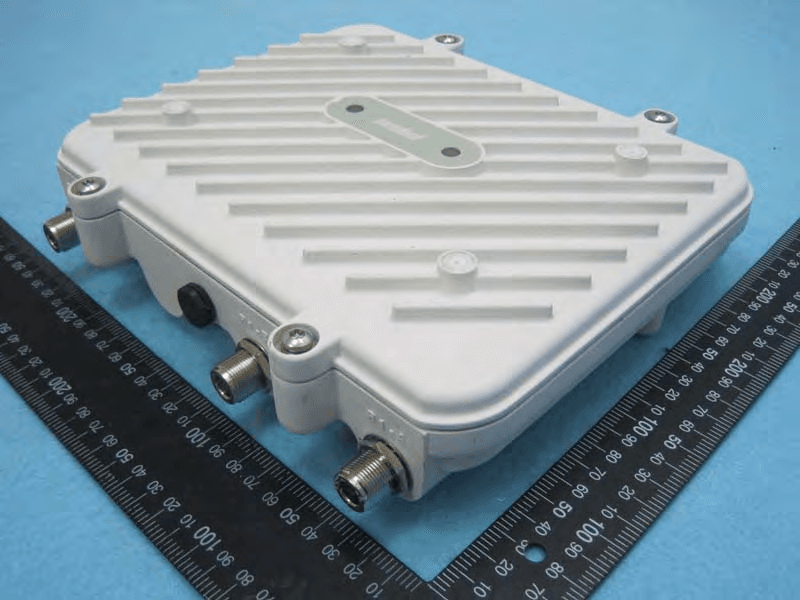
H9PAP7562
May 10, 2015802.11 abgn/ac Access Point
Equipment Class
DTS - Digital Transmission System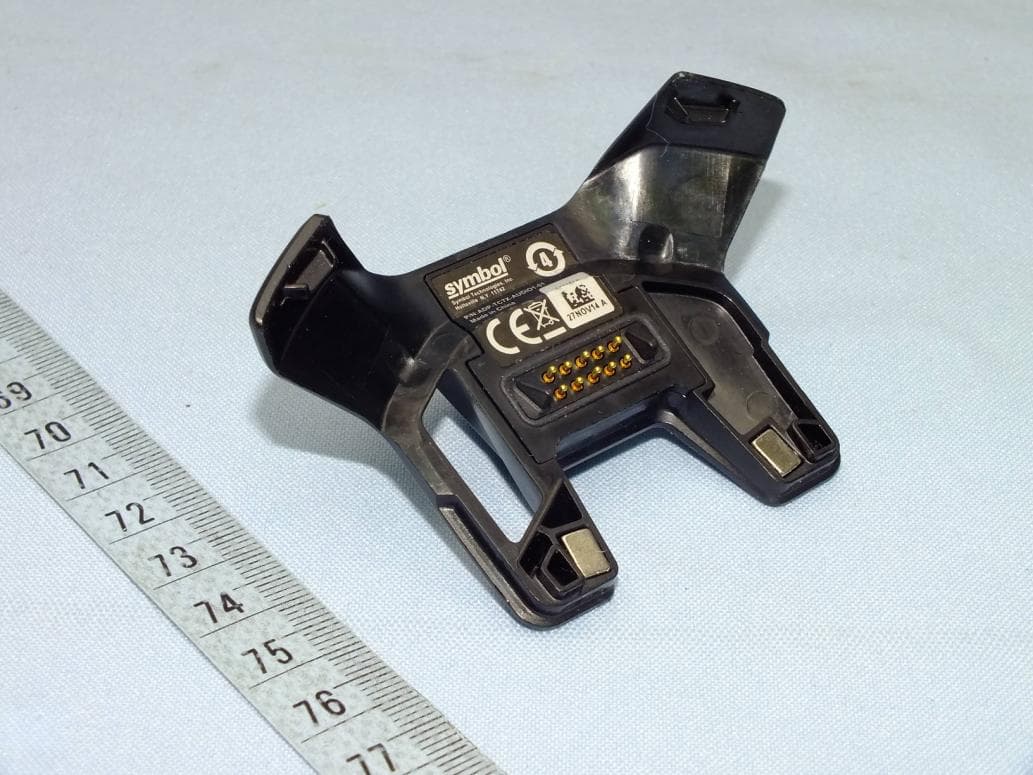
H9PTC75AH
Mar 26, 2015Touch Computer
Equipment Class
NII - Unlicensed National Information Infrastructure TX
H9PRA1202
Sep 24, 2014UHF Narrowband Radio Module
Equipment Class
TNB - Licensed Non-Broadcast Station Transmitter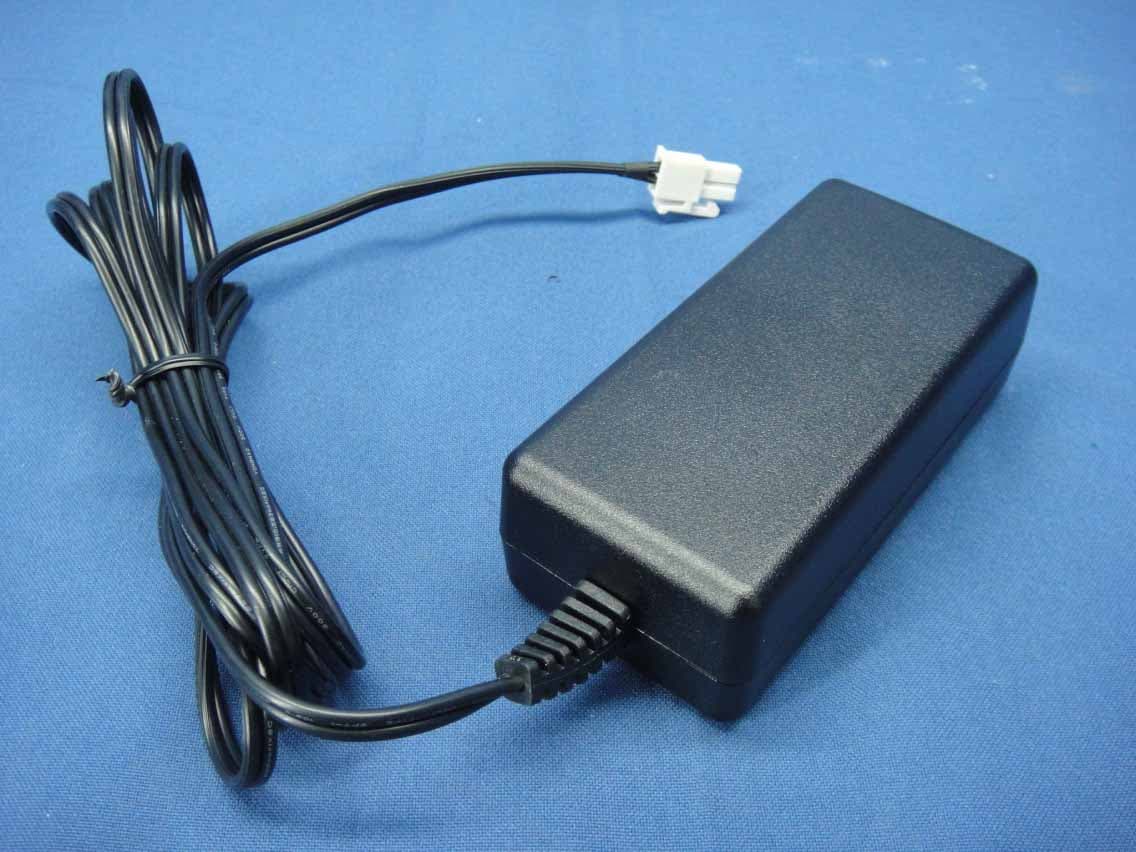
H9PEMG101
Aug 26, 2014802.15.4 Gateway
Equipment Class
DTS - Digital Transmission System