H9PNP4046WLAN DS Radio Phone
Symbol Technologies Inc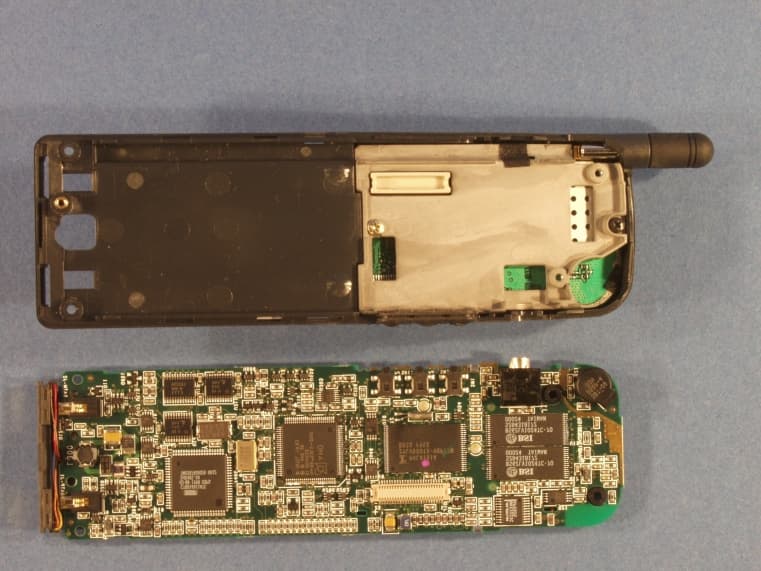
Click to zoom
Application Details
- Equipment Class
- DSS - Part 15 Spread Spectrum Transmitter
- Date of Grant
- Jun 25, 2001
- Application Purpose
- Original Equipment
- Date of Application
- Dec 17, 2000
- Equipment Note
- WLAN DS Radio Phone
- Frequency Range
- 2412.00000000 - 2462.00000000
- Company
- Symbol Technologies Inc
- Country
- United States
Documents & Files
Document Text
Text extracted from the exhibit documents filed with the FCC. Open a document above to read the original.
Users Manual
Setting up the Phone1. Press MENU.2. Scroll down to using the #> key to System Setup , press SND. 3. Press SND when the screen highlights Network . 4. For Net ID , enter the S24 AP Net_ID, press SND. 5. For IP Address , enter the IP address assigned to Phone, press SND. To write over existing IP addresses use CLR.6. For Subnet mask , enter the network subnet mask, press SND. 7. For the DFT GTW ADR (default gateway address), enter the IP gateway address used to access the phone systems and gatekeeper, press SND.8. For the POTS GTW ADR (plain old telephone service gateway address), enter the IP gateway address for accessing POTS lines directly, press SND.9. For the FTP IP ADR (FTP IP address), enter the IP FTP server address from which the phone can download its configuration file. ((Press SND??))DialingThe NetVISION Phone features include dialing by:· a complete IP addressee entry· a partial IP addressee entry· an extension· a speed-dial key· a previous-number redial· names internally mapped to an IP address · dialing 9 to access an outside line.The dialing process begins by pressing any dialing-related key, including:· the numeric keys, *, and #· the RCL key· the scroll keys· the NAME key.To dial by extension number, enter the number and press SND. To dial by complete or partial IP Address, enter * followed by the IP address or last three digits, press SND. To use the redial feature, press RCL to display last number entered, press SND.To dial by name, press NAME. A list of names display on the screen. Scroll through the names until the desired name appears, press the Select or SND. If the user presses Select, the selected name and IP address display. Pressing SND, with or without first pressing Select, call setup processing begins. The user can move to names beginning with other letters by pressing a numeric key after pressing the NAME key. Cancel the dialing sequence at any time by pressing END. Speed Dial NumbersThe NetVISION Phone provides 100, two-digit speed-dial locations for frequently dialed numbers. To enter a speed-dial number, type in the number and press STO. Enter a two-digit access number, press STO. To use the speed dial numbers, press RCL and enter the two-digit access number. Press SND to dial a stored number.Receiving callsThe NetVISION phone provides three methods to respond to a call:· Auto answer· Single key answer/refuse· Any key answerThe NetVISION Phone notifies users of incoming calls by sounding ringing tones. The caller name and address display on the phone screen. The user can refuse a call by pressing END. When refused, the call appears to the caller as unanswered.Users can configure the phone to answer calls automatically. The Auto Answer mode answers calls after a single ring. The call activates immediately.The Single-Key answer mode requires users to press the SND key to accept a call. Pressing any key other than END has no effect.The Any-Key answer mode allows users to press any key except END to accept a call. Setting User OptionsWhen selecting optional features, use SND as the enter key. Use END to scroll back one selection on the menu. To Navigate through the menus, use the *< Key to scroll up and #> to scroll down.Press the Menu key. A choice between User Options, Maintenance, System Setup and Mfg Test displays. Select User Options, press SND. To access specific user options, highlight a selection and press SND.User Options include:· Phone Ring: a choice between six tones, vibration or LED display.· Phone Aswr: set the phone to answer automatically (Auto), by pressing one key (SND), or pressing any key.· Ring Volume: press *< to turn the ringer volume down. Press #> to turn the ringer volume up.· Play Volume: set volume level press *< to turn down #> to turn up.· Contrast: press *< to turn the contrast down. Press #> to turn the contrast up.· Clear SD: clear speed dial numbers programmed into the phone. Push SND to select. The system prompts the user to indicate if clearing the speed dial is correct. Press SND again to clear speed-dial numbers.Broadcast/Intercom ModeThe Phone supports broadcast or intercom-style calls. In this mode, the user can send a message to several other phones. ((How many??)) The message transmits immediately to the intended receivers. Configureeach receiving Phone to allow broadcast messages to preempt existingcalls if desired.Multiple ConversationsThe Phone supports two concurrent conversations. The user can switch between calls using the HOLD key.The user can put onecaller on hold whileplacing another call. Phone Features· Three-line display · Headset port· Ear tone for call waiting/incoming call· Ringer on/off switch· Vibrating, visual and audio ring signals· Volume control· Call forwarding/transfer· Redial key· Roaming· External calls using gateway· Unidirectional broadcast message· Paging· Dial by name· Speed dial/address book· External serial port· Caller ID· Battery strength meter· Signal strength meterAlpha KeysFCT Key: ((TBD??)) MENU Key: access set up. RCL Key: functions as a speed dial and redial key, listing the last eight numbers dialed. NAME Key: used to access the directory for dialing by name.CLR Key: deletes previous entered characters. Press and hold for two seconds and entire entry deletes. STO Key: used to store numbers in the Recall function. HOLD key : used to put the caller on hold, and call waiting access. Getting StartedThe battery included with the NetVISION Phone needs to be charged. Charge the battery using the dual-slot charging cradle accompanying the Phone before engaging in continuous use.((Does the battery come attached and fully charged??))Charging the BatteryThe charging cradle allows users to charge the battery separately or while attached to the phone. The cradle recharges one battery at a time. For the quickest charge, remove the battery from the Phone and place in the rear slot of the cradle. The red LED indicator lights while the battery charges. The green LED indicator lights for a full…
Text truncated - open the document above for the full version.
Users Manual
Declaration of Conformity BABT, Claremont House, 34 Molesey Road, Walton-on-Thames, K T12 4RQ We, Symbol Technologies Inc. of One Symbol Plaza, Holtsville, NY 11742-1300, USA declare under our sole responsibility that the product To which this product relates, is in conformity with the following standards and/or other normative documents . ETS 300 328 (November 1996) Radio; Wideband 2.4GHz Spread Spectrum ETS 300 826 (November 1997) EMC: 2.4GHz wideband transmission systems EN 60950: 1992 Incl Amdt 1-4, 11 - Safety of Information Technology Equipment We hereby declare that all essential radio test suites have been carried out and that the above named product is in conformity to all the essential requirements of Directive 1999/5/EC . The conformity assessment procedure referred to in Article 10(5) and detailed in Annex IV of Directive 1999/5/EC has been followed with the involvement of the following Notified Body(ies): Identification mark : 0168 The equipment also carries the Class 2 equipment identifier The technical documentation relevant to the above equipment can be made available for inspection on application to: Symbol Technologies EMEA, Symbol Place, Winnersh Triangle, Berkshire, RG 41 5TP, UK Dornu Narnor Senior Director, Regulatory 7 September 2000 (name) (title) (signature of authorised person) (date) Inside North America, contact Symbol at: Symbol Technologies, Inc. One Symbol Plaza, Holtsville, New York 11742-1300 Telephone: 1-516-738-2400/1-800-SCAN 234; Fax: 1-516-738-5990 Symbol Support Center: Telephone: 1-800-653-5350; Fax: (516) 563-5410; Email: [email protected] International Contacts Outside North America, contact Symbol at: Symbol Technologies Technical Support 12 Oaklands P ark; Berkshire, RG41 2FD, United Kingdom Tel: 011-44-118-945-7000 or 1-516-738-2400 ext. 6213 Customer Support North American Contacts Symbol T echnologies is committed to providing its customers with world -c lass customer service and technical support. The Symbol Support Center operates as the single point of contact for any technical problem, question or support issue. The Support Center operates all year, 24 hours a day, staffed by full-time professional Technical Specialists. If Symbol cannot solve the problem immediately within its tiered, technical-support center, access to all technical disciplines within Symbol become available for further assistance email, fax or telephone. and support. F . Responses by irst response/contact within 24 hours or one business day NetVision DP-4046, 11 Mbps Radio IP Communicator with Barcode reader NetVision NV-4046, 11 Mbps Radio IP Communicator Declaration of Conformity BABT, Claremont House, 34 Molesey Road, Walton-on-Thames, K T12 4RQ We, Symbol Technologies Inc. of One Symbol Plaza, Holtsville, NY 11742-1300, USA declare under our sole responsibility that the product To which this product relates, is in conformity with the following standards and/or other normative documents . ETS 300 328 (November 1996) Radio; Wideband 2.4GHz Spread Spectrum ETS 300 826 (November 1997) EMC: 2.4GHz wideband transmission systems EN 60950: 1992 Incl Amdt 1-4, 11 - Safety of Information Technology Equipment We hereby declare that all essential radio test suites have been carried out and that the above named product is in conformity to all the essential requirements of Directive 1999/5/EC . The conformity assessment procedure referred to in Article 10(5) and detailed in Annex IV of Directive 1999/5/EC has been followed with the involvement of the following Notified Body(ies): Identification mark : 0168 The equipment also carries the Class 2 equipment identifier The technical documentation relevant to the above equipment can be made available for inspection on application to: Symbol Technologies EMEA, Symbol Place, Winnersh Triangle, Berkshire, RG 41 5TP, UK Dornu Narnor Senior Director, Regulatory 7 September 2000 (name) (title) (signature of authorised person) (date) Inside North America, contact Symbol at: Symbol Technologies, Inc. One Symbol Plaza, Holtsville, New York 11742-1300 Telephone: 1-516-738-2400/1-800-SCAN 234; Fax: 1-516-738-5990 Symbol Support Center: Telephone: 1-800-653-5350; Fax: (516) 563-5410; Email: [email protected] International Contacts Outside North America, contact Symbol at: Symbol Technologies Technical Support 12 Oaklands P ark; Berkshire, RG41 2FD, United Kingdom Tel: 011-44-118-945-7000 or 1-516-738-2400 ext. 6213 Customer Support North American Contacts Symbol T echnologies is committed to providing its customers with world -c lass customer service and technical support. The Symbol Support Center operates as the single point of contact for any technical problem, question or support issue. The Support Center operates all year, 24 hours a day, staffed by full-time professional Technical Specialists. If Symbol cannot solve the problem immediately within its tiered, technical-support center, access to all technical disciplines within Symbol become available for further assistance email, fax or telephone. and support. F . Responses by irst response/contact within 24 hours or one business day NetVision DP-4046, 11 Mbps Radio IP Communicator with Barcode reader NetVision NV-4046, 11 Mbps Radio IP Communicator Regulatory Compliance Symbol RF products are designed to be compliant with the rules and regulations in the locations into which they are sold and will be labeled as required. The majority of Symbol RF devices are type approved and do not require the user to obtain license or authorization before using the equipment. Any changes or modification to Symbol Technologies equipment not expressly approved by Symbol Technologies could void the user authority to operate the equipment. Radio Frequency Interference Requirements This device has been tested and found to comply with the limits for a Class A digital device pursuant to Part 15 of the Federal Communications Commissions Rules and Regulation. These limits are designed to provide reasonable pro…
Text truncated - open the document above for the full version.
Attestation Statements
Manufacturer’s Certification Declaration of Conformity Standard to which conformity is declared: FCC Part 15 Subpart B Class B Manufacturer/Importer’s Information Name: Symbol Technologies, Inc. Address: 6480 Via Del Oro San Jose, CA 95119-1208 Telephone Number: 408-528-2600 Equipment Information Type of Equipment: 2.4 GHz Spread Spectrum Transceiver Trade Name: Spectrum 24 NetVision Phone Model Number: NP4026 Test Report Reference: J20029320 I, the undersigned, herby declare that the equipment specified above conforms to Part 15 of the FCC Rules. (Signature) Norman H. Nelson, Sr. EMC Engineer (Name & Title) November 30, 2000 (Date) Manufacturer’s Certification Declaration of Conformity Standard to which conformity is declared: FCC Part 15 Subpart B Class B Manufacturer/Importer’s Information Name: Symbol Technologies, Inc. Address: 6480 Via Del Oro San Jose, CA 95119-1208 Telephone Number: 408-528-2600 Equipment Information Type of Equipment: 2.4 GHz Spread Spectrum Transceiver Trade Name: Spectrum 24 NetVision Data Phone Model Number: DP4026 Test Report Reference: J20029320 I, the undersigned, herby declare that the equipment specified above conforms to Part 15 of the FCC Rules. (Signature) Norman H. Nelson, Sr. EMC Engineer (Name & Title) November 30, 2000 (Date)
Cover Letter(s)
Network Systems Organization Norman H. Nelson Symbol Technologies, Inc. 6480 Via Del Oro Federal Communications Commission San Jose, CA 95119-1208 Equipment Approval Services Voice: (408) 528-2649 P.O. Box 358315 FAX: (408) 528-2740 Pittsburgh, PA 15251-5315 [email protected] Re: Certification request for the Symbol model DM4046 WLAN DS Radio Module Date: December 18, 2000 To The Commission: This certification request is for the Spectrum 24 model DM4046 WLAN DS Radio Module. The DM4046 is a 2.4 GHz direct sequence IEEE 802.11 compliant transceiver. The DM4046 is configured in a form factor for installation into two different models of Voice Over IP wireless phones. This request is for Limited Modular Approval of a Part 15 transmitting device operating under 15.247(c) and its associated antennas. Symbol is requesting a Limited Modular Approval for this device. This device meets seven of the eight requirements for modular approval. This device does not meet requirement #3 for onboard voltage regulation. This device will only be installed into end products with the necessary voltage regulation to ensure that the end product remains compliant. Symbol Technologies, Inc. manufactures information systems that are employed in commercial establishment to assist in controlling inventory. Spectrum 24 is a Wireless Local Area Network (WLAN) used along with hand held computers to assist in information collection typically in retail stores, warehouses, and factories. The following files are electronically submitted as attachments. Exhibit Type File Name Confidential Block Diagram ------------------------------------DM4046 Blk Dia.pdf X Cover Letters: -------------------------------------DM4046 Cover Letter.pdf Attestation Statements ---------------------------DM4046 DOC.pdf External Pictures ----------------------------------DM4046 Ext Pics.pdf Internal Pictures -----------------------------------DM4046 Int Pics.pdf ID Label/Location Info --------------------------DM4046 Label.pdf Operational Description -------------------------DM4046 OpDesc.pdf X RF Exposure ---------------------------------------DM4046 RF Exposure.pdf Schematics -----------------------------------------DM4046 Schem.pdf X Test Report Photos -------------------------------DM4046 Test Report Photos.pdf Test Report Plots----------------------------------DM4046 Test Report Plots.pdf Test Report-----------------------------------------DM4046 Test Report.pdf User Manual ---------------------------------------DP4046 User Man.pdf Note that the RF Exposure contains all of the antenna information. There are 3 antennas included in this submission. The radio board is used in two wireless voice communication devices. One of them uses one antenna and the other uses the remaining two antennas. Symbol Technologies, Inc. ("Symbol"), requests that the Block Diagram, Schematics, and Operational Description Exhibits of the above referenced application be withheld from routine availability for public DM4046 Cover Letter.doc Page 2 of 2 inspection pursuant to Section 0.459 of the Commissions Rules and Freedom of Information Act ("FOIA") Exemption 4, 5 U.S.C. 552(b)(4). These exhibits consist of "trade secrets [or] commercial or financial information obtained from a person and privileged or confidential", 5 U.S.C. 552(b)(4), and is therefore entitled to protection from disclosure under FOIA. The documents in question contain trade secrets: detailed technical descriptions, specifications and schematics for a product to be offered for sale. These materials provide particulars on the product design that can be ascertained from inspection of the product itself only with extraordinary expenditures of time and effort, if at all. This information would give Symbol's would-be competitors an unearned and unwarranted competitive advantage. Moreover, the documents contain "commercial information" within the scope of FOIA Exemption 4. This information is the product of Symbol's investment of money, personnel, and other resources. The result of that investment is a fairly earned position in the marketplace. Premature release of the information threatens substantial and unwarranted harm to Symbol's competitive position. For these reasons, Symbol has taken pains to keep this technical information confidential, and intends to continue doing so. Symbol customarily withholds this information from persons outside the employ of Symbol and certain of its suppliers and contractors, and even within these groups routinely limits access to persons having a particular need for the information. If the Commission were to make these documents public, it would be giving away hard won fruits of Symbol's labors without compensation. The filing fee required for this request is submitted by credit card account as entered on Form 159 mailed under separate cover. If there are any questions about this request, please call me at the number above. Thank you for your attention. Respectfully submitted, Norman H. Nelson
Cover Letter(s)
FccID:H9PDM4046Data Phone DS Module Conf Num: EA99556 Original Equip. Corespondence # 18031 Date Emailed: 2/8/01 1 Question Provide photo's of both of the devices that the device will be installed into. Answer: The device photos are loaded as NP4046 photos.pdf and DP4046 photos.pdf as External Photos 2 Question Provide a cover letter justifying modular approval. Answer: The LMA request letter is loaded. 3 Question Provide process gain data at the highest data rate for each chip/symbol ratio. What are the data rates and chip/symbol ratios? Do not submit copies of process gain data unless you verify that the device is electrically identical to the device tested for Process gain measurements. Answer: The DM4046 RF and base band processing are identical to the LA4021 WLAN PC Card. The PCB layouts and parts are the same. I have loaded the processing gain test as a test report. 4 Question Provide the theoretical process gain (spread rate/data rate) for each data rate. Answer: Please see the loaded processing gain test report. 5 Question There are discrepancies regarding RF safety. The device is a portable device not a mobile device. Provide SAR data, user manual RF safety information. Provide the manual for each phone. Answer: The SAR reports are loaded. Both phone Quick Reference Guides are loaded. The regulatory addenum for the QRG's is loaded. 6 Question For both devices, do they have provisions for belt use, body worn use, accessories such as headphones etc... which will affect the SAR requirements other than use of the devices as a headphone? Submit the RF exhibits into the RF exposure info folder of the filing. Answer: The phones are for hand use and belt use. All configurations were tested for the SAR reports as listed therein. The belt clip assesory was used in the belt worn configuration. Page 1 of 1 Thursday, April 05, 2001 11:31 AM
Cover Letter(s)
Network Systems Organization Norman H. Nelson Symbol Technologies, Inc. 6480 Via Del Oro Federal Communications Commission San Jose, CA 95119-1208 Equipment Approval Services Voice: (408) 528-2649 P.O. Box 358315 FAX: (408) 528-2740 Pittsburgh, PA 15251-5315 [email protected] Re: Limited Modular Approval for the H9PDM4046 FCC ID: H9PDM4046 Date: April 4, 2001 To The Commission: I request that the Symbol Technologies model DM4046 be granted a Limited Modular Approval according to DA 00-1407 of June 26, 2000. This module meets the following requirements of DA 00-1407: 1) The module has its own shielding so that it does not rely on the installed device for emissions shielding and to prevent coupling between the RF circuitry of the module and any wires or circuits in the device into which the module is installed. 2) The module has buffered digital inputs. The buffering is performed by a custom ASIC chip. 3) The module does not have its own voltage regulation. This is why we are requesting a LMA. The module will only be installed in products that have the necessary voltage regulation circuitry. 4) The antenna couplings are unique. Either a special spring makes contact with the sleeve of the screw in stud antenna or a Hirose FL series coaxial connector is used. 5) The transmitter was tested in a stand-alone configuration. 6) The modular transmitter is labeled with its own FCC ID number. 7) The modular transmitter complies with the specific rules of Part 15.247. Symbol Technologies will only integrate this module so there are no instructions to be submitted. 8) The modular transmitter complies with any applicable RF exposure requirements. A SAR test report for all configurations is included with this application. Symbol Technologies, Inc. manufactures information systems that are employed in commercial establishment to assist in controlling inventory. Spectrum 24™ is a Wireless Local Area Network (WLAN) used along with hand held computers to assist in information collection typically in retail stores, warehouses, and factories. If there are any questions about this request, please call me at the number above. Thank you for your attention. Respectfully submitted, Norman H. Nelson
Cover Letter(s)
FccID:H9PNP4046DS NetVision® Phone Conf Num: EA99556 Original Equip. Corespondence # 19611 Date Emailed: 6/13/01 1 Question The request for change in FCC identifier must be submitted in the filing. Answer: Please change the FCC identifier from H9PDM4046 to H9PNP4046. 2 Question The label must be corrected and submitted. Answer: Please see the uploaded corrected label. 3 Question The the SAR report lists the "Stick on" antenna as 0 dBi while the latest exhibit lists it as 2 dBi. Answer: The SAR report is incorrect. The correct gain for the "Stick on" antenna is 2 dBi. 4 Question Indicate whether the device transmits simultaneously on both antennas when the "Stick on" antenna is installed. Answer: The device only transmits on one antenna at a time. 5 Question The RF safety needs revision. Remove the word Warning. Since SAR was tested, revise the statements to include only the following To comply with RF safety requrirements use the specific belt clip. All other belt clips should be avoided and may not comply with RF safety requirements. Answer: Please see the uploaded revised Regulatory Addendum. Page 1 of 1 Friday, June 15, 2001 01:54 PM
ID Label/Location Info
bar codeabc here MOD: <Model Number> SN: <Device Serial No.> MANUFACTURED: <Date> SEE USER GUIDE FOR PATENT INFORMATION This device complies with Part 15 of the FCC Rules and RSS-210 of Industry Canada. Operation is subject to the following two conditions: (1) this device my not cause harmful interference, and (2) this device must accept any interference received, including interference that may cause undesired operation. This Class B digital apparatus complies with Canadian ICES-003. Cet appareil numØrique de la classe B est comforme la norme NMB-003 du Canada. IEEE ADDRESS REF NO <MAC Address Number> CONTAINS FCC ID : H9PDM4046 CANADA ID : <Canadian Certification No.> NetVision® Phone Symbol Technologies, Inc. Holtsville, N.Y. MADE IN JAPAN LISTED ACCESSORY I.T.E. 9B97 C0168R N410 Proposed Device Label
ID Label/Location Info
bar codeabc here MOD: <Model Number> SN: <Device Serial No.> MANUFACTURED: <Date> SEE USER GUIDE FOR PATENT INFORMATION This device complies with Part 15 of the FCC Rules and RSS-210 of Industry Canada. Operation is subject to the following two conditions: (1) this device my not cause harmful interference, and (2) this device must accept any interference received, including interference that may cause undesired operation. This Class B digital apparatus complies with Canadian ICES-003. Cet appareil numØrique de la classe B est comforme la norme NMB-003 du Canada. IEEE ADDRESS REF NO <MAC Address Number> CONTAINS FCC ID : H9PNP4046 CANADA ID : <Canadian Certification No.> NetVision® Phone Symbol Technologies, Inc. Holtsville, N.Y. MADE IN JAPAN LISTED ACCESSORY I.T.E. 9B97 C0168R N410 Proposed Device Label
Internal Photos
FccID:H9PDM4046Data Phone DS Module Conf Num: EA99556 Original Equip. Corespondence # 18840 Date Emailed: 4/11/01 1) Question What is the FCC identifier for the LA4021 WLAN card? Confirm that they are the same exact transciever. Answer: The FCC ID is H9PLA4121. They are the same transciever. 1. The transmitters are the same. 2. The receivers are the same. The only difference between the devices are the outline of the PCB and parts of the digital control sections. Although the outline of the PCB is different the layer stackup and thicknesses are the same. I have included a picture of each transceiver so that you may compare them. The transceivers are within the shield frames. Page 1 of 1 Thursday, April 12, 2001 02:37 PM
RF Exposure Info
Network Systems Organization RF Exposure Antenna Summary FCC ID: H9PDM4046 Original Equip.Data Phone DS Module Output Power: 145 Portable DC Factor: 0.108 mW Mobile DC Factor: 1.000 Source Based Portable Antennas (R < 5cm) Ant No Model Symbol P/N Gain (dBi) Cabel Loss (dB) Pout (dBm) EIRP (mW) TR Status Device Type Type 01. Phone Stud 50-21900-043 2.0 0.00 21.61 24.7 Tested Mono p ole Hand Set 02. Phone PCB 50-21900-045 2.0 0.18 21.43 23.7 Tested Di p ole Hand Set 03. Phone Stickon 50-21900-044 2.0 0.22 21.40 23.5 Tested Di p ole Hand Set Antenna Gain listed without cableTR Status refers to weither the antena was tested. If not refer to the directed antenna test data Page 1 of 1 Thursday, December 21, 2000 02:26 P M Duty Cycle Factors are applied to MPE and EIRPTx Limited configurations are for low power versionsof the radio. See the specific antenna exhibit for detail Network Systems Organization RF Exposure Configuration Summary FCC ID: H9PDM4046 Original Equip.Data Phone DS Module Output Power: 145 mW Antenna Model Ant # Terminal Mfgr. Terminal Model Use 1S y mbol NP-4026 Hand Set Phone Stud 2S y mbol DP-4026 Hand Set Phone PCB 3S y mbol DP-4026 Hand Set Phone Stickon Thursday, December 21, 2000 Page 1 of 1 5- R < 5 cm5+ 5 cm < R < 20 cmOcp Ocupational Mobile & Wireless Systems Phone Stud Rev 1 Phone Stud Antenna The Phone Stud antenna is 2 dBi omni- directional in azimuth plane. It is mounted externally as shown in the attached photo. The Phone Stud uses a screw mount with a copper spring contact In its use it is 2.3 cm from the operators head. It is used in mobile devices. Antenna Photo Location Phone Handset Pattern Omni Type Monopole Max Gain 2 dBi Physical 1.33” x 0.28” Cable N/A Symbol P/N 50-21900-043 Mobile & Wireless Systems Phone Stud Rev 1 Antenna installed in NP4046 Voice communication device Mobile & Wireless Systems Phone Stud Rev 1 NP4046 Use Photo Mobile & Wireless Systems Phone PCB Rev 1 Phone PCB Ant enna The Phone PCB antenna is 2 dBi omni- directional in azimuth plane. It is mounted internally as shown in the attached photo. The Phone PCB uses a Hirose FL series connector. In use it is 1.5 cm from a users head. It is used in mobile devices. Antenna Photo Location Phone Handset Pattern Omni Type Dipole Max Gain 2 dBi Physical 1.5” x 0.3” Cable CO-6F-DSB- CX501X32AWG Symbol P/N 50-21900-045 Mobile & Wireless Systems Phone PCB Rev 1 Antenna installed in DP4046 Voice communication device DP4046 Use Photo Mobile & Wireless Systems Phone Stick On Rev 1 Phone Stick On Antenna The Phone Stick On antenna is 2 dBi omni-directional in azimuth plane. It is mounted internally as shown in the attached photo. The Phone Stick On uses a Hirose FL series connector. In use it is 3.4 cm from the users head. It is used in mobile devices. Antenna Photo Location Phone Handset Pattern Omni Type Dipole Max Gain 2 dBi Physical 2.12” x 0.2” Cable CO-6F-DSB- CX501X32AWG Symbol P/N 50-21900-044 Mobile & Wireless Systems Phone Stick On Rev 1 Antenna installed in DP4046 Voice communication device DP4046 Use Photo Network Systems Organization Norm Nelson, Sr. EMC Engineer Page 1 of 2 11/22/00 Duty Cycle Calculations The maximum duty cycle of a 802.11 compliant transmitter is dependent on the data rate and the processing speed of the device the transmitter is installed in. The duty cycle is the ratio of the maximum transmitter on time divided by the total cycle time which is composed of the maximum on time and the minimum off time. The maximum on time is dependent on the data rate. The 802.11 spec mandates what the maximum data payload for a packet may be. The data pay load along with packet addressing and other network overhead information determine the maximum size of a packet. The maximum transmitter on time is the longest time that it will take the radio to transmit the packet. In the case of Symbol’s Spectrum 24 products the 1 Mbps data rate is the slowest. For the cycle time the minimum off time consists of an acknowledgement from the receiver, the shortest carrier sense time and the shortest packet construction time. The acknowledgment an…
Text truncated - open the document above for the full version.
Contact Information
Applicant
Qianlin Zhou(Regulatory Specialist)
Technical Contact
Symbol Tecchnologies, Inc.Norman H Nelson
[email protected]408-528-2649
6480 Via Del Oro Drive · San Jose, California · United States
Test Firm
Intertek Testing Services NA Inc.John Quigley
Technical Specifications
| # | Rule Parts | Frequency Range | Power Output | Tolerance |
|---|---|---|---|---|
| 1 | 15C | 2.41 GHz - 2.46 GHz | 145.00 mW | ppm |
Other Applications from Symbol Technologies Inc

H9PCCHUB1
Jun 30, 2015Customer Concierge
Equipment Class
NII - Unlicensed National Information Infrastructure TX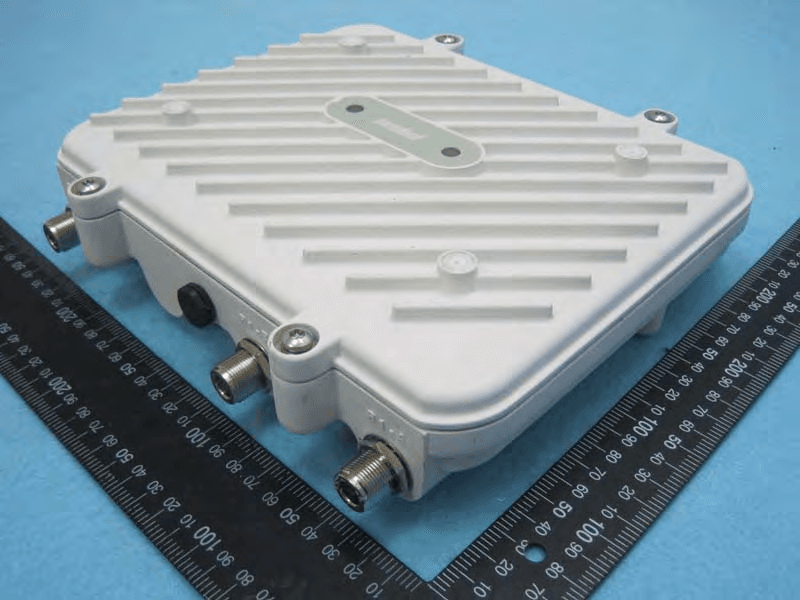
H9PAP7562
May 10, 2015802.11 abgn/ac Access Point
Equipment Class
DTS - Digital Transmission System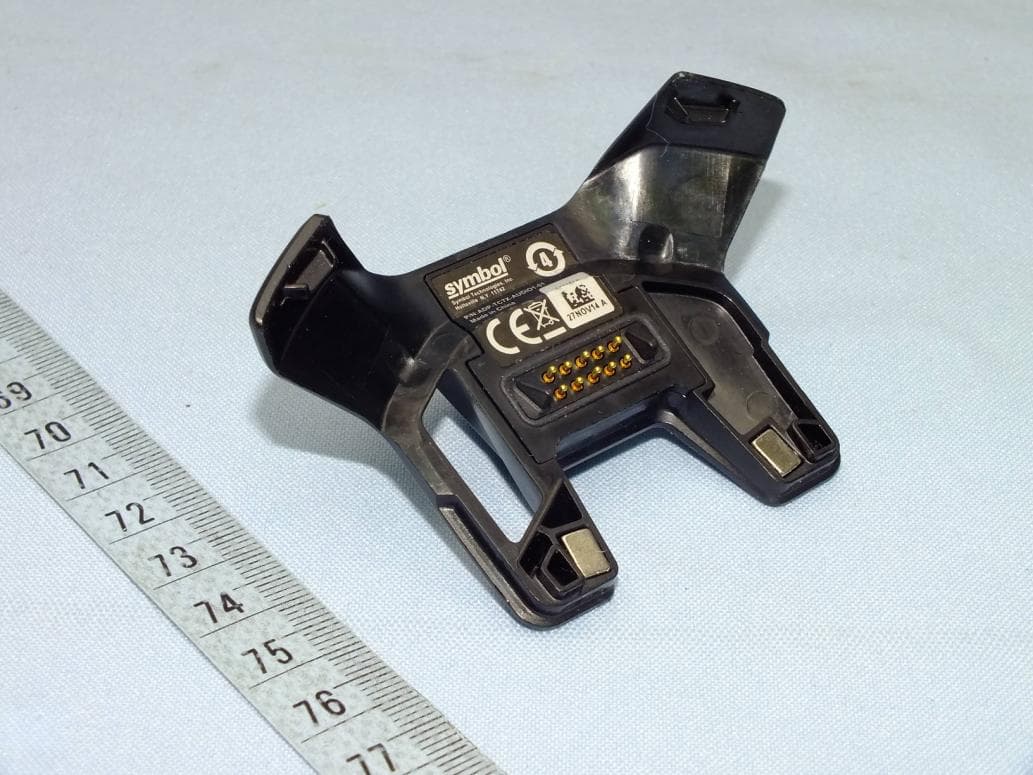
H9PTC75AH
Mar 26, 2015Touch Computer
Equipment Class
NII - Unlicensed National Information Infrastructure TX
H9PRA1202
Sep 24, 2014UHF Narrowband Radio Module
Equipment Class
TNB - Licensed Non-Broadcast Station Transmitter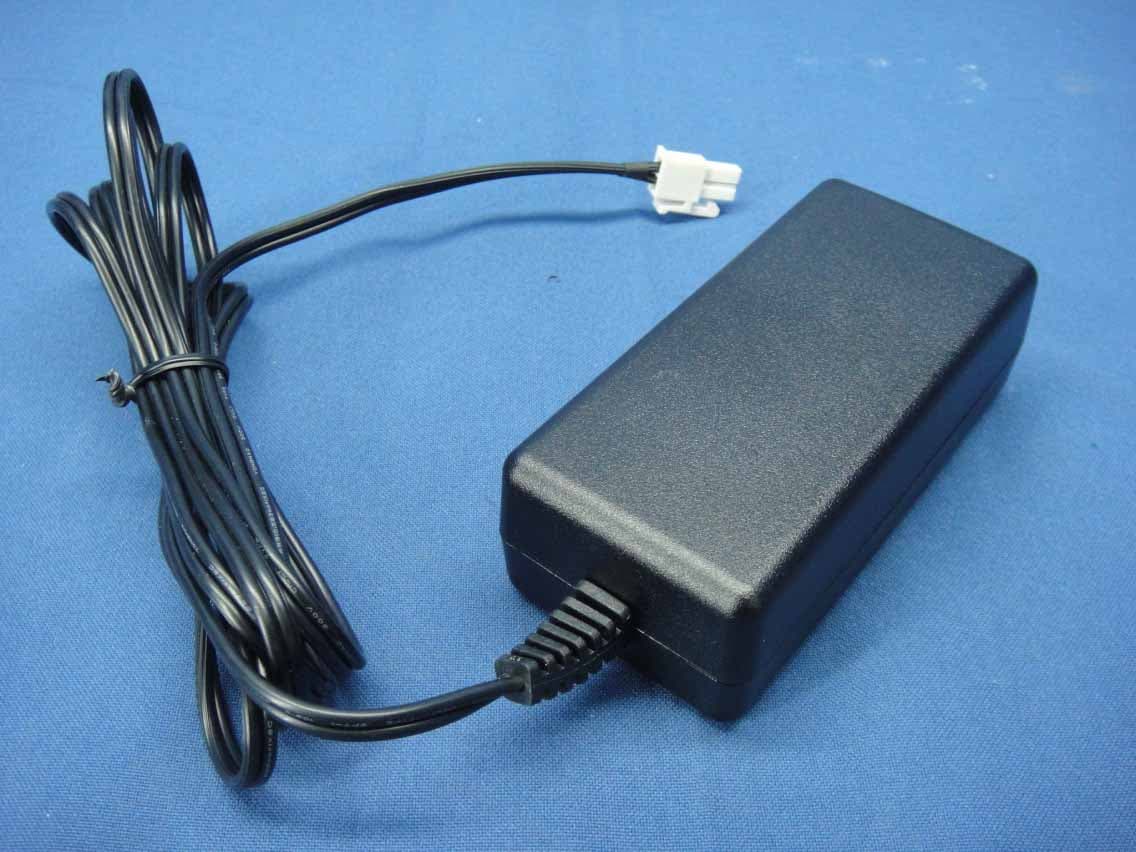
H9PEMG101
Aug 26, 2014802.15.4 Gateway
Equipment Class
DTS - Digital Transmission System