H9PPDT81381900 MHz CDMA Packet PC
Symbol Technologies Inc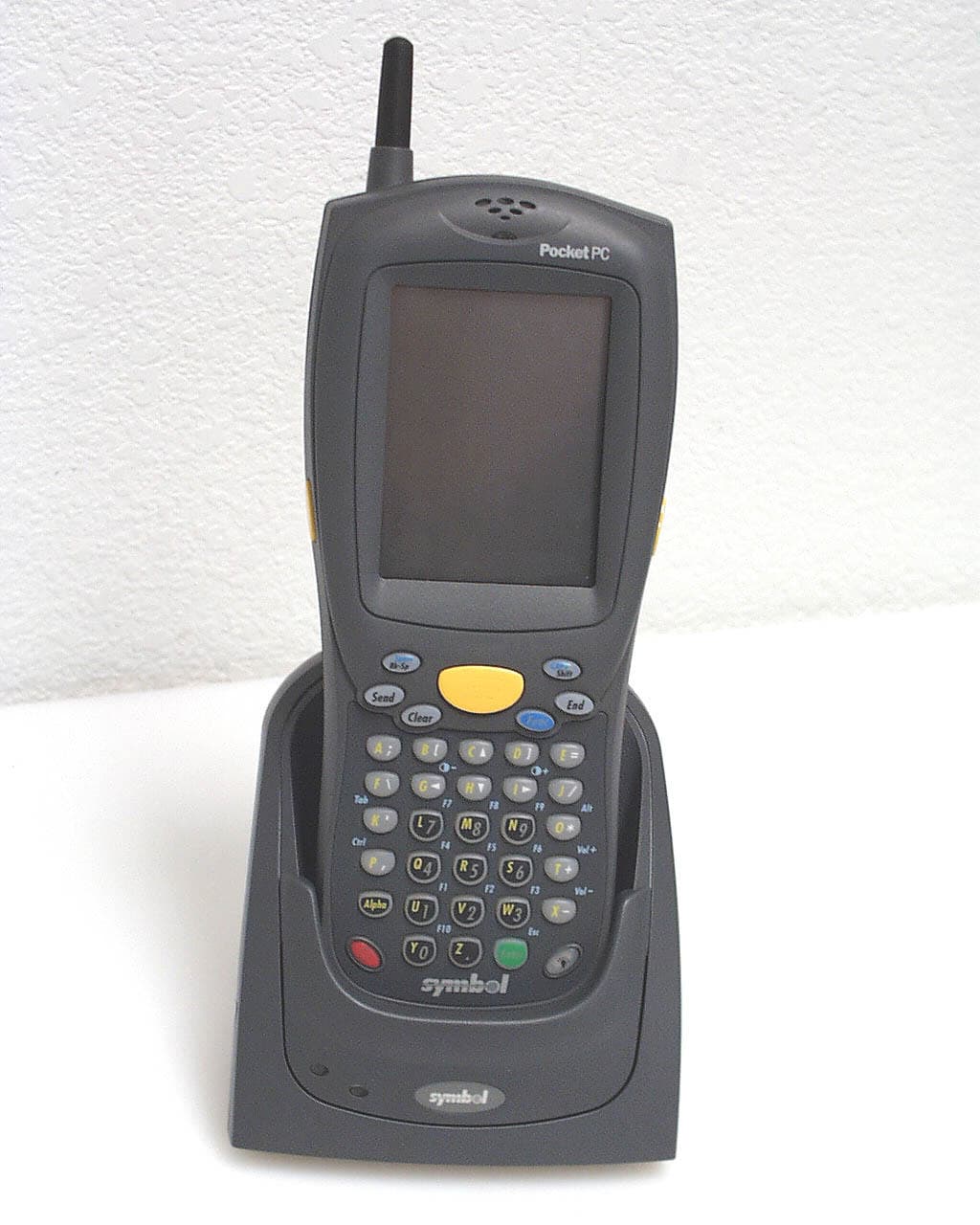
Click to zoom
Application Details
- Equipment Class
- PCT - PCS Licensed Transmitter worn on body
- Date of Grant
- Aug 07, 2003
- Application Purpose
- Original Equipment
- Date of Application
- Aug 07, 2003
- Equipment Note
- 1900 MHz CDMA Packet PC
- Frequency Range
- 1851.25000000 - 1908.75000000
- Company
- Symbol Technologies Inc
- Country
- United States
Documents & Files
Document Text
Text extracted from the exhibit documents filed with the FCC. Open a document above to read the original.
Users Manual
P D T 8 1 3 8 f o r P o c k e t P C 2 0 0 2 Quick Reference Guide P D T 8 1 0 0 S e r i e s P D T 8 1 3 8 f o r P o c k e t P C 2 0 0 2 © 2001 - 2003 SYMBOL TECHNOLOGIES, INC. All rights reserved. Symbol reserves the right to make changes to any product to improve reliability, function, or design. Symbol does not assume any product liability arising out of, or in connection with, the application or use of any product, circuit, or application described herein. No license is granted, either expressly or by implication, estoppel, or otherwise under any patent right or patent, covering or relating to any combination, system, apparatus, machine, material, method, or process in which Symbol products might be used. An implied license only exists for equipment, circuits, and subsystems contained in Symbol products. Symbol and the Symbol logo are registered trademarks of Symbol Technologies, Inc. Other product names mentioned in this manual may be trademarks or registered trademarks of their respective companies and are hereby acknowledged. Symbol Technologies, Inc. One Symbol Plaza Holtsville, N.Y. 11742-1300 http://www.symbol.com Patents This product is covered by one or more of the following U.S. and foreign Patents: U.S. Patent No. 4,593,186; 4,603,262; 4,607,156; 4,652,750; 4,673,805; 4,736,095; 4,758,717; 4,760,248; 4,806,742; 4,816,660; 4,845,350; 4,896,026; 4,897,532; 4,923,281; 4,933,538; 4,992,717; 5,015,833; 5,017,765; 5,021,641; 5,029,183; 5,047,617; 5,103,461; 5,113,445; 5,130,520; 5,140,144; 5,142,550; 5,149,950; 5,157,687; 5,168,148; 5,168,149; 5,180,904; 5,216,232; 5,229,591; 5,230,088; 5,235,167; 5,243,655; 5,247,162; 5,250,791; 5,250,792; 5,260,553; 5,262,627; 5,262,628; 5,266,787; 5,278,398; 5,280,162; 5,280,163; 5,280,164; 5,280,498; 5,304,786; 5,304,788; 5,306,900; 5,324,924; 5,337,361; 5,367,151; 5,373,148; 5,378,882; 5,396,053; 5,396,055; 5,399,846; 5,408,081; 5,410,139; 5,410,140; 5,412,198; 5,418,812; 5,420,411; 5,436,440; 5,444,231; 5,449,891; 5,449,893; 5,468,949; 5,471,042; 5,478,998; 5,479,000; 5,479,002; 5,479,441; 5,504,322; 5,519,577; 5,528,621; 5,532,469; 5,543,610; 5,545,889; 5,552,592; 5,557,093; 5,578,810; 5,581,070; 5,589,679; 5,589,680; 5,608,202; 5,612,531; 5,619,028; 5,627,359; 5,637,852; 5,664,229; 5,668,803; 5,675,139; 5,693,929; 5,698,835; 5,705,800; 5,714,746; 5,723,851; 5,734,152; 5,734,153; 5,742,043; 5,745,794; 5,754,587; 5,762,516; 5,763,863; 5,767,500; 5,789,728; 5,789,731; 5,808,287; 5,811,785; 5,811,787; 5,815,811; 5,821,519; 5,821,520; 5,823,812; 5,828,050; 5,848,064; 5,850,078; 5,861,615; 5,874,720; 5,875,415; 5,900,617; 5,902,989; 5,907,146; 5,912,450; 5,914,478; 5,917,173; 5,920,059; 5,923,025; 5,929,420; 5,945,658; 5,945,659; 5,946,194; 5,959,285; 6,002,918; 6,021,947; 6,029,894; 6,031,830; 6,036,098; 6,047,892; 6,050,491; 6,053,413; 6,056,200; 6,065,678; 6,067,297; 6,082,621; 6,084,528; 6,088,482; 6,092,725; 6,101,483; 6,102,293; 6,104,620; 6,114,712; 6,115,678; 6,119,944; 6,123,265; 6,131,814; 6,138,180; 6,142,379; 6,172,478; 6,176,428; 6,178,426; 6,186,400; 6,188,681; 6,209,788; 6,209,789; 6,216,951; 6,220,514; 6,243,447; 6,244,513; 6,247,647; 6,308,061; 6,250,551; 6,295,031; 6,308,061; 6,308,892; 6,321,990; 6,328,213; 6,330,244; 6,336,587; 6,340,114; 6,340,115; 6,340,119; 6,348,773; 6,380,949; 6,394,355; D305,885; D341,584; D344,501; D359,483; D362,453; D363,700; D363,918; D370,478; D383,124; D391,250; D405,077; D406,581; D414,171; D414,172; D418,500; D419,548; D423,468; D424,035; D430,158; D430,159; D431,562; D436,104. Invention No. 55,358; 62,539; 69,060; 69,187, NI-068564 (Taiwan); No. 1,601,796; 1,907,875; 1,955,269 (Japan); European Patent 367,299; 414,281; 367,300; 367,298; UK 2,072,832; France 81/03938; Italy 1,138,713 rev. 06/02 P D T 8 1 0 0 S e r i e s 1 Introduction Congratulations on your purchase of Symbol Technologies’ PDT 8138 Terminal! Its unique combination of features make this product superior for use in a wide range of applications. These features include: • Personal Information Management software • Microsoft® Windows® Pocket PC 2002 operating system • RF communication via wide area network • Color TFT LCD display • 28-key, 37-key, or 47-key keyboard • Touch screen • Printing support • IrDA-compliant interface for printing and communications. About This Guide This guide describes how to set up and use the terminal. The term PDT 8138 refers to the WAN version of the PDT8100 series terminal. Specific topics covered include: • Parts of the PDT 8138 on page 3 • Getting Started on page 6 • Inserting a Compact Flash Card on page 6 • Removing a Compact Flash Card on page 7 • Installing the Battery on page 7 • Charging the Battery on page 8 • Attaching the Handstrap on page 10 • Starting the PDT 8138 on page 11 • Aligning the Screen on page 11 • Initiating a Network Connection on page 11 • Controlling the Backlight (Color TFT LCD) on page 12 • Using a Headset on page 12 • Using the Keyboard on page 12 • Using the Stylus on page 17 • Today Screen on page 17 • Navigation Bar and Command Bar on page 18 • Input Methods on page 19 • Scanning with the PDT 8138 on page 21 • Resetting Your PDT 8138 Terminal on page 22 • Host Communications on page 24 • Maintaining the PDT 8138 on page 24 • Troubleshooting on page 25 • ESN Number on page 35 P D T 8 1 0 0 S e r i e s 2 Accessories Each PDT 8138 requires one 1550 mAh lithium-ion battery. The following optional accessories are available from Symbol Technologies: • Additional lithium-ion battery • Stylus for performing pen functions • Cables: - Serial charging cable - DEX cable - Autocharge cable - Snap-on printer cable • Single-slot cradle • Four-slot cradle • Vehicle cradle • IrDA compliant printer • Magnetic stripe reader • Clip on modem module • Headset • Carrying case. P D T 8 1 0 0 S e r i e s 3 Parts of the PDT 8138 P D T 8 1 0 0 S e r i e s 4 Parts of the PDT 8138 (continued) P D T 8 1 0 0 S e r i e s 5 Parts of the PDT 8138 (continued) P D T 8 1 0 0 S e r i e s 6 Getting Started…
Text truncated - open the document above for the full version.
Users Manual
User’s Guide PCS Connection Card TM by Sierra Wireless AirCard ® 550 Copyright © 2002 Sprint Spectrum L.P. All rights reserved. No reproduction in whole or in part allowed without prior written approval. Sprint, the diamond logo and all other trademarks listed herein are registered trade marks of Sprint Communications Company, L.P., used under license. Table of Contents Welcome to Sprint . . . . . . . . . . . . . . . . . . . . . . . . . . . . . . . . . . . i Introduction to this User’s Guide. . . . . . . . . . . . . . . . . . . . . . iii SECTION 1: PCS Connection Card Basics . . . . . . . . . . . . . . . 1 1A. Introducing the PCS Connection CardTM . . . . . . . . . . . . . . . . . . . . . . . . . . . . . . . . . . . . . . . . . 3 Your PCS Connection Card. . . . . . . . . . . . . . . . . . . . . . . . . . . . . . . . . . . 4 CDMA Networks . . . . . . . . . . . . . . . . . . . . . . . . . . . . . . . . . . . . . . . . . . 4 A Network Card and a Phone . . . . . . . . . . . . . . . . . . . . . . . . . . . . . . . . . 5 Package Contents . . . . . . . . . . . . . . . . . . . . . . . . . . . . . . . . . . . . . . . . . . 5 About This Guide . . . . . . . . . . . . . . . . . . . . . . . . . . . . . . . . . . . . . . . . . . 6 1B. Getting StartedWith Your PCS Connection CardTM . . . . . . . . . . . . . . . . . . . . . . . . . . . . . . . . . . . . . . . . . 7 Getting Started . . . . . . . . . . . . . . . . . . . . . . . . . . . . . . . . . . . . . . . . . . . . 8 The PCS Connection Card Software . . . . . . . . . . . . . . . . . . . . . . . . . . . . 8 Activating and Using PCS Service . . . . . . . . . . . . . . . . . . . . . . . . . . . . . . 8 Care and Maintenance . . . . . . . . . . . . . . . . . . . . . . . . . . . . . . . . . . . . . 10 SECTION 2: Installing the PCS Connection Card. . . . . . . . . . . . . . . . . . . . . . . . . . . . . . . . 11 2A. Installation on Notebook PCs . . . . . . . . . . . . . . . . . . . . . . . . . . . . . . . . 13 Getting Started . . . . . . . . . . . . . . . . . . . . . . . . . . . . . . . . . . . . . . . . . . . 14 System Requirements . . . . . . . . . . . . . . . . . . . . . . . . . . . . . . . . . . . . . 14 Installing the PCS Connection ManagerSM Software (Windows 98 SE, Me, and 2000). . . . . . . . . . . . . . . . . . . . . . . . . . . . . . . . . . . . . . . . . . . . . . . . 15 Installing the PCS Connection Manager Software (Windows XP) . . . . 17 Inserting and Removing the PCS Connection Card . . . . . . . . . . . . . . . 19 Activating Your PCS Connection Card . . . . . . . . . . . . . . . . . . . . . . . . . 20 2B. Installation on Handheld and Pocket PCs . . . . . . . . . . . . . . . . . . . . . . 23 Getting Started . . . . . . . . . . . . . . . . . . . . . . . . . . . . . . . . . . . . . . . . . . . 24 System Requirements . . . . . . . . . . . . . . . . . . . . . . . . . . . . . . . . . . . . . 24 Installing the PCS Connection ManagerSM Software . . . . . . . . . . . . . 26 Inserting and Removing the PCS Connection Card . . . . . . . . . . . . . . . 28 Activating Your PCS Connection Card . . . . . . . . . . . . . . . . . . . . . . . . . 29 SECTION 3: Using the PCS Connection Card. . . . . . . . . . . . . . . . . . . . . . . . . . . . . . . . 33 3A. The PCS Connection ManagerSM Window and Indicators . . . . . . . 35 The PCS Connection Manager . . . . . . . . . . . . . . . . . . . . . . . . . . . . . . . 36 Starting the PCS Connection Manager Software . . . . . . . . . . . . . . . . . 36 Getting Help . . . . . . . . . . . . . . . . . . . . . . . . . . . . . . . . . . . . . . . . . . . . . 37 The PCS Connection Manager Window . . . . . . . . . . . . . . . . . . . . . . . . 37 Displaying the Menu Items . . . . . . . . . . . . . . . . . . . . . . . . . . . . . . . . 39 Keypad Button (Notebook / Handheld PCs) . . . . . . . . . . . . . . . . . . . 39 The Minimize and Close Buttons (Notebook / Handheld PC) . . . . 39 Message Area . . . . . . . . . . . . . . . . . . . . . . . . . . . . . . . . . . . . . . . . . . . 40 Indicator Area . . . . . . . . . . . . . . . . . . . . . . . . . . . . . . . . . . . . . . . . . . . 42 GO Button . . . . . . . . . . . . . . . . . . . . . . . . . . . . . . . . . . . . . . . . . . . . . 46 Taskbar Icons. . . . . . . . . . . . . . . . . . . . . . . . . . . . . . . . . . . . . . . . . . . . . 46 3B. Data Connections . . . . . . . . . . . . . . . . . . . . . . . . . . . . . . . . . . . . . . . . . . . 49 The Basics . . . . . . . . . . . . . . . . . . . . . . . . . . . . . . . . . . . . . . . . . . . . . . . 50 PCS Vision (High-Speed) Connections. . . . . . . . . . . . . . . . . . . . . . . . . 51 Dormant Connection . . . . . . . . . . . . . . . . . . . . . . . . . . . . . . . . . . . . . 52 3C. Voice Connections . . . . . . . . . . . . . . . . . . . . . . . . . . . . . . . . . . . . . . . . . . 53 Voice Connection Features . . . . . . . . . . . . . . . . . . . . . . . . . . . . . . . . . . 54 Using the Keypad. . . . . . . . . . . . . . . . . . . . . . . . . . . . . . . . . . . . . . . . . . 55 Outgoing Calls. . . . . . . . . . . . . . . . . . . . . . . . . . . . . . . . . . . . . . . . . . . . 59 Incoming Calls. . . . . . . . . . . . . . . . . . . . . . . . . . . . . . . . . . . . . . . . . . . . 60 Voicemail . . . . . . . . . . . . . . . . . . . . . . . . . . . . . . . . . . . . . . . . . . . . . . . . 61 3D. Menu Options . . . . . . . . . . . . . . . . . . . . . . . . . . . . . . . . . . . . . . . . . . . . . . 63 Overview of menu items . . . . . . . . . . . . . . . . . . . . . . . . . . . . . . . . . . . . 64 Web Messaging . . . . . . . . . . . . . . . . . . . . . . . . . . . . . . . . . . . . . . . . . . . 65 Reading Web Messages: The Inbox . . . . . . . . . . . . . . . . . . . . . . . . . . 65 Exiting the Web Messaging Window . . . . . . . . . . . . . . . . . . . . . . . . . 67 Phone Book (Notebook PC) . . . . . . . . . . . . . . . . . . . . . . . . . . . . . . . . . 67 Adding a Record to the Phone Book . . . . . . . . . . . .…
Text truncated - open the document above for the full version.
Cover Letter(s)
DATE: August 4, 2003 Federal Communications Commission Equipment Authorization branch 7435 Oakland Mills Road Columbia, MD 21046 Re: Request for Confidentiality Gentlemen: In reference to the application under FCC ID: H9PPDT8138, and pursuant to Sections 0.457(d)(l)(ii) and 0.459 of the Commission’s Rules, the Applicant hereby requests confidential treatment of the accompanying information as outlined below: Schematics Block Diagrams Theory of Operation and Tune-up Procedure These documents contain detailed system and equipment description and related information about the product that Symbol Technologies,Inc. considers to be proprietary, confidential, and a custom design and, otherwise, would not release to the general public. Since this design is a basis from which future technological products will evolve, Symbol Technologies,Inc. considers that this information would be of benefit to its competitors, and that disclosure of the information in these documents would give competitors an unfair advantage in the market. Sincerely, Mark S. Luksich Regulatory Director Symbol Technologies One Symbol Plaza Holtsville, New York 11742-1300 631.738.2400
Cover Letter(s)
TCB Q and A From: Thu Chan Sent: August082003Friday 10:41 AM To: Mike Kuo Subject: (Correction) Symbol Technologies, Inc. , FCC ID:H9PPDT8138, AN03T3150 HI Mike, Pls discard my previous email and use this one instead. Thanks! Claire ____________________________________________________________________________________ _____________________________________ Hi Mike, Here are the responses to the questions. Question #1: User manual provided is not the manual will be provided to the end user due to there are a lots of technical and assemble information in the manual. In addition, there is no RF exposure information provided. Please provide the user manual which will be provided to the end user and please make sure the manual contains necessary information to address RF exposure compliance information. Answer: Client would like to submit two manuals, one for the Symbol PDT8100 termial w/o a radio (our QRG) and one from Sierra Wireless supporting the CDMA module. The appropriate FCC RF information is present. Please see attached. Tune Up - TRANSCEIVER ADJUSTMENTS/TUNE-UP PROCEDURE There are no user accessible adjustments or tuning in this portable cellular CDMA transceiver. All necessary adjustments and tuning are performed during manufacture of the product. Any adjustments or tuning after service or repair are done as part of that process as special equipment is required to perform such adjustments. Question #2: Block diagram provided does not provide detail technical information. The information contains in the block diagram is basic connection diagram from the radio to the antenna. Please provide more detail functional block diagram. In the request for confidentiality letter, block diagram is listed but such block diagram is contained in the operational description. Operational description is not included in the request for confidentiality letter. Answer: Please see attached updated block daigram. Question #3: In the operational description file, Symbol FCC ID :H9PDT8137 can not be verified via FCC web site. Please explain. Answer: The correct FCC ID should be: H9PPDT8137. Attached is the updated Theory of Operation. Question #4: Only one set of radiated spurious emission data is provided and there is not indication which channel that was tested. Please provide low/Mid/High channel radiated spurious emission test data. Answer: The data was already indicated on p.38 of the report(notes column) Question #5:In the fundamental EIRP measurement and radiated spurious emission tests, there is not indication that this handheld device has been investigated with three axes. Answer:Pls see p.11-15 of the revised report. Question #6: Please provide additional SAR evaluation with EUT's antenna pointed to the flat phantom vertically with 1.5 cm separation distance to simulate by-stander exposure. Answer:additional SAR test result is attached. Page 1 TCB Q and A Question #7: The tune up procedure provided by the transmitter module manufacturer shall be included in the request for confidentiality letter. Please provide revised confidential request letter. Answer: Revised confidentiality letter is attached. Thanks, Claire Page 2
Parts List/Tune Up Info
Centurion Wireless Antenna and Cable Assembly Do to the very close similarities in the US GSM and US CDMA transmit and receive frequencies, a previously certified antenna configuration, impedance match has been used on the 8138. Initial testing has yielded excellent performance and radiated power well within desired limits.
RF Exposure Info
in accordance with the requirements of FCC Report and Order: ET Docket 93-62, and OET Bulletin 65 Supplement C for 1900MHz CDMA Pocket PC MODEL: PDT8138 FCC ID: H9PPDT8138 July 29, 2003 REPORT NO: 03U2131-2 Prepared for Symbol Technologies, Inc. One Symbol Plaza Holtsville, New York 11742 USA Prepared by COMPLIANCE CERTIFICATION SERVICES 561F MONTEREY ROAD MORGAN HILL, CA 95037 USA TEL: (408) 463-0885 REPORT NO: 03U2131-2 DATE: July 29, 2003 FCC ID: H9PPDT8138 COMPLIANCE CERTIFICATION SERVICES Page: 2 of 23 This report shall not be reproduced except in full, without the written approval of CCS. This document may be altered or revised by Compliance Certification Services personnel only, and shall be noted in the revision section of the document. CERTIFICATE OF COMPLIANCE (SAR EVALUATION) Date of Tests: July 29, 2003 APPLICANT: Symbol Technologies, Inc. One Symbol Plaza Holtsville, New York 11742 U. S. A. MODEL: PDT8138 FCC ID: H9PPDT8138 DEVICE CATEGORY: PORTABLE DEVICES EXPOSURE CATEGORY: GENERAL POPULATION/UNCONTROLLED EXPOSURE Test Sample is a: Production unit Modulation type: CDMA PCS Band TX Frequency: 1851.25 MHz to 1908.75 MHz Max. O/P Power: 25.87 dBm (Conducted/Average) Max. SAR (1g): 0.0176 mW/g Application Type: Certification FCC Rule Part(s): 24 (E) This wireless portable device has been shown to be capable of compliance for localized specific absorption rate (SAR) for uncontrolled environment/general population exposure limits specified in ANSI/IEEE Std. C95.1-1992 and had been tested in accordance with the measurement procedures specified in FCC OET 65 Supplement C (released on 6/29/2001 see Test Report). I attest to the accuracy of data. All measurements reported herein were performed by me or were made under my supervision and are correct to the best of my knowledge and belief. I assume full responsibility for the completeness of these measurements and vouch for the qualifications of all persons taking them. Steve Cheng EMC Engineering Manager REPORT NO: 03U2131-2 DATE: July 29, 2003 FCC ID: H9PPDT8138 COMPLIANCE CERTIFICATION SERVICES Page: 3 of 23 This report shall not be reproduced except in full, without the written approval of CCS. This document may be altered or revised by Compliance Certification Services personnel only, and shall be noted in the revision section of the document. TABLE OF CONTENTS 1. EUT DESCRIPTION.................................................................................................4 2. REQUIREMENTS FOR COMPLIANCE TESTING DEFINED BY THE FCC................................5 3. DOSIMETRIC ASSESSMENT SYSTEM..........................................................................5 3.1. MEASUREMENT SYSTEM DIAGRAM.....................................................................................................6 3.2. SYSTEM COMPONENTS......................................................................................................................7 4. EVALUATION PROCEDURES.....................................................................................9 5. MEASUREMENT UNCERTAINTY...............................................................................11 6. EXPOSURE LIMIT..................................................................................................12 7. MEASUREMENT RESULTS......................................................................................13 7.1. SYSTEM PERFORMANCE CHECK.......................................................................................................13 7.2. TEST LIQUID CONFIRMATION............................................................................................................14 7.3. EUT TUNE-UP PROCEDURES...........................................................................................................14 7.4. EUT SETUP PHOTOS.......................................................................................................................15 7.5. SAR MEASUREMENT RESULTS.........................................................................................................17 8. EUT PHOTOS......................................................................................................18 9. EQUIPMENT LIST & CALIBRATION STATUS...............................................................21 10. REFERENCES......................................................................................................22 11. ATTACHMENTS....................................................................................................23 REPORT NO: 03U2131-2 DATE: July 29, 2003 FCC ID: H9PPDT8138 COMPLIANCE CERTIFICATION SERVICES Page: 4 of 23 This report shall not be reproduced except in full, without the written approval of CCS. This document may be altered or revised by Compliance Certification Services personnel only, and shall be noted in the revision section of the document. 1. EUT DESCRIPTION APPLICANT: Symbol Technologies, Inc. One Symbol Plaza Holtsville, New York 11742 U. S. A. MODEL: PDT8138 FCC ID: H9PPDT8138 DEVICE CATEGORY: PORTABLE DEVICES EXPOSURE CATEGORY: GENERAL POPULATION/UNCONTROLLED EXPOSURE Test Sample is a: Production unit Modulation type: CDMA PCS Band TX Frequency: 1851.25 MHz to 1908.75 MHz Max. O/P Power: 25.87 dBm (Conducted/Average) Max. SAR (1g): 0.0176 mW/g Application Type: Certification FCC Rule Part(s): 24 (E) Wireless module: PCMCIA CDMA Modem Manufactured by Sierra Wireless, model AirCard 550 Antennas: External Helical Stub type Manufactured by Centurion Wireless model CAF25973 Battery: Only one in EUT 1 Specific Absorption Rate (SAR) is a measure of the rate of energy absorption due to exposure to an RF transmitting source (wireless portable device). 2 IEEE/ANSI Std. C95.1-1992 limits are used to determine compliance with FCC ET Docket 93-62. REPORT NO: 03U2131-2 DATE: July 29, 2003 FCC ID: H9PPDT8138 COMPLIANCE CERTIFICATION SERVICES Page: 5 of 23 This report shall not be reproduced except in full, without the written app…
Text truncated - open the document above for the full version.
RF Exposure Info
REPORT NO: 03U2131-2 DATE: August 7, 2003 COMPLIANCE CERTIFICATION SERVICES Page: 1 of 2 This report shall not be reproduced except in full, without the written approval of CCS. This document may be altered or revised by Compliance Certification Services personnel only, and shall be noted in the revision section of the document. 1. MEASUREMENT RESULTS 1.1. SYSTEM PERFORMANCE CHECK Prior to the assessment, the system validation kit was used to test whether the system was operating within its specifications of ±10%. The validation results are tabulated below. And also the corresponding SAR plot is attached as well in the SAR plots files. IEEE P1528 Recommended Reference Value Frequency (MHz) 1 g SAR 10 g SAR Local SAR at surface (Above feed point) Local SAR at surface (y=2cm offset from feed point) 1800 38.1 19.8 69.5 6.8 SYSTEM PERFORMANCE CHECK RESULTS Dipole: D1800V2 SN: 294 Date of measured: August 7, 2003 Ambient condition: Temperature 24.5 °C; Relative humidity 46% FrequencyTemp. [°C]Depth [cm] Permitivity:4040.01020.03± 10 Conductivity:1.41.3824-1.26± 5 1g SAR:38.136.72-3.62± 10 23.00 Deviation[%]Limited[%]ParametersTargetMeasured Head Simulating Liquid 15.001800 MHz 1.2. TEST LIQUID CONFIRMATION SIMULATED TISSUE LIQUID PARAMETER CONFIRMATION The dielectric parameters were checked prior to assessment using the HP85070C dielectric probe kit. The dielectric parameters measured are reported in each correspondent section. IEEE SCC-34/SC-2 P1528 RECOMMENDED TISSUE DIELECTRIC PARAMETERS The head tissue dielectric parameters recommended by the IEEE SCC-34/SC-2 in P1528 have been incorporated in the following table. These head parameters are derived from planar layer models simulating the highest expected SAR for the dielectric properties and tissue thickness variations in a human head. Other head and body tissue parameters that have not been specified in P1528 are derived from the tissue dielectric parameters computed from the 4-Cole-Cole equations and extrapolated according to the head parameters specified in P1528 Target Frequency Head Body (MHz) ε r σ (S/m) ε r σ (S/m) 1800-2000 40.0 1.40 53.3 1.52 (ε r = relative permittivity, σ = conductivity and ρ = 1000 kg/m 3 ) LIQUID CONFIRMATION RESULTS Date of measured: August 7, 2003 Ambient condition: Temperature: 24.5°C; Relative humidity: 46% FrequencyTemp. [°C]Depth (cm) Permitivity:53.352.348-1.79± 10 Conductivity:1.521.5039-1.06± 5 23 Deviation[%]Limited[%]ParametersTargetMeasured Body Simulating Liquid 151900 MHz REPORT NO: 03U2131-2 DATE: August 7, 2003 COMPLIANCE CERTIFICATION SERVICES Page: 2 of 2 This report shall not be reproduced except in full, without the written approval of CCS. This document may be altered or revised by Compliance Certification Services personnel only, and shall be noted in the revision section of the document. 1.3. EUT SETUP PHOTOS EUT Set-up Configuration 4 Spacing between the back of the EUT and phantom - 1.5 cm 1.4. SAR MEASUREMENT RESULTS EUT Setup Configuration 4 *Conducted Pwr_dBm Separation Dist._cm Antenna Channel Frequency Before After Liquid Temp [°C] SAR (W/kg) Limit (W/kg) 1.5 Fixed 600 1880.00 25.87 25.79 23.0 0.00498 1.6 Notes: 1. *: Average power 2. Please see attachment for test plots. 2. ATTACHMENTS Exhibit Contents No. of page (s) 1 System Performance Check Plots 1 2 SAR Test Plots 2 1.5cm Date/Time: 08/07/03 16:12:20 Test Laboratory: Compliance Certification Services File Name: D1800V2 SN294_080703.da4 DUT: Dipole 1800 MHz; Type: D1800V2; Serial: 294 Program: System Performance Check at 1800 MHz Ambient Temperature: 24.5 deg C; Liquid Temperature: 23.0 deg C Communication System: CW; Frequency: 1800 MHz;Duty Cycle: 1:1 Medium: Head 1800 MHz (σ = 1.3824 mho/m, ε r = 40.0102, ρ = 1000 kg/m 3 ) Phantom section: Flat Section DASY4 Configuration: z Probe: ET3DV6 - SN1577; ConvF(5.6, 5.6, 5.6); Calibrated: 2/7/2003 z Sensor-Surface: 4mm (Mechanical Surface Detection) z Electronics: DAE3 Sn427; Calibrated: 2/4/2003 z Phantom: SAM 1; Type: SAM 1; Serial: 1185 z Measurement SW: DASY4, V4.1 Build 47; Postprocessing SW: SEMCAD, V1.6 Build 115 d=10mm, Pin=250mW/Area Scan (7x7x1): Measurement grid: dx=15mm, dy=15mm Reference Value = 91.3 V/m Power Drift = 0.002 dB Maximum value of SAR = 8.45 mW/g d=10mm, Pin=250mW/Zoom Scan (5x5x7) (5x5x7)/Cube 0: Measurement grid: dx=7.5mm, dy=7.5mm, dz=5mm Peak SAR (extrapolated) = 15.4 W/kg SAR(1 g) = 9.18 mW/g ; SAR(10 g) = 4.86 mW/g Reference Value = 91.3 V/m Power Drift = 0.002 dB Maximum value of SAR = 10.2 mW/g Date/Time: 08/07/03 18:08:12 Test Laboratory: Compliance Certification Services File Name: Conf 4.da4 DUT: H9PPDT8138; Type: PDT8138; Serial: N/A Program: EUT Set up Configuration 4 Ambient Temperature: 24.5 deg C; Liquid Temperature: 23.0 deg C Communication System: PCS CDMA; Frequency: 1880 MHz;Duty Cycle: 1:1 Medium: Muscle 1900 MHz (σ = 1.5039 mho/m, ε r = 52.348, ρ = 1000 kg/m 3 ) Phantom section: Flat Section DASY4 Configuration: z Probe: ET3DV6 - SN1577; ConvF(5, 5, 5); Calibrated: 2/7/2003 z Sensor-Surface: 4mm (Mechanical Surface Detection) z Electronics: DAE3 Sn427; Calibrated: 2/4/2003 z Phantom: SAM 2; Type: SAM 2; Serial: 1050 z Measurement SW: DASY4, V4.1 Build 47; Postprocessing SW: SEMCAD, V1.6 Build 115 Middle/Area Scan (9x9x1): Measurement grid: dx=15mm, dy=15mm Reference Value = 1.85 V/m Power Drift = -0.13 dB Maximum value of SAR = 0.00492 mW/g Middle/Zoom Scan (5x5x7)/Cube 0: Measurement grid: dx=7.5mm, dy=7.5mm, dz=5mm Peak SAR (extrapolated) = 0.0122 W/kg SAR(1 g) = 0.00498 mW/g; SAR(10 g) = 0.00349 mW/g Reference Value = 1.85 V/m Power Drift = -0.13 dB Maximum value of SAR = 0.00518 mW/g Date/Time: 08/07/03 18:08:12 Test Laboratory: Compliance Certification Services File Name: Conf 4.da4 DUT: H9PPDT8138; Type: PDT8138; Serial: N/A Program: EUT Set up Configuration 4 Communication System: PCS CDMA; Frequency: 1880 MHz;Duty Cycle: 1:1 Medium: Muscle 1900 MHz (σ = 1.5039 mho/m, ε r = 52.348, ρ = 1000 kg/m 3 ) Phantom section: Flat Sect…
Text truncated - open the document above for the full version.
RF Exposure Info
Date/Time: 07/29/03 10:08:28 Test Laboratory: Compliance Certification Services File Name: D1800V2 SN294_072903.da4 DUT: Dipole 1800 MHz; Type: D1800V2; Serial: 294 Program: System Performance Check at 1800 MHz Ambient Temperature: 24.5 deg C; Liquid Temperature: 23.0 deg C Communication System: CW; Frequency: 1800 MHz;Duty Cycle: 1:1 Medium: Head 1800 MHz (σ = 1.3721 mho/m, ε r = 40.0302, ρ = 1000 kg/m 3 ) Phantom section: Flat Section DASY4 Configuration: z Probe: ET3DV6 - SN1577; ConvF(5.6, 5.6, 5.6); Calibrated: 2/7/2003 z Sensor-Surface: 4mm (Mechanical Surface Detection) z Electronics: DAE3 Sn427; Calibrated: 2/4/2003 z Phantom: SAM 1; Type: SAM 1; Serial: 1185 z Measurement SW: DASY4, V4.1 Build 47; Postprocessing SW: SEMCAD, V1.6 Build 115 d=10mm, Pin=250mW/Area Scan (7x7x1): Measurement grid: dx=15mm, dy=15mm Reference Value = 89.3 V/m Power Drift = 0.01 dB Maximum value of SAR = 8.01 mW/g d=10mm, Pin=250mW/Zoom Scan (5x5x7) (5x5x7)/Cube 0: Measurement grid: dx=7.5mm, dy=7.5mm, dz=5mm Peak SAR (extrapolated) = 14.6 W/kg SAR(1 g) = 8.76 mW/g ; SAR(10 g) = 4.66 mW/g Reference Value = 89.3 V/m Power Drift = 0.01 dB Maximum value of SAR = 9.79 mW/g Date/Time: 07/22/03 12:16:22 Test Laboratory: Compliance Certification Services File Name: D2450V2SN706_072203.da4 DUT: Dipole 2450 MHz; Type: D2450V2; Serial: D2450V2 - SN:706 …
Text truncated - open the document above for the full version.
Contact Information
Applicant
Qianlin Zhou(Regulatory Specialist)
Test Firm
Compliance Certification Services IncSteve Cheng
Technical Specifications
| # | Rule Parts | Frequency Range | Power Output | Emission | Tolerance |
|---|---|---|---|---|---|
| 1 | 24E | 1.85 GHz - 1.91 GHz | 525.00 mW | 1M25F9W | 2.5000000000 ppm |
Other Applications from Symbol Technologies Inc

H9PCCHUB1
Jun 30, 2015Customer Concierge
Equipment Class
NII - Unlicensed National Information Infrastructure TX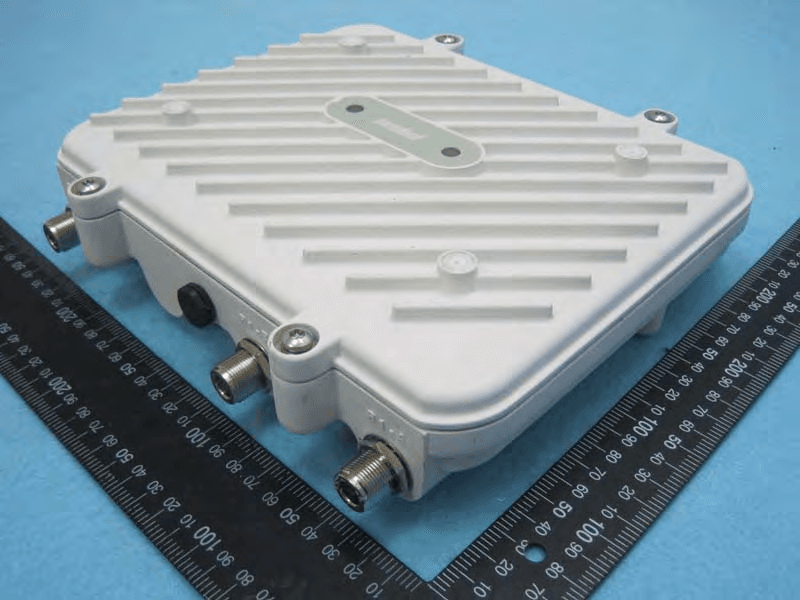
H9PAP7562
May 10, 2015802.11 abgn/ac Access Point
Equipment Class
DTS - Digital Transmission System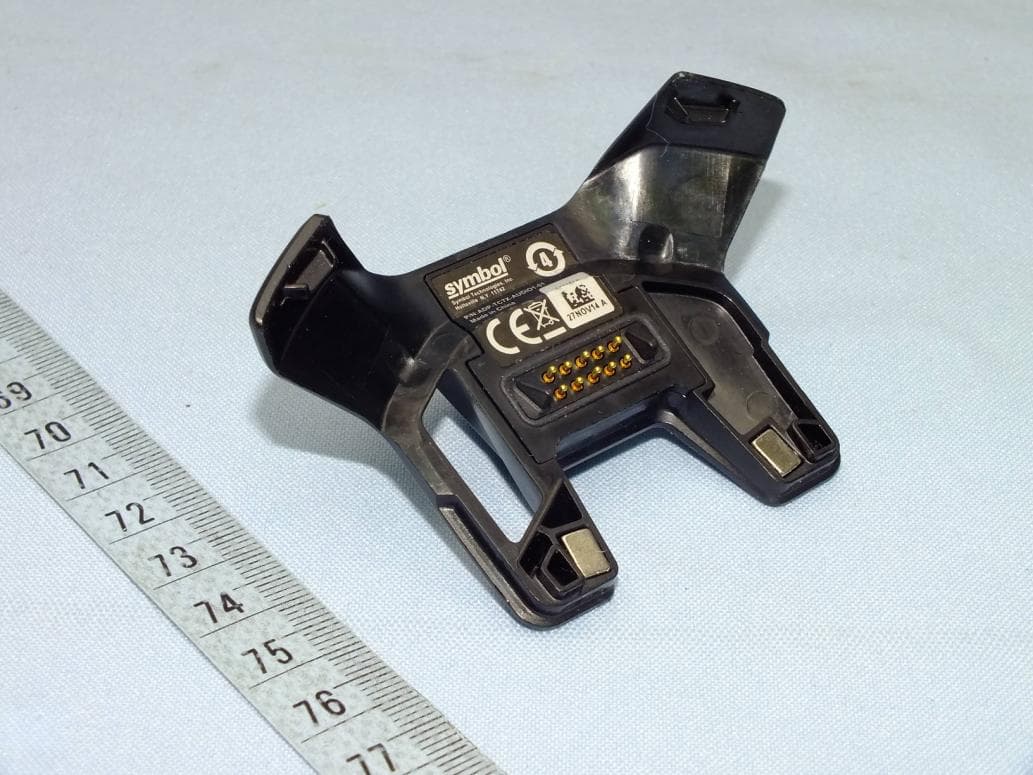
H9PTC75AH
Mar 26, 2015Touch Computer
Equipment Class
NII - Unlicensed National Information Infrastructure TX
H9PRA1202
Sep 24, 2014UHF Narrowband Radio Module
Equipment Class
TNB - Licensed Non-Broadcast Station Transmitter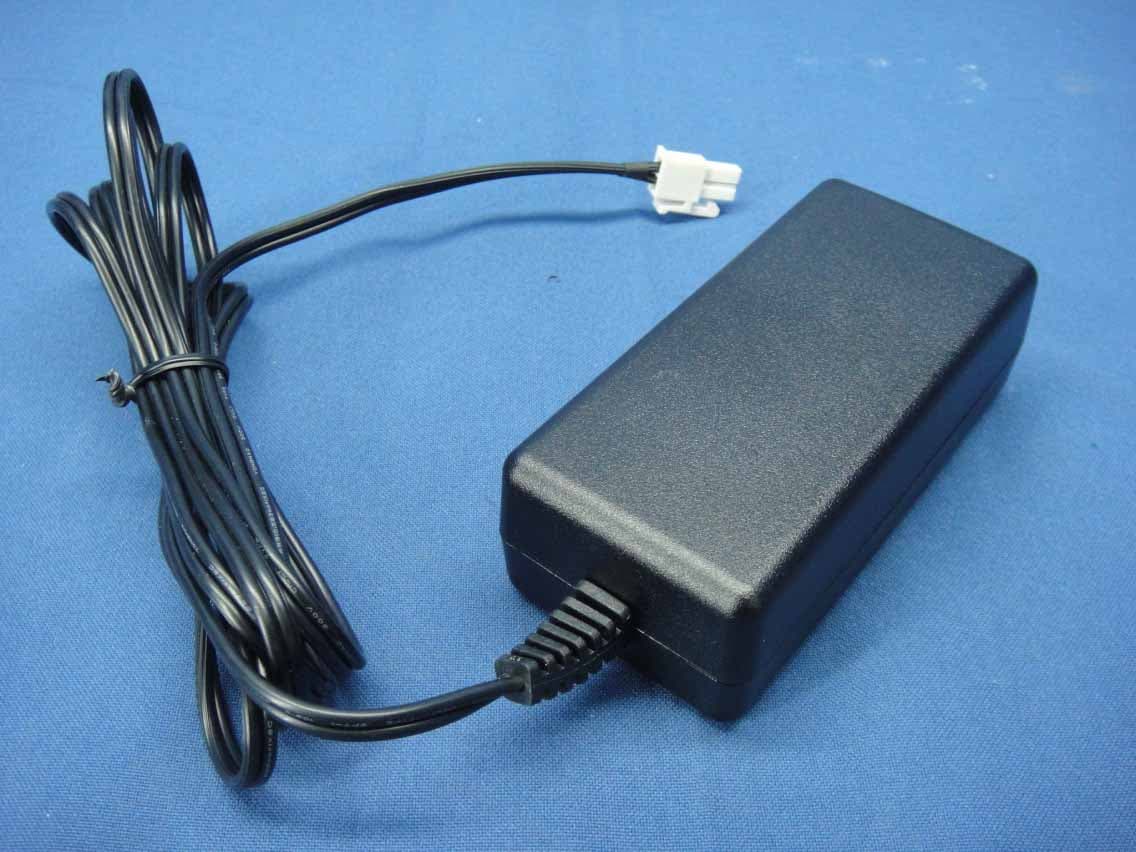
H9PEMG101
Aug 26, 2014802.15.4 Gateway
Equipment Class
DTS - Digital Transmission System