HHC-125A00HAI Omni-Bus Keyfob Remote Control
Home Automation Inc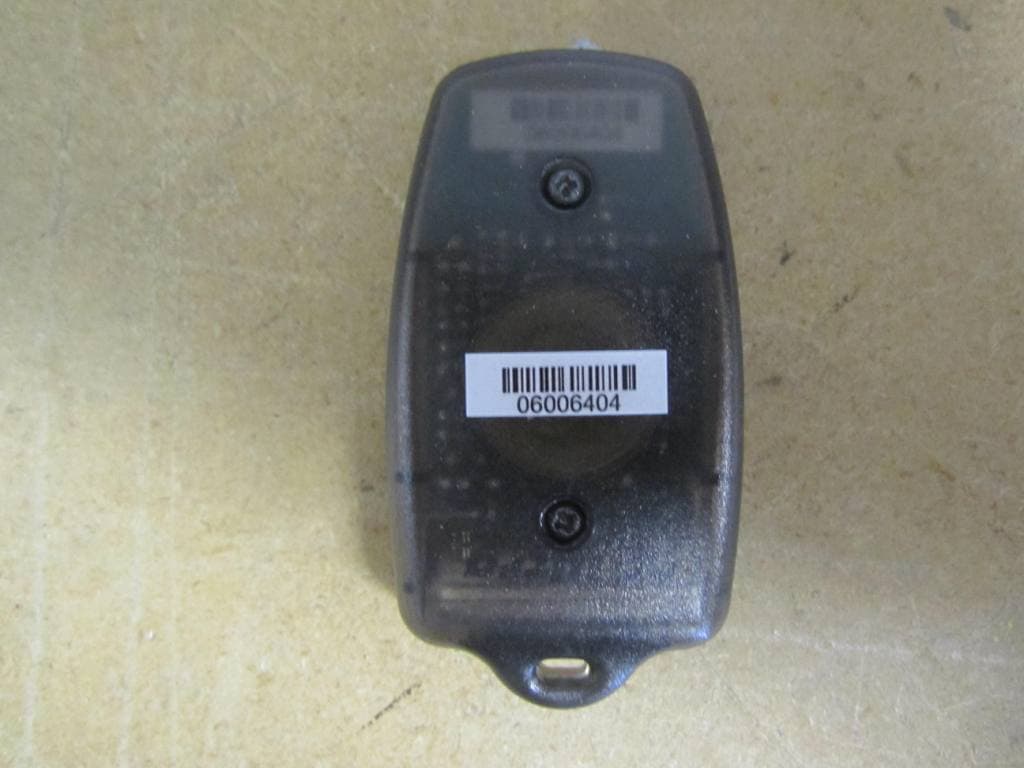
Click to zoom
Application Details
- Equipment Class
- DSR - Part 15 Remote Control/Security Device Transceiver
- Date of Grant
- Sep 26, 2012
- Application Purpose
- Original Equipment
- Date of Application
- Sep 26, 2012
- Equipment Note
- HAI Omni-Bus Keyfob Remote Control
- Frequency Range
- 433.92000000 - 433.92000000
- Company
- Home Automation Inc
- Country
- United States
Documents & Files
Document Text
Text extracted from the exhibit documents filed with the FCC. Open a document above to read the original.
Users Manual
© 2012 Home Automation, Inc. www.homeauto.com Document: 125I00-1, Rev2.0 September 2012 HAI Omni-Bus 6-Channel Keyfob Remote Model 125A00-1 User’s Guide SPECIFICATIONS o 6 Channels o For use with HAI Omni-Bus Output devices o Requires an HAI Omni-Bus RF Transceiver or HAI Omni-Bus Translator Interface on the Omni-Bus network o Frequency: 433.92MHz o Range: Up to 30m (98 feet) indoors, up to 100m (328 feet) outdoors REMOTE CONTROL FUNCTIONS To switch a device ON or OFF Press and release the button on the Remote Control. The remote control will toggle between the ON and OFF commands each time the button is pressed. To DIM a light (when used with an Omni-Bus Dimmer unit) Enter DIM/BRIGHT mode on the Remote control by pressing buttons 1 and 2 simultaneously. Press and hold the appropriate button on the Remote Control to dim or brighten the light. The Remote Control will exit the DIM/BRIGHT mode automatically if no buttons are pressed for 7 seconds. A forced exit can be achieved by pressing buttons 1 and 2 simultaneously again. OMNIBUS PROGRAMMING See the HAI OMNIBUS Software User Guide for more information on how to program the remote control into an Omni-Bus output devices using the OMNIBUS Installation Software. MANUAL PROGRAMMING 1. Place the receiving device into the programming mode. This is normally done by pressing and holding the button on the receiving device until its LED starts flashing continuously. (See receiving device user guide for more information). 2. Press and hold the DESIRED channel button on the Remote Control until the remote sounds 3 beeps (approx.10 seconds). Check for a confirmation signal from the receiving device. (See receiving device user manual for more information). 3. Exit the programming mode on the receiving device. REMOTE CONTROL BATTERY REPLACEMENT If the remote control does not respond to any key presses or the LED fails to come on when a key is held in, the battery may need replacement. The remote control uses one type 23A 12V battery. DELETING A REMOTE CONTROL A Remote Control channel programmed into an Omni-Bus receiving device may be deleted from that device via the OMNIBUS Installation Software or by following the procedure below: 1. Place the receiving device into the programming mode. This is normally done by pressing and holding the button on the receiving device until the receiving device LED starts flashing continuously (see receiving device user guide). 2. Press and hold the appropriate button on the remote control until the remote sounds 3 beeps followed by another set of 4 beeps. Check for a confirmation signal from the receiving device. (See receiving device user manual for more information). 3. Exit the programming mode on the receiving device. DELETE ALL All remote control channels programmed into ANY Omni-Bus RECEIVING device can be deleted entirely by using any Omni-Bus Remote Control. The remote control used for this does not necessarily need to be one that was previously programmed into the device. This allows a lost or stolen remote control to be deleted before reprogramming the new remote control. 1. Place the receiving device into the programming mode. This is normally done by pressing and holding the button on the receiving device until the receiving device LED starts flashing continuously (see receiving device user guide). 2. Press and hold any button on the remote control until the remote sounds 3 beeps, then 4 beeps and then 5 beeps (approximately 17 seconds). Check for a confirmation signal from the receiving device. (See receiving device user manual for more information). 3. Exit the programming mode on the receiving device. KEYPAD LOCK FUNCTION The keypad lock function can be used to prevent accidental remote control activation. Enabling the Keypad Lock Function Before the keypad lock function can be used, it has to be enabled as follows: Press and hold button 3 and 4 simultaneously until the remote sounds a burst of beeps (after approximately 5 seconds). Disabling the Keypad Lock Function Press and hold button 3 and 4 simultaneously until the remote sounds a short beep (after approximately 5 seconds). Locking/Unlocking the Keypad Lock or Unlock the Keypad on the Remote Control by pressing buttons 3 and 4 simultaneously. The Remote Control will sound a long beep when the Keypad is locked and any key is pressed on the remote control. FCC ID: HHC-115A00-1 IC: 1516A-115A001 This device complies with Part 15 of the FCC Rules. Operation is subject to the following two conditions: (1) This device may not cause harmful interference, and (2) this device must accept any interference received, including interference that may cause undesired operation. Caution: Changes or modifications not expressly approved by the party responsible for compliance could void the user's authority to operate the equipment. © 2012 Home Automation, Inc. www.homeauto.com Document: 125I00-2, Rev2.0 September 2012 HAI Omni-Bus 16-Channel Keyfob Remote Model 125A00-2 User’s Guide SPECIFICATIONS o 16 Channels o For use with HAI Omni-Bus Output devices. o Requires an HAI Omni-Bus RF Transceiver or HAI Omni-Bus Translator Interface on the Omni-Bus network o Frequency: 433.92MHz o Range: Up to 30m (98 feet) indoors, up to 100m (328 feet) outdoors CHANNEL SELECTION The remote control has 16 channels. 4 Layers x 4 Channels on each Layer = 16 To select a layer: Select a layer number from 1 to 4 by pressing and holding the appropriate channel key (1, 2, 3 or 4) until the remote sounds 2 beeps. Now press and release the key for the desired channel on the selected layer. If another channel on the same layer needs to be selected, the layer selection does not have to be repeated. After a channel was selected, that selection will remain active until another channel is selected i.e. all subsequent function operations will be done with the selected channel. REMOTE CONTROL FUNCTIONS To switch a device ON or OFF: 1. Select the appropriate channel on the remote control (see CHA…
Text truncated - open the document above for the full version.
Cover Letter(s)
® www.homeauto.com HAI 4330 Michoud Blvd. New Orleans, LA 70129 Phone: 800-229-7256 Fax: 504-253-2955 December 20, 2011 Attention: Application Examiner Re: Request for confidentiality Applicant: Home Automation, Inc. FCC ID: HHC-125A00-2 To whom it may concern, Permanent Confidentiality Request is hereby submitted by Home Automation, Inc. to withhold permanently from public review certain portions of the application for equipment certification for the referenced FCC identifiers. This request for confidentiality is made pursuant to 47 CFR 0.457(d) and 0.459 of the FCC Rules. In particular, the following sections of the application are to be kept permanently confidential: Schematics Detailed Block diagrams Detailed Operational/Functional Description Parts list Rationale for request for confidentiality: Home Automation, Inc. has invested considerable time and materials in research and development to produce the referenced product. Disclosure of the permanently confidential portions of this application to competitors would not only give them significant competitive advantages in developing similar products, but would also disclose successful implementation of unpublished, leading edge technology developed by us. If you have questions or need further information, please contact the undersigned. Sincerely, Ron Gumina VP, Product Development Home Automation, Inc.
ID Label/Location Info
Model: 125A00-1 FCC ID: HHC-125A00 IC: 1516A-125A00 HAI Model: 125A00-2 FCC ID: HHC-125A00 IC: 1516A-125A00 HAI
Test Report
This report is for the exclusive use of Intertek's Client and is provided pursuant to the agreement between Intertek and its Client. Intertek's responsibility and liability are limited to the terms and conditions of the agreement. Intertek assumes no liability to any party, other than to the Client in accordance with the agreement, for any loss, expense or damage occasioned by the use of this report. Only the Client is authorized to permit copying or distribution of this report and then only in its entirety. Any use of the Intertek name or one of its marks for the sale or advertisement of the tested material, product or service must first be approved in writing by Intertek. The observations and test results in this report are relevant only to the sample tested. This report by itself does not imply that the material, product, or service is or has ever been under an Intertek certification program. EMC Report for Home Automation Inc on the Keyfob Remote Control Page 1 of 22 TEST REPORT Report Number: 100468650DAL-005a Project Number: G100468650 Report Issue Date: 7/30/12 Product Designation: 433.92 MHz Keyfob Remote Control Model: 125A00-2 Standards: 47 CFR Part 15, Subpart C (15.231 - Periodic operation in the band 40.66-40.70 MHz and above 70 MHz) RSS-210, Issue 8, 2010 Tested by: Client: Intertek Testing Services NA, Inc. 1809 10 th St. Plano TX 75074 Home Automation Inc. 4330 Michoud Blvd New Orleans, LA 70129 Report prepared by Report reviewed by William Cullen EMC Team Lead Jeremy O. Pickens EMC Manager Intertek Report Number: 100468650DAL-005a Issued: 07/30/2012 EMC Report for Home Automation Inc. on the KeyFob Remote Control Page 2 of 22 TABLE OF CONTENTS (OPTIONAL) 1 Introduction and Conclusion .............................................................................................................. 3 2 Test Summary ...................................................................................................................................... 3 3 Description of Equipment Under Test ............................................................................................... 4 4 System setup including cable interconnection details, support equipment and simplified block diagram ........................................................................................................................................................ 5 5 Duty Cycle Determination (FCC 15A - 15.35(c)) ................................................................................ 6 6 Radiated emissions (E-field) for low power intentional radiators................................................. 10 7 Bandwidth Requirements (FCC 15C - 15.231(c))............................................................................. 17 8 Conducted emissions on AC power lines ....................................................................................... 19 9 Restrictions (FCC 15C - 15.231(a)) ................................................................................................... 19 10 Revision History ................................................................................................................................... 22 Intertek Report Number: 100468650DAL-005a Issued: 07/30/2012 EMC Report for Home Automation Inc on the Keyfob Remote Control Page 3 of 22 1 Introduction and Conclusion The tests indicated in section 2.0 were performed on the product constructed as described in section 3.0. The remaining test sections are the verbatim text from the actual data sheets used during the investigation. These test sections include the test name, the specified test Method, a list of the actual Test Equipment Used, documentation Photos, Results and raw Data. No additions, deviations, or exclusions have been made from the standard unless specifically noted. Based on the results of our investigation, we have concluded the product tested complies with the requirements of the standard indicated. The results obtained in this test report pertain only to the item tested. 2 Test Summary Section Test full name Test date Result 3 Description of Equipment Under Test 4 System setup including cable interconnection details, support equipment and simplified block diagram 5 Duty Cycle Determination (FCC 15A - 15.35(c)) 07/11/12 Pass 6 Radiated emissions (E-field) for low power intentional radiators 05/16/12 Pass 7 Bandwidth Requirements (FCC 15C - 15.231(c)) 07/11/12 Pass 8 Conducted Emissions testing is not required as EUT is battery powered. N/A N/A 9 Restrictions (FCC 15C - 15.231(a)) 05/16/12 Pass 10 10 Revision History --- --- Intertek Report Number: 100468650DAL-005a Issued: 07/30/2012 EMC Report for Home Automation Inc on the Keyfob Remote Control Page 4 of 22 3 Description of Equipment Under Test Equipment Under Test Description Manufacturer Model Number Serial Number Keyfob Remote Control Home Automation Inc 125A00-2 06006404 Receive Date: 4/25/12 Received Condition: Good Type: Production Description of Equipment Under Test (provided by client) EUT is a Low Power Wireless transceiver that transmits a 433.92 MHz signal to the Omni-Bus Control system and allows a home owner to adjust various applications around their home (i.e. lights, security system, etc.) Transmitter Overview: FCC Identifier HHC-125A00-2 IC Identifier 1516A-125A002 Frequency Range 433.92MHz Modulation ASK - OOK Antenna type (15.203) integrated Equipment Under Test Power Configuration Rated Voltage Rated Current Rated Frequency Number of Phases 12V Battery-powered N/A N/A N/A Operating modes of the EUT: No. Descriptions of EUT Exercising 1 For Radiated emissions testing, EUT was Transmitting continuously @ 433.9MHz. The EUT was pretested on all 3 axis. The axis used in final test was determined by pretesting to be the worst-case. 2 For Bandwidth testing, EUT was Transmitting @ 433.9MHz every 10 seconds. Intertek Report Number: 100468650DAL-005a Issued: 07/30/2012 EMC Report for Home Automation Inc on the Keyfob Remote Contr…
Text truncated - open the document above for the full version.
Test Setup Photos
Intertek Report Number: 100468650DAL-005a Issued: 07/30/2012 EMC Report for Home Automation Inc on the Keyfob Remote Control Page 12 of 22 6.4 Setup Photographs: Test setup
Contact Information
Applicant
Brian A. Yokum(Chief Technology Officer)
Test Firm
Intertek Testing Services NA, Inc.Paul Coghill
Technical Specifications
| # | Rule Parts | Frequency Range | Power Output |
|---|---|---|---|
| 1 | 15.231 | 433.92 MHz - 433.92 MHz | - |
Other Applications from Home Automation Inc
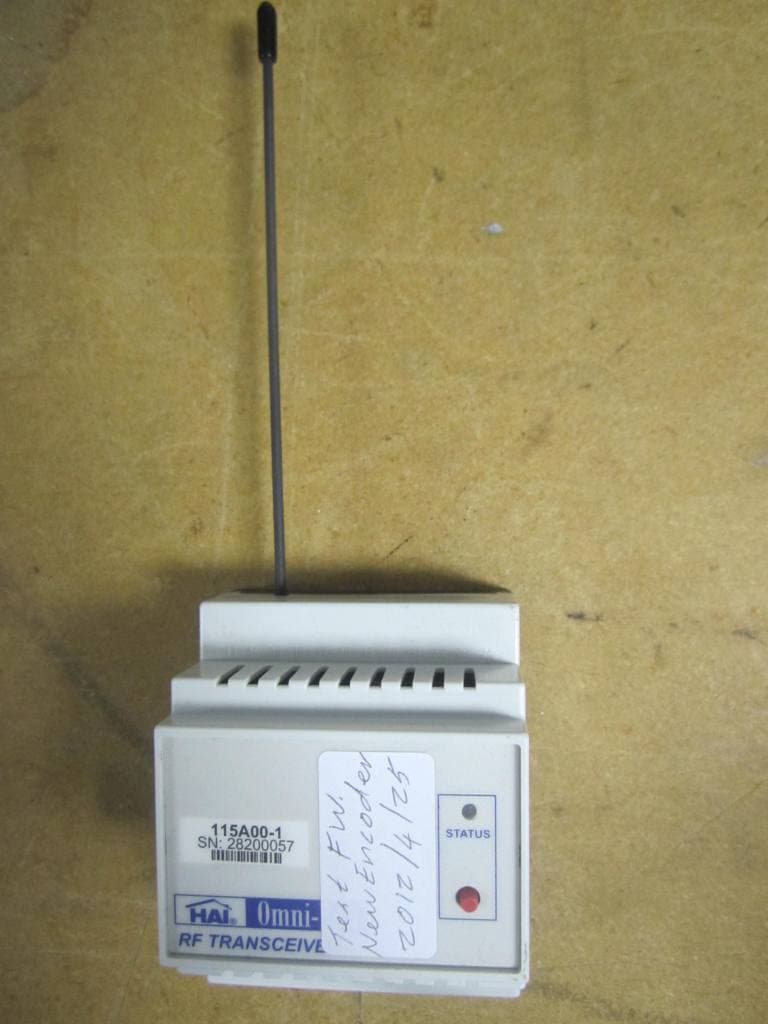
HHC-115A00
Sep 26, 2012HAI Omni-Bus RF Transceiver
Equipment Class
DSR - Part 15 Remote Control/Security Device Transceiver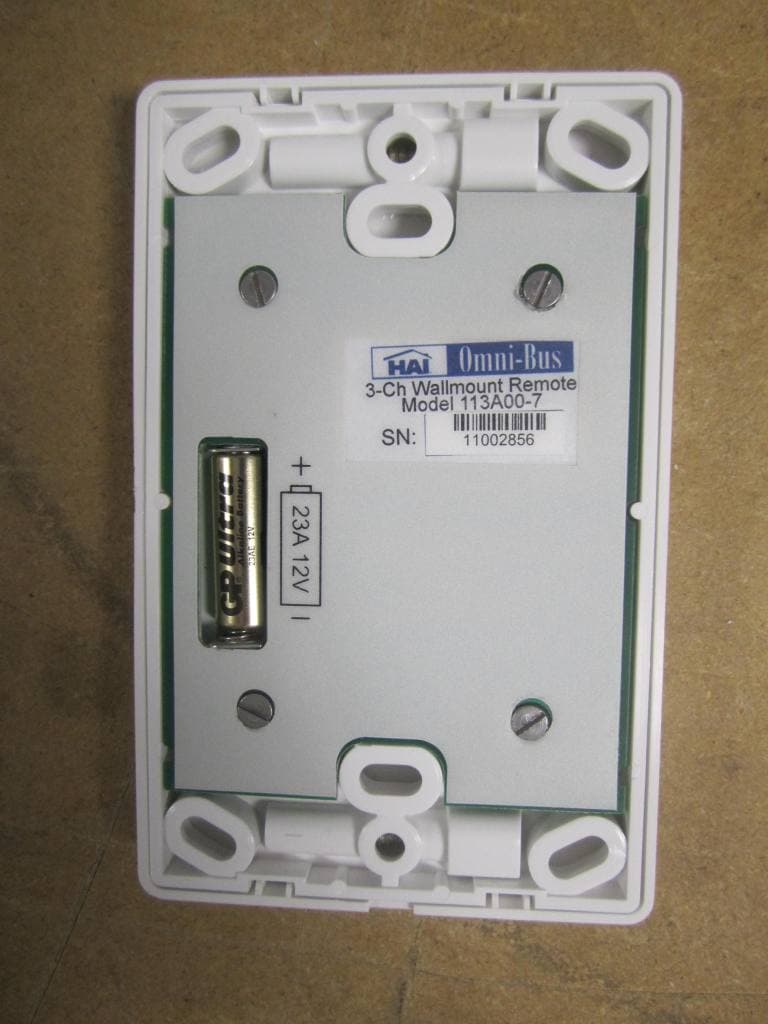
HHC-113A00
Sep 26, 2012HAI Omni-Bus Wireless Wall Switch
Equipment Class
DSR - Part 15 Remote Control/Security Device Transceiver
HHC-65A261
Dec 17, 2009Zigbee Module
Equipment Class
DTS - Digital Transmission System
HHCOMNISTAT-Z
Aug 26, 2007Z-Wave Thermostat
Equipment Class
DXX - Part 15 Low Power Communication Device Transmitter