I28MD-BTC2TYModular Bluetooth Radio
Zebra Technologies Corporation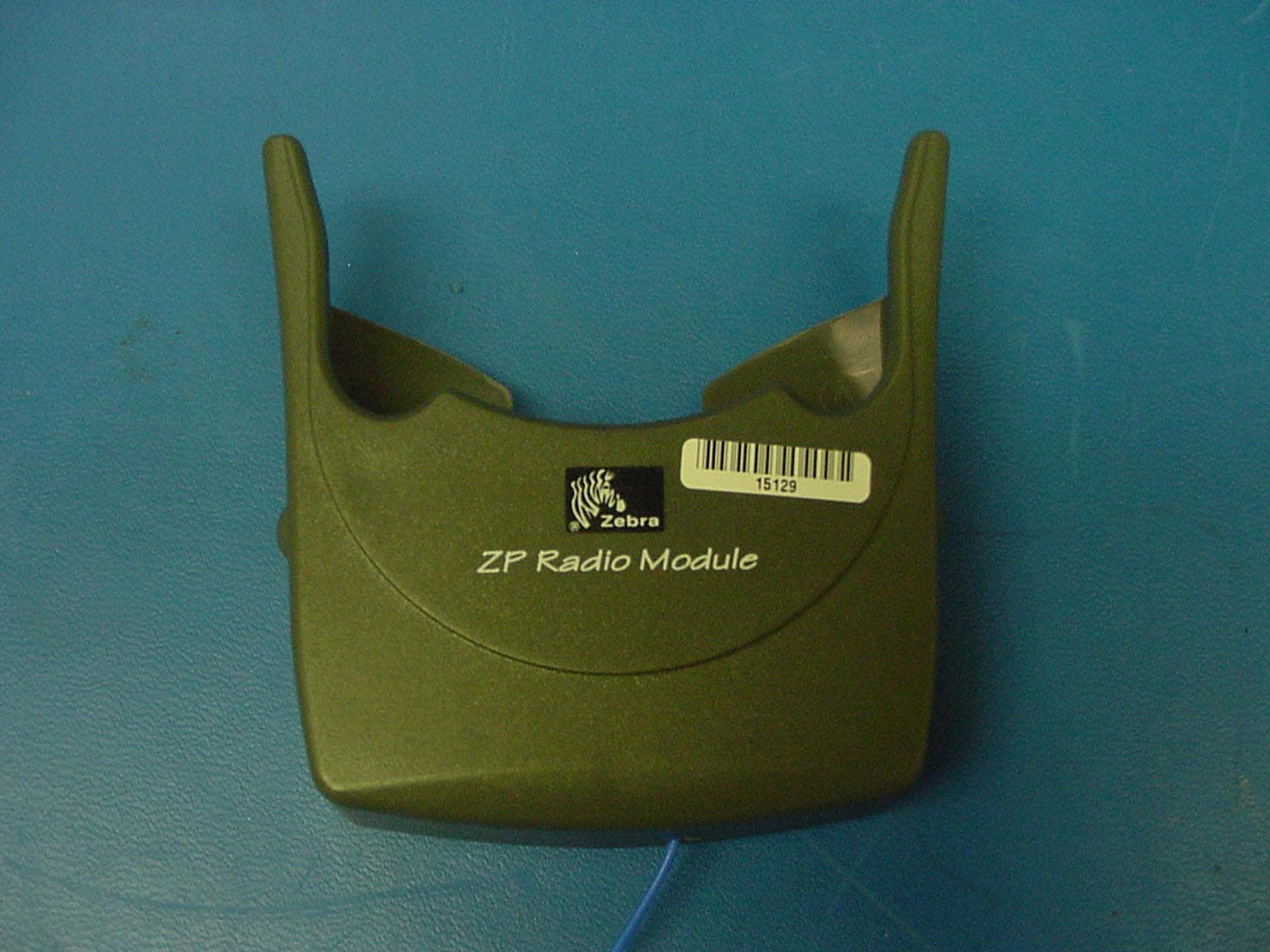
Click to zoom
Application Details
- Equipment Class
- DSS - Part 15 Spread Spectrum Transmitter
- Date of Grant
- Jun 03, 2003
- Application Purpose
- Original Equipment
- Date of Application
- Jun 03, 2003
- Equipment Note
- Modular Bluetooth Radio
- Frequency Range
- 2402.00000000 - 2480.00000000
- Country
- United States
Documents & Files
Document Text
Text extracted from the exhibit documents filed with the FCC. Open a document above to read the original.
Users Manual
Rhein Tech Laboratories Client: Zebra Technologies 360 Herndon Parkway Model Name/#: ZBR-2/CC16735-1 Suite 1400 FCC ID: I28MD-BTC2TY FCC: 15.247 Herndon, VA 20170 http://www.rheintech.com IC: RSS-210 Page 70 of 107 APPENDIX J: MANUAL Please refer to the following pages for a representative manual of a Zebra product that could contain the Zebra Bluetooth modular radio, model ZBR-2, model # CC16735-1. Please refer to manual pages 26-27. UMAN-QL4 Rev. C May, 2003 Proprietary Statement This manual contains proprietary information of Zebra Technologies Corporation. It is intended solely for the information and use of parties operating and maintaining the equipment described herein. Such proprietary information may not be used, reproduced, or disclosed to any other parties for any other purpose without the expressed written permission of Zebra Technologies Corporation. Product Improvements Since continuous product improvement is a policy of Zebra Technologies Corporation, all speci- fications and signs are subject to change without notice. FCC Compliance Statement NOTE: This equipment has been tested and found to comply with the limits for a Class B digital device, pursuant to Part 15 of FCC Rules. These limits are designed to provided reasonable protection against harmful interference when the equipment is operated in a commercial envi- ronment. This equipment generates, uses, and can radiate radio frequency energy and, if not installed and used in accordance with the instruction manual, may cause harmful interference to radio communications. Operation of this equipment in a residential area is likely to cause harm- ful interference in which case the user will be required to correct the interference at his own ex- pense. WARNING: Exposure to Radio Frequency radiation. To conform to FCC RF exposure require- ments this device shall be used in accordance with the operating conditions and instructions listed in this manual. Note that there are several radio options available with this printer. Addi- tional regulatory information is contained in later sections devoted to each radio individually. NOTE: This unit was tested with shielded cables on the peripheral devices. Shielded cables must be used with the unit to insure compliance. Changes or modifications to this unit not expressly approved by Zebra Technologies Corpora- tion could void the user’s authority to operate this equipment. Canadian Compliance Statement This Class B digital apparatus complies with Canadian ICES-003. Cet appareil numérique de la classe B est conforme á la norme NMB-003 du Canada. "IC:" before the equipment certification number signifies that the Industry Canada technical specifications were met. It does not guarantee that the certified product will operate to the us- er's satisfaction. Agency Approvals and Regulatory Information • Built to UL and CSA standards • Canadian STD RSS-210 • EN55022:1998 Class B European Electromagnetic Radiation Standard • EN55022:1998 European Immunity Standard • EN60950: 2000 Safety Standard • NOM/NYCE (Mexico) • C-Tick (Australia) Liability Disclaimer Inasmuch as every effort has been made to supply accurate information in this manual, Zebra Technologies Corporation is not liable for any erroneous information or omissions. Zebra Tech- nologies Corporation reserves the right to correct any such errors and disclaims liability result- ing therefrom. No Liability for Consequential Damage In no event shall Zebra Technologies Corporation or anyone else involved in the creation, pro- duction, or delivery of the accompanying product (including hardware and software) be liable for any damages whatsoever (including, without limitation, damages for loss of business profits, business interruption, loss of business information, or other pecuniary loss) arising out of the use of or the results of use of or inability to use such product, even if Zebra Technologies Cor- poration has been advised of the possibility of such damages. Because some states do not al- low the exclusion of liability for consequential or incidental damages, the above limitation may not apply to you. Copyrights The copyrights in this manual and the system described therein are owned by Zebra Technolo- gies Corporation. All rights are reserved. Unauthorized reproduction of this manual or the soft- ware in any of the system modules may result in imprisonment of up to one year and fines of up to $10,000 (17 U.S.C.506). Copyright violators may be subject to civil liability. All products and brand names are trademarks of their respective companies. All rights re- served. © 2003 ZIH Corp. Mobile Printer User’s Guide ivQL 420 User’s Guide Contents Introduction ............................................ 7 Unpacking and Inspection.............................................. 7 Reporting Damage.......................................................... 7 Getting Ready to Print............................. 9 Battery............................................................................. 9 Installing the Battery........................................................ 9 Charging the Battery........................................................ 9 Battery Safety................................................................ 11 Charger Safety.............................................................. 11 Loading the Media........................................................ 12 Installing the Media........................................................ 12 Operator Controls......................................................... 16 Standard Keypad........................................................... 16 LCD Control Panel......................................................... 18 Verify the Printer Is Working ......................................... 21 Printing a Configuration Label ....................................... 21 Connecting the Printer.................................................. 21 Cable Communications.......…
Text truncated - open the document above for the full version.
Cover Letter(s)
American Telecommunications Certification Body Inc. 6731 Whittier Ave, McLean, VA 22101 May 26, 2003 RE: Zebra Technologies FCC ID: I28MD-BTC2TY I have a few comments on the above referenced Application. 1) The top view of the Bluetooth board without the shield shown in the internal photographs is too dark. Please provide a better photograph. Additionally, please provide clear top and bottom views of the Bluetooth module itself (with and without shield as applicable). Response : Please refer to the revised Internal and External Photograph exhibits uploaded with this response. 2) The theory of operation mentions that the Bluetooth module is a class 2 Bluetooth device with a 0 dBm output. Note that a typical Class 2 Bluetooth are typically considered to have a +4 dBm output. Please explain. Response : Please refer to the attestation letter uploaded with this response. 3) RF exposure takes into consideration both conducted and EIRP power. Therefore, please update the RF exposure information to include the worse case power (EIRP) by including the highest antenna gain as well. Response : Please refer to the revised RF Exposure exhibit uploaded with this response. 4) Please provide a close up photograph of a typical tested configuration showing the standalone portion as tested. Note that from the photos provided, it can not be determined if the device and antenna were both tested as a standalone, if one portion such as the antenna was contained within an actual device, or if the end use device was fully configured or only the "shell" of a device was present to hold the antenna, etc. Information regarding the internal construction of the end use device and any justification vs. stand-alone testing should also be provided. Note that loading conditions due to close proximity of components, shields, etc. from device to device can vary therefore affecting the spurious emissions results. In order to characterize a device and its antennas for a modular approval for use in a variety of devices, it is desirable to see its characteristics in a stand-alone condition. Normally both the device and its antennas should be tested as a standalone configuration. Given that this approval is specific to Zebra devices, we can accept an explanation regarding the positioning of the antennas for a Limited Modular Approval specific to Zebra devices if adequate information regarding the configuration tested and how it is relevant to all future configurations can be provided. Response : Please note that this is a limited modular approval application as stated in section 1.3 on page 6 of the test report. The Bluetooth module and antennas were tested in a stand-alone configuration. Specifically, the Bluetooth module was not housed in any enclosure. The antennas were contained in typical end-use enclosures to account for any effect the enclosure would have on emissions from the antennas. An antenna cable was run outside of the end-use enclosures and connected to the standalone Bluetooth module. The end-use enclosures are typical of future housings for the antennas contained in this application. Please refer to the revised Test Configuration Photographs exhibit uploaded with this response. American Telecommunications Certification Body Inc. 6731 Whittier Ave, McLean, VA 22101 5) Information regarding conducted emissions was not provided. Can any device this is intended to be installed within work while powered from 120 VAC, or are these adapters only used to charge the device, etc? Additionally, will all such future devices only be battery powered as well and how can this be assured? Note that if conducted emissions results are not provided the grant notes will include the following or similar: "This device may only be used in battery powered devices which do not have any provision for operation while connected to the AC power lines". Response : Please refer to the conducted emissions data in the revised test report uploaded with this response. 6) The limits on page 42 do not appear to match the limits specified on that page. Please correct. Response : Please refer to the revised test report uploaded with this response. 7) Spurious emissions are required to be tested for a typical low, middle, and high channel, but the results of harmonics appear to only be provided for the middle channel. Please explain. Response : The low and high channels were investigated. An engineering justification was made as follows: As shown in the RF exposure exhibit, the average gains for the various antennas are seen to be below the maximum gains measured. These gains represent measurements within the band for which it was designed; it would lack efficiency at the second through fourth harmonics to 10 GHz as compared to those frequencies (78 MHz) within the band. All other frequencies measured were seen as noise floor measurements. The only frequency which is found to be within 20 dB of the limit is the third harmonic, of which the margin was found to be within 20 dB since it falls within the restricted band, and subsequently the 54 dBuV margin is 20 dB higher than the non-restricted band. A comparison of conducted antenna emissions between channels shows small variance; this coupled with low center channel measurements can be used to justify center channel measurements as indicative of those that could be found for out-of-band emissions. This justification, as compared to the time requirements for additional measurements, (6 antennas x 2 additional channels x 9 harmonics = 108 additional measurements in three orthogonal positions) to provide certification in a timely manner mitigated the avidity for center channel measurement. 8) FYI. 6 dB bandwidth tests are not necessary for this type of device. Response : Noted, thank you. 9) FYI. Note that power spectral density tests are normally required for Bluetooth submissions. However, given that the maximum power of this device is less than the limit for spectral density, further information is not …
Text truncated - open the document above for the full version.
Cover Letter(s)
American Telecommunications Certification Body Inc. 6731 Whittier Ave, McLean, VA 22101 June 3, 2003 RE: Zebra Technologies FCC ID: I28MD-BTC2TY I have a few comments on the above referenced Application. 1) The conducted measurements provided in the test report appear to have been tested to the new limits as given in the results and procedure. However, part of the procedure mentions the use of a 400 kHz high pass filter. This would affect any results falling between 150 kHz and 450 kHz. Please comment and/or provide new test data as necessary. Response: The report reflected the incorrect filter; please see the revised test report uploaded with this response. Timothy R. Johnson Examining Engineer mailto: [email protected] The items indicated above must be submitted before processing can continue on the above referenced application. Failure to provide the requested information may result in application termination. Correspondence should be considered part of the permanent submission and may be viewed from the Internet after a Grant of Equipment Authorization is issued. Please do not respond to this correspondence using the email reply button. In order for your response to be processed expeditiously, you must submit your documents through the AmericanTCB.com website. Also, please note that partial responses increase processing time and should not be submitted. Any questions about the content of this correspondence should be directed to the sender.
Cover Letter(s)
American Telecommunications Certification Body Inc. 6731 Whittier Ave, McLean, VA 22101 May 26, 2003 RE: Zebra Technologies FCC ID: I28MD-BTC2TY I have a few comments on the above referenced Application. 1) The top view of the Bluetooth board without the shield shown in the internal photographs is too dark. Please provide a better photograph. Additionally, please provide clear top and bottom views of the Bluetooth module itself (with and without shield as applicable). 2) The theory of operation mentions that the Bluetooth module is a class 2 Bluetooth device with a 0 dBm output. Note that a typical Class 2 Bluetooth are typically considered to have a +4 dBm output. Please explain. 3) RF exposure takes into consideration both conducted and EIRP power. Therefore, please update the RF exposure information to include the worse case power (EIRP) by including the highest antenna gain as well. 4) Please provide a close up photograph of a typical tested configuration showing the standalone portion as tested. Note that from the photos provided, it can not be determined if the device and antenna were both tested as a stand alone, if one portion such as the antenna was contained within an actual device, or if the end use device was fully configured or only the "shell" of a device was present to hold the antenna, etc. Information regarding the internal construction of the end use device and any justification vs. stand-alone testing should also be provided. Note that loading conditions due to close proximity of components, shields, etc. from device to device can vary therefore affecting the spurious emissions results. In order to characterize a device and its antennas for a modular approval for use in a variety of devices, it is desirable to see its characteristics in a stand-alone condition. Normally both the device and its antennas should be tested as a standalone configuration. Given that this approval is specific to Zebra devices, we can accept an explanation regarding the positioning of the antennas for a Limited Modular Approval specific to Zebra devices if adequate information regarding the configuration tested and how it is relevant to all future configurations can be provided. 5) Information regarding conducted emissions was not provided. Can any device this is intended to be installed within work while powered from 120 VAC, or are these adapters only used to charge the device, etc? Additionally, will all such future devices only be battery powered as well and how can this be assured? Note that if conducted emissions results are not provided the grant notes will include the following or similar: "This device may only be used in battery powered devices which do not have any provision for operation while connected to the AC power lines". 6) The limits on page 42 do not appear to match the limits specified on that page. Please correct. 7) Spurious emissions are required to be tested for a typical low, middle, and high channel, but the results of harmonics appear to only be provided for the middle channel. Please explain. 8) FYI. 6 dB bandwidth tests are not necessary for this type of device. 9) FYI. Note that power spectral density tests are normally required for Bluetooth submissions. However, given that the maximum power of this device is less than the limit for spectral density, further information is not necessary for this particular application. Timothy R. Johnson Examining Engineer mailto: [email protected] The items indicated above must be submitted before processing can continue on the above referenced application. Failure to provide the requested information may result in application termination. Correspondence should be considered part of the permanent submission and may be viewed from the Internet after a Grant of Equipment Authorization is issued. z Page 2May 26, 2003 Please do not respond to this correspondence using the email reply button. In order for your response to be processed expeditiously, you must submit your documents through the AmericanTCB.com website. Also, please note that partial responses increase processing time and should not be submitted. Any questions about the content of this correspondence should be directed to the sender.
Cover Letter(s)
American Telecommunications Certification Body Inc. 6731 Whittier Ave, McLean, VA 22101 June 3, 2003 RE: Zebra Technologies FCC ID: I28MD-BTC2TY I have a few comments on the above referenced Application. 1) The conducted measurements provided in the test report appear to have been tested to the new limits as given in the results and procedure. However, part of the procedure mentions the use of a 400 kHz high pass filter. This would affect any results falling between 150 kHz and 450 kHz. Please comment and/or provide new test data as necessary. Timothy R. Johnson Examining Engineer mailto: [email protected] The items indicated above must be submitted before processing can continue on the above referenced application. Failure to provide the requested information may result in application termination. Correspondence should be considered part of the permanent submission and may be viewed from the Internet after a Grant of Equipment Authorization is issued. Please do not respond to this correspondence using the email reply button. In order for your response to be processed expeditiously, you must submit your documents through the AmericanTCB.com website. Also, please note that partial responses increase processing time and should not be submitted. Any questions about the content of this correspondence should be directed to the sender.
Cover Letter(s)
Rhein Tech Laboratories Client: Zebra Technologies 360 Herndon Parkway Model Name/#: ZBR-2/CC16735-1 Suite 1400 FCC ID: I28MD-BTC2TY FCC: 15.247 Herndon, VA 20170 http://www.rheintech.com IC: RSS-210 Page 64 of 107 APPENDIX D: AGENCY AUTHORIZATION LETTER Please refer to the following page.
Cover Letter(s)
Rhein Tech Laboratories Client: Zebra Technologies 360 Herndon Parkway Model Name/#: ZBR-2/CC16735-1 Suite 1400 FCC ID: I28MD-BTC2TY FCC: 15.247 Herndon, VA 20170 http://www.rheintech.com IC: RSS-210 Page 65 of 107 APPENDIX E: CONFIDENTIALITY REQUEST LETTER Please refer to the following page.
Cover Letter(s)
Rhein Tech Laboratories Client: Zebra Technologies 360 Herndon Parkway Model Name/#: ZBR-2/CC16735-1 Suite 1400 FCC ID: I28MD-BTC2TY FCC: 15.247 Herndon, VA 20170 http://www.rheintech.com IC: RSS-210 Page 61 of 107 APPENDIX A: MODULAR APPROVAL JUSTIFICATION STATEMENT Please see the following page for a letter from the client. 30 Plan Way Warwick, RI 02886 U.S.A. Telephone +1401.739.5800 / 800.556.7266 Facsimile +1.401.732.0145 www.zebra.com 5/08/2003 Federal Communications Commission 7435 Oakland Mills Road Columbia, MD 21046-1609 To Whom It May Concern: In reference to the application for FCC ID#: I28MD-BTC2TY (Zebra p/n CC16735-1), this device is being submitted for MODULAR TRANSMITTER APPROVAL based on the guidelines in FCC Publication DA 00-1407. We believe that this transmitter meets all 8 criterion listed in DA 00-1407 as detailed in the paragraphs below. Note that I28MD-BTC2TY is a radio module made by Zebra Technologies and designed for use in Zebra Technologies portable printers and other Zebra products. This device has a proprietary interface that is only found on Zebra Technologies printers. 1) I28MD-BTC2TY is based on a Taiyo-Yuden EYSF2SAJJ self-contained Bluetooth radio module. The RF portion of EYSF2SAJJ is fully shielded. 2) I28MD-BTC2TY has buffered inputs on all digital lines. Further, the embedded EYSF2SAJJ radio module also has fully buffered inputs. Overdriving one or more of the digital inputs will have no affect on the transmitter output. 3) I28MD-BTC2TY contains a voltage regulator that powers the EYSF2SAJJ module, and the EYSF2SAJJ has further, internal, regulation. The unit is designed to accept regulated 5 volts DC at it’s input, but transmitter output will not be affected if input voltage is exceeded. 4) I28MD-BTC2TY will always be used with one of a family of approved antennas, all of which are mounted (with the radio) inside a finished printer or other product. None of these antennas is user accessible, nor is the antenna cable / connector user accessible; for this reason the antennas can be considered to be permanently attached. All of the antennas in the family have been tested with the radio module as part of the modular approval; test results are included with the application. If the radio is to be used with a new antenna, further testing will be performed and a Class II permissive change will be obtained. 5) I28MD-BTC2TY was tested in a stand-alone configuration, outside of any Zebra printer.
External Photos
Rhein Tech Laboratories Client: Zebra Technologies 360 Herndon Parkway Model Name/#: ZBR-2/CC16735-1 Suite 1400 FCC ID: I28MD-BTC2TY FCC: 15.247 Herndon, VA 20170 http://www.rheintech.com IC: RSS-210 Page 90 of 116 APPENDIX M: EXTERNAL PHOTOGRAPHS PHOTOGRAPH 14: FRONT VIEW OF EUT Rhein Tech Laboratories Client: Zebra Technologies 360 Herndon Parkway Model Name/#: ZBR-2/CC16735-1 Suite 1400 FCC ID: I28MD-BTC2TY FCC: 15.247 Herndon, VA 20170 http://www.rheintech.com IC: RSS-210 Page 91 of 116 PHOTOGRAPH 15: BACK VIEW OF EUT NEXT TO SHIELD Rhein Tech Laboratories Client: Zebra Technologies 360 Herndon Parkway Model Name/#: ZBR-2/CC16735-1 Suite 1400 FCC ID: I28MD-BTC2TY FCC: 15.247 Herndon, VA 20170 http://www.rheintech.com IC: RSS-210 Page 92 of 116 PHOTOGRAPH 16: TOP VIEW CAMEO 3 ANTENNA INSTALLED IN TYPICAL HOST Rhein Tech Laboratories Client: Zebra Technologies 360 Herndon Parkway Model Name/#: ZBR-2/CC16735-1 Suite 1400 FCC ID: I28MD-BTC2TY FCC: 15.247 Herndon, VA 20170 http://www.rheintech.com IC: RSS-210 Page 93 of 116 PHOTOGRAPH 17: REAR VIEW CAMEO 3 ANTENNA INSTALLED IN TYPICAL HOST Rhein Tech Laboratories Client: Zebra Technologies 360 Herndon Parkway Model Name/#: ZBR-2/CC16735-1 Suite 1400 FCC ID: I28MD-BTC2TY FCC: 15.247 Herndon, VA 20170 http://www.rheintech.com IC: RSS-210 Page 94 of 116 PHOTOGRAPH 18: TOP VIEW CAMEO 2 ANTENNA INSTALLED IN TYPICAL HOST Rhein Tech Laboratories Client: Zebra Technologies 360 Herndon Parkway Model Name/#: ZBR-2/CC16735-1 Suite 1400 FCC ID: I28MD-BTC2TY FCC: 15.247 Herndon, VA 20170 http://www.rheintech.com IC: RSS-210 Page 95 of 116 PHOTOGRAPH 19: REAR VIEW CAMEO 2 ANTENNA INSTALLED IN TYPICAL HOST Rhein Tech Laboratories Client: Zebra Technologies 360 Herndon Parkway Model Name/#: ZBR-2/CC16735-1 Suite 1400 FCC ID: I28MD-BTC2TY FCC: 15.247 Herndon, VA 20170 http://www.rheintech.com IC: RSS-210 Page 96 of 116 PHOTOGRAPH 20: FRONT VIEW QL-220 ANTENNA INSTALLED IN TYPICAL HOST Rhein Tech Laboratories Client: Zebra Technologies 360 Herndon Parkway Model Name/#: ZBR-2/CC16735-1 Suite 1400 FCC ID: I28MD-BTC2TY FCC: 15.247 Herndon, VA 20170 http://www.rheintech.com IC: RSS-210 Page 97 of 116 PHOTOGRAPH 21: REAR VIEW QL-220 ANTENNA INSTALLED IN TYPICAL HOST Rhein Tech Laboratories Client: Zebra Technologies 360 Herndon Parkway Model Name/#: ZBR-2/CC16735-1 Suite 1400 FCC ID: I28MD-BTC2TY FCC: 15.247 Herndon, VA 20170 http://www.rheintech.com IC: RSS-210 Page 98 of 116 PHOTOGRAPH 22: FRONT VIEW CAMEO 3 SC ANTENNA INSTALLED IN TYPICAL HOST Rhein Tech Laboratories Client: Zebra Technologies 360 Herndon Parkway Model Name/#: ZBR-2/CC16735-1 Suite 1400 FCC ID: I28MD-BTC2TY FCC: 15.247 Herndon, VA 20170 http://www.rheintech.com IC: RSS-210 Page 99 of 116 PHOTOGRAPH 23: REAR VIEW CAMEO 3 SC ANTENNA INSTALLED IN TYPICAL HOST Rhein Tech Laboratories Client: Zebra Technologies 360 Herndon Parkway Model Name/#: ZBR-2/CC16735-1 Suite 1400 FCC ID: I28MD-BTC2TY FCC: 15.247 Herndon, VA 20170 http://www.rheintech.com IC: RSS-210 Page 100 of 116 PHOTOGRAPH 24: FRONT VIEW QL-320 ANTENNA INSTALLED IN TYPICAL HOST Rhein Tech Laboratories Client: Zebra Technologies 360 Herndon Parkway Model Name/#: ZBR-2/CC16735-1 Suite 1400 FCC ID: I28MD-BTC2TY FCC: 15.247 Herndon, VA 20170 http://www.rheintech.com IC: RSS-210 Page 101 of 116 PHOTOGRAPH 25: REAR VIEW QL-320 ANTENNA INSTALLED IN TYPICAL HOST Rhein Tech Laboratories Client: Zebra Technologies 360 Herndon Parkway Model Name/#: ZBR-2/CC16735-1 Suite 1400 FCC ID: I28MD-BTC2TY FCC: 15.247 Herndon, VA 20170 http://www.rheintech.com IC: RSS-210 Page 102 of 116 PHOTOGRAPH 26: FRONT VIEW ZPR POD ANTENNA INSTALLED IN TYPICAL HOST Rhein Tech Laboratories Client: Zebra Technologies 360 Herndon Parkway Model Name/#: ZBR-2/CC16735-1 Suite 1400 FCC ID: I28MD-BTC2TY FCC: 15.247 Herndon, VA 20170 http://www.rheintech.com IC: RSS-210 Page 103 of 116 PHOTOGRAPH 27: REAR VIEW ZPR POD ANTENNA INSTALLED IN TYPICAL HOST
ID Label/Location Info
Rhein Tech Laboratories Client: Zebra Technologies 360 Herndon Parkway Model Name/#: ZBR-2/CC16735-1 Suite 1400 FCC ID: I28MD-BTC2TY FCC: 15.247 Herndon, VA 20170 http://www.rheintech.com IC: RSS-210 Page 67 of 107 APPENDIX G: LABEL AND LABEL LOCATION Please see the following pages for a sample of the FCC and Industry Canada Identification Label, and the label location on the shield on the bottom side of the Zebra Bluet ooth modular radio. Also included is a representative label (and its location) that would appear on the outside of a Zebra printer or other similar Zebra producta that contain the Zebra Bluetooth modular radio. D E C B A Rev. ECO # 1 2 Description: Part Number: This drawing contains confidential and other data of a proprietary nature owned by Zebra Technologies Corporation. and may not be used or disclosed to others without the prior written consent of Zebra Technologies Corporation. DwnAppvd.Date. FCC ID: I28MD-BTC2TY Complies with CAN RSS210 IC: 3798A-BTC2TY This device complies with part 15 of the FCC Rules. Operation is subject to the following conditions: 1) this device may not cause harmful interference and 2) this device must accept any interference that may cause undesired operation. FCC ID: I28MD-BTC2TY Complies with CAN RSS210 Canada IC: 3798A-BTC2TY This device complies with part 15 of the FCC Rules. Operation is subject to the following conditions: 1) this device may not cause harmful interference and 2) this device must accept any interference that may cause undesired operation. SCALE: 2x 1.34 VENDOR: Identification Products, Inc. TOOL #: 698 MATERIAL: .005" thick polyesther w/ polycarbonate overlay, matrix removed ADHESIVE: V156 .0017 Acrylic Artwork per Zebra file A16837.EPS Background white; text and logo black. R .12 x 4 Actual Size Bluetooth (ZBR-2) F.C.C. ID LABEL AA16837-1 FILE: A1683711.pdf .93 Rev.1 initial release GF 4/16/03 E D C B A Rev. ECO # 1 2 Description: Part Number: This drawing contains confidential and other data of a proprietary nature owned by Zebra Technologies Corporation. and may not be used or disclosed to others without the prior written consent of Zebra Technologies Corporation. DwnAppvd.Date. R 0.025 typ. 3.170 0.300 R 0.443 typ. R 4.110 R 10.220 1.000 C o n t a i n s Z e b r a B l u e t o o t h R a d i o ( Z B R - 2 ) F C C ID : I 2 8 M D - B T C 2 T Y I C : 3 7 9 8 A - B T C 2 T Y MATERIAL: 2 MIL WHITE POLYESTER W/ 1 MIL VELVET TEXTURED OVERLAMINATE. ADHESIVE BACKED. ADHESIVE TO BOND TO POLYCARBONATE/ABS (CYCOLOY ® ) SUBSTRATE. DIE IS IDENTICAL TO AA16403-Tab ARTWORK PER "A16711. eps" FILE SUPPLIED BY ZEBRA. -1 COLORS: BACKGROUND BLACK. TEXT & LOGOS AS INDICATED. COLORS: -2thru -4: BACKGROUND COLOR TO MATCH G.E. COLOR GY1460, (SAMPLE CAN BE SUPPLIED BY ZEBRA.) TEXT & LOGO AS INDICATED. initial distribution gf 11/19/02 revised dash #s gf 12/3/02 ECO 19191 gf AAR 12/13/02 ECO 19286 gf AAR 1/14/03 ECO 19427 gf AAR 2/20/03 ECO 19586 gf AAR 3/3/03 ECO 19332 gf 4/15/03 LABEL, PRODUCT I.D. QL SERIES AA16711-tab File: A16711ET.pdf AA16711-4 Rev. E Sheet 7 of 7MEI 162xx-1 rev. A The following operations should be performed at a grounded workstation, and the operator must wear an ESD strap. INSTALL LABELS Perform this step for all assemblies Apply Product ID Label Peel adhesive backing off the Product ID Label (p/n per table) and apply to the recess on the top of the Module housing. Apply Serial Number Label Print the Serial Number Label called out in the table. (Refer to drawing AC16328-tab) Assembly#I.D. LabelS/N Label CC16225-1AA16403-6AC16328-1 CC16226-1AA16403-5AC16328-2 CC16227-1AA16403-4AC16328-3 CC16232-1AA16403-8AC16328-4 Apply the Serial Number Label approximately where shown on the Module Housing. This completes the QL Series Wireless Module assembly. Completed assemblies should be stored in static proof bags or containers and handled only by personnel at a properly grounded work station. Product I.D. Label p/n …
Text truncated - open the document above for the full version.
Contact Information
Applicant
Jay Cadiz(Sr. Manager, Regulatory)
Technical Contact
Rhein Tech LaboratoriesDesmond Fraser
[email protected]703-689-0368
360 Herndon Parkway, Suite 1400 · Herndon, Virginia · United States
Non-Technical Contact
Rhein Tech LaboratoriesKathy Grzovic
[email protected]703-689-0368
Test Firm
Rhein Tech Laboratories, Inc.Rick McMurray
Technical Specifications
| # | Rule Parts | Frequency Range | Power Output |
|---|---|---|---|
| 1 | 15C | 2.40 GHz - 2.48 GHz | 800.00 µW |
Other Applications from Zebra Technologies Corporation
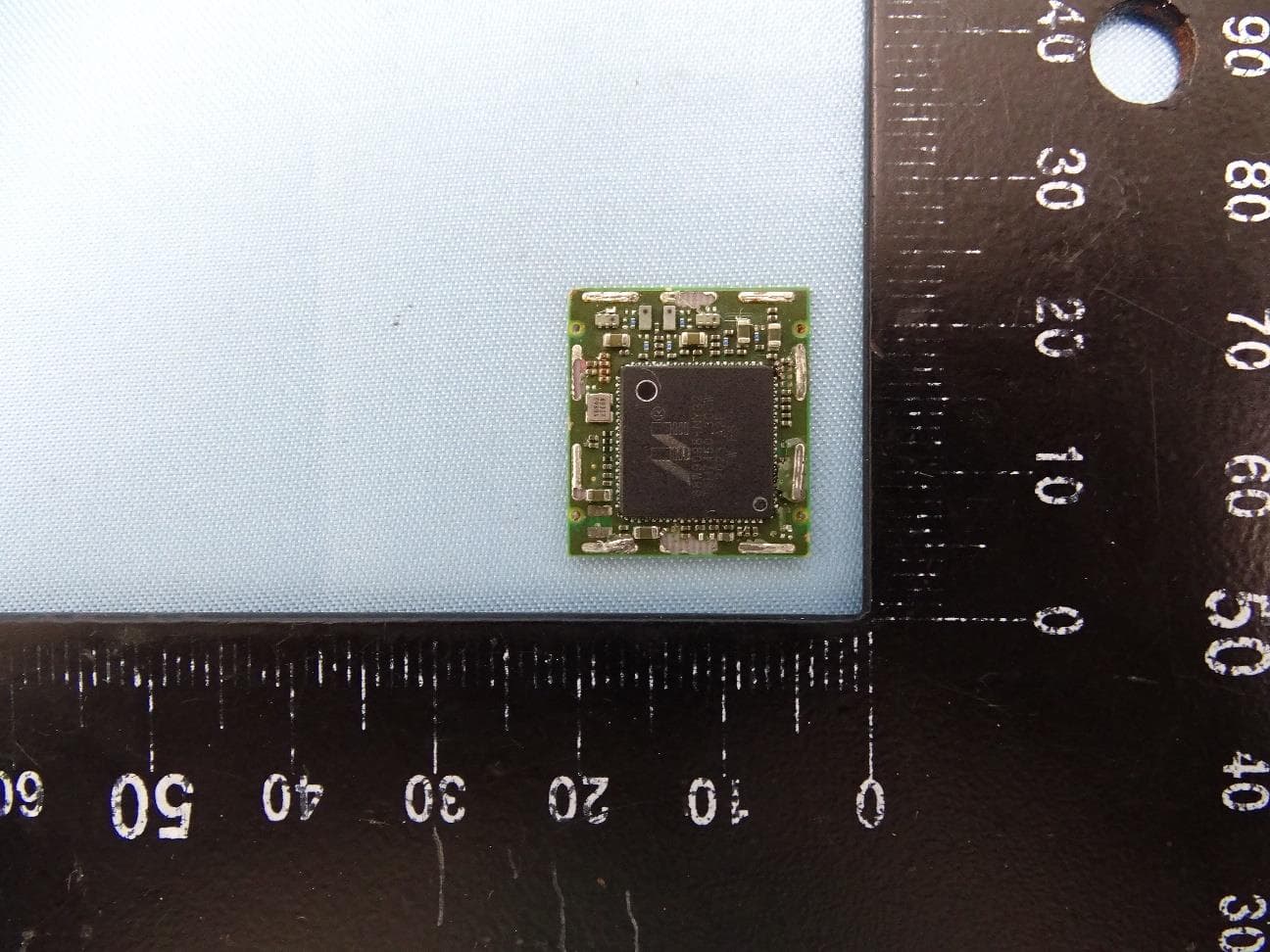
I28-WYSBHVDXP
May 19, 2021WLAN/BTLE module
Equipment Class
DTS - Digital Transmission System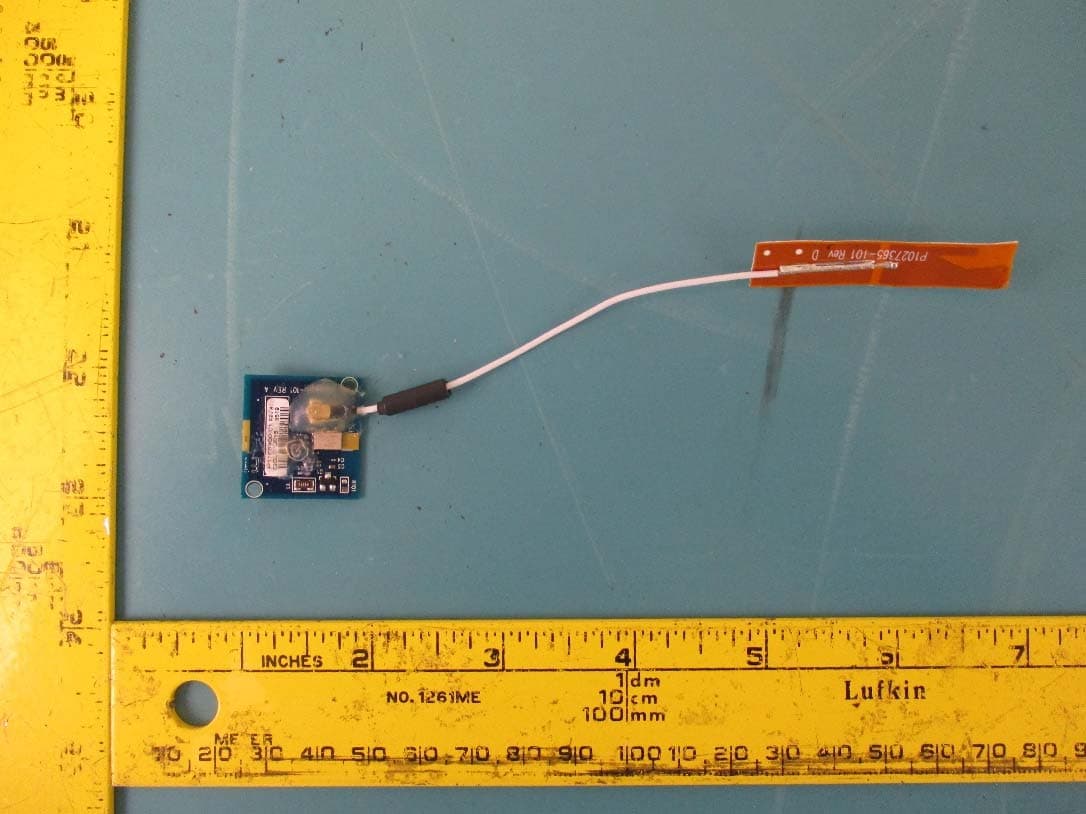
I28-EYSNSNZWWZ1
May 04, 2021BT5 Radio Module
Equipment Class
DTS - Digital Transmission System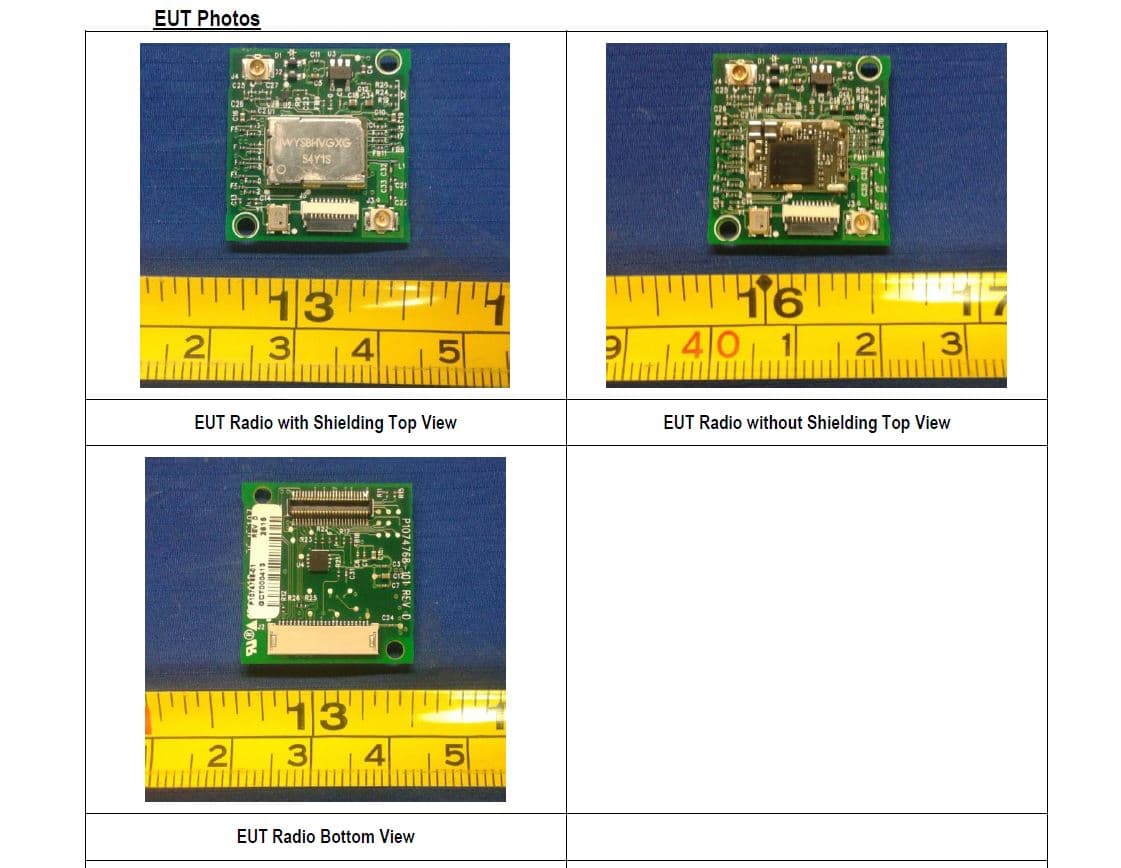
I28MD-FXLAN11AC
Nov 22, 2015Wireless 802.11ac + Bluetooth Module
Equipment Class
DSS - Part 15 Spread Spectrum Transmitter
I28MD-ZBRBLE
Nov 19, 2015Bluetooth Low Energy Module
Equipment Class
DTS - Digital Transmission System
I28MD-ZBR7BTLE
Jan 19, 2015Bluetooth 4.0 LE Module
Equipment Class
DSS - Part 15 Spread Spectrum Transmitter