ISEBTSBaby Tag
Xmark Corporation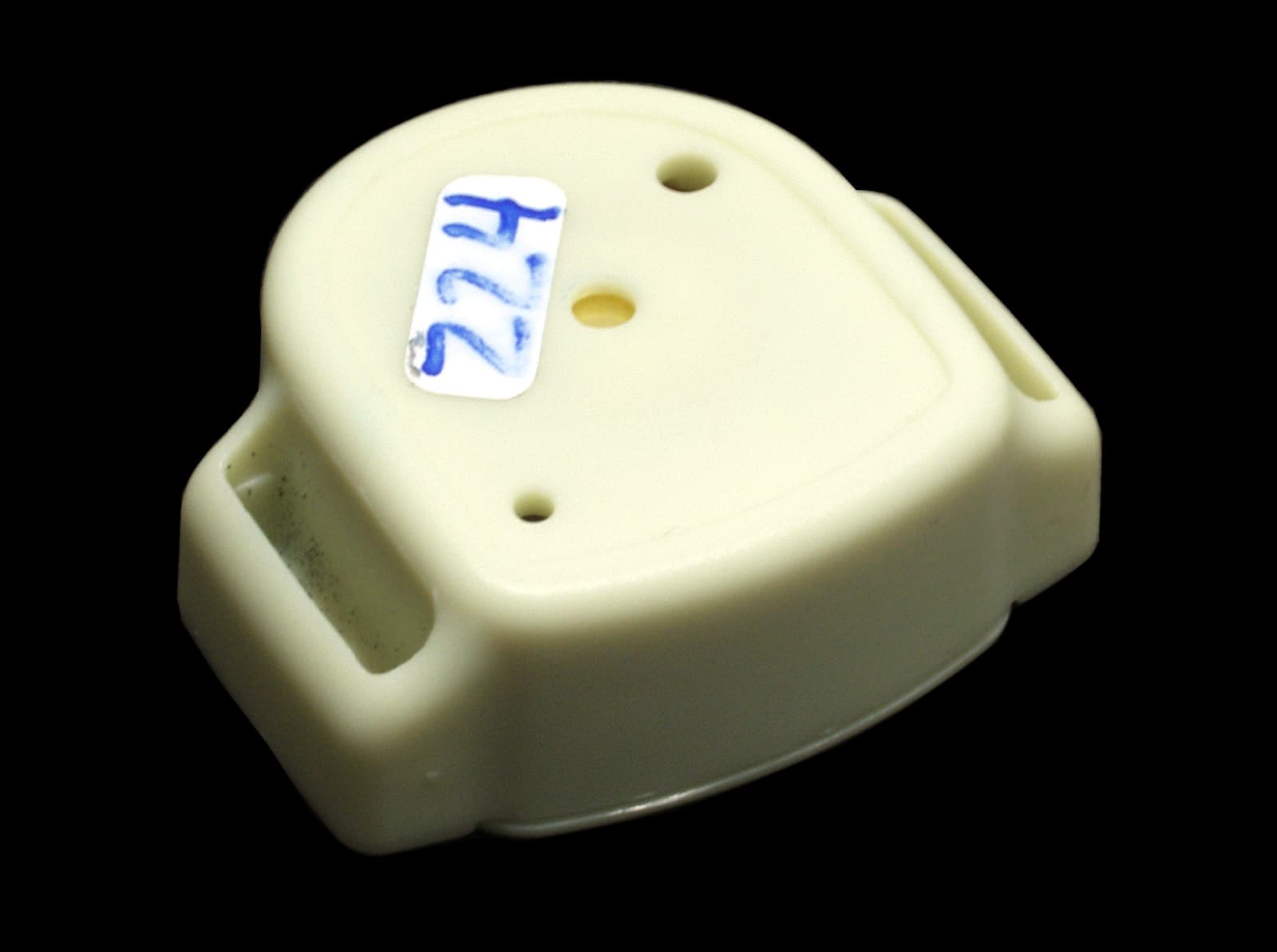
Click to zoom
Application Details
- Equipment Class
- DSR - Part 15 Remote Control/Security Device Transceiver
- Date of Grant
- May 08, 2003
- Application Purpose
- Original Equipment
- Date of Application
- May 08, 2003
- Equipment Note
- Baby Tag
- Frequency Range
- 216.66450000 - 216.66450000
- Company
- Xmark Corporation
- Country
- Canada
Documents & Files
Document Text
Text extracted from the exhibit documents filed with the FCC. Open a document above to read the original.
Users Manual
Hugs ® Tag Instructions 309 Legget Drive Ottawa, ON K2K 3A3 Canada or 808 Commerce Park Drive Ogdensburg, NY 13669 USATelephone: 1-613-592-4642 Facsimile: 1-613-592-4296 Web Site: www.xmarksystems.com © 2003 Instantel Inc. All Rights Reserved. Instantel and Hugs are registered trademarks of Instantel Inc. in North America. Kisses, the hearts logo, Xmark and Heartbeat are trademarks of Instantel Inc. Xmark is a division of Instantel Inc. Printed in Canada. February 2003. 806U2401 Rev 01.Certifi ed to the ISO 9001 Quality Standard Part Number 806A2401 failure and failure to detect infant abduc- tions and/or mother/infant mismatches. The failure to undertake regular testing and maintenance will increase the risk of false reports of infant abductions and/or mother/infant mismatches. Instantel hereby disclaims all warranties, express or implied, arising out of or in connection with any of its Products of the use or performance thereof, including but not limited to, where allowable by law, all other implied warranties or conditions of merchantable quality and fi tness for a par- ticular purpose and those arising by statute or otherwise in law or from a course of dealing or usage of trade. Instantel’s liability to you or anyone claim- ing through or on behalf of you with respect to any claim or loss arising out of the use or misuse of Instantel’s Product, defective products or materials, improper installa- tion or maintenance of Instantel’s Product or products or the system in which they are incorporated, or alleged to have resulted from an act or omission of Instantel or any person, negligent or otherwise, shall be limited to: A) the repair or replacement of defective Product or materials supplied by Instantel during the warranty period as set out in the Product documentation; or, at the option of Instantel, B) refund of the purchase price of the Prod- uct supplied by Instantel. In no event shall Instantel be liable for general, specifi c, indirect, consequential, incidental, exemplary or punitive damages or any losses or expenses suffered by you or anyone else, whether or not Instantel, or its employees, offi cers, agents, resellers or installers has been informed of the risk of such loss or expense and whether or not such losses or expenses were foreseeable. Introduction The Hugs tag is part of the Hugs Infant Protection System. The tag is attached to the infant using a Hugs tamper-proof strap. From the moment of attachment, the infant is automatically enrolled in the system, and protected against abduction. Cutting the band or attempting to remove the infant without authorization from the protected area will immediately cause an alarm. The Hugs tag is also used with the optional Kisses Mother/Infant Matching component of the Hugs System. Kisses is designed to confi rm that the correct infant is matched with the correct mother each time they are brought together. The Hugs tag emits an audible beep to indicate either a correct or incorrect match. The tag is reusable, and does not interfere with other hospital or personal medical equipment. The patented asymmetrical shape of the tag ensures that it does not pinch or irritate the baby’s skin, and also helps prevent it from being kicked off, while still allowing the ankle joint to move freely. The tag is water proof which allows bath- ing of the infant. It is also resistant to soiling and UV light. Please refer to the instructions included with the Hugs straps for details on attach- ing the tag to an infant. Note: The tag is not sterilized at the fac- tory. You may wish to clean the tag prior to fi rst use. Cleaning the Tag The Hugs tag can be cleaned using a soft- bristle brush and a disinfectant soap or similar solution with no more than 20% alcohol content (for example, Butcher’s Heptagon Disinfectant Cleaner, or Kleen- Aseptic from Metrex Research Corp.). Dry the tag thoroughly before use. A small soft-bristle brush can be used to clean the tag slots. Pass the brush care- fully through the tag slot moving from the bottom to top of the tag. Notes: • Do not use an autoclave to clean the tag or serious damage may result. • Do not soak the tag in alcohol or alco- hol-based cleaners. • Do not immerse the tag when cleaning. Handling Information Battery Handling - this device contains a lithium battery. Do not force open, heat to 100° C, or dispose of in fi re. X-Rays - Do not directly expose the tag to X-rays. (The tag is not affected by stray radiation.) Storage Store Hugs tags at room temperature. Statements United States—Federal Communication Commission (FCC) This device complies with Part 15 of the FCC Rules. Operation is subject to the following two conditions: (1) this device may not cause harmful interference, and (2) this device must accept any interfer- ence received, including interference that may cause undesired operation. NOTE: This equipment has been tested and found to comply with the limits for a Class A digital device, pursuant to Part 15 of the FCC Rules. These limits are designed to provide reasonable protection against harm- ful interference when the equipment is oper- ated in a commercial environment. This equipment generates, uses, and can radiate radio frequency energy and, if not installed and used in accordance with the instruction manual, may cause harmful interference to radio communications. Operation of this equipment in a residential area is likely to cause harmful interference in which case the user will be required to correct the interfer- ence at his own expense. Warning: Changes or modifications not expressly approved by Xmark could void the user’s authority to operate the equipment. Canada—Industry Canada The term “IC:” before the certifi cation/ registration number only signifies that Industry Canada technical specifi cations were met. Warranty Xmark’s products are warranted against defects in materials and workmanship and shall perform in accordance with pub- lished specifi cations for a period of one year. Xma…
Text truncated - open the document above for the full version.
Cover Letter(s)
Response to TCB Findings Q: In the table on page 11 of the test report, please clarify the spectrum analyzer settings in the bands measurements were taken. And for the “N.D" readings please specify the noise floor of the receiving measurement system Response: For emissions below 1000MHz, the measurement bandwidth is 100khz (120kHz) and for emissions above 1000MHz, the measurement bandwidth is 1000kHz, as per ANSI C63.4. To find and maximize an emission we will (if required) use amplifiers or reduce the resolution bandwidth of the receiver to maximize the emission (if it can be detected). Once it has been maximized we then correct the measurement bandwidth to measure that level. And the “N.D” readings are as follows: N.D at 433MHz - N.F = 28dBuV N.D. at 866MHz - N.F = 35dBuV N.D. at 1083MHz - N.F. = 40dBuV Q: The user manual does not include a statement warning the users against modifications as required by 15.21. Please insert that statement into the user manual. Response: Supplied
Test Report
Master:PT15-Sub-C-15231 Date: November 12, 2001 Test Report: 3W07091 Applicant: Instantel Inc. 309 Legget Drive Kanata, Ontario K2K 3A3 Equipment Under Test: Baby Tag (EUT) FCC ID: ISEBTG In Accordance With: FCC Part 15, Subpart C, 15.231 Class II Permissive Change Tested By: Nemko Canada Inc. 303 River Road, R.R. 5 Ottawa, Ontario K1V 1H2 Authorized By: Kevin Carr, EMC Specialist Date: 29 April 2003 Total Number of Pages: 15 Nemko Canada Inc. FCC PART 15, SUBPART C, 15.231 Class II Permissive Change PROJECT NO.:3W07091 EQUIPMENT: Baby Tag Page 2 of 15 Table of Contents Section 1. Summary of Test Results ...................................................................................... 3 Section 2. Equipment Under Test .......................................................................................... 5 Section 3. Transmission Requirements ................................................................................. 7 Section 4. Occupied Bandwidth ............................................................................................. 8 Section 5. Periodic Alternate Field Strength Requirements ............................................. 10 Section 6. Block Diagrams .................................................................................................... 14 Section 7. Test Equipment List ............................................................................................ 15 Nemko Canada Inc. FCC PART 15, SUBPART C, 15.231 Class II Permissive Change PROJECT NO.:3W07091 EQUIPMENT: Baby Tag Page 3 of 15 Section 1. Summary of Test Results General All measurements are traceable to national standards. These tests were conducted on a sample of the equipment for the purpose of demonstrating compliance with Part 15, Subpart C. All tests were conducted using measurement procedure ANSI C63.4-1992. Radiated emissions are made on an open area test site. A description of the test facility is on file with the FCC. THIS TEST REPORT RELATES ONLY TO THE ITEM(S) TESTED. TESTED BY: ______________________________ DATE: 24 April 2003 Glen Westwell, Wireless Technologist Nemko Canada Inc. authorizes the above named company to reproduce this report provided it is reproduced in its entirety and for use by the company’s employees only. Any use which a third party makes of this report, or any reliance on or decisions to be made based on it, are the responsibility of such third parties. Nemko Canada Inc. accepts no responsibility for damages, if any, suffered by any third party as a result of decisions made or actions based on this report. This report applies only to the items tested. Nemko Canada Inc. FCC PART 15, SUBPART C, 15.231 Class II Permissive Change PROJECT NO.:3W07091 EQUIPMENT: Baby Tag Page 4 of 15 Summary Of Test Data Name of Test Para. Number Results Transmission Requirements 15.231(a) N/A Radiated Emissions 15.231(b) Complies Occupied Bandwidth 15.231(c) Complies Frequency Tolerance 15.231(d) N/A Periodic Alternate Field Strength Requirements 15.231(e) Complies Description of Changes to Hugs Tag Transmitter The following change was made to change the operating Frequency of the Transmitter from 217.003MHz to 216.6645MHz: Designator Part Identifier Description Was: Y1 80600701 XTMR Crystal 72.332833MHz Becomes: Y1 XTL 72.220000 Crystal,72.220000MHz, UM-5 Test Conditions: Indoor Temperature: 22°C Humidity: 45% Outdoor Temperature: 5°C Humidity: 55% Nemko Canada Inc. FCC PART 15, SUBPART C, 15.231 Class II Permissive Change PROJECT NO.:3W07091 EQUIPMENT: Baby Tag Page 5 of 15 Section 2. Equipment Under Test General Equipment Information Manufacturer: Instantel Inc. Model No.: 806A2402 Serial No.: None Date Received In Laboratory: 23 April 2003 Nemko Identification No.: 1 Transmit Frequency (fixed) 216.6645MHz 20 dB Bandwidth: 10.0kHz Type of Modulation: FSK Emission designator: 9K7P0D Occupied Bandwidth (99% BW): 9.7kHz Nemko Canada Inc. FCC PART 15, SUBPART C, 15.231 Class II Permissive Change PROJECT NO.:3W07091 EQUIPMENT: Baby Tag Page 6 of 15 99% Occupied Band Width Nemko Canada Inc. FCC PART 15, SUBPART C, 15.231 Class II Permissive Change PROJECT NO.:3W07091 EQUIPMENT: Baby Tag Page 7 of 15 Section 3. Transmission Requirements Para. No.: 15.231(a) Test Performed By: Glen Westwell Date of Test: 23 April 2003 Minimum Standard: 15.231(a) Continuous transmissions such as voice, video or data transmissions are not permitted. 15.231(a)(1) A manually operated transmitter shall employ a switch that will automatically deactivate the transmitter within not more than 5 seconds after being released. 15.231(a)(2) A transmitter activated automatically shall cease transmission within 5 seconds of activation. 15.231(a)(3) Periodic transmissions at regular pre-determined intervals are not permitted. However polling or supervisory transmissions to determine system integrity of transmitters used in security or safety applications are allowed if the periodic rate of transmission does not exceed one transmission of not more than one second duration per hour for each transmitter. 15.231(a)(4) Intentional radiators which are employed for radio control purposes during emergencies involving fire, security, and safety of life, when activated to signal an alarm, may operate during the pendency of the alarm. Test Results: N/A EUT was tested to 15.231(e), Reduced Field Strengths. Test Data: Compliance was determined by verification of technical specifications and a functional test on the equipment. Nemko Canada Inc. FCC PART 15, SUBPART C, 15.231 Class II Permissive Change PROJECT NO.:3W07091 EQUIPMENT: Baby Tag Page 8 of 15 Section 4. Occupied Bandwidth Para. No.: 15.231(c) Test Performed By: Glen Westwell Date of Test: 23 April 2003 Minimum Standard: 15.231(c) The bandwidth of the emission shall be no wider than 0.25% of the center frequency for devices operating above 70 MHz and below 900 MHz. For devices operating above 900 MHz, the emission shall be no wider than 0.5% of the center…
Text truncated - open the document above for the full version.
Test Setup Photos
Nemko Canada Inc. FCC PART 15, SUBPART C, 15.231 Class II Permissive Change PROJECT NO.:3W07091 EQUIPMENT: Baby Tag Page 13 of 15 OATS, SET UP PHOTO
Contact Information
Applicant
Peter Rousseau(RF Technologist)
Test Firm
Nemko Canada Inc.Stuart Beck
Technical Specifications
| # | Rule Parts | Frequency Range | Power Output |
|---|---|---|---|
| 1 | 15.231(e) | 216.6645 MHz - 216.6645 MHz | - |
Other Applications from Xmark Corporation
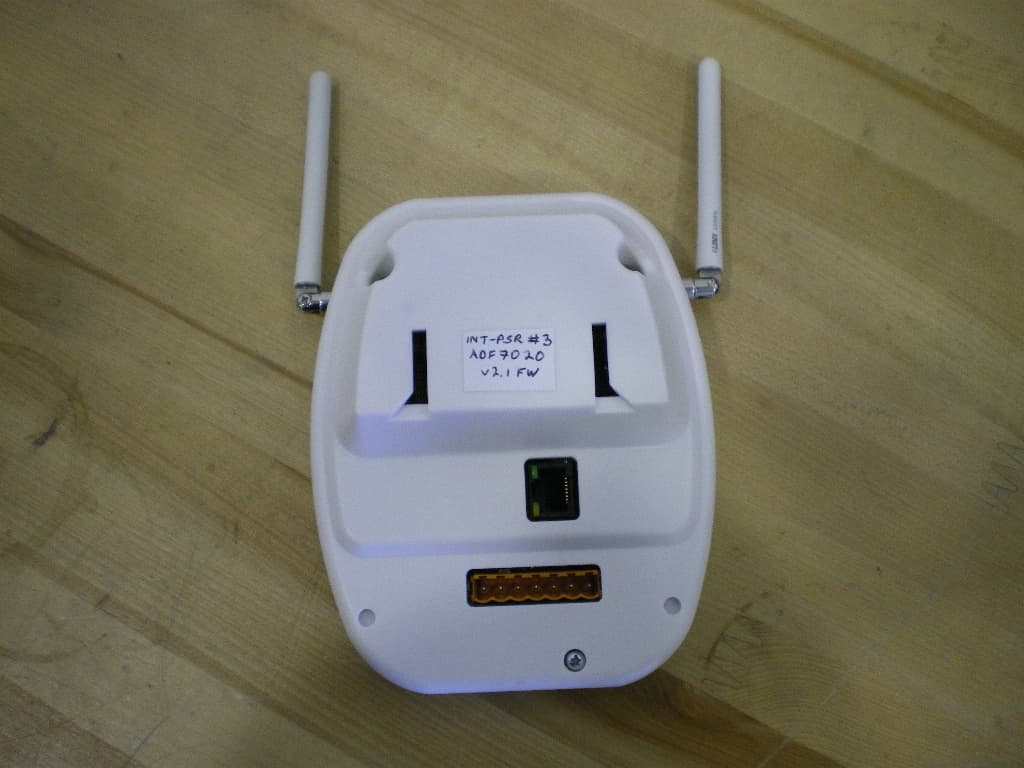
ISEIPSR
Dec 02, 2010434MHz International Patient Security Receiver
Equipment Class
CYY - Communications Receiver used w/Pt 15 Transmitter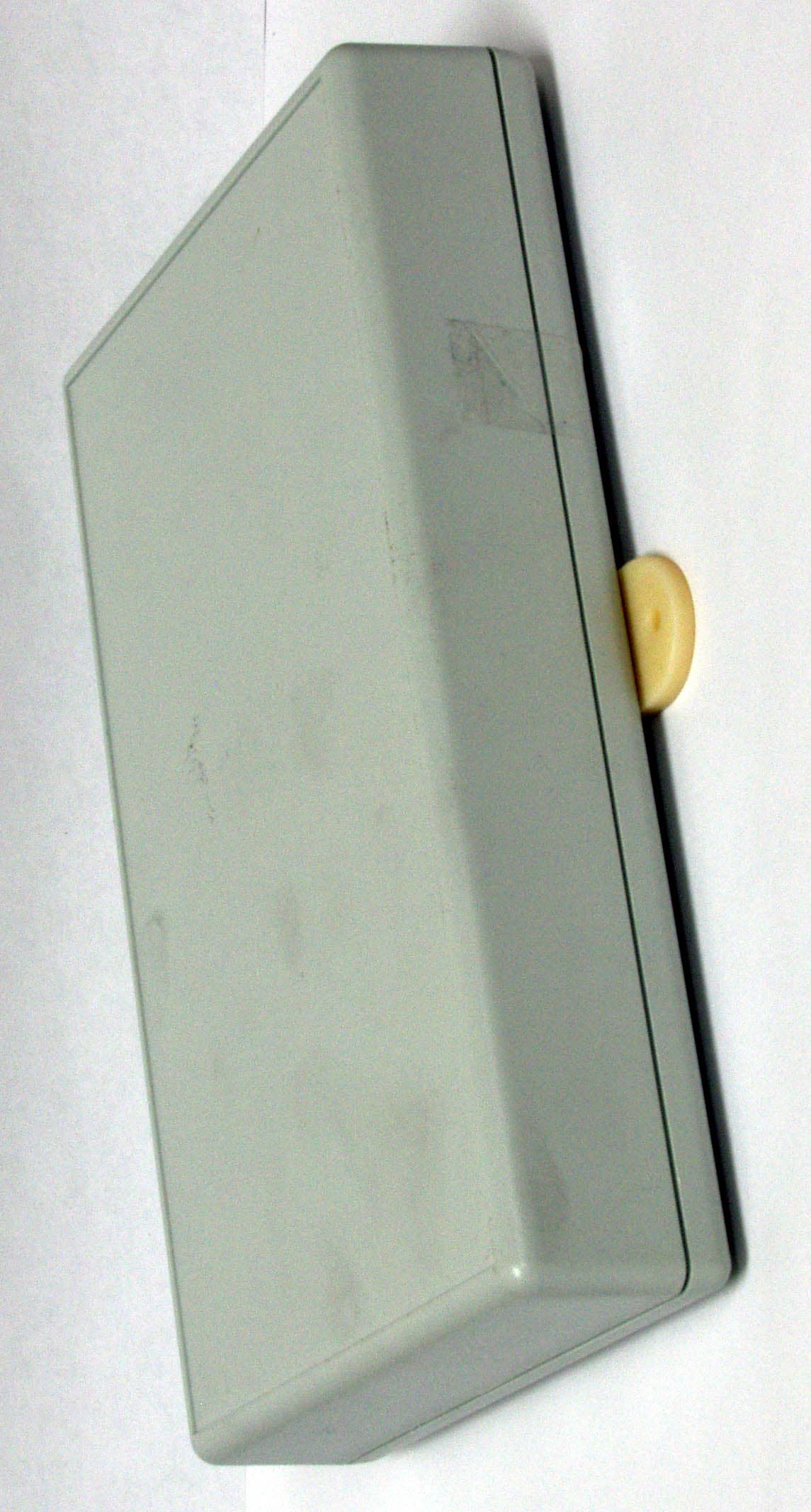
ISEXCR
Oct 16, 2007Transceiver Exciter
Equipment Class
DCD - Part 15 Low Power Transmitter Below 1705 kHz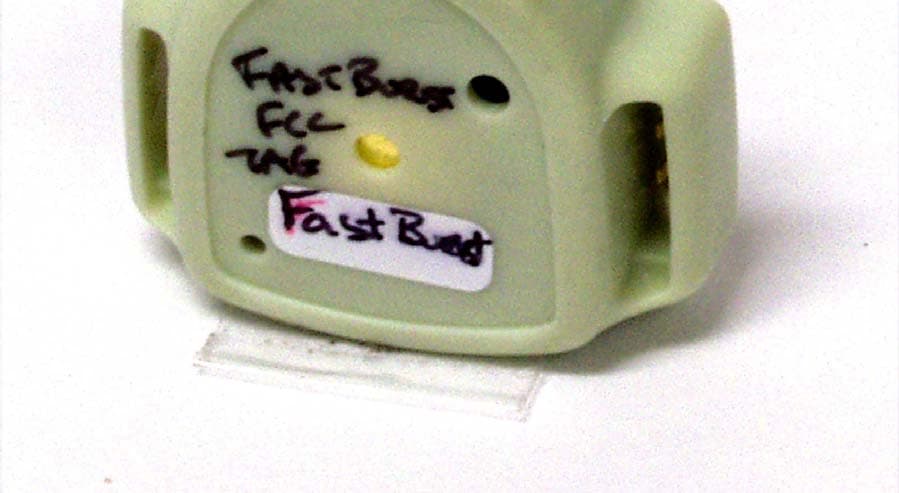
ISEH2H
Jun 20, 2006Infant Tag
Equipment Class
DSR - Part 15 Remote Control/Security Device Transceiver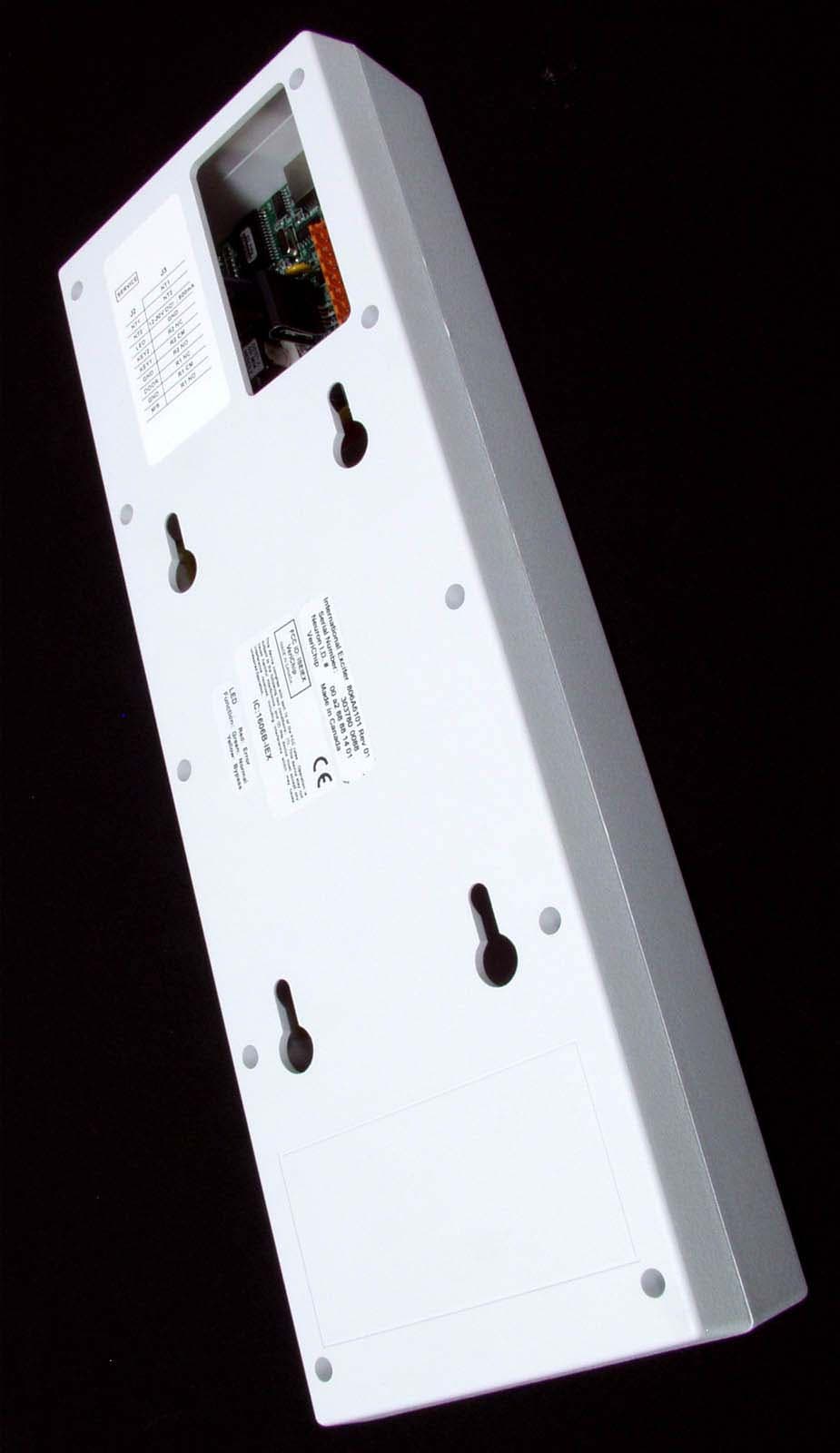
ISEIEX
Aug 25, 2005Low Power Transmitter
Equipment Class
DCD - Part 15 Low Power Transmitter Below 1705 kHz
ISEIMF
Jun 23, 2005Communicator Tag
Equipment Class
DSC - Part 15 Security/Remote Control Transmitter