K7GMSFGJTwo Way Radio with Weather Band
Giant Electronics Ltd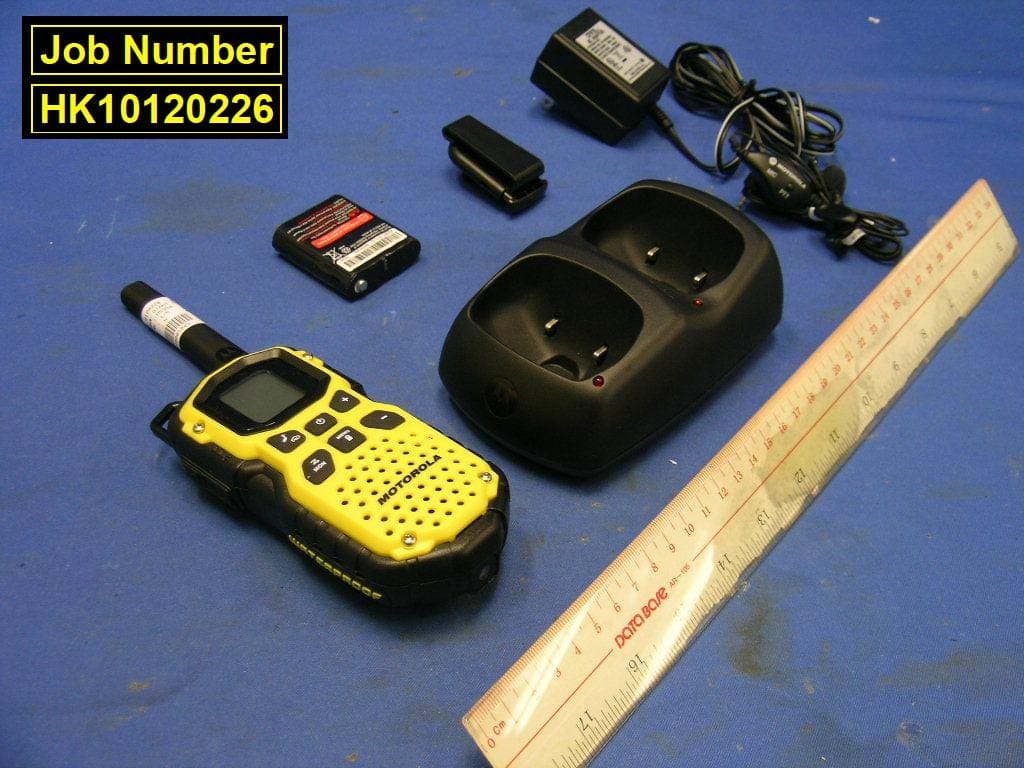
Click to zoom
Application Details
- Equipment Class
- CXX - Communications Rcvr for use w/ licensed Tx and CBs
- Date of Grant
- Mar 10, 2011
- Application Purpose
- Original Equipment
- Date of Application
- Mar 10, 2011
- Equipment Note
- Two Way Radio with Weather Band
- Frequency Range
- 161.65000000 - 162.55000000
- Company
- Giant Electronics Ltd
- Country
- Hong Kong
Documents & Files
Document Text
Text extracted from the exhibit documents filed with the FCC. Open a document above to read the original.
Users Manual
MS560 Series KEM-ML36100-22 Safety and General Information Important Information on Safe and Efficient Operation Read This Information Before Using Your Radio. The information provided in this document supersedes the general safety information in user guides published prior to December 1, 2002. Transmit and Receive Procedure Your two-way radio contains a transmitter and a receiver. To control your exposure and ensure compliance with the general population/ uncontrolled environment exposure limits, always adhere to the following procedure: • Transmit no more than 50% of the time. • To receive calls, release the PTT button. • To transmit (talk), press the Push to Talk (PTT) button. Transmitting 50% of the time, or less, is important because the radio generates measurable RF energy exposure only when transmitting (in terms of measuring standards compliance). Exposure to Radio Frequency Energy Your Motorola two-way radio complies with the following RF energy exposure standards and guidelines: • United States Federal Communications Commission, Code of Federal Regulations; 47CFR part 2 sub-part J. • American National Standards Institute (ANSI)/Institute of Electrical and Electronic Engineers (IEEE) C95. 1-1992. • Institute of Electrical and Electronics Engineers (IEEE) C95. 1-1999 Edition. • International Commission on Non-Ionizing Radiation Protection (ICNIRP) 1998. • Ministry of Health (Canada) Safety Code 6. Limits of Human Exposure to Radiofrequency Electromagnetic Fields in the Frequency Range from 3 KHz to 300 GHz, 1999. • Australian Communications Authority Radiocommunications (Electromagnetic Radiation—Human Exposure) Standard, 2003. • ANATEL ANNEX to Resolution No. 303 of July 2, 2002. • ANATEL ANNEX to Resolution No. 533 of September 10, 2009. To ensure optimal radio performance and make sure human exposure to radio frequency electromagnetic energy is within the guidelines set forth in the above standards, always adhere to the following procedures. Portable Radio Operation and EME Exposure Antenna Care Use only the supplied or an approved replacement antenna. Unauthorized antennas, modifications, or attachments could damage the radio and may violate FCC regulations. Do NOT hold the antenna when the radio is “IN USE.” Holding the antenna affects its effective range. Body-Worn Operation To maintain compliances with FCC/Health Canada RF exposure guidelines if you wear a radio on your body when transmitting always place the radio in a Motorola-supplied or approved clip holder, holster, case or body harness for this product. Use of non-Motorola-approved accessories may exceed FCC/Health Canada RF exposure guidelines. If you do not use one of the Motorola-supplied or approved body-worn accessories and are not using the radio held in the normal use position, ensure the radio and its antenna are at least 1 inch (2.5 cm) from your body when transmitting. Data Operation If applicable, when using any data feature of the radio with or without an accessory cable, position the radio and its antenna at least one inch (2.5 cm) from the body. Approved Accessories 53724: Remote Speaker with Push-to-Talk Microphone 53725: Headset with Swivel Boom Microphone 53727: Earbud with Push-to-Talk Microphone 53728: Flexible Ear Receiver 56320: Earpiece with Boom Microphone Electromagnetic Interference/Compatibility Note: Nearly every electronic device is susceptible to electromagnetic interference (EMI) if inadequately shielded, designed or otherwise configured for electromagnetic compatibility. This device complies with Part 15 of the FCC Rules. Operation is subject to the following two conditions: 1. This device may not cause harmful interference; and 2. This device must accept any interference received, including interference that may cause undesired operation. IC Canada The term "IC:" before the equipment certification number only signifies that the Industry Canada technical specifications were met. Facilities To avoid electromagnetic interference and/or compatibility conflicts, turn off your radio in any facility where posted notices instruct you to do so. Hospitals or health care facilities may be using equipment that is sensitive to external RF energy. Aircraft When instructed to do so, turn off your radio when onboard an aircraft. Any use of a radio must be in accordance with applicable regulations per airline crew instructions. Medical Devices – Pacemakers The Advanced Medical Technology Association recommends that a minimum separation of 6 inches (15 cm) be maintained between a handheld wireless radio and a pacemaker. These recommendations are consistent with the independent research by and recommendations of the U.S. Food and Drug Administration. People with pacemakers should: • ALWAYS keep the radio more than 6 inches (15 cm) from their pacemaker when the radio is turned ON. • Not carry the radio in the breast pocket. • Use the ear opposite the pacemaker to minimize the potential for interference. • Turn the radio OFF immediately if there is any reason to suspect that interference is taking place. Medical Devices – Hearing Aids Some digital wireless radios may interfere with some hearing aids. In the event of such interference, you may want to consult your hearing aid manufacturer to discuss alternatives. Medical Devices – Other If you use any other personal medical device, consult the manufacturer of your device to determine if it is adequately shielded from RF energy. Your physician may be able to assist you in obtaining this information. Safety and General Use While Driving Check the laws and regulations regarding the use of radios in the area where you drive, and always obey them. If you do use your radio while driving, please: • Give full attention to driving and to the road. • Use hands-free operation, if available. • Pull off the road and park before making or answering a call if driving conditions so require. The use of a two-way radio while engaged in activities requiring concentration may …
Text truncated - open the document above for the full version.
Cover Letter(s)
Re: FCC ID: K7GMSFGJ Pursuant to 47 CFR 0.459, Giant Electronics Ltd. request confidential protection of the following documents submitted electronically in furtherance of the above-reference application as containing propriety information listed below: ■ Schematic ■ Block Diagram ■ Operational Description ■ Tune up Procedure ■ Part list This information represents intellectual property of Giant Electronics Ltd. and it is subject to competition. This information should not be made routinely available for public inspection, and Giant Electronics Ltd. reserves the right to discern which parties can obtain access to this information. Dated this 14 th day of January 2011 By: YuMin Zou . Signature Printed Title : A. Manager The content of this document is Giant Electronics Ltd.'s intellectual property and is the property of Giant. It is to be treated as strictly confidential and is not to be disclosed, reproduced, or used except as authorized in writing by Giant Electronics Ltd. In connection with the manufacture, maintenance and use of the Giant equipment to which it pertains. Copyright @Giant Electronics Ltd. All rights reserved.
External Photos
INTERTEK TESTING SERVICES External Photos FCC ID: K7GMSFGJ external photos - 1 of 1
ID Label/Location Info
GIANT MODEL: MS350XXXCAYEE4 CUSTOMER MODEL: MS560CR TITLE: FCC & MODEL NUMBER LABEL GIANT ELECTRICS LIMITED DOCUMENT NO. ENG-MS560CR-09 REV # A PAGE P3 NOTE: 1. STICK THE MODEL NUMBER & IC LABEL AND WEEE LABEL AND AN EAS TAG LABEL INTO THE BATTERY BOX. 2. STICK THE FCC ID LABEL ONTO RADIO BACK SIDE. 3. PUT THE DUAL RESONATOR INTO THE BATTERY DOOR,(ONE PER PACKAGE,NOT PER RADIO) MODEL NUMBER & IC LABEL SIZE: W45H7.5MM WEEE LABEL KEM-PK10615 WYMXXXXX 00000......1 00001......2 00002......3 . . . . 00009......10 0000B......11 . . . . 0000Z......31 00010......32 Serial Number of unit format S/N is printed base same customer number one by one. Start from first 00001, first unit is 00000, the second is 00001, the eleven is 0000B etc. W=GIANT(Vendor Code) Y=Year Code A=2000, B=2001, C=2003,......H=2007 J=2008, K=2009, L=2010, M=2011 N=2012, P=2013, Q=2014, R=2015 S=2016, T=2-017, U=2018, V=2019 W=2020, X=2021, Y=2022, Z=2023,etc. Serial number format: M=Month Code A or B=Jan, C or D=Feb E or F=Mar, G or G=Apr J or K=May, L or M=Jun N or P=Jul, Q or R=Aug S or T=Sep, U or V=Oct W or X=Nov, Y or Z=Dec FCC ID LABEL SIZE: W19.7H3.3MM FCC ID: K7GMSFGJ Model: MS560CR IC: 2415B-MSFGJ MOTOROLA SN.: WYMXXXXX 4.5VDC DD/MMM/YYYY Tnp: MS350BAXCAYEXX MADE IN CHINA DUAL RESONATOR WITH BARCODE REMOVE LABEL SUPPORT CUSHION
Test Setup Photos
INTERTEK TESTING SERVICES The Worst Case Configuration Photographs FCC ID: K7GMSFGJ config photos (radiated emission) - 1 of 1 Radiated Emission Front View Rear View
Contact Information
Applicant
Yumin Zou(A. Manager)
Technical Contact
Intertek Testing Services Hong Kong LtdKen Sit
[email protected]2173-8888
Flat D 5/F Garment Centre · Kowloon · Hong Kong
Non-Technical Contact
Intertek Testing Services Hong Kong LtdKen Sit
[email protected]2173-8888
Test Firm
Intertek Testing Services Hong Kong Ltd.Billy Chow
Technical Specifications
| # | Rule Parts | Frequency Range | Power Output |
|---|---|---|---|
| 1 | 15B | 161.65 MHz - 162.55 MHz | - |
Other Applications from Giant Electronics Ltd
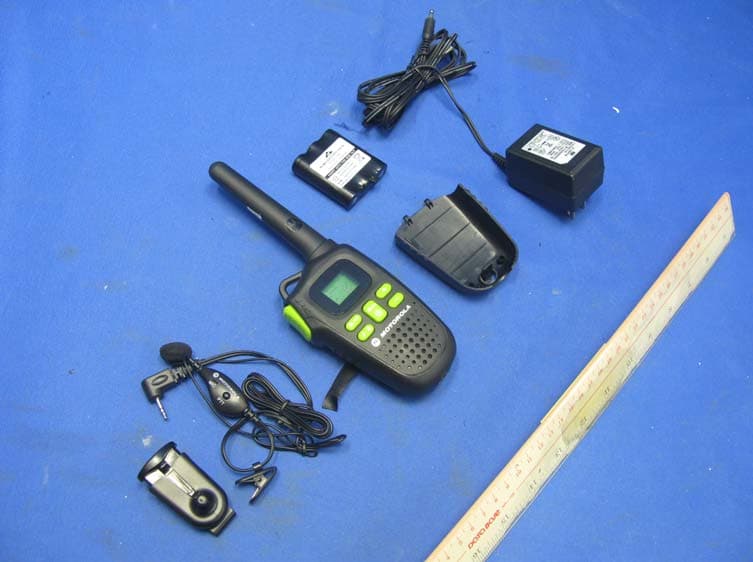
K7GMDBJJPR
Jun 24, 2012Two Way Radio - FRS
Equipment Class
FRF - Part 95 Family Radio Face Held Transmitter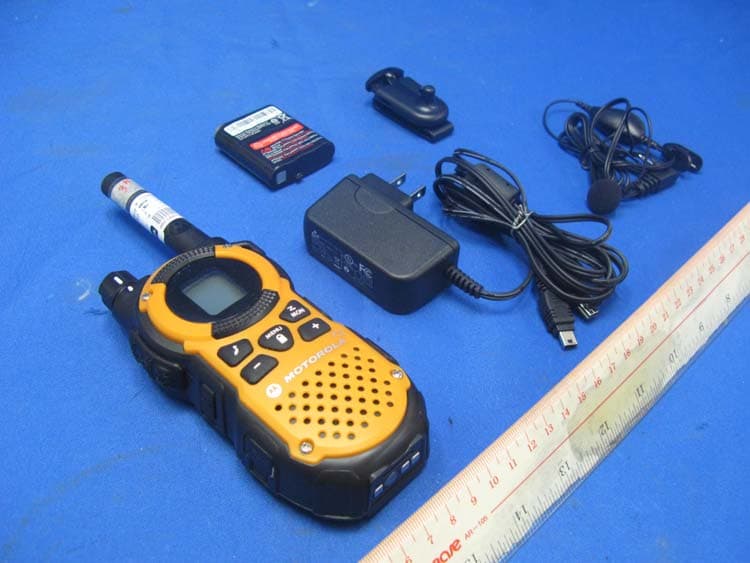
K7GMTCEJ
Apr 26, 2012Two Way Radio with GMRS and FRS
Equipment Class
CXX - Communications Rcvr for use w/ licensed Tx and CBs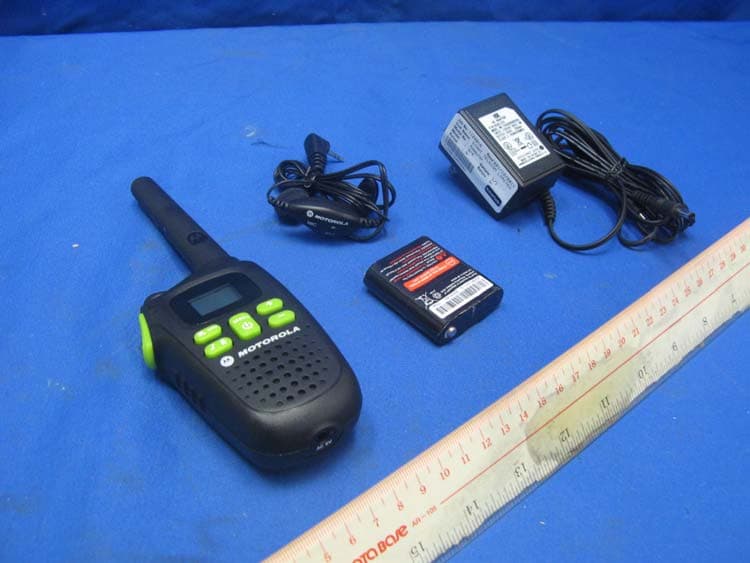
K7GMDBJJ
Mar 01, 2012Two Way Radio with GMRS and FRS
Equipment Class
FRF - Part 95 Family Radio Face Held Transmitter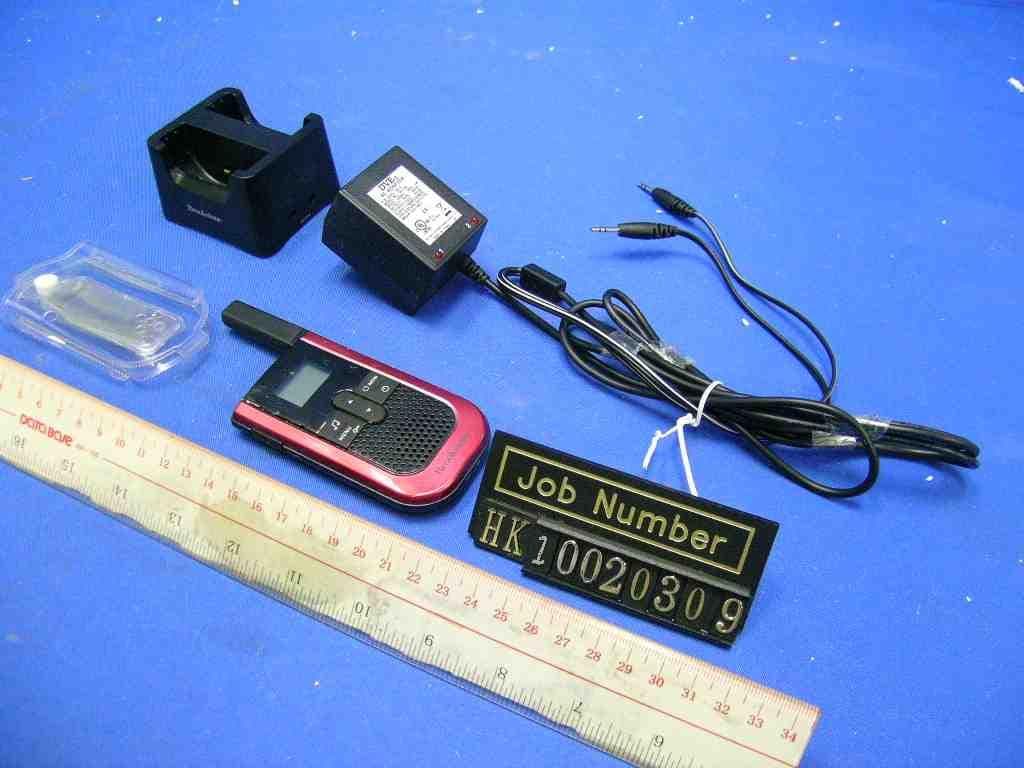
K7GT2007
Apr 08, 2010Two Way Radio with GMRS and FRS
Equipment Class
FRF - Part 95 Family Radio Face Held Transmitter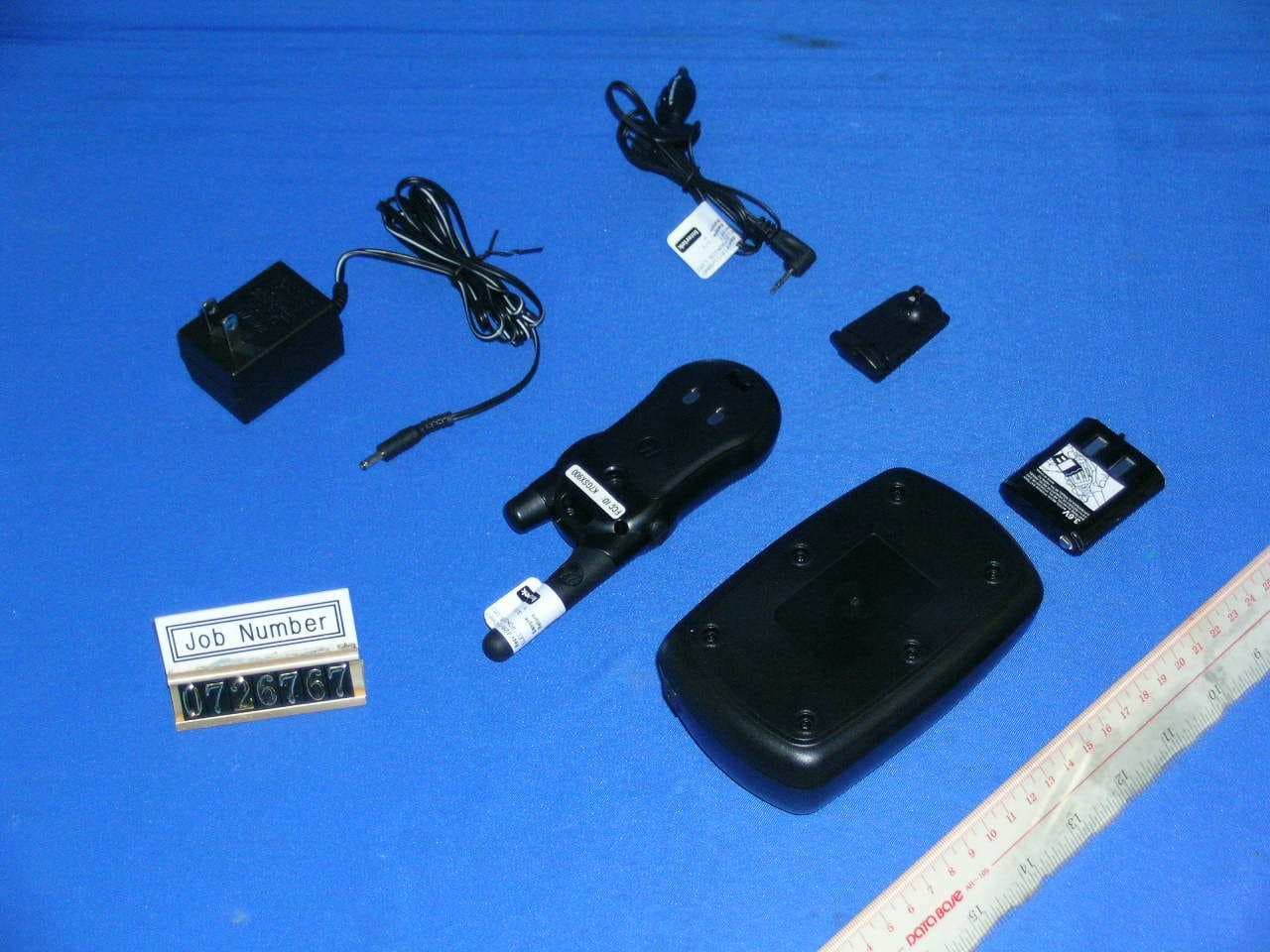
K7GSX900
Feb 19, 2008Two Way Radio with GMRS, FRS, and Weather Band Rx
Equipment Class
FRF - Part 95 Family Radio Face Held Transmitter