KL7-662T-V1RF ID Tag
Savi Technology Inc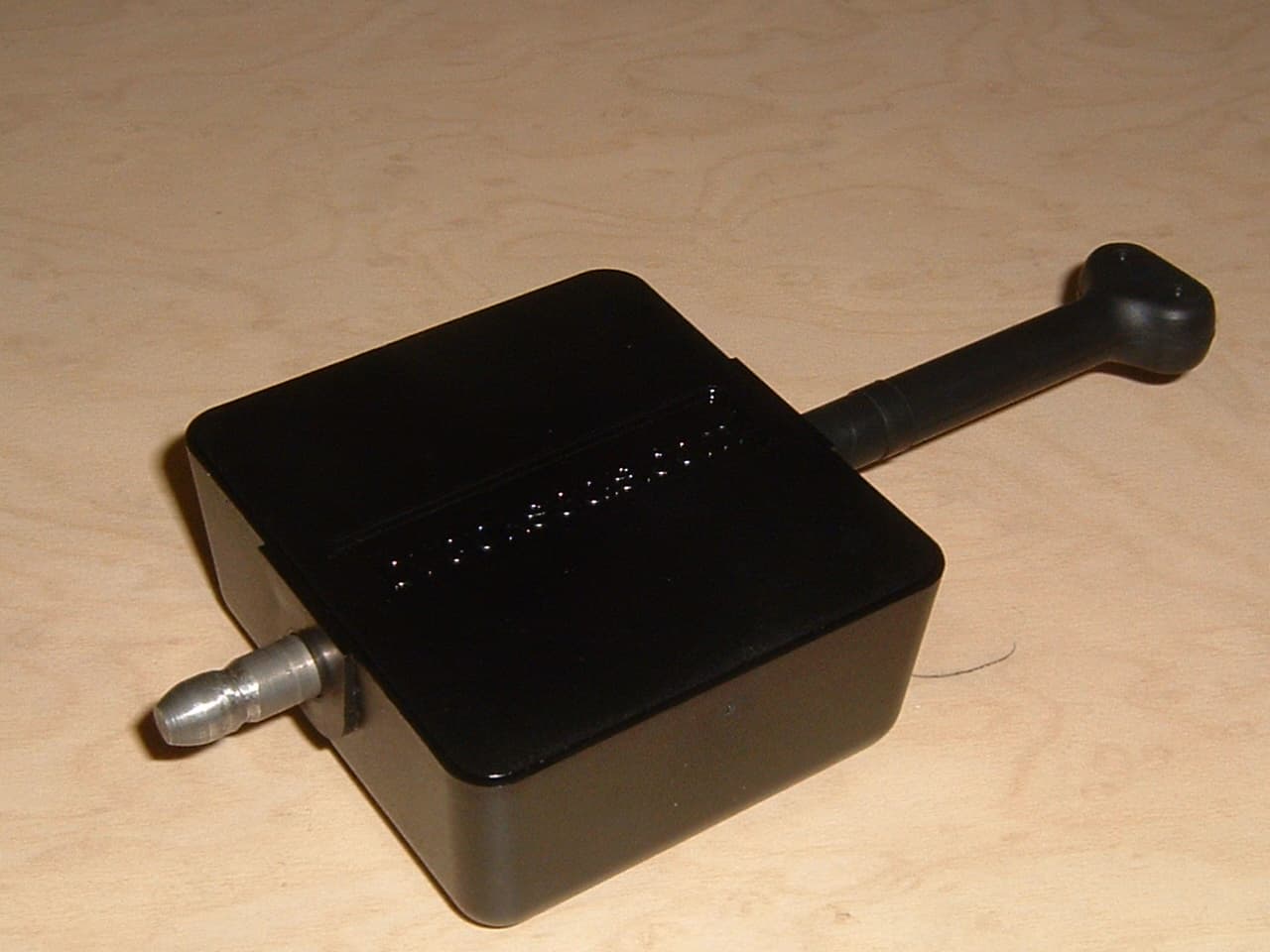
Click to zoom
Application Details
- Equipment Class
- DXT - Part 15 Low Power Transceiver, Rx Verified
- Date of Grant
- May 21, 2006
- Application Purpose
- Original Equipment
- Date of Application
- May 10, 2006
- Equipment Note
- RF ID Tag
- Frequency Range
- 433.92000000 - 433.92000000
- Company
- Savi Technology Inc
- Country
- United States
Documents & Files
Document Text
Text extracted from the exhibit documents filed with the FCC. Open a document above to read the original.
Users Manual
ST-661 Savi -EJ Brooks Single Use eSeal Tag ST-662 Savi -EJ Brooks Reusable eSeal Tag U.S. Regulatory Approvals Compliance Notice 1 Keep This Document Savi P/N 805-05260-001 (Rev. A) Federal Communications Commission (FCC) Notice The Federal Communications Commission has established technical standards regarding radio frequency energy emitted by computer devices. This equipment has been tested and found to comply with the limits for a Class A digital device, pursuant to Part 15 of the FCC Rules. These limits are designed to provide reasonable protection against harmful interference when the equipment is operated in a commercial environment. This equipment generates, uses, and can radiate radio frequency energy and, if not installed and used in accordance with the instruction manual, may cause harmful interference with radio/TV reception. Operation of this equipment in a residential area is likely to cause harmful interference in which case the user will be required to correct the interference at his own expense. Warning: Changes or modifications to this equipment that are not expressly approved by Savi Technology could void the warranty and the authority to operate this equipment. Savi Technology is not responsible for radio/TV interference caused by using unauthorized cable or by making unauthorized changes to this equipment. Federal Communications Commission (FCC) Label Statement This device complies with Part 15 of the FCC Rules. Operation is subject to the following conditions: • This device may not cause harmful interference, and • This device must accept any interference received, including interference that may cause undesired operation. The label statement corresponds to the following devices: Savi Technology, Inc. 615 Tasman Drive Sunnyvale, CA 94089-1707 Phone:(408) 743-8000 Fax:(408) 543-8650 E-mail:[email protected] Web site:www.savi.com Copyright © 2006, Savi Technology Incorporated. All rights reserved. First edition printed March 2006. Copyright protection claimed includes all forms and matters of copyrightable material and information, now allowed by statutory or judicial law or hereinafter granted. Information in this guide is subject to change without notice and does not represent a commitment from the vendor. Savi is a registered trademark and EchoPoint is a trademark of Savi Technology Incorporated. Other product names mentioned in this guide may be trademarks or registered trademarks of their respective owners and are hereby acknowledged. DeviceModelFCC ID Radio TagST-661 Savi -EJ Brooks Single Use eSeal Tag KL7-661T-V1 Radio TagST-662 Savi -EJ Brooks Reusable eSeal Tag KL7-662T-V1
Users Manual
Installation Guide For Savi-EJ Brooks Re-Usable eSeal ST-662 Page 1 of 3 pages ELECTRONIC COPY NOT CONTROLLED IF PRINTED Date Prepared Revision Revision Date Revision Approval Feb 24, 2006 1.0 Feb 24, 2006 K. Merritt Savi-EJB Installation Guide - ST-662.doc Savi-EJ Brooks Re-Usable eSeal ST-662 Installation Guide The EJ Brooks Re-Usable Electronic eSeal ST-662 consists of a printed circuit board incorporating a non-replaceable battery enclosed in a sealed plastic case with a fixed bolt designed for single insertion. Once the bolt is inserted in the housing, it is locked in place, and cannot be removed without destroying the unit. • The Savi-EJ Brooks ST-662 tag contains a label on the front with the tag serial number in both bar code and numerical format and includes the product model number. The label also includes FCC compliance markings. • The Savi-EJ Brooks ST-662 tag can be exposed to environments including rain, snow, and direct exposure to sunlight. • The tag battery life is a nominal 4 years under normal operating conditions. The tag contains an internal lithium battery and should be discarded according to local safety requirements. Installation Guide For Savi-EJ Brooks Re-Usable eSeal ST-662 Page 2 of 3 pages ELECTRONIC COPY NOT CONTROLLED IF PRINTED Date Prepared Revision Revision Date Revision Approval Feb 24, 2006 1.0 Feb 24, 2006 K. Merritt Savi-EJB Installation Guide - ST-662.doc Tag Attachment Tag Attachment Tag Attachment Tag Attachment Do not insert the bolt through the body of the tag housing prior to inserting it through the security hasp. Once the external bushing cap (Intermodal Locking Unit) is joined to the bolt, it cannot be removed without destroying the bolt. The Savi-EJ Brooks ST-662 contains an integrated locking bolt assembly. 1. Place the bolt through the lock holes of the closed security hasp. • Always orient the tag with the main tag body below the container hasp. 2. Snap the bolt into the seal housing and then into the bolt cap far enough to hear an audible ‘click’, locking the bolt into place, where the bolt is pushed in all the way. To make sure the bolt is secure, pull on the seal case housing gently to make sure the bolt is secure. The bolt is now secured via the cap’s internal bushing. Tag Operation Tag OperationTag Operation Tag Operation • After installation you may communicate with the device and monitor events using the appropriate commands from a Savi Mobile Readers SMR-650 or Fixed Readers SR-650 and SP-652. • Once the tag is electronically locked (sealed), if the bolt is cut or removed, a tamper event will occur. Installation Guide For Savi-EJ Brooks Re-Usable eSeal ST-662 Page 3 of 3 pages ELECTRONIC COPY NOT CONTROLLED IF PRINTED Date Prepared Revision Revision Date Revision Approval Feb 24, 2006 1.0 Feb 24, 2006 K. Merritt Savi-EJB Installation Guide - ST-662.doc
Cover Letter(s)
RE: Savi Technology, Inc. FCC ID: KL7-662T-V1 Dear Tim, Here are your questions concerning the above application with the responses embedded: 1) Page 7 of the operational description appears to show > 5 sec transmit for the reader for wakeup and hello command (480 + 90 + 10). Please explain as it appears the reader is in excess of 15.231 timing requirements. The timing for the reader’s transmission is 4.8 seconds + 90ms + 10ms = 4.9 seconds (4800 + 90 + 10 = 4900). This meets the 15.231 limit for transmissions under 15.231(a). 2) Section 6.3.4.2 of the operational description mentions the pattern repeating up to 6 times (6 * 330 msec), but this would be in excess of the 1 second maximum transmit period. Please explain. The timing of the pulses described is a transmission time of 330ms followed by a silent period of 10 seconds repeated up to 6 times (i.e. the pattern of 3 pulses is not repeated 6 times, the pattern of three pulses followed by a 10 second silent period is repeated up to 6 times). 3) Information regarding 15.240 (a), (e), and (f) do not appear to be provided to the user. Please review. The operation under 15.240 is dictated by the reader and not by the tag. In a previous application it was, therefore, considered that these statements only belong with the readers capable of controlling the tags to operate under 15.240 and not the tags themselves, since use is transparent to the end user. Please advise if you still consider it necessary to include the statements in the manual for the tag. 4) Please explain how the device knows when it is communicating with a 15.240 device vs. a 15.231 device. The tag is controlled by a 15.240 certified Reader located at a Registered Site where the reader is specially configured to enable 15.240 Tag Read commands to be sent to the tag. The commands issued by the15.240 reader are what cause the tag to operate under 15.240. At other sites not Registered for 15.240 operation, Readers are only configured to enable 15.231 Tag Read commands. 5) Is the applicant fully aware of their responsibility under 15.240(f). Please have Savi comment. Savi understand the requirements and their responsibilities for the manufacture of devices that operate under 15.240. This is shown in the operational description, provided by Savi, on page 8, Read/Write Operations Under Section 15.240. As the readers that control the tags are responsible for initiating the tags responses under 15.240 it is suggested that the applicant has to address these issues in full in applications for readers operating under FCC 15.240. 6) Please provide further detail/justification of point to point signals being considered under 15.231(a) vs. 15.231(e). The point-to-point signals contain a combination of control and data information as permitted under 15.231(a) and as explained to the FCC in previous communications between Savi and the FCC. 15.231(a) permits transmissions to be initiated by human operation or other non- periodic external events. Point-to-point operations are initiated in two ways: (1.) by operators requesting control and data interaction with the tags, or (2.) through non-periodic events generated through the system control logic which in turn generate a command to the tag. 15.231(a) permits data to be combined with control functions in a single transmission. Point-to-point commands always include several ID fields which control the system response, and also include control bits indicating the state of the devices including battery status, alarm conditions triggered by sensors, and the results of data searches inside the device. These control fields may generate requests for service or maintenance, or in control decisions for the routing of the asset to its final destination. 7) Was the device investigated from 30 – 200 MHz? Test equipment does not necessarily support this. Preliminary scans in an anechoic chamber were performed from 30 MHz to 4GHz. No signals were observed below 300 MHz, therefore all OATS measurements were made between 400 MHz and 4.3 GHz. 8) Duty cycle on page 30 of 43 is 10% for the fundamental. However information suggests that duty cycle may be 10 or 25% in this mode. Please review. The data has been corrected, apologies for not spotting this. 9) On page 30 of 43 1301 MHz is a restricted band, but incorrect limits were applied. Additionally, a 20 dB correction appears to be used when only a 12 dB correction for averaging should have been used. Please review/correct. The data has been corrected, apologies for not spotting this. 10) Please comment on if the 99% bandwidth was measured using IC techniques as specified in the attachment? Additionally, it does not appear that the measurements meet with the requirements of using RBW > 1%, VBW > 3*RBW and NO Video Averaging? RSS-GEN, section 4.4.1, issue 1. Please correct the IC form as necessary. The 99% bandwidth has been re-measured using the correct settings and the IC form has been corrected.
ID Label/Location Info
735-05162-TAB_rev. 01 SHEET 2 OF 2 LABEL, Model No./Compliance/Serial#, ST-661/ST-662 EJ BROOKS’ LABEL Notes: (Unless Otherwise Specified) 1. Dimensions are in inches, ± 0.1 2. Tag ID Range is to be determined by Savi Operations. Place Barcode in the box indicated “Printed Serial Number” and “Barcode Serial Number” must match. 3. Tag ID is Barcoded, Barcode Type. Barcode and Text to be centered and conformed to Code 39. High density, 9.4 characters per inch. 4. Label shall be manufactured by an UL Approved Vendor. Vendor shall have a current signed “Printer Agreement” on file with UL per UL marking and labeling system and shall supply each package or roll marked with company name and label designation per UL marking and labeling systems. 5. Specifications: M M A A T T E E R R I I A A L L FLEXMARK PM-200-W (3 MIL.) POLYESTER WITH V-23 ADHESIVE (1 MIL.) C C O O L L O O R R BLACK LETTERS ON WHITE BACKGORUND EXCEPT AS NOTED F F O O N N T T ARIAL BOLD L L A A M M I I N N A A T T I I O O N N 1 MIL CLEAR POLYESTER 6. Use ARTWORK FILE, 231-05162-002, to produce Label. 735-05162-002 2 3 1.871 1.624 XXXXXXX
Test Report
File: R63111 Page 1 of 22 2016-01 Electromagnetic Emissions Test Report In Accordance With Industry Canada Radio Standards Specification 210 And FCC Part 15 Sections 15.209, 15.231, 15.240 on the Savi Technology, Inc. Transmitter Model: ST-662 UPN: 2404A-662T FCC ID: KL7-662T-V1 GRANTEE: Savi Technology, Inc. 615 Tasman Drive Sunnyvale, CA 94089-1707 TEST SITE: Elliott Laboratories, Inc. 684 W. Maude Ave Sunnyvale, CA 94086 REPORT DATE: February 27, 2006 FINAL TEST DATE: February 3, February 10 and February 17, 2006 AUTHORIZED SIGNATORY: ______________________________ Mark Briggs Principal Engineer Elliott Laboratories, Inc. is accredited by the A2LA, certificate number 2016-01, to perform the test(s) listed in this report. This report shall not be reproduced, except in its entirety, without the written approval of Elliott Laboratories, Inc. Elliott Laboratories, Inc. -- EMC Department Test Report Report Date: February 27, 2006 File: R63111 Page 2 of 22 pages Equipment Name and Model: Transceiver ST-662 Manufacturer: Savi Technology, Inc. 615 Tasman Drive Sunnyvale, CA 94089-1707 Tested to applicable standard: RSS210, Issue 5, February 1996 Low Power License-Exempt Radio Communication Devices Test Report Prepared For: Eugene Schlindwein Savi Technology, Inc. 615 Tasman Drive Sunnyvale, CA 94089-1707 Measurement Facility Description Filed With Department of Industry: Departmental Acknowledgement Number: IC2845 SV2 Dated August 16, 2007 Declaration of Compliance I declare that the testing was performed or supervised by me; that the test measurements were made in accordance with the above mentioned departmental standards (through the use of ANSI C63.4:2003 as detailed in section 5.3 of RSS-210, Issue 5); and that the equipment performed in accordance with the data submitted in this report. Signature ______________________________ Name Mark Briggs Title Principal Engineer Elliott Laboratories Inc. Address 684 W. Maude Ave Sunnyvale, CA 94086 USA Date: February 27, 2006 Elliott Laboratories, Inc. -- EMC Department Test Report Report Date: February 27, 2006 File: R63111 Page 3 of 22 pages TABLE OF CONTENTS COVER PAGE............................................................................................................................................................. 1 TABLE OF CONTENTS ..........................................................................................................................................3 SCOPE........................................................................................................................................................................5 OBJECTIVE ..............................................................................................................................................................5 STATEMENT OF COMPLIANCE .........................................................................................................................6 TEST RESULTS SUMMARY..................................................................................................................................6 MOMENTARILY OPERATED DEVICES – CONTROL SIGNALS...................................................................6 MOMENTARILY OPERATED DEVICES – DATA SIGNALS OR SIGNALS AT PREDETERMINED INTERVALS ..........................................................................................................................................................7 RFID DEVICES OPERATING IN THE 433.5 – 434.5MHZ BANDS ..................................................................7 GENERAL REQUIREMENTS APPLICABLE TO ALL BANDS ........................................................................8 MEASUREMENT UNCERTAINTIES ...................................................................................................................8 EQUIPMENT UNDER TEST (EUT) DETAILS ....................................................................................................9 GENERAL..............................................................................................................................................................9 ENCLOSURE .........................................................................................................................................................9 MODIFICATIONS .................................................................................................................................................9 SUPPORT EQUIPMENT.......................................................................................................................................9 EUT INTERFACE PORTS ....................................................................................................................................9 EUT OPERATION ...............................................................................................................................................10 ANTENNA SYSTEM ..........................................................................................................................................10 TEST SITE ...............................................................................................................................................................11 GENERAL INFORMATION ...............................................................................................................................11 CONDUCTED EMISSIONS CONSIDERATIONS.............................................................................................11 RADIATED EMISSIONS CONSIDERATIONS.................................................................................................11 MEASUREMENT INSTRUMENTATION ..........................................................................................................12 RECEIVER SYSTEM ..........................................................................................................................................12 INSTRUMENT CONTROL CO…
Text truncated - open the document above for the full version.
Contact Information
Applicant
Rosemary Johnston(Vice President, Operations)
Technical Contact
Elliot Laboratories, Inc.Mark Briggs
[email protected]408-245-7800
684 W. Maude Ave. · Sunnyvale, California · United States
Test Firm
Elliott Laboratories Inc.David Bare
Technical Specifications
| # | Rule Parts | Frequency Range | Power Output |
|---|---|---|---|
| 1 | 15C | 433.92 MHz - 433.92 MHz | - |
Other Applications from Savi Technology Inc

KL7-650MR-V6
Aug 11, 2010RFID Reader
Equipment Class
DSR - Part 15 Remote Control/Security Device Transceiver
KL7-694T-V1
Jun 03, 2010RFID TAG
Equipment Class
DXT - Part 15 Low Power Transceiver, Rx Verified
KL7-696T-V1
Feb 05, 2008RFID Tag
Equipment Class
DXT - Part 15 Low Power Transceiver, Rx Verified
KL7-602T-V1
Aug 02, 2007RFID Tag
Equipment Class
DSR - Part 15 Remote Control/Security Device Transceiver
KL7-662T-V2
May 17, 2007Active RF ID Tag
Equipment Class
DSC - Part 15 Security/Remote Control Transmitter