KLS-PLB-1Fastfind
Orolia Ltd
Click to zoom
Application Details
- Equipment Class
- PLB - Personal Locator Beacons
- Date of Grant
- Jul 09, 2003
- Application Purpose
- Original Equipment
- Date of Application
- Jun 23, 2003
- Equipment Note
- Fastfind
- Frequency Range
- 406.02800000 - 406.02800000
- Company
- Orolia Ltd
- Country
- United Kingdom
Documents & Files

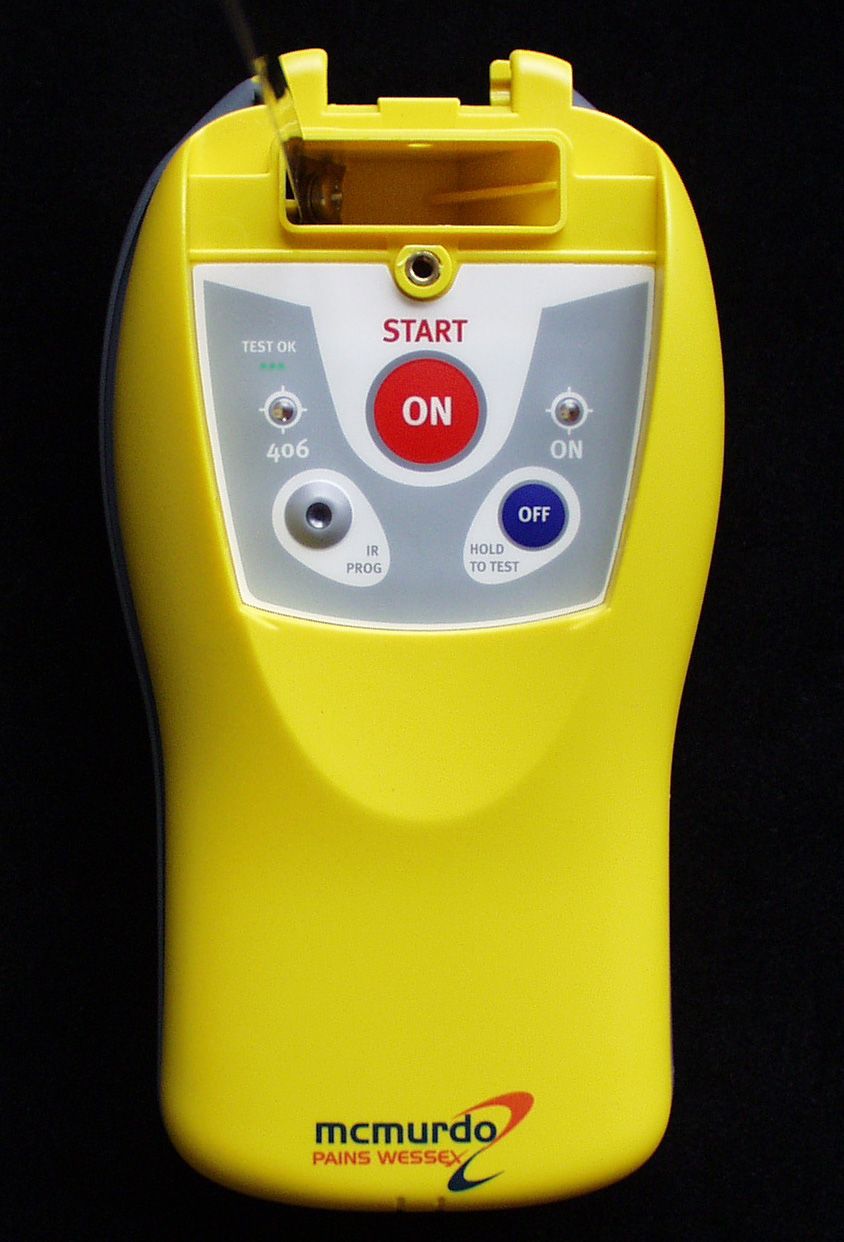

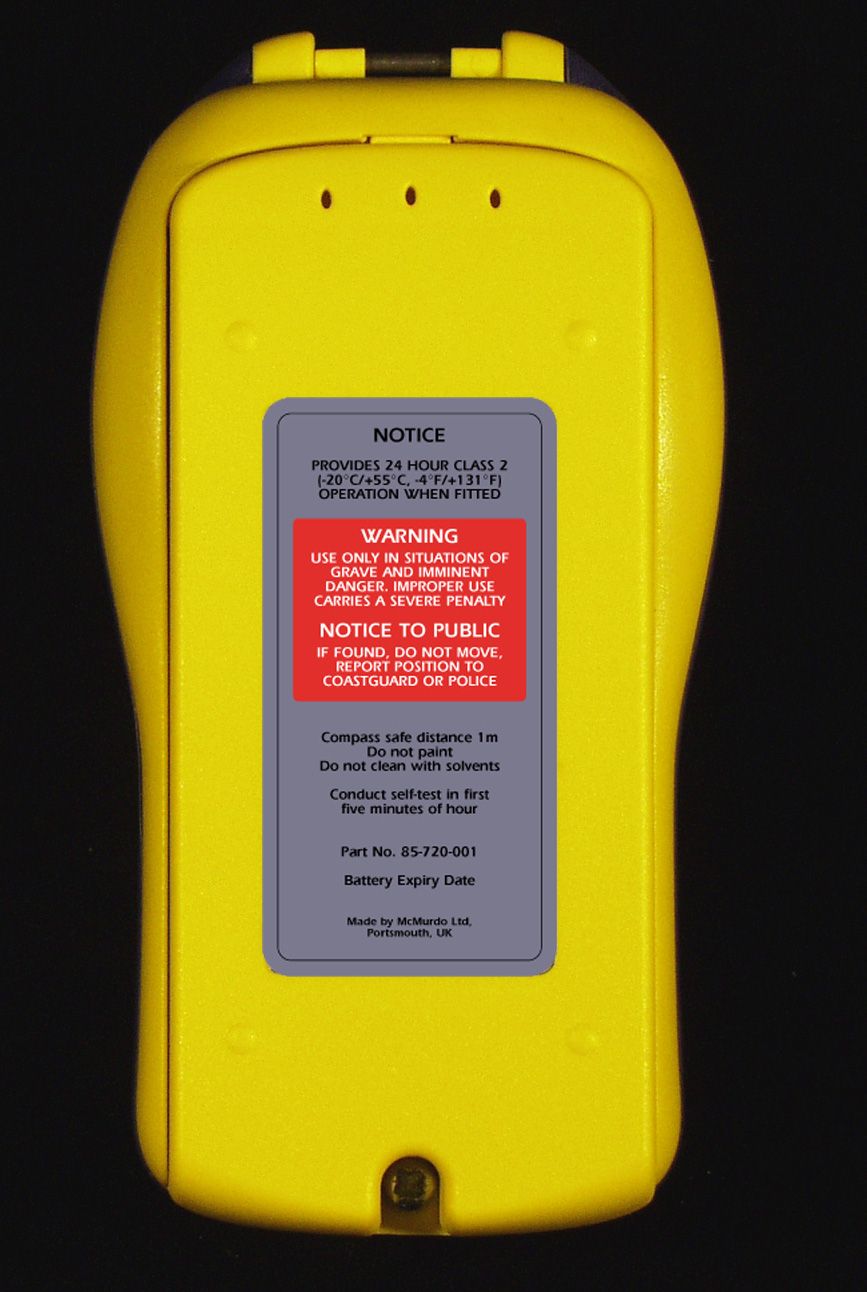
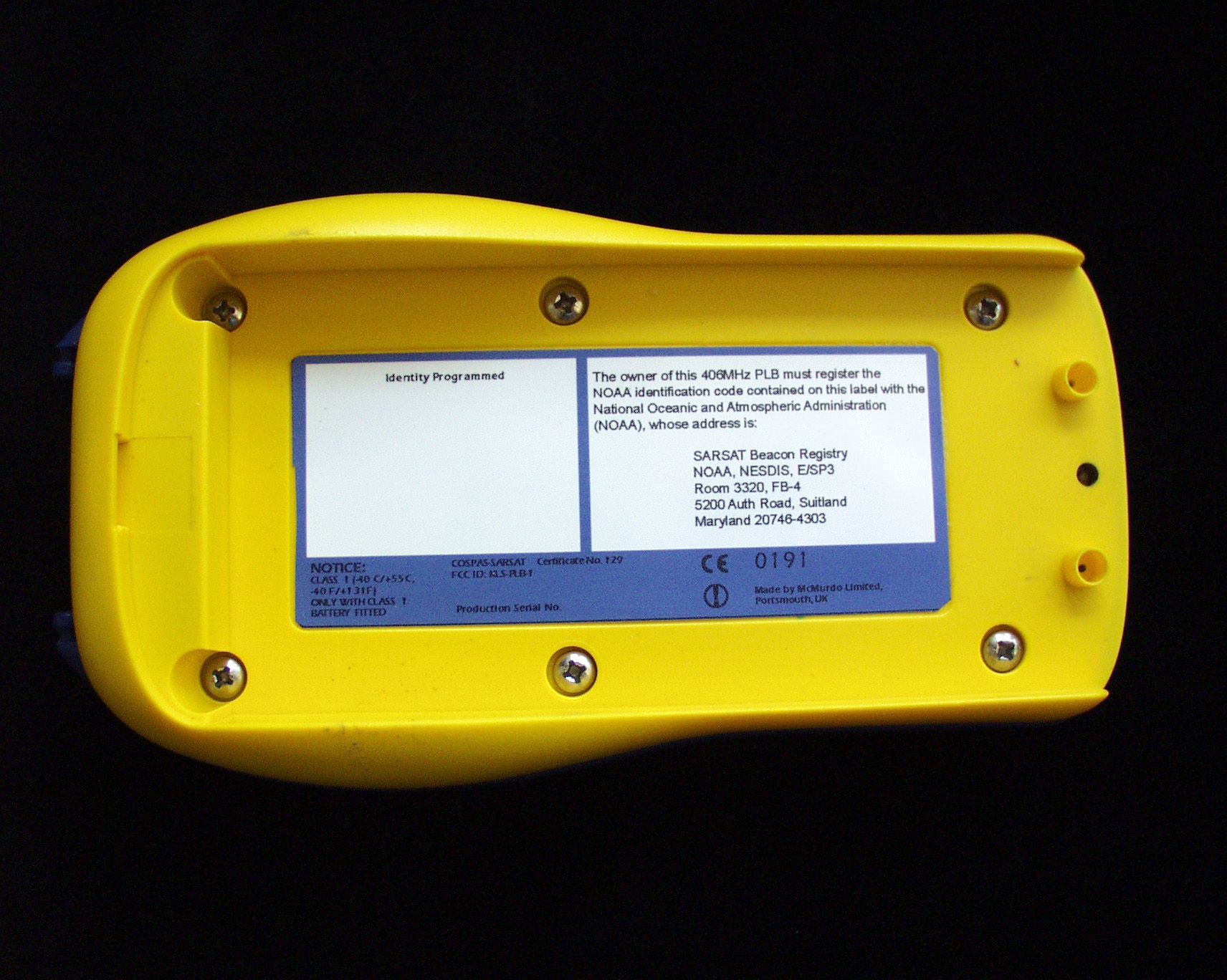
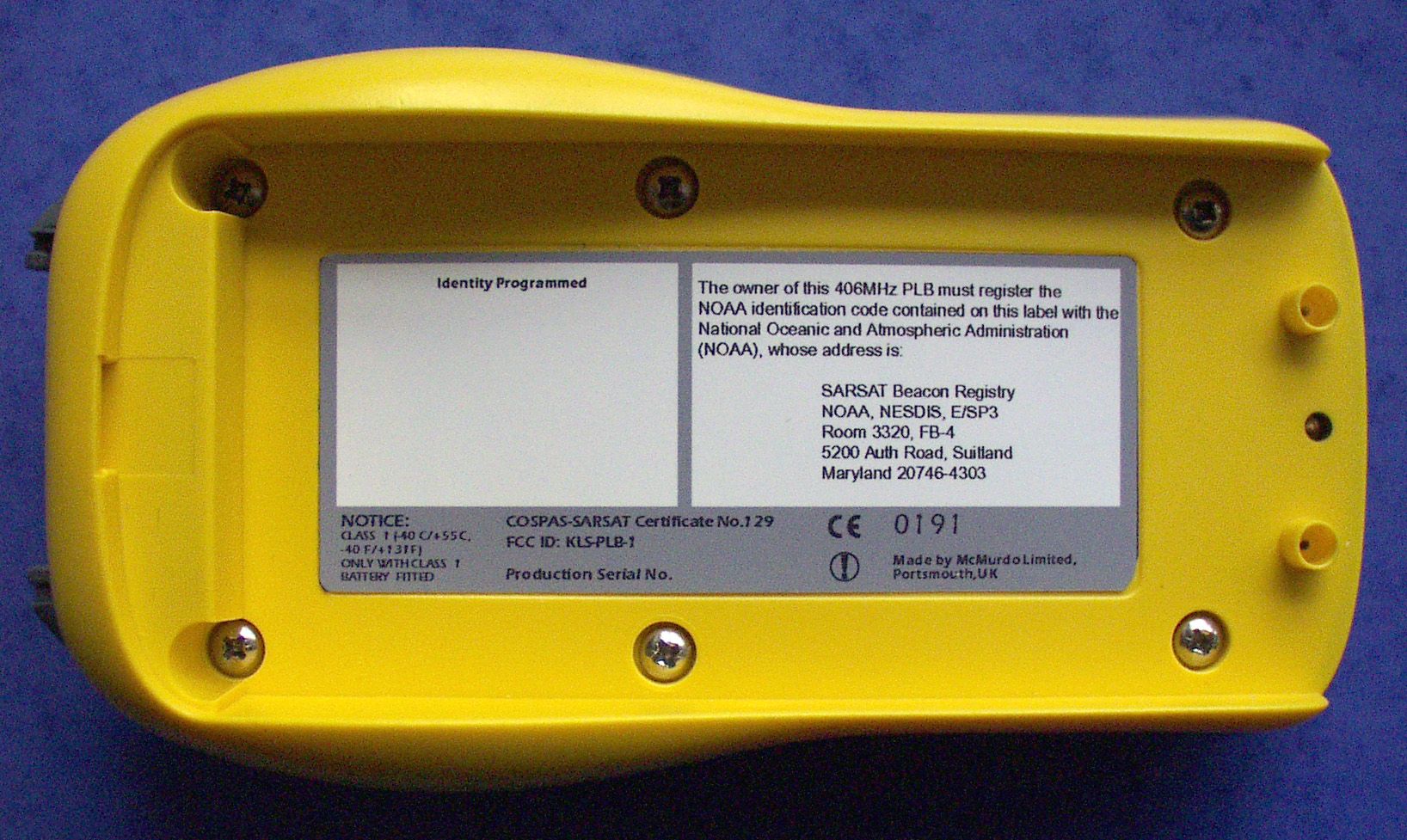
Document Text
Text extracted from the exhibit documents filed with the FCC. Open a document above to read the original.
Users Manual
Fastfind & Fastfind Plus Personal Locator Beacon Owner’s manual WARNING Use only in situations of grave and imminent danger Register PLB with NOAA SARSAT (refer to details on Page 2 following) before use McMurdo Limited reserves the right to change this specification at any time without notice, and hereby specifically disclaims liability for any consequences of such action. Contents Recommendations and Safety Notices.......................................1 Registration and licensing ...........................................................2 Quick Checklist ...........................................................................3 Introduction .................................................................................4 Preparation for Use .....................................................................4 Operation ....................................................................................5 Self-test ............................................................................................. 5 Emergency operation ........................................................................ 7 Switching off ...................................................................................... 8 Using the PLB in an emergency .................................................9 How does it work?.....................................................................10 PLB Registration.......................................................................11 COSPAS-SARSAT Satellite System.........................................12 Indicators...................................................................................14 Fastfind (non-GPS version) .............................................................14 Fastfind Plus (integral GPS version)............................................... 15 False Alarms and Complete Deactivation.................................17 Service and Maintenance .........................................................18 Before use ....................................................................................... 18 After use.......................................................................................... 18 Inadvertent Activation......................................................................18 Battery Packs ............................................................................18 Spare Parts ..................................................................................... 19 Service ............................................................................................ 19 Verification ...................................................................................... 19 Specification..............................................................................20 McMurdo Limited Product Warranty .........................................22 IMPORTANT Please take time to read this manual carefully and to understand its contents fully, so that you can maintain your PLB and operate it correctly in case of an emergency Page 1 Recommendations and Safety Notices This Fastfind or Fastfind Plus Personal Locator Beacon (PLB) is an emergency radio beacon for use only in situations of grave and imminent danger. False alarms cause expensive disruption to search and rescue services, and may endanger lives. Deliberate misuse of the PLB can result in a severe penalty. Make sure you read this manual and understand how to activate/de- activate your PLB, and how to change the battery packs. Ensure that the PEPIRB is registered with NOAA SARSAT office in Suitland, MD. Failure to register may lead to prosecution. The PLB and battery pack contain no user-serviceable parts. Do not dismantle the PLB or the battery pack. Battery packs contain lithium batteries. Do not incinerate, puncture, deform, or short-circuit. Dispose of spent battery packs safely and in accordance with local waste disposal regulations. The PLB is a radio transmitter, and as such emits radio frequency radiation when activated. This radiation is classified as harmless because of the levels and duty cycles; however it is advisable not to handle the antenna while the unit is transmitting. Page 2 Registration and licensing Each PLB is programmed with a unique digital identity before reaching the customer. This 15 digit hexadecimal number appears on the programming information label located on the back of the PLB (visible when the battery pack is removed), and is pre-printed on the registration card included in the PLB pack. This is the identity which is transmitted to the satellite system when the PLB is activated. The registration form must be completed, signed, and forwarded to the NOAA SARSAT office in Suitland MD by fax or mail as soon as possible. The registration forms are pre-printed with the correct mailing address and fax number. Registration will also be available on-line (anticipated date: August 1 2003) at http://www.sarsat.noaa.gov, or forms may be downloaded now for completion off-line. Use the PLB form in both cases. Emergency Contact It is VITAL that the Emergency Contact information is accurate, particularly regarding the telephone number, as this will be used to validate an alert. Only if the beacon registration and approximate location details can be confirmed will AFRCC (the Air Force Rescue Coordination Center) launch an immediate rescue, otherwise there will be a delay whilst further alerts from the same source are received and verified. You will be sent a sticker which must be attached to the PLB. The most convenient place for this is on the front of the unit clear of the recess for opening the cover. Registration address: NOAA SARSAT Beacon Registration E/SP3, RM 3320, FB-4 5200 Auth Road Suitland MD 20746-4304 FAX: 301-568-8649 Helpline: 301-457-5678 or toll-free: 1-888-212-SAVE (7283). Page 3 Quick Checklist Do: • Test the PLB before taking it on a trip • Ensure that the PLB is registered with NOAA SARSAT • Make sure that you know how to activ…
Text truncated - open the document above for the full version.
Block Diagram
McMurdo Limited Silver Point, Airport Service Road, Portsmouth, Hampshire, UK PO3 5PB Phone: +44 (0) 23 9262 3900 Fax: +44 (0) 23 9262 3998 www.mcmurdo.co.uk Registered in England No. 746603 Registered Office: 1650 Parkway, Whiteley, Fareham, Hants, PO15 7AH VAT NO GB 421 1393 92 Block diagram of Fastfind BATTERY SWITCH CONTROL CIRCUITS ON OFF/TEST TEST OUTPUT LED DRIVERS LEDS MICRO- CONTROLLER 121.5MHz OSCILLATOR BUFFER PA MODULATION PHASE MODULATOR OCXO BUFFER PA PHASE LOCKED LOOP VCO PA ON/OFF CONTROL / MODULATION DIPLEXER ATU DETECTOR DIVISION RATIO REGULATOR 3V4 MICROCONTROLLER VCO/PLL REGULATOR 5V 121.5MHz OSCILLATOR OCXO 406 PA ANTENNA REGULATOR ON/OFF TRANSMIT NMEA DATA OUTPUT LATCH ON REGULATOR 3V7 STEP-DOWN REGULATOR +5V 121 PA 8V REGULATOR MICRO- CONTROLLER CONTROL LOGIC MODULATION
Block Diagram
McMurdo Limited Silver Point, Airport Service Road, Portsmouth, Hampshire, UK PO3 5PB Phone: +44 (0) 23 9262 3900 Fax: +44 (0) 23 9262 3998 www.mcmurdo.co.uk Registered in England No. 746603 Registered Office: 1650 Parkway, Whiteley, Fareham, Hants, PO15 7AH VAT NO GB 421 1393 92 Block diagram of Fastfind BATTERY SWITCH CONTROL CIRCUITS ON OFF/TEST TEST OUTPUT LED DRIVERS LEDS MICRO- CONTROLLER 121.5MHz OSCILLATOR BUFFER PA MODULATION PHASE MODULATOR OCXO BUFFER PA PHASE LOCKED LOOP VCO PA ON/OFF CONTROL / MODULATION DIPLEXER ATU DETECTOR DIVISION RATIO REGULATOR 3V4 MICROCONTROLLER VCO/PLL REGULATOR 5V 121.5MHz OSCILLATOR OCXO 406 PA ANTENNA REGULATOR ON/OFF TRANSMIT NMEA DATA OUTPUT LATCH ON REGULATOR 3V7 STEP-DOWN REGULATOR +5V 121 PA 8V REGULATOR MICRO- CONTROLLER CONTROL LOGIC MODULATION
Cover Letter(s)
McMurdo Limited Silver Point, Airport Service Road, Portsmouth, Hampshire, UK PO3 5PB Phone: +44 (0) 23 9262 3900 Fax: +44 (0) 23 9262 3998 www.mcmurdo.co.uk Registered in England No. 746603 Registered Office: 1650 Parkway, Whiteley, Fareham, Hants, PO15 7AH VAT NO GB 421 1393 92 Request for Type Acceptance for Class 1 and 2, 406MHz Personal Locator Beacon Model: McMurdo Fastfind Dear Mr Leimer, McMurdo Limited wish to apply for FCC Type Acceptance for the McMurdo Fastfind 406MHz Personal Locator Beacon, manufactured by McMurdo Limited in the United Kingdom. The Personal Locator Beacon, (PLB), features a user replaceable battery pack. Two versions of battery pack will be available from agents allowing the purchaser to choose either a Class 1 (-40ºC) product or a Class 2 (-20ºC) product. The generic PLB electronics has been tested to and meets Class 1 requirements. Part Number: Description FCC Identifier 85-826 Class 2 FCC ID: KLS-PLB-1 85-846 Class 1 FCC ID: KLS-PLB-1 Please note; the Class 1 product is a RTCM Category 2 PLB, ( the unit does not float). The Class 2 product is a RTCM Category 1 PLB, (the unit does float). In addition: A further application for acceptance of a GPS PLB with the unique FCC ID KLS- PLB-1-GPS was made on the 17 th of June 2003. The bulk of the reports associated with this application are identical to those submitted for the Fastfind Plus. This is because the Fastfind mechanics, PCB and circuitry is identical to the Fastfind Plus except the GPS module and antenna are not fitted in the Fastfind model. The only test report that was specific to the Fastfind only wasRM608213C and is highlighted on page 4. McMurdo Limited wish to submit for Type Acceptance under the proposed rules defined in FCC 02-271(CFR 47 Part 95, subpart K) and CFR 47 Part 2. ( We note that RTCM Paper 76-2002/SC110-STD does not fully define the characteristics of the Morse ‘P’ transmission. The RTCM have addressed this in RTCM PAPER 23-2003/SC110-274, which is an addendum to RTCM Paper 76-2002/SC110-STD. McMurdo wish to claim compliance with this addendum in support of meeting the requirements of Part 95. The relevant test of the RTCM requirement is reproduced below for reference. McMurdo Limited Silver Point, Airport Service Road, Portsmouth, Hampshire, UK PO3 5PB Phone: +44 (0) 23 9262 3900 Fax: +44 (0) 23 9262 3998 www.mcmurdo.co.uk Registered in England No. 746603 Registered Office: 1650 Parkway, Whiteley, Fareham, Hants, PO15 7AH VAT NO GB 421 1393 92 3 Recommended implementation of the letter “P” requirement Substitute the following entries for “Modulation” and “Modulation Frequency” in Table 2-2 of (RTCM) Recommended Standards for 406 MHz Satellite Personal Locator Beacons (PLBs), Version 1.1 (RTCM Paper 76-2002/SC110-STD), and add Figure 2-0 as follows (added text indicated by underlining ): TABLE 2-2 SUMMARY OF TECHNICAL CHARACTERISTICS OF 121.5 MHz AUXILIARY RADIO-LOCATING DEVICE PARAMETER VALUE RF Signal * * * Modulation 2 Amplitude modulated (3K20A3X) except that a Morse P (2K00A2A) shall be inserted immediately following the (2 s maximum) interruption of the homer signal as indicated in the Figure 2-0 with a dot length (one unit) equal to 115 ms ± 5%. Modulation Frequency An audio signal swept upward or downward by not less than 700 Hz within the range 300 to 1600 Hz except that during the dot and dash intervals of the Morse P the signal shall be modulated at 1000 ± 50 Hz. * * * 2 The A3X emission must have a clearly defined carrier frequency distinct from the modulation sideband components. At least 30% of the total power emitted during any transmission cycle with or without modulation should be contained within ± 30 Hz of the carrier frequency. Additionally, if the emission is interrupted by the transmission of the 406 MHz burst, the carrier frequency must not shift more than ± 30 Hz. McMurdo Limited Silver Point, Airport Service Road, Portsmouth, Hampshire, UK PO3 5PB Phone: +44 (0) 23 9262 3900 Fax: +44 (0) 23 9262 3998 www.mcmurdo.co.uk Registered in England No. 746603 Registered Office: 1650 Parkway, Whiteley, Fareham, Hants, PO15 7AH VAT NO GB 421 1393 92 FIGURE 2-0 FORMAT OF MORSE CODE “P” IN 121.5 MHz HOMING SIGNAL McMurdo Limited originally submitted the Fastfind Plus PLB for test to RTCM 5-97/ SC110-STD in 2001. The FCC referenced RTCM Paper 76-2002/SC110-STD did not exist at that time. The changes between the two specifications mainly reflect the inclusion of the 406.028MHz operating frequency, hence we claim functional equivalence. McMurdo Limited have consulted with NOAA, Paul Steward at the USCG , and George Dillon and Jim (James) Shaffer at the FCC. They all confirm that USCG approval of PLB’s is not required, this is only required for EPIRB’s. Hence no letter of USCG approval is attached to this application. McMurdo Limited Silver Point, Airport Service Road, Portsmouth, Hampshire, UK PO3 5PB Phone: +44 (0) 23 9262 3900 Fax: +44 (0) 23 9262 3998 www.mcmurdo.co.uk Registered in England No. 746603 Registered Office: 1650 Parkway, Whiteley, Fareham, Hants, PO15 7AH VAT NO GB 421 1393 92 The table below, details where in the exhibits associated with this application, the relevant RTCM test results can be located. RTCM TEST REQUIREMENTS PARA TEST DESCRIPTION LOCATION A3.0 VIBRATION TEST TEST REPORT SX608213 A4.0 BUMP TEST (TEST TO ETSI EN 300 066 CLAUSE 6.4 SUBSTITUTED, AS PULSE DURATION MORE SEVERE AT 18m/s 2 ). TEST REPORT SX608213 A5.0 SALT FOG TEST TEST REPORT SX609598 Page 7 A6.0 DROP TEST TEST REPORT SX609598 Page 8 A7.0 LEAKAGE AND IMMERSION TESTS TEST REPORT SX609598 Page 9 A8.0 SPURIOUS EMISSIONS TEST TEST REPORT 00608213B A9.0 COSPAS-SARSAT TYPE APPROVAL TESTS TEST REPORT RM608213 PLUS SUPPLEMENTARY REPORTS RM608213B and C A10.0 OPERATIONAL LIFE AND SELF TESTS TEST REPORT SX609598 Page 10 and RM608623 A11.0 BUOYANCY TEST (Category 1 only) * A12.0 121.5 MHz AUXILIARY RADIO-LOCATING DEVICE TRANSMITTER TEST TEST REPORT RM608213A. • * Test not formally carried out…
Text truncated - open the document above for the full version.
ID Label/Location Info
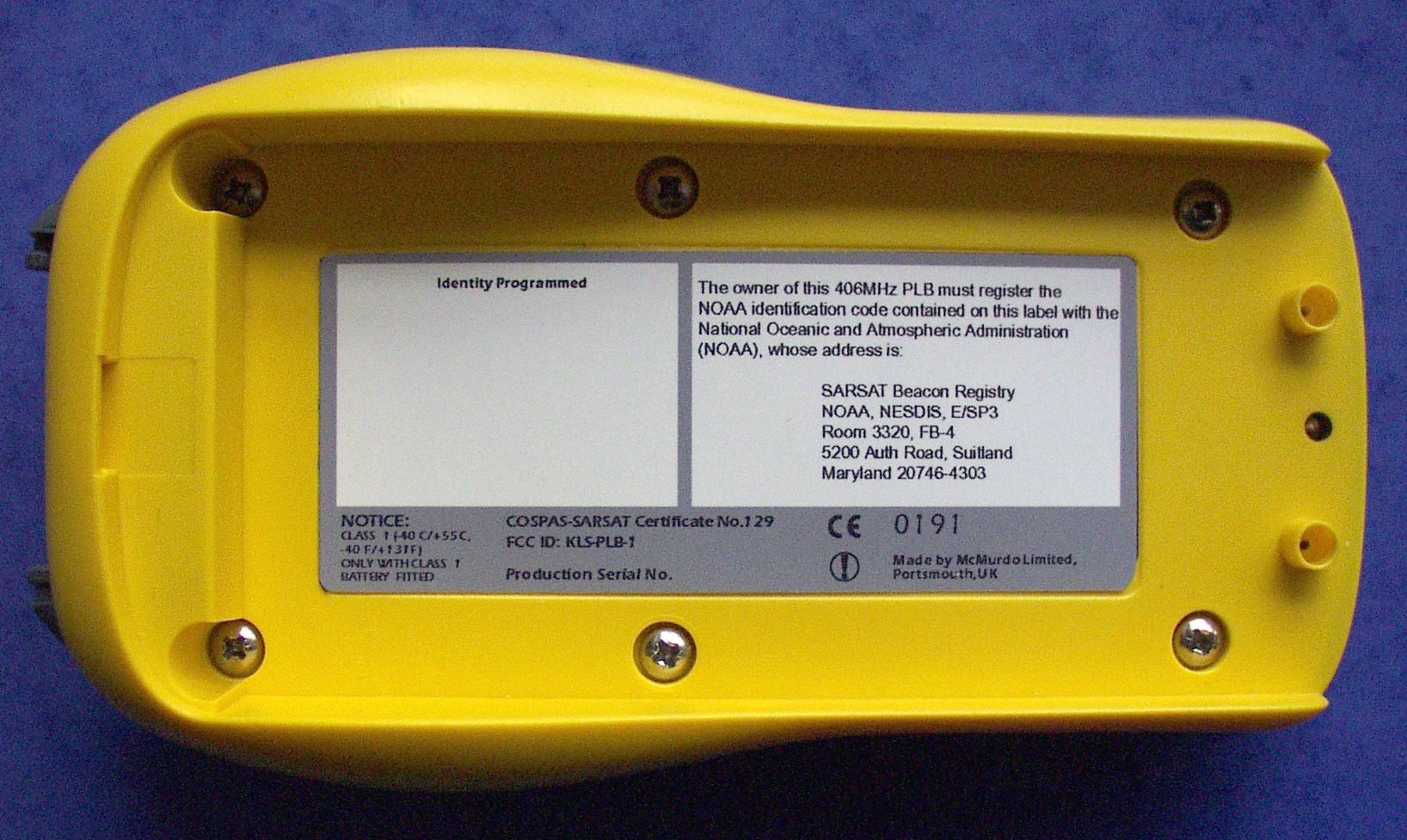
UNIQUE 10 2DD6B8383F81 FEO COUNTRY366 PROGRAMMED94320 SERIAL500-000001 UNIQUE 10 2DD6B8383F81 FEO COUNTRY366 PROGRAMMED94320 SERIAL500-000001 UNIQUE 10 2DD6B8383F81 FEO COUNTRY366 PROGRAMMED94320 SERIAL500-000001
Operational Description
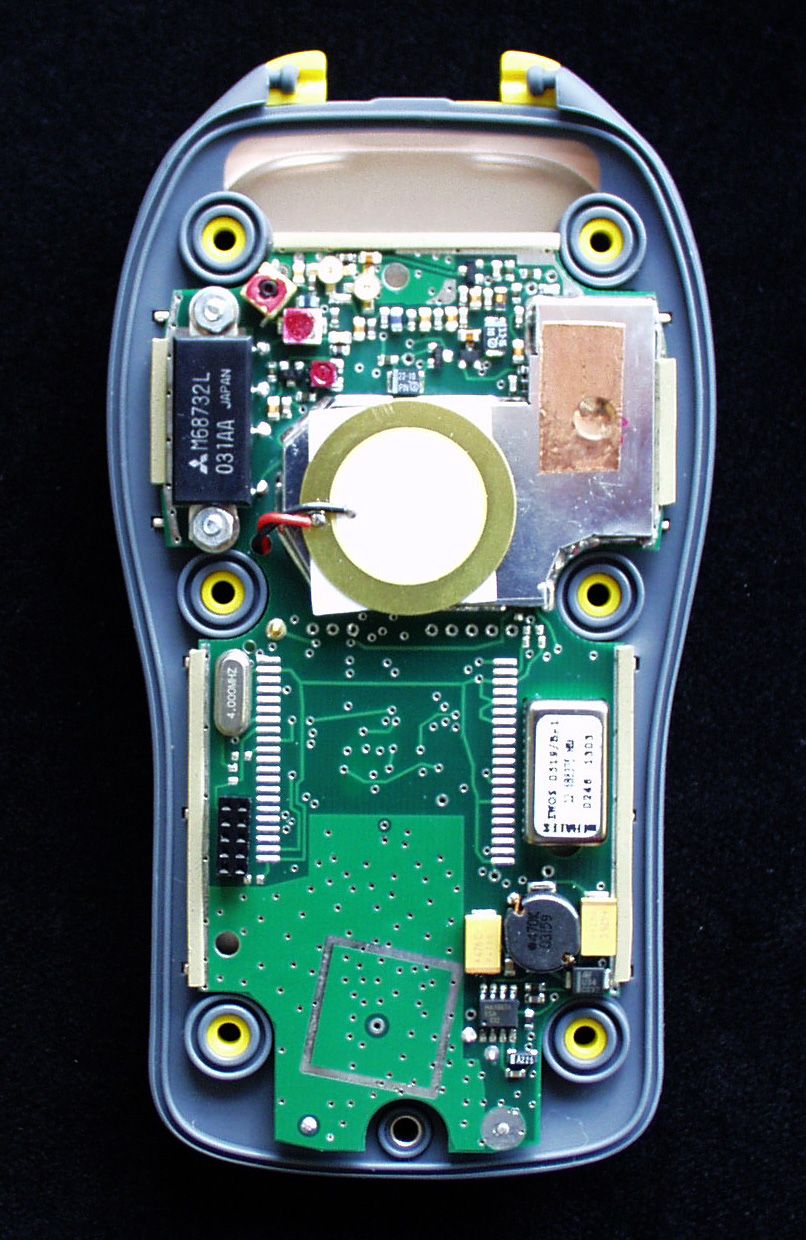
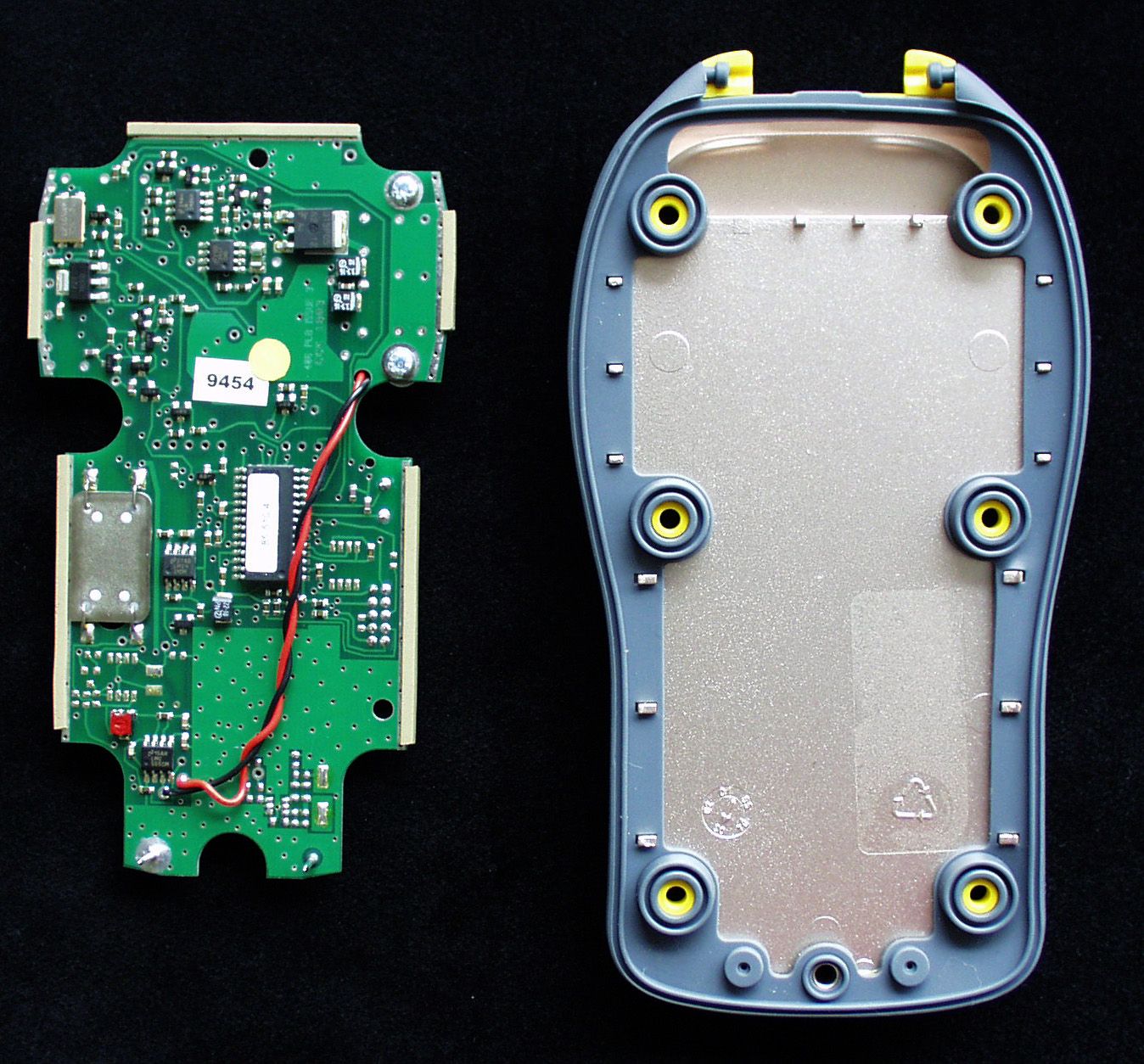
McMurdo Limited Silver Point, Airport Service Road, Portsmouth, Hampshire, UK PO3 5PB Phone: +44 (0) 23 9262 3900 Fax: +44 (0) 23 9262 3998 www.mcmurdo.co.uk Registered in England No. 746603 Registered Office: 1650 Parkway, Whiteley, Fareham, Hants, PO15 7AH VAT NO GB 421 1393 92 TECHNICAL DESCRIPTION OF THE FASTFIND PLB The FASTFIND is a 406MHz PLB with a built in 121.5MHz homing beacon. It is used to locate a person in distress. When activated,. data is transmitted in the 406MHz message, allowing identification of the user. Doppler shift position calculation on the 406MHz transmission is used by the Cospas-Sarsat system giving a position accuracy of typically 3 km. PLB DESCRIPTION The FASTFIND consists of six mouldings. The two part main body is made from a thermoplastic mix. Both halves of the main body are internally sprayed with a conductive coating to achieve good EMC performance. The internal PCB is connected to the conductive spray by an internal EMC gasket The two mouldings are screwed together. A gasket made from silicone is used to provide a waterproof seal between the two halves of the body. The antenna is a stainless steel tape antenna, sprayed with a nylon coating. The antenna is coiled and retained in a cavity in the main body moulding. This is accessed by removing the tamper cover; which also exposes the membrane switch assembly. When the tamper cover is removed, the antenna automatically deploys. The unit may then be switched on by momentarily pressing the ON switch. The detachable battery pack consists of two mouldings which are ultrasonically welded together. Both halves of the battery pack are internally sprayed with a conductive coating to achieve good EMC performance. The battery pack is fixed to the main body by a recessed clip and screw arrangement. The FASTFIND is programmed via an infra-red data link. This means that a unique serial number can be programmed into the FASTFIND via a RS232 interface. This data is then permanently stored in the PLB. This system enables swift and easy programming of the PLB without having to dismantle it. McMurdo Limited Silver Point, Airport Service Road, Portsmouth, Hampshire, UK PO3 5PB Phone: +44 (0) 23 9262 3900 Fax: +44 (0) 23 9262 3998 www.mcmurdo.co.uk Registered in England No. 746603 Registered Office: 1650 Parkway, Whiteley, Fareham, Hants, PO15 7AH VAT NO GB 421 1393 92 CIRCUIT DESCRIPTION Refer to drawing 85-630C The FASTFIND PLB is controlled by IC1, an 8-bit micro-controller, with internal EEPROM. The micro-controller is responsible for all board operations. The micro-controller is powered by a 3V4 regulator, IC3, and run by 4MHz crystal X2. The micro-controller may be programmed during self- test with the data to be encoded in the 406 message. Data is input to the RX line from an infrared photodiode, D20, and stored in EEPROM. In operational mode the micro-controller provides the following control signals: 1) Flashes a red LED every 2.6 seconds to indicate normal operation. 2) Sets the PLL line high to enable the 121.5 MHz oscillator. 3) Generates frequency swept square waves on the MOD line to modulate the 121.5MHz transmission. 4) Every 50 se conds initiates a 406MHz transmission sequence. 5) Sets the PLL line low to enable the PLL and VCO circuits. 6) Loads division ratio data to the PLL via the LAT, DAT and CLK lines. 7) Sets the PA line high to enable the 406MHz PA. 8) Holds the DAT and CLK lines static for 160ms to generate un-modulated carrier. 9) Pulses the DAT and CLK lines for 280ms to phase modulate the carrier with encoded data. 10) Flashes a green LED during SELF TEST to indicate normal operation. A second micro-controller, IC10, is used to generate a Morse ‘P’ transmission. At the end of every 406MHz transmission. The 8-bit micro-controller (PIC 24C671) monitors the timing and modulation signals from the main micro-controller and inserts the Morse 'P' modulation at the correct points in the 121.5MHz modulation signal. The ‘Morse’ micro-controller operates independently from the Fastfind micro-controller and has its own 4MHz clock. The micro-controller generates all necessary timing and modulation signals required to generate the Morse 'P' modulation signal as defined by the relevant specification. A fail- safe design is implemented to ensure that, in the event that the adapter micro-controller fails to start up, for whatever reason, the original swept modulation tone will still be fed to the 121.5MHz transmitter. McMurdo Limited Silver Point, Airport Service Road, Portsmouth, Hampshire, UK PO3 5PB Phone: +44 (0) 23 9262 3900 Fax: +44 (0) 23 9262 3998 www.mcmurdo.co.uk Registered in England No. 746603 Registered Office: 1650 Parkway, Whiteley, Fareham, Hants, PO15 7AH VAT NO GB 421 1393 92 121.5MHz TRANSMITTER Transistor Q4 forms part of a crystal controlled oscillator. IC6 is a regulator which supplies the oscillator with a regulated 5V supply. The oscillator is switched on and off by the micro-controller via D1 and R7. FET Q5 is a modulator/buffer. Amplitude modulation of the 121.5MHz signal is generated by the micro-controller. Modulation is in the form of a square wave, swept down from 1300Hz to 600Hz, with a duty cycle of around 41%. During the Morse ‘P’ transmission, the signal is modulated with a 1KHz tone. The dot length of the Morse ‘P’ characters is fixed at 115ms under the control of micro-controller IC10. The power amplifier, Q8, is operated in Class C mode. The output of the power amplifier is fed to a diplexer. The diplexer acts to combine the 121.5MHz signal with the 406MHz signal which is then output to the antenna via the antenna tuning unit (A.T.U). The 121.5MHz output power level is detected and converted to a DC level by the network C67, L15 and D9. This level is monitored during the self-test sequence to confirm the correct operation of the 121.5MHz circuitry. 406MHz TRANSMITTER The 406MHz signal is generated by frequency synthesiser IC2 and VCO Q6. The frequency synthesiser reference …
Text truncated - open the document above for the full version.
Operational Description
McMurdo Limited Silver Point, Airport Service Road, Portsmouth, Hampshire, UK PO3 5PB Phone: +44 (0) 23 9262 3900 Fax: +44 (0) 23 9262 3998 www.mcmurdo.co.uk Registered in England No. 746603 Registered Office: 1650 Parkway, Whiteley, Fareham, Hants, PO15 7AH VAT NO GB 421 1393 92 TECHNICAL DESCRIPTION OF THE FASTFIND PLB The FASTFIND is a 406MHz PLB with a built in 121.5MHz homing beacon. It is used to locate a person in distress. When activated,. data is transmitted in the 406MHz message, allowing identification of the user. Doppler shift position calculation on the 406MHz transmission is used by the Cospas-Sarsat system giving a position accuracy of typically 3 km. PLB DESCRIPTION The FASTFIND consists of six mouldings. The two part main body is made from a thermoplastic mix. Both halves of the main body are internally sprayed with a conductive coating to achieve good EMC performance. The internal PCB is connected to the conductive spray by an internal EMC gasket The two mouldings are screwed together. A gasket made from silicone is used to provide a waterproof seal between the two halves of the body. The antenna is a stainless steel tape antenna, sprayed with a nylon coating. The antenna is coiled and retained in a cavity in the main body moulding. This is accessed by removing the tamper cover; which also exposes the membrane switch assembly. When the tamper cover is removed, the antenna automatically deploys. The unit may then be switched on by momentarily pressing the ON switch. The detachable battery pack consists of two mouldings which are ultrasonically welded together. Both halves of the battery pack are internally sprayed with a conductive coating to achieve good EMC performance. The battery pack is fixed to the main body by a recessed clip and screw arrangement. The FASTFIND is programmed via an infra-red data link. This means that a unique serial number can be programmed into the FASTFIND via a RS232 interface. This data is then permanently stored in the PLB. This system enables swift and easy programming of the PLB without having to dismantle it. McMurdo Limited Silver Point, Airport Service Road, Portsmouth, Hampshire, UK PO3 5PB Phone: +44 (0) 23 9262 3900 Fax: +44 (0) 23 9262 3998 www.mcmurdo.co.uk Registered in England No. 746603 Registered Office: 1650 Parkway, Whiteley, Fareham, Hants, PO15 7AH VAT NO GB 421 1393 92 CIRCUIT DESCRIPTION Refer to drawing 85-630C The FASTFIND PLB is controlled by IC1, an 8-bit micro-controller, with internal EEPROM. The micro-controller is responsible for all board operations. The micro-controller is powered by a 3V4 regulator, IC3, and run by 4MHz crystal X2. The micro-controller may be programmed during self- test with the data to be encoded in the 406 message. Data is input to the RX line from an infrared photodiode, D20, and stored in EEPROM. In operational mode the micro-controller provides the following control signals: 1) Flashes a red LED every 2.6 seconds to indicate normal operation. 2) Sets the PLL line high to enable the 121.5 MHz oscillator. 3) Generates frequency swept square waves on the MOD line to modulate the 121.5MHz transmission. 4) Every 50 se conds initiates a 406MHz transmission sequence. 5) Sets the PLL line low to enable the PLL and VCO circuits. 6) Loads division ratio data to the PLL via the LAT, DAT and CLK lines. 7) Sets the PA line high to enable the 406MHz PA. 8) Holds the DAT and CLK lines static for 160ms to generate un-modulated carrier. 9) Pulses the DAT and CLK lines for 280ms to phase modulate the carrier with encoded data. 10) Flashes a green LED during SELF TEST to indicate normal operation. A second micro-controller, IC10, is used to generate a Morse ‘P’ transmission. At the end of every 406MHz transmission. The 8-bit micro-controller (PIC 24C671) monitors the timing and modulation signals from the main micro-controller and inserts the Morse 'P' modulation at the correct points in the 121.5MHz modulation signal. The ‘Morse’ micro-controller operates independently from the Fastfind micro-controller and has its own 4MHz clock. The micro-controller generates all necessary timing and modulation signals required to generate the Morse 'P' modulation signal as defined by the relevant specification. A fail- safe design is implemented to ensure that, in the event that the adapter micro-controller fails to start up, for whatever reason, the original swept modulation tone will still be fed to the 121.5MHz transmitter. McMurdo Limited Silver Point, Airport Service Road, Portsmouth, Hampshire, UK PO3 5PB Phone: +44 (0) 23 9262 3900 Fax: +44 (0) 23 9262 3998 www.mcmurdo.co.uk Registered in England No. 746603 Registered Office: 1650 Parkway, Whiteley, Fareham, Hants, PO15 7AH VAT NO GB 421 1393 92 121.5MHz TRANSMITTER Transistor Q4 forms part of a crystal controlled oscillator. IC6 is a regulator which supplies the oscillator with a regulated 5V supply. The oscillator is switched on and off by the micro-controller via D1 and R7. FET Q5 is a modulator/buffer. Amplitude modulation of the 121.5MHz signal is generated by the micro-controller. Modulation is in the form of a square wave, swept down from 1300Hz to 600Hz, with a duty cycle of around 41%. During the Morse ‘P’ transmission, the signal is modulated with a 1KHz tone. The dot length of the Morse ‘P’ characters is fixed at 115ms under the control of micro-controller IC10. The power amplifier, Q8, is operated in Class C mode. The output of the power amplifier is fed to a diplexer. The diplexer acts to combine the 121.5MHz signal with the 406MHz signal which is then output to the antenna via the antenna tuning unit (A.T.U). The 121.5MHz output power level is detected and converted to a DC level by the network C67, L15 and D9. This level is monitored during the self-test sequence to confirm the correct operation of the 121.5MHz circuitry. 406MHz TRANSMITTER The 406MHz signal is generated by frequency synthesiser IC2 and VCO Q6. The frequency synthesiser reference …
Text truncated - open the document above for the full version.
Operational Description
McMurdo Limited Silver Point, Airport Service Road, Portsmouth, Hampshire, UK PO3 5PB Phone: +44 (0) 23 9262 3900 Fax: +44 (0) 23 9262 3998 www.mcmurdo.co.uk Registered in England No. 746603 Registered Office: 1650 Parkway, Whiteley, Fareham, Hants, PO15 7AH VAT NO GB 421 1393 92 TECHNICAL DESCRIPTION OF THE FASTFIND PLB The FASTFIND is a 406MHz PLB with a built in 121.5MHz homing beacon. It is used to locate a person in distress. When activated,. data is transmitted in the 406MHz message, allowing identification of the user. Doppler shift position calculation on the 406MHz transmission is used by the Cospas-Sarsat system giving a position accuracy of typically 3 km. PLB DESCRIPTION The FASTFIND consists of six mouldings. The two part main body is made from a thermoplastic mix. Both halves of the main body are internally sprayed with a conductive coating to achieve good EMC performance. The internal PCB is connected to the conductive spray by an internal EMC gasket The two mouldings are screwed together. A gasket made from silicone is used to provide a waterproof seal between the two halves of the body. The antenna is a stainless steel tape antenna, sprayed with a nylon coating. The antenna is coiled and retained in a cavity in the main body moulding. This is accessed by removing the tamper cover; which also exposes the membrane switch assembly. When the tamper cover is removed, the antenna automatically deploys. The unit may then be switched on by momentarily pressing the ON switch. The detachable battery pack consists of two mouldings which are ultrasonically welded together. Both halves of the battery pack are internally sprayed with a conductive coating to achieve good EMC performance. The battery pack is fixed to the main body by a recessed clip and screw arrangement. The FASTFIND is programmed via an infra-red data link. This means that a unique serial number can be programmed into the FASTFIND via a RS232 interface. This data is then permanently stored in the PLB. This system enables swift and easy programming of the PLB without having to dismantle it. McMurdo Limited Silver Point, Airport Service Road, Portsmouth, Hampshire, UK PO3 5PB Phone: +44 (0) 23 9262 3900 Fax: +44 (0) 23 9262 3998 www.mcmurdo.co.uk Registered in England No. 746603 Registered Office: 1650 Parkway, Whiteley, Fareham, Hants, PO15 7AH VAT NO GB 421 1393 92 CIRCUIT DESCRIPTION Refer to drawing 85-630C The FASTFIND PLB is controlled by IC1, an 8-bit micro-controller, with internal EEPROM. The micro-controller is responsible for all board operations. The micro-controller is powered by a 3V4 regulator, IC3, and run by 4MHz crystal X2. The micro-controller may be programmed during self- test with the data to be encoded in the 406 message. Data is input to the RX line from an infrared photodiode, D20, and stored in EEPROM. In operational mode the micro-controller provides the following control signals: 1) Flashes a red LED every 2.6 seconds to indicate normal operation. 2) Sets the PLL line high to enable the 121.5 MHz oscillator. 3) Generates frequency swept square waves on the MOD line to modulate the 121.5MHz transmission. 4) Every 50 se conds initiates a 406MHz transmission sequence. 5) Sets the PLL line low to enable the PLL and VCO circuits. 6) Loads division ratio data to the PLL via the LAT, DAT and CLK lines. 7) Sets the PA line high to enable the 406MHz PA. 8) Holds the DAT and CLK lines static for 160ms to generate un-modulated carrier. 9) Pulses the DAT and CLK lines for 280ms to phase modulate the carrier with encoded data. 10) Flashes a green LED during SELF TEST to indicate normal operation. A second micro-controller, IC10, is used to generate a Morse ‘P’ transmission. At the end of every 406MHz transmission. The 8-bit micro-controller (PIC 24C671) monitors the timing and modulation signals from the main micro-controller and inserts the Morse 'P' modulation at the correct points in the 121.5MHz modulation signal. The ‘Morse’ micro-controller operates independently from the Fastfind micro-controller and has its own 4MHz clock. The micro-controller generates all necessary timing and modulation signals required to genera…
Text truncated - open the document above for the full version.
Contact Information
Applicant
Erwan Thomas(Certification and hardware engineer)
Technical Contact
McMurdo LimitedRichard A Read
[email protected]+44 (0)23 9262
Silverpoint · Portsmouth · United Kingdom
Non-Technical Contact
McMurdo LimitedDerek Carr
[email protected]+44 (0)23 9262
Technical Specifications
| # | Rule Parts | Frequency Range | Power Output | Emission | Tolerance |
|---|---|---|---|---|---|
| 3 | 95K | 406.028 MHz - 406.028 MHz | 5 W | 16K0G1D | 1000 Hz |
Other Applications from Orolia Ltd

KLS-Z502
Apr 19, 2012AIS-MSLD
Equipment Class
AIS - Automatic Identification Systems
KLS-Z501
Apr 19, 2012AIS-MSLD
Equipment Class
AIS - Automatic Identification Systems
KLS-G5-2
Jul 10, 2011McMurdo Smartfind Plus G5, Sailor SGE406-II, Simrad EG50
Equipment Class
GEP - 406 MHz EPIRB
KLS-E5-2
Jul 10, 2011McMurdo Smartfind E5, Kannad Marine Automatic EPIRB, Kannad Marine Manual EPIRB, Sailor SE406-II, Simrad EP50
Equipment Class
GEP - 406 MHz EPIRB
KLS-PLB-4-GPS
Apr 05, 2011Fastfind MaxG, Safelink Pro, XS-ER GPS
Equipment Class
PLB - Personal Locator Beacons