L7MR170Wireless Mouse
Wireless Computing Inc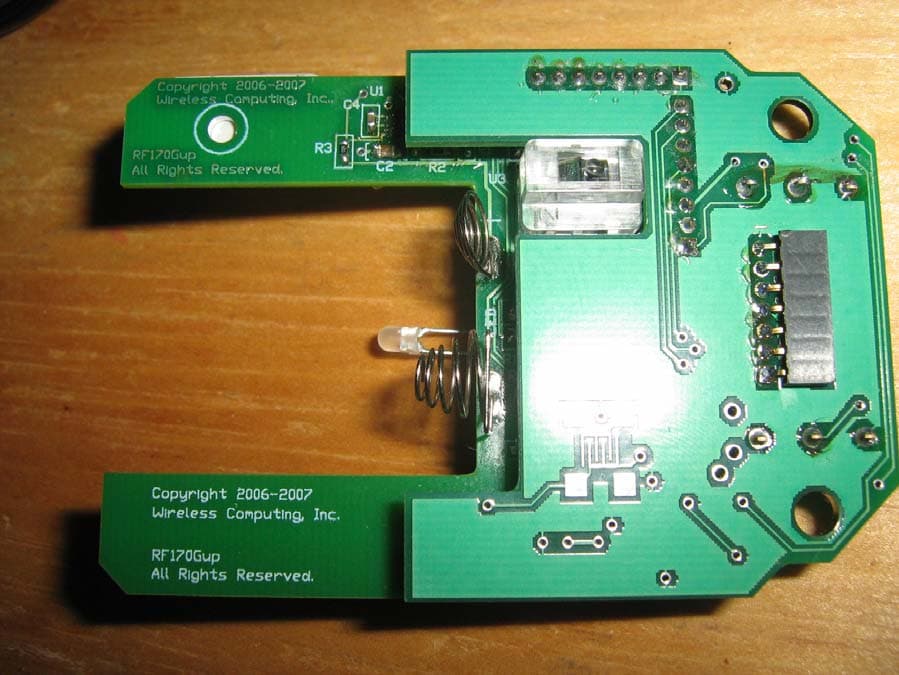
Click to zoom
Application Details
- Equipment Class
- DXX - Part 15 Low Power Communication Device Transmitter
- Date of Grant
- Mar 13, 2008
- Application Purpose
- Original Equipment
- Date of Application
- Mar 10, 2008
- Equipment Note
- Wireless Mouse
- Frequency Range
- 916.50000000 - 916.50000000
- Company
- Wireless Computing Inc
- Country
- United States
Documents & Files
Document Text
Text extracted from the exhibit documents filed with the FCC. Open a document above to read the original.
Users Manual
SETUP 1. Remove the mouse’s battery door. 2. Insert two AA alkaline batteries (included) into the battery compartment. The batteries face in oppo- site directions. The direction of each battery is marked. 3. Replace the battery door. 4. Plug the receiver into a USB port on your comput- er. Do not place receiver on or in a metal cabinet, or near other equipment and strong EMI sources. SELECT ADDRESS When delivered, your RF-170 operates on address zero. You may leave it on address zero. However, while on address zero, your computer may receive and respond to signals from other Wireless Computing products. 1. Press and release the black button on the under- side of the receiver. The LED on top of the receiver begins blinking. 2. If you purchased your RF-170 together with a Wireless Computing keyboard, first select an address on the keyboard. Refer to the keyboard instructions for what keys or buttons to press. If you do not have a Wireless Computing keyboard, continue to the next step. 3. While the LED on the receiver blinks, press the black SELECT button on the underside of the mouse. This sets the mouse and receiver to one of 65,000 random addresses. The receiver LED blinks for 30 seconds. This 30-second blinking cycle starts again each time a product is selected. OPERATION The RF-170 Wireless Laser Mouse is designed to operate reliably at distances of 100 feet (30 meters). Operating range will vary depending on positioning of the receiver, mouse, nearby sources of interference and other factors. Pressing a button, rolling the scrollball up/down, or moving the mouse makes the LED flash green on the top of the mouse, and the LED on the receiver blink green. When the mouse’s batteries are low, the LED blinks in a characteristic on/off pattern. If you see your mouse’s LED blinking when it is not being moved, lift the mouse from the tabletop. If the LED continues blinking, replace the batteries. Operating instructions RF-170 Laser Mouse Wireless Computing, Inc., Austin, TX 512.263.2205 wirelesscomputing.com TROUBLESHOOTING The receiver LED is not lit • Ensure that the computer is powered on and the receiver is connected to computer. Mouse cursor does not move • If the LED on the mouse flashes all red, select the address. • If the LED flashes mixed red and green, reposition the receiver away from other equipment and as high as possible. Also, ensure the distance between the mouse and receiver is no more than 100 feet. • If the LED does not flash at all, replace the mouse’s batteries. • Unplug the receiver and plug it back into the com- puter. The RF-170 works, but other Wireless Computing keyboards and mice don’t • The other devices aren’t set to the receiver’s address. Select the address on all devices. Cursor moves by itself or keystrokes appear from nowhere • Your receiver is within range another Wireless Computing product set to the same address. Re- select the address. FOR FURTHER ASSISTANCE Visit www.wireless-computing.com/support or call customer support at 512.263.2205 between 9:00 - 5:00 Central Time. FCC INFORMATION This device complies with Part 15 of the FCC Rules. Operation is subject to the following two conditions: (1) this device may not cause harmful interference, and (2) this device must accept any interference received, including interference that may cause unde- sired operation. FCC ID: L7MR170 RF-170 Wireless Laser Mouse L7MR019 RF-019 Dual Antenna Receiver ADDITIONAL INFORMATION For use with UL Listed, CSA approved personal com- puters. Not intended for use in machinery, medical or industrial applications. Do not use in aircraft or haz- ardous locations. © Copyright 2008 Wireless Computing, Inc. All Rights Reserved. Wireless Computing is a trademark of Wireless Computing, Inc., Austin TX USA. 01-2008 Caution: Any changes or modifications not expressly approved by Wireless Computing could void your authority to operate this device. No parts are user serviceable.
Cover Letter(s)
3703 Peak Lookout, Austin, TX 78738 USA 512.263.2205 • wireless-computing.com 10 August 2007 American Telecommunications Certification Body, Inc. 6731 Whittier Avenue Suite C110 McLean VA 22101 RE: Certification Application FCC ID: L7MR170 Please be advised that the following information is to be held confidential on behalf of Wireless Computing, Inc.: • RF-170 Wireless Laser Mouse schematic • RF-170 Wireless Laser Mouse parts list • RF-170 Wireless Laser Mouse block diagram The application contains technical information which Wireless Computing, Inc. deems to be trade secrets and proprietary. If made public, the information might be used to the disadvantage of the applicant in the market place. Thank you for your attention to this matter. Regards, Martin Phillips President
Cover Letter(s)
1601 FM 1460, Suite B Round Rock, TX 78664 e-mail: [email protected] (512)244-3371 Fax: (512)244-1846 November 19, 2007 FCC ID: L7MR170 In response to your comments regarding the application for certification of the device referenced above please find our response below: 1.) The address listed for the Applicant on the FCC website for Grantee code L7M does not match the address used on the Application form, nor the letterhead used for formal letters. If the Applicant has moved from the original address, then they must make sure that keep FCC informed of all changes in contact information. The Applicant has updated the FCC with their new address information. 2.) You goofed – you uploaded your internal photograph exhibit twice as both Internal and External photos. Please correct. In addition, the internal photos supplied are deficient – we must have top and bottom of all PWB. Please find new uploaded documents for both internal and external photographs 3.) Kindly provide a block diagram of the RF portion of this wireless laser mouse. Please describe how this device creates, modulates and amplifies RF energy. Please find new uploaded block diagram of the RF portion with narrative. 4.) Your Form 731 appears to be in error. I believe that all .0225W (22.5mW) devices will always exceed the limits of 15.249. In brief, very few Part 15C devices ever need to concern themselves with listing RF power, frequency tolerance or emission designators. Exceptions are for Part 15C devices which potentially have RF exposure concerns (i.e. 15.247, 15.407). Please find new uploaded Form 731 5.) The label as some errors too. The correct format is “FCC ID:” – you need to insert the colon. In addition, all letters and numbers need to be the same upper case size. Also, there is no information as to where the label will be located on the device. Pleas provide as soon as practical. Please find new uploaded label 6.) Where can I find the 15.19(a)(3) two-part statement? It can be found in the Users Manual 7.) Is Professional Testing accredited to either A2LA or NAVLAP? Yes, Professional Testing is NAVLAP accredited: 200062-0
Cover Letter(s)
1601 FM 1460, Suite B Round Rock, TX 78664 e-mail: [email protected] (512)244-3371 Fax: (512)244-1846 January 17, 2008 FCC ID: L7MR170 In response to your comments regarding the application for certification of the device referenced above please find our response below: 1.) Your revise Block Diagram contains no details on what is within the RF transceiver. As such, we still have no understanding as to how this device creates, modulates, or amplifies RF energy. Ideally, the Block Diagram can be used in conjunction with the schematic to understand how the RF circuit portion of this device operates. At minimum, I expect to see and understand the RF oscillators and amplifiers used within the device. The block diagram has been revised and uploaded.. 2.) Your response to my question #6.) of September 29, 2007 indicates that the 15.19(a)(3) statement can be found within the Manual. This is not found. Ideally the 15.19(a)(3) statement should be on the device itself. However, in cases where the device is too small it is permitted to place the text within the Manual. Please review your response and 47CFR 15.19(a)(3) for the correct language. The manual has been revised and uploaded. 3.) The Manual also makes reference to use of “modules”. Kindly note that this filing will not create any sort of “modular approval” for your client – each individual product will need to be separately Certificated. Be cautious in the use of the word “module”. The use of the word modules has been removed from the manual.
Cover Letter(s)
American Telecommunications Certification Body Inc. 6731 Whittier Ave, McLean, VA 22101 September 29, 2007 RE: Wireless Computing FCC ID: L7MR170 I have a few comments on this Application. Depending on your responses, kindly understand there may be additional comments. 1.) The address listed for the Applicant on the FCC website for Grantee code L7M does not match the address used on the Application form, nor the letterhead used for formal letters. If the Applicant has moved from the original address, then they must make sure that keep FCC informed of all changes in contact information. 2.) You goofed – you uploaded your internal photograph exhibit twice as both Internal and External photos. Please correct. In addition, the internal photos supplied are deficient – we must have top and bottom of all PWB. 3.) Kindly provide a block diagram of the RF portion of this wireless laser mouse. Please describe how this device creates, modulates and amplifies RF energy. 4.) Your Form 731 appears to be in error. I believe that all .0225W (22.5mW) devices will always exceed the limits of 15.249. In brief, very few Part 15C devices ever need to concern themselves with listing RF power, frequency tolerance or emission designators. Exceptions are for Part 15C devices which potentially have RF exposure concerns (i.e. 15.247, 15.407). 5.) The label as some errors too. The correct format is “FCC ID:” – you need to insert the colon. In addition, all letters and numbers need to be the same upper case size. Also, there is no information as to where the label will be located on the device. Pleas provide as soon as practical. 6.) Where can I find the 15.19(a)(3) two-part statement? 7.) Is Professional Testing accredited to either A2LA or NAVLAP? William H. Graff President mailto: [email protected] The items indicated above must be submitted before processing can continue on the above referenced application. Failure to provide the requested information may result in application termination. Correspondence should be considered part of the permanent submission and may be viewed from the Internet after a Grant of Equipment Authorization is issued. Please do not respond to this correspondence using the email reply button. In order for your response to be processed expeditiously, you must submit your documents through the AmericanTCB.com website. Also, please note that partial responses increase processing time and should not be submitted. Any questions about the content of this correspondence should be directed to the sender.
Cover Letter(s)
American Telecommunications Certification Body Inc. 6731 Whittier Ave, McLean, VA 22101 November 23, 2007 RE: Wireless Computing FCC ID: L7MR170 I have a few comments on this Application. Depending on your responses, kindly understand there may be additional comments. 1.) Your revise Block Diagram contains no details on what is within the RF transceiver. As such, we still have no understanding as to how this device creates, modulates, or amplifies RF energy. Ideally, the Block Diagram can be used in conjunction with the schematic to understand how the RF circuit portion of this device operates. At minimum, I expect to see and understand the RF oscillators and amplifiers used within the device. 2.) Your response to my question #6.) of September 29, 2007 indicates that the 15.19(a)(3) statement can be found within the Manual. This is not found. Ideally the 15.19(a)(3) statement should be on the device itself. However, in cases where the device is too small it is permitted to place the text within the Manual. Please review your response and 47CFR 15.19(a)(3) for the correct language. 3.) The Manual also makes reference to use of “modules”. Kindly note that this filing will not create any sort of “modular approval” for your client – each individual product will need to be separately Certificated. Be cautious in the use of the word “module”. William H. Graff President mailto: [email protected] The items indicated above must be submitted before processing can continue on the above referenced application. Failure to provide the requested information may result in application termination. Correspondence should be considered part of the permanent submission and may be viewed from the Internet after a Grant of Equipment Authorization is issued. Please do not respond to this correspondence using the email reply button. In order for your response to be processed expeditiously, you must submit your documents through the AmericanTCB.com website. Also, please note that partial responses increase processing time and should not be submitted. Any questions about the content of this correspondence should be directed to the sender.
ID Label/Location Info
The label will be made to fit this location.
ID Label/Location Info
RF-170 Wireless Laser Mouse www.wireless-computing.com S/N 07070000 FCC ID: L7MR170 916.5 MHz Made in China SELECT ► This label is located on the bottom of the mouse
Internal Photos
3703 Peak Lookout, Austin, TX 78738 USA 512.263.2205 • wireless-computing.com 10 August 2007 Federal Communications Commission 7435 Oakland Mills Road Columbia MD 21046 RE: Letter of Authorization and Anti-Drug This is a letter of authorization to accept Professional Testing (EMI), Inc. as an agent for Wireless Computing, Inc. 3703 Peak Lookout, Austin TX 78738 for a period of one year, to sign applications before the Commission on our behalf, to make representations to you on our behalf, and to receive and exchange data between our company and the Commission with respect to the following Wireless Computing products: Product: RF-170 Wireless Laser Mouse Please also accept this letter as an attestation that neither Wireless Computing nor any of its officers, directors, or persons holding 5% or more of the outstanding stock or shares, voting or non-voting, have been denied federal benefits under section 5301 of the Anti-Drug-Abuse Act of 1988, 21 U.S.C. 853(a). In addition, Wireless Computing will notify the Federal Communications Commission if, at any time, the situation changes causing Wireless Computing to be denied federal benefits. If you have any further questions or need additional information, please call 512.263.2205. Sincerely, Martin Phillips President
Operational Description
Product Description: RF-170 Wireless Laser Mouse FCC ID L7MR170 The RF-170 is a 916.5 MHz RF mouse for use with RF-019 Wireless USB receiver. The RF-170 uses a laser-type mouse sensor. Operational Description: See Instructions Technical Description: RF packets from the mouse are sent to a RF-019 receiver. These are either mouse moves, mouse button changes, or wheel up/down/left/right commands. These are passed to the computer via USB. RF packets from the mouse are acknowledged via a reciprocal RF packet sent from the receiver to the mouse. If the mouse does not hear an acknowledgement packet, it automatically retries up to two additional times.
Test Report
Exhibit B Test Report Wireless Computing, Inc. RF170 Wireless Laser Mouse Project Number: 08106-10 Prepared for: Wireless Computing, Inc. 3703 Peak Lookout Austin, Texas 78738 By Professional Testing (EMI), Inc. 1601 FM 1460, Suite B Round Rock, Texas 78664 September 10, 2007 CERTIFICATION Electromagnetic Interference Test Report Wireless Computing, Inc. RF170 Wireless Laser Mouse Professional Testing (EMI), Inc. Project 08106-10 Page 2 of 15 Table of Contents Title Page .........................................................................................................................................1 Table of Contents .............................................................................................................................2 Certificate of Compliance ................................................................................................................3 1.0 EUT Description ..................................................................................................................4 1.1 Applicable Documents.....................................................................................................4 1.2 EUT Operation.................................................................................................................4 2.0 Electromagnetic Emissions Testing.....................................................................................4 2.1 Radiated Emissions Measurements .................................................................................4 2.1.1 Test Procedure .........................................................................................................5 2.1.2 Test Criteria .............................................................................................................5 2.1.3 Test Results ..............................................................................................................5 3.0 Occupied Bandwidth Measurements ...................................................................................5 3.1 Test Procedure .................................................................................................................6 3.2 Test Criteria .....................................................................................................................6 3.3 Test Results ......................................................................................................................6 4.0 Antenna Requirement ..........................................................................................................6 4.1 Evaluation Procedure .......................................................................................................6 4.2 Evaluation Criteria ...........................................................................................................6 4.3 Evaluation Results ...........................................................................................................6 5.0 Modifications to Equipment ................................................................................................6 6.0 List of Test Equipment.........................................................................................................7 FIGURES Figure 1 Radiated Emissions Test Setup .........................................................................................8 APPENDICES Appendix A Emissions Data ............................................................................................................9 THIS REPORT SHALL NOT BE REPRODUCED EXCEPT IN FULL, WITHOUT THE WRITTEN APPROVAL OF PROFESSIONAL TESTING (EMI), INC. Professional Testing (EMI), Inc. Project 08106-10 Page 3 of 15 Applicant: Wireless Computing, Inc. Applicant’s Address: 3703 Peak Lookout Austin, TX 78738 FCC ID: L7MR170 Project Number: 08106-10 Test Dates: August 13, 2007 I, Jason Anderson, Director of Testing Services for Professional Testing (EMI), Inc., being familiar with the FCC rules and test procedures have reviewed the test setup, measured data and this report. I believe them to be true and accurate. The Wireless Computing, Inc., RF170 was tested to and found to be in compliance with FCC Part 15 Subpart C for an Intentional Radiator. The highest emissions generated by the above equipment are listed below: Frequency (MHz) Level (dBμV/m) Limit (dBμV/m) Margin (dB) Fundamental 916.5 83.3 84.5 -1.2 Harmonics 1830 54.1 63.5 -9.4 Spurious 992 31.9 35.5 -3.6 Occupied Bandwidth 380 (kHz) Jason Anderson Director of Testing Services This report has been reviewed and accepted by Wireless Computing, Inc.. The undersigned is responsible for ensuring that Wireless Computing, Inc., RF170 will continue to comply with the FCC rules. Certificate Of Compliance Professional Testing (EMI), Inc. Project 08106-10 Page 4 of 15 1.0 EUT Description The Wireless Computing RF170 is a wireless laser mouse. The device transmits in the ISM band at 916.5 MHz. The device employs amplitude shift keying to transmit binary data to the host device. The system tested consisted of the following: Manufacturer & Model FCC Number Description Wireless Computing, Inc., RF170 L7MR170 Wireless Laser Mouse 1.1 Applicable Documents Guidelines FCC Rule Part 15 Transmitter Characteristics 15.249 Spurious Radiated Power 15.205, 15.209, 15.249 Antenna Requirement 15.203 1.2 EUT Operation The EUT was operated in continuous transmit mode at max power amplitude modulated with a 101010 bit pattern to measure fundamental, harmonics, and spurious radiation. 2.0 Electromagnetic Emissions Testing Professional Testing (EMI), Inc. (PTI), follows the guidelines of NIST for all uncertainty calculations, estimates and expressions thereof for EMC testing. 2.1 Radiated Emissions Measurements Radiated emission measurements were made of the Fundamental and Spurious Emission levels for the EUT. Measurements of the occupied bandwidth were also made for the EUT. Tests of the fundamental for the device were performed to de…
Text truncated - open the document above for the full version.
Test Setup Photos
Wireless Computing Test Set-up Photos Radiated Emissions >1GHz Radiated Emissions < 1 GHz Radiated Emissions < 1 GHz
Contact Information
Applicant
Martin Phillips
Technical Contact
Professional Testing (EMI) Inc.Jason Anderson
[email protected]512-244-3371
1601 FM 1460, Ste B · Round Rock · United States
Non-Technical Contact
Professional Testing (EMI) Inc.Jason Anderson
[email protected]512-244-3371
Test Firm
Professional Testing (EMI), Inc.Michael Royer
Technical Specifications
| # | Rule Parts | Frequency Range | Power Output |
|---|---|---|---|
| 1 | 15C | 916.5 MHz - 916.5 MHz | - |
Other Applications from Wireless Computing Inc
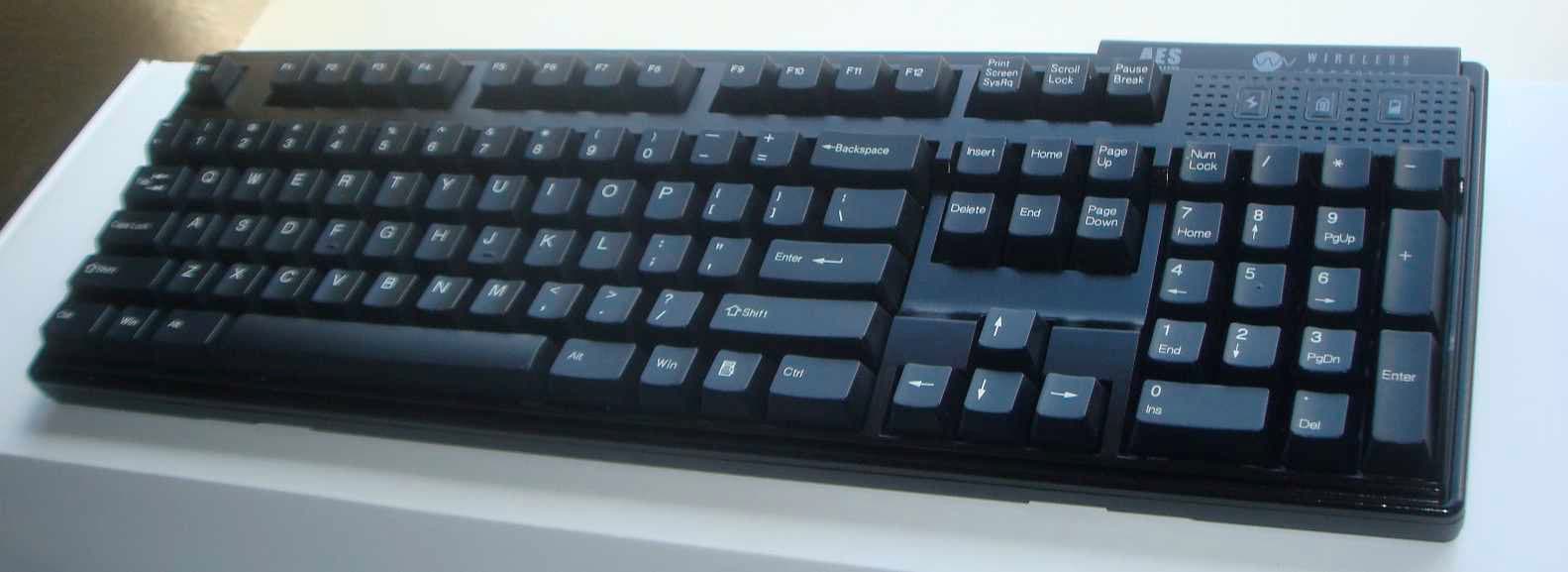
L7MR600
Apr 04, 2011Mechanical Wireless Keyboard
Equipment Class
DXT - Part 15 Low Power Transceiver, Rx Verified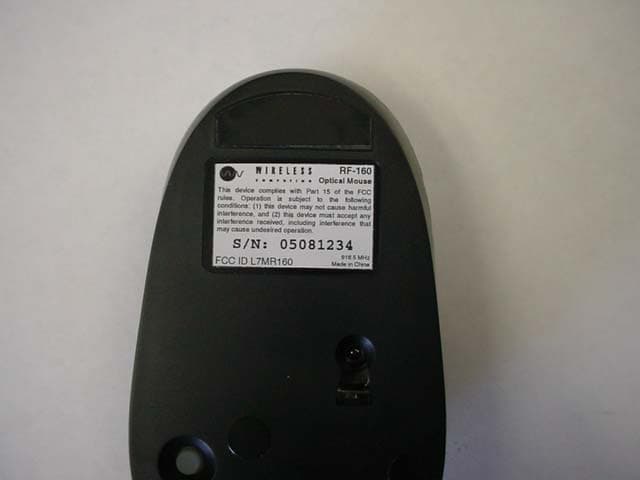
L7MR160
Sep 27, 2005Optical Mouse
Equipment Class
DXT - Part 15 Low Power Transceiver, Rx Verified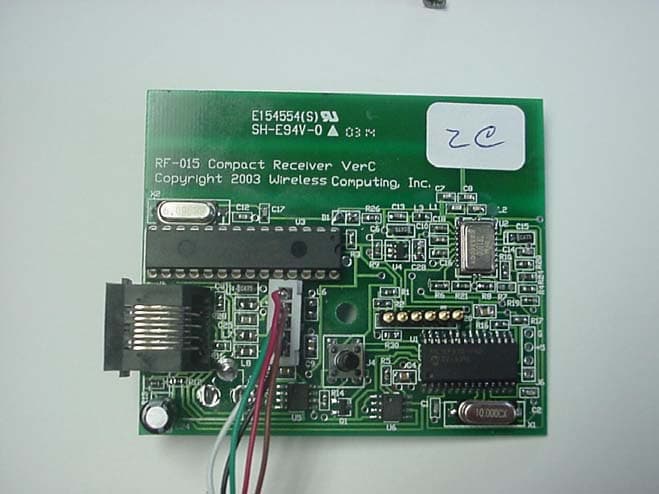
L7MR015
Jul 01, 2003Wireless Receiver
Equipment Class
DXX - Part 15 Low Power Communication Device Transmitter
L7MR150
Jul 01, 2003RF 150 Wireless Mouse
Equipment Class
DXX - Part 15 Low Power Communication Device Transmitter
L7MR250
Jul 31, 2002Wireless Keyboard
Equipment Class
DXX - Part 15 Low Power Communication Device Transmitter