LJPNPM-6XPCS Band GSM Cellular Transceiver
Microsoft Corporation
Click to zoom
Application Details
- Equipment Class
- PCE - PCS Licensed Transmitter held to ear
- Date of Grant
- Feb 03, 2003
- Application Purpose
- Original Equipment
- Date of Application
- Feb 03, 2003
- Equipment Note
- PCS Band GSM Cellular Transceiver
- Frequency Range
- 1850.20000000 - 1909.80000000
- Company
- Microsoft Corporation
- Country
- United States
Documents & Files
Document Text
Text extracted from the exhibit documents filed with the FCC. Open a document above to read the original.
Users Manual
[ 1 DRAFT ] Safety first 1Safety first Read these simple guidelines. Breaking the rules may be dangerous or illegal. Further detailed information is given in this manual. Do not switch the phone on when wireless phone use is prohibited or when it may cause interference or danger. ROAD SAFETY COMES FIRST Don't use a hand-held phone while driving. INTERFERENCE All wireless phones may get interference, which could affect performance. SWITCH OFF IN HOSPITALS Follow any regulations or rules. Switch the phone off near medical equipment. SWITCH OFF IN AIRCRAFT Wireless devices can cause interference in aircraft. SWITCH OFF WHEN REFUELING Don't use the phone at a refuelling point. Don't use near fuel or chemicals. SWITCH OFF NEAR BLASTING Don't use the phone where blasting is in progress. Observe restrictions, and follow any regulations or rules. USE SENSIBLY Use only in the normal position. Don't touch the antenna unnecessarily. QUALIFIED SERVICE Only qualified personnel may install or repair phone equipment. [ 2 DRAFT ] OBSERVE INFRARED PRECAUTIONS Do not point the IR beam at anyone’s eyes or allow it to interfere with other IR devices. ACCESSORIES AND BATTERIES Use only approved accessories and batteries. Do not connect incompatible products. CONNECTING TO OTHER DEVICES When connecting to any other device, read its user's guide for detailed safety instructions. Do not connect incompatible products. BACKUP COPIES Remember to make backup copies of all important data. WATER-RESISTANCE Your phone is not water-resistant. Keep it dry. CALLING Ensure the phone is switched on and in service. Enter the phone number, including the area code, then press the Talk key. To end a call, press the End key. To answer a call, press the Talk key. EMERGENCY CALLS Ensure the phone is switched on and in service. Press the End key as s many times as needed (e.g. to exit a call, to exit a menu, etc.) to clear the display. Enter the emergency number, then press the Talk key. Give your location. Do not end the call until told to do so. •ABOUT ACCESSORIES Check the model number of any charger before use with this device. This device is intended for use when supplied with power from ACP-12 and LCH-12. [ 3 DRAFT ] Safety first Warning: Use only batteries, chargers and accessories approved by the phone manufacturer for use with this particular phone model. The use of any other types may invalidate any approval or warranty applying to the phone, and may be dangerous. For availability of approved accessories, please check with your dealer. When you disconnect the power cord of any accessory, grasp and pull the plug, not the cord. [ 4 DRAFT ] 2An overview of functions •MULTIMEDIA MESSAGING SERVICE (MMS) Your phone is able to send and receive multimedia messages made up of text and pictures. You may also be able to receive polyphonic ringing tones. You can also save pictures and ringing tones to personalize your phone. See “Multimedia Messages” on page70 for more information. This feature uses shared memory. Please see “Shared memory” on page15 for more information. •POLYPHONIC SOUND (MIDI) Polyphonic sounds are used in ringing tones and message alert tones. They consist of several sound components played at the same time, like an actual melody through a speaker. Your phone has sound components from over 40 instruments that can be used for polyphonic sounds and the phone can play four instruments simultaneously. The phone supports Scalable Polyphonic MIDI (SP-MIDI) format. You can receive polyphonic ringing tones via multimedia service, (see “Read and reply to a multimedia message” on page74), or download them via the gallery menu, see “Gallery (Menu 7)” on page113 for more information. •GENERAL PACKET RADIO SERVICE (GPRS) GPRS technology allows mobile phones to send and receive data over a mobile network. Applications such as WAP, MMS, text messaging, and Java TM use GPRS. Your phone supports up to three simultaneous GPRS connections. For more information on GPRS, see “GPRS” on page137. Also, consult the PC Connectivity Guide. The PC Connectivity Guide, Nokia PC Suite, and all related software can be downloaded from the U.S. Mobile Phone products section of www.nokia.com. [ 5 DRAFT ] An overview of functions Before you can use GPRS technology •Contact your network operator or service provider for availability and subscription to the GPRS service. •Save the GPRS settings for each of the applications used over GPRS. PRICING FOR GPRS AND APPLICATIONS Your wireless provider may charge for GPRS services. For more information on pricing, contact your wireless provider. •SPEAKERPHONE You can use your phone as a speakerphone during a call. •To activate the speakerphone, press Loudsp. •To deactivate the speakerphone during a call, press Handset. The speakerphone deactivates automatically when you end the call, attempt to make a new call, or when you connect a headset. •FLASHLIGHT There is a flashlight in your phone. You can activate it while in standby mode when the keypad is not locked. •To activate the flashlight, press and hold the up scroll key. To switch off the flashlight, release the scroll key. •To have the flashlight on continuously, quickly press the up scroll key twice. To switch it off again, press the up scroll key once. •JAVA TM APPLICATIONS Your phone supports Java TM and includes some Java applications and games that have been specially designed for mobile phones. You may be able to download new applications and games to your phone from a PC with Java installer software or from some Mobile Internet services. See “Applications (Menu 10)” on page124 for more information. [ 6 DRAFT ] This feature uses shared memory. Please see “Shared memory” on page15 for more information. •FM STEREO RADIO Your phone has an integrated FM stereo radio. You can listen to the radio through a headset or the handsfree speaker (with the headset attached). See “Radio (Menu 6)” on page110 for more information. [ 7 DRAFT ] Welcome and quick guide…
Text truncated - open the document above for the full version.
Cover Letter(s)
RESPONSE 1 (1) TCC Oulu Kare Oksa nen 02/04/2003 1. ) Pl ea s e pr ov i de Z -Ax is pl ot s on th e v al ida ti on di pol e in a ddi ti on t o tha t pr ovi ded f or th e “ w ors t case” head and body SAR. Don e 2.) FYI: In Section 3.3 of the SAR report , It appears tha t scaling from GSM to GPRS was perf or med by sim pl y dou bli n g th e m ea sur ed GSM val u e. I hav e ch ec ked w i th th e Com missi on and in the future w e will not be accepting this technique. Pl ease be sur e to pr ovi de measured SAR values f or GPRS. Acknowledged. 3.) Th e Tune-Up Pr ocedures (Section 2. 3.3) i ndicate this device has a maximum tar get RF Pout va lue muc h h i gh er than th a t sh ow n i n th e E M C r ep ort, an d a l s o cal ls in t o qu es ti on th e R F Pou t value used in the SA R r eport. Pl ease provide data in the EMC and SAR r eports which match th e tar get val u es i n Tu n e-U p pr oc edur e or acc oun t f or th e di sc rep ancy . Conducted power output value li sted in EMC report is th e power measured at input of substi tuti on antenna, not the output power of tested sample. Since there is no antenna connector available in LJPNPM-6X, con ducted values are availa ble neither in EMC nor i n SAR report. The same sampl e was used in EMC a nd SAR tests, and theref or e radiated power rea din gs ar e identical in both reports. Radiated power output correlates with tuning targets given in Tune-up Procedure. 4. ) Was c on duc ted pow er mea sur ed f or S AR r epor t? I t i s mu ch easi er to c orr el a te S A R wi th conducted RF Pout than radiated EIRP. Please provide conducted RF Pout, if possible, on all SAR r eports and pl ots. Please see a bove.
Cover Letter(s)
American Telecommunications Certification Body Inc. 6731 Whittier Ave, McLean, VA 22101 February 4, 2003 RE: Nokia Corporation FCC ID: LJPNPM-6X I have a few comments on this Application. 1.) Please provide Z-Axis plots on the validation dipole in addition to that provided for the “worst case” head and body SAR. 2.) FYI: In Section 3.3 of the SAR report, It appears that scaling from GSM to GPRS was performed by simply doubling the measured GSM value. I have checked with the Commission and in the future we will not be accepting this technique. Please be sure to provide measured SAR values for GPRS. 3.) The Tune-Up Procedures (Section 2.3.3) indicate this device has a maximum target RF Pout value much higher than that shown in the EMC report, and also calls into question the RF Pout value used in the SAR report. Please provide data in the EMC and SAR reports which match the target values in Tune-Up procedure or account for the discrepancy. 4.) Was conducted power measured for SAR report? It is much easier to correlate SAR with conducted RF Pout than radiated EIRP. Please provide conducted RF Pout, if possible, on all SAR reports and plots. Thanks, William H. Graff President and Examining Engineer mailto: [email protected] The items indicated above must be submitted before processing can continue on the above referenced application. Failure to provide the requested information may result in application termination. Correspondence should be considered part of the permanent submission and may be viewed from the Internet after a Grant of Equipment Authorization is issued. Please do not respond to this correspondence using the email reply button. In order for your response to be processed expeditiously, you must submit your documents through the AmericanTCB.com website. Also, please note that partial responses increase processing time and should not be submitted. Any questions about the content of this correspondence should be directed to the sender.
Cover Letter(s)
NOKIA CORPORATION Nokia Mobile Phones Elektroniikkatie 10 FIN-90570 OULU FINLAND Tel. +358 7180 08000 Fax. +358 7180 47222 January 17, 2003 Federal Communications Commission, Authorization & Evaluation Division, 7435 Oakland Mills Road, Columbia, MD. 21046 Attention: Equipment Authorization Branch REQUEST FOR CONFIDENTIALITY Pursuant to Sections 0.457 (d) (l) (ii) and 0.459 of the Commission’s Rules, the Applicant hereby requests confidential treatment of some of the information accompanying this Application of FCC ID: LJPNPM-6X and as outlined below: - Exhibit 4: Block Diagram - Exhibit 5: Schematic Diagrams - Exhibit 10: List of Active Devices and Tune-Up Procedure - Exhibit 12: Theory of Operation / Description of Circuitry These materials contain trade secrets and proprietary information not customarily released to the public and the public disclosure of these matters might be harmful to the Applicant and provide unjustified benefits to its competitors. The Applicant understands that pursuant to Rule 0.457 (d) (l) (ii) disclosure of this Application and all accompanying documentation will not be made before the date of the Grant for this Application. NOKIA CORPORATION Ismo Savikoski Nokia Mobile Phones Product Program Manager, MP Oulu
External Photos
23 Jan 2003 Exhibit 3: External Photographs FCC ID: LJPNPM-6X Applicant: Nokia Corporation Copyright © 2003 Nokia. All rights reserved. 23 Jan 2003 Exhibit 3: External Photographs FCC ID: LJPNPM-6X Applicant: Nokia Corporation Copyright © 2003 Nokia. All rights reserved.
ID Label/Location Info
SIM CARD 168 IMEI: CODE: MADE IN GERMANY Type: NPM-6X Nokia Corporation Model: 5100 FCC ID: LJPNPM-6X IC: 661E-NPM6X Applicant: Nokia CorporationCopyright2003 Nokia. All rights reserved. Exhibit 1: Label Position FCC ID: LJPNPM-6X 23 Jan 2003 Exhibit 1: Type Label FCC ID: LJPNPM-6X 23 Jan 2003 SIM CARD 168 IMEI: CODE: MADE IN GERMANY Type: NPM-6X Nokia Corporation Model: 5100 FCC ID: LJPNPM-6X IC: 661E-NPM6X SIM CARD 168 IMEI: CODE: MADE IN GERMANY Type: NPM-6X Nokia Corporation Model: 5100 FCC ID: LJPNPM-6X IC: 661E-NPM6X Applicant: Nokia CorporationCopyright2003 Nokia. All rights reserved. NOKIA CORPORATION Nokia Mobile Phones Elektroniikkatie 10 FIN-90570 OULU FINLAND Tel. +358 7180 08000 Fax. +358 7180 47222 January 17, 2003 Federal Communications Commission, Authorization & Evaluation Division, 7435 Oakland Mills Road, Columbia, MD. 21046 Attention: Equipment Authorization Branch COMPLIANCE STATEMENT OF FCC ID: LJPNPM-6X The compliance statement can be seen in User Guide of LJPNPM-6X because the size of the handportable and its identification label are so small that the compliance statement can’t be printed visible enough. NOKIA CORPORATION Ismo Savikoski Nokia Mobile Phones Product Program Manager, MP Oulu
Internal Photos
23 Jan 2003 Exhibit 9: Internal Photographs FCC ID: LJPNPM-6X Applicant: Nokia Corporation Copyright © 2003 Nokia. All rights reserved. 23 Jan 2003 Exhibit 9: Internal Photographs FCC ID: LJPNPM-6X Applicant: Nokia Corporation Copyright © 2003 Nokia. All rights reserved. 23 Jan 2003 Exhibit 9: Internal Photographs FCC ID: LJPNPM-6X Applicant: Nokia Corporation Copyright © 2003 Nokia. All rights reserved.
Parts List/Tune Up Info
CONFIDENTIAL 23 Jan 2003 Exhibit 10: List of Active Devices FCC ID: LJPNPM-6X Applicant: Nokia Corporation Copyright © 2003 Nokia. All Rights Reserved. LIST OF ACTIVE CIRCUIT DEVICES, THEIR SYMBOLS AND FUNCTIONS SECTION ITEM APPLICATION FREQ. Receiver N500 Custom ASIC 925 – 1990 MHz V802 LNA 1930 - 1990 MHz Synthesizer G500 VCO 3420 - 3980 MHz G501 VCTCXO 26 MHz N500 PLL/Custom ASIC 1700 - 4100 MHz Transmitter N500 Custom ASIC 880 – 1910 MHz N700 Power Amplifier 880 – 1910 MHz FM radio N356 Stereo FM receiver 87.5 – 108 MHz CONFIDENTIAL 23 Jan 2003 Exhibit 10: Tune-Up Procedure FCC ID: LJPNPM-6X Applicant: Nokia Corporation Copyright © 2003 Nokia. All Rights Reserved. TUNE-UP PROCEDURES FOR LJPNPM-6X 1. Introduction 1.1 Testing phases Production testing is divided to two phases, module and product testing. Figure 1. Testing Phase PHASE 1 PHASE 2 MODULE TESTINGPRODUCT TESTING FINALALIGNMENT Functional performance, UI FLASH, BB & RF block ESN, LABEL CONFIDENTIAL 23 Jan 2003 Exhibit 10: Tune-Up Procedure FCC ID: LJPNPM-6X Applicant: Nokia Corporation Copyright © 2003 Nokia. All Rights Reserved. 2. Module Testing Phase 1 2.1 Tests and alignments for RF During the design phase of the engine, all the tests and alignments will be optimized by analyzing previous build data and flashing new values into the phone. 2.2 Recommended Equipment The following equipment is required for the RF tests and alignments: - RF signal generator frequency range up to 2 GHz frequency resolution 10 Hz frequency accuracy ±0.1 ppm amplitude resolution 0.1 dB - Spectrum analyzer frequency range up to 2 GHz dynamic range 70 dB sweep time min. 50 ms - PC and PC-locals CONFIDENTIAL 23 Jan 2003 Exhibit 10: Tune-Up Procedure FCC ID: LJPNPM-6X Applicant: Nokia Corporation Copyright © 2003 Nokia. All Rights Reserved. 2.3 Alignments 2.3.1 AFC (VCXO, VCTCXO) Purpose: To calibrate the VCXO at room temperature by feeding in one accurate receive frequency into the receiver. This is required so that the AFC algorithm has starting values for the center frequency and the slope of the control curve. If a VCTCXO is used this calibration may not be required (decision will be made after testing various samples) Equipment: RF signal generator set to the middle channel, CW, train of ”0” and ”1” bits Procedure: - Input RF signal with frequency set to middle channel (+67.71kHz) - PC Locals sets DAC -value to 0, DSP measures the frequency error and rough correction for D/A -converter is calculated - PC Locals checks whether +/-341 (DAC -value) measurement can be carried out (if not =>”freq, error out of range”) - Phase error with corrected DAC -values of 0, -341 and +341 is measured - Phase errors are converted to frequency errors and, based on the results from previous measurement, a 3-point curve is calculated - The curve is mathematically temperature-compensated so that the height of the curve settles down to the level on which it would be if the measurement was done at T=25°C (the actual measuring temperature is read from the phone) - Based on this temperature-compensated curve, a more precise, calibrated 0-frequency-error-point is now calculated and stored to phone‘s EEPROM - Points -341 and +341, and the slope between those two, are also calculated and stored to EEPROM CONFIDENTIAL 23 Jan 2003 Exhibit 10: Tune-Up Procedure FCC ID: LJPNPM-6X Applicant: Nokia Corporation Copyright © 2003 Nokia. All Rights Reserved. 2.3.2 RSSI (AGC) Purpose: The AGC algorithm must learn two correct RF levels for the RSSI measurement to work within specifications. This calibration is completed using the middle channel and at room temperature. Equipment: RF signal generator Procedure: - Input an RF signal (-55 dBm) set to middle channel - PC locals calculates value (lowest AGC gain calibrated) - Input an RF signal (-85 dBm) set to middle channel - PC locals calculates value (highest AGC gain calibrated) CONFIDENTIAL 23 Jan 2003 Exhibit 10: Tune-Up Procedure FCC ID: LJPNPM-6X Applicant: Nokia Corporation Copyright © 2003 Nokia. All Rights Reserved. 2.3.3 TX power Purpose: To calibrate the power control circuitry including detector drift compensation and TXC values for RF power levels. The RF output power should be measured into a 50 ohm load at specified power levels. Equipment: Spectrum analyzer. Procedure: - 16 power samples are measured with fixed DAC values stored in test SW. Sample values are from -5 ... +32 dBm - TXC power control words are calculated to correspond to following target power in GSM1900: - ion is performed by using interpolation with three closest measured power samples. - Two extra samples calculated down from the lowest power level 15 for base level calculation. - Base level is interpolated from these two measured samples with target power of -30 dBm. 2.3.4 TX IQ modulator tuning Purpose: To compensate for the modulator offset voltage and adjust the I and Q amplitude and phase. Equipment: Spectrum analyzer Procedure: - Offset voltage - PC-locals sets phone to transmit train of ”0” or ”1” bits on middle power level - DSP sets I and Q DAC offset to 0.0mV, measure the difference between the wanted sideband and the carrier frequency Power level Target power Power level Target power 0 29.5 dBm 8 14 dBm 1 28 dBm 9 12 dBm 2 26 dBm 10 10 dBm 3 24 dBm 11 8 dBm 4 22 dBm 12 6 dBm 5 20 dBm 13 4 dBm 6 18 dBm 14 2 dBm 7 16 dBm 15 0 dBm CONFIDENTIAL 23 Jan 2003 Exhibit 10: Tune-Up Procedure FCC ID: LJPNPM-6X Applicant: Nokia Corporation Copyright © 2003 Nokia. All Rights Reserved. - DSP sets I DAC offset to 10.0mV and Q DAC offset to 0.0mV, measure the difference between the wanted sideband and the carrier frequency - DSP sets I DAC offset to 0.0mV and Q DAC offset to 10.0mV, measure the difference between the wanted sideband and the carrier frequency - PC-locals calculates the compensation value knowing 3 reading Procedure: - Amplitude tuning - Offset voltage must be tuned first - Measure the rejection between the unwanted sideband and the wanted sid…
Text truncated - open the document above for the full version.
RF Exposure Info
NOKIA CORPORATION Nokia Mobile Phones Elektroniikkatie 10 FIN-90570 OULU FINLAND Tel. +358 7180 08000 Fax. +358 7180 47222 January 17, 2003 Federal Communications Commission, Authorization & Evaluation Division, 7435 Oakland Mills Road Columbia, MD. 21046 Attention: Equipment Authorization Branch We hereby certify that the transceiver FCC ID: LJPNPM-6X complies with ANSI/IEEE C95.1-1992 Standard for Safety Levels with Respect to Human Exposure to Radio Frequency Electromagnetic Fields, 3 kHz to 300 GHz. Compliance was determined by testing appropriate parameters according to standard. NOKIA CORPORATION Ismo Savikoski Nokia Mobile Phones Product Program Manager, PC Center Oulu TCC Oulu Exhibit 11: SAR Report DTX06256-EN Applicant: Nokia Corporation FCC ID: LJPNPM-6 X Copyright 2003 Nokia Corporation 1 (13) SAR Compliance Test Report Test report no.: Not numbered Date of report: 2003-01-23 Number of pages: 45 Contact person: Pentti Pärnänen Responsible test engineer: Pertti Mäkikyrö Testing laboratory: Nokia Corporation Elektroniikkatie 10 P.O. Box 50 FIN-90571 OULU Finland Tel. +358-7180-08000 Fax. +358-7180-47222 Client: Nokia Corporation Yrttipellontie 10 P.O. Box 300 FIN-90230 OULU Finland Tel.+358-7180-08000 Fax. +358-7180-58300 Tested devices: LJPNPM-6X Supplement reports: - Testing has been carried out in accordance with: 47CFR §2.1093 Radiofrequency Radiation Exposure Evaluation: Portable Devices IEEE P1528-200X Draft 6.4 Recommended Practice for Determining the Peak Spatial-Average Specific Absorption Rate (SAR) in the Human Body Due to Wireless Communications Devices: Experimental Techniques FCC OET Bulletin 65 (Edition 97-01), Supplement C (Edition 01-01) Evaluating Compliance with FCC Guidelines for Human Exposure to Radiofrequency Electromagnetic Fields Documentation: The documentation of the testing performed on the tested devices is archived for 15 years at TCC Oulu Test results: The tested device complies with the requirements in respect of all parameters subject to the test. The test results and statements relate only to the items tested. The test report shall not be reproduced except in full, without written approval of the laboratory. Date and signatures: 2003-01-23 For the contents: Pertti Mäkikyrö Engineering Manager, EMC Anne Kiviniemi Test Engineer TCC Oulu Exhibit 11: SAR Report DTX06256-EN Applicant: Nokia Corporation FCC ID: LJPNPM-6 X Copyright 2003 Nokia Corporation 2 (13) CONTENTS 1. SUMMARY FOR SAR TEST REPORT............................................................................................................................. 3 1.1 MAXIMUM RESULTS FOUND DURING SAR EVALUATION..................................................................................................................3 1.1.1 Head Configuration ..........................................................................................................................................................3 1.1.2 Body Worn Configuration ...............................................................................................................................................3 1.1.3 Measurement Uncertainty..............................................................................................................................................3 2. DESCRIPTION OF TESTED DEVICE................................................................................................................................ 4 2.1 PICTURE OF PHONE............................................................................................................................................................................4 2.2 D ESCRIPTION OF THE ANTENNA.........................................................................................................................................................4 2.3 B ATTERY OPTIONS..............................................................................................................................................................................5 3. TEST CONDITIONS............................................................................................................................................................ 5 3.1 AMBIENT CONDITIONS.......................................................................................................................................................................5 3.2 RF CHARACTERISTICS OF THE TEST SITE.............................................................................................................................................5 3.3 T EST SIGNAL, FREQUENCIES, AND OUTPUT POWER...........................................................................................................................5 4. DESCRIPTION OF THE TEST EQUIPMENT................................................................................................................... 5 4.1 SYSTEM ACCURACY VERIFICATION....................................................................................................................................................6 4.2 T ISSUE SIMULANTS............................................................................................................................................................................6 4.2.1 Head Tissue Simulant.......................................................................................................................................................6 4.2.2 Muscle Tissue Simulant ...................................................................................................................................................7 4.3 P HANTOMS........................................................................................................................................................................................7 4.4 I SOTROPIC E-FIELD PROBE ET3DV6.................................................................................................................…
Text truncated - open the document above for the full version.
RF Exposure Info
Dipole 1900 MHzSAM 2 Phantom; Flat Section; Position: (90°,90°); Frequency: 1900 MHzProbe: ET3DV6 - SN1379; ConvF(5.30,5.30,5.30); Crest factor: 1.0; Brain 1900 MHz SCC34: σ = 1.46 mho/m ε r = 38.3 ρ = 1.00 g/cm 3 , liquid temperature: 21.0 C Cubes (2): SAR (1g): 11.1 mW/g ± 0.03 dB, SAR (10g): 5.56 mW/g ± 0.07 dBCube 5x5x7: Dx = 8.0, Dy = 8.0, Dz = 5.0 01/07/03DTX06256-EN 01234 010203040 SAR tot [mW/g] [mm] Dipole 1900 MHzSAM 1 Phantom; Flat Section; Position: (90°,90°); Frequency: 1900 MHzProbe: ET3DV6 - SN1379; ConvF(4.80,4.80,4.80); Crest factor: 1.0; Muscle 1900 MHz: σ = 1.51 mho/m ε r = 51.1 ρ = 1.00 g/cm 3 , liquid temperature: 21.8 C Cubes (2): SAR (1g): 11.2 mW/g ± 0.06 dB, SAR (10g): 5.73 mW/g ± 0.04 dBCube 5x5x7: Dx = 8.0, Dy = 8.0, Dz = 5.0 01/09/03DTX06256-EN 01234 010203040 SAR tot [mW/g] [mm]
Test Report
FCC ID: LJPNPM-6X MFA p02c0006, d02c0026 T R A N S M I T T E R C E R T I F I C A T I O N of FCC ID: LJPNPM-6X MODEL: 5100 Serial Number of Unit Tested: 004400/16/16924610 to FEDERAL COMMUNICATIONS COMMISSION Rule Part(s) 24E, Confidentiality DATE OF REPORT: December 18, 2002 ON THE BEHALF OF THE APPLICANT: Nokia Corporation AT THE REQUEST OF: P.O. Olli Kautio 12/9/2002 Nokia Corporation Elektroniikkatie 10 Fin-90570 Oulu, Finland Attention of: Olli Kautio, Senior Engineering Manager, Testing & Type Approvals [email protected] and/or Kare Oksanen, R&D Type Approvals [email protected] 011 358 7180 08000; FAX: 011 358 7180 47222 SUPERVISED BY: Morton Flom, P. Eng. FCC ID: LJPNPM-6X MFA p02c0006, d02c0026 THE APPLICANT HAS BEEN CAUTIONED AS TO THE FOLLOWING: 15.21 INFORMATION TO USER. The users manual or instruction manual for an intentional radiator shall caution the user that changes or modifications not expressly approved by the party responsible for compliance could void the user's authority to operate the equipment. 15.27(a) SPECIAL ACCESSORIES. Equipment marketed to a consumer must be capable of complying with the necessary regulations in the configuration in which the equipment is marketed. Where special accessories, such as shielded cables and/or special connectors are required to enable an unintentional or intentional radiator to comply with the emission limits in this part, the equipment must be marketed with, i.e. shipped and sold with, those special accessories. However, in lieu of shipping or packaging the special accessories with the unintentional or intentional radiator, the responsible party may employ other methods of ensuring that the special accessories are provided to the consumer, without additional charge. Information detailing any alternative method used to supply the special accessories for a grant of equipment authorization or retained in the verification records, as appropriate. The party responsible for the equipment, as detailed in § 2.909 of this chapter, shall ensure that these special accessories are provided with the equipment. The instruction manual for such devices shall include appropriate instructions on the first page of text concerned with the installation of the device that these special accessories must be used with the device. It is the responsibility of the user to use the needed special accessories supplied with the equipment. FCC ID: LJPNPM-6X MFA p02c0006, d02c0026 TABLE OF CONTENTS RULE DESCRIPTION PAGE . Test Report 1 2.1033(c) General Information Required 2 2.1033(c)(14) Rule Summary 5 . Standard Test Conditions and Engineering Practices 6 2.1046(a) ERP Carrier Power (Radiated) 7 2.1051, 2.1049(c), 24, 24.238(b). . Transmitter Conducted Measurements 8 2.1053(a) Field Strength of Spurious Radiation 16 2.1055(a)(1), 24.235 . Frequency Stability (Temperature Variation) 20 2.1055(b)(1) Frequency Stability (Voltage Variation) 23 2.202(g) Necessary Bandwidth and Emission Bandwidth 24 FCC ID: LJPNPM-6X MFA p02c0006, d02c0026 PAGE NO. 1 of 24. Required information per ISO/IEC Guide 25-1990, paragraph 13.2: a) TEST REPORT b) Laboratory: (FCC: 31040/SIT) (Canada: IC 2044) M. Flom Associates, Inc. 3356 N. San Marcos Place, Suite 107 Chandler, AZ 85225 c) Report Number: d02c0026 d) Client: Nokia Corporation Elektroniikkatie 10 Fin-90570 Oulu, Finland e) Identification: 5100 FCC ID: LJPNPM-6X Description: Cellular Telephone f) EUT Condition: Not required unless specified in individual tests. g) Report Date: December 18, 2002 EUT Received: December 9, 2002 h, j, k): As indicated in individual tests. i) Sampling method: No sampling procedure used. l) Uncertainty: In accordance with MFA internal quality manual. m) Supervised by: Morton Flom, P. Eng. n) Results: The results presented in this report relate only to the item tested. o) Reproduction: This report must not be reproduced, except in full, without written permission from this laboratory. ACCESSORIES USED DURING TESTING: Type Model MFA# Charger ACP-7U s001248 Charger ACP-8U s001250 Charger ACP-9U s001249 Charger ACP-12U s001275 Loopset LPS-4 s000564 Headset HS-5 s000565 Headset HDS-4 s000567 Battery BL-4C s000577 FCC ID: LJPNPM-6X MFA p02c0006, d02c0026 PAGE NO. 2 of 24. LIST OF GENERAL INFORMATION REQUIRED FOR CERTIFICATION IN ACCORDANCE WITH FCC RULES AND REGULATIONS, VOLUME II, PAR…
Text truncated - open the document above for the full version.
Contact Information
Applicant
Hasnain Syed(Director, EMC, SI and RF Compliance)
Technical Contact
Technical Specifications
| # | Rule Parts | Frequency Range | Power Output | Emission | Tolerance |
|---|---|---|---|---|---|
| 1 | 24E | 1.85 GHz - 1.91 GHz | 977.00 mW | 300KGXW | 0.1000000000 ppm |
Other Applications from Microsoft Corporation
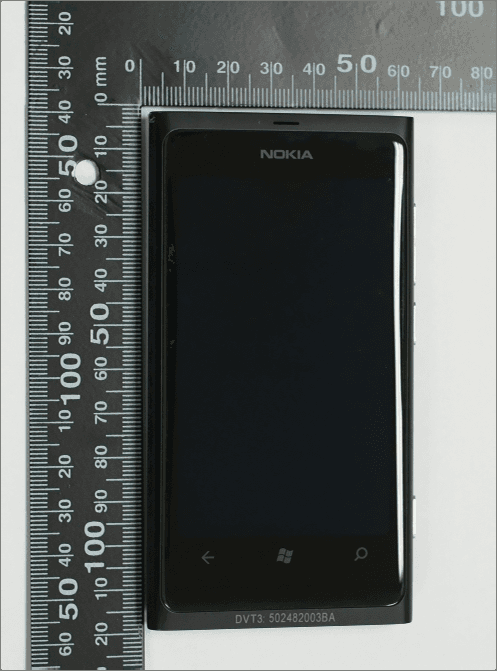
LJPA
Dec 20, 2011GSM/WCDMA cellular phone w/BT and WLAN
Equipment Class
DTS - Digital Transmission System
LJPRM-801
Oct 08, 2011GSM/WCDMA cellular phone w/BT and WLAN
Equipment Class
JBP - Part 15 Class B Computing Device Peripheral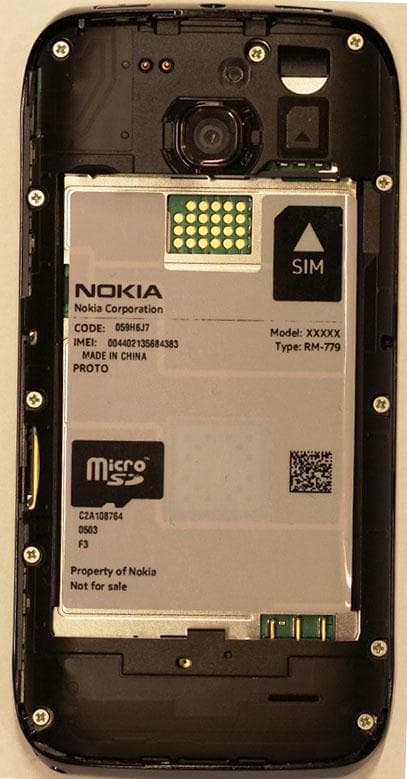
LJPRM-779
Sep 29, 2011GSM/WCDMA cellular phone w/BT, WLAN and NFC
Equipment Class
DTS - Digital Transmission System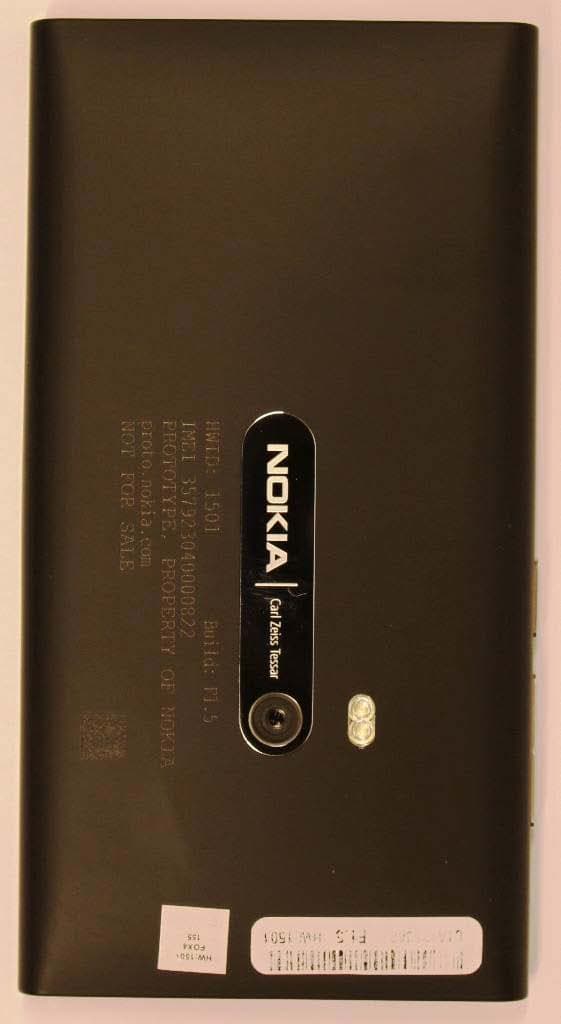
LJPK
Jul 20, 2011GSM/WCDMA cellular telephone with BT, WLAN, and NFC
Equipment Class
DTS - Digital Transmission System
LJPRM-701
Jul 20, 2011GSM/WCDMA cellular phone w/BT, WLAN, FMTx and NFC
Equipment Class
DXX - Part 15 Low Power Communication Device Transmitter