LJPNSB-6NXPCS Band GSM Hand Held Cellular Telephone
Microsoft Corporation
Click to zoom
Application Details
- Equipment Class
- PCE - PCS Licensed Transmitter held to ear
- Date of Grant
- Jun 08, 2000
- Application Purpose
- Original Equipment
- Date of Application
- Jan 24, 2000
- Equipment Note
- PCS Band GSM Hand Held Cellular Telephone
- Frequency Range
- 1850.00000000 - 1910.00000000
- Company
- Microsoft Corporation
- Country
- United States
Documents & Files
Document Text
Text extracted from the exhibit documents filed with the FCC. Open a document above to read the original.
Users Manual
8890 UG version 0.0811/30/99 Nokia 8890 Owner’s Manual version 0.08 To do: • Add headset to “voice dialing” section and review with Georg. • Complete illustrations on pages 91, 92, and 118. • Check feasibility of generating index 8890titl.fm Page 1 Tuesday, November 30, 1999 3:54 PM 8890 UG version 0.0811/30/99 The wireless phone described in this guide is approved for use in GSM 900 and GSM 1900 networks. Copyright information Part No. 935nnnn, Issue No. 1, n.nn © 1999 Nokia Mobile Phones. All rights reserved. Printed in Canada nn/99 Nokia, Nokia Connecting People and the Original Accessories logos are trademarks of Nokia Corporation and/or its affiliates. US Patent No 5818437 and other pending patents. T9 text input software Copyright (C) 1999. Tegic Communications, Inc. All rights reserved. The information contained in this Owner’s Manual was written for Nokia phone NSB-6. The right to make changes and improvements to any of the products described in this guide without prior notice is reserved. These commodities are authorized by the U.S. Government for export only to Canada, Mexico, or the United States. They may not be resold, diverted, transferred, or otherwise disposed of in any other country, either in their original form or after being incorporated through an intermediate process into other end-items, without the written approval of the U.S. Department of State. FCC/Industry Canada Notice Your phone may cause TV or radio interference (for example, when using a telephone in close proximity to receiving equipment). The FCC or Industry Canada can require you to stop using your telephone if such interference cannot be eliminated. If you require assistance, contact your local service facility. This device complies with part 15 of the FCC rules. Operation is subject to the condition that this device does not cause harmful interference. 8890ug.book Page 2 Tuesday, November 30, 1999 3:39 PM 8890 UG version 6i11/30/99 Contents For Your Safety........................... 1 Your Phone’s Label .................... 2 Welcome ................................... 3 Using this guide ......................... 3 Documentation conventions ............................ 3 Terms ........................................ 4 Accessing this guide online ............................................ 4 Keys and features ...................... 5 Front ......................................... 5 Back .......................................... 5 Left side ................................... 6 Bottom ..................................... 6 Network Services ....................... 7 Contacting Nokia....................... 7 Contacting Your Service Provider ........................................ 8 Before You Begin...................... 9 Preparing Your Phone for Use .......................................... 9 Installing the SIM Card ....... 9 Notes about SIM cards ......10 Installing the Battery .........10 Charging the Battery .........10 Removing the battery ........11 About Your Phone .................. 12 Switching on your phone ......12 Start screen............................... 12 Indicators and icons.......... 13 How to make and answer calls ......................................15 Making a call............................ 15 Checking the signal strength ................................. 15 Using the keypad ................ 15 Using the phone book ....... 16 Using the sliding cover...... 16 Advanced calling options ................................... 17 Adjusting the earpiece vol- ume during a call................ 17 Ending a call ............................. 17 Answering a call ...................... 18 Rejecting a call ........................ 18 Redialing the last-dialed number ....................................... 18 Dial any of the 10 last dialed numbers.................... 18 The menu.................................19 Using the menus...................... 19 Selection keys ...................... 19 Scroll keys............................. 19 Scroll bar ............................... 20 Help text ............................... 20 Menu shortcuts........................ 20 List of menu shortcuts........... 21 8890ug.book Page i Tuesday, November 30, 1999 3:39 PM 8890 UG version 6ii11/30/99 Entering letters and numbers ............................... 25 Standard text input.................25 ABC mode..............................25 123 Mode ..............................27 Using special characters in names and phone numbers .................................27 Phone book ............................. 28 Saving names and numbers......................................28 Saving a name and number...................................28 Saving a number only ........28 Saving a name and number while in a call.......................28 If your phone book is full.......................................29 Finding names in the phone book .............................................29 From the start screen.........29 While in a call ......................29 Editing names and numbers......................................30 Erasing names and numbers......................................30 Erasing stored names and numbers.........................30 Erasing your entire phone book ...........................30 Two types of memory............. 31 Switching between internal memory and SIM memory.................................. 31 Call log ....................................... 32 Dialed calls ........................... 32 Received calls ...................... 32 Missed calls .......................... 32 Clearing call lists ................ 34 Voice Mail ...............................35 Saving the Voice Mailbox Number...................... 36 Working with Two Phone Lines .......................... 36 Listening to Your Voice Messages ................................... 36 Profiles ....................................37 Selecting profiles..................... 37 Advanced calling features .....38 Active call options ...…
Text truncated - open the document above for the full version.
Attestation Statements
NOKIA MOBILE PHONES Elektroniikkatie 10 FIN-90570 Oulu FINLAND Tel. +358 10 5051 Fax. +358 10 505 7222 December 7, 1999 Federal Communications Commission Authorization & Evaluation Division, 7435 Oakland Mills Road, Columbia, MD. 21046 Attention: Equipment Authorization Branch PER:47 CFR 22.919 RE:FCC ID: LJPNSB-6NX The Electronic Serial Number (ESN) for each transceiver is unique. The ESN host component is permanently attached to a main circuit board of the alterable. The ESN is isolated from fraudulent contact and tampering. The host component does not contain other information, it is not removable and its electrical connections are not accessible. The host component does contain other information, and the ESN information is encoded using: (1) Multiplication or division by a polynomial. (2) Cyclic coding. (3) The spreading of ESN bits over various non-sequential memory locations. The ESN is factory set and is not alterable, transferable, removable, or otherwise able to be manipulated. Cellular mobile equipment is designed such that any attempt to remove, tamper with, or change the ESN chip, its logic system, or firmware originally programmed by the manufacturer will render the mobile transmitter inoperative. NOKIA MOBILE PHONES Juha Lumila Product Program Manager, Product Creation Center, Oulu NOKIA MOBILE PHONES Elektroniikkatie 10 FIN-90570 Oulu FINLAND Tel. +358 10 5051 Fax. +358 10 505 7222 December 7, 1999 Federal Communications Commission, Authorization & Evaluation Division, 7435 Oakland Mills Road, Columbia, MD. 21046 Attention: Equipment Authorization Branch We hereby certify that the transceiver FCC ID: LJPNSB-6NX complies with ETSI GSM 1900 SPECIFICATION Standard. Compliance was determined by testing appropriate parameters according to standard. Extensive field testing has been performed against several different systems in the USA to verify the interoperability with different systems. NOKIA MOBILE PHONES Juha Lumila Product Program Manager, Product Creation Center, Oulu
Cover Letter(s)
NOKIA MOBILE PHONES Elektroniikkatie 10 FIN-90570 Oulu FINLAND Tel. +358 10 5051 Fax. +358 10 505 7222 January 12, 1999 Federal Communications Commission, Authorization & Evaluation Division, 7435 Oakland Mills Road, Columbia, MD. 21046 Attention: Equipment Authorization Branch This letter will authorize the appointment of MORTON FLOM, P. Eng., and/or M. FLOM ASSOCIATES, INC. to act as our Agent in all FCC matters. This appointment is effective until otherwise notified by us. This is to advice that we are in full compliance with the Anti-Drug Abuse Act. The Applicant is not subject to a denial of federal benefits pursuant to Section 5301 of the Anti- Drug Abuse Act of 1988, 21 USC 862, and no party to the application is subject to a denial of federal benefits pursuant to that section. Sincerely, NOKIA MOBILE PHONES Timo Huttunen Vice President, Product Creation Center, Oulu
Cover Letter(s)
L:\MFA\FCC letter re Bill Graff.doc May 23, 2000 Federal Communications Commission Gentlemen: Please be advised that William H. (Bill) Graff is no longer employed by M. Flom Associates, Inc. in any capacity nor as a consultant. The only contact person to replace him is Morton Flom, P. Eng., President. Telephone number: 480 926 3100, FAX: 480 926 3598, email: general@mflom. Regards, Morton Flom, P. Eng., President M. Flom Associates, Inc.
External Photos
01 Dec 1999 Applicant: Nokia Mobile Phones FCC ID: LJPNSB-6NX Copyright © 1999 Nokia Mobile Phones 01 Dec 1999 Applicant: Nokia Mobile Phones FCC ID: LJPNSB-6NX Copyright © 1999 Nokia Mobile Phones 01 Dec 1999 Applicant: Nokia Mobile Phones FCC ID: LJPNSB-6NX Copyright © 1999 Nokia Mobile Phones 01 Dec 1999 Applicant: Nokia Mobile Phones FCC ID: LJPNSB-6NX Copyright © 1999 Nokia Mobile Phones 01 Dec 1999 Applicant: Nokia Mobile Phones FCC ID: LJPNSB-6NX Copyright © 1999 Nokia Mobile Phones 01 Dec 1999 Applicant: Nokia Mobile Phones FCC ID: LJPNSB-6NX Copyright © 1999 Nokia Mobile Phones 01 Dec 1999 Applicant: Nokia Mobile Phones FCC ID: LJPNSB-6NX Copyright © 1999 Nokia Mobile Phones 01 Dec 1999 Applicant: Nokia Mobile Phones FCC ID: LJPNSB-6NX Copyright © 1999 Nokia Mobile Phones
ID Label/Location Info
30 Nov 99 FCC ID: LJPNSB-6NX Applicant: Nokia Mobile PhonesCopyright1999 Nokia Mobile Phones FCC ID: LJPNSB-6NX CAN: MOBILE PHONES LTD. Type: NSB-6NXModel: 8890 IMEI:001004/30/014680/1 CODE:0502714 KG163 01680168 MADE IN KOREA 30 Nov 99 FCC ID: LJPNSB-6NX Applicant: Nokia Mobile PhonesCopyright1999 Nokia Mobile Phones FCC ID: LJPNSB-6NX CAN: MOBILE PHONES LTD. Type: NSB-6NXModel: 8890 IMEI:001004/30/014680/1 CODE:0502714 KG163 01680168 MADE IN KOREA FCC ID: LJPNSB-6NX CAN: MOBILE PHONES LTD. Type: NSB-6NXModel: 8890 IMEI:001004/30/014680/1 CODE:0502714 KG163 01680168 MADE IN KOREA NOKIA MOBILE PHONES Elektroniikkatie 10 FIN-90570 Oulu FINLAND Tel. +358 10 5051 Fax. +358 10 505 7222 December 7, 1999 Federal Communications Commission, Authorization & Evaluation Division, 7435 Oakland Mills Road, Columbia, MD. 21046 Attention: Equipment Authorization Branch COMPLIANCE STATEMENT OF NOKIA 8890, FCC ID: LJPNSB-6NX The compliance statement can be seen in User Guide of NOKIA 8890 because the size of the handportable NOKIA 8890 and its identification label are so small that the compliance statement can’t be printed visible enough. NOKIA MOBILE PHONES Juha Lumila Product Program Manager, Product Creation Center, Oulu 8890 UG version 0.0811/30/99 The wireless phone described in this guide is approved for use in GSM 900 and GSM 1900 networks. Copyright information Part No. 935nnnn, Issue No. 1, n.nn © 1999 Nokia Mobile Phones. All rights reserved. Printed in Canada nn/99 Nokia, Nokia Connecting People and the Original Accessories logos are trademarks of Nokia Corporation and/or its affiliates. US Patent No 5818437 and other pending patents. T9 text input software Copyright (C) 1999. Tegic Communications, Inc. All rights reserved. The information contained in this Owner’s Manual was written for Nokia phone NSB-6. The right to make changes and improvements to any of the products described in this guide without prior notice is reserved. These commodities are authorized by the U.S. Government for export only to Canada, Mexico, or the United States. They may not be resold, diverted, transferred, or otherwise disposed of in any other country, either in their original form or after being incorporated through an intermediate process into other end-items, without the written approval of the U.S. Department of State. FCC/Industry Canada Notice Your phone may cause TV or radio interference (for example, when using a telephone in close proximity to receiving equipment). The FCC or Industry Canada can require you to stop using your telephone if such interference cannot be eliminated. If you require assistance, contact your local service facility. This device complies with part 15 of the FCC rules. Operation is subject to the condition that this device does not cause harmful interference. 8890ug.book Page 2 Tuesday, November 30, 1999 3:39 PM
Internal Photos
01 Dec 1999 Applicant: Nokia Mobile Phones FCC ID: LJPNSB-6NX Copyright © 1999 Nokia Mobile Phones 01 Dec 1999 Applicant: Nokia Mobile Phones FCC ID: LJPNSB-6NX Copyright © 1999 Nokia Mobile Phones 01 Dec 1999 Applicant: Nokia Mobile Phones FCC ID: LJPNSB-6NX Copyright © 1999 Nokia Mobile Phones
RF Exposure Info
NOKIA MOBILE PHONES Elektroniikkatie 10 FIN-90570 Oulu FINLAND Tel. +358 10 5051 Fax. +358 10 505 7222 December 7, 1999 Federal Communications Commission, Authorization & Evaluation Division, 7435 Oakland Mills Road Columbia, MD. 21046 Attention: Equipment Authorization Branch We hereby certify that the transceiver FCC ID: LJPNSB-6NX complies with ANSI/IEEE C95.1-1992 Standard for Safety Levels with Respect to Human Exposure to Radio Frequency Electromagnetic Fields, 3 kHz to 300 GHz. Compliance was determined by testing appropriate parameters according to standard. NOKIA MOBILE PHONES Juha Lumila Product Program Manager, Product Creation Center, Oulu 1 December 13th, 1999 Nokia Mobile Phones P.O. Box 86 Joensuunkatu 7E FIN-24101 SALO Finland FEDERAL COMMUNICATIONS COMMISSION Equipment Authorization Branch 7435 Oaklands Mills Road Columbia, MD 21046 SAR TEST REPORT of Nokia 8890i Gentlemen, Please find attached SAR test report of FCC ID: LJPNSB-6NX For and on behalf of Nokia Mobile Phones Ltd. Respectfully, Sami Savela RF Design Engineer Responsible for NMP SAR measurements 2 Contents Page 1.DESCRIPTION OF THE MEASUREMENT................................................... 3 2.DESCRIPTION OF CALIBRATION BY MANUFACTURER ..................... 4 3.LIST OF STANDARDS ...................................................................................... 4 4.DEVICE LIST...................................................................................................... 5 5.EQUIPMENT UNDER TEST ............................................................................ 6 5.1 V ERIFICATION AND RESULTS............................................................................... 6 5.2 S PECIFICATION OF LIQUID.................................................................................... 6 5.3 SPECIFICATION OF POSITION WITH PHONE AGAINST GENERIC TWIN PHANTOM..... 7 5.4 T HE PHONE POSITION AGAINST GENERIC TWIN PHANTOM..................................... 8 5.5 RESULTS OF SAR FOR 1G. ................................................................................... 9 APPENDIX 1 APPENDIX 2 APPENDIX 3 APPENDIX 4 APPENDIX 5 APPENDIX 6 APPENDIX 7 APPENDIX 8 APPENDIX 9 APPENDIX 10 3 1.Description of the measurement This measurements were done by E-field scanning system for dosimetric assessments. It is robot-based system which allows automated E-field scanning in tissue simulating solutions. The measurements are based on the induced specific absorption rate (SAR) definition of relevant ANSI / IEEE standards. The dosimetric assessment system of Nokia Mobile Phones is manufactured by Prof. Niels Kuster at ETH (Schmid & Partner Engineering AG) in Switzerland, Europe. The method used to determine the 1 gram average value of SAR is: Initially a coarse scan is performed over the whole area on a 20 x 20 mm grid. From this coarse scan, the location at which the maximum value is measured is used as the centre for a second, more detailed scan. This second scan is based on a three-dimensional grid of 4 x 4 x 7 points on a grid of 10 mm for 900 MHz band. The average SAR values are computed using the 3D spline interpolation algorithm. The 3D spline is composed on three one-dimensional splines with the “Not a knot” condition in the x, y and z directions (1), (2). The volume is integrated with the trapezoidal algorithm. 1000 points (10x10x10) are interpolated to calculate the average. All neighbouring volumes are evaluated until no neighbouring volume with a higher average is found. (1) W. Gander, Computermathematik, Birkhauser, Basel, 1992 (2) W. H. Press, S. A Teukolsky, W. T. Vettering and B. P. Flannery, Numerical Recipes in C, The Art of Scientific Computing, second edition, Cambridge University Press, 1992 4 2.Description of calibration by manufacturer The calibration of data acquisition electronics and probe was done by the manufacturer. (Appendix 3 and 7) - the data acquisition unit is calibrated and tested using a FLUKE 702 Process Calibrator - measurement uncertainty is less than ± 20% for various tissues simulating solutions and frequencies: - these calibration parameters were measured using a temperature probe developed by manufacturer - description of the probe calibration and examples of the evaluation are enclosed in Appendix 7 3.List of standards ANSI/IEEE Std C95.1-1992 IEEE Standard for Safety Levels with Respect to Human Exposure to Radio Frequency Electromagnetic Fields, 3 kHz to 300 GHz ANSI/IEEE Std C95.3-1992 IEEE Recommended Practice for the Measurement of Potentially Hazardous Electromagnetic Fields-RF and Microwave 5 4.Device list Automated E-field scanning system for dosimetric assessments System. Calibration due July 2000. Technical data (Appendix 1) Probe ET3DV4, SN: 1105, Recalibrated due July 2000 Technical data (Appendix 2) DASY-dosimetric assessment system, DAE V2, SN: 213, Calibration due July 2000 (Appendix 3) Industrial robot and Control unit, type STÄUBLI CS7 RX 90(CR) NO:595148-01, Technical data (Appendix 4) Generic Twin Phantom Version 3 (Appendix 6). PC COMPAQ 466 laser printer QMS magicolor plus Devices for preparation of the brain tissue simulating liquids -General laboratory equipment for preparation of liquids -Magnetic stirrer with heating plate IKA RET CV, SN:792708 -Scale Mettler Doleto, SN: 2114177678 HP 85070A Dielectric probe system - network analyzer HP 8753B, SN:2716U00762, Calibration due April 2000 - cables - probe stand - dielectric probe kit NO: US33020242 - PC AST PREMMIA 4/66 d - HP-IB 82335B (interface and software) Dipole Validation kit for 900 MHz band, Schmid & Partner Engineering AG, Typ: D900V2, SN: 003, Recalibrated/Verification due July 2001 and Dipole Validation kit for 1800 MHz band, Schmid & Partner Engineering AG, Typ: D1800V2, SN: 207, Recalibrated/Verification due July 2001 - signal generator ROHDE & SCHWARZ, 1038.6002.03, Calibration due July 2000 - power meter, ROHDE & SCHWARZ, 857.8008.02, Calibration due December 2001 - amplifier ZHL-42…
Text truncated - open the document above for the full version.
RF Exposure Info
FCC ID LJPNSB-6NX Applicant: Nokia Mobile Phones Correspondence Reference Number: 13089 731 Confirmation Number: EA96591 CORRESPONDENCE 26. April 2000 1. Q: Body-worn data was not provided in the test data. The manual indicates that there is a connector for a Headset/car kit connection. Since there is a headset option the device can be worn on the body. As a result Body-worn data will be required. Address body-worn SAR compliance with respect to belt-clips, holsters or similar accessories provided with this device. Body-worn SAR may be addressed by testing SAR with a minimum separation distance, typically 0.5 cm to 1.0 cm including the antenna whether extended or retracted, between the back of the device and the body phantom. If the accessories are not included in the test, only belt clips and holsters containing no metallic parts in the assembly can be marketed providing that they keep the device separation from the body as specified in the test. The specific operating requirements for body-worn SAR compliance must be included in the users manual for users to comply, indicating that it is for FCC RF exposure compliance and non-tested accessories may not comply and should be avoided. A: Required body-worn data is shown in appendix 1 and modified user guide page is shown in appendix 2. 2. Q: Clarification is needed on the car kit accessory. If external antennas are used an evaluation of MPE compliance or qualifications for categorical exclusion requirements of Part 2.1091 need to be addressed. A: There is no external antenna connector in LJPNSB-6NX and thus no external antennas are used. 3. Q: Confirm SAR compliance with the hand either by measurements or other appropriate means. A: SAR compliance data with the hand is shown in appendix 3. 4. Q: Confirm that the GSM 900 capabilities indicated in the technical description are not a part of this filing. A: Even though LJPNSB-6NX is capable to operate in both GSM900 and GSM1900 networks, it will not active its transmitter unless network is first detected. Since there is no GSM900 network in US territory, GSM900 capability is not a part of this filing. Appendix 1. Body-worn SAR Data BODY SAR REPORT1 (5) NOKIA MOBILE PHONES2000-4-20 Sami Savela Evaluation of SAR in Body Worn Configurations LJPNSB-6NX Introduction Our approach was to measure the SAR, when phone is used with body worn accessories or is against the Flat Phantom. Body worn accessories CSH-3 Leather Carrying Case and Leather Carrying Case from CBP-2 Travel pack (Picture 1) was tested. The measurement test equipment and setup was the same as used and referred in SAR TEST REPORT of NOKIA 8890. Picture 1. Leather Carrying Case CSH-3 and Leather Carrying Case from Travel pack CBP-2. Test method Measurements were done with the Dasy 2 dosimetric assessment system DAE V2, SN: 213 and with the generic Twin Phantom version 3 from Schmid & Partner Engineering Ag. Positioning of the phone in all measurements was done according to the user guide instructions in section Radio Frequency (RF) Signals i.e. display and keypad were facing the flat phantom. Also the design of body worn accessories encourages to this kind of positioning. The point of maximum SAR was searched and SAR was measured with a 3-dimensional cube measurement. Because of the highest SAR values were originally measured on the channel 512 (1850 MHz) with the head phantom, body-worn SAR was measured on this same channel with the maximum output power level. Brain equivalent liquid, which has higher conductivity than tissues in the body, was used also in body-worn measurements. Thus this method overestimates SAR. BODY SAR REPORT2 (5) NOKIA MOBILE PHONES2000-4-20 Sami Savela Results Graphical presentations of test positions with the highest SAR values are presented in the end of this report. Digital mode GSM PCS (1900MHz) meas. nr: Phone position Frequency MHz / channel Power,dBm EIRP *) SAR (1g)[mW/g] 1 Body Worn, Carrying Case (CSH-3) against Flat Phantom 1850 / 512 31.0 0.42 2 Body Worn, Carrying Case (from Travel Pack CBP-2) against Flat Phantom 1850 / 512 31.0 0.64 3 Body Worn, Display against Flat Phantom 1850 / 512 31.0 0.64 FCC ID: LJPNSB-6NX MEASURED: 2000-4-20/NMP FCC limit1.60[mW/g] (ANSI/IEEE) *) Radiated power was measured by FCC accredited test lab Summary The SAR values found for the portable cellular phone (FCC ID: LJPNSB-6NX) are below the maximum recommended levels of 1.6 mW/g. BODY SAR REPORT3 (5) NOKIA MOBILE PHONES2000-4-20 Sami Savela Figure 1. SAR-plot LJPNSB-6NX with Carrying Case CSH-3 BODY SAR REPORT4 (5) NOKIA MOBILE PHONES2000-4-20 Sami Savela Figure 2. SAR-plot LJPNSB-6NX with Carrying Case from CBP-2 BODY SAR REPORT5 (5) NOKIA MOBILE PHONES2000-4-20 Sami Savela Figure 3. SAR-plot LJPNSB-6NX body worn Appendix 2. FCC RF Exposure Info in User Guide [ 110 ] Radio Frequency (RF) Signals Your wireless handheld portable telephone is a low-power radio transmitter and receiver. When it is ON, it receives and sends out radio frequency (RF) signals. In August 1996, the Federal Communications Commission (FCC) adopted RF exposure guidelines that included safety levels for handheld wireless phones. Those guidelines are consistent with safety standards previously set by both U.S and international standards bodies: •ANSI C95.1 (1992)*, NCRP Report 86 (1986)*, ICNIRP (1996)*, and RSS-102 issue 1. Those standards were based on comprehensive and periodic evaluations of the relevant scientific literature. For example, over 120 scientists, engineers, and physicians from universities, government health agencies, and industry reviewed the available body of research to develop the ANSI Standard (C95.1). The design of your phone complies with the FCC guidelines (and those standards). To maintain compliance with FCC RF exposure guidelines, use only Nokia approved accesories. When carrying the phone while it is on, place the phone in Nokia approved belt clip, carrying case or holster, or place the phone in a pocket so that the ke…
Text truncated - open the document above for the full version.
RF Exposure Info
Applicant: Nokia Mobile Phones FCC ID: LJPNSB-6NX Correspondence Reference Number: 14266 731 Confirmation Number: EA96591 Federal Communications Commission Authorization and Evaluation Division 7435 Oakland Mills Road Columbia, Maryland 21046 Kwok Chan / Frank Coperich: Please find attached our reply to your correspondence concerning LJPNSB-6NX (EA96591, correspondence reference number 14266). The original text is followed by our highlighted response. Regards, Kare Oksanen Engineering Manager, Type Approval Nokia Mobile Phones, PCC Oulu 1. Please provide photos or other illustrations indicating the phone can only be placed in the proposed carrying holsters with its keypad /display facing the user when transmitting in body-worn configurations. Otherwise, additional SAR compliance results would be needed. The bottom connector is available for headset when LJPNSB-6NX is positioned in the carrying cases so that the keypad and display are facing the user. This is shown in Picture 1. Picture 1. LJPNSB-6NX positioned keypad/display facing the user Applicant: Nokia Mobile Phones FCC ID: LJPNSB-6NX Correspondence Reference Number: 14266 731 Confirmation Number: EA96591 If LJPNSB-6NX is positioned in the way that its keypad and display are facing away from the user, the bottom connector will not be available without misusing the carrying cases (Picture 2). Thus having a call while having LJPNSB-6NX in the carrying case is reasonable only when keypad and display and facing the user. Picture 2. LJPNSB-6NX positioned keypad/display facing away from the user 2. Please revise body-worn SAR compliance statement in the manual to exclude belt- clip. Only two carrying cases were tested for body-worn SAR compliance. Suggestion: "....., place the phone in specific Nokia carrying cases that have been tested for compliance. Use of non-Nokia-approved accessories may violate FCC RF exposure guidelines and should be avoided.". We accept your suggestion. This paragraph will be changed as follows: For body worn operation, to maintain compliance with FCC RF exposure guidelines, use only Nokia approved accessories. When carrying the phone while it is on, place the phone in the specific Nokia carrying cases that have been tested for compliance. Use of non-Nokia-approved accessories may violate FCC RF exposure guidelines and should be avoided. 3. FYI - Even at 6 GHz, muscle-equivalent dielectric constant ... (a very long explanation was deleted here to save some space )... For the current filing, there is sufficient SAR margin in the measured results which we do not believe the difference in tissue dielectric parameters could result in non-compliance conditions; therefore, additional testing is not requested. Please test SAR with appropriate tissue dielectric parameters as inappropriate tissue parameters may not be accepted for future filings. We understand your concern and we will try to find to the best of our abilities a more suitable tissue simulating liquid for the future filings. Applicant: Nokia Mobile Phones FCC ID: LJPNSB-6NX Correspondence Reference Number: 14266 731 Confirmation Number: EA96591 4. FYI - the response provided by the test lab had incorrectly substitute permittivity for tissue density in the SAR equation. Please note that any error or misunderstanding of this basic SAR equation could have significant effects on all SAR evaluations. Thank you for pointing this out. We have discussed this with the test lab and they will no longer make modifications in regards to SAR evaluations without our approval.
RF Exposure Info
Applicant: Nokia Mobile Phones FCC ID: LJPNSB-6NX Correspondence Reference Number: 14377 731 Confirmation Number: EA96591 Federal Communications Commission Authorization and Evaluation Division 7435 Oakland Mills Road Columbia, Maryland 21046 Kwok Chan / Frank Coperich: Please find attached our reply to your correspondence concerning LJPNSB-6NX (EA96591, correspondence reference number 14377). The original text is followed by our highlighted response. Regards, Kare Oksanen Engineering Manager, Type Approval Nokia Mobile Phones, PCC Oulu In a previous request for technical information it was requested that photos or other illustrations indicating that the phone can only be placed in the appropriate carrying holster with the keypad/display facing the user when transmitting in the configuration be submitted. The latest exhibit shows only the horizontal carrying case. Please submit photos using the vertical carrying case. The photo(s) should show the external connector(s) as was done in the previous exhibit for the horizontal carrying case. The reason for leaving out the vertical carrying case was that at the moment we do not have t…
Text truncated - open the document above for the full version.
Contact Information
Applicant
Hasnain Syed(Director, EMC, SI and RF Compliance)
Technical Contact
M. Flom Associates, Inc.William H Graff
[email protected]480 926 3100
3356 N. San Marcos Place · Chandler, Arizona · United States
Non-Technical Contact
M. Flom Associates, Inc.Morton Flom
[email protected]480 926 3100
Test Firm
M. Flom Associates, Inc.Morton Flom
Technical Specifications
| # | Rule Parts | Frequency Range | Power Output | Emission | Tolerance |
|---|---|---|---|---|---|
| 1 | 24E | 1.85 GHz - 1.91 GHz | 1.25 W | 256KGXW | 2.5000000000 ppm |
Other Applications from Microsoft Corporation
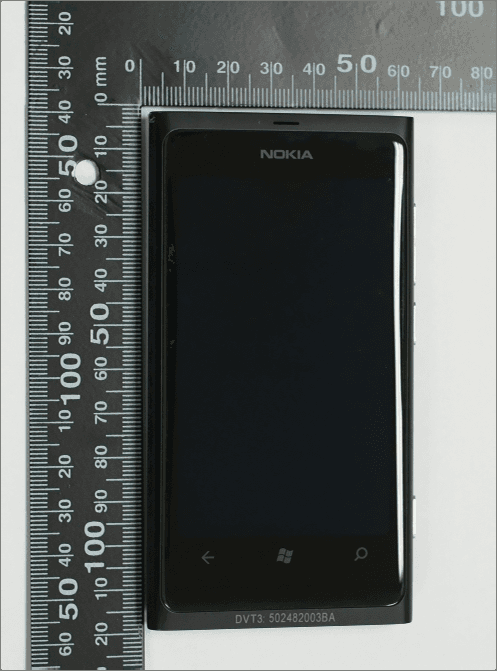
LJPA
Dec 20, 2011GSM/WCDMA cellular phone w/BT and WLAN
Equipment Class
DTS - Digital Transmission System
LJPRM-801
Oct 08, 2011GSM/WCDMA cellular phone w/BT and WLAN
Equipment Class
JBP - Part 15 Class B Computing Device Peripheral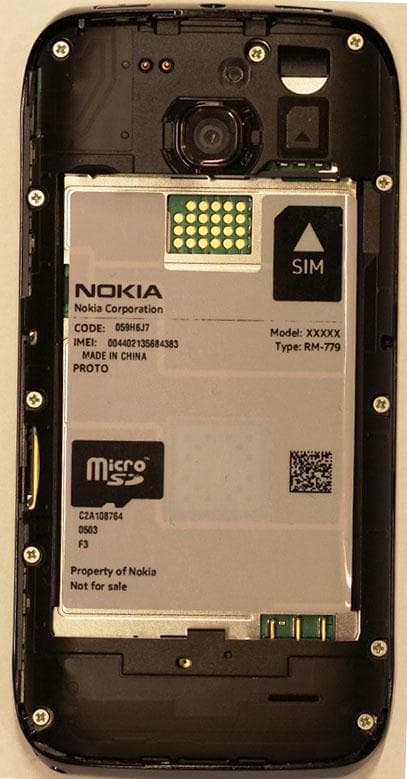
LJPRM-779
Sep 29, 2011GSM/WCDMA cellular phone w/BT, WLAN and NFC
Equipment Class
DTS - Digital Transmission System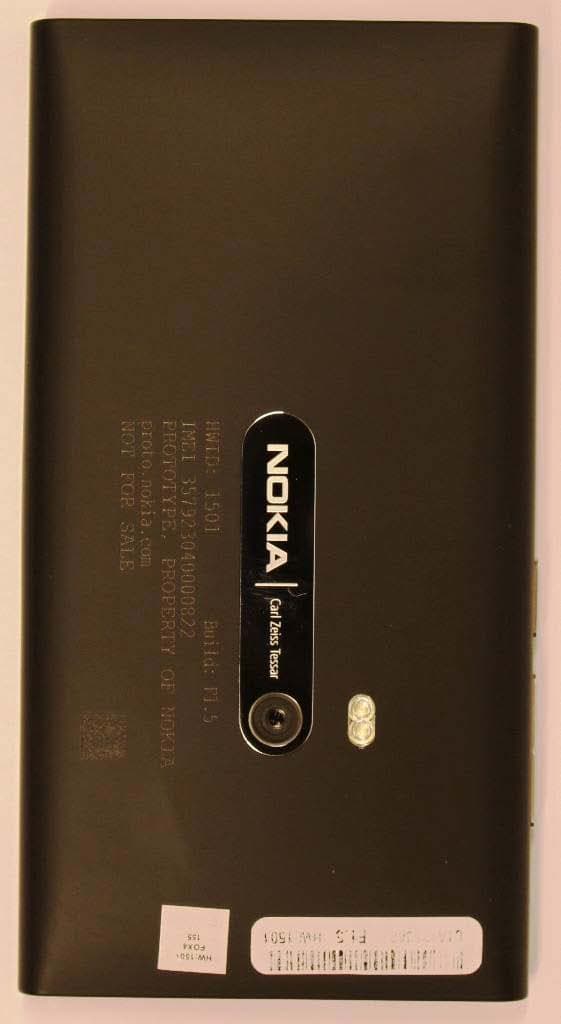
LJPK
Jul 20, 2011GSM/WCDMA cellular telephone with BT, WLAN, and NFC
Equipment Class
DTS - Digital Transmission System
LJPRM-701
Jul 20, 2011GSM/WCDMA cellular phone w/BT, WLAN, FMTx and NFC
Equipment Class
DXX - Part 15 Low Power Communication Device Transmitter