LJPNSM-9Dual Band GSM Cellular Transceiver
Microsoft Corporation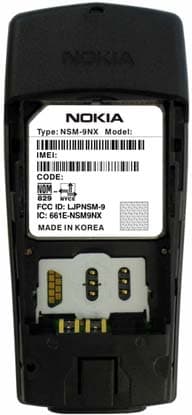
Click to zoom
Application Details
- Equipment Class
- PCE - PCS Licensed Transmitter held to ear
- Date of Grant
- Apr 15, 2002
- Application Purpose
- Original Equipment
- Date of Application
- Apr 11, 2002
- Equipment Note
- Dual Band GSM Cellular Transceiver
- Frequency Range
- 1850.20000000 - 1909.80000000
- Company
- Microsoft Corporation
- Country
- United States
Documents & Files
Document Text
Text extracted from the exhibit documents filed with the FCC. Open a document above to read the original.
Users Manual
Nokia 6590 User Guide 2nd Draft The wireless phone described in this guide is approved for use in GSM networks. LEGAL INFORMATION Part No. _________, Issue No. 1 ©2002 Nokia Mobile Phones. All rights reserved. Nokia is a registered trademark of Nokia Corporation. Printed in Canada __/2002 Nokia, Nokia Connecting People and the Original Accessories logos are trademarks of Nokia Corporation and/or its affiliates. US Patent No 5818437 and other pending patents. T9 text input software Copyright ©1999-2002. Tegic Communications, Inc. All rights reserved. Includes RSA BSAFE cryptographic or security protocol software from RSA Security. The information contained in this user guide was written for Nokia 6590 phone. Nokia operates a policy of continuous development. Nokia reserves the right to make changes and improvements to any of the products described in this document without prior notice. UNDER NO CIRCUMSTANCES SHALL NOKIA BE RESPONSIBLE FOR ANY LOSS OF DATA OR INCOME OR ANY SPECIAL, INCIDENTAL, AND CONSEQUENTIAL OR INDIRECT DAMAGES HOWSOEVER CAUSED. THE CONTENTS OF THIS DOCUMENT ARE PROVIDED “AS IS.” EXCEPT AS REQUIRED BY APPLICABLE LAW, NO WARRANTIES OF ANY KIND, EITHER EXPRESS OR IMPLIED, INCLUDING, BUT NOT LIMITED TO, THE IMPLIED WARRANTIES OF MERCHANTABILITY AND FITNESS FOR A PARTICULAR PURPOSE, ARE MADE IN RELATION TO THE ACCURACY AND RELIABILITY OR CONTENTS OF THIS DOCUMENT. NOKIA RESERVES THE RIGHT TO REVISE THIS DOCUMENT OR WITHDRAW IT AT ANY TIME WITHOUT PRIOR NOTICE. EXPORT CONTROLS This product contains commodities, technology or software exported from the United States in accordance with the Export Administration regulations. Diversion contrary to U.S. law is prohibited. FCC/INDUSTRY CANADA NOTICE Your phone may cause TV or radio interference (for example, when using a telephone in close proximity to receiving equipment). The FCC or Industry Canada can require you to stop using your telephone if such interference cannot be eliminated. If you require assistance, contact your local service facility. This device complies with part 15 of the FCC rules. Operation is subject to the condition that this device does not cause harmful interference. [ i ] Contents 1. Safety first . . . . . . . . . . . . . . . . . . . . . . . . . . . . . . . . . . . . . 1 Safety guidelines . . . . . . . . . . . . . . . . . . . . . . . . . . . . . . . . . . . . . . . . .1 Road safety comes first . . . . . . . . . . . . . . . . . . . . . . . . . . . . . . . . . .1 Switch off in hospitals . . . . . . . . . . . . . . . . . . . . . . . . . . . . . . . . . . .1 Switch off while aboard aircraft . . . . . . . . . . . . . . . . . . . . . . . . . . .1 Switch off when refueling . . . . . . . . . . . . . . . . . . . . . . . . . . . . . . . .1 Switch off near blasting . . . . . . . . . . . . . . . . . . . . . . . . . . . . . . . . . .1 Observe infrared precautions . . . . . . . . . . . . . . . . . . . . . . . . . . . . . .1 Emergency calls. . . . . . . . . . . . . . . . . . . . . . . . . . . . . . . . . . . . . . . . .2 Be aware of interference . . . . . . . . . . . . . . . . . . . . . . . . . . . . . . . . .2 Use your phone sensibly . . . . . . . . . . . . . . . . . . . . . . . . . . . . . . . . . .2 Use only qualified service personnel . . . . . . . . . . . . . . . . . . . . . . . .2 Use approved accessories and batteries . . . . . . . . . . . . . . . . . . . . .2 Read instructions before you connect to other devices . . . . . . . .2 Make sure the phone is on . . . . . . . . . . . . . . . . . . . . . . . . . . . . . . . .2 2. Welcome. . . . . . . . . . . . . . . . . . . . . . . . . . . . . . . . . . . . . . . 3 Get the most out of this guide . . . . . . . . . . . . . . . . . . . . . . . . . . . . . .3 Understand the terms . . . . . . . . . . . . . . . . . . . . . . . . . . . . . . . . . . . .3 Notice text conventions . . . . . . . . . . . . . . . . . . . . . . . . . . . . . . . . . .4 Follow graphic clues . . . . . . . . . . . . . . . . . . . . . . . . . . . . . . . . . . . . .4 Look for updates . . . . . . . . . . . . . . . . . . . . . . . . . . . . . . . . . . . . . . . .4 Understand wireless network services . . . . . . . . . . . . . . . . . . . . . . . .5 Sign up with a service provider . . . . . . . . . . . . . . . . . . . . . . . . . . . .5 Note differences among service providers . . . . . . . . . . . . . . . . . . .5 Learn about accessibility solutions . . . . . . . . . . . . . . . . . . . . . . . . . . .6 Alternate format user guides . . . . . . . . . . . . . . . . . . . . . . . . . . . . . .6 LPS-3 Mobile Inductive Loopset . . . . . . . . . . . . . . . . . . . . . . . . . . .6 Accessible features . . . . . . . . . . . . . . . . . . . . . . . . . . . . . . . . . . . . . .7 Find information about your phone . . . . . . . . . . . . . . . . . . . . . . . . . .7 Contact Nokia . . . . . . . . . . . . . . . . . . . . . . . . . . . . . . . . . . . . . . . . . . . .7 Have the right information available . . . . . . . . . . . . . . . . . . . . . . .7 Have the phone or accessory handy . . . . . . . . . . . . . . . . . . . . . . . .8 Contact your service provider . . . . . . . . . . . . . . . . . . . . . . . . . . . . . . .8 [ ii ] 3. Before you begin . . . . . . . . . . . . . . . . . . . . . . . . . . . . . . . . 9 Install the SIM card . . . . . . . . . . . . . . . . . . . . . . . . . . . . . . . . . . . . . . .9 Notes about SIM cards . . . . . . . . . . . . . . . . . . . . . . . . . . . . . . . . . .10 Install the battery . . . . . . . . . . . . . . . . . . . . . . . . . . . . . . . . . . . . . . . .10 Charge the battery . . . . . . . . . . . . . . . . . . . . . . . . . . . . . . . . . . . . . . .11 Important battery information . . . . . . . . . . . . . . . . . . . . . . . . . . . . .11 Remove the battery . . . . . . . . . . . . . . . . . . . . . . . . . . . . . . . . . . . . . .12 Set up your headset . . . . . . . . . . . . . . . . . . . . . . . . . . . . . . . . . . . . . .12 Connect the headset. . . . . . . . . . …
Text truncated - open the document above for the full version.
Attestation Statements
NOKIA CORPORATION Nokia Mobile Phones Elektroniikkatie 10 FIN-90570 OULU FINLAND Tel. +358 7180 08000 Fax. +358 7180 47222 March 22, 2002 Federal Communications Commission, Authorization & Evaluation Division, 7435 Oakland Mills Road, Columbia, MD. 21046 Attention: Equipment Authorization Branch PER: 47 CFR 22.919 RE: FCC ID: LJPNSM-9 The Electronic Serial Number (ESN) for each transceiver is unique. The ESN host component is permanently attached to a main circuit board of the alterable. The ESN is isolated from fraudulent contact and tampering. The host component does not contain other information, it is not removable and its electrical connections are not accessible. The host component does contain other information, and the ESN information is encoded using: (1) Multiplication or division by a polynomial. (2) Cyclic coding. (3) The spreading of ESN bits over various non-sequential memory locations. The ESN is factory set and is not alterable, transferable, removable, or otherwise able to be manipulated. Cellular mobile equipment is designed such that any attempt to remove, tamper with, or change the ESN chip, its logic system, or firmware originally programmed by the manufacturer will render the mobile transmitter inoperative. NOKIA CORPORATION Pasi Pentinpuro Product Program Manager, PC Center Oulu
Cover Letter(s)
NOKIA CORPORATION Nokia Mobile Phones Elektroniikkatie 10 FIN-90570 OULU FINLAND Tel. +358 7180 08000 Fax. +358 7180 47222 March 22, 2002 Federal Communications Commission, Authorization & Evaluation Division, 7435 Oakland Mills Road, Columbia, MD. 21046 Attention: Equipment Authorization Branch REQUEST FOR CONFIDENTIALITY Pursuant to Sections 0.457 (d) (l) (ii) and 0.459 of the Commission’s Rules, the Applicant hereby requests confidential treatment of some of the information accompanying this Application of FCC ID: LJPNSM-9 and as outlined below: - Exhibit 4: Block Diagram - Exhibit 5: Schematic Diagrams - Exhibit 10: List of Active Devices and Tune-Up Procedure - Exhibit 12: Theory of Operation / Description of Circuitry These materials contain trade secrets and proprietary information not customarily released to the public and the public disclosure of these matters might be harmful to the Applicant and provide unjustified benefits to its competitors. The Applicant understands that pursuant to Rule 0.457 (d) (l) (ii) disclosure of this Application and all accompanying documentation will not be made before the date of the Grant for this Application. NOKIA CORPORATION Pasi Pentinpuro Product Program Manager, PC Center Oulu NOKIA CORPORATION Nokia Mobile Phones Elektroniikkatie 10 FIN-90570 OULU FINLAND Tel. +358 7180 08000 Fax. +358 7180 47222 March 22, 2002 Federal Communications Commission, Authorization & Evaluation Division, 7435 Oakland Mills Road, Columbia, MD. 21046 Attention: Equipment Authorization Branch REQUEST FOR AN ADDITIONAL GRANT STATEMENT We kindly request that the grant has an additional statement indicating the mobile may be produced for Part 24 only single band operation by deactivating Cellular band functions with a factory firmware. There is neither mechanical nor hardware changes concerning this request. NOKIA CORPORATION Pasi Pentinpuro Product Program Manager, PC Center Oulu
Cover Letter(s)
American Telecommunications Certification Body Inc. 6731 Whittier Ave, McLean, VA 22101 April 11, 2002 RE: Nokia Corporation FCC ID: LJPNSM-9 I have a few comments on this Application. 1.) The requested additional Grant notes requested are unusual, but acceptable. Please confirm that once manufactured, the firmware cannot be re-activated in the field. 2.) The Schematics are only one page, and do not seem to be complete. Only a single large scale IC is shown with a few additional support circuits. Is this all there is? 3.) Block Diagram does not seem to match supplied Schematic. Please review. 4.) Test Report indicates collector voltage and collector current appear in manual. Please indicate where. 5.) Test Report indicates rated Pout is higher that reported Pout. Please explain. 6.) The Test Report measurement description of radiated Pout seems a bit confusing. If you could refine this description, specifically that involving Et – Es it would be appreciated. Perhaps a sample calculation would clarify. Please explain 7.) Antennas quoted for antenna substitution method are a biconical and a Roberts’s style dipole. Neither antenna is capable of measurement in the PCS band. Please explain. 8.) Measured -26dBc bandwidth is 243KHz, but requested necessary BW is 256KHz. Please explain. 9.) The Field Strength of Spurious Radiation quotes the use of 10KHz RBW for frequencies below 1GHz. This measurement BW is smaller than the requested necessary BW for this device. Please explain. Thanks for your consideration. William H. Graff President and Examining Engineer mailto: [email protected] The items indicated above must be submitted before processing can continue on the above referenced application. Failure to provide the requested information may result in application termination. Correspondence should be considered part of the permanent submission and may be viewed from the Internet after a Grant of Equipment Authorization is issued. Please do not respond to this correspondence using the email reply button. In order for your response to be processed expeditiously, you must submit your documents through the AmericanTCB.com website. Also, please note that partial responses increase processing time and should not be submitted. Any questions about the content of this correspondence should be directed to the sender.
Cover Letter(s)
RESPONSE 1 (2) Response to ATCB Correspondence FCC ID: LJPNSM-9 Applicant: Nokia Corporation Copyright © 2002 Nokia. All rights reserved. 1.) The requested additional Grant notes requested are unusual, but acceptable. Please confirm that once manufactured, the firmware cannot be re-activated in the field. Once manufactured, single band/dual band capability won’t be changed. Normal firmware updates won’t affect to this capability. 2.) The Schematics are only one page, and do not seem to be complete. Only a single large scale IC is shown with a few additional support circuits. Is this all there is? Schematics include TX, RX and synthesizer circuits, i.e. all radio frequency parts. 3.) Block Diagram does not seem to match supplied Schematic. Please review. Actually, Block Diagram does match Schematics. Block Diagram just presents more detailed information of IC, which cannot be seen in Schematics. 4.) Test Report indicates collector voltage and collector current appear in manual. Please indicate where. Collector voltage is 3.9V and collector current 1.9A (cellular) and 1.4A (PCS). 5.) Test Report indicates rated Pout is higher that reported Pout. Please explain. Rated power refers to the GSM specification, which defines nominal power output. Since this specification allows some tolerances, rated power does not have necessarily anything to do with particular product measured. Instead of comparing reported power output to rated power output, it should be compared to tune-up procedure. 6.) The Test Report measurement description of radiated Pout seems a bit confusing. If you could refine this description, specifically that involving Et – Es it would be appreciated. Perhaps a sample calculation would clarify. Please explain Radiated power peak value of tested device was first sought by rotating turntable and raising/lowering mast. Maximum field strength level was recorded as E T . After this tested device was replaced with substitution antenna, which was fed by signal generator using the same modulation used by tested device. Peak value was again sought by raising/lowering the mast only and maximum field strength level was recorded as E S . Now radiated power output can be calculated from P OUT = P F + E T – E S + Gain Ant , where P F is conducted power fed into substitution antenna. E T is field strength level received from tested device, dBuV/m E S is field strength level received from substitution antenna, dBuV/m Gain Ant is antenna gain Full measurement data is presented in the table below. Mode Frequency, MHz Gain Ant E T E S P F Power dBm Power Watts 824.2 0dBd 90.7 69.7 4.4 25.4 ERP 0.347 ERP 836.4 0dBd 92.2 68.3 4.3 28.2 ERP 0.661 ERP GSM850 848.8 0dBd 94.0 69.0 4.1 29.1 ERP 0.813 ERP 1850.2 -3.25dBi 87.2 52.8 0.4 31.6 EIRP 1.429 EIRP 1880.0 -3.31dBi 86.7 53.8 0.0 29.6 EIRP 0.910 EIRP GSM1900 1909.8 -3.27dBi 86.7 52.5 -0.2 30.7 EIRP 1.183 EIRP RESPONSE 2 (2) Response to ATCB Correspondence FCC ID: LJPNSM-9 Applicant: Nokia Corporation Copyright © 2002 Nokia. All rights reserved. Some small rounding errors were found in GSM1900 results. Please update the new maximum power output for Part 24 in Form 731 accordingly. 7.) Antennas quoted for antenna substitution method are a biconical and a Roberts’s style dipole. Neither antenna is capable of measurement in the PCS band. Please explain. Used Seiberdorf precision biconical antenna is calibrated and capable to measure up to 2.5GHz with extremely flat frequency response. 8.) Measured -26dBc bandwidth is 243KHz, but requested necessary BW is 256KHz. Please explain. As stated, 243kHz was the measured 99% OBW. However, traditionally it is requested to use a theoretical value of 256kHz in emission designator. 9.) The Field Strength of Spurious Radiation quotes the use of 10KHz RBW for frequencies below 1GHz. This measurement BW is smaller than the requested necessary BW for this device. Please explain. There is a mistake in test report and amended page is uploaded. Used RBW was 100kHz, which in turn is higher than required in 22.917(h).
Cover Letter(s)
RESPONSE 1 (1) Response to FCC correspondence 4117 FCC ID: LJPNSM-9 Applicant: Nokia Corporation Copyright © 2002 Nokia. All rights reserved. To: Martin Perrine FCC Equipment Authorization Branch Re: FCC ID: LJPNSM-9 Applicant: Nokia Corporation Correspondence Reference Number: 4117 731 Confirmation Number: TC294100 A) The FCC could not locate answers to ATCB letter dated 11 April 2002. Please provide. Answers are now uploaded as a seprate document. B) Please update the rule part associated with pt 22 stated on the grant. 22.901(d) is appropriate by FCC convention. TCB has been asked to revise this rule part in the grant. C) Please provide a full parts list. New confidentiality request is included to cover also parts list. D) Please confirm that the three tested body-worn accessories are the only ones available for this phone. Please update the manual to mention these accessories. RF safety statement suggests that only one clip was tested. Please revise. At the moment these three body-worn accessories are the only ones available. These accessories will be listed in Accessory section of the user manual. Reference to belt-clip has been removed and revised text in manual goes as follows: For body worn operation, this phone has been tested and meets the FCC RF exposure guidelines when used with the Nokia accessories supplied or designated for this product. Use of other accessories may not ensure compliance with FCC RF exposure guidelines. E) Please address how the burst nature of the emission was account for in the radiated and conducted emission measurements. All spectrum analyzer measurement were done using peak detector and duty cycle was used during power meter measurements. F) Discussion of how the EUT was operated/controlled during the test to assure the testing of all appropriate modes, maximum power, and any duty factor driven parameters. Supplement C Appendix B part I 2. Special control software was used allowing control over frequency, mode and power level of EUT. Modulation, duty cycle or any other system specified fixed parameters cannot be affected and they were the same than in normal operation. All EMC and RF exposure tests are done using this software.
External Photos
18 Mar 2002 Exhibit 3: External Photographs FCC ID: LJPNSM-9 Applicant: Nokia Corporation Copyright © 2002 Nokia Corporation 18 Mar 2002 Exhibit 3: External Photographs FCC ID: LJPNSM-9 Applicant: Nokia Corporation Copyright © 2002 Nokia Corporation
ID Label/Location Info
Model: 6590 IMEI: CODE: FCC ID: LJPNSM-9 IC: 661E-NSM9NX MADE IN KOREA Type: NSM-9NX FCC ID LJPN:SM-9 Copyright2002 Nokia Corporation Exhibit 1: Type Label Position Applicant Nokia Corporation 19 Mar 2002 Model: IMEI: CODE: FCC ID: LJPNSM-9 IC: 661E-NSM9NX MADE IN KOREA Type: NSM-9NX Model: 6590 IMEI: CODE: FCC ID: LJPNSM-9 IC: 661E-NSM9NX MADE IN KOREA Type: NSM-9NX FCC ID LJPN:SM-9 Copyright2002 Nokia Corporation Exhibit 1: Type Label Applicant Nokia Corporation 19 Mar 2002 NOKIA CORPORATION Nokia Mobile Phones Elektroniikkatie 10 FIN-90570 OULU FINLAND Tel. +358 7180 08000 Fax. +358 7180 47222 March 22, 2002 Federal Communications Commission, Authorization & Evaluation Division, 7435 Oakland Mills Road, Columbia, MD. 21046 Attention: Equipment Authorization Branch COMPLIANCE STATEMENT OF FCC ID: LJPNSM-9 The compliance statement can be seen in User Guide of LJPNSM-9 because the size of the handportable and its identification label are so small that the compliance statement can’t be printed visible enough. NOKIA CORPORATION Pasi Pentinpuro Product Program Manager, PC Center Oulu The wireless phone described in this guide is approved for use in GSM networks. LEGAL INFORMATION Part No. _________, Issue No. 1 ©2002 Nokia Mobile Phones. All rights reserved. Nokia is a registered trademark of Nokia Corporation. Printed in Canada __/2002 Nokia, Nokia Connecting People and the Original Accessories logos are trademarks of Nokia Corporation and/or its affiliates. US Patent No 5818437 and other pending patents. T9 text input software Copyright ©1999-2002. Tegic Communications, Inc. All rights reserved. Includes RSA BSAFE cryptographic or security protocol software from RSA Security. The information contained in this user guide was written for Nokia 6590 phone. Nokia operates a policy of continuous development. Nokia reserves the right to make changes and improvements to any of the products described in this document without prior notice. UNDER NO CIRCUMSTANCES SHALL NOKIA BE RESPONSIBLE FOR ANY LOSS OF DATA OR INCOME OR ANY SPECIAL, INCIDENTAL, AND CONSEQUENTIAL OR INDIRECT DAMAGES HOWSOEVER CAUSED. THE CONTENTS OF THIS DOCUMENT ARE PROVIDED “AS IS.” EXCEPT AS REQUIRED BY APPLICABLE LAW, NO WARRANTIES OF ANY KIND, EITHER EXPRESS OR IMPLIED, INCLUDING, BUT NOT LIMITED TO, THE IMPLIED WARRANTIES OF MERCHANTABILITY AND FITNESS FOR A PARTICULAR PURPOSE, ARE MADE IN RELATION TO THE ACCURACY AND RELIABILITY OR CONTENTS OF THIS DOCUMENT. NOKIA RESERVES THE RIGHT TO REVISE THIS DOCUMENT OR WITHDRAW IT AT ANY TIME WITHOUT PRIOR NOTICE. EXPORT CONTROLS This product contains commodities, technology or software exported from the United States in accordance with the Export Administration regulations. Diversion contrary to U.S. law is prohibited. FCC/INDUSTRY CANADA NOTICE Your phone may cause TV or radio interference (for example, when using a telephone in close proximity to receiving equipment). The FCC or Industry Canada can require you to stop using your telephone if such interference cannot be eliminated. If you require assistance, contact your local service facility. This device complies with part 15 of the FCC rules. Operation is subject to the condition that this device does not cause harmful interference.
Internal Photos
18 Mar 2002 Exhibit 9: Internal Photographs FCC ID: LJPNSM-9 Applicant: Nokia Corporation Copyright © 2002 Nokia Corporation Internal antenna 18 Mar 2002 Exhibit 9: Internal Photographs FCC ID: LJPNSM-9 Applicant: Nokia Corporation Copyright © 2002 Nokia Corporation
RF Exposure Info
NOKIA CORPORATION Nokia Mobile Phones Elektroniikkatie 10 FIN-90570 OULU FINLAND Tel. +358 7180 08000 Fax. +358 7180 47222 March 22, 2002 Federal Communications Commission, Authorization & Evaluation Division, 7435 Oakland Mills Road Columbia, MD. 21046 Attention: Equipment Authorization Branch We hereby certify that the transceiver FCC ID: LJPNSM-9 complies with ANSI/IEEE C95.1-1992 Standard for Safety Levels with Respect to Human Exposure to Radio Frequency Electromagnetic Fields, 3 kHz to 300 GHz. Compliance was determined by testing appropriate parameters according to standard. NOKIA CORPORATION Pasi Pentinpuro Product Program Manager, PC Center Oulu PC Site Oulu Exhibit 11: SAR Report DTX04235-EN Applicant: Nokia Corporation FCC ID: LJPNSM-9 Copyright 2002 Nokia Corporation 1 (14) SAR Compliance Test Report Test report no.: Not numbered Date of report: 2002-03-27 Number of pages: 68 Contact person: Olli Kautio Responsible test engineer: Pertti Mäkikyrö Testing laboratory: Nokia Corporation Elektroniikkatie 10 P.O. Box 50 FIN-90571 OULU Finland Tel. +358-7180-08000 Fax. +358-7180-47222 Client: Nokia Corporation Elektroniikkatie 10 P.O. Box 50 FIN-90571 OULU Finland Tel.+358-7180-08000 Fax. +358-7180-47222 Tested devices: LJPNSM-9, CSL-18, CSM-10, CSH-3 Supplement reports: - Testing has been carried out in accordance with: IEEE P1528-200X Draft 6.4 Recommended Practice for Determining the Peak Spatial-Average Specific Absorption Rate (SAR) in the Human Body Due to Wireless Communications Devices: Experimental Techniques Documentation: The documentation of the testing performed on the tested devices is archived for 15 years at PC Site Oulu Test results: The tested device complies with the requirements in respect of all parameters subject to the test. The test results and statements relate only to the items tested. The test report shall not be reproduced except in full, without written approval of the laboratory. Date and signatures: 2002-03-27 For the contents: Pertti Mäkikyrö Engineering Manager, EMC Miia Nurkkala Test Engineer PC Site Oulu Exhibit 11: SAR Report DTX04235-EN Applicant: Nokia Corporation FCC ID: LJPNSM-9 Copyright 2002 Nokia Corporation 2 (14) CONTENTS 1.SUMMARY FOR SAR TEST REPORT ..........................................................................................................................3 1.1MAXIMUM RESULTS FOUND DURING SAR EVALUATION............................................................................................................ 3 1.1.1Head Configuration.......................................................................................................................................................... 3 1.1.2Body Worn Configuration............................................................................................................................................... 3 1.1.3Measurement Uncertainty ............................................................................................................................................. 3 2.DESCRIPTION OF TESTED DEVICE .............................................................................................................................4 2.1PICTURE OF PHONE...................................................................................................................................................................... 4 2.2D ESCRIPTION OF THE ANTENNA................................................................................................................................................... 4 2.3B ATTERY OPTIONS........................................................................................................................................................................ 4 2.4B ODY WORN ACCESSORIES......................................................................................................................................................... 5 3.TEST CONDITIONS ........................................................................................................................................................6 3.1AMBIENT CONDITIONS................................................................................................................................................................. 6 3.2RF CHARACTERISTICS OF THE TEST SITE........................................................................................................................................ 6 3.3T EST SIGNAL, FREQUENCIES, AND OUTPUT POWER..................................................................................................................... 6 4.DESCRIPTION OF THE TEST EQUIPMENT.................................................................................................................6 4.1SYSTEM ACCURACY VERIFICATION.............................................................................................................................................. 7 4.2T ISSUE SIMULANTS...................................................................................................................................................................... 8 4.2.1Head Tissue Simulant ...................................................................................................................................................... 8 4.2.2Muscle Tissue Simulant................................................................................................................................................... 8 4.3P HANTOMS.................................................................................................................................................................................. 9 4.4I SOTROPIC E-FIELD PROBE ET3DV6........................................................................................................................................... 9 5.DESCRIPTION OF THE TEST PROCEDURE ...........................................................................…
Text truncated - open the document above for the full version.
Test Report
FCC ID: LJPNSM-9 MFA p0230013, d0230054 TRANSMITTER CERTIFICATION of FCC ID: LJPNSM-9 S/N of unit tested: 001004/10/053154/1 to FEDERAL COMMUNICATIONS COMMISSION Rule Part(s) 22, 24, Confidentiality DATE OF REPORT: March 28, 2002 ON THE BEHALF OF THE APPLICANT: Nokia Corporation AT THE REQUEST OF : P.O. Kare Oksanen, March 25th, 2002 Nokia Corporation Elektroniikkatie 10 Fin-90570 Oulu, Finland Attention of: Kare Oksanen, R&D Type Approvals [email protected] 011 358 7180 08000; FAX: 011 358 7180 47222 SUPERVISED BY: Morton Flom, P. Eng. FCC ID: LJPNSM-9 MFA p0230013, d0230054 THE APPLICANT HAS BEEN CAUTIONED AS TO THE FOLLOWING: 15.21 INFORMATION TO USER. The users manual or instruction manual for an intentional radiator shall caution the user that changes or modifications not expressly approved by the party responsible for compliance could void the user's authority to operate the equipment. 15.27(a) SPECIAL ACCESSORIES. Equipment marketed to a consumer must be capable of complying with the necessary regulations in the configuration in which the equipment is marketed. Where special accessories, such as shielded cables and/or special connectors are required to enable an unintentional or intentional radiator to comply with the emission limits in this part, the equipment must be marketed with, i.e. shipped and sold with, those special accessories. However, in lieu of shipping or packaging the special accessories with the unintentional or intentional radiator, the responsible party may employ other methods of ensuring that the special accessories are provided to the consumer, without additional charge. Information detailing any alternative method used to supply the special accessories for a grant of equipment authorization or retained in the verification records, as appropriate. The party responsible for the equipment, as detailed in § 2.909 of this chapter, shall ensure that these special accessories are provided with the equipment. The instruction manual for such devices shall include appropriate instructions on the first page of text concerned with the installation of the device that these special accessories must be used with the device. It is the responsibility of the user to use the needed special accessories supplied with the equipment. FCC ID: LJPNSM-9 MFA p0230013, d0230054 TABLE OF CONTENTS RULE DESCRIPTION PAGE . Test Report…
Text truncated - open the document above for the full version.
Contact Information
Applicant
Hasnain Syed(Director, EMC, SI and RF Compliance)
Technical Contact
Technical Specifications
| # | Rule Parts | Frequency Range | Power Output | Emission | Tolerance |
|---|---|---|---|---|---|
| 2 | 24E | 1.85 GHz - 1.91 GHz | 1.429 W | 256KGXW | 0.1 ppm |
Other Applications from Microsoft Corporation
LJPA
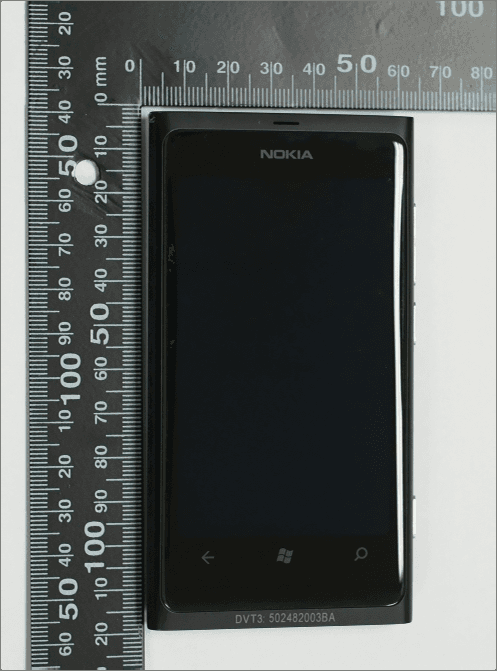
Dec 20, 2011GSM/WCDMA cellular phone w/BT and WLAN
Equipment Class
DTS - Digital Transmission System
LJPRM-801
Oct 08, 2011GSM/WCDMA cellular phone w/BT and WLAN
Equipment Class
JBP - Part 15 Class B Computing Device Peripheral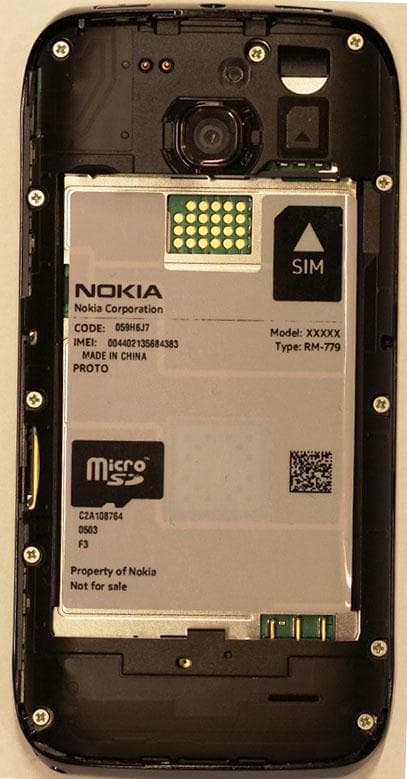
LJPRM-779
Sep 29, 2011GSM/WCDMA cellular phone w/BT, WLAN and NFC
Equipment Class
DTS - Digital Transmission System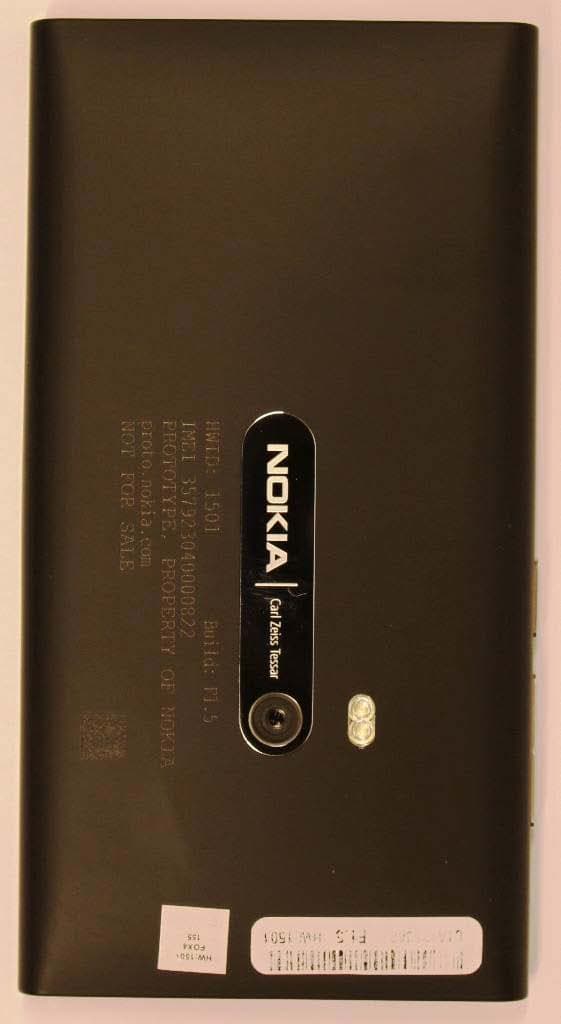
LJPK
Jul 20, 2011GSM/WCDMA cellular telephone with BT, WLAN, and NFC
Equipment Class
DTS - Digital Transmission System
LJPRM-701
Jul 20, 2011GSM/WCDMA cellular phone w/BT, WLAN, FMTx and NFC
Equipment Class
DXX - Part 15 Low Power Communication Device Transmitter