LJPRM-199GSM850/900/1800/1900 Cellular Telephone w/WLAN
Microsoft Corporation
Click to zoom
Application Details
- Equipment Class
- PCE - PCS Licensed Transmitter held to ear
- Date of Grant
- Jun 18, 2006
- Application Purpose
- Original Equipment
- Date of Application
- Jun 15, 2006
- Equipment Note
- GSM850/900/1800/1900 Cellular Telephone w/WLAN
- Frequency Range
- 824.20000000 - 848.80000000
- Company
- Microsoft Corporation
- Country
- United States
Documents & Files
Document Text
Text extracted from the exhibit documents filed with the FCC. Open a document above to read the original.
Users Manual
1 Nokia 6136 User Guide - FCC Draft 2 LEGAL INFORMATION DECLARATION OF CONFORMITY We, NOKIA CORPORATION declare under our sole responsibility that the product RM-199 is in conformity with the provisions of the following Council Directive:1999/5/EC. A copy of the Declaration of Conformity can be found at http://www.nokia.com/phones/ declaration_of_conformity/. The crossed-out wheeled bin means that within the European Union the product must be taken to separate collection at the product end-of-life. This applies to your device but also to any enhancements marked with this symbol. Do not dispose of these products as unsorted municipal waste. PART NO. XXXXXXX, ISSUE NO. 1 Copyright © 2006 Nokia. All rights reserved. Nokia, Nokia Connecting People, Pop-Port, PC Suite, and the Nokia Original Enhancements logos are trademarks or registered trademarks of Nokia Corporation. Other company and product names mentioned herein may be trademarks or trade names of their respective owners. Nokia tune is a sound mark of Nokia Corporation. US Patent No 5818437 and other pending patents. T9 text input software Copyright © 1999-2006. Tegic Communications, Inc. All rights reserved. Includes RSA BSAFE cryptographic or security protocol software from RSA Security. Java is a trademark of Sun Microsystems, Inc. This product is licensed under the MPEG-4 Visual Patent Portfolio License (i) for personal and noncommercial use in connection with information which has been encoded in compliance with the MPEG-4 Visual Standard by a consumer engaged in a personal and noncommercial activity and (ii) for use in connection with MPEG-4 video provided by a licensed video provider. No license is granted or shall be implied for any other use. Additional information, including that related to promotional, internal, and commercial uses, may be obtained from MPEG LA, LLC. See <http://www.mpegla.com>. 3 The information contained in this user guide was written for the Nokia 6136 product. Nokia operates a policy of ongoing development. Nokia reserves the right to make changes to any of the products described in this document without prior notice. UNDER NO CIRCUMSTANCES SHALL NOKIA BE RESPONSIBLE FOR ANY LOSS OF DATA OR INCOME OR ANY SPECIAL, INCIDENTAL, AND CONSEQUENTIAL OR INDIRECT DAMAGES HOWSOEVER CAUSED. THE CONTENTS OF THIS DOCUMENT ARE PROVIDED "AS IS." EXCEPT AS REQUIRED BY APPLICABLE LAW, NO WARRANTIES OF ANY KIND, EITHER EXPRESS OR IMPLIED, INCLUDING, BUT NOT LIMITED TO, THE IMPLIED WARRANTIES OF MERCHANTABILITY AND FITNESS FOR A PARTICULAR PURPOSE, ARE MADE IN RELATION TO THE ACCURACY AND RELIABILITY OR CONTENTS OF THIS DOCUMENT. NOKIA RESERVES THE RIGHT TO REVISE THIS DOCUMENT OR WITHDRAW IT AT ANY TIME WITHOUT PRIOR NOTICE. EXPORT CONTROLS This device may contain commodities, technology, or software subject to export laws and regulations from the U.S. and other countries. Diversion contrary to law is prohibited. FCC/INDUSTRY CANADA NOTICE Your device may cause TV or radio interference (for example, when using a telephone in close proximity to receiving equipment). The FCC or Industry Canada can require you to stop using your telephone if such interference cannot be eliminated. If you require assistance, contact your local service facility. This device complies with part 15 of the FCC rules. Operation is subject to the following two conditions: (1) This device may not cause harmful interference, and (2) this device must accept any interference received, including interference that may cause undesired operation. Any changes or modifications not expressly approved by Nokia could void the user's authority to operate this equipment. Contents 4 Contents 1. General information ............. 8 2. Get started ......................... 11 3. Your phone......................... 17 4. Call functions..................... 23 5. Phone menus...................... 26 6. Messaging .......................... 27 7. Contacts ............................. 46 8. Call log ............................... 52 9. Settings .............................. 53 10. Operator menu................ 71 11. Gallery.............................. 72 12. Media............................... 73 13. Push to talk ..................... 79 14. Organiser ......................... 85 15. Applications .................... 89 16. Web.................................. 91 17. SIM services..................... 99 18. Computer connectivity . 100 19. Enhancements ............... 101 20. Reference information.. 102 Index..................................... 109 For your safety 5 For your safety Read these simple guidelines. Not following them may be dangerous or illegal. Read the complete user guide for further information. SWITCH ON SAFELY Do not switch the device on when wireless phone use is prohibited or when it may cause interference or danger. ROAD SAFETY COMES FIRST Obey all local laws. Always keep your hands free to operate the vehicle while driving. Your first consideration while driving should be road safety. INTERFERENCE All wireless phones may get interference, which could affect performance. SWITCH OFF IN HOSPITALS Follow any regulations or rules. Switch the phone off near medical equipment. SWITCH OFF IN AIRCRAFT Follow any restrictions. Wireless devices can cause interference in aircraft. SWITCH OFF WHEN REFUELING Do not use the phone at a refueling point. Do not use near fuel or chemicals. SWITCH OFF NEAR BLASTING Follow any restrictions. Do not use the phone where blasting is in progress. USE SENSIBLY Use only in the normal position as explained in the product documentation. Do not touch the antenna unnecessarily. QUALIFIED SERVICE Only qualified personnel may install or repair this product. ENHANCEMENTS AND BATTERIES Use only approved enhancements and batteries. Do not connect incompatible products. For your safety 6 WATER-RESISTANCE Your phone is not water-resistant. Keep it dry. BACKUP COPIES Remember to make back-up copies or keep a written record of all im…
Text truncated - open the document above for the full version.
Cover Letter(s)
NOKIA CORPORATION Elektroniikkatie 10 FIN-90570 OULU FINLAND Tel. +358 7180 08000 Fax. +358 7180 47222 April 28, 2006 Federal Communications Commission, Authorization & Evaluation Division, 7435 Oakland Mills Road, Columbia, MD. 21046 Attention: Equipment Authorization Branch REQUEST FOR CONFIDENTIALITY Pursuant to Sections 0.457 (d) (l) (ii) and 0.459 of the Commission’s Rules, the Applicant hereby requests confidential treatment of some of the information accompanying this Application of FCC ID: LJPRM-199 and as outlined below: - Exhibit 4: Block Diagram - Exhibit 5: Schematic Diagrams - Exhibit 10: List of Active Devices and Tune-Up Procedure - Exhibit 12: Theory of Operation / Description of Circuitry These materials contain trade secrets and proprietary information not customarily released to the public and the public disclosure of these matters might be harmful to the Applicant and provide unjustified benefits to its competitors. The Applicant understands that pursuant to Rule 0.457 (d) (l) (ii) disclosure of this Application and all accompanying documentation will not be made before the date of the Grant for this Application. NOKIA CORPORATION Pekka Väyrynen Product Program Manager Mobile Phones, Oulu
Cover Letter(s)
TEST REPORT APPLICABILITY BETWEEN RM-199 and RM-106 This application of FCC ID: LJPRM-106 reuses some test reports from LJPRM-199. The difference between these two products is firmware tuning values of output power for WLAN 802.11b/g operation. Therefore, - all GSM test results (part 22/24) of LJPRM-199 are applicable - all WLAN (part 15C) tests have been redone - SAR report of LJPRM-199 is applicable otherwise except for WLAN part, which has been remeasured for LJPRM-106. LJPRM-199 SAR report is used as supplemental report for LJPRM-106 SAR Report, and final results are calculated for LJPRM-106 report.
Cover Letter(s)
American Telecommunications Certification Body Inc. 6731 Whittier Ave, McLean, VA 22101 May 27, 2006 RE: FCC ID: LJPRM-199_ATCB003446 and LJPRM-106_ATCB003447 Attention: Kare I have a few comments on these Applications. Please note that further comments may arise in response to answers provided to the questions below. LJPRM-199_ATCB003446 4. Please note that the Power in the WLAN report (page 6 of the WLAN power report) is conducted at a power of 27.3dBm. The SAR report lists WLAN as EIRP (page3 and 4) with the maximum tested power almost 3dB less than that in the EMC (page 18 of the SAR report only shows 24.6dBm). Please note that power must be in the same units either conducted (with less than 0.0dB difference between the two reports) or EIRP (with up to 3dB difference but the SAR must be the higher). Please correct to show the same power measurements and/or retest as necessary. 5. Please note that probe SN1813 calibration data is dated Sept 2004. Please note that recent FCC interpretation is that SAR probes are to have one year or less calibration cycle. Please retest those configurations where probe serial number is 1813. 6. Please note that the dipole calibration data for SN476 is Jan 2005. The FCC has recently stated that cal cycle for SAR equipment is not to exceed 1 year. Please correct and re-measure as needed.. Dennis Ward mailto:[email protected] The items indicated above must be submitted before processing can continue on the above referenced application. Failure to provide the requested information may result in application termination. Correspondence should be considered part of the permanent submission and may be viewed from the Internet after a Grant of Equipment Authorization is issued. Please do not respond to this correspondence using the email reply button. In order for your response to be processed expeditiously, you must submit your documents through the AmericanTCB.com website. Also, please note that partial responses increase processing time and should not be submitted. Any questions about the content of this correspondence should be directed to the sender.
Cover Letter(s)
RESPONSE LJPRM-106_ATCB003447 1. Please note that the SAR report for the WLAN shows a maximum conducted power of 25.4dBm. the WLAN test report shows a maximum power level of 26.3dBm. The SAR report has to have the highest power level and there is a 0.9dB difference between the two maximums. The WLAN SAR values in the SAR report have been scaled up to account for the above-mentioned difference in power levels. 2. Please note that the revised SAR report appears to only have the WLAN data. Please provide the Cellphone data as well. Unfortunately the supplemental SAR of LJPRM-199 report was initially not uploaded. As noted in Section 3.2 of the SAR report, the only difference between LJPRM-106 and LJPRM-199 is in the WLAN output power tuning; the cellular bands in LJPRM-106 are identical to those in LJPRM-199. The full cellphone data is provided in the SAR report for LJPRM-199, which is now uploaded with this application. 3. Please note that probe SN1813 calibration data is dated Sept 2004. Please note that recent FCC interpretation is that SAR probes are to have one year or less calibration cycle. Please retest those configurations where probe serial number is 1813. An expired calibration certificate was erroneously included in the SAR report. A revised version of the report has been updated with the current certificate. LJPRM-199_ATCB003446 4. Please note that the Power in the WLAN report (page 6 of the WLAN power report) is conducted at a power of 27.3dBm. The SAR report lists WLAN as EIRP (page3 and 4) with the maximum tested power almost 3dB less than that in the EMC (page 18 of the SAR report only shows 24.6dBm). Please note that power must be in the same units either conducted (with less than 0.0dB difference between the two reports) or EIRP (with up to 3dB difference but the SAR must be the higher). Please correct to show the same power measurements and/or retest as necessary. The above-mentioned power levels in the EMC report are radiated power levels and are therefore different for Open and Closed modes. The WLAN SAR values in the SAR report have been scaled up to account for the 1.0dB difference in the power levels between modulation modes BPSK/1Mbps and QPSK/11Mbps. Modulation mode OFDM/64QAM/48Mbps appears to have the highest power in the EMC report, but the power level reported is peak power. OFDM/64QAM/48Mbps mode has been tuned to -4.0dB time-averaged power relative to the BPSK/1Mbps modulation mode. OFDM/64QAM/48Mbps peak power result in the EMC report is therefore not relevant for SAR testing. 5. Please note that probe SN1813 calibration data is dated Sept 2004. Please note that recent FCC interpretation is that SAR probes are to have one year or less calibration cycle. Please retest those configurations where probe serial number is 1813. An expired calibration certificate was erroneously included in the SAR report. A revised version of the report has been updated with the current certificate. 6. Please note that the dipole calibration data for SN476 is Jan 2005. The FCC has recently stated that cal cycle for SAR equipment is not to exceed 1 year. Please correct and re-measure as needed. The dipole manufacturer (SPEAG) states a calibration cycle of 2 years is adequate.
Cover Letter(s)
Dward ATCB From: Dward ATCB [[email protected]] Sent: 05/19/2006 12:36 PM To: 'Martin Perrine' Cc: '[email protected]'; 'William Graff' Subject: RE: Response to Inquiry to FCC (Tracking Number 928319) 05/19/06 HI Martin The email from the KDB was a forward to you as received. I double checked and the comment is not at the bottom of the email I received. Perhaps the email server on one end or the other nixed that last line. I will take your email as an OK and proceed. Thanks for your efforts and consideration in this matter it is very greatly appreciated. Dennis Ward Evaluation Engineer American TCB Certification Resource for the Wireless Industry www.atcb.com 703‐847‐4700 fax 703‐847‐6888 direct ‐ 703‐880‐4841 cell ‐ 209‐769‐8316 NOTICE: This E‐Mail message and any attachment may contain privileged or company proprietary information. If you received this message in error, please return to the sender. From: Martin Perrine [mailto:[email protected]] Sent: 05/19/2006 12:30 PM To: Dward ATCB Cc: [email protected]; William Graff Subject: RE: Response to Inquiry to FCC (Tracking Number 928319) Dennis Please double check your email. The end should have the following. Please send me the email if it does not and I'll forward it to our KDB folks. Best Regards Martin Perrine *** Non-Public: For Internal Use Only *** Response to Inquiry on May 19 2006 2:49PM: Answer: For this specific case of handover operation the TCB can authorize the grant. It should be handled as if there were no simultaneous transmission for RF exposure purposes. This KDB correspondence or similar information should be included in the exhibit. There should be no simultaneous transmission evaluation in the SAR report. -----Original Message----- From: Dward ATCB [mailto:[email protected]] Sent: Friday, May 19, 2006 3:14 PM To: Martin Perrine Cc: [email protected]; 'William Graff' Subject: FW: Response to Inquiry to FCC (Tracking Number 928319) Hi Martin I got the email below from the FCC. Is this an auto response, or is there more the FCC wants. If more is needed, I quite frankly do not know what it is you are asking for as the operational description and Nokia has responded with the information we think you have requested. I understand that the FCC does not want to make precedence on WLAN and Cellphone co-transmission for TCBs, but according to Nokia, this configuration was something that was already previously discussed with the FCC. If there is more information the FCC desires, can you please be more specific. Thanks Dennis Ward Evaluation Engineer American TCB Certification Resource for the Wireless Industry www.atcb.com 703‐847‐4700 fax 703‐847‐6888 direct ‐ 703‐880‐4841 cell ‐ 209‐769‐8316 NOTICE: This E‐Mail message and any attachment may contain privileged or company proprietary information. If you received this message in error, please return to the sender. From: Generic Office of Engineering Technology [mailto:[email protected]] Sent: 05/19/2006 11:50 AM To: [email protected] Subject: Response to Inquiry to FCC (Tracking Number 928319) Inquiry: As per request of Martin Perrine this question is being resubmitted through the KDB. The original question is only changed in the exclusion of manufacturer information. information on device A GSM phone also contains a WLAN device. The GSM and WLAN do cotransmit but only for a very short time and only in a hand over situation. The manufacturer has been in contact with the FCC on this device and has received information that ATCB can certify the product. The FCC has responded with a request for information about the cotransmission time of the device. Question: Based on the information being provided can the TCB certify this device as presented? --- Reply from Customer on 05/16/2006 --- WLAN is divided to WLAN module and radio front-end module/parts. WLAN module is a three- die module, partioned to radio, baseband and energy management die. Module conforms to the IEEE 802.11b/g protocols operating in 2.4 GHz band supporting OFDM data rates of 54, 48, 36, 24, 18, 12, 9 and 6 Mbps as well as CCK data rates of 11 and 5.5Mbps and legacy data rates of 2 and 1Mb ps.. In USA channels 1-11 are used (2412-2462MHz). Conducted power output is 05/19/06 approximately 23dBm (200mW). GSM is capable for 850 and 1900 functions (824.2-848.8 and 1850.2-1909.8MHz). Conducted power output is 33dBm (2W) in GSM850 and 30dBm (1W) in GSM1900 in voice mode with 1/8 duty cycle (only mode available for handovers between GSM and WLAN). WLAN is not used for data transmission but only for VoIP calls. Therefore simultanous transmission can occur only in handover case, in which new channel is prepared at the same time while still connected to the previous channel. In call maintenance mode only the transmitter in use is active, while the other transceiver is in receive mode to seek for access points or base stations. In case handover is triggered either because of preferences or weakening signal strength, simultaneous transmission takes typically less than 80ms in 8-10 seconds time frame (GSM duty cycle is not accounted for in this calculation, but GSM transmission is considered to be continuous signal). --- Reply from Customer on 05/16/2006 --- Further information on cotransmission is attached. Response: We handle these on a case by case basis. We would need full details to answer the question at hand. Please inclu! de more details on both transmitters. Also, include all possible conditions of cotransmission including "maintenance" Do not reply to this message. Please select the Reply to an Inquiry Response link from the OET Inquiry System to add any additional information pertaining to this inquiry. 05/19/06
External Photos
25 Apr 2006 External Photographs FCC ID: LJPRM-199 Exhibit 3 IC: 661E-RM199 Applicant: Nokia Corporation Copyright © 2006 Nokia. All rights reserved. 25 Apr 2006 External Photographs FCC ID: LJPRM-199 Exhibit 3 IC: 661E-RM199 Applicant: Nokia Corporation Copyright © 2006 Nokia. All rights reserved. 25 Apr 2006 External Photographs FCC ID: LJPRM-199 Exhibit 3 IC: 661E-RM199 Applicant: Nokia Corporation Copyright © 2006 Nokia. All rights reserved. 25 Apr 2006 External Photographs FCC ID: LJPRM-199 Exhibit 3 IC: 661E-RM199 Applicant: Nokia Corporation Copyright © 2006 Nokia. All rights reserved.
ID Label/Location Info
Modèle Nokia Corporation Type: RM-199 0434 FCC ID: LJPRM-199 IC: 661E-RM199 CODE: XXXXXXX IMEI: XXXXXX/XX/yyyyyy/0 Model: 6136 MADE IN GERMANY Fabrique en Allemagne Label Location Exhibit 1 Applicant: Nokia Corporation FCC ID: LJPRM-1 IC: 661E-RM1 99 99 Copyright2006 Nokia. All Rights Reserved. 13 Jan 2006 Modèle Nokia Corporation Type: RM-199 0434 FCC ID: LJPRM-199 IC: 661E-RM199 CODE: XXXXXXX IMEI: XXXXXX/XX/yyyyyy/0 Model: 6136 MADE IN GERMANY Fabrique en Allemagne Modèle Nokia Corporation Type: RM-199 0434 FCC ID: LJPRM-199 IC: 661E-RM199 CODE: XXXXXXX IMEI: XXXXXX/XX/yyyyyy/0 Model: 6136 MADE IN GERMANY Fabrique en Allemagne Label Exhibit 1 Applicant: Nokia Corporation FCC ID: LJPRM-1 IC: 661E-RM1 99 99 Copyright2006 Nokia. All Rights Reserved. 13 Jan 2006 NOKIA CORPORATION Elektroniikkatie 10 FIN-90570 OULU FINLAND Tel. +358 7180 08000 Fax. +358 7180 47222 April 28, 2006 Federal Communications Commission, Authorization & Evaluation Division, 7435 Oakland Mills Road, Columbia, MD. 21046 Attention: Equipment Authorization Branch COMPLIANCE STATEMENT OF LJPRM-199 The compliance statement can be seen in User Guide of LJPRM-199 because the size of the handportable LJPRM-199 and its identification label are so small that the compliance statement cannot be printed visible enough. NOKIA CORPORATION Pekka Väyrynen Product Program Manager Mobile Phones, Oulu
Internal Photos
25 Apr 2006 Internal Photographs FCC ID: LJPRM-199 Exhibit 9 IC: 661E-RM199 Applicant: Nokia Corporation Copyright © 2006 Nokia. All rights reserved. 25 Apr 2006 Internal Photographs FCC ID: LJPRM-199 Exhibit 9 IC: 661E-RM199 Applicant: Nokia Corporation Copyright © 2006 Nokia. All rights reserved. 25 Apr 2006 Internal Photographs FCC ID: LJPRM-199 Exhibit 9 IC: 661E-RM199 Applicant: Nokia Corporation Copyright © 2006 Nokia. All rights reserved. 25 Apr 2006 Internal Photographs FCC ID: LJPRM-199 Exhibit 9 IC: 661E-RM199 Applicant: Nokia Corporation Copyright © 2006 Nokia. All rights reserved.
RF Exposure Info
Nokia ____________________________________________________________________________ SAR Report Cph_SAR_0621_01 Applicant: Nokia Corporation Type: RM-199 Copyright © 2006 TCC Nokia 1/47 SAR Compliance Test Report Test report no.: Cph_SAR_0621_01 Date of report: 2006-05-24 Template version: 5 Number of pages: 47 Testing laboratory: TCC Nokia Copenhagen Frederikskaj 1790 COPENHAGEN V DENMARK Tel. +45 33 292929 Fax. +45 33 292934 Client: Nokia Corporation P.O. Box 50 Elektroniikkatie 10 FIN-90571 OULU, FINLAND Tel. +358 (0) 7180 08000 Fax. +358 (0) 7180 47222 Responsible test engineer: Leif Funch Klysner Product contact person: Jorma Hanni Measurements made by: Jesper Nielsen / Leif Klysner Tested device: RM-199 FCC ID: LJPRM-199 IC: 661E-RM199 Supplement reports: Cph_SAR_0604_07 for RM-178 / LJPRM-178 / 661E-RM178 Testing has been carried out in accordance with: 47CFR §2.1093 Radiofrequency Radiation Exposure Evaluation: Portable Devices FCC OET Bulletin 65 (Edition 97-01), Supplement C (Edition 01-01) Evaluating Compliance with FCC Guidelines for Human Exposure to Radiofrequency Electromagnetic Fields RSS-102 Evaluation Procedure for Mobile and Portable Radio Transmitters with Respect to Health Canada’s Safety Code 6 for Exposure of Humans to Radio Frequency Fields IEEE 1528 - 2003 IEEE Recommended Practice for Determining the Peak Spatial-Average Specific Absorption Rate (SAR) in the Human Head from Wireless Communications Devices: Measurement Techniques Documentation: The documentation of the testing performed on the tested devices is archived for 15 years at TCC Nokia. Test results: The tested device complies with the requirements in respect of all parameters subject to the test. The test results and statements relate only to the items tested. The test report shall not be reproduced except in full, without written approval of the laboratory. Date and signatures: For the contents: Nokia ____________________________________________________________________________ SAR Report Cph_SAR_0621_01 Applicant: Nokia Corporation Type: RM-199 Copyright © 2006 TCC Nokia 2/47 CONTENTS 1. SUMMARY OF SAR TEST REPORT............................................................................................................................................. 3 1.1 TEST DETAILS.............................................................................................................................................................................3 1.2 MAXIMUM RESULTS....................................................................................................................................................................3 1.2.1 Head Configuration........................................................................................................................................................ 3 1.2.2 Body Worn Configuration ............................................................................................................................................ 4 1.2.3 Maximum Drift ................................................................................................................................................................ 4 1.2.4 Measurement Uncertainty ........................................................................................................................................... 4 2. DESCRIPTION OF THE DEVICE UNDER TEST........................................................................................................................... 5 2.1 PICTURE OF THE DEVICE..............................................................................................................................................................5 2.2 DESCRIPTION OF THE ANTENNA..................................................................................................................................................6 3. TEST CONDITIONS ..................................................................................................................................................................... 6 3.1 TEMPERATURE AND HUMIDITY....................................................................................................................................................6 3.2 TEST SIGNAL, FREQUENCIES AND OUTPUT POWER......................................................................................................................6 4. DESCRIPTION OF THE TEST EQUIPMENT ............................................................................................................................... 7 4.1 MEASUREMENT SYSTEM AND COMPONENTS................................................................................................................................7 4.1.1 Isotropic E-field Probe Type ET3DV6 ......................................................................................................................... 8 4.2 PHANTOMS................................................................................................................................................................................8 4.3 TISSUE SIMULANTS....................................................................................................................................................................9 4.3.1 Tissue Simulant Recipes ............................................................................................................................................... 9 4.3.2 System Checking .......................................................................................................................................................... 10 4.3.3 Tissue Simulants used in the Measurements ....................................................................................................... 11 5. DESCRIPTION OF THE TEST PROCEDURE ............................................................................................................................. 13 5.1 DEVICE HOLDER..........…
Text truncated - open the document above for the full version.
Test Report
FCC Part 22/24 Compliance Test Report FCC Part 22/24 Compliance Test Report / Template Version 6.0 \\satcc01nmp\tcc_salo\Projects\RM-199\EMC\Results\FCC\Cph_FCC_0612_05.doc Copyright © TCC Nokia 1 (19) TCC Nokia Copenhagen Laboratory Frederikskaj 1790 COPENHAGEN V DENMARK Tel. +45 33 292929 Fax. +45 33 292934 Test Report no.: 14.03.2006 Cph_FCC_0612_05.doc Date of Report: Number of pages: 19 Jorma Hanni Customer’s Contact person: Testing laboratory: TCC Nokia Copenhagen Laboratory Frederikskaj 1790 COPENHAGEN V DENMARK Tel. +45 33 292929 Fax. +45 33 292934 FCC listing no.: IC recognition no.: 99059 4820 and 4820-1 Nokia Corporation Client: P.O. Box 300 Yrttipellontie 6 FIN-90230 OULU, FINLAND Tel. +358 (0) 7180 08000 Fax. +358 (0) 7180 58300 Tested devices/ accessories: Phone RM-199, Battery BL-4C, AC charger AC-4, Headset HS-23 FCC ID: 661Y-RM199 P4JRM-199 IC: Supplement reports: - Testing has been carried out in accordance with: CFR 47, FCC rules Parts 22 and 24, TIA-603-B-2002 and IC standards RSS-GEN, RSS-132 and RSS-133. Deviations, modifications or clarifications (if any) to above mentioned documents are written in each section under "Test method and limit". The test report must always be reproduced in full; reproduction of an excerpt only is subject to Documentation: written approval of the testing laboratory. The documentation of the testing performed on the tested devices is archived for 15 years at TCC Nokia. The EUT complies with the requirements in respect of all parameters subject to the test. Test Results: The test results relate only to devices specified in this document. Date and signature for the contents: Juho Tuohino, System Manager FCC Part 22/24 Compliance Test Report / Template Version 6.0 \\satcc01nmp\tcc_salo\Projects\RM-199\EMC\Results\FCC\Cph_FCC_0612_05.doc Copyright © TCC Nokia 2 (19) TCC Nokia Copenhagen Laboratory Frederikskaj 1790 COPENHAGEN V DENMARK Tel. +45 33 292929 Fax. +45 33 292934 1. Summary for FCC Part 22/24 Compliance Test Report Date of receipt 14.03.2006 Testing completed 14.03.2006 The customer's contact person Jorma Hanni Test Plan referred to \\satcc01nmp\tcc_salo\Projects\RM-199\TestPlan_RS\ Puma_RM199_EMC_TestPlan.xls Notes - Document name \\satcc01nmp\tcc_salo\Projects\RM- 199\EMC\Results\FCC\Cph_FCC_0612_05.doc 1.1. EUT and Accessory Information The EUT is a quadri band (GSM850/900/1800/1900) mobile phone with GPRS, EGPRS and WLAN. The EUT is tested with maximum rated TX power, modulated with pseudo random bit sequence (PRBS9…
Text truncated - open the document above for the full version.
Contact Information
Applicant
Hasnain Syed(Director, EMC, SI and RF Compliance)
Technical Specifications
| # | Rule Parts | Frequency Range | Power Output | Emission | Tolerance |
|---|---|---|---|---|---|
| 4 | 22H | 824.2 MHz - 848.8 MHz | 457.00 mW | 300KG7W | 0.1 ppm |
Other Applications from Microsoft Corporation
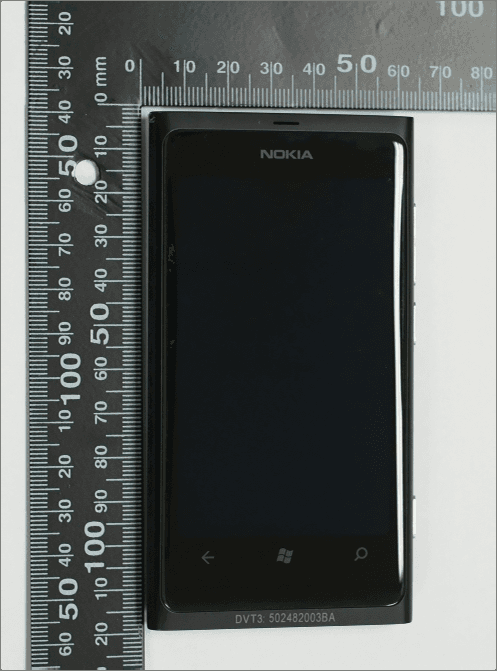
LJPA
Dec 20, 2011GSM/WCDMA cellular phone w/BT and WLAN
Equipment Class
DTS - Digital Transmission System
LJPRM-801
Oct 08, 2011GSM/WCDMA cellular phone w/BT and WLAN
Equipment Class
JBP - Part 15 Class B Computing Device Peripheral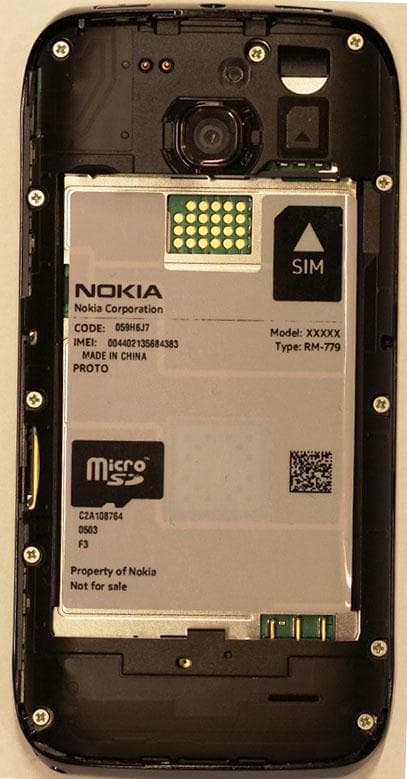
LJPRM-779
Sep 29, 2011GSM/WCDMA cellular phone w/BT, WLAN and NFC
Equipment Class
DTS - Digital Transmission System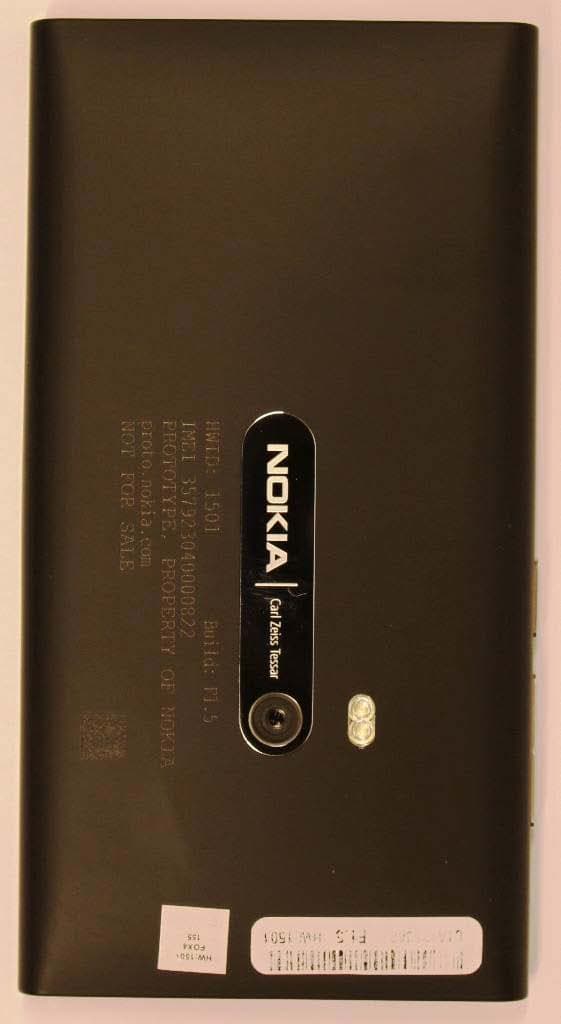
LJPK
Jul 20, 2011GSM/WCDMA cellular telephone with BT, WLAN, and NFC
Equipment Class
DTS - Digital Transmission System
LJPRM-701
Jul 20, 2011GSM/WCDMA cellular phone w/BT, WLAN, FMTx and NFC
Equipment Class
DXX - Part 15 Low Power Communication Device Transmitter